


Original article by Brad Reed republished from Common Dreams under Creative Commons (CC BY-NC-ND 3.0).
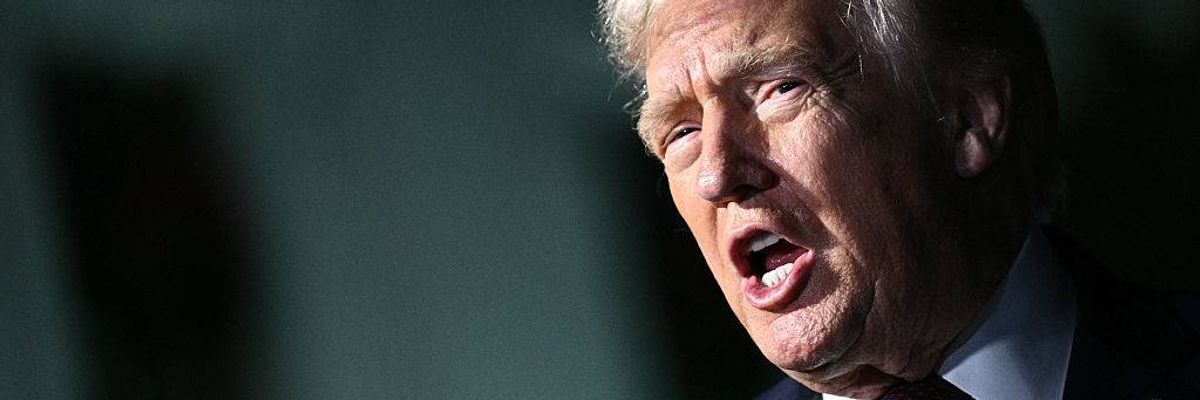
President Donald Trump sent out a cheery Christmas greeting early Wednesday morning just three minutes after threatening to shut down US broadcasters if their programs did not provide him with more positive coverage.
In a Truth Social post sent out at 12:36 am, Trump renewed his threat to once again strip broadcast licenses from networks that cover or portray him and his administration in a negative light.
RECOMMENDED…
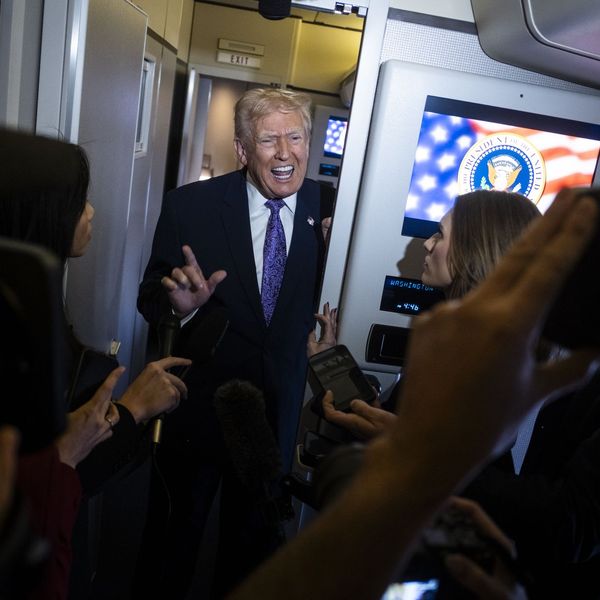
“If Network NEWSCASTS, and their Late Night Shows, are almost 100% Negative to President Donald J. Trump, MAGA, and the Republican Party, shouldn’t their very valuable Broadcast Licenses be terminated?” Trump wrote. “I say, YES!”
Just three minutes afterward, at 12:39 am, Trump posted an all-caps message that read, “MERRY CHRISTMAS!!!!!”
It is unclear what sparked Trump’s latest threat, although shortly before it was posted he lashed out at comedian Stephen Colbert, whose time hosting CBS’ “The Late Show” is set to end in May 2026.
“Stephen Colbert is a pathetic trainwreck, with no talent or anything else necessary for show business success,” he wrote. “Now, after being terminated by CBS, but left out to dry, he has actually gotten worse, along with his nonexistent ratings. Stephen is running on hatred and fumes. A dead man walking! CBS should, ‘put him to sleep,’ NOW, it is the humanitarian thing to do!”
While Trump frequently delivered angry rants about media coverage throughout his first term, his words appear to be carrying significantly more weight during his second term.
For example, the announcement of Colbert’s cancellation raised eyebrows earlier this year because it came shortly before the Federal Communications Commission (FCC) signed off on an $8 billion deal for CBS parent company Paramount to be bought by Skydance Media, the company founded by David Ellison, son of Trump ally Larry Ellison.
Weeks after this, Trump-appointed FCC Chairman Brendan Carr threatened to rescind broadcast licenses for Disney-owned ABC unless it took late-night host Jimmy Kimmel, a frequent Trump critic, off the air. Hours after Carr’s threat, Kimmel’s show was suspended before being put back on the air days later amid a public outcry.
Over the weekend, CBS News boss Bari Weiss spiked a segment on the network’s flagship news program “60 Minutes” that cast a critical eye on the Trump administration for sending hundreds of Venezuelan immigrants to a notorious El Salvadoran prison where they were allegedly subjected to abuse and torture.
Weiss’ decision to at least temporarily quash the story came as Larry Ellison is making a hostile bid to buy Warner Brothers Discovery that will once again need FCC approval in the future in order to succeed.
Original article by Brad Reed republished from Common Dreams under Creative Commons (CC BY-NC-ND 3.0).
Original article by Brett Wilkins republished from Common Dreams under Creative Commons (CC BY-NC-ND 3.0).
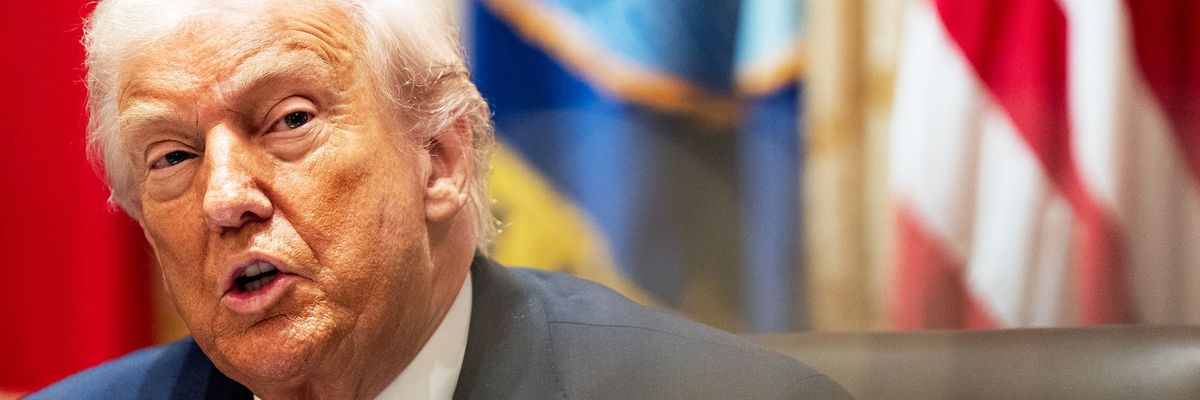
President Donald Trump said in an interview published Tuesday that a US land attack on Venezuela is coming and signaled that he is open to launching similar military action against Colombia and Mexico.
“We’re gonna hit ‘em on land very soon, too,” Trump told Politico‘s Dasha Burns, citing the pretext of stopping fentanyl from entering the United States.
RECOMMENDED…
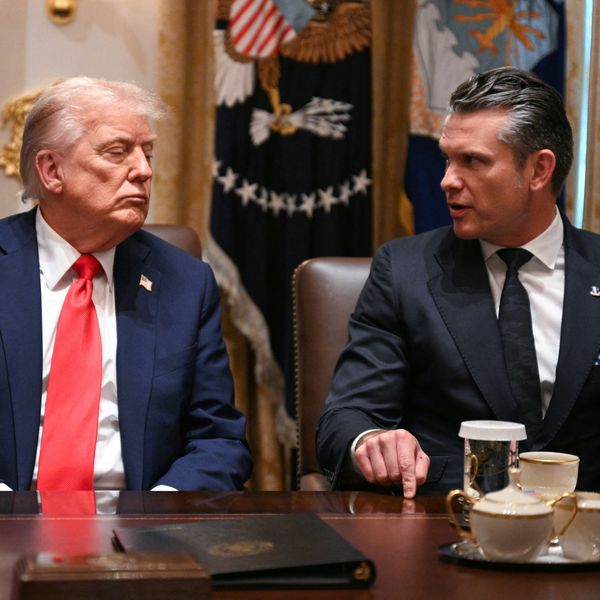
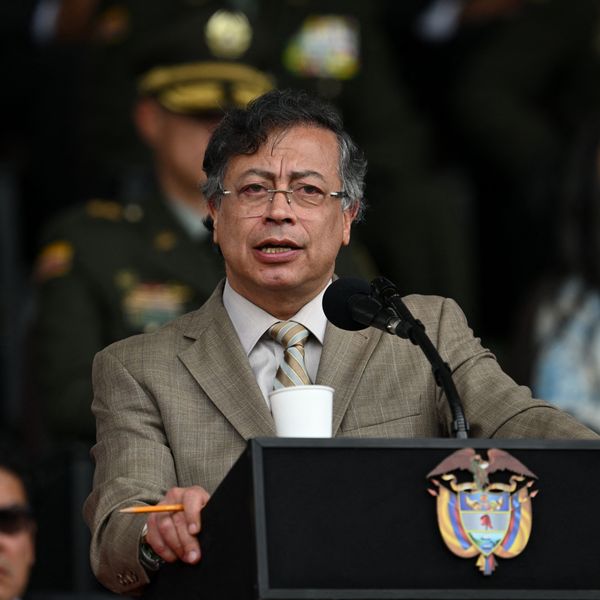
Trump repeated his baseless claim that during the administration of his predecessor, the “very stupid” former President Joe Biden, Venezuelan President Nicolás Maduro “sent us millions of people, many from prisons, many drug dealers, drug lords,” and “people in mental institutions.”
Burns then noted that most of the illicit fentanyl sold in the United States “is actually produced in Mexico,” which along with Colombia is “even more responsible” for trafficking the potent synthetic opioid into the US. She asked Trump if he would “consider doing something similar” to those countries.
“I would,” Trump replied. “Sure, I would.”
Pressed on his contradictory pardon of convicted narco-trafficking former Honduran President Juan Orlando Hernández while threatening war against Venezuela, Trump feigned ignorance, claiming that “I don’t know him” and asserting that “he was set up.”
Trump’s latest threat against Venezuela comes amid his deployment of warships and thousands of troops off the coast of the oil-rich South American nation, his approval of covert CIA action against Maduro’s government, and more than 20 airstrikes on boats his administration claims without evidence were smuggling drugs in the southern Caribbean Sea and eastern Pacific Ocean.
The Trump administration’s targeting of Venezuela evokes the long history of US “gunboat diplomacy” in Latin America and continues more than a century of Washington’s meddling in Venezuelan affairs. It also marks a historic escalation of aggression, as the US has never attacked Venezuelan territory.
Officials in Venezuela and Colombia, as well as relatives of men killed in the boat bombings, contend that at least some of the victims were fishermen who were not involved in drug trafficking.
The strikes have killed at least 87 people since early September, according to administration figures—including shipwrecked survivors slain in a so-called double-tap bombing. Legal experts and some former US military officials contend that the strikes are a violation of international law, murders, war crimes, or all of these.
Critics also assert that the boat strikes violate the War Powers Act, which requires the president to report any military action to Congress within 48 hours and mandates that lawmakers must approve troop deployments after 60 days. The Trump administration argues that it is not bound by the War Powers Resolution, citing as precedent the Obama administration’s highly questionable claim of immunity from the law when the US attacked Libya in 2011.
A bipartisan bid to block the boat bombings on the grounds that they run afoul of the War Powers Act failed to muster enough votes in the Senate in October.
“Note that it’s now taken as a given—as an unremarkable and baked-in fact about our politics—that Trump is mulling a ground invasion of Venezuela and a dramatic expansion in his bombing campaign with no congressional authorization,” New Republic staff writer Greg Sargent observed Tuesday in response to the president’s remarks to Politico.
“What emerges from this interview,” he added, “is that Trump is pulling all of this—the substantive case for these bombings, the legal justification for them, the rationale for mulling a massive military escalation in the Western Hemisphere—out of his rear end.”
Original article by Brett Wilkins republished from Common Dreams under Creative Commons (CC BY-NC-ND 3.0).
This article by Zoe Alexandra republished from peoples dispatch under a Creative Commons Attribution-ShareAlike 4.0 (CC BY-SA) license.
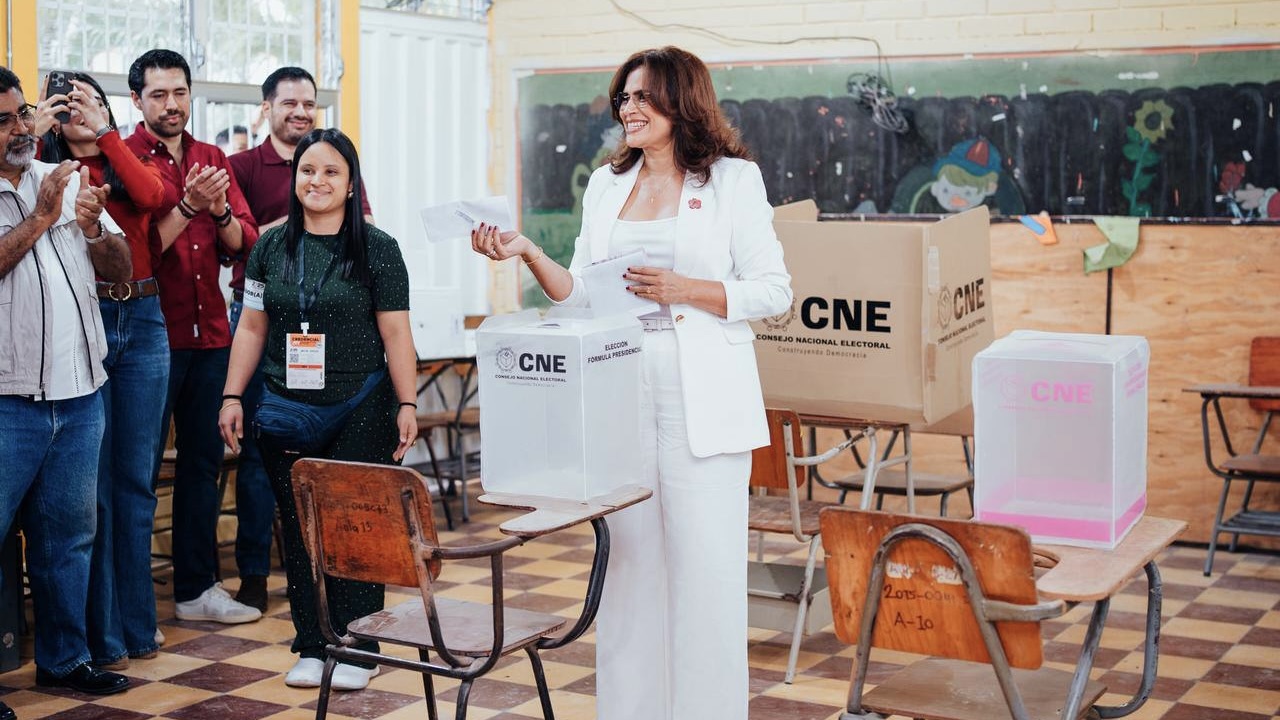
The people of Honduras are voting in general elections to decide their next president, 128 deputies to the Honduran Congress, 20 deputies to the Central American Parliament, 298 mayors, and more than 2,000 councilors. Most of the attention has been focused on the presidential election, which will be decided in a single round. The three frontrunners for the presidency are progressive candidate for the LIBRE Party Rixi Moncada; right-wing Liberal Party candidate Salvador Nasralla; and far-right National Party candidate Nasry Asfura.
Six million Hondurans are eligible to vote in these general elections which have become the subject of debate of far-right figures from across the world, who are all warning about the possible “triumph of communism” in the Central American country. However, the external intervention in the elections has gone beyond comments on social media about the “danger” represented by progressive candidate from the LIBRE Party Rixi Moncada.
In a move shocking many, on Friday, November 28, US President Donald Trump announced that he would pardon former Honduran president Juan Orlando Hernández (JOH), adding, “according to many people that I greatly respect, [he has been] treated very harshly and unfairly. This cannot be allowed to happen, especially now, after Tito Asfura wins the Election, when Honduras will be on its way to Great Political and Financial Success.” In the message, Trump reiterated his support to National Party candidate Tito Asfura and declared that if he doesn’t win the US will “not be throwing good money after bad, because a wrong Leader can only bring catastrophic results to a country.”
Is communism really on the ballot? Why has the electoral process in the Central American country become a focus of the right wing internationally? Peoples Dispatch spoke to Camilo Bermúdez, the Director of Strategic Litigation and Management of the Civic Council of Popular and Indigenous Organizations of Honduras (COPINH) about what is at stake in this political moment in the country.
As previously mentioned, the candidates polling the highest ahead of the elections are Rixi Moncada, Salvador Nasralla, and Tito Asfura. For Bermúdez, while there are three candidates, there are “clearly two political models in confrontation”.
He explains that at the base of the political project represented by LIBRE veteran Moncada is “a strong criticism of the economic system and the economic elites in Honduras”. Moncada, he emphasizes, “has been very open in criticizing, from her positions as Finance Minister and other roles she has held, the control of the country’s economy by ten families and about 26 economic groups that have [historically] controlled the main sectors of the country’s economy. She has criticized this control, the lack of tax justice, and the lack of economic democratization.” In addition to her critiques of the neoliberal economic model dominant in the country, Rixi represents “a project of continuity with President Xiomara Castro’s social program and LIBRE Party, who are heirs to the resistance and opposition to the 2009 coup d’état that overthrew Manuel Zelaya Rosales.” It is a progressive project which calls itself socialist, but mired with “many internal contradictions due to the same contradictions in LIBRE Party’s composition,” Bermúdez adds.
The other model is represented by Asfura and Nasralla, who, despite running with the country’s historically opposed parties, represent a very similar political project. This is “a traditional project of the Honduran right” which is one aligned with “private enterprise, aligned with the interests of large landowners, of large national and international corporations, and that seeks the approval of the United States Embassy in order to govern.”
The difference, Bermúdez underscores, is that Asfura is “more related to the post-coup regime, an authoritarian regime very linked to organized crime and drug trafficking. He’s from the party of President Juan Orlando, who was extradited and sentenced to 45 years in prison in the United States for drug trafficking.”
Meanwhile, Nasralla, while maintaining similar political and economic proposals to the National Party, has attempted to distance himself from organized crime, declaring himself “clean” and corruption free. Nevertheless, the COPINH organizer warns, “the political support and backing for candidate Nasralla clearly also comes from that background – for example, from business groups, corporate media groups, and also financial companies like Banco FICOHSA, which is linked to the assassination of Berta Cáceres and also to money laundering from drug trafficking.”
Under the National Party rule following the coup d’état in 2009, an all out neoliberal offensive was unleashed in the country to accelerate natural resource plundering in Indigenous and Garifuna territories, establish Special Economic Development Zones ( ZEDES) to favor international investment with the suspension of labor laws, and the privatization of state companies. Rolling back this model, which caused environmental devastation, social conflict, territorial breakdown, deep inequality and poverty, and the extraction of the country’s wealth by national and international private companies, was a cornerstone of Xiomara Castro’s 2021 campaign.
This effort has been the basis of much of the opposition she faces both by Honduran elites and international capital that, for years, had heeded the call of “Honduras is open for business” and profited immensely from the country’s cheap labor, natural resources, and relaxed labor and environmental laws. In 2017, the National Party committed outright electoral fraud, recognized even by the Organization of American States (OAS) in order to maintain their grasp on power.
The 2017 fraud is fresh in people’s minds, not only for how US President Donald Trump provided the necessary stamp of approval to his ally Juan Orlando Hernández to consolidate the fraud, but also how the event provoked mass protests and unrest across the country and the death of at least 35 protesters, with dozens imprisoned.
This time around, the possibilities for the right wing to influence the outcome of the polls are different. The leading scenario that analysts predict is an attempt by the right wing to orchestrate a non-recognition in the case of Moncada’s victory, which for Bermúdez has the sole purpose of “triggering a process of instability”. Suspicion has already been raised both within Honduras and outside the country by right-wing actors questioning the effectiveness of the electoral system for the mere reason that there is a progressive government in office. Some analysts warn that right-wing media and figures may seek to heavily promote exit polls and any results from the rapid count that would contradict the official results that will take some time to be released. Some may remember this formula from the 2019 Bolivian elections which were followed by a month of right-wing street protest against “fraud”, and ended with the overthrow of Evo Morales. Last year’s elections in Venezuela, saw a similar formula implemented: right-wing fraud allegations, echoed by the United States, which fed and fomented violent street protests a day after the elections, yet popular mobilization by Chavismo was successful in defeating this coup attempt.
Bermúdez explains, “We believe this could be what the opposition wants, with the backing of the United States government: a process of instability in which they seek to delegitimize Rixi Moncada’s victory and try to apply pressures similar to what has happened in Venezuela, trying to destabilize a progressive project, a possible progressive government project like Rixi Moncada’s.”
In this scenario, the COPINH organizer underlines, “The position taken by the Honduran Armed Forces will be very important, since they are supposedly called upon to defend the electoral process – but in 2009 they carried out the coup.” Notably though, “the current Xiomara Castro government has had a very close relationship with this Armed Forces sector.”
Bermúdez highlights that the streets will become the most important scenario in coming days if actions of non-recognition and attempts to destabilize the country after a Rixi Moncada victory go forward. In this case, “the Libre Party militants will take to the streets, because this is a militancy that emerged in the streets, from the post-coup resistance movement, and it’s a party and militancy accustomed to social protest. So we foresee that faced with any such action, there will also be a response of popular mobilization.”
“What will be very important won’t really be election day itself, because there isn’t an immediate vote counting system – moreover, it has been denounced as a system that could have been hacked or is unreliable. So the results won’t come on the same day; results will possibly come the following day, a couple of days later, after all the tally sheets from the polling stations have arrived at a location for manual counting of each sheet, and then that becomes the official result,” Bermúdez emphasizes.
A constant in Honduran politics, has been the outsized role of the United States leaders, in shaping the country’s present and future. Yet, Trump’s recent statements and actions have gone a step further.
“There is great concern in the country about that statement from the United States government…Obviously the US Embassy and State Department have great influence in Central American countries and great influence in Honduras, but we’ve never seen such blatant and interventionist pronouncements, which demonstrate the nature of US government policy,” Bermúdez remarks.
This in reference to the pardon of JOH couched in the endorsement of National Party candidate Asfura.
JOH was arrested on February 16, 2022, by Honduran police following an extradition request from the United States for conspiring to traffic drugs in the US. Two months later, on April 21, 2022, Hernández was extradited to the United States. In June 2024, JOH was sentenced by a US judge to 45 years in prison for the crime of exporting more than 400 tons of cocaine to the United States and for the possession of “destructive devices”. At the time, the judge, Kevin Castel, called Hernández “a two-faced politician” because, on the one hand, he claimed to fight drug trafficking in his country, while, on the other hand, he supported the drug cartels. Prosecutors alleged that the former president built a “Narco-State” in which he personally received millions of dollars in bribes from drug traffickers.
Bermúdez believes that the explicit support from Trump and other US officials for Asfura, and the explicit rejection of Moncada and LIBRE, “has to do with an international campaign to fight against any kind of progressive perspective in Latin America, under the outdated discourse of communism linked to a supposed fight against drug trafficking and what they call ‘narcoterrorism.’” “Narcoterrorism”, he explains, “is the policy the United States government develops to attack Venezuela, to enter into deep contradiction with the governments of Colombia, Mexico, and Brazil. So we believe this fits within this dynamic of the growth of the right-wing that we are seeing internationally, of these authoritarian and extreme-right discourses that seek shelter in this narcoterrorism discourse, attempting to link it to the revolutionary processes in Venezuela and Cuba.”
Yet, the outright violations of Honduran sovereignty and rule of law by the US president and their potential to sow chaos, are also telling. Bermúdez said, such actions show “the fear they have of a progressive project that could be executed by candidate Rixi Moncada, and also the expectation and perspective they have that she could be the candidate favored by the popular vote – because if that weren’t the case, we believe they wouldn’t take such a decisive, forceful, and strong position like that of the US president, who, it goes without saying, very possibly doesn’t even know where Honduras is, yet is speaking in favor of one of the candidates.”
Bermúdez states that at the end of the day, “no matter how blatant this interference is and no matter how powerful Donald Trump’s government is, the decision lies with the people. And I think it’s also a call to awareness for the people to take the reins and make decisions about their future.”
This article by Zoe Alexandra republished from peoples dispatch under a Creative Commons Attribution-ShareAlike 4.0 (CC BY-SA) license.
Original article by Vijay Prashad republished from peoples dispatch under a Creative Commons Attribution-ShareAlike 4.0 (CC BY-SA) license.
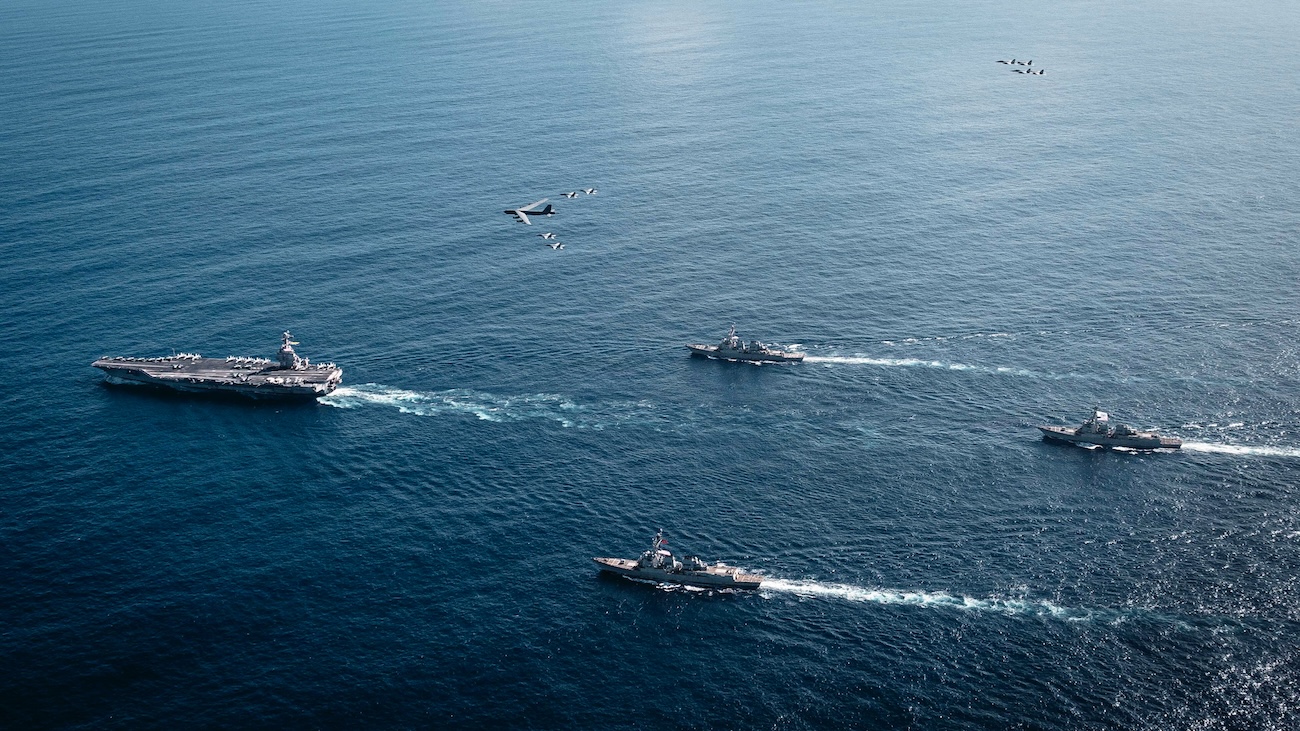
US President Donald Trump has authorized the USS Gerald R. Ford to enter the Caribbean. It now floats north of Puerto Rico, joining the USS Iwo Jima and other US navy assets to threaten Venezuela with an attack. Tensions are high in the Caribbean, with various theories floating about regarding the possibility of what seems to be an inevitable assault by the US and regarding the social catastrophe that such an attack will occasion. CARICOM, the regional body of the Caribbean countries, released a statement affirming its view that the region must be a “zone of peace” and that disputes must be resolved peacefully. Ten former heads of government from Caribbean states published a letter demanding that “our region must never become a pawn in the rivalries of others”.
Former Trinidad and Tobago Prime Minister Stuart Young said on August 21, “CARICOM and our region is a recognized zone of peace, and it is critical that this be maintained”. Trinidad and Tobago, he said, has “respected and upheld the principles of non-intervention and non-interference in the internal affairs of other countries and for good reason”. On the surface, it appears as if no one in the Caribbean wants the United States to attack Venezuela.
However, the current Prime Minister of Trinidad and Tobago, Kamla Persad-Bissessar (known by her initials as KPB), has openly said that she supports the US actions in the Caribbean. This includes the illegal murder of eighty-three people in twenty-one strikes since September 2, 2025. In fact, when CARICOM released its declaration on the region being a zone of peace, Trinidad and Tobago withdrew from the statement. Why has the Prime Minister of Trinidad and Tobago gone against the entire CARICOM leadership and supported the Trump administration’s military adventure in the Caribbean?
Since the Monroe Doctrine (1823), the United States has treated all Latin America and the Caribbean as its “backyard”. The United States has intervened in at least thirty of the thirty-three countries in Latin America and the Caribbean (90 percent of the countries, in other words) – from the US attack on Argentina’s Malvinas Islands (1831-32) to the current threats against Venezuela.
The idea of the “zone of peace” emerged in 1971 when the UN General Assembly voted for the Indian Ocean to be a “zone of peace”. In the next two decades, when CARICOM debated this concept for the Caribbean, the United States intervened in, at least, the Dominican Republic (after 1965), Jamaica (1972-1976), Guyana (1974-1976), Barbados (1976-1978), Grenada (1979-1983), Nicaragua (1981-1988), Suriname (1982-1988), and Haiti (1986).
In 1986, at the CARICOM summit in Guyana, the Prime Minister of Barbados, Errol Barrow, said “My position remains clear that the Caribbean must be recognized and respected as a zone of peace… I have said, and I repeat, that while I am prime minister of Barbados, our territory will not be used to intimidate any of our neighbors be that neighbor Cuba or the USA.” Since Barrow made that comment, Caribbean leaders have punctually affirmed, against the United States, that they are nobody’s backyard and that their waters are a zone of peace. In 2014, in Havana, all members of the Community of Latin American and Caribbean States (CELAC) approved a “zone of peace” proclamation with the aim “of uprooting forever [the] threat or use of force” in the region.
Persad-Bissessar or KPB has rejected this important consensus across political traditions in the Caribbean. Why is this so?
In 1989, trade union leader Basdeo Panday formed the United National Congress (UNC), a centre-left formation (whose former name was the Caucus for Love, Unity, and Brotherhood). KPB joined Panday’s party and has remained in the UNC since then. Throughout her career till recently, KPB stayed at the center of the UNC, arguing for social democratic and pro-welfare policies whether as opposition leader or in her first term as Prime Minister (2010-2015). But even in her first term, KPB showed that she would not remain within the bounds of the centre-left but would tack Far-Right on one issue: crime.
In 2011, KPB declared a State of Emergency for a “war on crime”. At her home in Phillipine, San Fernando, KPB told the press, “The nation must not be held to ransom by groups of thugs bent on creating havoc in our society”, “We have to take very strong action”, she said, “very decisive action”. The government arrested seven thousand people, most of them released for lack of evidence against them, and the government’s Anti-Gang Law could not be passed: this was a policy that mimicked the anti-poor campaigns in the Global North. Already, in this State of Emergency, KPB betrayed the legacy of the UNC, which she dragged further to the Right.
When KPB returned to power in 2025, she began to mimic Trump with “Trinidad and Tobago First” rhetoric and with even harsher language against suspected drug dealers. After the first US strike on a small boat, KPB made a strong statement in support of it: “I have no sympathy for traffickers, the US military should kill them all violently”. Pennelope Beckles, who is the opposition leader in Trinidad and Tobago, said that while her party (the People’s National Movement) supports strong action against drug trafficking, such action must be “lawful” and that KPB’s “reckless statement” must be retracted. Instead, KPB has furthered her support of the US militarization of the Caribbean.
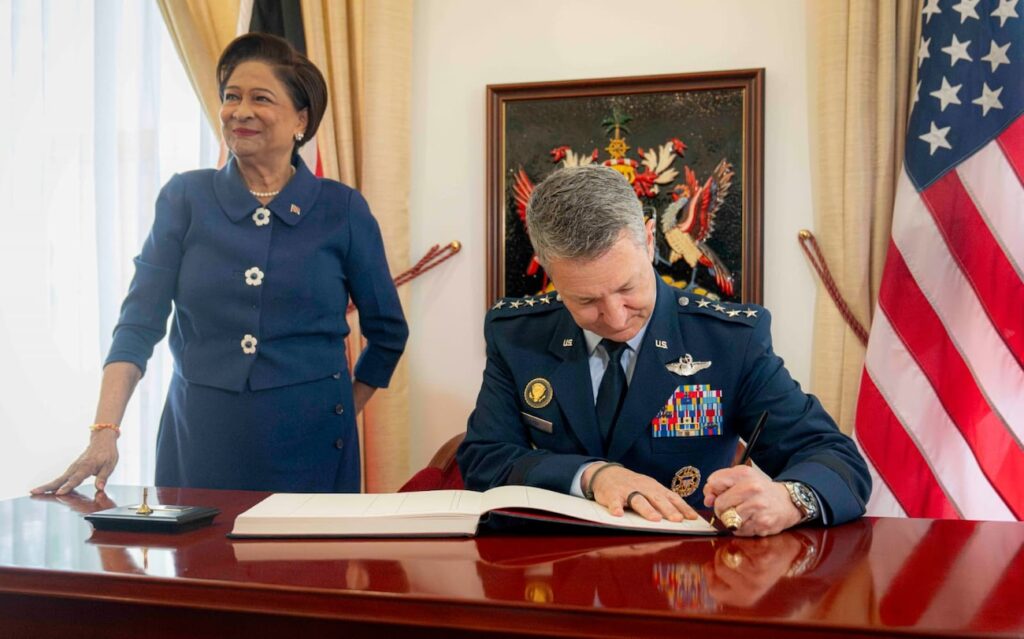
Certainly, Trinidad and Tobago faces a tight knot of economic vulnerability (oil and gas dependence, foreign exchange shortages, slow diversification) and social crises (crime, inequality, migration, youth exclusion). All of this is compounded by the weakness of State institutions to help overcome these challenges. The weakness of regionalism further isolates small countries such as Trinidad and Tobago, which are vulnerable to pressure from powerful countries. But KPB is not only acting due to pressure from Trump; she has made a political decision to use US force to try and solve her country’s problems.
What could be her strategy? First, get the United States to bomb small boats that are perhaps involved in the centuries-old Caribbean smuggling operations. If the US bombs enough of these little boats, then the small smugglers would rethink their transit of drugs, weapons, and basic consumer commodities. Second, use the goodwill generated with Trump to encourage investment into Trinidad and Tobago’s essential but stagnant oil industry. There might be short-term gain for KPB. Trinidad and Tobago requires at least USD 300 million if not USD 700 million a year for maintenance and for upgrading its petrochemical and Liquified Natural Gas plants (and then it needs USD 5 billion for offshore field development and building new infrastructure). ExxonMobil’s massive investment in Guyana (rumored to be over USD 10 billion) has attracted attention across the Caribbean, where other countries would like to bring in this kind of money. Would companies such as ExxonMobil invest in Trinidad and Tobago? If Trump wanted to reward KPB for her unctuousness, he would tell ExxonMobil CEO Darren Woods to expand on the deepwater blocks investment his company has already made in Trinidad and Tobago. Perhaps KPB’s calculation to set aside the zone of peace ideas will get her some more money from the oil giants.
But what does this betrayal break? It certainly disrupts further any attempt to build Caribbean unity, and it isolates Trinidad and Tobago from the broader Caribbean sensibility against the use of the waters for US military confrontations. There are real problems in Trinidad and Tobago: rising gun-related violence, transnational trafficking, and irregular migration across the Gulf of Paria. These problems require real solutions, not the fantasies of US military intervention. US military interventions do not resolve problems, but deepen dependency, escalate tensions, and erode every country’s sovereignty. An attack on Venezuela is not going to solve Trinidad and Tobago’s problems but might indeed amplify them.
The Caribbean has a choice between two futures. One path leads toward deeper militarization, dependency, and incorporation into the US security apparatus. The other leads toward the revitalization of regional autonomy, South-South cooperation, and the anti-imperialist traditions that have long sustained the Caribbean’s political imagination.
Vijay Prashad is an Indian historian, editor, and journalist. He is a writing fellow and chief correspondent at Globetrotter. He is an editor of LeftWord Books and the director of Tricontinental: Institute for Social Research. He has written more than 20 books, including The Darker Nations and The Poorer Nations. His latest books are On Cuba: Reflections on 70 Years of Revolution and Struggle (with Noam Chomsky), Struggle Makes Us Human: Learning from Movements for Socialism, and (also with Noam Chomsky) The Withdrawal: Iraq, Libya, Afghanistan, and the Fragility of US Power.
Original article by Vijay Prashad republished from peoples dispatch under a Creative Commons Attribution-ShareAlike 4.0 (CC BY-SA) license.