Javier Milei’s right-wing government promised to stop inflation in Argentina, and has thus far failed
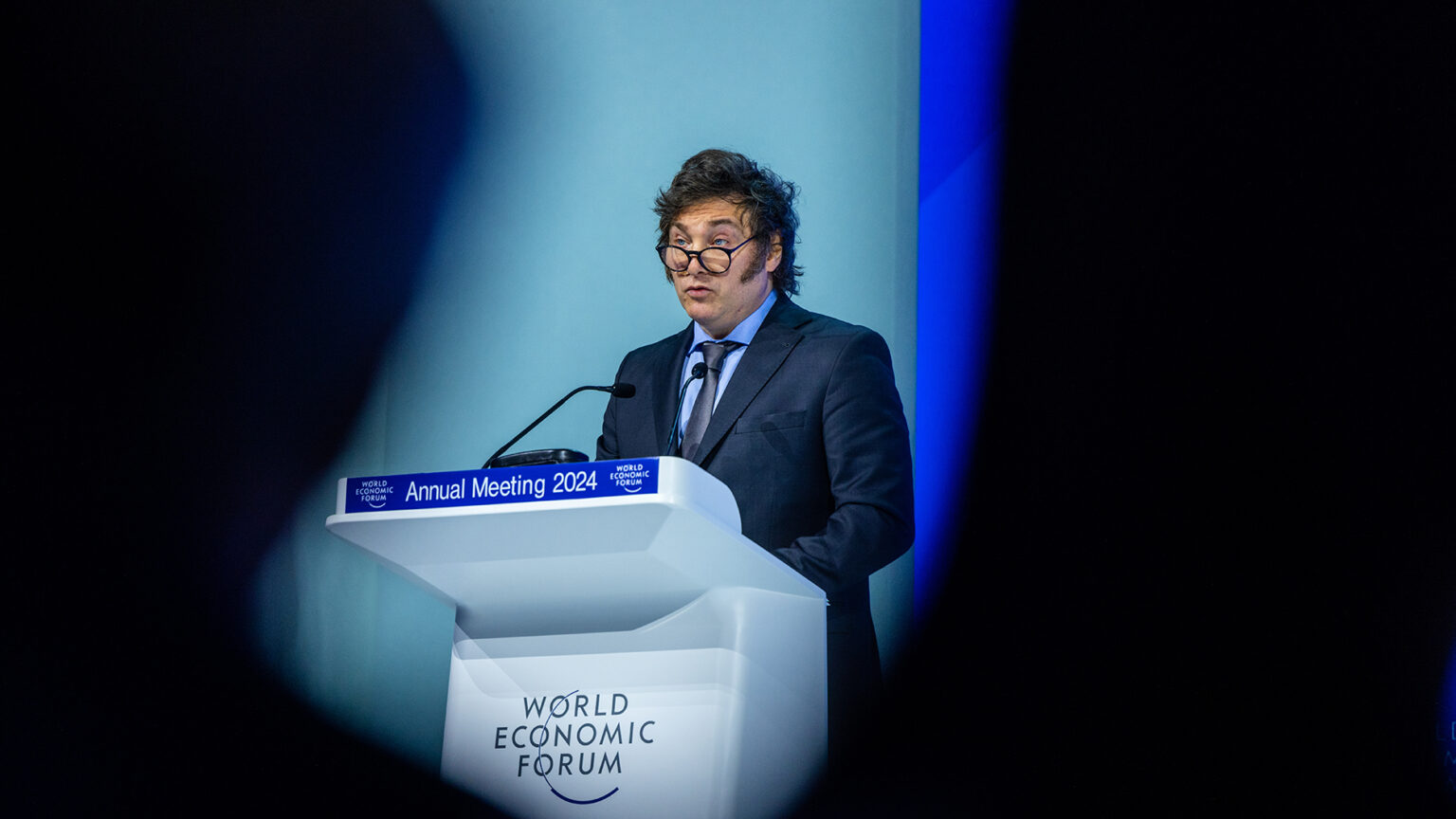
The neoliberal economic measures of Javier Milei’s government are not improving the economic situation they promised to eradicate. During the election campaign, Milei made several promises that thus far he has been unable to keep. For example, he stated that the price of gas would not increase under his government, but from April to May rates rose by 450%. He also promised that public transportation fares would not increase, but the price of the subway went from 125 to 757 pesos.
The government has not been able to stimulate the growth of the Argentine economy either. According to the IMF itself, which bases a good part of its analysis and recommendations on neoliberal economic theory, the GDP of the Argentine economy will fall by 3.5% in 2024. In this sense, the recession the country is enduring does not seem to have a clear way out. Initially, the IMF thought that the economic contraction would be 2.8% of the GDP, but given the incontestable evidence, it had to adjust its forecast.
However, the IMF maintains that there will be a rebound effect, and that, therefore, in 2025 Argentina will grow by 5%. In addition, the agency praised the economic measures of the Milei government to curb the inflationary process, fiscal adjustment, and liberalization of the economy. Petya Koeva Brooks, deputy director of the Research Department, said that “looking ahead, even in the coming quarters, we expect growth to rebound because we see the effects of fiscal adjustment, the return of confidence and rising wages.”
However, several Argentine economists have stated that such expectations are not based on the reality of the national economy, as the problems caused by high inflation have worsened, as well as the evident decrease in employment in the country. According to data for the first half of 2024, Argentina has the highest cumulative inflation worldwide, 79.8%, and a peak year-on-year inflation of 271.5%.
Another unfulfilled promise of Milei was the increase of employment in the country thanks, according to the libertarian government, to the radical liberalization of the economy. However, despite the set of neoliberal economic measures, there has been a 7.7% increase in unemployment during the first quarter of 2024.
Milei’s administration celebrates the fact that the inflationary process decreased a little compared to previous years, claiming that this is thanks to certain public policies of his administration. This is even though Milei’s brutal fiscal adjustment, the contraction of the State, and the loss of thousands of jobs, which Milei stated would have a very positive impact on inflation, have not had the expected results. For example, food prices in Argentina have risen 260% (40 times more than Mexico), one of many figures which confirms that the neoliberal “shock” measures of Milei are not likely to benefit workers in the long run.
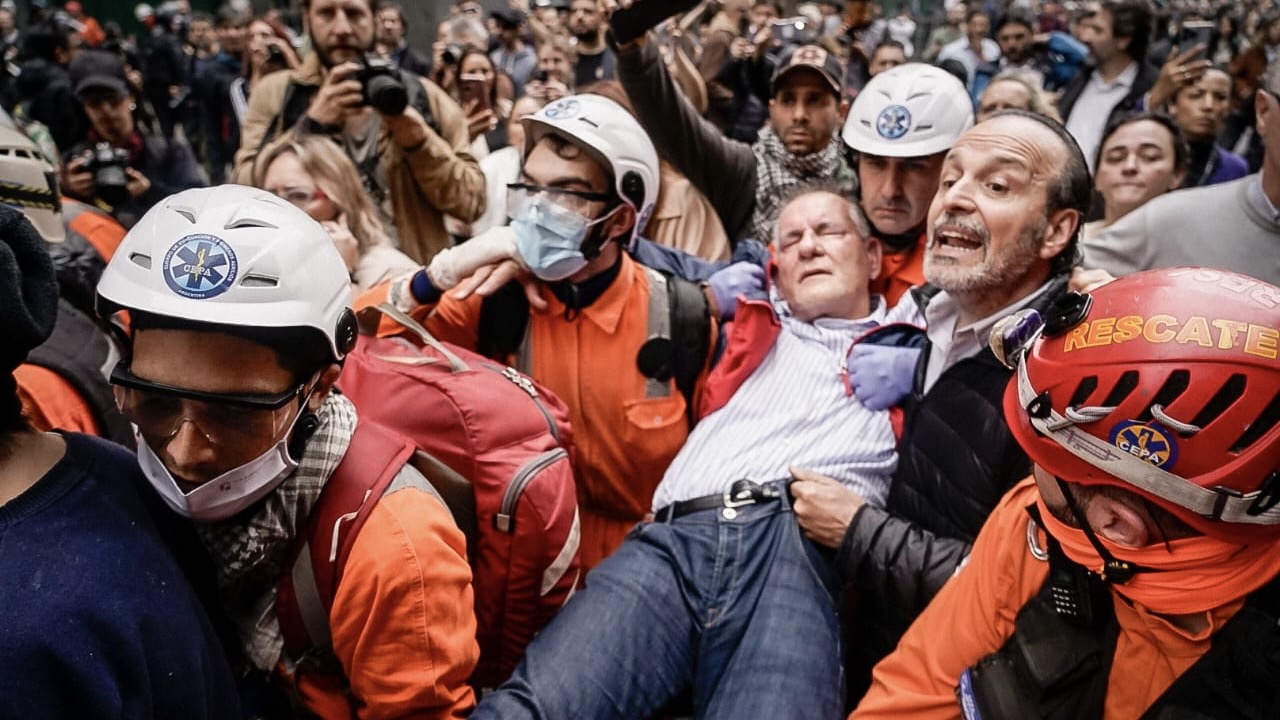
Police in Argentina brutally repressed a mobilization against Milei’s controversial economic reforms. Photo: UP Diputados
Over 30 people were detained in Buenos Aires during the brutal repression of the protests against Milei’s economic reform law
Last week, the Argentine Senate debated the bill called “Law for Bases and Starting Points for the Freedom of Argentines” (Ley Bases), a set of economic and political reforms proposed by the far-right government of Javier Milei. While the Executive sought the necessary votes in the Senate to pass the law, thousands of demonstrators gathered around the legislature to demand that the law be shelved.
The protests were called by several social organizations and trade unions, including the country’s largest trade union confederations, the General Confederation of Labor (CGT), the Argentine Workers’ Central Union, and the Argentine Workers’ Central Union (Autonomous).
The action of the police, under the orders of the Minister of Security, Patricia Bullrich, was excessive and brutal. Even lawmakers were not spared the violent repression. Peronist legislators, Eduardo Valdés, Carlos Castagnetto, Leopoldo Moreau, Juan Manuel Pedrini, Carolina Yutrovic and Luis Basterra, denounced that they were beaten by the security forces. In addition, several detainees told press that “they were stripped naked and that pepper spray was thrown at them”.
Martin Dirroco, a worker detained during the protests, recounted: “We were in Congress and we began to feel the tear gas, our throats began to burn and we began to leave. We heard more and more shots fired; we could see the repression. […] Suddenly a lot of people started to come, we tried to leave and seven motorcycles appeared. The one on the back of the motorcycle was pointing a gun at us. They got off the motorcycle and told us to stay still. They shooted and shouted ‘everybody against the wall’. They started pushing and shoving, holding me and throwing me to the ground. […] We had to sleep in a courtyard with handcuffs on”.
On Wednesday, June 12, 33 people were arrested, with many held for several days. Carlos Lopez, a left Argentine political leader, told Peoples Dispatch that as of today there are still five people detained on alleged charges of “public intimidation” and “arson”. Lopez comments that some people were even arrested 15 blocks from the Senate, far away from the events for which they are accused. “They are trying to sow terror from the government, the State, so that the population feels fear and shuts its mouth”. In addition, López continues, the detainees did not have adequate access to water and food; some spent more than 15 hours in a police patrol car and many could not speak to their lawyers: “There was intimidation, torture and threats […] We ask for everyone’s solidarity so that this type of action does not happen again,” said López.
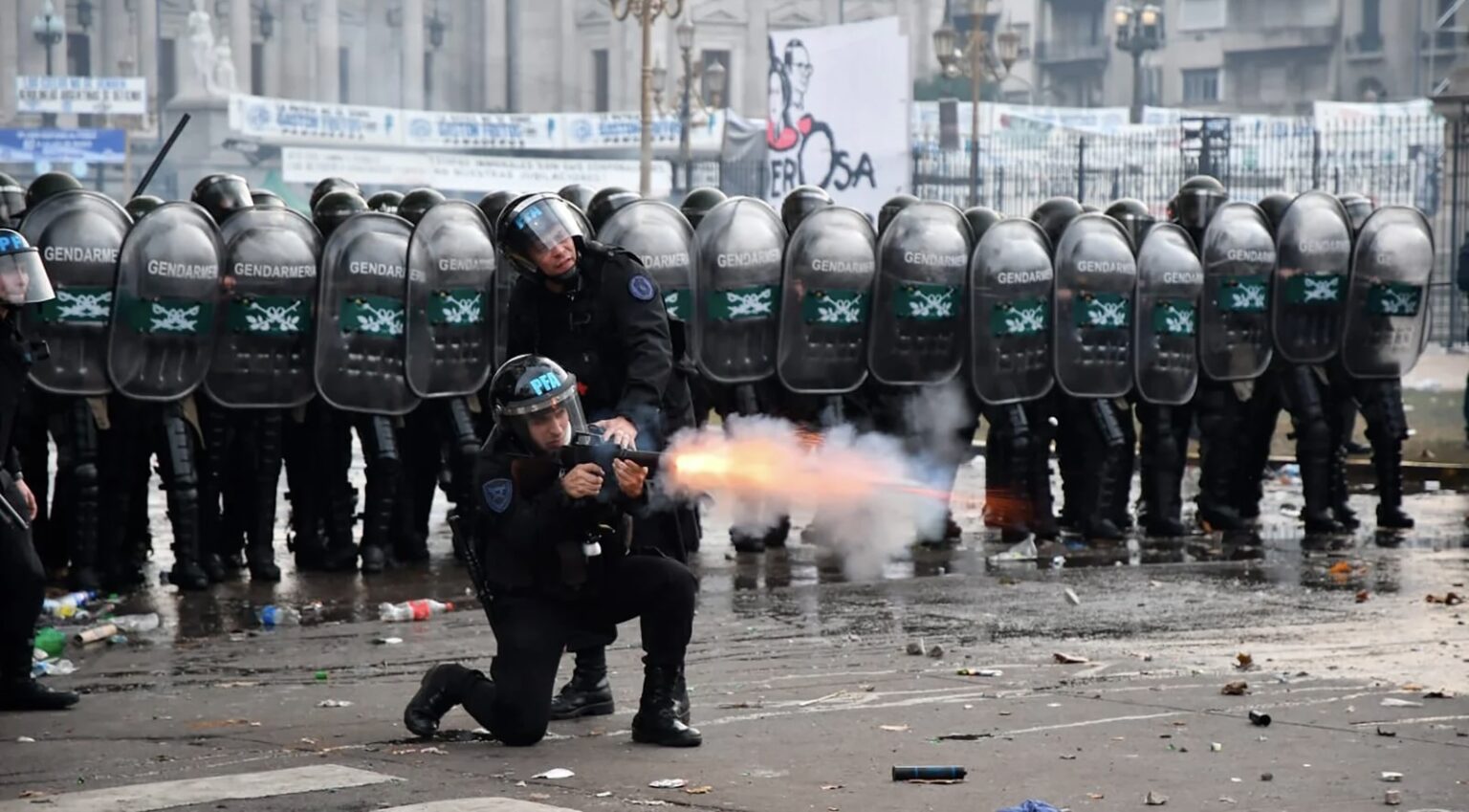
Police launching tear gas canisters at protesters on Wednesday June 12 in Buenos Aires. Photo: Somos Telam
The President’s Office celebrated the approval of the law and called the demonstrators “terrorists”: “Starting from 38 deputies and 7 senators, with terrorist groups attacking the Congress, having to deploy the Security Forces in defense of democracy, with the political caste resisting and operating until the last moment, and having to resort to the tie-breaker of the Vice President of the Nation, Victoria Villarruel, tonight’s is a triumph of the Argentine people and the first step towards the recovery of our greatness, having approved the most ambitious legislative reform of the last forty years.”
Several human rights organizations, such as the Grandmothers and Mothers of the Plaza de Mayo, the Permanent Assembly for Human Rights, the Relatives of the Disappeared and Detained for Political Reasons, among others, called for a demonstration on Tuesday June 18 to demand the release of the 16 people that were still detained (including several students and professors) accused of “terrorism”. During a press conference, various relatives of the detainees denounced the injustice of the accusations against the prisoners and affirmed that they are not terrorists and demanded their immediate release.
Milei’s “Ley Bases”
At the end of the debate last Wednesday, the law was approved thanks to the vote of Vice President Victoria Villarruel, who broke the tie. The controversial law must be approved a second time in the Chamber of Deputies.
The reforms of the “Ley Bases” propose a paradoxical transformation of the functioning of the Argentine State. At the same time that they seek to diminish the State’s capacity to control the economy, they strengthen the President’s political power to make economic and political decisions, which will no longer have to be approved by the legislative branch. In other words, the intention is to build a weaker but more agile State to execute President Milei’s neoliberal plan.
One of the most controversial changes is the creation of the “Incentive Regime for Large Investments” (RIGI, for its initials in Spanish). The purpose of this regime is to reduce the State’s control over large companies that invest more than USD 200 million in the country. The government promises these big companies a reduction in taxes, privileges in the project approval process, and protection of capital from state control for 30 years. RIGI seeks, among other things, the exploitation of natural resources by major companies.
According to the “Ley Bases”, the President may have “extraordinary powers” for one year if he declares a public emergency in the economic, financial, and energy fields. In this sense, Milei would have several powers that currently only the Legislative has. To achieve its approval in the Senate, the Executive committed itself not to interfere with 15 public agencies, such as the National Service of Food, Health and Quality (SENASA), the National Bank of Genetic Data (which has information on those who disappeared during the last dictatorship), among other institutions. However, the government will be able to legislate through expeditious decrees, which implies, in general, the first great legislative victory for its political project.
In addition, the “Ley Bases” authorizes the privatization of Intercargo, a state-owned company dedicated to provide services to air travel companies, and Energía Argentina S.A., which is in charge of the extraction and exploration of hydrocarbon deposits, their transportation, and storage. Although Milei wanted to privatize more than 40 public companies, the negotiations forced him to limit his aspirations. Nevertheless, Milei’s major project in this regard seems to be aimed, at first, at the privatization of the mining, energy and fuel sectors.
Finally, the “Ley Bases” seeks to make a discreet, although controversial, labor reform, as it proposes, among other things, to eliminate penalties for companies that use informal workers, which is currently sanctioned by law.
While the Executive celebrates its neoliberal legislative victory, the families of the prisoners continue to pressure the justice system to free the detainees and drop the serious charges that could mean several years in prison.
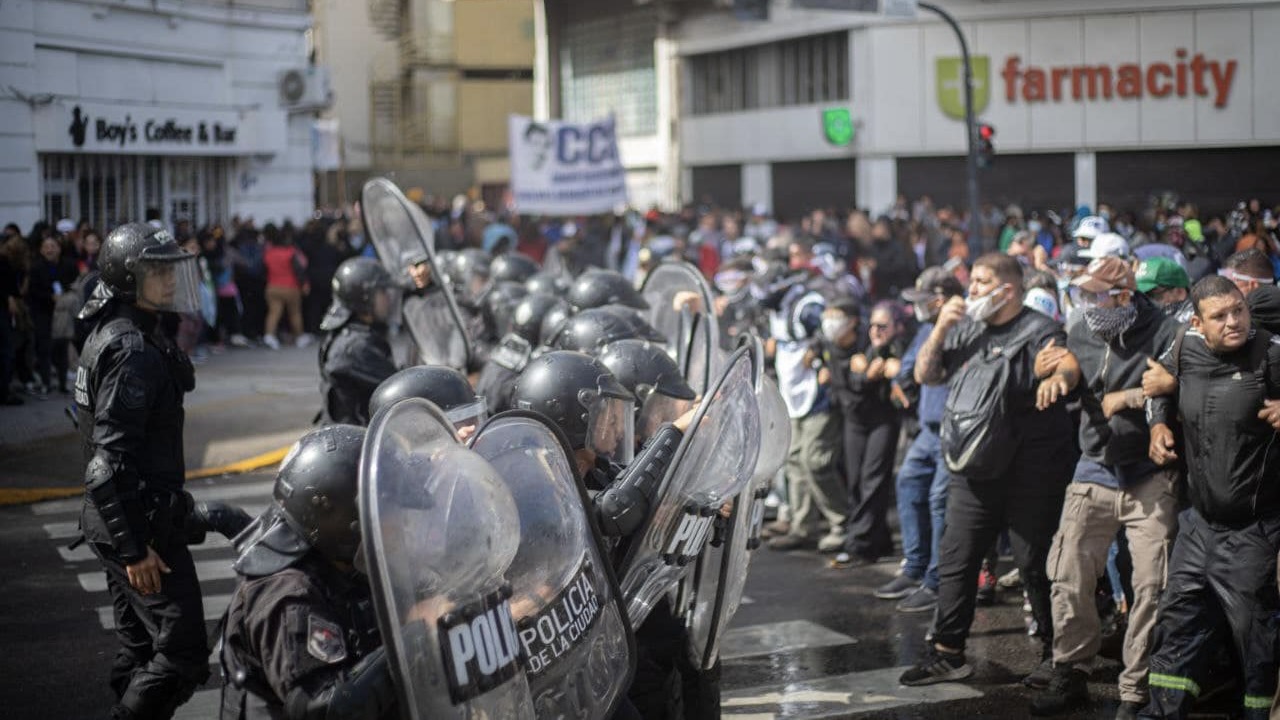
Police attacked the protest organized by UTEP in Buenos Aires. Photo: UTEP
Police cracked down on a protest of thousands of workers in the capital who demanded the government listen to its demands to send food to the community kitchens and address the growing hunger in the country
On Wednesday April 10, the Federal Police and the Police of the city of Buenos Aires violently evicted and repressed a peaceful demonstration on 9 de Julio Avenue in the center of the capital. The mobilization organized by the Union of Workers of the Popular Economy (UTEP) was one of many which took place in cities across the country to raise awareness to the critical situation faced by workers in the popular, or informal, economy in Argentina.
Organizations part of UTEP claim that the national government has suspended programs providing food to community kitchens and has also refused to dialogue with organizations who have repeatedly denounced the suspension and now, are unable to provide food to the thousands of families that they previously worked with. Many poor families across the country have also suffered from a freezing and arbitrary reduction of their “Social Complementary Salary”, a government program which provided supplementary economic aid to workers of the popular economy.
In Buenos Aires, thousands of protesters attempted to march to the Ministry of Human Capital when they were violently attacked by police with gas, water cannons. Over 10 were arrested in the brutal police repression and several were injured, including one protester who was dragged down the street and hit against the asphalt. Additionally, a journalist with the outlet Crónica TV driver was hit with a rubber bullet in the face.
The Ministry of Human Capital is a creation of the Milei government as a part of his promise to cut the majority of ministries and secretaries and create “super ministries”. It is the combination of the former Ministry of Labor, Ministry of Employment and Social Security, Ministry of Education, Ministry of Culture, and the Ministry of Social Development. This move, in addition to massively reducing the number of people working for the ministry, also saw severe cuts be made to the dozens of social programs run by those areas.
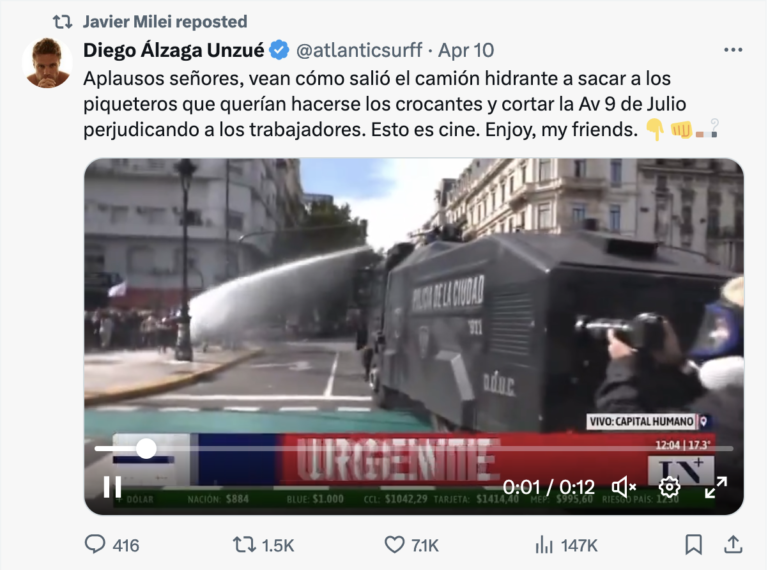
Milei, who was in Miami visiting with zionist and far-right US leaders such as Ben Shapiro, celebrated the repression of the protesters who were demanding government action against hunger amid unprecedented levels of poverty in the country. Milei reposted a publication from user Diego Álzaga Unzué on X which said: “Applause, gentlemen, see how the fire hydrant truck came out to remove the picketers who wanted to get dirty and cut off 9 de Julio Avenue, harming the workers. This is cinema. Enjoy, my friends.”
His Minister of Security Patricia Bullrich declared: “Law and order” in her post praising the “effective” crackdown on the mobilization through her “anti-picket protocol”.
Following the repressive operation, UTEP wrote in a statement: “We tried to create a channel of dialogue by all possible means, but once again the only response to the social and economic crisis is batons, gas and bullets. We denounce the violent actions of this Government, which the only thing it proposes for the people is planned misery. Our fight plan will continue to deepen to get food for our community kitchens, work and projects in our working class neighborhoods and social wages for the workers of the popular economy.”
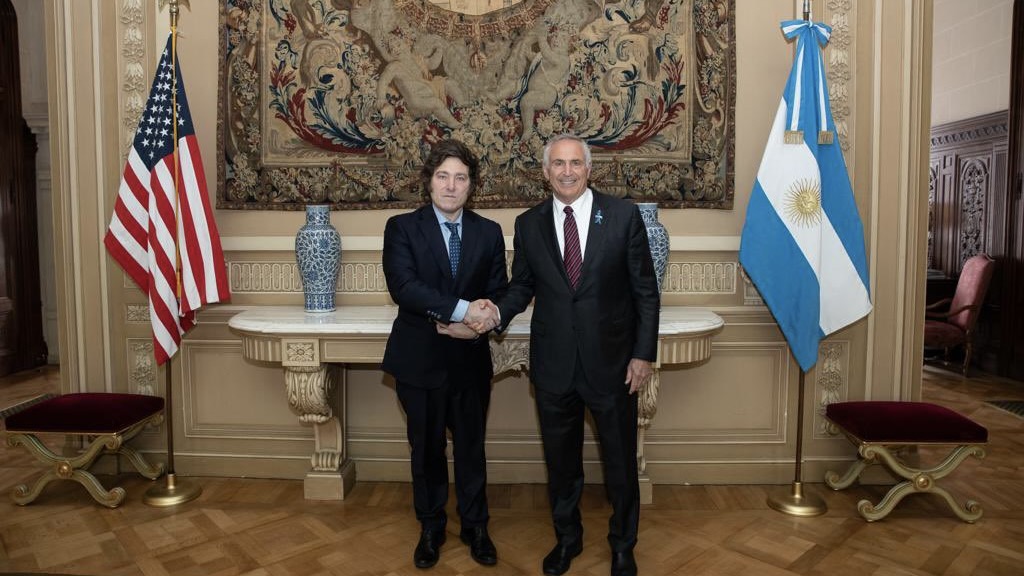
Argentine President Javier Milei with US Ambassador in Argentina Marc Stanley
In an interview with CNN, the Argentine president called Petro a “terrorist assassin”, Mexican President López Obrador “ignorant”, and declared that Israel was not committing “any excesses” in Gaza
Argentina’s libertarian president Javier Milei is under fire from his counterparts in the region for comments made during an interview with CNN Español. In response to his explosive comments, wherein he called Colombia’s president a “terrorist assassin”, Colombia’s Foreign Ministry announced the expulsion of Argentina’s diplomats from its embassy in Bogotá, Colombia.
The Foreign Ministry wrote in a statement, “This is not the first time that Mr. Milei offends the Colombian head of state, affecting the historical relationship of brotherhood between Colombia and Argentina.”
Indeed, Milei made similar comments about the leftist president back in January. When asked what he thought about the Colombian president, Milei told right-wing Colombian-American journalist Patricia Janiot that he is a “communist assassin that is sinking Colombia”.
In the statement released by the Colombian government, they highlighted: “The expressions of the Argentine president have deteriorated the confidence of our nation, in addition to offending the dignity of President Petro, who was democratically elected.”
Meanwhile, former Argentine president Alberto Fernández also condemned the statement by his successor. “I regret and categorically reject the statements of President Javier Milei, who has mistreated the President of Colombia, Gustavo Petro. My solidarity with the president of the Colombian people. The derogatory and disqualifying way in which the Argentine president expresses himself about presidents legitimately elected by their people and who are recognized leaders throughout Latin America is absolutely inadmissible.”
Gustavo Petro himself responded to Milei’s comments on Thursday and stated, “I believe that Milei seeks to destroy, or at least postpone, the project of Latin American integration. Today the Argentine people suffer and poverty increases. Milei’s promise to repeat the neoliberal system of 30 years ago may be a failure foretold; His thesis in the world that he has seen today as neoliberalism led to worsening the climate crisis, and putting us on the brink of extinction, as a species, is not accurate. The Argentine people are the ones who must discuss these issues and decide.”
He added, “Despite the insults, we must preserve the project of unity, in diversity, of Latin America and the Caribbean.”
Since winning the elections, Milei has rejected the pro-Global South integration position of his predecessors, instead pledging his priority and allegiance to the United States. Weeks after he was sworn in, Milei announced that Argentina would not join the BRICS economic bloc. The body had offered Argentina membership after its Johannesburg summit in August 2023, but Milei stated in December that it would rather do business with the US and Israel. So far Argentina has remained in the Latin American integration platforms but has threatened to withdraw from some.
Milei’s explosive comments were not reserved only for Colombia’s president. The CNN interviewer mentioned that Mexican President Andrés Manuel López Obrador had said some “tough words” about Milei, to which the Argentine president said “That an ignorant person like López Obrador speaks ill of me exalts me”.
The Mexican head of state responded to the comments on Thursday saying, “Milei stated that I am ‘ignorant’ because I called him a ‘conservative fascist.’ You are right: I still do not understand how the Argentines, being so intelligent, voted for someone who is not accurate, who despises the people and who dared to accuse his countryman [Pope] Francisco of being a ‘communist’ and ‘representative of the Evil One in the earth’, when it comes to the most Christian Pope and defender of the poor that I have ever known or heard of. PS Hugs to Gustavo Petro.”
Another segment of the not-yet aired interview that was shared was regarding Milei’s views on Israel’s genocidal war on Gaza. The staunch zionist declared: “Israel is not committing any excesses.”
The full interview is set to air this Sunday March 31.
After 100 days of a Javier Milei presidency, hundreds of thousands of Argentinians marked the anniversary of the 1976 coup amid growing revisionism of the brutal dictatorship years. BERT SCHOUWENBURG reports
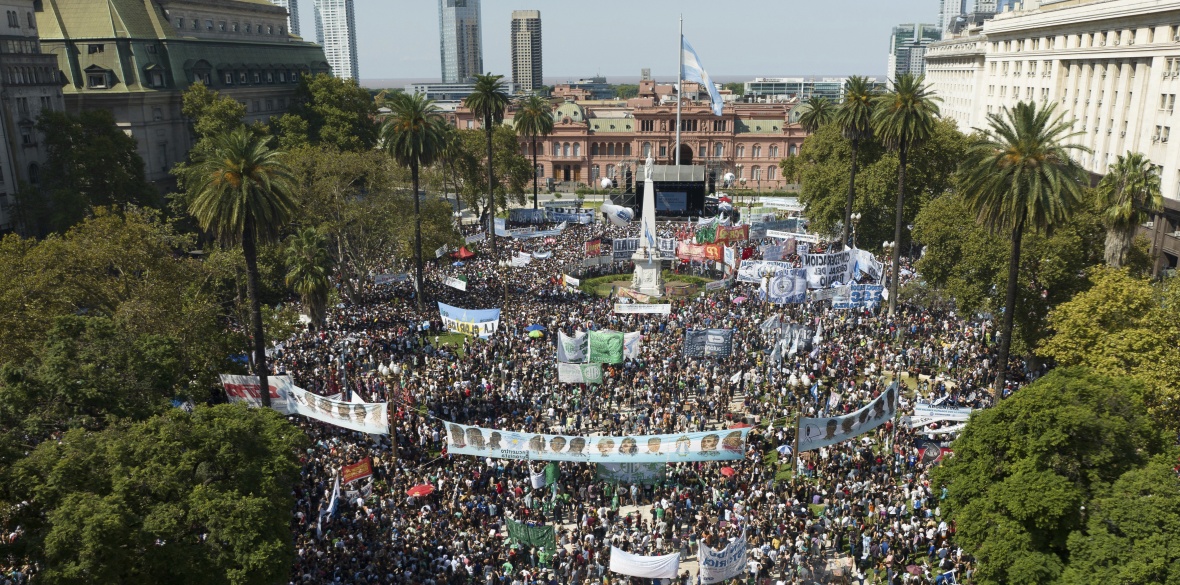
EVERY March 24, hundreds of thousands of Argentinians flood the streets of Buenos Aires and other cities to commemorate those who were killed, tortured or simply disappeared during the military dictatorship that took power on that date in 1976.
This year the marches and demonstrations had particular significance because they took place just after President Javier Milei’s first chaotic 100 days in office following his shock election victory in November of last year.
Until now, it has been widely accepted that during a dictatorship that lasted until 1983, some 30,000 people were taken from their homes, workplaces or from on the streets and were never seen again.
They were put in clandestine detention centres where they were interrogated, tortured and in most cases, killed. Some were put in aeroplanes, flown out to sea and dumped into the ocean.
…
Following the return of civilian rule, the leaders of the coup and other perpetrators of these crimes against humanity were tried and imprisoned, though many of them have been permitted to remain under house arrest rather than go to jail.
…
However, since Milei’s election, the consensus that the sentences being served by those guilty of the atrocities are more than justified is being challenged by his government who say that they have been wronged.