Commentary and analysis of recent political events

Spread the love

The government is trying to pass a clause in the Care bill today that will allow hospitals to be closed much easier without public consultation.

Hospital closure clause battle heats up today

Stormy scenes are likely in parliament today as the government tries to “rush through” changes that will make it far easier to close hospitals without public consultation. The changes,which OurNHS has campaigned on from the start, now face fierce opposition from doctors, 38 Degrees, the British Medical Association, NHS campaigners and charities.

On Friday Ed Miliband tabled a motion of opposition to the Bill, saying it “includes provisions which could put NHS hospitals at risk of having services reconfigured without adequate consultation and without clinical support”.

The hospital closure clause gives Trust Special Administrators greater powers including the power to make changes in neighbouring trusts without consultation. It was added to the Care Bill just as the government was being defeated by Lewisham Hospital campaigners, in an attempt to ensure that campaigners could not challenge such closure plans in the future. But the new Bill could be applied anywhere in the country.

Louise Irvine, Chair of the Save Lewisham Hospital campaign, said “If services need redesigning the law must ensure this is with proper and extensive consultation with local people. This process cannot be rushed. Decisions should not be based on the needs of investment banks. What happened to the government promises that in the NHS there would be ‘no decision about me, without me’?

OpenDemocracy appears on the Want to make a worthwhile donation this Solstice? page

Ed Miliband commits to doubling the number of homes built each year. The move is likely to prove very popular. I think that he’s correct in recognising development and building as a racket concerned with profiteering. I would also like to see the renovation of properties and the conversion of buildings to homes or other forms of social housing.

Ed Miliband promises drive to double rate of housebuilding

Profiteering property developers that hoard land and councils that block developments will be swept aside in a “non-stop drive” to more than double the number of homes being built each year in England, Ed Miliband will promise on Monday.

Attacking “stick-in-the-mud councils”, the Labour leader will say he would order a national planning inspectorate to give priority to local authorities that want to expand if they are being blocked by neighbouring councils refusing to release land.

Under the Labour plans, councils would be empowered to compulsorily purchase land or charge fees if developers fail to build on land for which they have planning permission. Michael Lyons, the chair of Labour’s new independent commission on housing and a former BBC chairman, told the Guardian that Britain needed to recapture the postwar spirit when building homes was the national priority.

Despite MPs claiming publicly that they object to their intended pay rise, only 10 MPs back a motion to limit their pay rises to 1% to match the public sector.

Cuts to care funding mean half a million fewer looked after, study finds

Almost half a million fewer old and disabled people are receiving care and support from the public purse than would have been the case before the financial crash, according to an expert study.

The research comes as MPs vote on Monday on the coalition’s care bill, which aims to overhaul the care system in England but threatens to tighten still further the rules of eligibility for state support.

Charities and care organisations are calling on ministers to address a “black hole” in social care funding which they say has left the system short of £2.8bn a year that would be necessary to meet people’s needs assessed as “moderate”.

Bridget Warr, chief executive of the United Kingdom Homecare Association, said: “Funding good care which helps people stay in their own home is not only a moral responsibility for any civilised society, but is also cost-efficient as it extends people’s wellbeing, reducing admissions to A&E, and helps people return home from hospital quicker.”

Continue ReadingCommentary and analysis of recent political events

Commentary and analysis of recent political events

Spread the love

Mandela’s funeral dominates the news today.

Prime Minister David Cameron has rejected the advice of his advisor Nadhim Zahawi that child benefit is only paid for the first two children. Why mention it then?

Pope says that he is not a Marxist but does not consider it an insult.

Illiberal benefits cuts increase evictions of poor families.

MPs to be given honesty training. MPs are apparently the most mistrusted profession – ahead of bankers, journalists, estate agents and second-hand car salesmen!


Continue ReadingCommentary and analysis of recent political events

Commentary and analysis of recent political events

Spread the love

Number of homeless in England has risen for 3 years in a row, report says

Homelessness has increased for three consecutive years, partly because of housing shortages and cuts to benefits, with an estimated 185,000 people a year now affected in England, a report says.

Research by the Joseph Rowntree Foundation and Crisis found almost one in 10 people experience homelessness at some point in their life, with one in 50 experiencing it in the last five years.

Responding to the report, Emma Reynolds, the shadow housing minister, accused David Cameron of breaking his promises to tackle homelessness and get Britain building.

“Homelessness has risen every year under this government, the number of families with children living in bed and breakfasts is at a 10-year high and house-building is at its lowest in peacetime since the 1920s,” she said.

Leslie Morphy, chief executive of Crisis, urged the government to address a chronic lack of affordable housing and consider the impact of its cuts to housing benefit, such as the bedroom tax, welfare cap and shared accommodation rate.

Image of Accident and emergencyA&E Winter Crisis: Patients Wait 12 Hours

Hundreds of patients are being forced to wait more than four hours to be seen by accident and emergency departments as the winter crisis begins.

It is the first time since April that emergency departments have struggled to hit their four-hour targets as admissions to A&E hit the highest level since data started being collected in November 2010.

According to NHS England figures, 3,678 patients across the country were forced to wait between four and 12 hours for treatment.

Five patients were not seen for more than 12 hours last week – the busiest week of the year with 415,000 people visiting A&E departments.

Waiting times were worst in major A&E wards where just 92.2% of patients were seen within four hours.

Free-Market Ideology: The Destruction of Lives

The over-policing of America

BoJo the bozo: Cycling safety campaigners slam Boris Johnson over lack of helmet and hi-viz 

Idiot Johnson is not the only one setting a poor example. As a cyclist, I advise you to wear a helmet as I was advised by my GP (doctor). If you fall from a bike, you’re falling six feet or so possibly with your head impacting the ground. Even presidents can have a ‘bicycle accident’.

Continue ReadingCommentary and analysis of recent political events

Commentary and analysis of recent political events

Spread the love

There’s a special edition of BBC Question Time tonight from Johannesburg, South Africa. I hope that somebody will discuss the real legacy of Nelson Mandela and the African National Congress: that South Africa is still an Apartheid state. The clearest indicator of this is the massacre of 34 striking miners at Marikana

Nelson Mandela: The Reluctant Revolutionary is an article about the South African campaign for liberation. It discusses the Apartheid regime and the history of Nelson Mandela, the ANC and anti-apartheid campaigning. It recognises that the ANC leadership was repeatedly a moderating force opposed to radical campaigning while simultaneously claiming that it had organised that same radical campaigning. Recommended.

spiked appears on the Want to make a worthwhile donation this Solstice? page

Firefighters launch fresh strikes over pension changes

Firefighters in England and Wales are to launch a fresh wave of strikes in their long-running row with the government over pensions.

Members of the Fire Brigades Union (FBU) will walk out for four hours from 6pm on Friday, and again from the same time on Saturday, with the threat of further action in the new year.

One brigade urged Christmas partygoers to buy takeaway food during the strike rather than try to cook at home if drunk.

FBU members have gone on strike four times in recent months in protest against changes to pensions and their retirement age. The union argues that older firefighters face losing their jobs if they fail fitness tests as part of changes to the pension age from 55 to 60.

The general secretary, Matt Wrack, said: “It’s now been almost two months since the government has been willing to meet us for negotiations despite several invitations from us.

“Until they do, and until they start to actually resolve the dispute, we’ll keep up the pressure for the sake of public safety and our members’ pensions.

‘UK’s stale energy market makes it easy for Big Six to hike prices,’ says new study

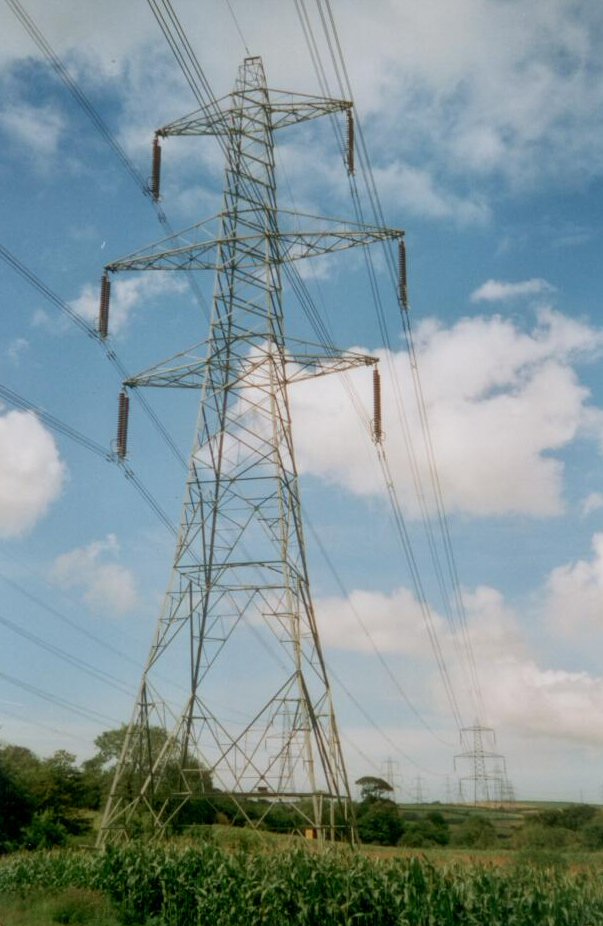
Image of an electricity pylon tree

Six years ago Britain had the healthiest record among all major developed economies for people shopping around for the cheapest prices, but the country has badly slipped down international league tables. While 21 per cent were changing companies in 2006, just 11.5 per cent have changed this year (including estimates for December). This is partly because the Big Six stopped door-step selling in the second half of 2011 after a series of fines for misleading customers.

The figures will fuel suspicions the Big Six firms, which have all hiked their prices significantly above inflation in recent weeks while announcing huge profits, are taking advantage of the problems people experience in changing provider.

Prime Minister David Cameron has urged customers to switch to better deals – but many find the process difficult and time-consuming.

EU migrants face 100 new questions to make it harder to obtain benefits

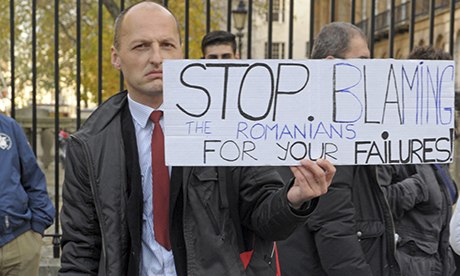
Image of protest. Placard reads 'Stop blaming the Romanians for your failures!"

Income-related benefits such as housing benefit, income support and council tax benefit are to be harder for EU migrants to obtain from Friday as they face a string of 100 questions, including the reasons they were unable to find a job in their home country. They will also be asked about their ability to speak English.

The new 100 questions in the fresh habitual residence test is being rushed out ahead of the transitional controls on Romanians and Bulgarians being lifted on 1 January.

The European Union insists on the free movement of workers within the EU, but the government believes it is legally entitled to ask tougher questions of migrants before they are entitled to make benefit claims.

Revised UK welfare sanctions mean more punishment for the poor

Job Seekers Allowance (JSA) and Employment and Support Allowance (ESA) sanctions are set to put many Britons in “dire financial conditions,” according to the Citizens Advice Bureau (CAB).

The report [https://skydrive.live.com/view.aspx?resid=CB5ED957FE0B849F!350&app=WordPdf&wdo=2&authkey=!AJTbB-gzwsSCayQ], published in October 2013 by the Manchester CAB on behalf of the Greater Manchester Citizens Advice Bureaux Cluster Group, is an in-depth evaluation of the impact of the sanctions. It describes benefit sanctions as “financial penalties” that are driving people already in devastating financial crisis even further into dire conditions. They raise concerns about the increase in the number of clients they had seen in relation to these sanctions.

Although the majority of the respondents were sanctioned for four weeks, one third had been given 10 week sanctions, with the average duration working out at eight weeks.

Two thirds had been left with no income. Twenty-three percent who had sanctions imposed had children, and 10 percent were lone parents.

Eighty percent of respondents borrowed money from family and friends, 8 percent borrowed from banks and 9 percent from pay day loan companies, which charge astronomical annual percentage rates.

The sanctions described in the CAB report are part of £21.8 billion in welfare cuts being imposed by the Conservative/Liberal government. Last month Prime Minister David Cameron declared that austerity cuts would be made permanent, meaning that escalating numbers of people will join the many already struggling to put food on the table, to find shelter and afford necessities like heating and lighting.

US drone strike in Yemen kills 15

At least 15 people were killed yesterday in central Yemen, when missiles fired from an unmanned US drone slammed into a wedding convoy. Yemeni security officials said the attack took place near the city of Radda, the capital of Bayda province, leaving behind charred bodies and burnt out vehicles.

No names and few details have been released. The CIA and US military, which are responsible for the criminal program of targeted assassinations in Yemen, Pakistan and other countries, have made no statement.

Yemeni security officials have provided conflicting accounts of the attack. “An air strike missed its target and hit a wedding car convoy,” one official told Reuters. “Ten people were killed immediately and another five who were injured died after being admitted to the hospital.” Another five people were injured. No attempt was made to explain what the real target was, or why “a mistake” was made.

Continue ReadingCommentary and analysis of recent political events

Politics news allsorts

Spread the love

Commentary and analysis of recent UK politics events

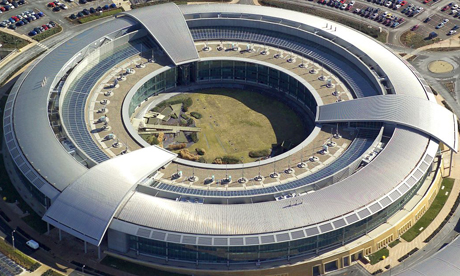
Image of GCHQ donught building

Edward Snowden voted Guardian person of the year 2013 for his whistleblowing on worldwide surveillance activities.

Online gamers are targeted by NSA and GCHQ

Online gaming is big business, attracting tens of millions of users worldwide who inhabit their digital worlds as make-believe characters, living and competing with the avatars of other players. What the intelligence agencies feared, however, was that among these clans of elves and goblins, terrorists were lurking.

The NSA document, written in 2008 and titled Exploiting Terrorist Use of Games & Virtual Environments, stressed the risk of leaving games communities under-monitored, describing them as a “target-rich communications network” where intelligence targets could “hide in plain sight”.

Games, the analyst wrote, “are an opportunity!”. According to the briefing notes, so many different US intelligence agents were conducting operations inside games that a “deconfliction” group was required to ensure they weren’t spying on, or interfering with, each other.

But the documents contain no indication that the surveillance ever foiled any terrorist plots, nor is there any clear evidence that terror groups were using the virtual communities to communicate as the intelligence agencies predicted.

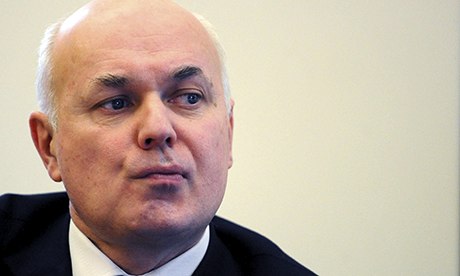
Image of Iain Duncan SmithIain Duncan Smith blames everyone else at the work and pensions select committee

After months of trying, MPs on the work and pensions select committee finally had a chance to question Iain Duncan Smith on the DWP’s abuse of statistics and the chaos surrounding Universal Credit today. On the former, Duncan Smith bullishly pointed out that the department had published “over 500” statistical releases and had received just two critical letters from the UK Statistics Authority. He again declared that he “believed” thousands of people had moved into work as a result of the introduction of the benefit cap, despite the UKSA warning that this was “unsupported by the official statistics”.

But when he was questioned on the false statement by Conservative chairman Grant Shapps that “nearly a million people” (878,300) on incapacity benefit dropped their claims, rather than face a new medical assessment for the employment and support allowance (which resulted in another reprimand from the Statistics Authority to Duncan Smith and Shapps), he took a strikingly different line. Rather than defending the claim, he replied that it was “nothing to do with the department” and blamed CCHQ for the inaccurate “conflation of data”. Speaking from what appeared to most to be a glass house, he added: “I’ve tried to get my colleagues at Central Office to check first before they put anything out about the areas that the DWP covers because it’s complex”. One was left with the image of Duncan Smith pleading with Shapps and other Tory apparatchiks not to twist statistics for the purposes of political propaganda but his own record meant he received little sympathy from the committee.

After being challenged on the DWP’s demonisation of benefit claimants through its references to “a something for nothing culture”, Duncan Smith similarly sought to shift the blame, noting that it was “a minister” from the last government (Liam Byrne) who first referred to “shirkers” and “workers”, to which the only appropriate reply is ‘two wrongs don’t make a right”.

… (continues much the same)

Related: Universal credit failed IT system write-off increased by £6m

Continue ReadingPolitics news allsorts