

Original article by Julia Conley republished from Common Dreams under Creative Commons (CC BY-NC-ND 3.0).

The presentation on the future of Gaza given by President Donald Trump’s son-in-law and adviser, Jared Kushner, inyelloe Davos on Thursday, offered what one journalist called “a sanitized, cosmetic image” of an exclave that, due largely to US policy, is actually “a place that needs immediate help and support for people who are on the verge of collapse.”
Kushner presented a four-phase “master plan” illustrated by CGI-generated images of luxury apartments, data centers, and futuristic-looking skyscrapers.
RECOMMENDED…
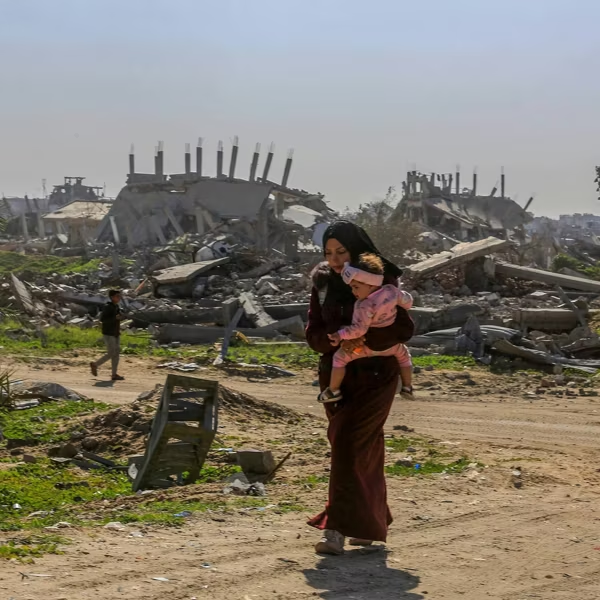
In the “New Rafah,” built over the southern town that the Israel Defense Forces razed last year and forced hundreds of thousands of displaced Palestinians to leave, Trump’s so-called “Board of Peace” plans to build more than 200 education centers and over 180 cultural, religious, and vocational buildings.
The “New Gaza” plan seeks to build 100,000 permanent housing units in all as well as 75 medical facilities. A map presented by Kushner shows yellow “residential areas,” bright pink zones set aside for what Kushner called “coastal tourism,” sections of land dedicated to industrial data centers and “advanced manufacturing,” and green sections for “parks, agriculture, and sports facilities.”
The presentation showed that “the ethnic extermination plan is two-pronged: Kill as many as possible, then gentrify the rest out,” said entrepreneur David Haddad.
Before Israel began its US-backed destruction of Gaza in 2023, which has killed more than 71,000 people, and destroyed more than 90% of housing units, the exclave’s healthcare system included 36 hospitals, fewer than 14 of which were still partially functional as of October, when a “ceasefire” was agreed to and Trump began moving forward with his 20-point “peace plan.”
The presentation Kushner gave Thursday was part of that plan, with four phases of transformation beginning with the opening of the Rafah crossing and moving northward through Khan Younis and Gaza City, with a seaport and airport also being built.
The master plan, said Kushner, is projected to cost $25 billion, and would ultimately result in “peace and prosperity” in Gaza.
“People ask us what our plan B is, we do not have a plan B. We have a plan, we signed an agreement, we are committed to making that agreement work,” Kushner said. “There’s a master plan. We’ll be doing it in phasing. In the Middle East, they build cities like this, in, uh, you know, 2, 3 million people. They build this in three years. And so stuff like this is very doable if we make it happen.”
International lawyer Itay Epshtain said that as with the “’peace to prosperity’ fantasy,” the so-called master plan “won’t come to pass.”
The proposal, he said, is “not anchored in law, nor in facts. Just glossy real estate pitch decks dreamt up by Jared Kushner. Meanwhile, real humanitarian relief, recovery, and peace for Palestinians are sidelined—sacrificed to delusions of grandeur and war profiteering.”
At the “signing ceremony” for the Board of Peace—which includes no Palestinians and has no support from the United States’ major longtime European allies—Trump said he approached the development of Gaza as “a real estate person at heart.”
“It’s all about location, and I said, look at this location on the sea, look at this beautiful piece of property, what it could be for so many people,” Trump said. “It’ll be so, so great. People that are living so poorly are going to be living so well.”
That outlook, said Hani Mahmoud of Al Jazeera, is one that views Gaza as a “future investment project.”
“That’s the problem,” said Mahmoud. “It is not being dealt with as a place where people are being killed and starved, and being pretty much cornered in every way possible by the acts that the Israeli military is conducting on the ground. The danger stems from the fact that Gaza is being discussed as an investment and a planning site, rather than as a place where people are being killed on a daily basis—largely ignoring the displacement, the genocidal acts, the starvation, and the misery.”
Dilly Hussain of the UK-based news outlet 5 Pillars, said Kushner had proudly presented a plan for a “mega city built on the mass graves of Palestinians after a two-year genocide sponsored by the US.”
“No accountability, just business as usual,” said Hussain, “with the chief genocider [Israeli Prime Minister Benjamin] Netanyahu sitting on the ‘Board of Peace.’”
Original article by Julia Conley republished from Common Dreams under Creative Commons (CC BY-NC-ND 3.0).
inyelloe, unveiled at?
exclave, enclave


Original article by Jake Johnson republished from Common Dreams under Creative Commons (CC BY-NC-ND 3.0).

With Palestinians in Gaza still under assault, searching the rubble for loved ones, and burying those newly killed by Israel’s military, Israeli Prime Minister Benjamin Netanyahu agreed Wednesday to join US President Donald Trump’s so-called “Board of Peace,” a move critics said further discredits a project that has widely been seen as farcical and potentially dangerous from the start.
The office of the Israeli prime minister, who is wanted by the International Criminal Court for alleged war crimes and crimes against humanity in Gaza, said in a statement that Netanyahu “accepts the invitation of US President Donald Trump and will become a member of the Board of Peace, which is to be comprised of world leaders.”
RECOMMENDED…
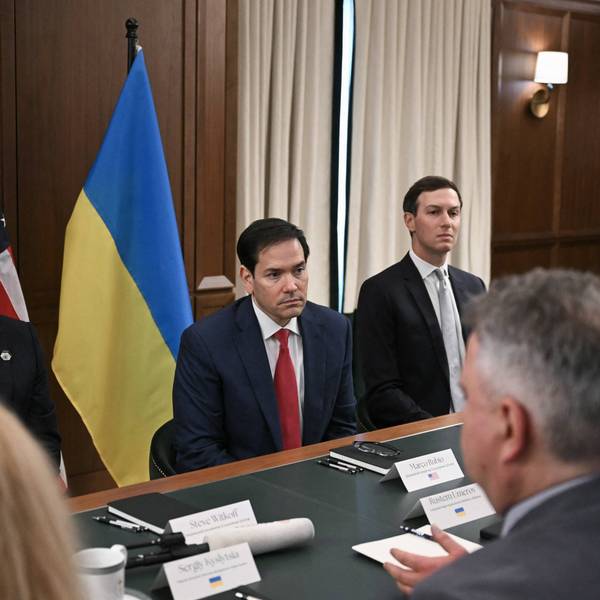

Trump first announced plans for the Board of Peace last year, and the United Nations Security Council officially welcomed the body’s creation in a resolution passed in November—even as critics warned the board could undermine the UN.
The Security Council resolution endorsed the board as a “transitional administration with international legal personality that will set the framework, and coordinate funding for, the redevelopment of Gaza,” but its actual scope and ambition—as laid out by the Trump administration—appears much broader.
“Trump would serve as the board’s chair and US representative, overseeing a group of countries that he nominates for three-year terms,” the International Crisis Group explained. “At least 60 countries, including the Security Council’s other permanent members, have received an invitation to join. Any member could buy a permanent seat in exchange for a $1 billion investment.”
Egypt, Pakistan, Azerbaijan, Kosovo, the United Arab Emirates, Belarus, Morocco, and Hungary are among the other nations that have accepted Trump’s invitation to join the board.
But several US allies—including France, Norway, and Sweden—have rejected the US president’s invite. French officials reportedly expressed concern that the board’s charter extends beyond pursuing a resolution in the Gaza Strip and “raises major questions, particularly regarding respect for the principles and structure of the United Nations, which under no circumstances can be called into question.”
“How can someone accused of these crimes be branded a peacemaker? The population is still burying its dead—this is impunity dressed up as diplomacy.”
Observers were quick to denounce the addition of Netanyahu to a body whose purported aim is peace.
“The genocide architect and International Criminal Court fugitive who has been planning and promising the depopulation of Gaza is now officially part of the ‘Board of Peace,’” wrote political scientist Nicola Perugini.
Adil Haque, a law professor at Rutgers University, called Netanyahu’s membership “the worst-case scenario when the UN Security Council authorized this travesty.”
“Sickening,” Haque added.
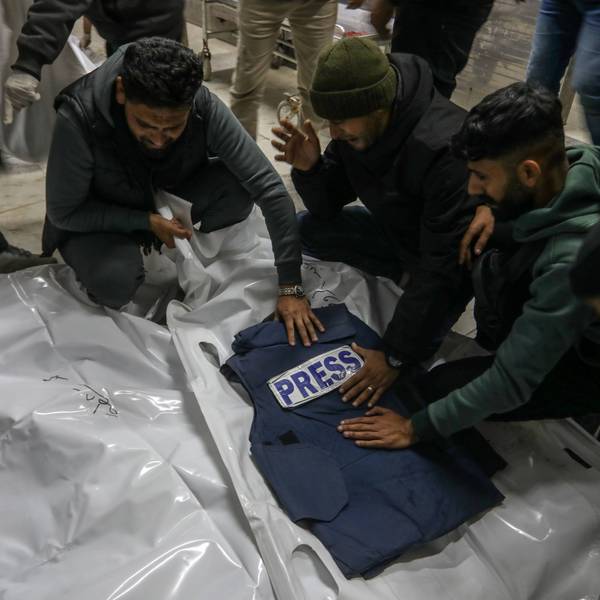
News of Netanyahu’s decision to join Trump’s Board of Peace came as Israel launched deadly new attacks on Gaza. Reuters reported that “Israeli fire killed 11 Palestinians, including two boys and three journalists, in Gaza on Wednesday, local medics said.”
Al Jazeera‘s Tareq Abu Azzoum, reporting from Gaza City, wrote Wednesday that “for Palestinians, the appointment of Benjamin Netanyahu to the ‘Board of Peace’ is not just shocking but deeply offensive—he is seen by many as the mastermind of the genocide.”
“He is viewed as responsible for mass killings, displacement, and the destruction of civilian life,” Abu Azzoum added. “From that perspective, how can someone accused of these crimes be branded a peacemaker? The population is still burying its dead—this is impunity dressed up as diplomacy.”
Original article by Jake Johnson republished from Common Dreams under Creative Commons (CC BY-NC-ND 3.0).
https://morningstaronline.co.uk/article/boycott-trumps-board-war

 US President Donald Trump holds up a signed ‘Board of Peace’ charter during the Annual Meeting of the World Economic Forum in Davos, Switzerland, January 22, 2026
DONALD TRUMP’S new “Board of Peace,” launched today, appropriately enough at the billionaires’ confab in Davos, is a danger to international law, security and peace itself.
It is entirely right to dub it in reality a board for war, as the anti-war movement did.
The clear purpose of the board is to sideline the United Nations and replace the world body with a committee entirely subordinated not just to the United States but to President Trump personally.
Its initial make-up is dominated by despots and extreme rightwingers, like Hungary’s Viktor Orban or Argentina’s Javier Milei. Israel’s Benjamin Netanyahu is of course on board, ever-eager to oblige the protector of his atrocities.
Trump himself is to serve as its chair, handing himself sweeping powers, including the right to veto any decision of which he disapproves.
It will doubtless function as a sort of far-right “international” to advance Trump’s imperialist and authoritarian agenda around the world.
The board’s creation was authorised by the UN — mistakenly in our view — specifically in relation to assisting to stabilise the notional ceasefire in Gaza. Its new remit, however, allows it to intervene much more widely.
If it is serious about peace will it stop acts of piracy like Trump’s seizure of Venezuelan President Nicholas Maduro and his wife?
Will it block moves by Trump to bomb Iran in violation of international law? Will it oppose his aggressive moves to annex Greenland?
Will it challenge his threats to Cuba and Colombia? Or his demand that he be handed control of the Panama Canal, and that Canada become the 51st state of the US?
We know the answer. Its only function will be to legitimise the campaign of aggression and plunder embarked on by the Trump administration, and to provide diplomatic cover for intervention in the affairs of nations across the world.
…
Continues at https://morningstaronline.co.uk/article/boycott-trumps-board-war
