From grey water to cool spaces: 10 climate crisis policies Britain needs right now

Spread the love

See the original Guardian article at https://www.theguardian.com/environment/2026/aug/12/urgent-climate-policies-uk-should-implement-now
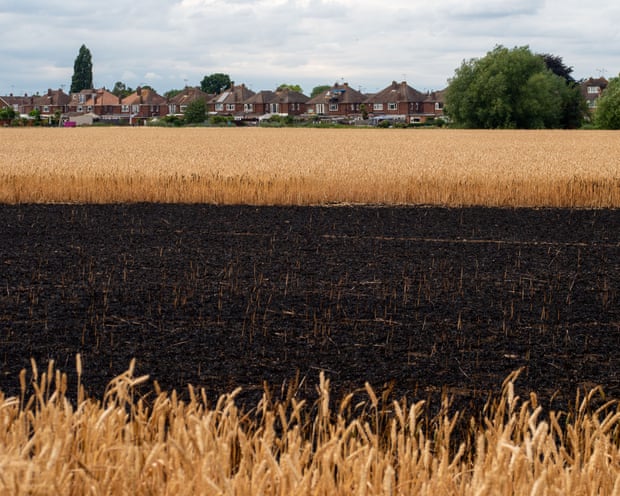
A burned field of wheat in Eton Wick, Windsor, in July. Experts say the UK should regenerative agriculture approaches to increase food resilience. Photograph: Maureen McLean/REX/Shutterstock

Rejecting North Sea drilling licences and protecting nature are just some measures Andy Burnham must implement to ready country

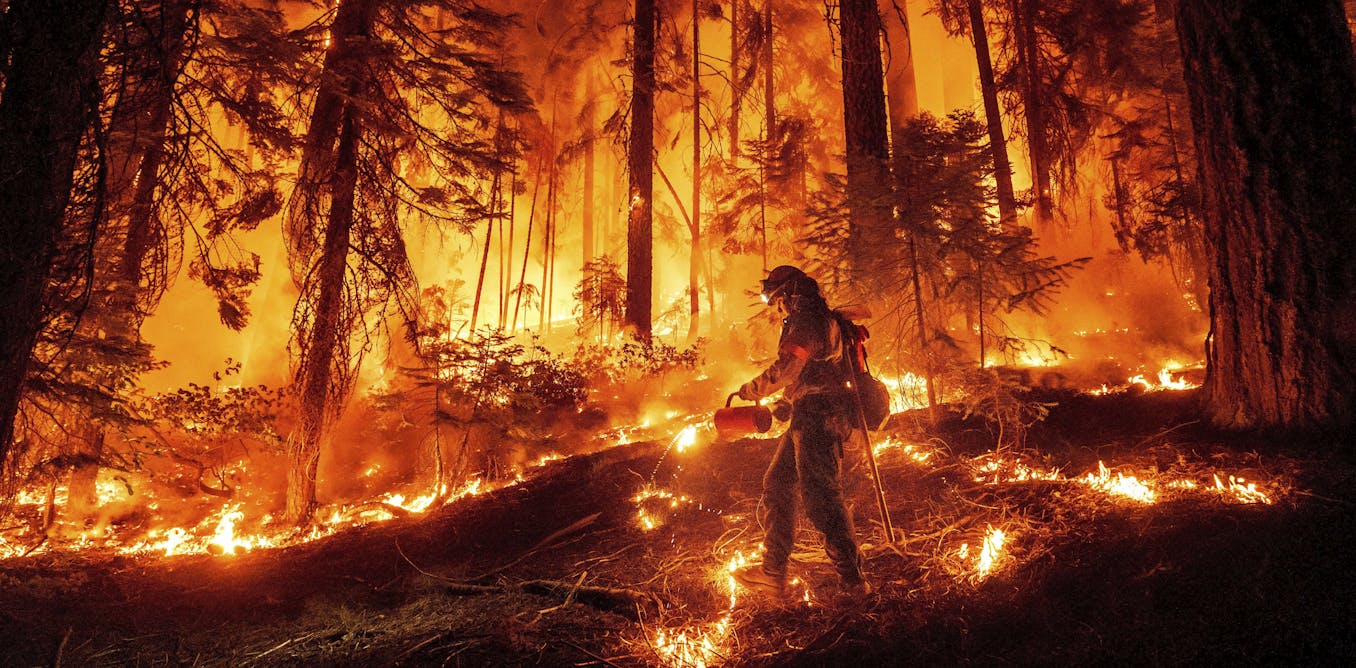
From record-smashing temperatures, wildfires, hosepipe bans and thousands of premature deaths, the climate crisis has left its mark across the summer of 2026.

Tackling the root cause – the burning of fossil fuels – and ending the crisis will take years. So will fixing the UK government’s calamitous failure to protect lives and livelihoods against the long-predicted affects of global heating.

But the climate emergency is right here, right now, and here are 10 policies that Andy Burnham’s government should consider announcing urgently.

1. Reject drilling licences for the Jackdaw and Rosebank oil and gasfields

This would be a vital and confidence-boosting sign that the UK is committed to putting a rocket-booster under the clean, green and very fast-growing economy of the 21st century, not the fossil-fuelled one of the last. It would also give diplomatic weight to the UK as it works internationally to cut emissions and end the climate crisis.

The supposed benefits of approving the North Sea oil and gasfields are mostly fantasy. They will have no impact on UK energy prices – oil and gas are commodities whose price is set by international markets. As the UK Energy Research Council says: “Assertions that drilling the North Sea will provide energy resilience and affordability in the face of current fuel price shocks are a delusion.”

As for jobs, the licences would support very few – again, unlike the growing green economy. Some also argue North Sea production is less carbon intensive than imports, but that ignores the far cleaner record of our main gas importer, Norway, as well as the methane emissions from LNG, and in any case the differences are small compared with CO2 savings of using renewable energy and storage instead of gas.

2. Increase windfall tax on fossil fuel giants to pay for adaptation measures

3. Make grey water reuse mandatory in new buildings and incentivise rainwater harvesting

4. Bring the water industry under national control

5. Invest in proper equipment for firefighters

6. Implement a maximum workplace temperature

7. Fund cool spaces in every community

8. Launch a national retrofit programme

Homes in the UK are among the draughtiest and least energy-efficient in Europe. This means they are often too hot in summer and too cold in winter, leading to high bills and spiralling carbon emissions.

Efforts to persuade the private sector to take on the challenge of making homes fit for the changing climate have failed. But a report earlier this year suggested councils could take the lead on a retrofitting programme backed by national government. Under the plan, councils would train and employ their own retrofitting workforce and, starting with key public services such as hospitals and care homes, then work through council and social housing before moving on to privately owned homes. The report said it would not only make the country’s homes and public services more climate resilient, but it would also tackle the cost of living, create secure jobs and stimulate growth. They added it would also be a more efficient way of spending the public funds already allocated for insulation.

9. Plant more trees and protect existing nature

10. Encourage regenerative agriculture approaches to increase food resilience

Guardian’s article is at https://www.theguardian.com/environment/2026/aug/12/urgent-climate-policies-uk-should-implement-now
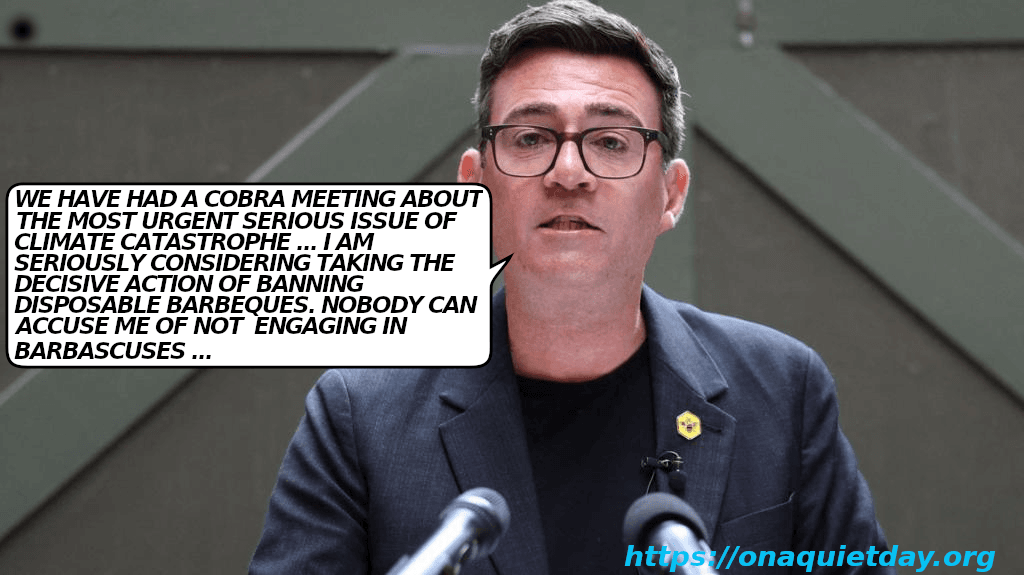
Andy Burnham addresses the climate crisis by considering banning disposable barbecues.
Nigel Farage urges you to ignore facts and reality and be a climate science denier like him and his Deputy Richard Tice. He says that Reform UK has received £Millions and £Millions from the fossil fuel industry to promote climate denial and destroy the planet.
Orcas comment on killer apes destroying the planet by continuing to burn fossil fuels.

dizzy:

11. Make private jets and superyachts history

12. Tax the rich so much that they’re not able to destroy the planet

The rich hugely drive climate breakdown. Tax them out of existence.

13. Recognise Carbon Capture and Storage as a false solution and abandon it

14. End all fossil fuel subsidies

Continue ReadingFrom grey water to cool spaces: 10 climate crisis policies Britain needs right now

Unprecedented peril: disaster lies ahead as we track towards 2.7°C of warming this century

Spread the love
Noah Berger/AP

Thomas Newsome, University of Sydney and William Ripple, Oregon State University

You don’t have to look far to see what climate change is doing to the planet. The word “unprecedented” is everywhere this year.

We are seeing unprecedented rapidly intensifying tropical storms such as Hurricane Helene in the eastern United States and Super Typhoon Yagi in Vietnam. Unprecedented fires in Canada have destroyed towns. Unprecedented drought in Brazil has dried out enormous rivers and left swathes of empty river beds. At least 1,300 pilgrims died during this year’s Hajj in Mecca as temperatures passed 50°C.

Unfortunately, we are headed for far worse. The new 2024 State of the Climate report, produced by our team of international scientists, is yet another stark warning about the intensifying climate crisis. Even if governments meet their emissions goals, the world may hit 2.7°C of warming – nearly double the Paris Agreement goal of holding climate change to 1.5°C. Each year, we track 35 of the Earth’s vital signs, from sea ice extent to forests. This year, 25 are now at record levels, all trending in the wrong directions.

Humans are not used to these conditions. Human civilisation emerged over the last 10,000 years under benign conditions – not too hot, not too cold. But this liveable climate is now at risk. In your grandchild’s lifetime, climatic conditions will be more threatening than anything our prehistoric relatives would have faced.

Our report shows a continued rise in fossil fuel emissions, which remain at an all-time high. Despite years of warnings from scientists, fossil fuel consumption has actually increased, pushing the planet toward dangerous levels of warming. While wind and solar have grown rapidly, fossil fuel use is 14 times greater.

This year is also tracking for the hottest year on record, with global daily mean temperatures at record levels for nearly half of 2023 and much of 2024.

Next month, world leaders and diplomats will gather in Azerbaijan for the annual United Nations climate talks, COP 29. Leaders will have to redouble their efforts. Without much stronger policies, climate change will keep worsening, bringing with it more frequent and more extreme weather.


Bad news after bad news

We have still not solved the central problem: the routine burning of fossil fuels. Atmospheric concentrations of greenhouse gases – particularly methane and carbon dioxide – are still rising. Last September, carbon dioxide levels in the atmosphere hit 418 parts per million (ppm). This September, they crossed 422 ppm. Methane, a highly potent greenhouse gas, has been increasing at an alarming rate despite global pledges to tackle it.

Compounding the problem is the recent decline in atmospheric aerosols from efforts to cut pollution. These small particles suspended in the air come from both natural and human processes, and have helped cool the planet. Without this cooling effect, the pace of global warming may accelerate. We don’t know for sure because aerosol properties are not yet measured well enough.

Other environmental issues are now feeding into climate change. Deforestation in critical areas such as the Amazon is reducing the planet’s capacity to absorb carbon naturally, driving additional warming. This creates a feedback loop, where warming causes trees to die which in turn amplifies global temperatures.

Loss of sea ice is another. As sea ice melts or fails to form, dark seawater is exposed. Ice reflects sunlight but seawater absorbs it. Scaled up, this changes the Earth’s albedo (how reflective the surface is) and accelerates warming further.

In coming decades, sea level rise will pose a growing threat to coastal communities, putting millions of people at risk of displacement.

Accelerate the solutions

Our report stresses the need for an immediate and comprehensive end to the routine use of fossil fuels.

It calls for a global carbon price, set high enough to drive down emissions, particularly from high-emitting wealthy countries.

Introducing effective policies to slash methane emissions is crucial, given methane’s high potency but short atmospheric lifetime. Rapidly cutting methane could slow the rate of warming in the short term.

Natural climate solutions such as reforestation and soil restoration should be rolled out to increase how much carbon is stored in wood and soil. These efforts must be accompanied by protective measures in wildfire and drought prone areas. There’s no point planting forests if they will burn.

Governments should introduce stricter land-use policies to slow down rates of land clearing and increase investment in forest management to cut the risk of large, devastating fires and encourage sustainable land use.

We cannot overlook climate justice. Less wealthy nations contribute least to global emissions but are often the worst affected by climate disasters.

Wealthier nations must provide financial and technical support to help these countries adapt to climate change while cutting emissions. This could include investing in renewable energy, improving infrastructure and funding disaster preparedness programs.

Internationally, our report urges stronger commitments from world leaders. Current global policies are insufficient to limit warming to 1.5°C above pre-industrial levels.

Without drastic changes, the world is on track for approximately 2.7°C of warming this century. To avoid catastrophic tipping points, nations must strengthen their climate pledges, reduce dependence on fossil fuels, and accelerate the transition to renewable energy.

Immediate, transformative policy changes are now necessary if we are to avoid the worst effects of climate change.

Climate change is already here. But it could get much, much worse. By slashing emissions, boosting natural climate solutions and working towards climate justice, the global community can still fend off the worst version of our future.

Thomas Newsome, Associate Professor in Global Ecology, University of Sydney and William Ripple, Distinguished Professor and Director, Trophic Cascades Program, Oregon State University

This article is republished from The Conversation under a Creative Commons license. Read the original article.

Orcas discuss Donald Trump and the killer apes' concept of democracy. Front Orca warns that Trump is crashing his country's economy and that everything he does he does for the fantastically wealthy.
Orcas discuss Donald Trump and the killer apes’ concept of democracy. Front Orca warns that Trump is crashing his country’s economy and that everything he does he does for the fantastically wealthy.
Neo-Fascist Climate Science Denier Donald Trump says Burn, Baby, Burn.
Elon Musk urges you to be a Fascist like him, says that you can ignore facts and reality then.
Continue ReadingUnprecedented peril: disaster lies ahead as we track towards 2.7°C of warming this century