A burned field of wheat in Eton Wick, Windsor, in July. Experts say the UK should regenerative agriculture approaches to increase food resilience. Photograph: Maureen McLean/REX/Shutterstock
Rejecting North Sea drilling licences and protecting nature are just some measures Andy Burnham must implement to ready country
From record-smashing temperatures, wildfires, hosepipe bans and thousands of premature deaths, the climate crisis has left its mark across the summer of 2026.
Tackling the root cause – the burning of fossil fuels – and ending the crisis will take years. So will fixing the UK government’s calamitousfailure to protect lives and livelihoods against the long-predicted affects of global heating.
But the climate emergency is right here, right now, and here are 10 policies that Andy Burnham’s government should consider announcing urgently.
1. Reject drilling licences for the Jackdaw and Rosebank oil and gasfields
This would be a vital and confidence-boosting sign that the UK is committed to putting a rocket-booster under the clean, green and very fast-growing economy of the 21st century, not the fossil-fuelled one of the last. It would also give diplomatic weight to the UK as it works internationally to cut emissions and end the climate crisis.
The supposed benefits of approving the North Sea oil and gasfields are mostly fantasy. They will have no impact on UK energy prices – oil and gas are commodities whose price is set by international markets. As the UK Energy Research Council says: “Assertions that drilling the North Sea will provide energy resilience and affordability in the face of current fuel price shocks are a delusion.”
As for jobs, the licences would support very few – again, unlike the growing green economy. Some also argue North Sea production is less carbon intensive than imports, but that ignores the far cleaner record of our main gas importer, Norway, as well as the methane emissions from LNG, and in any case the differences are small compared with CO2 savings of using renewable energy and storage instead of gas.
2. Increase windfall tax on fossil fuel giants to pay for adaptation measures
…
3. Make grey water reuse mandatory in new buildings and incentivise rainwater harvesting
…
4. Bring the water industry under national control
…
5. Invest in proper equipment for firefighters
…
6. Implement a maximum workplace temperature
…
7. Fund cool spaces in every community
…
8. Launch a national retrofit programme
Homes in the UK are among the draughtiest and least energy-efficient in Europe. This means they are often too hot in summer and too cold in winter, leading to high bills and spiralling carbon emissions.
Efforts to persuade the private sector to take on the challenge of making homes fit for the changing climate have failed. But a report earlier this year suggested councils could take the lead on a retrofitting programme backed by national government. Under the plan, councils would train and employ their own retrofitting workforce and, starting with key public services such as hospitals and care homes, then work through council and social housing before moving on to privately owned homes. The report said it would not only make the country’s homes and public services more climate resilient, but it would also tackle the cost of living, create secure jobs and stimulate growth. They added it would also be a more efficient way of spending the public funds already allocated for insulation.
9. Plant more trees and protect existing nature
…
10. Encourage regenerative agriculture approaches to increase food resilience
Andy Burnham addresses the climate crisis by considering banning disposable barbecues.Nigel Farage urges you to ignore facts and reality and be a climate science denier like him and his Deputy Richard Tice. He says that Reform UK has received £Millions and £Millions from the fossil fuel industry to promote climate denial and destroy the planet.Orcas comment on killer apes destroying the planet by continuing to burn fossil fuels.
dizzy:
11. Make private jets and superyachts history
…
12. Tax the rich so much that they’re not able to destroy the planet
The rich hugely drive climate breakdown. Tax them out of existence.
13. Recognise Carbon Capture and Storage as a false solution and abandon it
…
14. End all fossil fuel subsidies
…
15/8/26 9.50pm
15. Abandon nuclear power
Nuclear is far too expensive, too centralised and takes far too long. Renewables is the way to go and will create far more employment for more people.
There are far better ways to tackle climate breakdown, but successive governments have chosen to listen to the fossil fuel companies instead
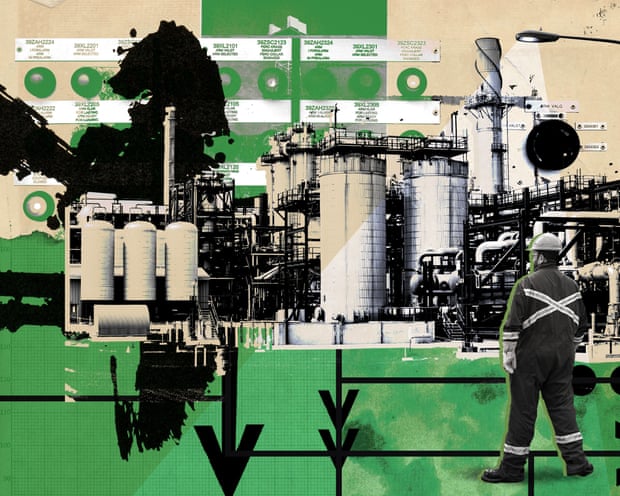
The new prime minister will be looking for money? Well, here’s £21.7bn lying on the ground. The government could cancel its deranged, disastrous carbon capture and storage (CCS) programme at no cost to public welfare: in fact, it would greatly reduce the harm we will suffer.
[N]ew CCS plants will mean massively more gas use than the UK would otherwise have required. Ultimately, that means more imports of liquefied natural gas (LNG). We now know that, thanks to methane leakage along the production and transport chain, LNG has higher emissions than coal. Two-thirds of its greenhouse impact occurs before the gas arrives in this country. So that’s all right then – it doesn’t count towards our national figures.
If the real aim were to cut emissions, we would push fossil fuel use in the electricity sector down to zero, and scale up renewables and battery storage instead. The net effect? Much lower climate impacts and much lower bills. Instead, the programme will greatly ramp up both. Why?
Well, the whole thing has been built the wrong way round. It appears likely to be the result of massive lobbying by fossil fuel companies. In 2023 alone, as the key decision on deployment loomed, the oil companies Equinor, BP and ExxonMobil attended 24 meetings with Conservative ministers to discuss CCS. Why? Because they know it’s the only way they will be permitted to keep burning gas. Governments have sought to find a way of meeting their demands while adhering to the climate budgets, so lo, a £264bn white elephant is born. As the Climate Change Committee admits, “gas with CCS accounts for around half of the remaining demand for fossil fuels in 2050” in the UK. In other words, this is their lifeline.
Neo-Fascist Climate Science Denier Donald Trump says Burn, Baby, Burn.Nigel Farage urges you to ignore facts and reality and be a climate science denier like him and his Deputy Richard Tice. He says that Reform UK has received £Millions and £Millions from the fossil fuel industry to promote climate denial and destroy the planet.Elon Musk urges you to be a Fascist like him, says that you can ignore facts and reality then.
dizzy: Carbon Capture and Storage (CCS) should be regarded as a fossil fuel subsidy.
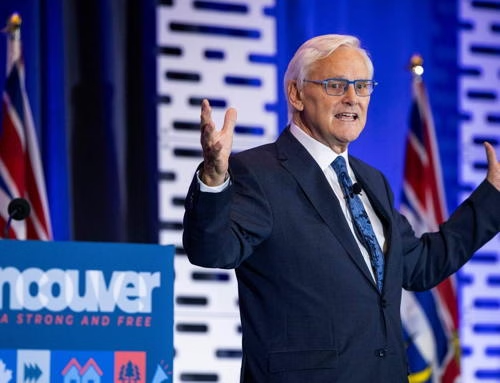
Former British Columbia Premier Gordon Campbell delivers the keynote address at the 2026 Canada Strong and Free Network conference in Vancouver. Credit: Canada Strong and Free Facebook page
Is the mask finally coming off the long-delayed Pathways Alliance CCS Project?
For years, Canadian officials and oil industry backers have pitched carbon capture and storage (CCS) as the solution that would allow Alberta’s oil sands — and the nation’s proposed west coast pipeline — to proceed with a lower climate impact. Now, in a speech at this year’s Canada Strong and Free Network (CSFN) conference in Vancouver, keynote speaker and former British Columbia Premier Gordon Campbell warned the costly, troubled technology has failed to deliver, undercutting a central justification for billions in public subsidies and new oil infrastructure.
This reporter was there in person at the April 24 CSFN gathering. Formerly the Manning Centre for Building Democracy, the CSFN self-describes as supporting “conservative and libertarian activists and ideas in Canada”. Imagine a MAGA-adjacent gabfest featuring speakers mostly cheerleading extractive industries or fear-mongering about First Nations rights. My already low expectations were not exceeded.
However, there was an unexpected utterance of truth from Campbell, who was the first elected leader in North America to bring in a carbon tax. And what does he think about the technology being touted to clean up ballooning emissions from the Alberta oil sands and justifying a new pipeline to the BC coast?
“It’s time to take off the blinders. Carbon capture and storage is something we’ve talked about in Canada for more than a generation, more than 25 years,” he told the conference. “We’ve invested billions of dollars trying to convince ourselves that carbon capture and storage will work. It doesn’t work. It costs money. And that money is money that we take out of other potential productive resources that we could have for Canadians.”
Campbell was certainly not suggesting that fossil fuel extraction be scaled back. His comments instead pointed out that pretending to solve emissions problems with expensive and ineffective carbon capture and storage is an unwise waste of scarce public resources. This unusual truth-bomb from a public figure stands in stark contrast to the theater playing out in Alberta and Ottawa, where CCS is being heavily promoted and backed by billions in public money as a panacea for oil sands climate costs.
Even a Pathways Alliance co-founder is now publicly coming out against the CCS project in a recent Globe and Mail op-ed, equating long-delayed efforts by the oil patch to limit its massive carbon emissions with a cash-strapped household wasting money on a vacation or meal deliveries. Is Big Oil now pivoting away from a marquee carbon capture project it never intended to build?
Meanwhile the government of Prime Minister Mark Carney claims that the $20 billion CCS project being promoted by the Pathways Alliance will make “Alberta oil among the lowest carbon intensity-produced barrels of oil in the world.” This multi-billion-dollar boondoggle has been offered as a “grand bargain” between Ottawa and Alberta to facilitate a new bitumen pipeline outlined in their now-overdue memorandum of understanding.
This confident public posturing was made despite internal briefing notes accessed by DeSmog showing Pathways had “…few front end engineering (FEED) studies done and initial cost estimates based on very limited project information”.
DeSmog previously reviewed 12 large scale CCS projects around the world and found “a litany of cost-overruns and missed targets, with a net increase in emissions.” Only 50MT of CO2 are sequestered each year by CCS, representing a mere 0.1 percent of global greenhouse gases.
A recent study published in the prestigious journal Nature showed that a shortage of suitable geological formations worldwide limit CCS to mitigating only a puny portion of dangerous emissions. And even if injecting all production emissions underground was somehow perfectly effective, it would do nothing to alleviate the other 80-90 percent of downstream tailpipe greenhouse gases.
Such shaky fundamentals have apparently had little impact on government enthusiasm for throwing billions in public money towards dubious CSS schemes. The federal government has committed to covering half of the $20 billion estimated cost of the Pathways CCS project in tax credits, and the Alberta government is pledging to shovel billions more towards the highly profitable members of the Pathways Alliance.
Pathways Alliance companies — recently renamed as the Oil Sands Alliance — include Canada Natural Resources Ltd, Cenovus, ConocoPhillips, Imperial Oil, MEG Energy, and Suncor, representing 95 percent of Alberta’s bitumen production. These giants enjoyed $37 billion in combined profit in 2023 and will reap billions more in windfall profits with oil above $100 per barrel due to Trump’s war on Iran.
A ‘Generous Transfer Provision’
A good yardstick of whether the Pathways project is credible is revealed in action, not words. Despite years of public spin and lobbying by Pathways members, the largest bitumen producers still stubbornly refuse to pony up any of their own money towards beginning construction even as Canadians struggle with historically high prices at the gas pump.
If carbon capture is so safe, why has the oil patch lobbied to wash its hands of long-term CCS liabilities? In a system unique to Alberta, the province assumes the long-term risks associated with CO2 storage once a closure certificate has been issued, a concession to the oil industry described as one of the most “generous transfer provisions” of any CCS scheme in the world.
Documents obtained by the Narwhal also revealed that Pathways Alliance president Kendall Dilling asked Ottawa for “assurance that the Pathways pipeline, hub and capture projects would not require a federal review under the Impact Assessment Act.”
In Alberta, regulators allowed the largest CCS project in the world to be broken into over 120 separate proposals to avoid triggering a provincial environmental assessment. Does this kind of maneuvering inspire confidence?
Not for local residents facing risks of a potentially deadly CO2 leak from a pipeline rupture, as occurred in Sataria, Mississippi where 49 people were hospitalized in 2020. Rural Albertans living close to the proposed 600 kilometre CO2 pipeline from the oil sands to Cold Lake have recently come together in an unlikely alliance of farmers and Indigenous leaders opposed to the Pathways project called “No CO2 Pipelines.”
“Thousands of Albertans like me live directly in this project’s ‘hazard zone’”, said Penny Fox, No CO2 Pipelines co-founder, in a press release. “In an explosion, people in our communities are facing anything from breathing issues to brain damage to instant death. So I have one question for the Prime Minister: if you wouldn’t live next to this pipeline, why should we?”
“We’re talking about hundreds of kilometers of pipeline that pass directly through areas where we live, hunt, fish and exercise our treaty rights”, Chief Allan Adam of the Athabasca Chipewyan First Nation has said. “This project endangers our people, our land, our water and wildlife. And yet there has been no consultation, no information sharing, and no formal environmental assessment.”
Gordon Campbell makes a good point. The Pathways project will cost the taxpayers billions and do nothing to contain the vast majority of ultimate oil sands emissions. Other Canadian industries have managed to cut greenhouse gases by one quarter since 2005, while bitumen producers have seen their emissions explode by 143 percent over the same period.
Why should highly profitable oil industry laggards still expect public handouts before cleaning up their own mess?
Donald Trump urges you to be a Climate Science denier like him. He says that he makes millions and millions for destroying the planet, Burn, Baby, Burn and Flood, Baby, Flood.Elon Musk urges you to be a Fascist like him, says that you can ignore facts and reality then.Orcas comment on killer apes destroying the planet by continuing to burn fossil fuels.
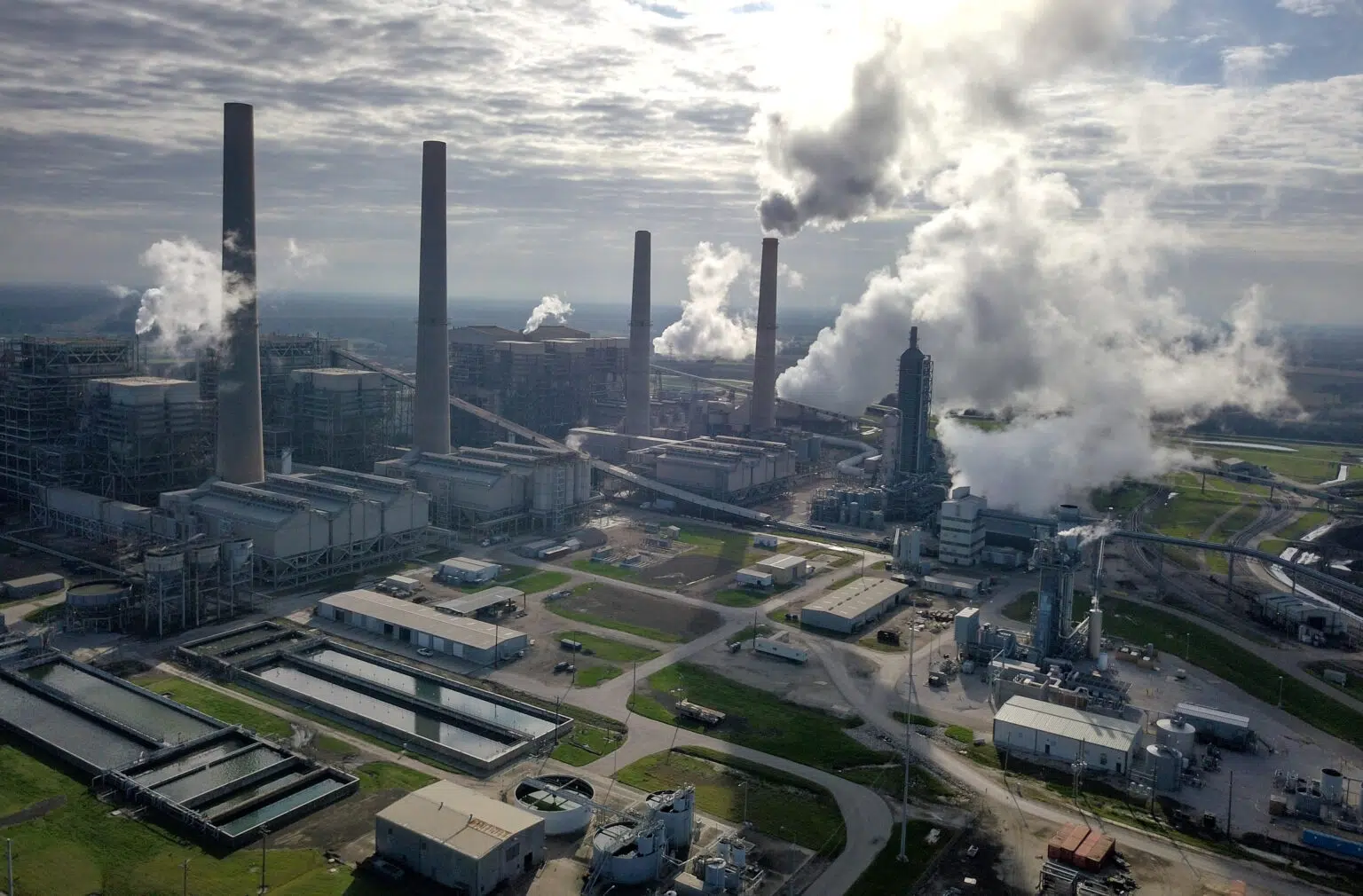
Carbon capture faces significant skepticism from environmentalists who note that the industry’s past is littered with failed projects, missed targets, and an overall net increase in emissions. Credit: Matt Hrkac (CC BY-NC-ND 2.0)NDLA,
CCS can “no longer be considered an unlimited” climate solution, researchers caution after concluding most storage options are in risky regions
As the Trump administration seeks to wipe away environmental rules covering the oil, gas, and coal industries, fossil fuel producers and sellers are reassuring buyers that carbon capture and storage (CCS) could slash climate-altering emissions from a growing range of fossil-fuel projects — like blue hydrogen, LNG export terminals, and data centers.
“That’s right: data centers,” fossil fuel giant ExxonMobil wrote in December, adding that the need for more data centers for AI could represent a fifth of the world’s demand for carbon capture by 2050.
Now, a study published in the journal Nature calls attention to another issue that could loom in the future if CCS were to really take off — a lack of easy-to-develop locations where captured carbon can be buried underground.
The vast majority of places where you can find the kinds of sedimentary rocks that allow carbon dioxide to be stored underground sit in higher risk zones or in areas like the Arctic that are potentially off-limits for practical or political reasons, the study found.
That has big implications for the energy transition, since once carbon dioxide is put into storage, it’s supposed to stay there for as long as possible. Any storage sites we use today can’t be expected to be available for future generations — not just the children and grandchildren of people alive today but “more than ten generations into the future,” the study notes.
“This study should be a gamechanger for carbon storage,” coauthor Joeri Rogelj, director of research at the Grantham Institute at Imperial College London, said in a statement when the study was announced. “It can no longer be considered an unlimited solution to bring our climate back to a safe level. Instead, geological storage space needs to be thought of as a scarce resource that should be managed responsibly to allow a safe climate future for humanity.”
In fact, there may be only enough practical storage to potentially reverse between 0.4 and 0.7 degrees Celsius of warming — a tiny fraction of the five or six degrees experts previously estimated, the researchers said.
The carbon storage that is available “should be used to halt and reverse global warming,” Rogelj added, “and not be wasted on offsetting on-going and avoidable CO2 pollution from fossil electricity production or outdated combustion engines.”
On Track to ‘Overshoot’
International plans to limit climate change tend to assume that we can “overshoot” on climate pollution, pushing the Earth’s climate into dangerous territory past 1.5 or 2 degrees Celsius of warming. That’s because, the argument goes, carbon capture and storage could come to the rescue if we go too far, letting us draw carbon dioxide levels back down.
The new study calls that assumption into question, highlighting uncertainty about how effective carbon removal will be at curbing climate change, in addition to concerns over difficulties in accessing underground carbon storage.
“With current trends suggesting warming up to 3°C this century, using all of the safe geological storage wouldn’t even get us back to 2°C,” said lead author Matthew Gidden, research professor at the Center for Global Sustainability at the University of Maryland.
Industry estimates, like those from the Oil and Gas Climate Initiative (OGCI), suggest the world has plenty of storage potential to keep 14,000 gigatons of carbon dioxide buried below ground and out of the atmosphere.
That would be “more than enough to meet projected needs for CCUS [carbon capture, use and sequestration] over the coming century,” the OGCI wrote in a 2023 report it called a “playbook for regulators, industrial emitters and hub developers.”
The new study, however, takes a closer look at where that storage is located — and in particular whether it’s in regions at higher risk of earthquakes or groundwater contamination like locations deep in the ocean, or in the Arctic and Antarctic circles. The study concludes that nearly 90 percent of that storage capacity is in less-than-desirable locations.
The researchers estimate there’s just 1,460 gigatons worth of “prudent” storage available worldwide — a tenth of the industry estimates.
Some earlier estimates stretch even higher, suggesting there’s around 40,000 gigatons of CO2 storage capacity worldwide.
“These estimates are also important as they remove all the technical constraints from assessment and assume that cost and engineering challenges will pose no issue in the future,” coauthor Siddharth Joshi, a research scholar at the Integrated Assessment and Climate Change Research Group, told DeSmog, adding that “the shock value of technical potentials is enough to sometimes drive an industry forward.”
At the same time, focusing only on larger capacity estimates can create a “false sense of abundance,” Gidden noted, if policy-makers think the world has more room for overshoot than carbon storage can really offer.
The Nature study raises big questions about how the world’s carbon storage should be used long term.
“As [the study authors] point out, if we act to reduce emissions now, we probably have enough storage, but that ceases to be true really, really soon,” Rob Anex, professor at the University of Wisconsin-Madison who researches carbon capture technology, told Canada’s CBC News. “Global emission rates are so high that the window of time in which geologic storage is practical is shutting really, really fast.”
Trump Backs Carbon Capture Subsidies
Despite the federal government’s retreat from climate action, including Trump’s January executive order withdrawing the U.S. from the Paris Agreement, the Trump administration has moved to protect and expand some federal subsidies for CCS.
Lucrative tax credits for using captured carbon for enhanced oil recovery were expanded this summer as part of Trump’s “One Big Beautiful Bill Act.”
Given this political climate, experts didn’t expect to see a major direct impact from the study for blue hydrogen projects and other proposals aiming to use carbon storage.
“The pragmatist in me says it’s unlikely,” Anika Juhn, energy data analyst for the Institute for Energy Economics and Financial Analysis (IEEFA), told DeSmog. “I don’t see government taking those kinds of steps.”
The Nature study follows a precautionary approach to carbon storage, she noted. “The precautionary principle says if we don’t really know about it, then maybe we shouldn’t be rushing headlong into just applying this technology everywhere as fast as possible,” she said. “I think that’s really where the strength of it is, saying if you are interested in doing it safely, here are some key aspects that you should really focus on.”
“Because their estimate is so prudent, it really doesn’t reflect at all current industry practice,” Juhn noted.
So far, there’s not a lot of carbon storage operating worldwide, with the Nature study pointing out existing projects currently store just 49 megatons per year, with 416 megatons worth “either planned or in construction.” Meanwhile, annual global emissions from fossil fuels topped 37,400 megatons last year, according to the World Meteorological Organization, another record high.
But that small CCS industry has already caused significant safety incidents — including well blowouts and a major 2020 CO2 pipeline leak that hospitalized dozens of people.
Concerns over the potential for groundwater contamination — one of the factors highlighted in the Nature study — have already begun curbing real-world carbon storage availability at the state and local level.
Take, for example, Illinois, home to the nation’s first dedicated carbon storage project, the Archer-Daniels-Midland (ADM) carbon storage site in Decatur, Illinois.
Carbon injections were halted at ADM’s site a year ago, after the company discovered leaks below ground. “Given the extreme depth and the multiple layers of shale and other confining rock up to the surface, at no time was there an impact to the surface or groundwater sources, nor any threat to public health,” ADM said at the end of August, announcing the restart of operations at its Decatur site.
But the incident appears to have hit a nerve in the state, where nearly a million people rely on the Mahomet Aquifer in Champaign, Illinois, as their sole source of drinking water.
This summer, Illinois passed a law banning carbon storage below that aquifer, making roughly 15 percent of the state’s counties off limits for carbon storage. ADM’s leak had reached within about six miles of the Mahomet Aquifer, Taxpayers for Common Sense notes.
The Nature study notes that most of the carbon storage in operation today doesn’t actually offer any net climate benefit — because it’s used for enhanced oil recovery, which, the researchers wrote, “overall results in net-positive CO2 emissions.”
“After decades of bold projections, only around 10 million tons of CO₂ are captured and permanently stored each year (excluding enhanced oil recovery), representing less than 0.03% of annual global fossil fuel emissions,” Kevin Anderson, professor of Energy and Climate Change at the University of Manchester, said in a statement responding to the study. “Rather than serving as a credible mitigation technology, CCS has largely functioned as a rhetorical device to delay robust fossil fuel regulation.”
Donald Trump urges you to be a Climate Science denier like him. He says that he makes millions and millions for destroying the planet, Burn, Baby, Burn and Flood, Baby, Flood.Nigel Farage urges you to ignore facts and reality and be a climate science denier like him. He says that Reform UK has received millions and millions from the fossil fuel industry to promote climate denial and destroy the planet.