Tag: carbon emissions

  • New Green Party transport policy aims for 75% cut in carbon emissions within ten years 

    Spread the love

    The Green Party’s revised transport policy, approved at its Autumn Conference, sets out a radical programme to transform transport in England & Wales. The proposed measures would aim to reduce carbon emissions by around 75% within a decade by reducing travel and expanding electrification of all modes. The party says the measures would also hugely reduce transport’s impacts on road danger and health while delivering a more equitable society. 

    Among a raft of ambitious initiatives, the policies include: 

    • Transforming road and public transport – A step change away from car dependency, with major investment in better buses and rail. It aims for a 50% increase in rail travel and more frequent and reliable bus services, connecting homes with jobs, education, shops, healthcare. The policy also opposes almost all new road building. 
    • Making Active Travel the natural choice – Safe, high-quality walking, wheeling and cycling networks, using road space reallocated from private motor vehicles. The policy aims for at least half of journeys in England’s towns and cities to be by active travel within five years, compared to a third in 2025. 
    • Fairer and cleaner aviation – Reduce demand for passenger and freight flights, halt airport expansion, and ensure those who take the most polluting and unnecessary flights contribute the most. The policy specifically targets private jets, premium-class travel, and frequent flyers, while supporting cleaner alternatives and sustainable aviation. 

    Green Party parliamentary spokesperson on transport, Sian Berry MP, said:  

    “For too long transport policy has focused on moving vehicles rather than enabling people to get where they need to go. Our new policy is about giving everyone genuine choices – reliable and affordable public transport, safe walking, wheeling and cycling, and communities where owning a car isn’t a prerequisite for participating fully in society. 

    “We also need to tackle transport’s contribution to the climate crisis in an equitable and fair way. That means providing attractive alternatives to car and air travel, moving more freight onto rail and electrification.  Those responsible for the most polluting and unnecessary journeys, including users of private jets and frequent flyers, will make the greatest contribution.” 

    Co-convenors of the policy, Jeremy Drew and Mark Strong, said: 

    “We have worked hard with an expert team of professionals and academics to revise our policy. It sets out measures to achieve a 75% reduction in transport carbon emissions within ten years, while making it easier for people and businesses to choose cleaner and healthier alternatives, which will improve not just transport but wider society.” 

  • Two planned datacentres will have higher UK carbon emissions than ExxonMobil, analysis finds

    Spread the love

    https://www.theguardian.com/uk-news/2026/aug/25/planned-datacentres-carbon-emissions-uk-exxonmobil

    Aerial view of the construction site for the proposed datacentre at Wapseys Wood in Buckinghamshire. Photograph: sdcm40campus

    [Guardian] Exclusive: Buckinghamshire and Bedfordshire sites predicted to emit 4.5m tonnes a year when fully running

    The carbon emissions from just two planned datacentres in England will exceed all of the fossil fuel company ExxonMobil’s UK emissions, analysis has revealed.

    Experts have said this demonstrates the “serious threat” datacentres pose to the UK’s legally binding climate goals.

    Analysis by the non-profit group Foxglove reveals that when fully operational, the Wapseys Wood datacentre in Buckinghamshire and the Quest Park datacentre in Bedfordshire will use 1.3GW of power and will produce more than 4.5m tonnes of carbon emissions.

    ExxonMobil emitted 3.9m tonnes in 2023, according to the global energy thinktank Ember.

    AI datacentres use a massive amount of electricity to power servers and cooling equipment, and to run facility systems. There are currently 315 datacentres in the queue to connect to the UK’s electricity grid, representing 73GW of demand. This is almost double the peak winter energy demand for the entire UK.

    Because of the long wait to connect to the grid, the Wapseys Wood and Quest Park datacentres are seeking to build their own on-site gas-fired power stations.

    …

    https://www.theguardian.com/uk-news/2026/aug/25/planned-datacentres-carbon-emissions-uk-exxonmobil

    Donald Trump urges you to be a Climate Science denier like him. He says that he makes millions and millions for destroying the planet, Burn, Baby, Burn and Flood, Baby, Flood.
    Donald Trump urges you to be a Climate Science denier like him. He says that he makes millions and millions for destroying the planet, Burn, Baby, Burn and Flood, Baby, Flood.
    Nigel Farage urges you to ignore facts and reality and be a climate science denier like him and his Deputy Richard Tice. He says that Reform UK has received £Millions and £Millions from the fossil fuel industry to promote climate denial and destroy the planet.
    Nigel Farage urges you to ignore facts and reality and be a climate science denier like him and his Deputy Richard Tice. He says that Reform UK has received £Millions and £Millions from the fossil fuel industry to promote climate denial and destroy the planet.
    Orcas discuss rotting brain, front Orca says Sundown Syndrome is a dead givaway and he wishes someone would Lock Him Up
    Orcas discuss rotting brain, front Orca says Sundown Syndrome is a dead givaway and he wishes someone would Lock Him Up
  • ‘We’d go absolutely nuts’: PM warned of Labour fight if he backs huge oilfield

    Spread the love

    https://www.theguardian.com/environment/2025/jan/31/keir-starmer-warned-against-approving-rosebank-oilfield-labour-unease-heathrow

    [Guardian] Exclusive: MPs and ministers say they would oppose Starmer if he tries to approve Rosebank development

    Senior Labour figures are warning of a serious fight if Keir Starmer tries to give the go-ahead to a giant new oilfield off Shetland later this year.

    MPs and ministers have told the Guardian they are prepared to oppose the UK prime minister should he try and give final consent to the Rosebank development, which is Britain’s biggest untapped oilfield.

    Many in the party see the battle over Rosebank as the next front in the struggle between its environmental wing and those around Rachel Reeves who want to push for economic growth above all else. The chancellor signalled her support for a third runway at Heathrow this week as part of the government’s latest push to stimulate the economy.

    One ally of the energy secretary, Ed Miliband, who is leading the government’s climate agenda, said the former Labour leader would have a “punchy” response for any attempt to give consent to Rosebank. The ally said: “Ed will come to that fight armed with a lot of evidence about what Rosebank will do to our carbon emissions.”

    A spokesperson for Miliband declined to comment.

    …

    https://www.theguardian.com/environment/2025/jan/31/keir-starmer-warned-against-approving-rosebank-oilfield-labour-unease-heathrow

    Orcas are pleased that Rosebank and Jackdaw oil fields are blocked.
    Orcas are pleased that Rosebank and Jackdaw oil fields are blocked.
  • ‘We Don’t Give Up’: Climate Groups Resolute as Shell Wins Appeal Against Landmark Ruling

    Spread the love

    Original article by Jake Johnson republiahed form Common Dreams under Creative Commons (CC BY-NC-ND 3.0).

    A protester holds a sign with a Shell logo during a demonstration on March 11, 2023 in The Hague, Netherlands. (Photo: Michel Porro/Getty Images)

    “This setback will only help us grow stronger,” said the Dutch climate group that originally brought the case. “Large polluters are powerful. But united, we as people have the power to change them.”

    Climate campaigners didn’t sugarcoat their reactions to a Dutch court decision on Tuesday that overturned a landmark 2021 ruling ordering the oil behemoth Shell to cut its planet-warming emissions nearly in half by the end of this decade.

    “We are shocked by today’s judgment,” said Donald Pols, director of Milieudefensie, the Netherlands-based environmental group that originally filed suit against Shell in 2018.

    “It is a setback for us, for the climate movement, and for millions of people around the world who worry about their future,” Pols said of Tuesday’s ruling by the Hague Court of Appeal. “But if there’s one thing to know about us, it’s that we don’t give up. This setback will only help us grow stronger. Large polluters are powerful. But united, we as people have the power to change them.”

    The original 2021 ruling, as CNBC noted, marked “the first time in history that a company was found to have been legally obliged to align its policies with the Paris Agreement” and “sparked a wave of lawsuits against other fossil fuel companies.”

    Despite acknowledging that Shell has “an obligation toward citizens to reduce CO2 emissions,” the appeals court on Tuesday scrapped a legal mandate compelling the company to slash its emissions by 45% by 2030 compared with 2019 levels, saying it was “unable to establish that the social standard of care entails an obligation for Shell to reduce its CO2 emissions by 45%, or some other percentage.”

    “It is primarily up to the government to ensure the protection of human rights,” the court added.

    Laurie van der Burg of Oil Change International said in response that “while we mourn today’s setback, the ruling establishes a responsibility for Big Oil and Gas to act that future litigation can build on.”

    “The court ruled protection against climate change is a human right, and corporations have a responsibility to reduce their emissions,” she added. “As far as we know, this is the first case where a court has acknowledged that new investments in oil and gas are incompatible with international climate goals.”

    “Today’s ruling underscores the importance of world leaders now negotiating at the U.N. Climate Summit in Baku taking responsibility.”

    Shell, which is responsible for just over 2% of global CO2 emissions, said in a statement that it was “pleased” with the court’s ruling and claimed to be “making good progress in our strategy to deliver more value with less emissions.”

    But research by the human rights organization Global Witness has found that Shell has consistently overstated the scale of its investments in green energy—including by characterizing fossil fuels as “renewable.”

    “Even as Shell claims to be reducing its oil production, it is planning to grow its gas business by more than 20% over the next few years, leading to significant additional emissions,” Global Witness wrote in a complaint to the U.S. Securities and Exchange Commission last year.

    Andy Palmen, the director of Greenpeace Netherlands, said Tuesday that while campaigners working toward a just phaseout of fossil fuel emissions are “disappointed that Shell is being allowed to continue polluting,” they “will not give up the fight.”

    “This only motivates us more to take action against major polluters,” said Palmen. “It really gives hope that the court finds that Shell must respect human rights and has a duty to reduce its CO2 emissions.”

    “Today’s ruling underscores the importance of world leaders now negotiating at the U.N. Climate Summit in Baku taking responsibility,” Palmen added, referring to the COP29 gathering that kicked off on Monday in Azerbaijan’s capital city. “The summit in Dubai last year marked the end of coal, oil, and gas, now governments must come up with concrete plans to move away from fossil fuels.”

    The Dutch appeals court’s ruling came in the wake of new research showing that oil and gas production surged to an all-time high in 2023—the hottest year on record.

    “The oil and gas industry is not transitioning,” the environmental group Urgewald and dozens of other NGOs found. “In fact, 95% of the upstream companies on [the Global Oil and Gas Exit List] are still exploring or developing new oil and gas resources. This includes the oil and gas producers TotalEnergies, Shell, BP, Eni, Equinor, OXY, OMV, and Ecopetrol, which all claim to be targeting net zero emissions by 2050.”

    Nils Bartsch, head of oil and gas research at Urgewald, said Tuesday that the 2023 oil and gas production record is “deeply concerning.”

    “If we do not end fossil fuel expansion and move towards a managed decline of oil and gas production,” said Bartsch, “the 1.5°C goal will be out of reach.”

    Original article by Jake Johnson republiahed form Common Dreams under Creative Commons (CC BY-NC-ND 3.0).

  • Biomass power station produced four times emissions of UK coal plant, says report

    Spread the love

    https://www.theguardian.com/environment/article/2024/aug/09/biomass-power-station-produced-four-times-emissions-of-uk-coal-plant-says-report

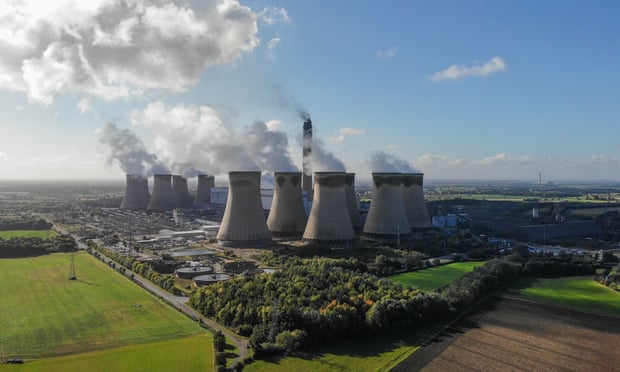
    Drax was responsible for 11.5m tonnes of CO2 last year, or nearly 3% of the UK’s total carbon emissions. Photograph: SOPA Images/LightRocket/Getty Images

    Drax received £22bn in subsidies despite being UK’s largest emitter in 2023, though company rejects ‘flawed’ research

    The Drax power station was responsible for four times more carbon emissions than the UK’s last remaining coal-fired plant last year, despite taking more than £0.5bn in clean-energy subsidies in 2023, according to a report.

    The North Yorkshire power plant, which burns wood pellets imported from North America to generate electricity, was revealed as Britain’s single largest carbon emitter in 2023 by a report from the climate thinktank Ember.

    The figures show that Drax, which has received billions in subsidies since it began switching from coal to biomass in 2012, was responsible for 11.5m tonnes of CO2 last year, or nearly 3% of the UK’s total carbon emissions.

    Drax produced four times more carbon dioxide than the UK’s last remaining coal-fired power station at Ratcliffe-on-Soar in Nottinghamshire, which is due to close in September. Drax also produced more emissions last year than the next four most polluting power plants in the UK combined, according to the report.

    …

    https://www.theguardian.com/environment/article/2024/aug/09/biomass-power-station-produced-four-times-emissions-of-uk-coal-plant-says-report