New report accuses fossil fuel companies of greenwashing, but profits are up

Spread the love

https://www.energymonitor.ai/features/new-report-accuses-fossil-fuel-companies-of-greenwashing-but-profits-are-up

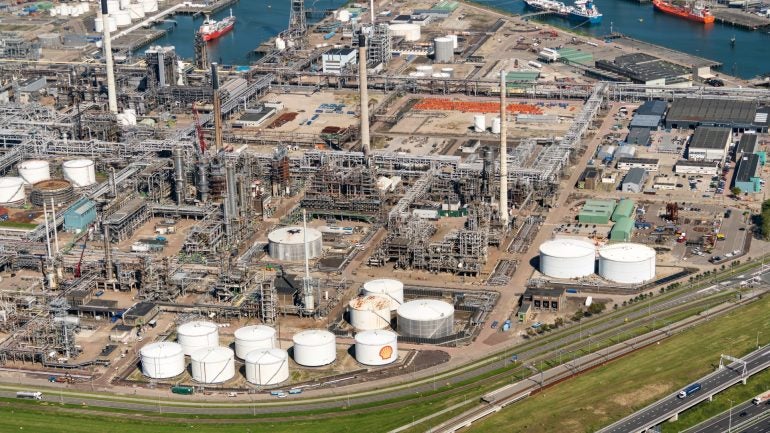
Aerial view of Shell Pernis in Rotterdam, Holland, taken 7 September 2023. Photo: Aerovista Luchtfotografie/Shutterstock.

A new report by the Senate Committee on the Budget details how fossil fuel companies have avoided tackling the climate crisis.

Last week, US Democrats released a report three years in the making detailing the ways that large fossil fuel producers including ShellBP and Exxon have sought to avoid responsibility for the climate crisis.

The 65 page-long report, jointly authored by the Democrats House Committee On Oversight And Accountability and the Senate Committee on the Budget, contains files subpoenaed from big oil companies that “demonstrate for the first time that fossil fuel companies internally do not dispute that they have understood since at least the 1960s that burning fossil fuels causes climate change and then worked for decades to undermine public understanding of this fact and to deny the underlying science”.

Previous documentation has shown that companies including Exxon knew about human-made climate change since at least 1981, and files released earlier this year suggest it may have been known since the 1950s. The importance of this report lies in proving that fossil fuel companies not only knew, but privately believed the science despite public rejection.

The files also show the tactics used by major fossil companies to discredit climate activism, the report says, among them “pivot[ing] from outright climate denial to a new strategy of deception. Instead of misrepresenting the science and the consequences of climate change, they pivoted to misrepresenting their business plans, their investments in low carbon technologies, the alleged safety of natural gas, and their support for various climate policies and emission reduction targets”.

Net zero?

Most major oil companies have made net zero pledges based on the Paris Agreement goal of net zero by 2050, but the report claims they are unlikely to be met. BP, for instance pledged to reach net zero on oil and gas by 2050, but is at the same time ramping up oil production.

The New York Times reported earlier this year that BP’s interim CEO Murray Auchincloss was clear that it would pursue an increase in fossil fuel production to meet demand, and internal documents gathered by the committees show that it was unwilling to publicly state a commitment to net zero in 2019.

In an internal email thread discussing a press request for comment, an official said “it goes a bit too far to state or imply support for net zero by 2050, because that would require policy likely to put some existing assets at risk, and we haven’t discussed that internally”.

This lack of action is further highlighted in a report released by thinktank Carbon Tracker in March, which suggests that companies including Shell and BP are far from hitting Paris Agreement goals.

https://www.energymonitor.ai/features/new-report-accuses-fossil-fuel-companies-of-greenwashing-but-profits-are-up

Continue ReadingNew report accuses fossil fuel companies of greenwashing, but profits are up

World’s largest oil companies ‘way off track’ on emissions goals, report finds

Spread the love

https://www.theguardian.com/us-news/2024/mar/22/oil-companies-emissions-goals-report

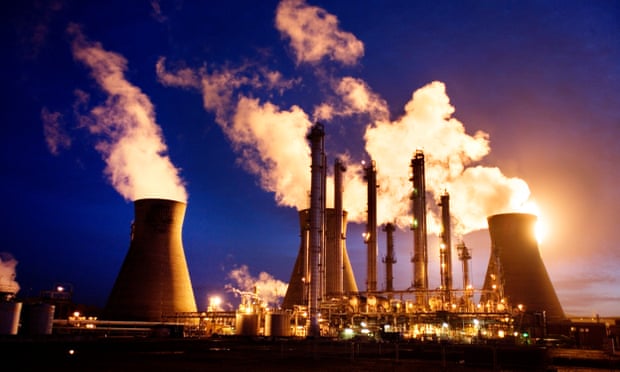
Gas flares at BP’s Grangemouth oil refinery at dusk in Scotland. Photograph: Murdo Macleod/The Guardian

Despite splashy climate pledges, firms including BP and Saudi Aramco have plans to expand fossil fuel production, says analysis

In recent years, virtually all of the world’s largest oil companies have made splashy climate pledges. But when it comes to actually slashing emissions, those firms are “way off track”, a new report has found.

The analysis from the thinktank Carbon Tracker assessed the production and transition plans of 25 of the world’s largest oil and gas companies. None align with the central goal of the 2015 Paris climate agreement to keep global warming “well under” 2 degrees above pre-industrial levels, the report found.

“Companies worldwide are publicly stating they are supportive of the goals of the Paris-Agreement, and claim to be part of the solution in accelerating the energy transition,” said Maeve O’Connor, analyst at Carbon Tracker and co-author of the report. “Unfortunately, however, we see that none are currently aligned with the goals of the Paris agreement.”

The analysis comes as oil and gas companies are publicly reneging on their climate commitments. Shell last week watered down earlier emissions targets, following BP, which made a similar announcement last year. In October, ExxonMobil also made a deal to buy the shale group Pioneer Natural Resources, while Chevron announced plans to acquire the Texas oil company Hess – marking two of the country’s largest oil and gas deals in decades.

https://www.theguardian.com/us-news/2024/mar/22/oil-companies-emissions-goals-report

Continue ReadingWorld’s largest oil companies ‘way off track’ on emissions goals, report finds

North Sea oil and gas assets a risky bet for private equity, think tank warns 

Spread the love
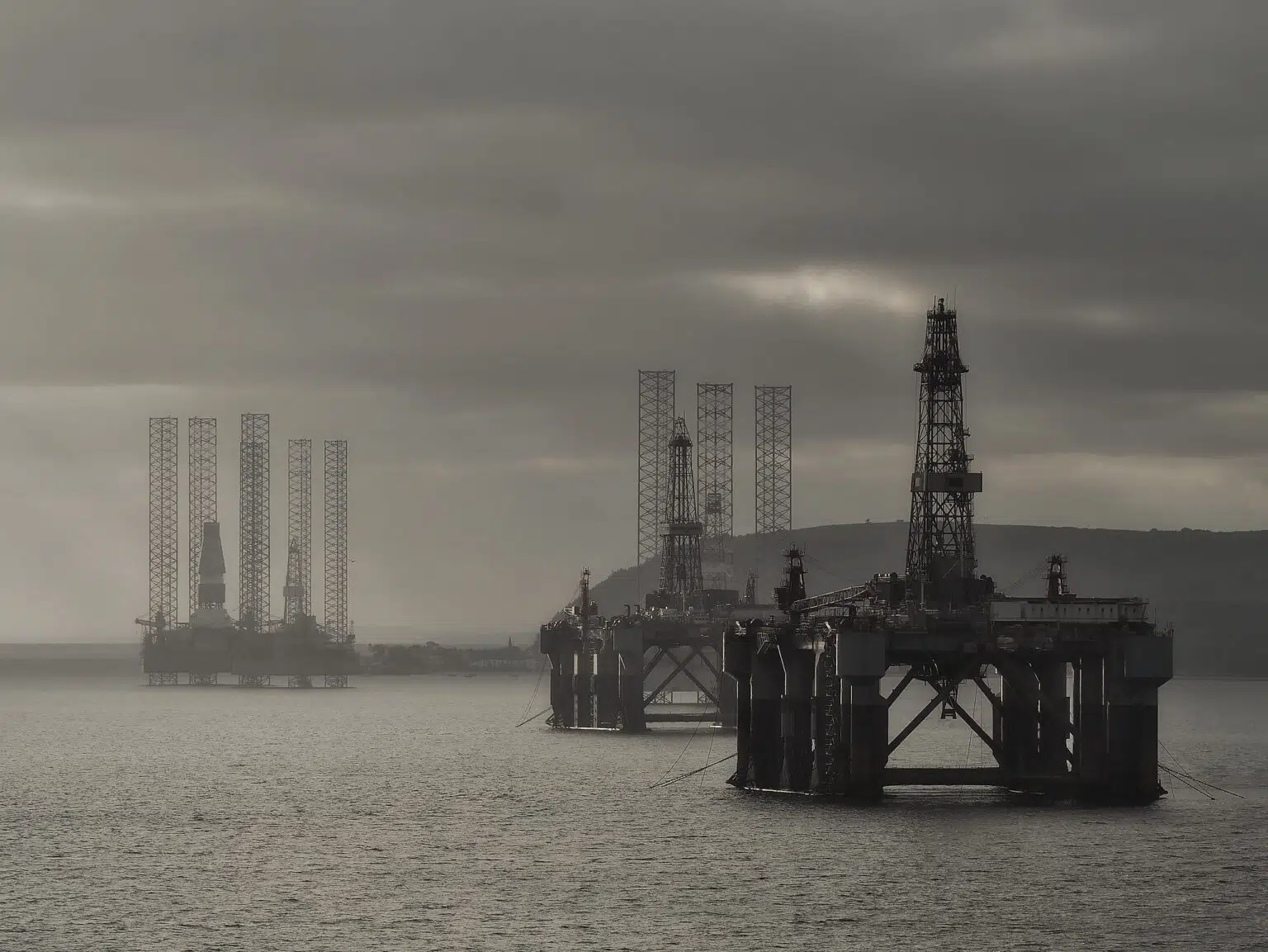
North Sea oil rigs in Cromarty Firth, Scotland. Credit: joiseyshowaa (CC BY-SA 2.0)

https://www.energymonitor.ai/finance/corporate-strategy/north-sea-oil-and-gas-assets-a-risky-bet-for-private-equity-think-tank-warns/?cf-view&cf-closed

North Sea oil and gas production is expected to plummet in the coming years, as renewables become increasingly competitive. Now, a new report by the think tank Carbon Tracker argues that private equity companies invested in North Sea (UK and Norway) oil and gas assets are particularly vulnerable to losses as demand falls. Private equity’s presence in the North Sea has grown steadily since the 2014 oil price crash. 

In 2010, just 8% of North Sea assets were held by private companies, with the remainder owned by publicly listed oil majors and state-owned utilities. Currently, 29.7% of North Sea equity licences are held by current or former private equity-backed ventures, according to recent analysis from the Common Wealth think tank. 

Carbon Tracker argues that while all upstream investors risk being saddled with stranded assets as demand for hydrocarbons falls, private equity companies are particularly vulnerable. For starters, the private equity industry is already facing “serious headwinds” as the low interest rate environment that “buoyed private markets” for the last decade “has, at least temporarily, come to an end”. 

https://www.energymonitor.ai/finance/corporate-strategy/north-sea-oil-and-gas-assets-a-risky-bet-for-private-equity-think-tank-warns/?cf-view&cf-closed

Continue ReadingNorth Sea oil and gas assets a risky bet for private equity, think tank warns