Article by Rebecca John republished from DeSmog.
As victims of a 2021 typhoon sue Shell for damages, new evidence shows oil giant funded storm-related climate research in the 1970s before spreading denial, endangering others.
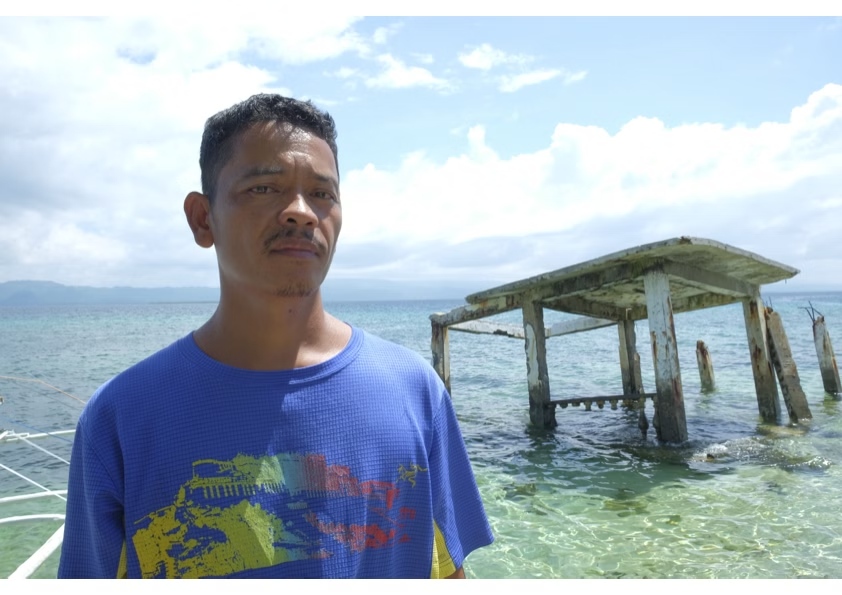
Arnold Obguia did not leave the island. According to the forecast, it was no big deal, just another tropical storm. But a few hours later, the winds escalated rapidly, bringing waves so large they almost pulled him out to sea. Clinging to a piece of broken sea wall, Arnold survived to find his house completely destroyed. Others were not so lucky.

This story is published in partnership with Rolling Stone.
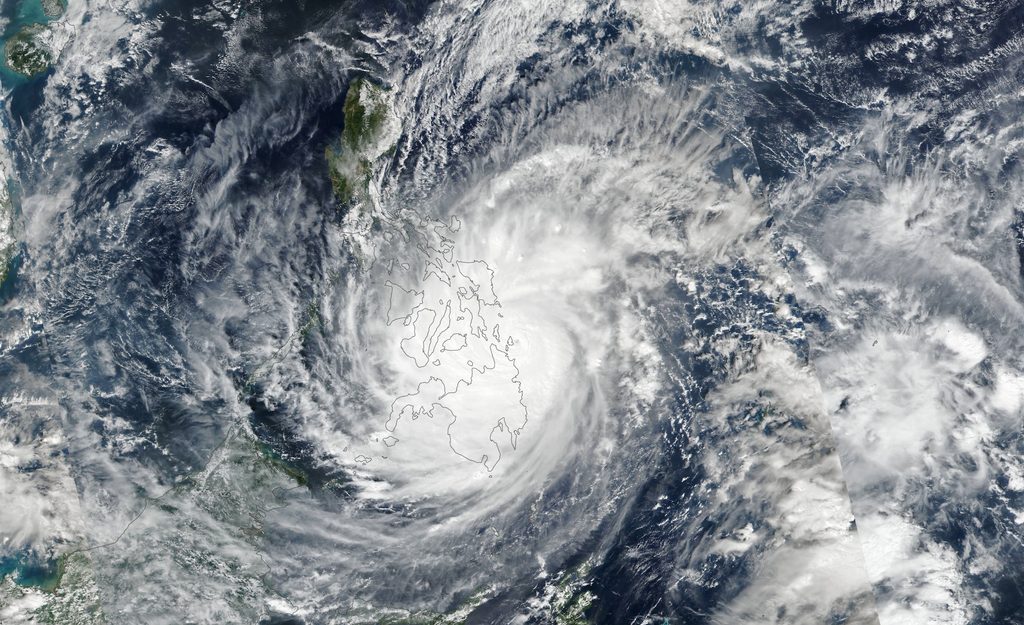
Typhoon Rai, known locally as Typhoon Odette, battered the Philippines in December 2021. With winds of up to 167 miles per hour, extreme rainfall, violent storm surges, extensive flooding, and landslides across the central Philippine archipelago, Odette ripped rooftops from houses and devastated crops, engulfing people and property in torrents of fast-flowing floodwater. A Category 5 cyclone, Odette displaced nearly 3.2 million people, killing 400, injuring over 1,000, and causing nearly a billion US dollars in damages.
Now, Arnold and other victims of the typhoon are demanding their day in court, filing a civil lawsuit against oil and gas giant Shell. Their allegations: Shell helped to make the typhoon more destructive through the company’s contribution to historic greenhouse gas emissions and its funding of climate denial — despite knowing since at least 1965 that the burning of fossil fuels was the primary cause of man-made climate change.
“The forecast had initially said it was going to be a weak storm,” says Arnold from the house he rebuilt with storm debris on the tiny island of Bilangbilangan in the heart of the Philippines’ Cebu Strait. Forty-four years old, Arnold is a fisherman, born and raised on the island, who earns his living catching trevally and bigeye scad, silvery-blue-green fish that swim in large schools around the region’s coral reefs.
“But suddenly the winds were different, they were very strong,” he recalls. “When I looked outside the window it was frightening because the waves were very high.” While his wife and two young daughters had taken refuge on the mainland, Arnold and his 14-year-old son had stayed behind to guard his boat and fishing equipment — the source of the family’s livelihood. “The waves were swelling and I could see the storm surge coming,” he remembers. Calculating that he might have time to better secure his boat, he ran outside only to get caught by the 20-foot waves that nearly swept him away. Terrified, Arnold held tight to the broken sea wall until, bruised and wounded by the debris whirling in the water, he was able to rejoin his son. “Thinking about my family and how much I wanted to see them again gave me the strength to hold on,” he says. Arnold and his son rode out the rest of the storm sheltering in the house of a neighbor. Hours later, when it was over, Arnold discovered his boat was broken but his family was safe. Like everyone else on Bilangbilangan, they had lost almost all their possessions. “Everyone went back to zero,” he explains.
Arnold joined the lawsuit in early 2024 when a coalition of NGOs working with communities ravaged by the typhoon organized a civil claim on behalf of the survivors. In 2025, British law firm Hausfeld agreed to take up the case in the UK — where Shell is headquartered —submitting full details of the claim against the oil company in July of this year.
Representing more than 100 of the typhoon’s victims, Hausfeld describes the suit as a “landmark case” that could have “major repercussions for the fossil fuel industry,” potentially paving the way for other hard-hit communities around the world to sue oil Big Oil on its home turf. The firm argues its clients suffered severe losses including serious property damage, personal injury, bereavement, psychological trauma, and loss of earnings. An announcement of the date for the first hearing to be held at London’s High Court is expected sometime early next year, says Greg Lascelles, the Hausfeld partner leading the legal team.
Shell has dismissed the lawsuit as “baseless,” asserting the company had no “unique knowledge about climate change” in an official statement.
However, evidence uncovered by DeSmog in collaboration with Rolling Stone reveals explosive new details of Shell’s decades of climate research that warned the company burning fossil fuels could lead to worsening storms — including studies conducted at the Climatic Research Unit (CRU), the UK’s first specialist climate research center established by Shell on the campus of a university in eastern England in 1972.
Some of these documents might have been lost forever, had a sharp-eyed faculty member not rescued them from a dumpster where they’d been thrown out after the retirement of the CRU’s first director, the UK’s leading climatologist, Hubert Lamb. Now preserved inside the temperature-controlled archives at the University of East Anglia, a few miles outside the medieval city of Norwich, these and other files contain handwritten notes, official correspondence, and reports that hold secrets of Shell’s early climate research, detailing a program that would give the company advance warning of the numerous threats climate change posed to its business — if not to the people, like Arnold and his island neighbors, liable to suffer the most harm.
Documents from the late 1960s show Shell playing a pivotal role in establishing the center before paying the CRU to carry out an in-depth “North Sea Storms Study” beginning in the mid-1970s. The findings warned Shell that storms in Europe’s North Sea — home to the company’s burgeoning offshore drilling business — were increasing. Rising atmospheric carbon dioxide (CO2) levels due to the burning of fossil fuels might be the most likely explanation, the Shell-funded study concluded.
These discoveries contribute to a growing body of existing evidence demonstrating that by the late 1980s the oil majors, including Exxon and Shell, knew the dangers posed by fossil fuel-induced climate change. However, a fresh look at documents previously unearthed by other researchers shows Shell receiving further storm warnings. For example, in 1980, a Shell-sponsored study at the CRU modeling future “Scenarios for a High CO2 World,” calculated that rising CO2 levels from burning fossil fuels would “perturb the whole atmospheric circulation system,” affecting rainfall, temperatures, and winds all over the world.
By the end of the 1980s, Shell had specifically learned that global warming would likely lead to more frequent and more dangerous storms, especially in tropical regions.
Today, as the world approaches the peak of what promises to be the worst El Niño cycle in recorded history, supercharging hurricanes, heatwaves, droughts, and other extreme weather events already made worse by climate change, the documents open a rare window into Shell’s early sponsorship of climate science, illustrating how much the company knew about the risks posed by burning its products before supporting million dollar PR and lobbying campaigns that denied or cast doubt on this climate science in public.
Shell did not respond to a request for comment about the company’s historical climate research.
Geoffrey Supran, an associate professor in the department of environmental science and policy at the University of Miami who is not involved in the lawsuit, but who has reviewed the new documents for DeSmog and Rolling Stone, calls them “a smoking-gun,” containing important evidence of “how the early climate denial machine began to be built — and when.”
“Seen across seven decades, Shell’s research looks less like scientific philanthropy and more like a public affairs strategy of ‘Know Thy Enemy,’” says Supran, “allowing the company to understand climate change early, help shape and stay close to the science, anticipate the physical and economic threats it poses, and stay ahead of policies that might threaten business-as-usual.”
‘A Centre on Climatic Studies’
Sitting at his desk in London’s “Shell Tower,” a 26-story modernist skyscraper with majestic views overlooking the River Thames and Houses of Parliament, R. O. Chalkley had a problem.
It was September 1966. The Beatles’ Revolver had reached Number One in the album charts but Chalkley was wrestling with something far more changeable: the weather.
As the director of a company-wide planning study, it was Chalkley’s job to help Shell find the most effective way of coping with variations in the demand for oil brought about by an apparently changing climate. Recent European winters had sent temperatures plunging but if Shell invested heavily in storing up larger quantities of oil to heat Europe’s homes only for the weather to turn warmer, it could prove an expensive mistake.

Luckily for Chalkley, an August 1966 article in The Times by the UK’s leading climatologist, Hubert Lamb, offered a possible solution. “Is our climate changing?” Lamb asked, arguing that improved understanding of the Earth’s climate history was essential for future economic planning. Hoping that the climatologist’s work might benefit Shell, Chalkley wrote to Lamb inviting him to discuss “the climatic aspects” of the company’s problem in person.
Their meeting was an instant success, launching the idea for a Shell-funded “Centre on Climatic Studies” — Lamb would search for a university to host his research, while Chalkley pitched the idea to his bosses inside Shell.
Slowly, the proposal moved up the ranks at Shell Tower and, on October 1, 1969, Chalkley arranged a meeting between Lamb and a handful of high-level Shell executives.
Present at the meeting was Monroe Spaght, a former country boy from Eureka, California, now president and chairman of Shell Oil (the company’s United States subsidiary) and the first American managing director of Shell’s parent company, Royal Dutch. Joining Spaght was Lord Victor Rothschild, director of Shell Research, scion of the famous banking dynasty, scientist, and World War II spy chief. Both held key positions on Shell’s grants committee and were “visibly enthusiastic” about Lamb’s proposal for the UK’s first specialist climatic research center, to be housed at the University of East Anglia under the aegis of Professor Keith Clayton, dean of its brand new School of Environmental Sciences.
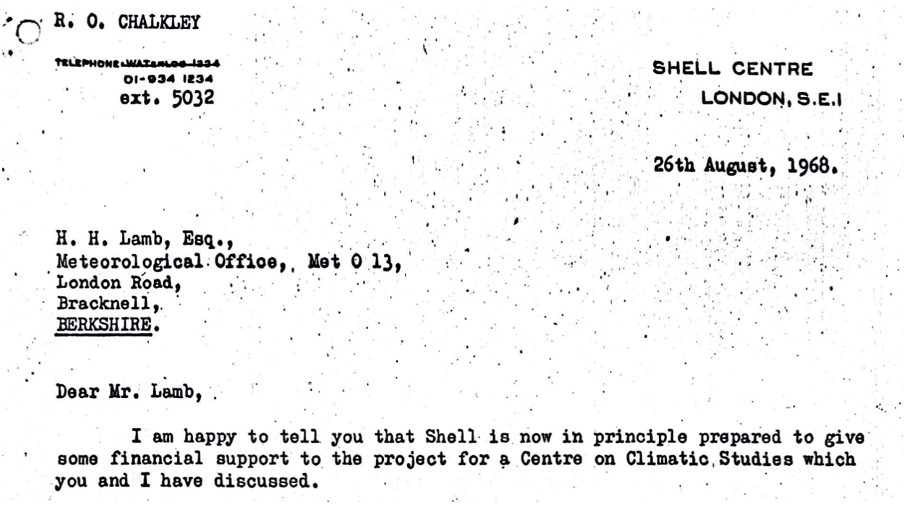
No record of Lamb’s 1969 pitch to Shell has yet been found but a proposal for the center written around the same time reveals that, in addition to providing enhanced weather forecasting, investigating the climate impact of burning fossil fuels was one of the center’s founding ambitions, DeSmog and Rolling Stone can reveal.

“Climatic history is particularly important because man is now disturbing the atmosphere so much (e.g. by increasing the CO2 level by burning fossil fuel) that it is difficult to disentangle long term trends from the effects of man,” stated the proposal, before promising that the center offered “a hope of long term climatic forecasting,” and would “evaluate the problems posed by such man-made changes as the CO2 level of the atmosphere.”
‘Beneficial to Shell’s Operations’
This message that burning fossil fuels could be altering the Earth’s climate would not have come as a surprise to either of Shell’s top men.
Spaght represented Shell Oil on the board of the American Petroleum Institute (API), the U.S. oil industry’s primary lobby group. In November 1965, API President Frank Ikard had briefed the group’s membership on the latest science linking CO2 emissions from “coal, oil, and natural gas” with future temperature increases and “changes in climate.”
Meanwhile in London, former intelligence officer Rothschild had already coordinated secret climatic research inside Shell, having commissioned the visionary British scientist James Lovelock to investigate the atmospheric consequences of burning fossil fuels. Were fossil fuels altering the Earth’s climate or could other factors be blamed? In the summer of 1965, Rothschild had dispatched Lovelock to find out.
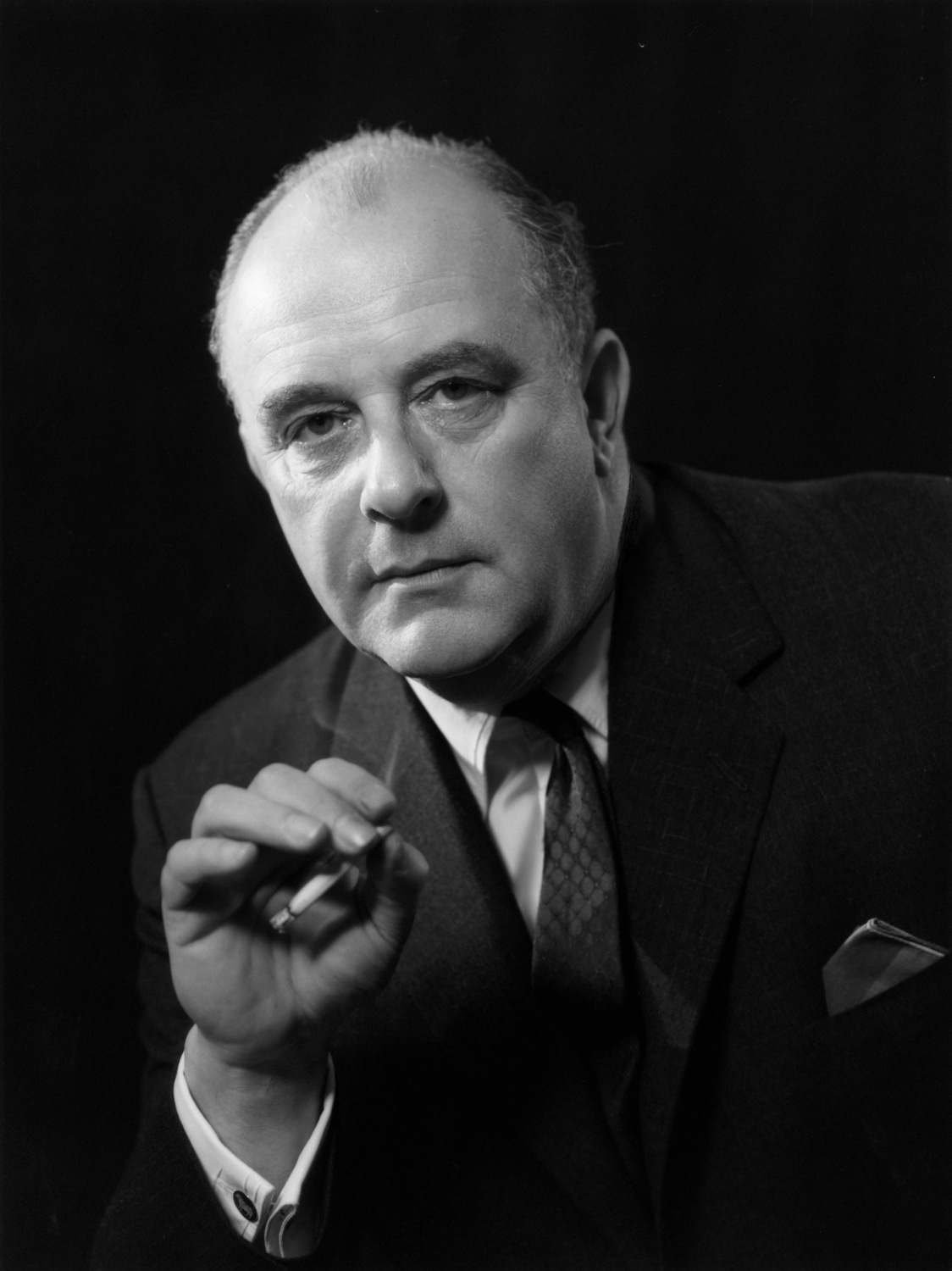
Submitting a report in June 1966, Lovelock had confirmed that pollution from burning fossil fuels “may be responsible for large scale phenomena affecting the whole of the Earth’s atmosphere.” Although there were uncertainties over the precise impacts of different pollutants, Lovelock told Shell it was important to recognize “the almost certain fact that the climate is worsening and the probability that the combustion of fuel is responsible.”
As several historians have recently documented, Shell buried Lovelock’s findings for years, and Rothschild expressly forbade him from talking to “non-Shell people” about his work.
By the late fall of 1969, however, Shell seems to have taken Lovelock’s warning seriously enough to sponsor a new climate project.
After his meeting with Spaght and Rothschild, Lamb wrote to the University of East Anglia’s Professor Clayton informing him that Shell wanted to set up a climatic research center for “their own ends.” Not only did the company want monthly and seasonal forecasts but also advice on the more “general climatic prospect over 5 to 25 years.”

Shell’s Spaght was particularly encouraging, stating that the new project would contribute to “the increase of knowledge” in general and might also be beneficial to “Shell’s operations.”
At the end of October 1969, Shell approved an initial grant of £10,000, a contribution it eventually doubled to £20,000 ($370,000 today) — a game-changing amount that, in Clayton’s words, made the Centre “a real possibility.” By 1971, BP had also put forward £3,000 and two UK electricity groups, £5,000. With these sums in the bag, the university agreed to provide the rest of the funding. And, in 1972, the Climatic Research Unit (CRU) opened its doors with Lamb appointed its first director.
From the outset, the CRU provided its sponsors with general weather forecast bulletins and a newsletter to keep a finger on the pulse of “world climate.” But before long Shell would find an even more specific use for the CRU’s expertise.
Obtaining information about storms was about to become one of the company’s top priorities.
‘Increasing Storminess’
“The Texas of Europe” was how the British press described the massive oil fields discovered by Shell and Esso (Exxon’s UK subsidiary) at the start of the 1970s in Europe’s North Sea — a region notorious for its fearsome waves and gale force winds.
Naming the oil fields after local seabirds, Shell operated the enormous “Brent” field and in 1975 paid the CRU another £15,921 [worth $166,000 today] to conduct a “North Sea Storms Study” that would help the company future-proof its new facilities.
It was exactly the kind of project Lamb had been waiting for, allowing the CRU to gather records dating back to the time of the Spanish Armada of 1588 — a “wealth of information” meticulously recorded by scientists, sailors, merchant traders, and amateur observers across 400 years.
The documents reveal Shell working closely with Lamb on a plan designed to identify specific dangers and improve storm prediction techniques. According to Lamb, the research would alert Shell to “forewarning signals” indicative of extreme weather events by mapping and analyzing “the severest North Sea storms of the past.” The study would also look at “variations of sea level in the North Sea region” produced by storms as well as “disastrous sea floods” and “the height of sea defences.”
With its profitable North Sea operations playing an increasingly important role in its business, Shell requested regular updates. In November 1981, Lamb sent Shell an “Interim Report,” noting that he was also keeping a watch on “current weather developments” including recent storms that had seriously damaged several North Sea oil rigs.
Citing these powerful storms, Lamb sent a further update to Shell in 1982 containing a significant new observation. According to the data, Lamb told Shell in handwritten notes, there was “some indication of an increasing storminess” since the 1950s. In November 1981, winds reaching 120 to 130 knots — equivalent to a Category 4 hurricane — had ripped two oil rigs housing over 200 people from their moorings.
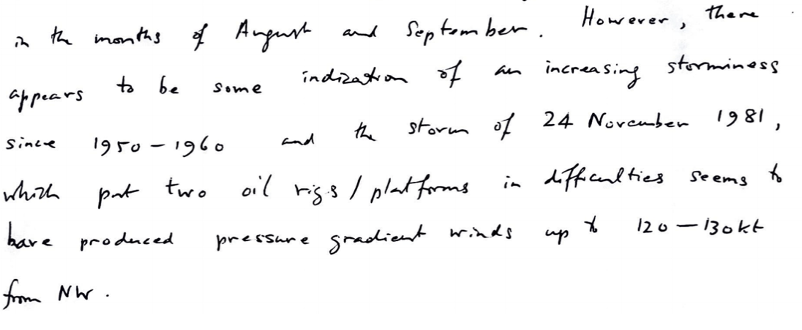
This warning would come almost 10 years before the study was published, giving Shell advance notice of nearly a decade that storms in the North Sea were increasing.
Despite Shell’s appreciation for Lamb’s “useful” work, the company did not approve further funding for the storms study. Undeterred, Lamb, who had retired as the CRU’s director, completed the study in 1991, sending a copy to the head of Shell Exploration and thanking the company “for the grant which started the project.” In line with his earlier findings, Lamb wrote that his subsequent research had confirmed his observations of increasing storminess in the North Sea over the latter half of the 20th Century and he concluded that rising atmospheric CO2 levels could be considered a likely explanation.
Article by Rebecca John republished from DeSmog.