Tag: ceasefire

  • Israel’s siege now blocks 83% of food aid reaching Gaza, new data reveals

    Spread the love
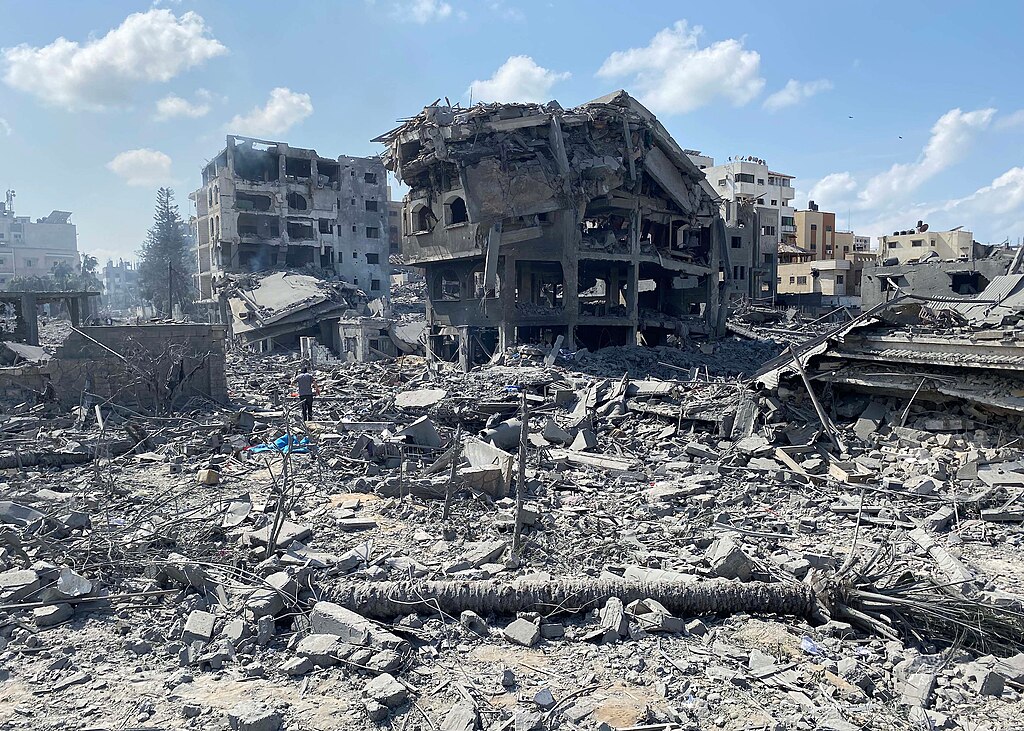
    Palestinians inspect the damage following an Israeli airstrike on the El-Remal aera in Gaza City on October 9, 2023. Israel continued to battle Hamas fighters on October 10 and massed tens of thousands of troops and heavy armour around the Gaza Strip after vowing a massive blow over the Palestinian militants' surprise attack. Photo by Naaman Omar apaimages. licensed under the Creative Commons Attribution-Share Alike 3.0 Unported license.
    Palestinians inspect the damage following an Israeli airstrike on the El-Remal aera in Gaza City on October 9, 2023. Israel continued to battle Hamas fighters on October 10 and massed tens of thousands of troops and heavy armour around the Gaza Strip after vowing a massive blow over the Palestinian militants’ surprise attack. Photo by Naaman Omar apaimages. licensed under the Creative Commons Attribution-Share Alike 3.0 Unported license.

    15 aid organisations demand international pressure for an immediate ceasefire, arms embargo, and end to Israel’s systematic aid obstruction

    New data has revealed the scale of aid obstruction, and the consequential drastic fall in aid entering Gaza. This is driving a humanitarian disaster, with the entire population of Gaza facing hunger and disease, and almost half a million at risk of starvation. 

    While Israeli military attacks on Gaza intensify, lifesaving food, medicine, medical supplies, fuel, and tents have been systematically blocked from entering for almost a year. 

    Data analysis by organisations working in Gaza has found that as a consequence of the Israeli government’s obstruction of aid: 

    • 83% of required food aid does not make it into Gaza, up from 34% in 2023.This reduction means people in Gaza have gone from having an average of two meals a day to just one meal every other day. An estimated 50,000 children aged between 6-59 months urgently require treatment for malnutrition by the end of the year.
    • 65% of the insulin required and half of the required blood supply are not available in Gaza. 
    • Availability of hygiene items has dropped to 15% of the amount available in September 2023. One million women are now going without the hygiene supplies they need. 
    • Only around 1,500 hospital beds in Gaza remain operational, compared to around 3,500 beds in 2023 which was already well below sufficient to meet the needs of a population of more than 2 million people. By comparison, cities of similar size, such as Chicago and Paris average 5 to 8 times more beds than in Gaza. 
    • 1.87 million people are in need of shelter with at least 60% of homes destroyed or damaged (January 2024). Yet tents for around just 25,000 people have entered Gaza since May 2024.

    A record low average of 69 aid trucks per day entered Gaza in August 2024, compared to 500 per working day last year; which was already not enough to meet people’s needs. In August more than 1 million people did not receive any food rations in southern and central Gaza. 

    Now, only 17 out of 36 hospitals remain partially functional. Critical infrastructure such as water networks, sanitation facilities and bread mills have been razed to the ground. 

    While humanitarian needs are ever increasing, agencies have detailed six main ways their life-saving aid is systematically obstructed on a daily basis.

    These include the denial of safety, with more than 40,000 Palestinians and nearly 300 aid workers killed since last October; the sharp tightening of a 17-year blockade to a full siege, which prevents aid from entering Gaza; delays and denials which restrict the movement of aid around Gaza; tightly restrictive and unpredictable control of imports; the destruction of public infrastructure such as schools and hospitals; and the displacement of civilians and humanitarian workers (witnessed again in recent displacement orders from the so-called “humanitarian zone” in Deir el-Balah.)

    Ahead of the UN General Assembly in New York this week, aid agencies are calling on governments to demand Israel end aid obstruction and to:

    • Secure an immediate and lasting ceasefire in Gaza. 
    • Implement an arms embargo and end the export of weapons and military equipment that risk being used in violations of international humanitarian law and human rights law. 
    • Demand compliance with the International Court of Justice’s findings and recommendations, an end to the Israeli government’s siege of Gaza, and heed the call of the ICJ in its advisory opinion to end the occupation of Palestinian territory. 

    Jolien Veldwijik, CARE Country Director in the West Bank and Gaza, said:

    “The situation was intolerable long before last October’s escalation and is beyond catastrophic now. Over 11 months, we have reached shocking levels of conflict, displacement, disease and hunger. Yet, aid is still not getting in, and humanitarian workers are risking their lives to do their jobs while attacks and violations of international law intensify. Aid, which is urgently required for 2.2 million people at risk of dying in the coming weeks and months, should never be politicised. We demand an immediate and sustained ceasefire, and the free flow of humanitarian aid into and throughout Gaza.” 

    Amjad Al Shawa, the director of the Palestinian NGOs Network (PNGO), an umbrella organisation of 30 Palestinian NGOs and a partner of ActionAid, said:

     “There is a shortage of all humanitarian items. We are overwhelmed [with] these needs and [these] urgent requirements…People [are] starving due to the shortage of aid…100% of the population depend on humanitarian aid…It’s the worst situation that we [witnessed] during …. the Israel war in Gaza.”

    1. CARE International
    2. Save the Children
    3. ActionAid
    4. Christian Aid
    5. War Child
    6. Islamic Relief
    7. HelpAge International 
    8. American Friends Service Committee
    9. Oxfam
    10. DanChurchAid
    11. Norwegian Church Aid
    12. Mennonite Central Committee
    13. Danish Refugee Council
    14. Norwegian Refugee Council
    15. KinderUSA

  • Death toll of Gaza’s health workers crosses 1,000

    Spread the love

    Original article by Peoples Health Dispatch republished from peoples dispatch under a Creative Commons Attribution-ShareAlike 4.0 (CC BY-SA) license.

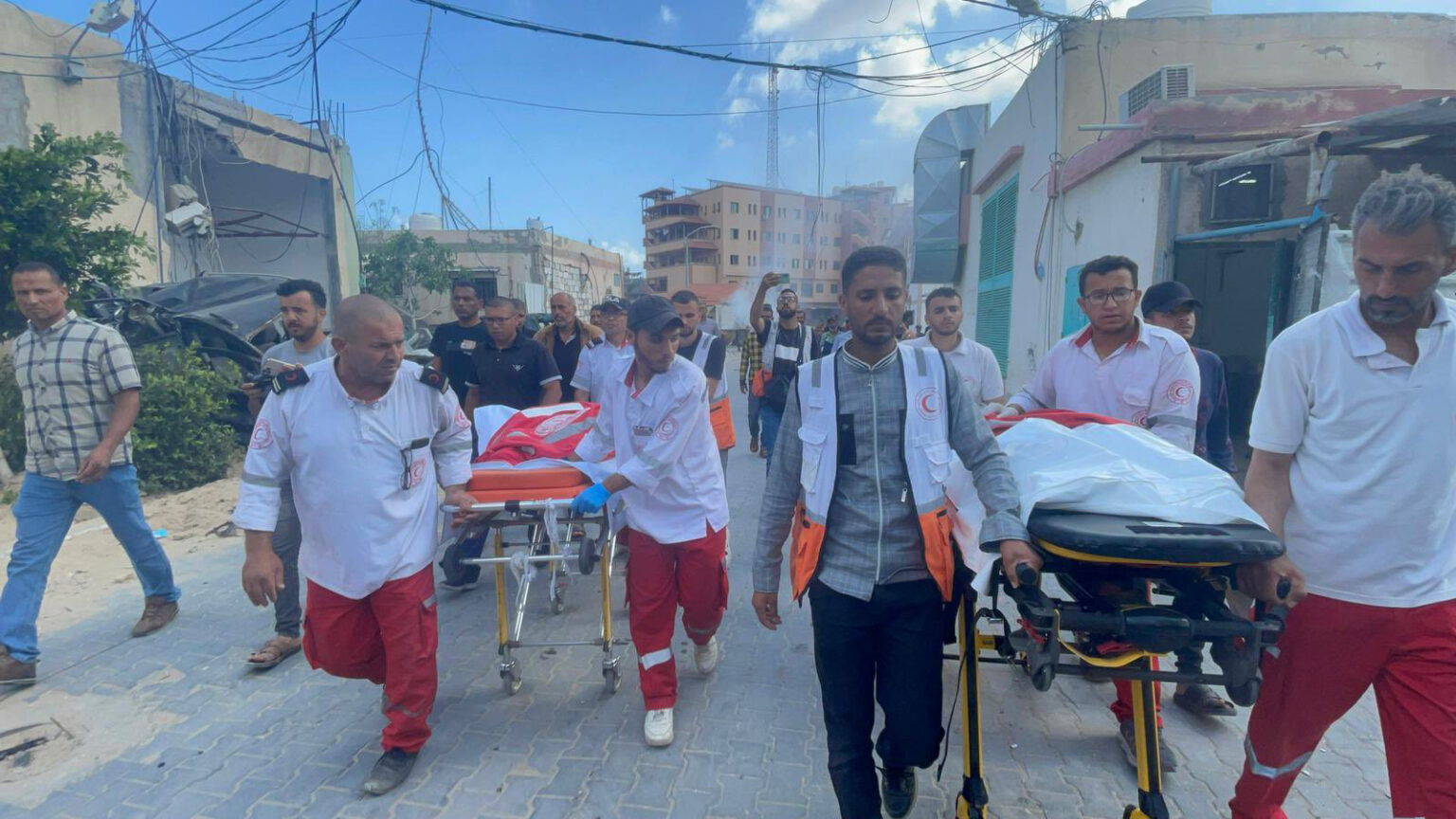
    Palestinian Red Crescent crews mourn fellow paramedics Haitham Tubasi and Suhail Hassouna, killed by Israeli forced (Photo via PRCS)

    A new report from the Palestinian Ministry of Health warns that over 1,000 health workers in Gaza have been killed by Israeli forces since October 2023. Meanwhile, a severe shortage of essential hygiene supplies continues to exacerbate the health crisis

    Israel has killed 1,151 workers in Gaza’s healthcare system since October 2023, according to the Palestinian Ministry of Health. Among the dead are 260 nurses, 184 health associates, 165 physicians, and 76 pharmacists, along with hundreds of management and support staff. While most of the victims’ names have been confirmed by health authorities, over 150 confirmations are still pending due to Israel’s refusal to release the martyrs’ bodies.

    In addition to those killed, hundreds of health workers remain imprisoned, where they face abuse and torture, as documented by international organizations. Ziad Muhammad Al-Dalu, a physician from Al-Shifa Hospital, was among those who died in Israeli custody, as reported by the Ministry of Health. His death serves as yet another example of Israel’s deliberate targeting of Gaza’s healthcare workers and infrastructure, actions that violate international humanitarian law.

    Read more: Palestinian health workers in Gaza describe torture and abuse in Israeli detention

    The ongoing attacks on healthcare have left tens of thousands of people with life-altering injuries. According to the World Health Organization (WHO), approximately 25% of those injured between October 2023 and July 2024 have suffered burns, severe limb injuries, or amputations, with no access to rehabilitation services. Dozens of physiotherapists were killed in the attacks, and inpatient rehabilitation services have been shut down for months. “Even the most essential assistive devices, like wheelchairs and crutches, are lacking due to the restricted flow of aid,” the WHO said.

    Israel’s blockade on humanitarian aid continues to choke Gaza’s healthcare system. At the moment, one of the most urgent problems is the shortage of soap and detergents. With the cost of a small bar of soap reaching USD 10—a price that could buy approximately 2 kilograms of soap in Germany—many families in Gaza are unable to afford basic hygiene supplies. “A family relying on cash-for-work income would spend 60% of the unskilled income on consumable hygiene products,” warned organizations monitoring water and sanitation in Gaza.

    With soap being an omnipresent product, it might be difficult to imagine how severe the effects of a shortage might be, particularly for children. Health and hygiene officials estimate that adequate access to soap in the Gaza Strip could reduce respiratory infections by 20% and diarrheal diseases by up to 40%. This would potentially prevent illness in at least one in three children currently suffering from diarrhea. However, humanitarian organizations estimate that delivering the 5 million soap bars needed each month to meet demand in Gaza is basically impossible under the existing restrictions.

    Read more: Israel targets health workers in the West Bank, obstructs polio campaign in Gaza

    Despite this situation, Gaza recently completed the first phase of its polio vaccination campaign, with an 87% coverage rate among children—just below the 90% benchmark. The campaign is set to resume in the coming weeks, but incidents of Israeli forces obstructing access to those taking part in it persist, jeopardizing future public health efforts.

    As winter approaches, the need for essential medicines, hygiene supplies, and nutritious food in Gaza becomes even more urgent. Concerns about potential floods and worsening living conditions highlight once again the critical need for an immediate ceasefire and rebuilding of the health system.

    Original article by Peoples Health Dispatch republished from peoples dispatch under a Creative Commons Attribution-ShareAlike 4.0 (CC BY-SA) license.

  • Israeli Rights Group Leader Tells UN It’s Clear Netanyahu ‘Does Not Want’ a Hostage Deal

    Spread the love

    Original article by Jake Johnson republished from Common Dreams under a CC licence.

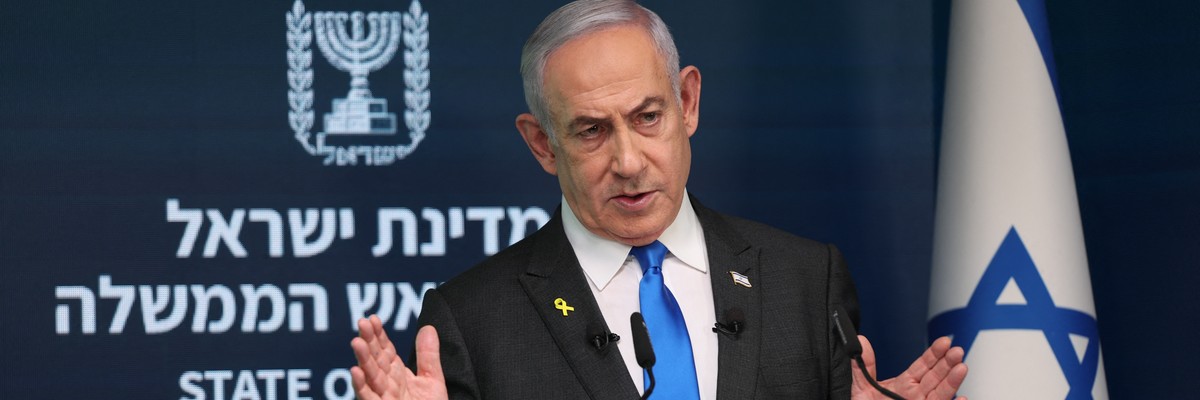
    Israeli Prime Minister Benjamin Netanyahu speaks at a press conference in Jerusalem on September 4, 2024. (Photo: Abir Sultan/Pool/AFP via Getty Images)

    Israel’s far-right government is “cynically exploiting our collective trauma” to “violently advance its project of cementing Israel’s control” over Palestinian land, said B’Tselem CEO Yuli Novak.

    The head of a leading Israeli human rights organization told the United Nations Security Council on Wednesday that Israel’s far-right government, led by Prime Minister Benjamin Netanyahu, obviously “does not want” to reach a hostage-release and cease-fire agreement with Hamas.

    Yuli Novak, the CEO of B’Tselem, said in an address to the U.N. body that the Netanyahu government is “cynically exploiting our collective trauma” in the wake of the October 7 Hamas-led attack to “violently advance its project of cementing Israel’s control” over Palestinian land.

    “To do that, it is waging war on the entire Palestinian people, committing war crimes almost daily,” said Novak. “In Gaza, this has taken the form of expulsion, starvation, killing, and destruction on an unprecedented scale.”

    Watch Novak’s full speech:

    Novak’s remarks came days after Israelis poured into the streets en masse over the weekend following their government’s announcement that Israel Defense Forces (IDF) soldiers recovered the bodies of six hostages in Gaza, heightening outrage over Netanyahu’s obstruction of cease-fire talks.

    In a speech on Monday, Netanyahu doubled down on his new hardline demands that have dampened hopes of a deal to end Israel’s U.S.-backed assault on Gaza and free the more than 60 living hostages still in captivity in the besieged Palestinian enclave.

    Hamas has rejected the prime minister’s demand that any deal include indefinite Israeli military control of the Philadelphi Corridor—a narrow strip of land along Gaza’s border with Egypt—leaving cease-fire talks at a standstill as the war on Gaza nears the 11-month mark.

    Gershon Baskin, a longtime Israeli hostage negotiator who has engaged in back-channel talks with Hamas since the October 7 attack, told Democracy Now! on Wednesday that the Philadelphi Corridor demand “is a made-up issue by Netanyahu to create… a new excuse for Israel to remain in Gaza.”

    “It’s very clear that Netanyahu doesn’t want to end the war,” Baskin said.

    In a social media post earlier this week, Baskin accused Netanyahu of “sacrificing the hostages on an altar of his own personal political survival.”

    The view that Netanyahu is deliberately sabotaging hostage-release talks is hardly fringe: As Jacobin‘s Branko Marcetic observed Wednesday, that assessment has become commonplace across Israeli society, including inside Netanyahu’s government.

    Marcetic cited recent reports from dozens of mainstream Israeli and U.S. media outlets casting Netanyahu—who faces corruption charges in his country—as the primary obstacle to a cease-fire agreement.

    One unnamed Israeli official, identified as a senior member of the country’s government, told the Israeli newspaper Haaretz over the weekend that the blood of hostages “is on [Netanyahu’s] hands.”

    “He knew the hostages are living on borrowed time, that the sand in their hourglass was running out,” said the senior official, referring to the six hostages who, according to the Israeli Ministry of Health, were shot at close range sometime around last Thursday.

    “He knew there were orders to kill them if there’d be rescue attempts. He understood the significance of his orders and acted in cold blood and cruelly,” the Israeli official continued. “They all knew he is corrupted, a narcissist, a coward, but his lack of humanity was fully revealed in all its ugliness in recent months.”

    Original article by Jake Johnson republished from Common Dreams under a CC licence.

  • ‘You Must Do Better’: Harris Rebuked Over Failure to Change Course on Gaza

    Spread the love

    Original article by Jake Johnson republished from Common Dreams under a CC licence.

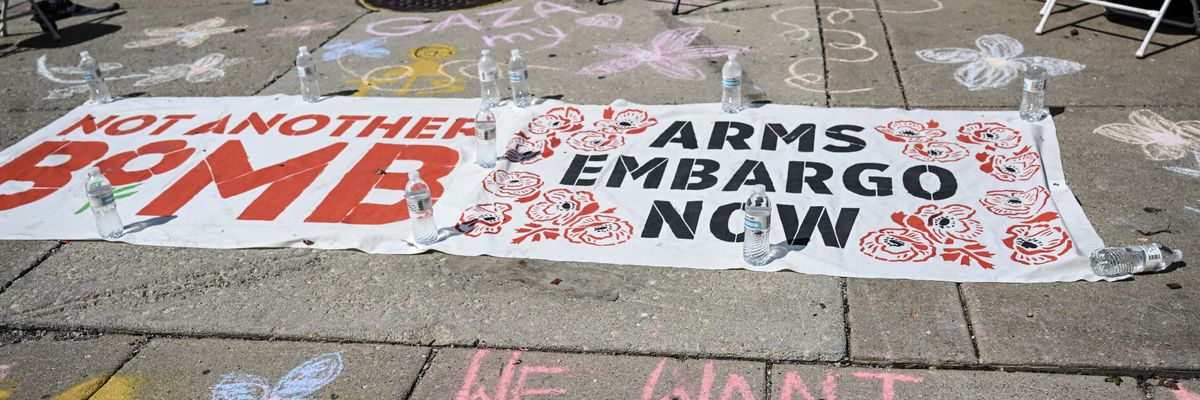
    A banner calling for an arms embargo against Israel is pictured outside of the Democratic National Convention in Chicago on August 22, 2024. (Photo: Fatih Aktas/Anadolu via Getty Images)

    “Harris called for a cease-fire in Gaza, but she failed to commit to the change in policy that would secure a cease-fire: ending weapons transfers to Israel,” said one Palestinian rights group.

    During her speech Thursday night accepting the Democratic Party’s 2024 nomination, Vice President Kamala Harris decried the “heartbreaking” suffering that Gazans are experiencing after 10 consecutive months of Israeli bombardment.

    But Harris didn’t acknowledge, let alone condemn, the central role the United States has played in fueling the humanitarian emergency in the Palestinian enclave, where civilians face indiscriminate bombings daily as well as famine and appalling disease outbreaks—including a possible polio epidemic.

    Instead, Harris repeated a line that has become commonplace for the White House and its allies, declaring that “President [Joe] Biden and I are working around the clock” to secure a cease-fire in the Gaza Strip.

    Nor did Harris explicitly denounce Israel’s actions in Gaza, which have included atrocities committed with U.S. weaponry.

    “Harris wanted to portray herself as strong and brave, but when she had to switch to passive voice (“What has happened in Gaza”) to avoid calling out Israel’s war crimes, she showed stunning cowardice,” said Palestinian American political analyst Yousef Munayyer.

    Declining to break with the administration in which she currently serves, the vice president did not express support for a policy shift that would pressure Israel’s far-right government to accept a cease-fire agreement, such as an arms embargo of the kind supported by United Nations experts, leading human rights groups, and a majority of U.S. voters.

    “I will always stand up for Israel’s right to defend itself, and I will always ensure Israel has the ability to defend itself,” said Harris, condemning the Hamas-led October 7 attack.

    “If you really wanted a cease-fire, you’d just stop sending the weapons. It is that simple.”

    Abbas Alawieh, a co-founder of the Uncommitted National Movement, toldReuters following the vice president’s speech that she did not deliver what was badly needed as the disaster in Gaza worsens by the minute: “courageous leadership that breaks from the current approach.”

    The IMEU Policy Project, an affiliate of the Institute for Middle East Understanding, echoed Alawieh’s assessment, saying in a statement that “with Vice President Kamala Harris’ nomination, the party had an opportunity to move in a new direction.”

    “Tonight Harris called for a cease-fire in Gaza, but she failed to commit to the change in policy that would secure a cease-fire: ending weapons transfers to Israel,” the group said. “To be clear: There is no way to end this bloodshed while supplying Israel with billions of dollars in weapons as it indiscriminately bombs Palestinian families, schools, hospitals, refugee shelters, and places of worship.”

    “It must be noted that Harris’ call for ‘dignity, security, freedom, and self-determination’ for the Palestinian people received thunderous applause,” the organization added. “However, words are not enough. Democratic voters are increasingly united in their demand for a change in policy on Gaza and in support of Palestinian safety and freedom broadly; it is time for the Democratic Party leadership to catch up.”

    Denied a speaking slot on the convention stage, Palestinian American delegates and their allies made their voices heard in the hallways of Chicago’s United Center and outside of the facility, where they held a sit-in to protest the DNC’s rejection of their demands.

    Calls for a Palestinian American speaker on the DNC stage drew broad support from Democratic lawmakers and their allies, including Chicago Mayor Brandon Johnson and the United Auto Workers.

    Lily Greenberg Call, a Jewish Biden political appointee who resigned in May over the administration’s Gaza policy, said late Thursday that she was “so sad and disappointed” that the DNC chose to “silence Palestinian American voices and exclude them from the convention stage.”

    “VP, I want you to win in November,” Call added. “You must do better.”

    Layla Elabed, a co-founder of the Uncommitted National Movement and the sister of Rep. Rashida Tlaib (D-Mich.), said Thursday that “Michigan voters want to vote for Harris, but we need to shift policy.”

    “Many of us know the impact of U.S.-funded bombs firsthand,” said Elabed.

    Rep. Ilhan Omar (D-Minn.), one of the lawmakers who showed solidarity with uncommitted delegates as they staged a sit-in outside of the DNC earlier this week, clearly articulated the U.S. Palestinian rights movement’s position during a press conference on Wednesday, a day before Harris took the stage in Chicago.

    “If you really wanted a cease-fire, you’d just stop sending the weapons,” said Omar. “It is that simple.”

    Original article by Jake Johnson republished from Common Dreams under a CC licence.

    ‘Let Palestine Speak’: Uncommitted Shares Speech the DNC Won’t Allow ›

    ‘History Is Watching’: Gaza Doctors Urge Harris to Back Israel Arms Embargo at Democratic Convention ›

  • 40,000 dead in Gaza a ‘milestone the world must be ashamed of’: Irish Premier

    Spread the love

    Original artticle republished from MIMO under a Creative Commons Attribution-NonCommercial-ShareAlike 4.0 International License.

    Ireland’s Prime Minister Simon Harris attends a press conference at Government Buildings in Dublin on April 12, 2024 [PAUL FAITH/AFP via Getty Images]

    Ireland’s Prime Minister, on Thursday, said that 40,000 dead in Gaza is a “milestone the world must be ashamed of”, Anadolu Agency reports.

    “International diplomacy has failed to protect innocent children, some only days old,” Simon Harris said on X.

    He called on Israel to stop the bombings in Gaza and asked Hamas to release the hostages.

    In addition to his call for a ceasefire in Gaza, Harris urged the EU to reassess its association agreement with Israel.

    Flouting a UN Security Council resolution demanding an immediate ceasefire, Israel has faced international condemnation amid its continued brutal offensive on Gaza since a 7 October, 2023 attack by Hamas.

    The Israeli onslaught has since killed over 40,000 people, mostly women and children, and injured over 92,400 others, according to local health authorities.

    Over 10 months into the Israeli onslaught, vast tracts of Gaza lie in ruins amid a crippling blockade of food, clean water and medicine.

    Israel is accused of genocide at the International Court of Justice, whose latest ruling ordered it to immediately halt its military operation in the southern city of Rafah, where more than 1 million Palestinians had sought refuge from the war before it was invaded on 6 May.

    READ: Pope Francis calls for ceasefire in Gaza amid ongoing Israeli onslaught

    Original artticle republished from MIMO under a Creative Commons Attribution-NonCommercial-ShareAlike 4.0 International License.