Palantir is turning the NHS into a tool for mass surveillance

Spread the love

Article by Jade-Ruyu Yan and Aman Sethi republished from openDemocracy under a Creative Commons Attribution-NonCommercial 4.0 International licence.
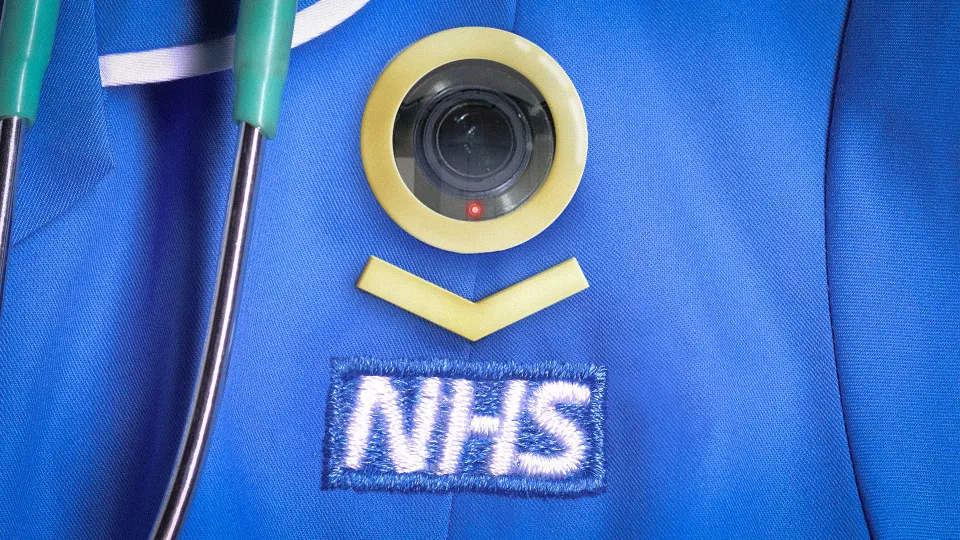
Composition by James Battershill

Kicking out Palantir, experts warn, may not solve the problems its Federated Data Platform has created.

NHS England’s Federated Data Platform, run primarily by controversial US military contractor Palantir, would give a future UK government the ability to use patients’ healthcare data to unleash unprecedented mass surveillance, experts and technologists have warned openDemocracy.

“We have already seen in the US how Palantir’s reach into so many different areas of government has allowed it to build a system that provides detailed profiles of people to enable ICE raids,” said Duncan McCann of the Good Law Project, referring to how President Donald Trump’s mass deportation programme has used Palantir’s tools. “The exact same thing is being enabled by the integration of Palantir into the UK public sector.”

This risk is only exacerbated by the fact that nearly three years after Palantir was awarded the £330m contract to run the FDP, it remains unclear what patient data it gathers, on what basis and to what end. Despite this, 69% of regional NHS Trusts have already adopted the platform, which provides the health service with a new operating system intended to link up otherwise unconnected databases and disparate software across different NHS services and regions.

This lack of clarity was laid bare this week, when the UK’s cross-party Science, Innovation and Technology Committee urged the government to break the NHS’s contract with Palantir. Its report contained a stark recommendation to the government: reveal “the exact nature of Palantir’s access to identifiable and non-identifiable patient data, on what statutory basis this was authorised, when, and by whom.”

McCann and the Good Law Project are part of an unusually wide coalition demanding the UK cut ties with Palantir, but technologists who have worked closely on the FDP warn that the genie is now out of the bottle; kicking the US giant out of the NHS may not be enough to solve the data privacy problems its Federated Data Platform has created.

“You know you could pull Palantir out,” Tom Bartlett, an NHS technologist who worked on the FDP and has spoken publicly in favour of the project, told openDemocracy. “But the danger remains.”

“You still might get a government that says, ‘We need to have the data from the NHS and the data from the Home Office connected, and we want to use it for the purpose of denying people healthcare or deporting people or whatever’.”

Coalition of Resistance

To understand how deeply Palantir is enmeshed in the UK’s public sector, consider the coalition opposed to it.

NHS data analysts and chief data and analytical officers have spoken out against the FDP. The British Medical Association, a union representing doctors and medical students, has urged GPs to reject it. The Greater Manchester Integrated Care Board, which oversees NHS services for 2.8 million people, has refused to sign up to the platform, claiming outstanding security risks haven’t been addressed, and that it has better technology in-house.

It’s not just the NHS, either. London’s mayor has blocked a £50m Palantir contract with the Metropolitan Police, arguing that it was improperly awarded. The housing ministry replaced a Palantir system to match British hosts with Ukrainian refugees with its own technology. In Coventry, local politicians and unions are protesting the renewal of a £750,000 Palantir contract with the council’s children’s services department. Financial Conduct Authority employees are seeking to orchestrate a cross-union campaign against a 12-week trial contract with Palantir that they fear could expose the UK’s sensitive financial data to US law enforcement authorities. 

“Our pilot with Palantir allows the Met for the first time to bring together data it already lawfully holds in one place to identify potential standards, welfare or cultural concerns,” said a spokesperson for The Met over email. “It also allows us to identify early issues so we can act more fairly and consistently, ensuring officers receive support or face appropriate action before problems escalate.” In April, Met officers expressed outrage at the “intrusive” use of Palantir’s technology to assess them for misconduct.

The police can already request information from the NHS if it meets a policing need, such as a homicide investigation or tracing missing persons.

The Financial Conduct Authority’s contract with Palantir involves testing an AI search tool for its data. “The data used in the trial will be fully encrypted and under our control,” wrote a spokesperson for the regulator over email. “No-one is able to access the unencrypted data without our authorisation.”

Coventry City Council did not respond to questions about its Palantir contract.

What exactly does Palantir do?

Palantir’s CEO, Alex Karp, once described its role as “the finding of hidden things”. 

He co-founded the company with $2 million from the venture capital arm of the CIA in the early 2000s, when the failure to prevent 9/11 was being debated across Washington and Silicon Valley. It was suspected, and would be confirmed by the public report a year later, that the CIA, the FBI, and the National Security Agency had separately held the data required to have foreseen the terror attacks, but had “failed to connect the dots”. 

That finding has since been the basis of much of Palantir’s success. It argues that governments, militaries, law enforcement authorities and businesses already have much of the data they need to make decisions, but that it is not readily available in the forms needed. 

Palantir, it tells them, is the solution.

“The actual thing that’s difficult is organising all your data together,” Alex Bores, a member of the New York State Assembly and a former Palantir employee turned critic, told The New York Times. “That requires hard work, and there’s no magic to do that yet. The software, plus engineers going on site and doing a lot of that hard work to do the manual hookups, was always going to be the true source of value.”

Databasing the Nation

In the NHS, Palantir’s work involves organising, hooking up, and streamlining vast troves of patient data currently scattered across, by one count, 44,000 healthcare IT systems in 26,000 organisations. “The fragmentation is absolutely massive,” said Bartlett, who helped build the FDP. “There’s all this information, and it’s all sat in different pockets.” 

Palantir’s solution has two layers. Bartlett describes one layer as an “operating system” analogous to the software that runs your iPhone, which will allow NHS Trusts and third-party developers to create applications (or what Palantir calls “products”) that allow for efficiency gains. An ambulance crew, for example, could input information about an accident victim to a product that would pass it onto the hospital, so that “the A&E department could prepare, rather than being sort of hit in the face” with information when the ambulance arrives, he said.

Yet, much like how your iPhone decisively locks you into the ecosystem of Apple products, running this system efficiently requires as much of the NHS as possible to sign on to the Palantir system – something experts call “vendor lock-in” – and to draw on a staggering library of data held across the health service.

The FDP’s public documentation reveals that the platform is already in the process of ingesting several hundred databases, covering a vast array of variables that include mental healthcare contact activity, mortality, flu vaccination status, covid vaccination status, emergency services data, race and ethnicity, aggregated data for persons held in secure mental health facilities in adult prisons and immigration removal centres, and much more. 

As the cross-party committee of MPs noted in their report last week, there is little clarity around exactly what data will make it into the FDP, and how it will be accessed. The debate around patient data held by GP practices offers a useful illustration.

Back in 2023, the then secretary of state for health and social care, Victoria Atkins, told the House of Commons: “No new data will be collected, and GP data will not be part of the national platform.” However, an NHS FAQ page last updated in April 2026 admits that “some of the data” in the FDP “may have been sourced from GP records”, and GP data lawfully shared with NHS trusts that use the FDP could end up on the platform.

More worryingly, the FDP uses all this data to create detailed profiles of individual patients that it calls the ‘Person Ontology’. To quote from an NHS Data Protection Impact Assessment: “The Person Ontology serves as the single source of the truth for pseudonymised patient level datasets”. 

Elsewhere, the document says that “the Person Ontology currently holds activity data for citizens in different care settings”, explaining that the platform assigns individual patients a unique ID that can be cross-referenced across multiple databases.

The NHS says that as the data held in the FDP is pseudonymised, it does not directly identify individuals. But pseudonymisation, as has been pointed out by the Information Commissioner’s Office, the UK’s data protection watchdog, is a reversible process. “Take care not to confuse pseudonymisation with anonymisation,” the ICO warns.

A person’s healthcare data is their “most intimate information,” said a spokesperson and legal officer at Privacy International, a UK-based charity focusing on technology and rights. “We’re talking about the breadth of the data, how personal it is, and the severity of what could be done with it if it were to land in the wrong hands.”

Big Data Means Big Brother

Consolidating so much data brings very real risks of surveillance, say those familiar with the platform, particularly since Palantir also holds contracts with police forces in the UK. In principle, all that’s stopping the Home Office from accessing NHS data are legal safeguards that can be reversed.

Here in the UK, Palantir UK CEO Louis Mosley has said that if Nigel Farage’s Reform comes into power, the company will follow the party’s professed directives to use NHS data to target individuals based on their immigration status. 

Such a scenario played out in the US when Trump first became president in 2016, as Bores, the former Palantir employee, told The New York Times.

“Palantir had signed a contract with a department within ICE called HSI, Homeland Security Investigations. During the Obama administration, it was focused on anti-human trafficking, anti-drug trafficking, sometimes counterfeiting,” Bores said. “Then, when Trump comes in in 2017, they try to change the nature of that work. They try to get another part of ICE called ERO, Enforcement and Removal Operations – the part that everyone thinks of as ICE – to get access to the software and to use it for deportations.”

In the US, Palantir already uses data from the Department of Health and Human Services to track people targeted for deportation by ICE. Here in the UK, junior doctor Rhiannon Mihranian Osborne, who is organising against Palantir in the NHS with health justice organisation Medact, described what she said was a disturbing pattern: “Reform’s policy ‘Operation Restoring Justice’ wants to create a powerful immigration surveillance system by mining data from health, police and financial databases. Louis Mosley said his company would comply with this.

“Palantir’s police contracts in the UK include collating highly sensitive information on victims of crime, including sexual orientation and trade union membership. The home secretary says she wants to create a panopticon of state surveillance. The synergy between Palantir and governments who use data to abuse human rights is deeply alarming, and a sign of what could be coming in the UK.”

This is a real risk, conceded Bartlett. “Let’s take [a] Reform government and the immigration question coming in, I do worry about that scenario,” he said – but he questioned whether that means the NHS doesn’t need a Federated Data Platform. “So is the answer to that bad scenario playing out to keep the data in such a bad state that nobody could ever use it at all for good or bad?”

Palantir, NHS England, the Cabinet Office, the Department of Health and Social Care and The Reform Party did not respond to requests for comment.

Critics of the FDP, however, have pushed back against what they see as a narrative that the NHS’s systems are so hopelessly complex and tangled that the only way to solve them is with a mass surveillance tool built by Palantir.

“There’s no magic here,” Sam Smith, a technologist with patient rights organisation medConfidential, said of the FDP. “It’s not like Palantir is doing anything that other people can’t do… They’re just doing the thing because they have the mythos that they can do the thing.”

Andrew Holway, the founder of UK-based medical software startup Darwinist, told the cross-party committee that “the primary barrier to NHS innovation” is mega contracts with companies such as Palantir. These, he said, hold the NHS “hostage, preventing the implementation of modern productivity tools that could save tens of billions of pounds”.

Some in the NHS have also questioned whether the service has tried different approaches that are less intrusive and data-centric. The NHS Greater Manchester Integrated Care Board, for instance, uses its own Analytics and Data Science Platform because it believes it offers better technology and access to better data.

“Public trust isn’t a side issue for the Federated Data Platform,” wrote Matt Hennessey, the chief data and analytics officer at Manchester Integrated Care Board, in a post on LinkedIn. He outlined the “effect that ethical concern, moral unease or perceived opacity has on trust–and, in turn, on participation.”

The platform’s “main problem is that it isn’t clear what it actually is,” he wrote. “Where trust is eroded, people disengage, patients opt out, and clinicians become cautious about involvement.”

Ultimately, as Osborne said, “any NHS data system must be built on public trust, buy-in from staff, and most importantly, protection from abuse by private corporations and governments themselves”.

Article by Jade-Ruyu Yan and Aman Sethi republished from openDemocracy under a Creative Commons Attribution-NonCommercial 4.0 International licence.

We’re NHS analysts organising together against Palantir. Here’s why

By NHS Analysts Together 

The great Ministry of Defence-to-Palantir pipeline

By Ethan Shone 
Zarah Sultana: Palantir has no place in UK public services

By Zarah Sultana 

NHS Palantir data deal puts patient trust at risk, warn MP and privacy groups

By Adam Bychawski 

Continue ReadingPalantir is turning the NHS into a tool for mass surveillance

What Is Palantir? How a US Spytech Firm Penetrated the British State

Spread the love

https://novaramedia.com/2026/02/19/what-is-palantir-how-a-us-spytech-firm-penetrated-the-british-state/

The Palantir Technologies logo. (Jonathan Raa/NurPhoto)

From Epstein to ICE to the IDF.

A US spytech firm deeply embedded in the most sensitive areas of the British state is being scrutinised as part of the fallout from the latest tranche of documents related to the financier and child sex offender Jeffrey Epstein. 

Palantir Technologies, co-founded and chaired by billionaire Peter Thiel, holds over £670m in UK government contracts across NHS patient data, defence operations, police intelligence databases and nuclear weapons management. The multibillion-dollar US company has also provided military tech to the Israel Defense Forces (IDF) during the genocide in Gaza, and helped facilitate Donald Trump’s brutal immigration enforcement crackdown across the US.

The most recent dump of Epstein files sheds light on the links between Palantir, Thiel, Epstein and the former British ambassador to the US Peter Mandelson. 

What is Palantir?

Palantir Technologies, worth approximately $300bn, is a software company that pulls together and analyses data from different sources. 

Headquartered in Miami, Florida after a recent exit from Denver, Colorado, Palantir describes its software as powering “real-time, AI-driven decisions in critical government and commercial enterprises in the west, from the factory floors to the front lines”. Its products are extensively deployed in military, policing and healthcare contexts. 

The name Palantir is inspired by the crystal balls from JRR Tolkien’s epic fantasy trilogy The Lord of the Rings. By looking into a palantír, the evil Lord Sauron is able to see in any direction, at any distance.

Built with CIA funding to support the US ‘war on terror’ following the 11 September attacks, Palantir was founded in 2003 by Peter Thiel, Alex Karp, Stephen Cohen, Jon Lonsdale and Nathan Gettings, but didn’t go public until 2020. 

Much of its work has been shrouded in secrecy, but today its flagship products – Palantir Gotham and Palantir Foundry – connect fragmented stores of information, forming them into big, searchable databases that can then be used for analysis, intelligence-gathering, policing and business analytics. 

Gotham is Palantir’s defence and intelligence platform, marketed as an “operating system for global decision making” and primarily used by militaries and counterterrorism analysts. It’s built to handle vast datasets and employed by the FBI, CIA, National Security Agency and Department of Defense in the US, and across Europe, including by the Ukrainian military. 

In Ukraine, Palantir’s Gotham system is credited with shaping the future of warfare by pulling together images, drone footage and battlefield data to create an operational map to form an “AI-powered kill chain”

Gotham supports alerts, geospatial analysis and prediction, with the latter drawing criticism from rights groups over the impact of predictive policing and intrusive mass surveillance. A 2019 predicting policing project between Palantir and the Los Angeles Police Department was cancelled after accusations that it reinforced racism and didn’t reduce crime.

Palantir has also built custom tools for US Immigration and Customs Enforcement (ICE). The agency has reportedly spent more than $200m on Palantir contracts to help it identify targets for deportation by integrating travel histories, visa records, biometrics and social media data. In the past month, immigration enforcement agents in the US have kidnapped children and shot dead citizen observers as part of Trump’s brutal immigration crackdown.

A protestor at a demonstration targeting tech billionaires on 13 June 2025 in Los Angeles. Credit: Madison Swart/Hans Lucas via Reuters Connect

See the original article at https://novaramedia.com/2026/02/19/what-is-palantir-how-a-us-spytech-firm-penetrated-the-british-state/

Experiencing issues with this image not appearing. I suspect because it's so critical of Zionist Keir Starmer's support of and complicity in Israel's genocides.
Genocide denier and Current UK Prime Minister Keir Starmer is quoted that he supports Zionism without qualification. He also confirms that UK air force support has been essential in Israel’s mass-murdering genocide. Includes URLs https://www.declassifieduk.org/keir-starmers-100-spy-flights-over-gaza-in-support-of-israel/ and https://youtu.be/O74hZCKKdpA
Keir Starmer objects to criticism of the IDF. He asks how could anyone object to them starving people to death, forced marches like the Nazis did, bombing Gaza's hospitals and universities, mass-murdering journalists, healthworkers and starving people queuing for food, killing and raping prisoners and murdering children. He calls for people to stop obstructing his genocide for Israel.
Keir Starmer objects to criticism of the IDF. He asks how could anyone object to them starving people to death, forced marches like the Nazis did, bombing Gaza’s hospitals and universities, mass-murdering journalists, healthworkers and starving people queuing for food, killing and raping prisoners and murdering children. He calls for people to stop obstructing his genocide for Israel.
Orcas discuss Genocide-supporting and complicit Zionists. Donald Trump, Keith Starmer, David Lammy, Rachel Reeves, Angela Rayner and Wes Streeting are acknowledged as evil genocide-complicit and supporting cnuts.
Continue ReadingWhat Is Palantir? How a US Spytech Firm Penetrated the British State

Venezuela Says CIA-Linked Mercenaries Caught During ‘False-Flag Attack’

Spread the love

Original article by Jessica Corbett republished from Common Dreams under Creative Commons (CC BY-NC-ND 3.0).

The USS Gravely enters the port at Port of Spain, Trinidad and Tobago on October 26, 2025. (Photo by Martin Bernetti/AFP via Getty Images)

“This is a colonial operation of military aggression that seeks to turn the Caribbean into a space for lethal violence and US imperial domination.”

The government of Venezuelan President Nicolás Maduro said Sunday that his country’s security forces captured a group of mercenaries aligned with the US Central Intelligence Agency, less than two weeks after President Donald Trump confirmed his authorization of covert CIA action against the South American nation.

Venezuela “reports that it has captured a mercenary group with direct information from the US intelligence agency, CIA, being able to determine that a false-flag attack is underway from waters bordering Trinidad and Tobago, or from Trinidad or Venezuelan territory itself,” the Venezuelan government said in a statement.

“This planned action perfectly evokes the provocation of the Battleship Maine and the Gulf of Tonkin, which gave rise to the war against Spain to seize Cuba in 1898 and allowed the US Congress to authorize involvement in an eternal war against Vietnam in 1964, from which they emerged defeated by the Vietnamese people after facing incalculable destruction and regrettable human loss,” the statement continues.

“The government of Prime Minister Kamla Persad-Bissessar has renounced the sovereignty of Trinidad and Tobago to act as a military colony subordinate to US hegemonic interests, turning its territory into a US aircraft carrier for war throughout the Caribbean against Venezuela, Colombia, and all of South America,” Caracas asserted.

The statement continues:

By folding to Washington’s militaristic agenda, Persad-Bissessar not only intends to attack Venezuela, a country that has always maintained a policy of energy cooperation, mutual respect, and Caribbean integration, and break our historic bonds of brotherhood; she also violates the United Nations Charter, the proclamation of Latin America and the Caribbean as a Zone of Peace approved by [the Community of Latin American and Caribbean States], and the principles of [the Caribbean Community], which protect all peoples of the Caribbean.

These are not defensive exercises: this is a colonial operation of military aggression that seeks to turn the Caribbean into a space for lethal violence and US imperial domination.

“Venezuela does not accept threats from any vassal government of the US. We are not intimidated by military exercises or war cries,” the statement says, adding that the country “will always defend its sovereignty, its territorial integrity, and its right to live in peace against foreign enemies and [their] vassals.”

Venezuela’s accusation came amid joint military exercises between the US and Trinidad and Tobago in the Caribbean Sea and follows a string of deadly US attacks on vessels the Trump administration claimed—without evidence—were transporting drugs bound for the United States. According to the Trump administration, at least 43 people have been killed in the US boat strikes in the southern Caribbean and Pacific Ocean since early last month.

Trinidad and Tobago challenged Venezuela to provide proof of the alleged false-flag operation and said the joint military operation with the United States “aims to bolster the fight against transnational crime and build resilience through training, humanitarian activities, and security cooperation.”

The Trump administration—which had already deployed an armada of warships and thousands of troops to the southern Caribbean—said Friday that it ordered the USS Gerald R. Ford carrier strike group off the coast of Venezuela, which possesses the world’s largest oil reserves.

The US has been meddling in Venezuelan affairs since at least the late 19th century, going back to the 1895 border dispute between Venezuela and Britain. Since then, the United States has helped install and prop up brutal dictators and assisted in the subversion of democratic movements, including by training Venezuelan forces in torture and repression at the notorious US Army School of the Americas.

In the 21st century, successive US administrations beginning with George W. Bush have tried to thwart the Bolivarian Revolution that was launched by former President Hugo Chávez and continued under Maduro. During the first Trump administration, Venezuela foiled an attempt by a group of mercenaries, including two Americans, to invade the country and topple Maduro.

Tens of thousands of Venezuelans have also died as a result of US economic sanctionsaccording to research from the Center for Economic and Policy Research.

Taunting the Venezuelan president during a Sunday appearance on CBS “60 Minutes,” Sen. Rick Scott (R-Fla.) said, “If I was Maduro, I’d head to Russia or China right now.”

However, senior Venezuelan officials waxed defiant in the face of the latest US threat.

“Once again, the empire and its accomplices seek to bend the sovereign will of the Venezuelan people through a criminal economic siege that flagrantly violates the Charter of the United Nations and international humanitarian law,” Venezuelan Foreign Minister Yván Gil Pinto said Monday.

“These actions are not only illegal,” he added, “they are an unconventional act of war that we are determined to face and defeat in all scenarios.”

Original article by Jessica Corbett republished from Common Dreams under Creative Commons (CC BY-NC-ND 3.0).

Donald Fuhrump says that Amerikkka doesn't bother with crimes or charges anymore, not being 100% Amerikkkan and opposing his real estate intentions is enough.
Donald Fuhrump says that Amerikkka doesn’t bother with crimes or charges anymore, not being 100% Amerikkkan and opposing his real estate intentions is enough.
Orcas discuss Donald Trump and the killer apes' concept of democracy. Front Orca warns that Trump is crashing his country's economy and that everything he does he does for the fantastically wealthy.
Orcas discuss Donald Trump and the killer apes’ concept of democracy. Front Orca warns that Trump is crashing his country’s economy and that everything he does he does for the fantastically wealthy.

Critics Allege White House ‘Propaganda’ After US Bombs Boat Off Venezuela Coast

Continue ReadingVenezuela Says CIA-Linked Mercenaries Caught During ‘False-Flag Attack’

Tens of thousands of Cubans march in support of Venezuela’s sovereignty amid US aggression

Spread the love

This article by Pablo Meriguet republished from peoples dispatch under a Creative Commons Attribution-ShareAlike 4.0 (CC BY-SA) license.

People hold up Cuban and Venezuelan national flags during a rally in support of Venezuela, in Havana, Cuba, October 17, 2025. Photo: CGTN

The demonstration rejected US interference in Venezuela’s internal affairs as US military operations in the Caribbean Sea increase.

On October 17, tens of thousands of Cubans took to the streets of Havana to show their support for Venezuela in the face of a potential intervention by the United States following its recent military deployment in the Caribbean Sea.

Under anti-imperialist and pro-sovereignty slogans, nearly 50,000 participants gathered in front of the statue of Simón Bolívar, the Venezuelan military leader and independence politician. The event was led by the country’s president, Miguel Díaz-Canel.

The event was also attended by Pedro Infante Aparicio, vice president of the United Socialist Party of Venezuela and the National Assembly, who told those present that both Cuba and Venezuela are victims of the supremacism and warmongering of the White House. He added: “From this platform, we join President Nicolás Maduro in calling for an end to the xenophobic attempts to compare the dignity of Venezuelans with criminal groups, and we demand an end to the policy of terrorism against our people.”

For his part, Díaz-Canel wrote on X: “At a time when the empire and its misguided leader are approving covert CIA operations against Venezuela, we express our solidarity with that brotherly people and, especially, with its President Nicolás Maduro. Today, Cuba is more mindful than ever of the words of [José] Martí: ‘Give me Venezuela to serve, she has in me a son,’ and of Fidel [Castro]: ‘For Venezuela, we must give everything. We are confident that Venezuela and its popular, military, and police forces will once again overcome the threats and actions of the empire.”

Read More: Trump’s military escalation against Venezuela repeats the Iraq War blueprint

In addition, Díaz-Canel presented a book containing more than 4 million signatures from Cubans who support the Bolivarian Revolution and condemn attempts to destabilize the government of Nicolás Maduro. 

For his part, Roberto Morales Ojeda, secretary of organization of the Central Committee of the Communist Party of Cuba, stated: “We are one soul, which does not give up. Receive these signatures as the greatest and most eloquent show of love that can be offered to a sister nation, led by constitutional President Nicolás Maduro and with an admirable military-popular fusion, which is preparing to face and defeat any aggression that may occur.”

For its part, the official newspaper of the Communist Party of Cuba, Granma, wrote in an editorial: “Because the sister nation of Venezuela is not alone and because its resistance symbolizes the history of all peoples who believe in sovereignty, more than 50,000 Havana residents, representing all Cubans, gathered today in front of the statue of liberator Simón Bolívar in solidarity with that country.

Military pressure against Venezuela intensifies

Several weeks ago, the United States deployed a large number of ships and troops to the Caribbean Sea to supposedly stop drugs from entering the United States. In addition, Washington declared the Cartel of the Suns an international terrorist organization and claimed that Maduro and other senior Chavista leaders were running the cartel.

Read More: Trump chooses war over diplomacy in the Caribbean

The United States is offering a USD 50 million reward for information leading to Maduro’s arrest and conviction. These accusations have been categorically denied by Venezuelan authorities, who see them as an attempt to legitimize a possible armed invasion of the South American country.

Under this premise, which many have questioned, Washington has claimed that it has sunk five small boats allegedly carrying drugs, killing 27 people on board. This type of pressure is in addition to the economic sanctions and trade blockades imposed by Washington for several years.

In addition, it was revealed a few days ago that Donald Trump had authorized secret CIA operations in Venezuela, according to the New York Times. Among the covert operations are lethal actions carried out in coordination with or independent of the US military.

This article by Pablo Meriguet republished from peoples dispatch under a Creative Commons Attribution-ShareAlike 4.0 (CC BY-SA) license.

Donald Fuhrump says that Amerikkka doesn't bother with crimes or charges anymore, not being 100% Amerikkkan and opposing his real estate intentions is enough.
Donald Fuhrump says that Amerikkka doesn’t bother with crimes or charges anymore, not being 100% Amerikkkan and opposing his real estate intentions is enough.
Orcas discuss how Trump was re-elected and him being an obviously insane, xenophobic Fascist.

Continue ReadingTens of thousands of Cubans march in support of Venezuela’s sovereignty amid US aggression

Venezuela announces dismantling of CIA-backed coup plot, arrest of active-duty Navy Seal

Spread the love

Original article by republished from peoples dispatch under a Creative Commons Attribution-ShareAlike 4.0 (CC BY-SA) license.

The coup plot comes just a month and a half after President Nicolás Maduro was reelected in the presidential election, which to date, the US has refused to recognize

In a press conference given on September 14, Venezuelan Interior Minister Diosdado Cabello announced that authorities had dismantled an operation reportedly backed by the Central Intelligence Agency of the United States and the National Intelligence Center of Spain, which sought to assassinate President Nicolás Maduro, Vice President Delcy Rodríguez, Cabello, and other government officials. The minister announced that Venezuelan authorities had seized 400 weapons from the US and arrested 14 mercenaries who were involved in the plot. Among the arrested is Wilber Joseph Castañeda, an active US military officer and Navy Seal. Two Spanish citizens were reportedly also arrested, José María Basua and Andrés Badasbe.

Officials stated that according to a document they seized from one of the detainees, the plot included attacking the Miraflores Palace and other public institutions, in addition to carrying out sabotage actions against various public services to generate chaos.

According to officials, those arrested possessed between 10-12 weapons in their homes that were set to be used in the destabilization plan. Cabello noted that many of those arrested also have links to Venezuela’s far-right opposition network.

He added that the weapons seized by authorities were brought to the country in “apparently legal” shipments and received by groups linked to the extreme right.

One of the leaders of the illegal arms trafficking network in the country, Cabello claimed, is a man who is already a fugitive from Venezuelan justice, Iván Simonovis. “Because of the capture of this weaponry here in Venezuela, they have taken actions in other countries that have included the murder of people. Simonovis knows what I am talking about,” he stated.

Venezuela has demanded that the United States government respond to the incident and “clarify the use of its agencies and the use of its territory to traffic weapons aimed at overthrowing a democratically elected government.”

Cabello declared: “The United States is behind this operation, they are delivering these weapons so that they circulate freely and reach Venezuela…They can say what they want, their agents are confessing. Castañeda is the head of the operation [of] the CIA here and they have a link with criminal groups in Venezuela.”

Regarding the Venezuelan state’s intelligence capacities, Cabello stated: “Let the world know that we are going to use all the necessary mechanisms to repel, to defeat these groups of mercenaries, of terrorists who try to undermine peace and order in Venezuela…prepare to be defeated again.”

Original article by republished from peoples dispatch under a Creative Commons Attribution-ShareAlike 4.0 (CC BY-SA) license.

Continue ReadingVenezuela announces dismantling of CIA-backed coup plot, arrest of active-duty Navy Seal