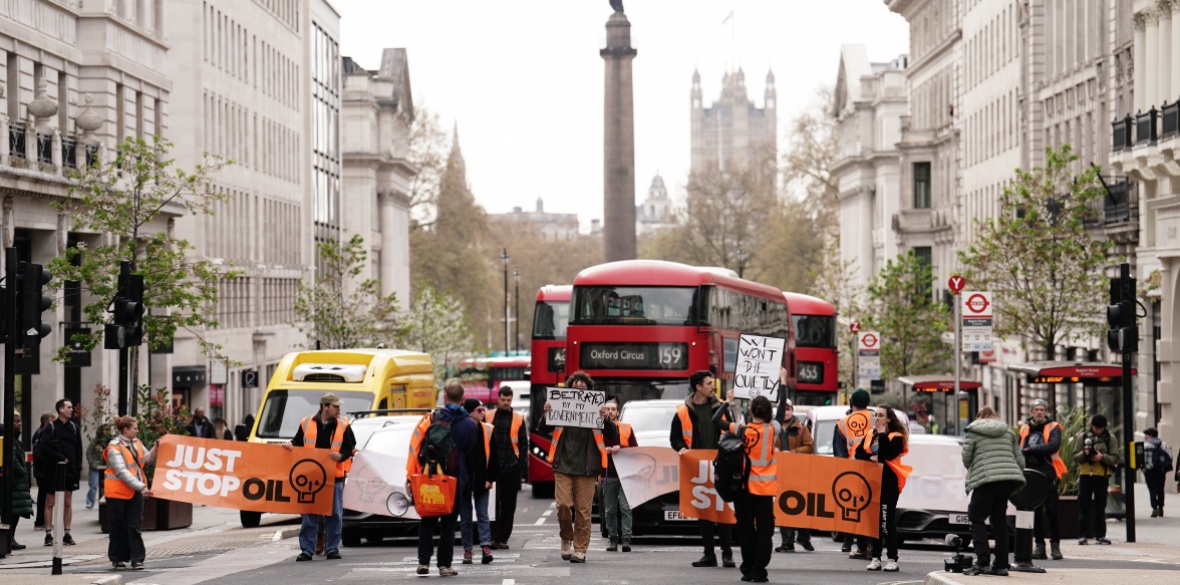
Just Stop Oil protesters as they take part in a slow march protest through London as part of the group’s campaign to convince the government to end all new oil and gas projects in the UK, April 24, 2023
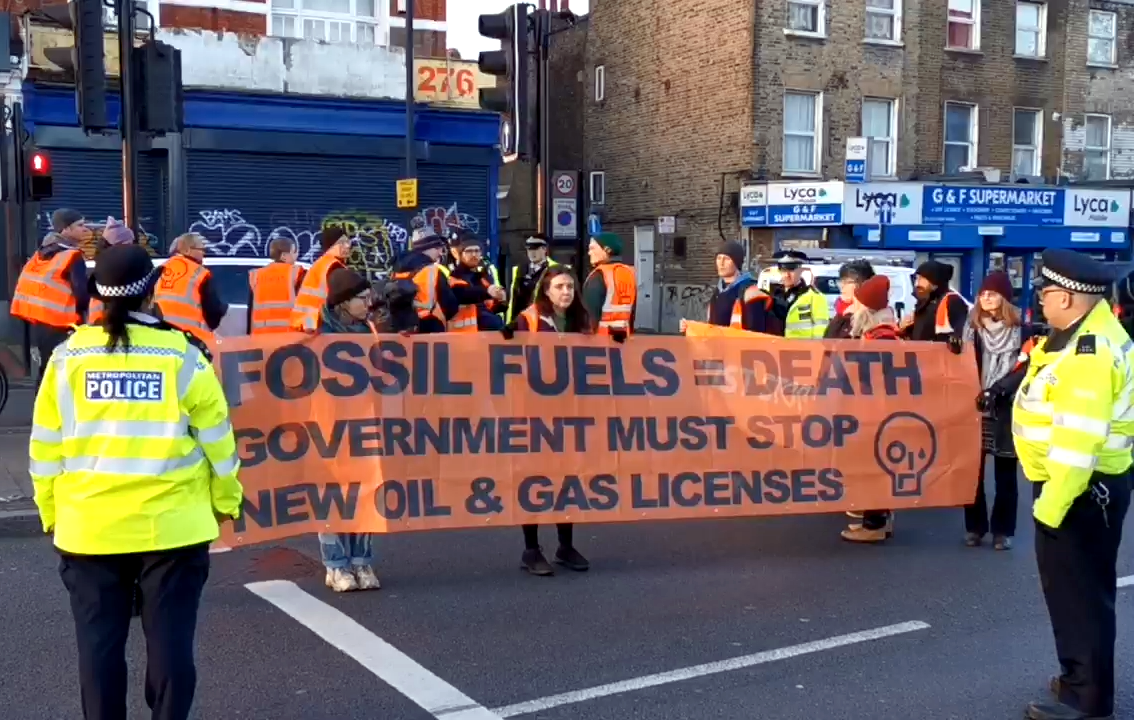
THE government’s draconian anti-protest laws have been used to give a shocking six-month prison sentence to a climate activist for taking part in a peaceful slow march.
Just Stop Oil supporter Stephen Gingell, 57, was sentenced at Manchester magistrates’ court on Thursday.
The father-of-three was arrested on November 13 after taking part in a slow march in north London for about half an hour.
Mr Gingell pleaded guilty to breaching section seven of the Public Order Act, which bans any act “which interferes with the use or operation of any key national infrastructure in England and Wales.”
Passed in May, the widely condemned legislation allows police to ban peaceful protests merely on the grounds that they might become disruptive.
“It seems this government has now made walking down the road, walking on the public highway, an illegal act that is worthy of imprisonment,” a Just Stop Oil spokesperson said.
The right to protest is a distinctive feature of democratic, liberal societies. Yet the way in which many leading British politicians are currently talking about Just Stop Oil might make you think otherwise. Far from engaging with the issues at stake in these protests, politicians appear to be encouraging the wider public to ignore them or even oppose them.
Having seen their initial protests largely ignored, Just Stop Oil members have been making more disruptive (but non-violent) protests lately. They’ve been present at high-profile sports events like Wimbledon and the World Snooker Championships.
Policing minister Chris Philp dismissed the temporary delays caused to such events as “completely unacceptable”“. He argued that “the vast majority of the public are appalled by this very, very small, very selfish minority” and called on those not protesting to intervene.
With the UK government announcing new licences for oil and gas drilling in the North Sea, it’s clear that collective action that allows people to demonstrate their disagreement in peaceful ways is needed. In apparent contradiction to warnings about the climate crisis, Prime Minister Rishi Sunak’s commitment to the green agenda is wavering.
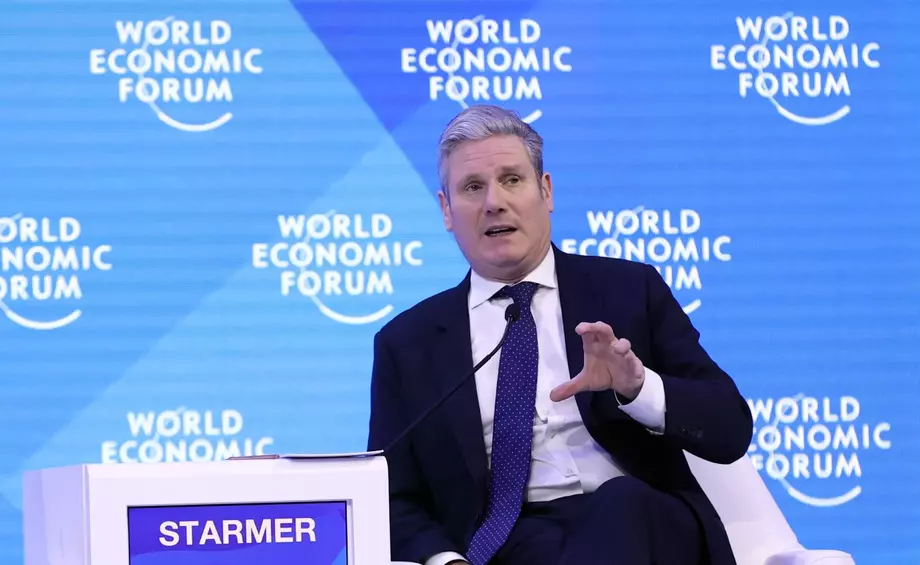
Meanwhile, Keir Starmer, the leader of the Labour party, has cancelled a plan to fund the transition from fossil fuels to green industries from the first day of government, should he win power. His response to criticism on this change was to turn on protesters.
He said: “The likes of Just Stop Oil want us to simply turn off the taps in the North Sea, creating the same chaos for working people that they do on our roads. It’s contemptible.”
Keir Starmer has deployed some divisive language about climate protestors of late.
Diverting the conversation
Referring to people defending the environment as a “minority” that acts against other citizens polarises society and marginalises protesters’ claims. It depicts people’s demands as somehow niche rather than amounting to a highly pressing threat to the majority.
One of the features of language is that when we talk, we only focus on one or, at most, a few aspects of a particular object or event. A lot will inevitably remain unsaid.
Still, when what remains unsaid is one of the most obvious elements of any given topic, what is missing becomes as informative as what was said. In this case, the focus on tactics instead of the substance of the protest betrays an unwillingness to engage with the climate crisis.
The government has put forward the home secretary Suella Braverman rather than the environment secretary to respond to the Just Stop Oil protests (itself a signal that they are seen as a public order issue more than anything else).
Braverman has referred to people protesting for environmental reasons as causing “havoc and misery”. Environment secretary Thérèse Coffey, meanwhile, doesn’t appear to have made any public statements regarding the matter.
To say that people are protesting and not mentioning the reason for the protest leaves the story incomplete. That’s something that rarely happens when UK politicians talk about protests in other countries.
But when talking about protests held in the UK, the debate looms over the disruption caused, as if the core message were secondary or even dispensable. It is only when the core message is ignored that politicians can refer to those acting in defence of human and nonhuman lives as “selfish”.
In the absence of meaningful political engagement, conversations about Just Stop Oil protests in the UK have strayed mainly into tactics and disruption at expense of their core message. However, politicians in democratic nations have a responsibility towards the electorate to engage properly with what citizens demand, not just with the way they make their claims heard.
Just Stop Oil activists with their hands glued to the wall after throwing tomato soup on Vincent van Gogh’s Sunflowers at the National Gallery. Photograph: Just Stop Oil/AFP/Getty Images. dizzy: I’m assuming that this is a JSO image really.
Opponents of meaningful action are trying to sidestep the immediacy of the threat to our planet
Expert opinion is settled and public opinion united on the urgency of climate action. If our politics or our discourse were in any way functional, there would be no confusion, no debate. We would simply be proceeding from one bold practical action to the next, following the blueprints laid out by the Climate Change Committee.
Instead, we have energy policies stitched together from reheated cliches, which on the one hand doesn’t matter, since no prime minister has been stable or focused enough to iterate them since Brexit, but on the other hand does matter. There is nothing more depressing than to go back to Amber Rudd’s “energy reset” speech of 2015: what if, instead of dismissing renewables incentives as “Blairite”, she’d actually taken them seriously and built on them? What if she’d pushed energy-efficient homes instead of the “unfettered market”, what if she’d made a plan to reduce dependence on gas from Vladimir Putin rather than increase it? “Spoiler alert,” wrote the renewables entrepreneur Bruce Davis at the time: “this doesn’t end well for bill payers.”And nor has it.
Obviously, Conservatives are only interested in their own internal dumb-and-dumber popularity contests, and cannot be trusted to make sound, long-term decisions in the national interest. They degrade everything in public life. But they only get away with this because of the discursive cover provided by pointless debates about climate action.