Tag: climate breakdown

  • I’m facing 10 years in prison for climate protest. I’d still do it again

    Spread the love

    Original article by Ella Ward republished from Open Democracy under a Creative Commons Attribution-NonCommercial 4.0 International licence.

    Matthew Chattle/Future Publishing via Getty Images

    The UK’s broken justice system is locking young activists like me away – and we’ll all suffer the consequences

    My name’s Ella. I am a fairly average 22-year-old from Birmingham, central England. I have friends, a supportive family, and hopes and dreams for after graduation. I’m also facing up to ten years in prison.

    On 5 August last year, I was arrested along with three others on a side street in Gatley, near Manchester, just after 4am. We had been planning to enter Manchester Airport’s airfield – provided it was safe to do so – to block the taxiway by glueing our hands to the tarmac. 

    We didn’t get near the airport, but I have been held in HMP Styal, a women’s prison just outside Manchester, ever since. I was charged with conspiracy to cause a public nuisance and spent six months in prison awaiting trial. I was found guilty in February and will have served three months by the time I am sentenced at the end of this month.

    So what drives a young person like me to take nonviolent action as drastic as this? You may have realised that I am a member of Just Stop Oil. At the time of my arrest, I was carrying boltcutters, glue, a hi-vis jacket, and a banner reading ‘sign the treaty’ in all caps.

    Get our free Daily Email

    Get one whole story, direct to your inbox every weekday.

    Sign up now

    It was the summer of 2024, the hottest year ever recorded. We were trying to send a message to the British government: it must sign the Fossil Fuel Non-Proliferation Treaty and make an immediate plan to transition away from oil, gas and coal to prevent further global heating, climate breakdown, and eventual societal collapse.

    We wanted to go to an airport – a symbol of the carbon economy – to make clear that the UK’s ‘business as usual’ approach is sending humanity over a cliff edge into destruction, displacement, and massive loss of life. 

    Our protest may have seemed drastic, but as I tried to explain to the judge and the jury, it was proportionate to the scale of the crisis we are facing. We all stand to lose everything. 

    Until my arrest, I was a final-year environmental science student at the University of Leeds. As I told the court, the science is clear: burning and extracting fossil fuels is heating the planet and leading to mass crop failure, with food insecurity and starvation for large parts of the world and drastic price hikes on staples for the rest of us. Crop failure on this scale will kill millions and displace many more. A billion people could be on the move within 25 years. The impacts will be felt everywhere, by everyone. 

    I spoke about my university lecturers, who are prominent climate scientists and are fearful for their children’s lives. They feel they aren’t being listened to, that the government is implementing policies contrary to science. I said that the knowledge I had gained from studying gave me a responsibility to act.

    Court trials like mine are remarkably technical – you must submit a legal defence if you want the judge to allow jurors to consider your motivation, or the context of your actions. I did not have a lawyer and, like my co-defendants, put forward a defence of ‘self-defence’ and ‘necessity’.  

    I argued that I acted not only to protect the lives of the millions already living on the frontline of climate breakdown, but in defence of myself and young people globally. I told the court how I am afraid for my own future, the future of my brother, my friends, my cousins, and all young people everywhere. 

    The judge dismissed this, saying the climate crisis does not pose an ‘immediate threat to life’. He told jurors to ignore the context around our actions and focus only on whether we had planned to commit a ‘crime’, saying that anything they’d heard about climate change during the hearing was irrelevant as it was a political or philosophical belief.

    But the climate crisis is not a belief, it is science, and science doesn’t care about legal defences, judges’ rulings or prison sentences. It will continue to worsen and take more lives until governments work together to stop burning fossil fuels.

    Related story

    Anti protest legislation

    How the UK’s ‘free speech’ government banned protest

    19 May 2025 | Sian Norris

    Conservative ministers loudly championed free speech – right up until they outlawed it. Now, we’re all at risk

    Over the past six months in prison, this truth has become clearer and clearer. Climate breakdown is no longer something I read about in textbooks, study in lectures, or write about in exams. I’m seeing it through the bars of my cell window. 

    On New Year’s Day, a state of emergency was declared as Greater Manchester was hit by heavy rains. Over a thousand people were evacuated from flooded homes – HMP Styal’s prison officers among them – their possessions ruined, and huge disruption caused. 

    The rising waters cut off the roads leading to the prison, causing a staffing crisis that compromised our safety, with no one allowed to leave their wings or houses. The prison’s library and workplaces were flooded, ruining books and leaving some prisoners with no work or activities even after the regime returned to normal. 

    Such extreme weather is being seen everywhere. On the penultimate day of my hearing, 14 people were killed in floods in the US state of Kentucky, including a seven-year-old girl and her mother, who were washed away in their car. I used my closing speech to tell jurors about this, about how upset it made me. How many people will die before we open our eyes? 

    The judge ruled it irrelevant.

    Having been barred from considering almost everything we’d said, the jury had little choice but to find us guilty. I am grateful to all twelve of them, though, for listening to what we had to say for three weeks and making the only decision they could within the constraints given.

    Despite the guilty verdict, being in prison and my impending sentencing, I am at peace. I should have had my whole life ahead of me, and my future now hangs in the balance, but I know that I acted in line with my conscience and moral convictions and, above all, nonviolently: without violence and actively against violence. 

    Being on trial at a crown court in my early twenties was the scariest thing I’ve ever done. But what choice did I have? At university, I studied the truth, and now I have to act on it.

    Original article by Ella Ward republished from Open Democracy under a Creative Commons Attribution-NonCommercial 4.0 International licence.

    Orcas discuss Donald Trump and the killer apes' concept of democracy. Front Orca warns that Trump is crashing his country's economy and that everything he does he does for the fantastically wealthy.
    Orcas discuss Donald Trump and the killer apes’ concept of democracy. Front Orca warns that Trump is crashing his country’s economy and that everything he does he does for the fantastically wealthy.
    Neo-Fascist Climate Science Denier Donald Trump says Burn, Baby, Burn.
    Neo-Fascist Climate Science Denier Donald Trump says Burn, Baby, Burn.
    Elon Musk urges you to be a Fascist like him, says that you can ignore facts and reality then.
    Elon Musk urges you to be a Fascist like him, says that you can ignore facts and reality then.
  • UN Chief’s Message to the World as Blistering 2024 Ends: ‘We Must Exit This Road to Ruin’

    Spread the love

    Original article by Jake Johnson republished from Common Dreams under Creative Commons (CC BY-NC-ND 3.0). 

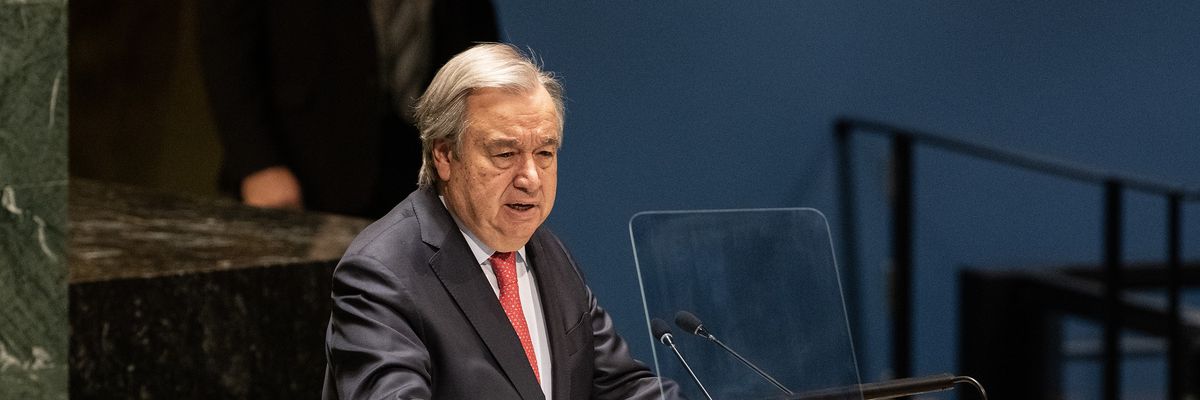
    United Nations Secretary-General António Guterres speaks at the U.N. headquarters on February 22, 2023. 
    (Photo: Lev Radin/Pacific Press/LightRocket via Getty Images)

    “This is climate breakdown—in real time,” said United Nations Secretary-General António Guterres.

    United Nations Secretary-General António Guterres said in a year-end message on Monday that “we have no time to lose” in the face of the worsening global climate crisis, which pushed temperatures to a record high this year and supercharged deadly extreme weather around the world.

    “Today, I can officially report that we have just endured a decade of deadly heat,” Guterres said in a video message posted to social media. “The top 10 hottest years on record have happened in the last 10 years, including 2024.”

    “This is climate breakdown in real time. We must exit this road to ruin,” he continued. “In 2025, countries must put the world on a safer path by dramatically slashing emissions and supporting the transition to a renewable future. It is essential—and it is possible.”

    https://twitter.com/i/status/1873655412198916332

    Sorry, this content could not be embedded.
    X

    Guterres’ call to action came in the waning days of what scientists say is almost certain to be the hottest year on record and the first full year to breach the critical 1.5°C temperature threshold.

    Celeste Saulo, secretary-general of the World Meteorological Organization (WMO), echoed Guterres’ warning about the dire consequences of the status quo, saying in a statement Monday that “if we want a safer planet, we must act now.”

    “It’s our responsibility. It’s a common responsibility, a global responsibility,” Saulo said. “Every fraction of a degree of warming matters, and increases climate extremes, impacts, and risks. Temperatures are only part of the picture. Climate change plays out before our eyes on an almost daily basis in the form of increased occurrence and impact of extreme weather events.”

    Last month, with emissions continuing to surge as the rich nations most responsible for the climate emergency refuse to ditch fossil fuels, world leaders convened for a U.N. climate summit in Azerbaijan that was swarmed by oil and gas lobbyists. The key gathering ended with a deal that climate advocates described as a step backward in the necessary push to rein in fossil fuel emissions.

    Climate-denier and fossil fuel booster Donald Trump’s looming return to office in the U.S.—the world’s largest historical emitter—has campaigners and scientists increasingly concerned about the future of existing global climate agreements such as the Paris accord, from which the president-elect has pledged to withdraw once again.

    One recent analysis projected that a second Trump administration could unleash an additional 4 billion tonnes of carbon dioxide equivalent by 2030, which would inflict $900 billion in global climate damages and deal a devastating blow to efforts to forestall runaway warming.

    Throughout 2024, Guterres used his role as head of the U.N. to sound the alarm about the world’s dangerous trajectory, saying in an October address that “there is a direct link between increasing emissions and increasingly frequent and intense climate disasters.”

    “We’re playing with fire,” he said, “but there can be no more playing for time.”

    Original article by Jake Johnson republished from Common Dreams under Creative Commons (CC BY-NC-ND 3.0). 

  • Forget Corbynism 2.0. Something bigger is happening on the British left

    Spread the love

    Original article by Michael Chessum republished from Open Democracy under a Creative Commons Attribution-NonCommercial 4.0 International licence.

    March for Palestine | Mark Kerrison/In Pictures via Getty Images

    A new generation across the UK is demanding political representation. But this unstoppable force is meeting an immovable object, the Labour Party

    A new generation across the UK is demanding political representation. Yet, this unstoppable force is now meeting an immovable object, the Labour Party.

    On one hand, despite its failure to leave behind much grassroots organisation, Jeremy Corbyn’s leadership galvanised millions. This generation now knows what it’s like to have a voice in the political mainstream. It won’t tolerate being shut out of the political process indefinitely. The success of Green and independent candidates at this year’s general election was in part driven by this fact.

    Meanwhile, the realities of climate breakdown, renewed austerity and a genocide in Gaza continue to alienate many. The British public backs the renationalisation of energy by a margin of four to one, the introduction of a wealth tax by a margin of eight to one, and a ban on arms exports to Israel by about three to one.

    On the other hand, the Labour Party is a fortress. Many advisors and politicians of the Labour right regarded the party’s defeat under Corbyn in 2019 as a lucky escape, and remain terrorised by the prospect of losing their careers to an insurgent political force. Starmerism is a relentless campaign on behalf of this professional political class, which is determined to shut the left out. Their hubris is an existential threat not just to Labour’s role as a political home for the left, but to the party itself.

    Both wings of the Labour Party are being blindsided by this process. The Labour right, and the commentariat that lives in its orbit, likes to think in terms of historical cycles and playbooks. The crushing of the post-Corbynite left was a repeat of Kinnock’s expulsion of the Militant Tendency. 2024 was just 1997 with TikTok.

    Starmer’s first act in government – blaming the outgoing administration for an economic mess and indicating a shift towards austerity – was both a conscious mimicry of Tory George Osborne and an homage to New Labour’s fiscal hawkishness.

    The Labour left’s attachment to the past is more nostalgic. Its leaders – Aneurin Bevan, Tony Benn, Corbyn – are stripped of their failings and revered. Its heroic defeats – the 1981 Deputy Leadership campaign, the Greater London Council’s fight for survival, Corbyn’s general elections – are endowed with their own folklore.

    Life on the outside is unthinkable and futile, as illustrated by every past attempt (the Socialist Labour Party, the Socialist Alliance, Respect, the Trade Union and Socialist Coalition, Left Unity) to build an alternative. “It is the Labour Party or it is nothing”, as Bevan once wrote, chiding members of the Independent Labour Party when they split in 1932.

    Both wings of Labour are good at producing a sense of collective memory that reinforces the party’s standing as immutable, and which relates new events to past ones. Neither are good at understanding when reality diverges from the historical script.

    In 2015, the left challenged for power, and in doing so broke the old system. Tony Blair did not bother to get rid of Tony Benn. Yet Starmer almost immediately expelled Corbyn and changed Labour’s rule to ensure that no one like him could lead the party again. He has already suspended seven MPs for voting to abolish the two-child benefit cap. It is only a matter of time until more feel forced to rebel.

    A politics from below

    The real politics happens outside parliament. We’ve already witnessed huge protests take shape against the massacre in Gaza, and the coming years could see mass movements and industrial unrest over cuts and living standards. Having lived through the Corbyn years, the participants of these movements are unlikely to be satiated by the prospect of a soft left Labour leader some time in the 2030s.

    Labour’s initial plans will provide some relief. The Employment Rights Bill is likely to be the most significant improvement in workers’ rights in decades. The renationalisation of the railways will also prove popular. But what happens once these progressive measures have been exhausted?

    The Green Party came second behind Labour in 39 seats. Pro-Palestinian Independent candidates have made inroads into safe Labour areas. For this to have happened while Labour was in opposition is unprecedented. Unless the new government rapidly shifts its approach on public spending, redistribution and green investment, it will face an earthquake.

    “Unless the new government shifts its approach on public spending, redistribution and green investment, it will face an earthquake”

    To have any success, the post-Corbynite left will have to ditch its obsession with icons and celebrities. Despite its roots in social movements, Corbynism became a tightly centralised project, in which activists were given little, if any, role in determining policy and strategy. Even now, discussion of the left’s future beyond Labour seems to centre on the intentions of Corbyn, his former advisors, prominent commentators, or MPs.

    Building a serious political project is about representing a solid base in society. This task flows from organising, and having roots in social and industrial struggle, not how many Twitter followers you have.

    The green surge

    Much of the left will also have to get over its age-old sectarianism towards the Greens, who have emerged as by far the most serious organised force to Labour’s left.

    If you listen to many old Labour left activists, or read many socialist newspapers, you will be presented with a critique of the Greens that is at least two decades old. They are portrayed as ‘Tories on bikes’ and alternative medicine enthusiasts. Their ability to win seats in North Herefordshire and Waveney is said to be the product of triangulation towards right-wing rural voters. The compromises of Green parties in France and Germany are held up as the inevitable destiny of the UK Greens.

    On the contrary, the Greens have become a major force precisely by occupying a space to the left of their sister parties in continental Europe. Since the turn of the millennium, their membership has risen twelve-fold to around 60,000. Waves of new members – from the ‘green surge’ of 2014 to today’s recruits – comprise its activist base.

    Many joined on a radical environmental basis, but just as many did so to oppose austerity, champion freedom of movement, or fight for Palestinian rights. There might be a case that their time would be better spent in Labour, or that party affiliation often operates more like a consumer identity than a political strategy. But the existence of a genuinely left-wing, and increasingly successful, Green Party in Britain is simply a fact. Any attempt to rebuild the left as an electoral force – from within Labour or outside – must take account of this.

    The landscape of the British left following the fall of Corbynism is still emerging. The only people who are definitely wrong are those who claim to know exactly what will happen. Perhaps Starmer will move back to the centre-left. Perhaps the social and industrial movements won’t materialise. There are many socialists – including me – who remain in Labour and will keep chipping away.

    One thing we can be certain of is that things will never go back to the way they were before the Corbyn moment. The late 2010s unleashed forces that are only beginning to shape our politics. The left must adapt if it is to survive.

    Original article by Michael Chessum republished from Open Democracy under a Creative Commons Attribution-NonCommercial 4.0 International licence.

  • Contempt, gagging and UN intervention: inside the UK’s wildest climate trial

    Spread the love
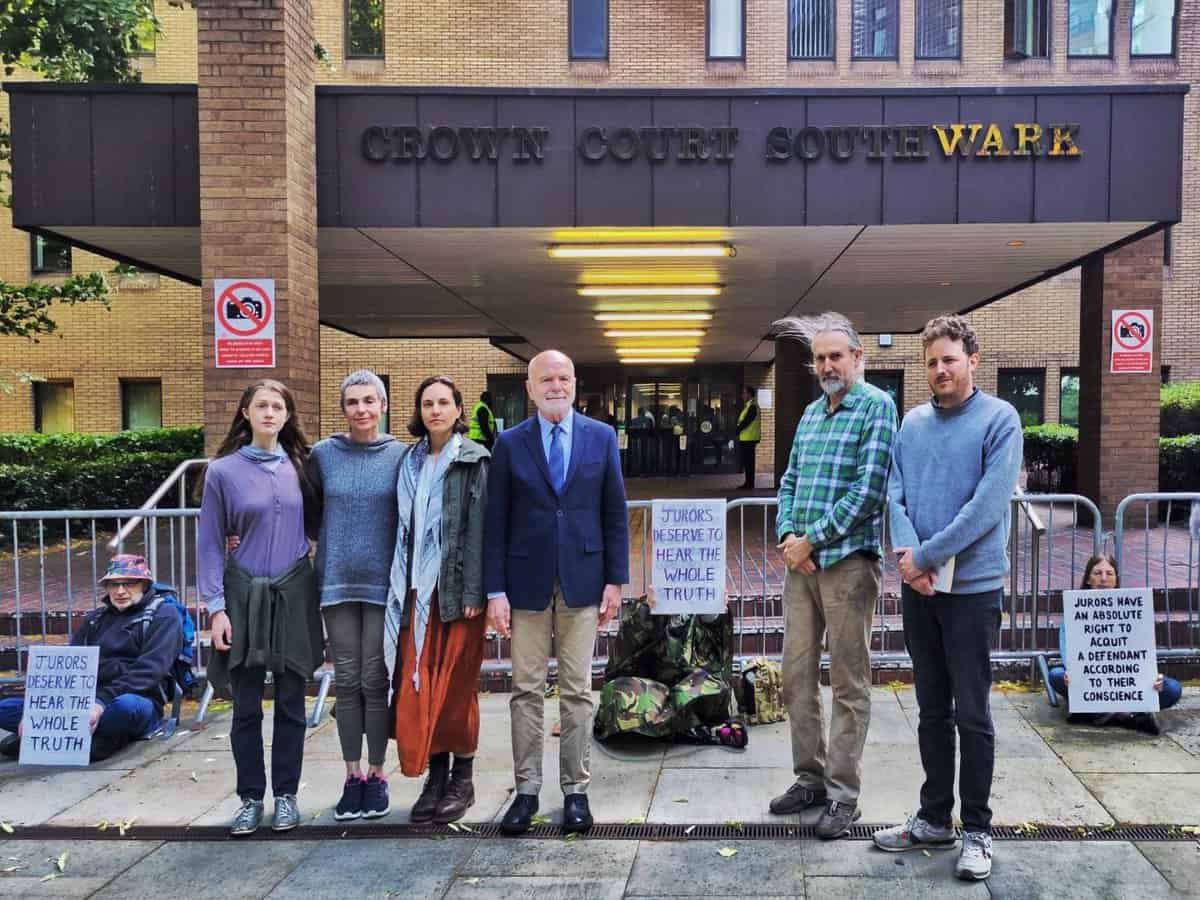
    UN Special Rapporteur on Environmental Defenders under the Aarhus Convention Michel Forst attended the trial of five Just Stop Oil supporters at Southwark Crown Court. He attended as an observer because of his serious concerns.

    https://www.theguardian.com/environment/article/2024/jul/12/contempt-gagging-un-intervention-uk-wildest-climate-trial-just-stop-oil

    Prosecution of five Just Stop Oil activists over M25 protest led to chaotic scenes in court and concerns about ‘judicial persecution’

    As part of his role as UN rapporteur for environmental defenders, Michel Forst has been watching proceedings against climate activists at courts across Europe.

    But he may not have seen anything like what unfolded at Southwark crown court in London over the past two and a half weeks, where five Just Stop Oil activists were convicted for conspiring to cause gridlock on the M25 in November 2022.

    On the days Forst visited, he witnessed three of the five defendants being arrested in court and dragged to the cells, protesters outside attempting to warn jurors they were not hearing the full case and a judge desperately trying to maintain control over his courtroom.

    The judge, Christopher Hehir, had ruled that information about climate breakdown could not be entered into evidence, and could only be referred to by defendants briefly as the “political and philosophical beliefs” that motivated them – which he would tell the jury were in any case irrelevant to their deliberations.

    But the defendants had other plans. They sought to turn Hehir’s court into a “site of civil resistance”, causing as much disruption as necessary to ensure that if the jury could not see their evidence on climate breakdown, then the jurors could at least be in no doubt it was being kept from them.

    By the time the jury retired to consider a verdict, police had been called into court no fewer than seven times, four of the five defendants had been remanded to prison and 11 others were facing contempt of court proceedings for protests outside the courtroom.

    By the end of the trial, Whittaker De Abreu, the only one who had not represented herself, was the only defendant left in court.

    As a punishment for their “persistent disruption”, Hehir slashed the time given to each defendant from one hour to 20 minutes. He further prohibited any mention of the climate crisis, the legal defences he had disallowed or the principle of jury equity – the idea that jurors can acquit based on their conscience.

    As Hallam, Shaw, Lancaster and Gethin gave their speeches from behind the reinforced glass screen of the dock, they each proceeded to flout Hehir’s prohibitions, arguing they had been denied a right to a fair trial.

    Hallam told jurors: “It’s blindingly obvious to us here first that you have not been given all the evidence you need. You cannot be sure of our guilt if you are not sure that you have not been given the evidence … we have received no good reason why we are not allowed to tell you what is blindingly obvious, namely what I’m not allowed to speak about. If you are not allowed to hear the blindingly obvious then it’s not a fair trial is it?”

    It took just a day’s deliberations for the jury to unanimously find them guilty.

    Given the recent history of UK climate protest trials, in which defendants have been sentenced to jail for merely mentioning the words “climate change”, and notwithstanding the dramatic arrests in court, Forst said he was surprised the judge gave them an opportunity to mention climate breakdown at all.

    “But the little latitude they had to mention climate change was in the meantime emptied of its very meaning by the fact that, overall, the jury was told to ignore most of it,” he added.

    https://www.theguardian.com/environment/article/2024/jul/12/contempt-gagging-un-intervention-uk-wildest-climate-trial-just-stop-oil

  • Big Oil’s Big Lies Are Catching Up With Them

    Spread the love
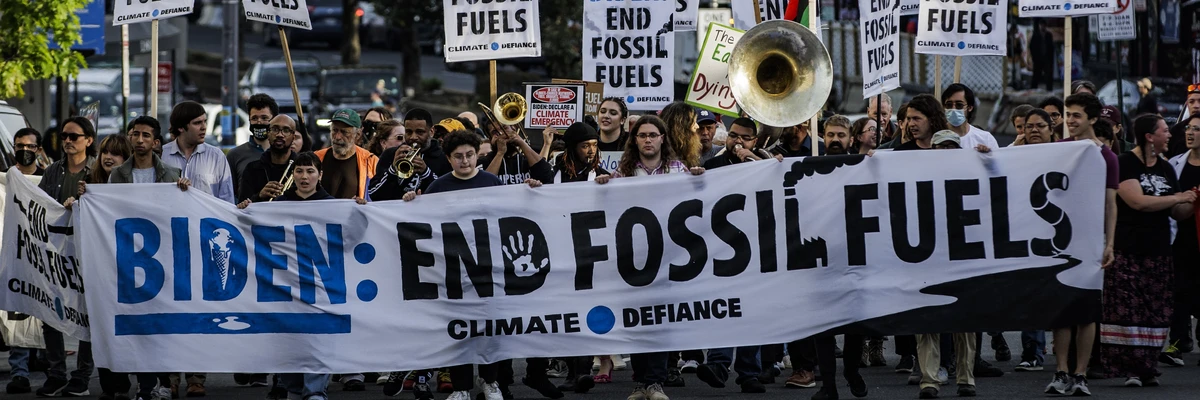
    Climate protestors march in Washington DC
    Climate protestors march in Washington DC

    Original article by Cassidy Dipaola republished from Common Dreams under Creative Commons (CC BY-NC-ND 3.0).

    The American public believes fossil fuel companies should pay for their deceit. Our job is to make sure they do.

    For decades, the fossil fuel industry has misled the public about the climate impacts of its products. Internal documents prove companies like Exxon knew since the 1970s that burning oil and gas drives catastrophic global warming. Yet rather than warn society, they denied the science and obstructed climate action at every turn.

    This corporate deception continues today, but the public is catching on in a big way. New polling from Data for Progress reveals 70% of Americans support making Big Oil pay for the climate damages their products have caused. With climate disasters growing in frequency and severity, people are fed up footing the bill for Big Oil’s greed.

    Such greed should disgust us all. But outrage alone achieves nothing.

    Critically, the American public believes Big Oil should pay for their lies. The new polling reveals that 77% of Americans agree that if oil and gas companies misled the public about climate impacts, they should help cover resulting climate costs. This consensus crosses political divisions. Agreement spans 91% of Democrats, 75% of Independents, and 63% of Republicans—an exceptionally high level of bipartisan agreement.

    The poll also shows a sharp rise in support for making polluters pay over time. Similar polls in 2021 and 2019 found roughly 60% and 57% of Americans backed accountability, respectively. In just a few short years, support for accountability has jumped nearly 20 percentage points. Now near three-quarters of Americans are in agreement around the belief that Big Oil should pay for the harms it sowed through decades of deception.

    The costs of warming are no longer abstract statistics. They can be seen in the devastation of communities across America. In 2021 alone, extreme weather fueled by climate change inflicted over $165 billion in damages nationwide. Floods, wildfires and storms killed hundreds and displaced countless more. Low income and minority communities suffered most, abandoned by the very corporations who caused this crisis.

    At the same time these climate impacts accelerate, the fossil fuel industry is raking in massive profits. Just last quarter, Chevron pocketed $11.2 billion and Exxon secured $19.7 billion. Rather than invest in renewables or pay for the harms they’ve caused, they’re doubling down on fossil fuels, scooping up sister-companies and stoking fears of monopolization in the public and leadership alike.

    New lawsuits are seeking damages for Big Oil’s climate deception, and they’re gaining traction.

    By misleading the public on climate science for so long, the industry secured decades of unchecked emissions to swell its bottom line. But now, the deadly consequences of its lies are coming to bear. Record heat, drought and near-weekly hurricanes make clear we rapidly must transition from fossil fuels to avert utter climate catastrophe.

    The public correctly realizes these corporations should pay for the crisis they knowingly fueled. Our leaders must stand up to polluters and enact policies to rein in their abuses. A future free from fossil fuels is possible, and we now have the political will to make it happen.

    Original article by Cassidy Dipaola republished from Common Dreams under Creative Commons (CC BY-NC-ND 3.0).

    Cassidy DiPaola is the Spokesperson and Campaign Manager for the Stop The Oil Profiteering Campaign at Fossil Free Media.

    Full Bio >