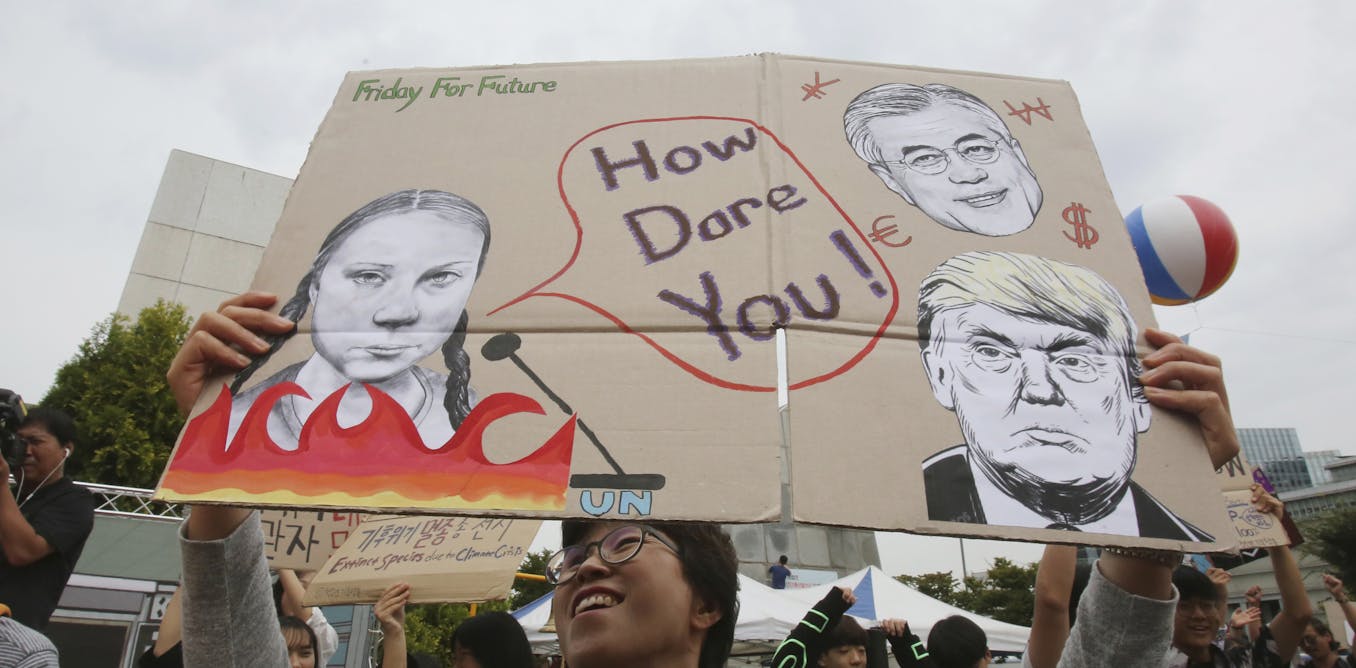
Tag: climate change denier

  • 10 reasons why US president-elect Donald Trump can’t derail global climate action

    Spread the love
    Ahn Young-joon/AP

    Wesley Morgan, UNSW Sydney and Ben Newell, UNSW Sydney

    If you care about saving Earth from catastrophe, you might be feeling a little down about the re-election of Donald Trump as United States president. Undeniably, his return to the White House is a real setback for climate action.

    Trump is a climate change denier who has promised to increase fossil fuel production and withdraw the US from the Paris climate deal, among other worrying pledges.

    But beyond Trump and his circle, there remains deep concern about climate change, especially among younger people. Support for climate policy remains high in the US and around the world. And studies based on data from 60,000 people in more than 60 countries suggest individuals’ concern about climate change is widely underestimated.

    So now is a good time to remember that efforts to tackle the climate crisis – both in Australia and globally – are much bigger than one man. Here are ten reasons to remain hopeful.
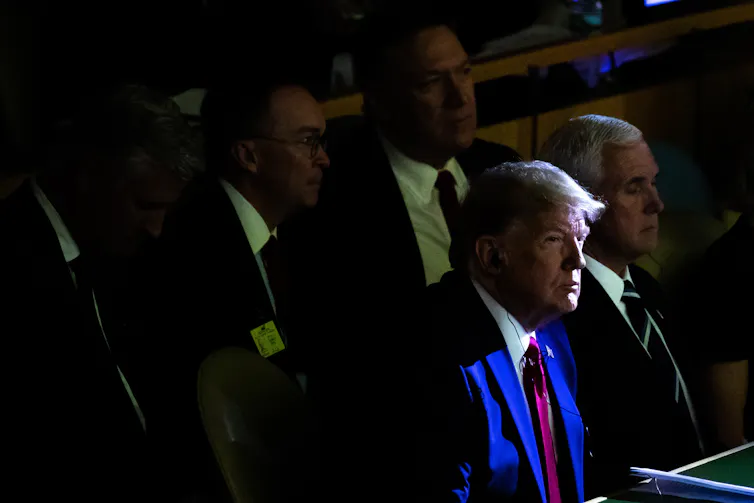
    Beyond Trump and his circle, there remains deep concern about climate change around the world. HAYOUNG JEON/EPA

    1. The global clean energy transition can’t be halted

    The global shift to clean energy is accelerating, and Trump can’t stop it. Investment in clean energy has overtaken fossil fuels, and will be nearly double investment in coal, oil and gas in 2024. This is a historic mega-trend and will continue with or without American leadership.

    2. Clean energy momentum is likely to continue in the US

    Much of the Biden-era spending on clean energy industries went to Republican states and Congressional districts. New factories for batteries and electric vehicles will still go ahead under the Trump administration. After all, entrepreneur Elon Musk – who is expected to join the Trump administration – makes electric vehicles.

    Some of Trump’s financial backers are receiving subsidies for clean energy manufacturing and 18 Republican Congress members have gone on record to oppose cuts to clean energy tax credits.

    The clean energy shift will continue in the US. Piictured: a solar panel array floats on a water storage pond in New Jersey. Seth Wenig/AP

    3. The US still wants to beat China

    There is bipartisan concern in Washington about the US losing a technological edge to Beijing. China currently dominates global production of electric vehicles, batteries, wind turbines and solar panels. So internal pressure in the US to counter China’s manufacturing might will continue.

    4. The federal government is not everything in the US

    When Trump was last in power, he withdrew the US from some climate commitments, such as the Paris Agreement. But many state and local governments powered ahead with climate policy, and that will happen this time around, too. For example, California – the world’s fifth largest economy – plans to eliminate its greenhouse gas footprint by 2045. Even Texas, a Republican heartland, is leading a shift toward wind and solar power.

    5. The US climate movement will be more energised than ever

    During Trump’s first presidency, the US climate movement developed policy proposals for a “Green New Deal”. Many of these proposals were later implemented by the Biden administration. Initial reactions to Trump’s re-election suggest we can expect similar policy advocacy this time around.
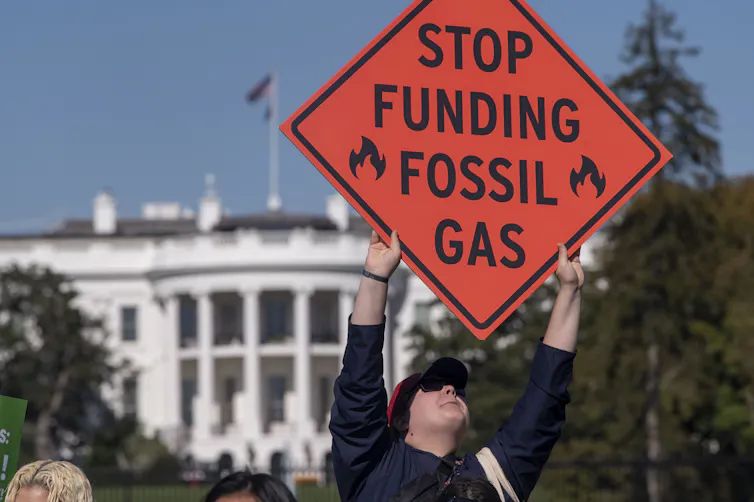
    Efforts to tackle the climate crisis are much bigger than one man in the White House. Kevin Wolf/AP

    6. Global climate cooperation is bigger than Trump

    If Trump makes good on his promise to leave the Paris Agreement (again), he will only be leaving the room where the world’s future is being shaped. The US has walked away from global climate agreements before – for example, refusing to join the Kyoto Protocol in 2001. But other nations rallied for global action, and will do so again.

    7. The rules-based global order will remain

    When a nation walks away from rules that have been agreed after decades of negotiation, responsible countries must work together to bolster global cooperation. This applies to trade and security – and climate is no different.

    As our Foreign Minister Penny Wong recently explained, Australia, as a middle power on the world stage, wants:

    a world where disputes are resolved by engagement, negotiation and by reference to rules [and] norms […] We don’t want a world in which disputes are resolved by power alone.

    8. Australian diplomacy matters

    Australia is seeking to co-host the United Nations climate talks with Pacific island countries in 2026, and is emerging as the favourite. Hosting the conference, known as COP31, would be a chance for Australia to help broker a new era of international climate action, even if the US opts out under Trump.

    Hosting the talks would also help cement Australia’s place in the Pacific and assist our Pacific neighbours to deal with the climate threat.

    Co-hosting COP31 would help assist our Pacific neighbours to deal with the climate threat. Mick Tsikas/AAP

    9. Australia’s clean energy shift is accelerating

    About 40% of Australia’s main national electricity grid is powered by renewables and this is set to rise to 80% by 2030. Some states are surging ahead – for example, South Australia is aiming for 100% renewables by 2027.

    Australians love clean energy at home, too. One in three households have rooftop solar installed, making us a world-leader in the technology’s uptake. Trump’s occupation of the Oval Office cannot stop this momentum.

    10. Trump cannot change the science of climate change

    The science is clear – burning coal, oil and gas fuels climate change and increases the risk of disasters that are harming communities right now. In Australia, we need look no further than the Black Summer bushfires in 2019-20 and unprecedented Lismore floods in 2022.

    And the damage is happening across the globe. In October, twin hurricanes in the US – made stronger by the warming ocean – left a damage bill of more than US$100 billion. And hundreds of people died when a year’s worth of rain fell in one day in Spain last month.

    The devastating floods in Spain remind us that climate change has arrived. ANA ESCOBAR/EPA

    On gloomy days – like, say, the election of a climate denier to the White House – it might feel humanity won’t rise to Earth’s biggest existential challenge. But there are many reasons for hope. The vast majority of us support policies to tackle climate change, and in many cases, the momentum is virtually unstoppable.

    Wesley Morgan, Research Associate, Institute for Climate Risk and Response, UNSW Sydney and Ben Newell, Professor of Cognitive Psychology and Director of the UNSW Institute for Climate Risk and Response, UNSW Sydney

    This article is republished from The Conversation under a Creative Commons license. Read the original article.

  • Liz Truss Book Calls for Climate Laws to be Abolished and Boasts of Effort to Cancel UK COP Summit

    Spread the love

    Original article by Adam Barnett republished from DeSmog.

    Liz Truss and former Prime Minister of Kazakhstan Asqar Mamin at the COP26 summit in Glasgow. Credit: Karwai Tang/UK Government (CC BY-NC-ND 2.0)

    The former prime minister attacks flagship climate deals and makes false claims about electric vehicles, Russia’s influence on energy policies, and net zero.

    The new book by former Prime Minister Liz Truss urges the UK, U.S. and EU to drop their landmark climate change laws, spreads falsehoods about green policies, and fondly recalls an attempt to cancel a major climate conference.

    Truss, who is the Conservative MP for South West Norfolk, resigned as prime minister in October 2022 after just 49 days in office.

    Since leaving 10 Downing Street, Truss has attempted to expose the “deep state” forces that allegedly brought down her premiership, while advocating for “free market” ideas within the Conservative Party, helping to launch the Popular Conservatives group.

    In her book, Ten Years to Save the West, which she is promoting widely this week, Truss writes that “the zealous drive to net zero”, the UK’s legally binding 2050 climate target, amounts to “unilateral economic disarmament” and is “a drag on economic growth”. She also claims that, while serving in the Treasury, she attempted to cancel the 2021 COP26 climate summit in Glasgow.

    Truss writes: “We should abolish the Climate Change Act and instead adopt a new Climate Freedom Act that enables rather than dictates technology”. She adds that “the U.S. should reverse the Inflation Reduction Act, and the EU should abandon its equivalent measures”.

    The Climate Change Act legalised the UK’s commitment to reducing carbon dioxide emissions by at least 80 percent by 2050 from 1990 levels. The Inflation Reduction Act is a $369 billion package of grants and subsidies by the U.S. government to spur green technology investment. 

    Scientists at the Intergovernmental Panel on Climate Change (IPCC) have said that without “immediate and deep emissions reductions across all sectors” limiting global heating to 1.5C is beyond reach.

    Restricting global temperatures to this threshold – the target agreed by the UK as part of the 2015 Paris Agreement – would prevent the worst and most irreversible effects of climate change, including floods, droughts, heatwaves, and wildfires.

    In the book, Truss also attacks climate advocates, writing that “the environmental movement is fundamentally driven by the radical left”, adding: “This ‘watermelon’ tendency is green on the outside, red on the inside – a modern rebranding of socialism. It features the same instincts of collectivism and authoritarianism.”

    Truss writes that “we should cancel” the United Nations annual COP climate summit, and falsely claims that electric vehicles are worse for the environment than those powered by fossil fuels.

    “In recent years, more radical forms of climate misinformation and disinformation have become mainstreamed”, said Jennie King, director of climate research and policy at the Institute of Strategic Dialogue think tank. “Such content continues to grow in virality and engagement online, but its impacts are vastly increased when platformed in the media or by politicians.”

    King said “the normalisation of wild and outlandish claims”, with climate action “being framed through a conspiratorial, tribalist and anti-scientific lens”, can lead to “real-world harm”. 

    “When such ideas are conveyed from the very corridors of power, it sets a dangerous precedent”, she added. 

    The IPCC warned in 2022 that efforts to tackle climate change were being delayed by “rhetoric and misinformation that undermines climate science and disregards risk and urgency”.

    Truss Claims ‘Couldn’t be Further from the Truth’

    Truss’s book is published by Biteback Publishing, a company owned by former Conservative deputy chair and major party donor Michael Ashcroft. 

    The former prime minister dedicates a chapter to green policies, titled ‘A Hostile Environment’, apparently a play on the term used by the Conservative government about its anti-immigration policies

    Truss writes that current environmental policies should be scrapped in favour of a “free market” approach. On energy, she calls for more fossil fuel extraction, advocating a mix of “oil and gas as well as nuclear and renewables”, adding: “The use of North Sea oil and gas is crucial, so there needs to be investment in that too. There also should be fracking in the UK.”

    Fracking for shale gas is a controversial practice that risks causing air, water, and noise pollution.

    She fails to mention that oil and gas firms receive major subsidies and tax breaks from the government, which would logically be removed in a “free market” energy system. The UK government has given £20 billion more in support to fossil fuel producers than renewables companies since 2015.

    Truss’s book also attacks the multilateral UN COP process, which has seen agreements on transitioning away from fossil fuels, and financial support for poorer countries suffering the worst effects of climate change. 

    Truss writes that “we should cancel the COP gravy train”. She claims that, in 2018, when she was chief secretary to the Treasury, she made “11th-hour attempts to ditch COP26”, the UN climate summit hosted by the UK in 2021, arguing that it was not a spending priority. 

    At COP26, nearly 200 countries agreed to ramp up efforts to cut emissions, also calling on wealthy countries to double their funding to poorer nations that have contributed the least to climate change. More than 40 countries also pledged to quit coal, the dirtiest fossil fuel and the world’s largest source of carbon dioxide emissions.

    The book also spreads false claims about climate policies. Truss writes that “in the UK and Europe, Russia has funded anti-fracking campaigns”, a claim which is not supported by any evidence.

    Truss claims that policies like “the switch from petrol to diesel in cars or the use of electric vehicles, have either harmed the environment in other ways or empowered our polluting adversaries elsewhere in the world”. 

    Colin Walker, head of transport at the Energy and Climate Intelligence Unit think tank, told DeSmog: “The notion that the switch to electric vehicles will have little discernible environmental impact, and make us dependent on imported gas and coal, couldn’t be further from the truth.

    “The total lifetime CO2 emissions of an electric vehicle, from being built to being driven, are three times lower than a petrol vehicle – a figure that will only get higher as our grid becomes cleaner. And while older technologies like petrol cars and gas boilers rely on fossil fuels imported from abroad, EVs and heat pumps can be powered by electricity generated by British wind and solar farms.”

    Truss also writes of “ludicrous claims that pursuing a net zero agenda … will boost the economy and drive growth”. 

    Walker added: “The UK’s net zero economy is now worth £74 billion, and grew by nine percent in 2023.  The wider economy grew just 0.1 percent. Talking down the economic opportunities net zero has to offer the UK is at odds with a growth agenda when the U.S., EU and China are all competing for clean industries.” 

    Truss’s Climate Denial Ties

    Truss has a long history of opposing climate policies. In the 2022 Conservative Party leadership contest, she attacked solar farms on agricultural land and, during her brief time in 10 Downing Street, she overturned the UK’s ban on fracking. (A policy reversed by her successor, Rishi Sunak.)

    As DeSmog reported at the time, Truss’s leadership campaign received £30,000 from a pro-fracking lobby group, £10,000 from a climate denial activist, and £100,000 from the wife of a former BP oil executive. Truss received a further £5,000 from Lord Vinson, a Tory peer who has provided funding to the UK’s leading climate science denial group, the Global Warming Policy Foundation

    Since leaving office, Truss has received £250,000 in speaking fees, including £7,600 last April from the Heritage Foundation, a right-wing U.S. think tank that has long promoted climate science denial. Heritage President Kevin Roberts provides a long and glowing blurb for Truss’s book. 

    Earlier this year, Truss helped to launch the Popular Conservatives (PopCon), a new initiative run by Truss-ally Mark Littlewood, the former director general of the Institute of Economic Affairs, a think tank which received funding from oil major BP for at least 50 years. 

    At the PopCon launch, Truss attacked “net zero zealotry”, claiming voters “don’t like the net zero policies which are making energy more expensive”

    .Additional reporting by Sam Bright

    Original article by Adam Barnett republished from DeSmog.