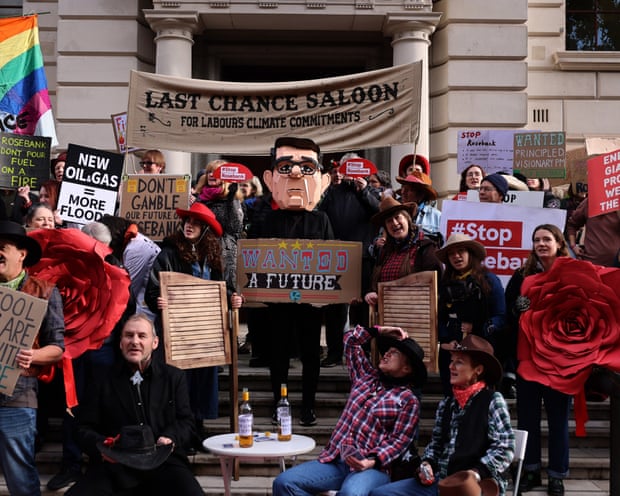
Opponents of the Rosebank oilfield protesting outside the Treasury in London this month. Photograph: Andy Rain/EPA
Labour’s internal divisions over the giant Rosebank oilfield have spilled into the open, with nearly 100 Labour MPs – including a handful of frontbenchers – writing to the prime minister to express their opposition to the project.
Ninety-two backbenchers and at least four frontbenchers have signed a letter to Andy Burnham urging him not to let his ministers approve the scheme for the biggest undeveloped field in UK waters.
It is the clearest sign yet of the deep rift the issue has caused within the Labour party. The chancellor, John Healey, and many Scottish MPs are pushing for it to go ahead, while dozens of others argue for it to be rejected on climate grounds.
Feelings are running so high that more than one frontbench ministerial aide is considering resigning if the project is approved, the Guardian has been told.
Catherine Fookes, the MP for Monmouthshire who helped organise the letter, said: “Concern about this project is widespread within the parliamentary Labour party. Some 92 people have signed our letter, and there are more who are worried about Rosebank who haven’t signed it.
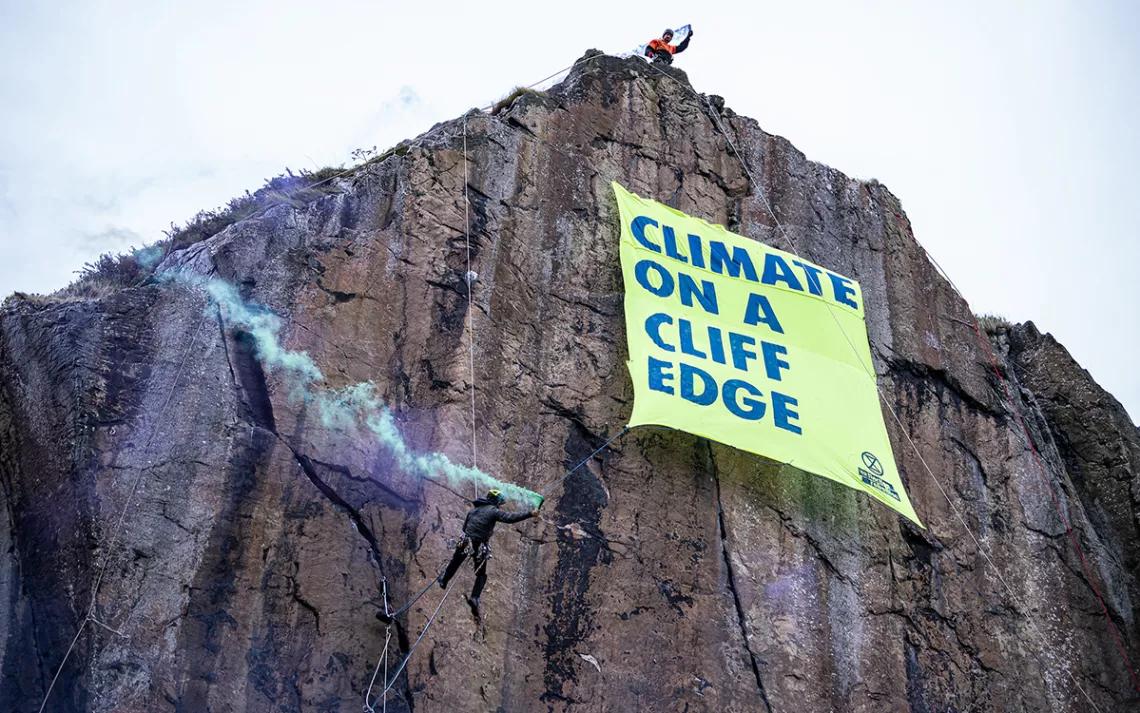
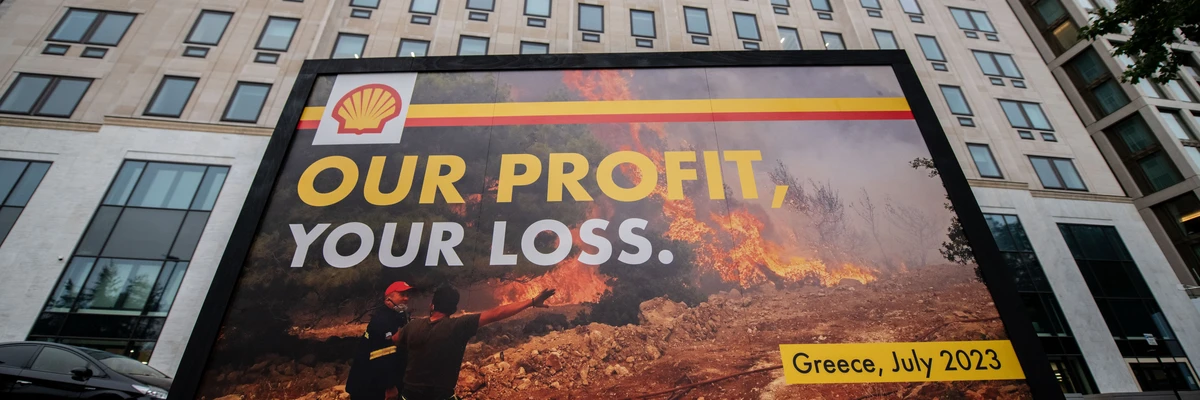
UK Prime Minister Andy Burnham says that he’s going to permit the Jackdaw and Rosebank North Sea fossil fuel projects. He urges you to ignore facts and reality and be a climate science denier like himExperienced climbers scale a rock face near the historic Dumbarton castle in Glasgow, releasing a banner that reads “Climate on a Cliff Edge.” One activist, dressed as a globe, symbolically looms near the edge, while another plays the bagpipes on the shores below. | Photo courtesy of Extinction Rebellion and Mark RichardsGreenpeace activists display a billboard during a protest outside Shell headquarters on July 27, 2023 in London. (Photo: Handout/Chris J. Ratcliffe for Greenpeace via Getty Images)
People around the world have contended with unprecedented weather events and their fatal effects caused by the climate catastrophe
After the world’s hottest summer since records began in 1850, the death toll from extreme weather in 2026 is already in the high tens of thousands. That is a conservative estimate and is certain to rise much higher.
As Cop31 continues [now ended] and scientists warn that climate breakdown may be accelerating, the Guardian looks back at a year of droughts, fires and floods as a reminder that, unless the world takes urgent action to cut emissions, this disastrous year will be one of the best of the rest of our lives.
…
July Joint-hottest July on record
Europe hit by wildfires and severe drought – video
Fires choke Canada and Europe
Almost 1,000 wildfires sweep across Canada, charring 3m hectares (7.4m acres) and sending a haze of smoke as far as New York. On 15 July Toronto registers the world’s worst air quality as a result of the haze. Smoke kills 4,000 people in Canada each year, almost four times as many as at the start of the century. Meanwhile, in Europe, prolonged droughts create tinderbox conditions for wildfires in Greece, Portugal, Italy, Norway, Germany, Spain and France. They burn 686,000 hectares in Europe, twice the average of the past 20 years.
Extreme weather disrupts US 250th birthday festivities and theWorldCup
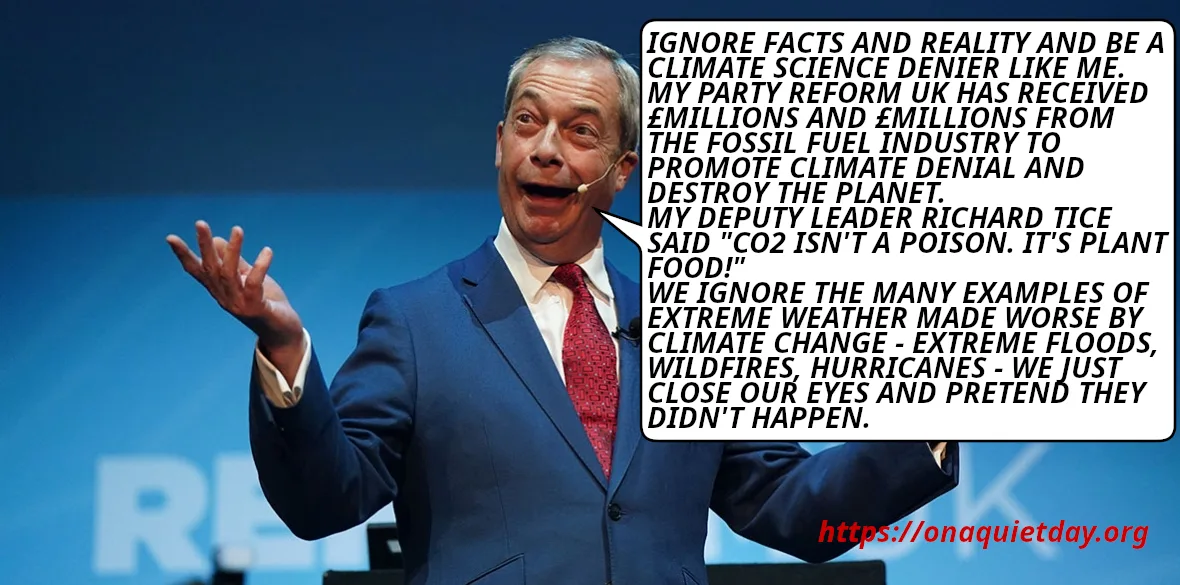
Greenpeace activists display a billboard during a protest outside Shell headquarters on July 27, 2023 in London. (Photo: Handout/Chris J. Ratcliffe for Greenpeace via Getty Images)Experienced climbers scale a rock face near the historic Dumbarton castle in Glasgow, releasing a banner that reads “Climate on a Cliff Edge.” One activist, dressed as a globe, symbolically looms near the edge, while another plays the bagpipes on the shores below. | Photo courtesy of Extinction Rebellion and Mark RichardsNigel Farage urges you to ignore facts and reality and be a climate science denier like him and his Deputy Richard Tice. He says that Reform UK has received £Millions and £Millions from the fossil fuel industry to promote climate denial and destroy the planet.
People around the world have contended with unprecedented weather events and their fatal effects caused by the climate catastrophe
After the world’s hottest summer since records began in 1850, the death toll from extreme weather in 2026 is already in the high tens of thousands. That is a conservative estimate and is certain to rise much higher.
As Cop31 continues [now ended] and scientists warn that climate breakdown may be accelerating, the Guardian looks back at a year of droughts, fires and floods as a reminder that, unless the world takes urgent action to cut emissions, this disastrous year will be one of the best of the rest of our lives.
…
May Second-hottest May on record
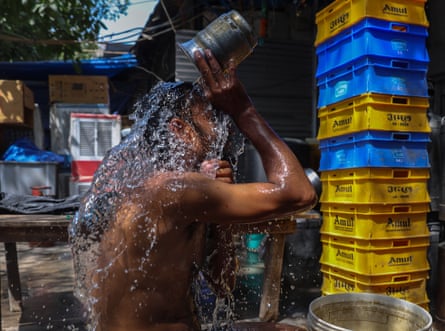
A man seeks relief from the heat as temperatures rise in New Delhi, India. Photograph: Rajat Gupta/EPA
Hundreds of millions endure deadly heat insouth Asia At least 47 heat-related deaths are reported in southern Asia as temperatures soar above 45C in several Indian and Bangladeshi cities, and hit a peak of 52C in Pakistan’s southern province of Sindh. Scientists warn that the climate crisis is exposing hundreds of millions of people in south Asia to longer, deadlier pre-monsoon heat.
June Second-hottest June on record
People assess the aftermath of landslides and flooding next to houses damaged in Attécoubé, a suburb of Abidjan, Côte d’Ivoire. Photograph: Chris Boli/AFP/Getty Images
Ocean heat enters uncharted territory Sea surface temperature graphs begin to jag upwards and away from all previous highs on 21 June, starting a trend that will worsen over the rest of the year. This alarms scientists because oceans absorb more than 90% of the excess energy in Earth’s system. If the seas start to release that heat then the land and air will get warmer more quickly. This coincides with the emergence of the latest El Niño, which is confirmed on 2 June.
Arctic and Antarctic swelter in unprecedented warmth Instead of the usual winter snow and ice, scientists at the Esperanza base on the Trinity peninsula of Antarctica are astonished to see rain and dirt outside their windows after an eight-day heatwave that peaked with a record temperature of 15C on 6 June. At the other end of the planet, the Arctic experiences its warmest ever June. Beliy Island, Siberia, registers 28.3C on 25 June, the highest temperature ever recorded that far north in the Eurasian Arctic.
West African deluge takes heavy toll Relentless rains claim almost 100 lives in west Africa from May to June. Record downpours of up to 140mm (5.5in) in a single day are made five times more likely and 23% more intense by the human-caused climate crisis. Floods and mudslides kill 59 in Côte d’Ivoire, 35 in Ghana and five in Togo.
Greenpeace activists display a billboard during a protest outside Shell headquarters on July 27, 2023 in London. (Photo: Handout/Chris J. Ratcliffe for Greenpeace via Getty Images)Experienced climbers scale a rock face near the historic Dumbarton castle in Glasgow, releasing a banner that reads “Climate on a Cliff Edge.” One activist, dressed as a globe, symbolically looms near the edge, while another plays the bagpipes on the shores below. | Photo courtesy of Extinction Rebellion and Mark RichardsNigel Farage urges you to ignore facts and reality and be a climate science denier like him and his Deputy Richard Tice. He says that Reform UK has received £Millions and £Millions from the fossil fuel industry to promote climate denial and destroy the planet.
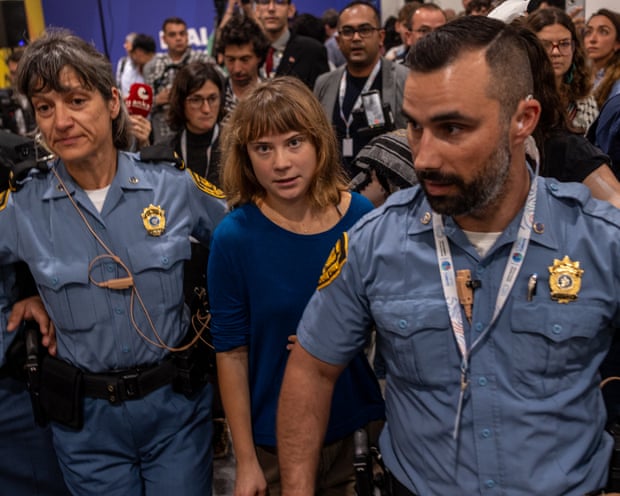
Greta Thunberg is escorted by police officers after the press conference on day four at Cop31. Photograph: Burak Kara/Getty Images
Swedish activist criticised world governments for their failure to prevent environmental breakdown
The planet is “not dying, it is being killed and we know by who”, said Greta Thunberg, who excoriated world governments for their failure to prevent environmental breakdown in her first appearance at the annual UN climate talks in five years.
Thunberg, 23, the Swedish activist who became famous for heading the school climate strike movement, delivered her stark message to those gathered at the Cop31 summit in Antalya, Turkey, amid the ongoing failure by countries to adequately address the climate crisis.
“It [Earth] is being killed by the very same people thought to come to our rescue,” Thunberg said.
“No one is coming to our rescue. When our human rights are being threatened by states and other institutions, it’s our duty to stand up and be the adult in the room and fight for everyone’s human rights.”
Thunberg, who in recent years has shifted her focus towards other areas such as the conflict in Gaza, linked worsening global heating to other calamities such as war in an appearance alongside activists from Nepal, Canada and Australia.
“We are heading towards a future of more genocides and more ecocides and the complete compromise of our basic rights and where basic necessities become luxuries,” she said.
Greenpeace activists display a billboard during a protest outside Shell headquarters on July 27, 2023 in London. (Photo: Handout/Chris J. Ratcliffe for Greenpeace via Getty Images)Experienced climbers scale a rock face near the historic Dumbarton castle in Glasgow, releasing a banner that reads “Climate on a Cliff Edge.” One activist, dressed as a globe, symbolically looms near the edge, while another plays the bagpipes on the shores below. | Photo courtesy of Extinction Rebellion and Mark RichardsUK Prime Minister Andy Burnham says ignore facts and reality and be a climate science denier like him. He says that he’s delayed the go-ahead for Jackdaw and Rosebank North Sea oil and gas extraction until after the Holborn and St. Pancras by-election – don’t want democracy interfering with Capitalism.Climate science denier Donald Trump confirms that he knows nothing about democracy and that more liquid gold is being secured according to his policy of global privateering.
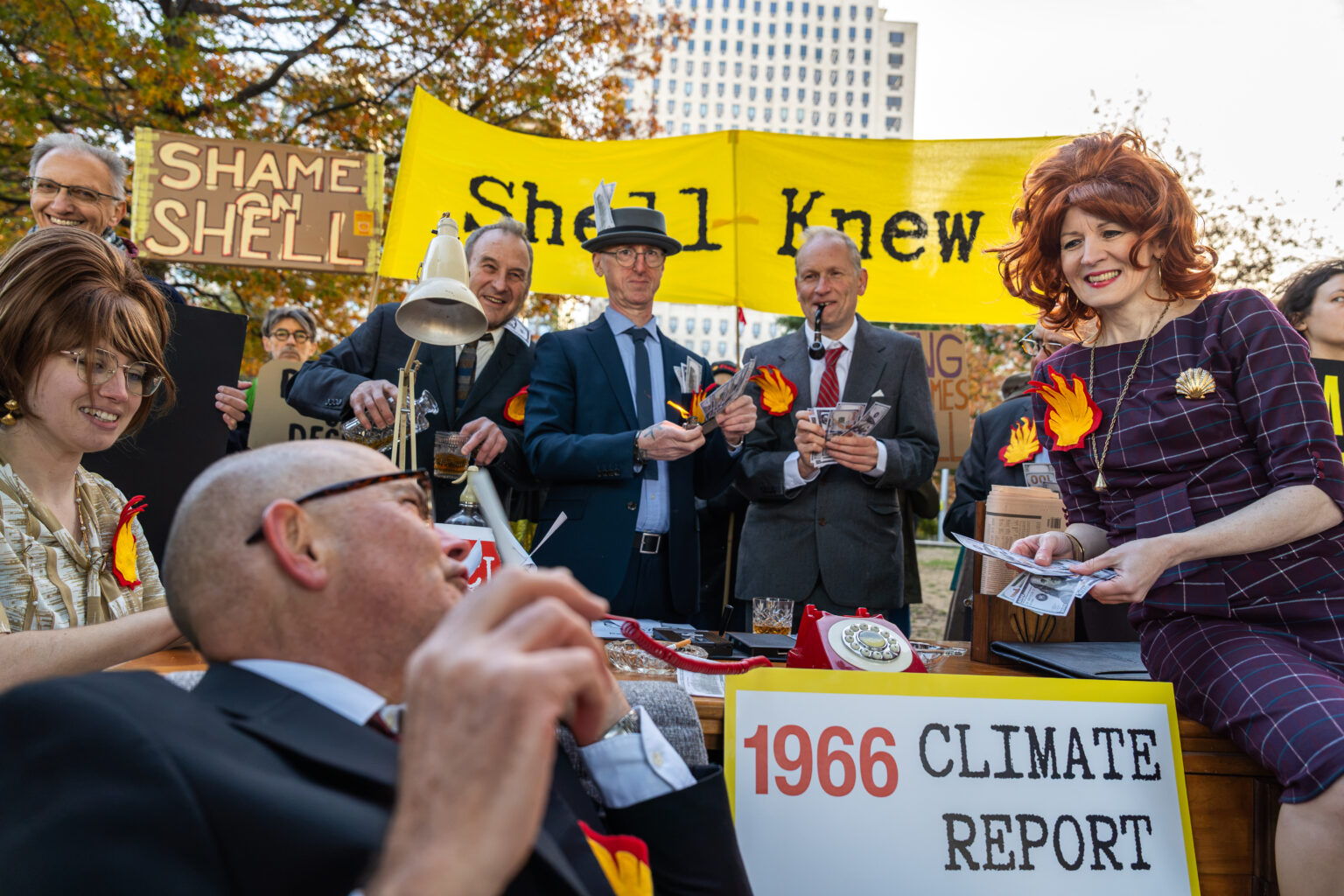
Protesters gathered in London on Thursday to highlight Shell’s early knowledge of climate risks. Credit: Fossil Free London
Campaigners backing attempts to sue Shell over a typhoon in the Philippines have launched an online archive showing that the British oil major knew that burning fossil fuels could harm the climate as early as the 1960s.
ExposeShell.com features documents including a 1966 memo Shell commissioned from British scientist James Lovelock and the ‘Greenhouse Effect’, a confidential 1988 report predicting that human-caused warming could trigger “dramatic” changes in sea level, ocean currents, weather and precipitation — “larger than any that have occurred over the last 12,000 years.” [Read these and other documents in the DeSmog series #ShellKnew]
The interactive site went live as Shell announced the latest figures showing that oil majors are enjoying bumper profits as the U.S.-Israeli war with Iran pushes oil prices higher. Shell said its adjusted third-quarter earnings had doubled to £10.8 billion in comparison to the same period last year.
“We don’t need any more reports to us that this big oily industry has been creating disaster,” Robin Wells, director of Fossil Free London, one of the groups behind the website, said in a statement. “Shell researched the reality but tore up the truth and locked it in the dark. Now, we are all facing the disastrous consequences.”
Fossil Free London protesters took to the streets outside Shell’s head office in London on Thursday, dressed in 1960s-style suits and holding banners that read “Shell Knew.”
ExposeShell.com is also backed by The Odette Case, a campaign group supporting more than 100 survivors of Typhoon Rai — known in the Philippines as Typhoon Odette — who began seeking damages from Shell last December in a first-of-its-kind case in the UK courts.
The typhoon tore through the Philippines in December, 2021, killing 400 people, injuring more than 1,000, and forcing almost 3.2 million people from their homes.
The survivors argue that Shell should be held liable for its historic contribution to the greenhouse gas emissions fuelling extreme weather events and its support for climate science denial via its past membership of industry groups such as the Global Climate Coalition — despite its early knowledge of the risks posed by burning its products.
Filed by UK law firm Hausfeld, the case draws on recent advances in attribution science that enable scientists to assess the degree to which climate change has contributed to an extreme weather event. Through Shell’s contribution of more than 2.5 percent of historical global greenhouse gas emissions, the suit alleges that Shell contributed to both the likelihood and severity of Typhoon Rai. It is the first civil claim to link the climate impacts of an oil and gas company’s activities with death, personal injury, and damage to property that has already occurred in the Global South.
Shell has dismissed the lawsuit as “baseless” and said that it had no “unique knowledge about climate change.”
(This story was updated at 12:44 GMT on October 29, 2026 to include Shell’s third-quarter earnings)
Greenpeace activists display a billboard during a protest outside Shell headquarters on July 27, 2023 in London. (Photo: Handout/Chris J. Ratcliffe for Greenpeace via Getty Images)Experienced climbers scale a rock face near the historic Dumbarton castle in Glasgow, releasing a banner that reads “Climate on a Cliff Edge.” One activist, dressed as a globe, symbolically looms near the edge, while another plays the bagpipes on the shores below. | Photo courtesy of Extinction Rebellion and Mark Richards