Tag: Colombia

  • Argentine diplomats expelled from Colombia following explosive comments by Milei

    Spread the love

    Original article republished from peoples dispatch under a Creative Commons Attribution-ShareAlike 4.0 (CC BY-SA) license.
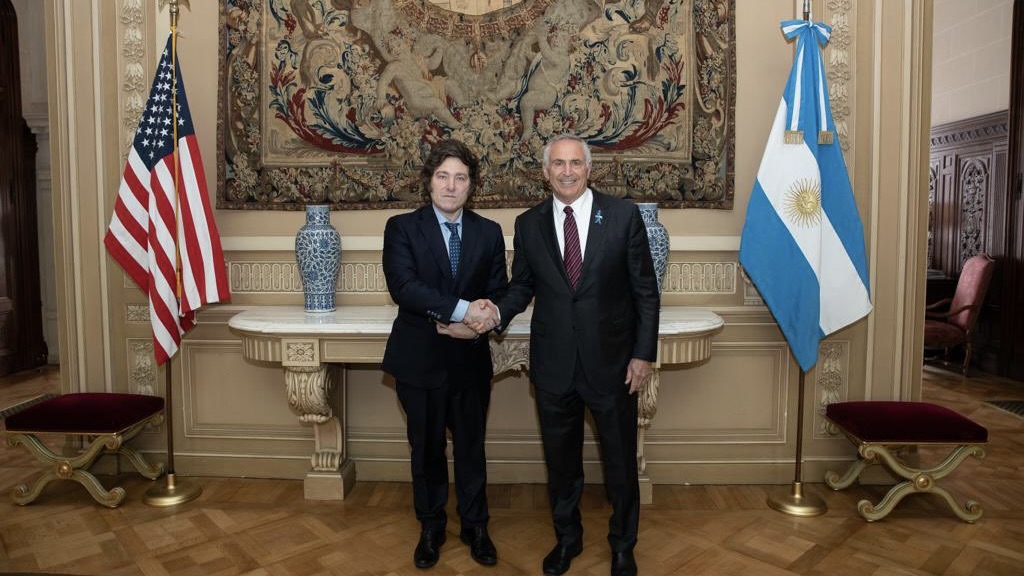
    Argentine President Javier Milei with US Ambassador in Argentina Marc Stanley

    In an interview with CNN, the Argentine president called Petro a “terrorist assassin”, Mexican President López Obrador “ignorant”, and declared that Israel was not committing “any excesses” in Gaza

    Argentina’s libertarian president Javier Milei is under fire from his counterparts in the region for comments made during an interview with CNN Español. In response to his explosive comments, wherein he called Colombia’s president a “terrorist assassin”, Colombia’s Foreign Ministry announced the expulsion of Argentina’s diplomats from its embassy in Bogotá, Colombia.

    The Foreign Ministry wrote in a statement, “This is not the first time that Mr. Milei offends the Colombian head of state, affecting the historical relationship of brotherhood between Colombia and Argentina.”

    Indeed, Milei made similar comments about the leftist president back in January. When asked what he thought about the Colombian president, Milei told right-wing Colombian-American journalist Patricia Janiot that he is a “communist assassin that is sinking Colombia”.

    In the statement released by the Colombian government, they highlighted: “The expressions of the Argentine president have deteriorated the confidence of our nation, in addition to offending the dignity of President Petro, who was democratically elected.”

    Meanwhile, former Argentine president Alberto Fernández also condemned the statement by his successor. “I regret and categorically reject the statements of President Javier Milei, who has mistreated the President of Colombia, Gustavo Petro. My solidarity with the president of the Colombian people. The derogatory and disqualifying way in which the Argentine president expresses himself about presidents legitimately elected by their people and who are recognized leaders throughout Latin America is absolutely inadmissible.”

    Gustavo Petro himself responded to Milei’s comments on Thursday and stated, “I believe that Milei seeks to destroy, or at least postpone, the project of Latin American integration. Today the Argentine people suffer and poverty increases. Milei’s promise to repeat the neoliberal system of 30 years ago may be a failure foretold; His thesis in the world that he has seen today as neoliberalism led to worsening the climate crisis, and putting us on the brink of extinction, as a species, is not accurate. The Argentine people are the ones who must discuss these issues and decide.”

    He added, “Despite the insults, we must preserve the project of unity, in diversity, of Latin America and the Caribbean.”

    Since winning the elections, Milei has rejected the pro-Global South integration position of his predecessors, instead pledging his priority and allegiance to the United States. Weeks after he was sworn in, Milei announced that Argentina would not join the BRICS economic bloc. The body had offered Argentina membership after its Johannesburg summit in August 2023, but Milei stated in December that it would rather do business with the US and Israel. So far Argentina has remained in the Latin American integration platforms but has threatened to withdraw from some.

    Milei’s explosive comments were not reserved only for Colombia’s president. The CNN interviewer mentioned that Mexican President Andrés Manuel López Obrador had said some “tough words” about Milei, to which the Argentine president said “That an ignorant person like López Obrador speaks ill of me exalts me”.

    The Mexican head of state responded to the comments on Thursday saying, “Milei stated that I am ‘ignorant’ because I called him a ‘conservative fascist.’ You are right: I still do not understand how the Argentines, being so intelligent, voted for someone who is not accurate, who despises the people and who dared to accuse his countryman [Pope] Francisco of being a ‘communist’ and ‘representative of the Evil One in the earth’, when it comes to the most Christian Pope and defender of the poor that I have ever known or heard of. PS Hugs to Gustavo Petro.”

    Another segment of the not-yet aired interview that was shared was regarding Milei’s views on Israel’s genocidal war on Gaza. The staunch zionist declared: “Israel is not committing any excesses.”

    The full interview is set to air this Sunday March 31.

    Original article republished from peoples dispatch under a Creative Commons Attribution-ShareAlike 4.0 (CC BY-SA) license.
  • Petro condemns “institutional rupture” and attacks on Colombian democracy by the right-wing

    Spread the love

    Original article republished from peoples dispatch under a Creative Commons Attribution-Share Alike 4.0 (CC BY-SA) license.

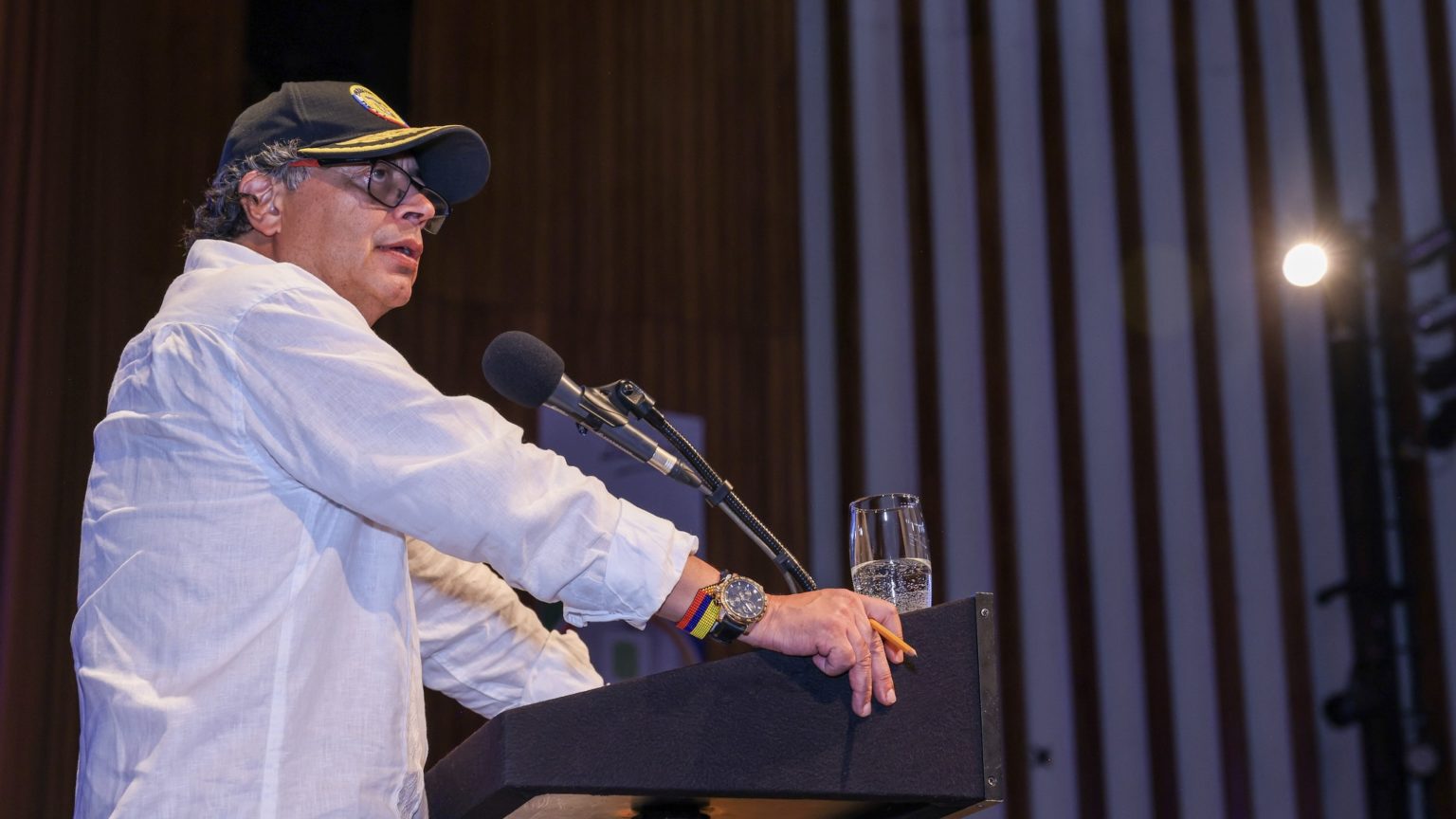
    Colombian President Gustavo Petro speaking on February 13 from the Industrial University of Santander in Bucaramanga. Photo: Presidencia Colombia

    The delay in the election of the Attorney General at the center of the ongoing tensions with the right, was highlighted by the United Nations Human Rights office and IACHR

    Colombia’s Supreme Court will convene on February 22 to elect the country’s Attorney General (AG). The Supreme Court had already convened on two occasions, January 25 and February 8, for the same purpose but was unable, or as some allege, unwilling, to elect one of the three candidates proposed by President Gustavo Petro for the post back in August. The court’s refusal to elect one of Petro’s candidates for the post, has been at the center of what some have termed a “soft coup” or a destabilization campaign against the left-wing president’s government.

    Petro himself said on February 2 that the court’s refusal to move forward was “institutional rupture that has reached its most desperate point, because the mafia does not want to control the entire sections of the Attorney General’s office that I have put in danger for having presented a shortlist of decent women.”

    The Attorney General in Colombia is part of the judicial branch of power and has the role of investigating and accusing those who are alleged to be responsible for committing crimes.

    On Monday February 12, the mandate of former AG Francisco Barbosa expired. Barbosa was appointed by former far-right president Iván Duque who is also his close friend from university. The AG has had open conflict with the current president, telling Blu Radio in May 2023 “I think Gustavo Petro is irresponsible” when Petro had warned of possible foul play in the AG’s investigation of members of Petro’s Historic Pact party.

    On January 25, the same day that the Supreme Court was first set to elect his replacement, Barbosa ordered a raid of the Bogotá office of the Federation of Colombian Educators (FECODE) over allegations of improper contributions to Gustavo Petro’s presidential campaign. The move was widely condemned by social movements and trade unions in the country as being politically motivated.

    With his term up, Barbosa’s deputy prosecutor and close ally, Martha Mancera, has taken up the post in the interim – until the Court makes its decision. Mancera has been named in different scandals, including an alleged cover up of an agent from the Attorney General’s investigative body who was involved in drug trafficking and arms trafficking.

    On Wednesday February 14 at an event in the Industrial University of Santander in Bucaramanga, Petro said, “The government doesn’t agree that the Attorney General should be handed over to people with dubious reputation, that could have links, it seems and according to media investigations, with organized crime.”

    International bodies such as the Inter-American Commission on Human Rights (IACHR) also expressed concern over the delay in the Supreme Court’s deliberations. In a statement published on February 13, the body said that a further delay in the selection of an AG, “could weaken the Colombian justice system” and that the Supreme Court must “fulfill its constitutional duty”.

    On February 14, the UN Office of Human Rights in Colombia also declared that it was closely following the AG election process. In its statement, it highlighted the role the AG plays in “guaranteeing access to justice, democratic consolidation, and Rule of Law”, and as such, it “encourages the Supreme Court to conclude the process of selection of the AG in the shortest time possible”.

    Both statements by the IACHR and the UN alluded to allegations by the right-wing that the citizen protests in dozens of cities across Colombia on February 8 to demand that the Court carry out its constitutional obligation, were an attempt by Petro to subvert rule of law and disrupt the Supreme Court’s process. The allegations are based on a video from a protest in Bogotá which depicts a couple of demonstrators attempting to rush the barricade at the gates of the Court while other protesters are leaving the site. Many analysts have stated that those depicted in the video were seemingly right-wing infiltrators.

    Nevertheless, right-wing media has launched full scale attacks on protesters and Petro, and the Attorney General’s office claimed “possible crimes were committed” and opened up a special investigation.

    Added to the growing pressure on Petro’s administration, is the direct attack on his foreign minister, Álvaro Leyva, who is under investigation by the Ombudsman and suspended from his position for three months over allegations of irregularities in the bidding process for passport processing. In reality, Leyva had taken steps to confront a private firm, Thomas Gregs and Sons, that had a major contract with the state for processing passports and had control over a significant amount of the population data in the country.

    Leyva is one of Petro’s key allies and was central to reactivating the peace talks with ELN in Cuba, advancing normalization of relations with neighboring Venezuela, in addition to helping lead Petro’s recognized diplomatic efforts on the world stage.

    Petro had said that renowned jurists called the suspension of the foreign minister unprecedented and he termed it “institutional rupture”.

    With growing pressure on the court to fulfill its constitutional mandate, the Supreme Court’s session on February 22 is set to be an important date, while the movements and social organizations that mobilized and campaigned to put Petro’s government of change in office have vowed to defend it at all costs.

    Original article republished from peoples dispatch under a Creative Commons Attribution-Share Alike 4.0 (CC BY-SA) license.