Tag: complicity

  • ICJ upholds South Africa’s case against Israel, orders measures to prevent genocide in Gaza

    Spread the love

    Original article by Tanupriya Singh republished from peoples dispatch under a Creative Commons Attribution-ShareAlike 4.0 (CC BY-SA) licence.
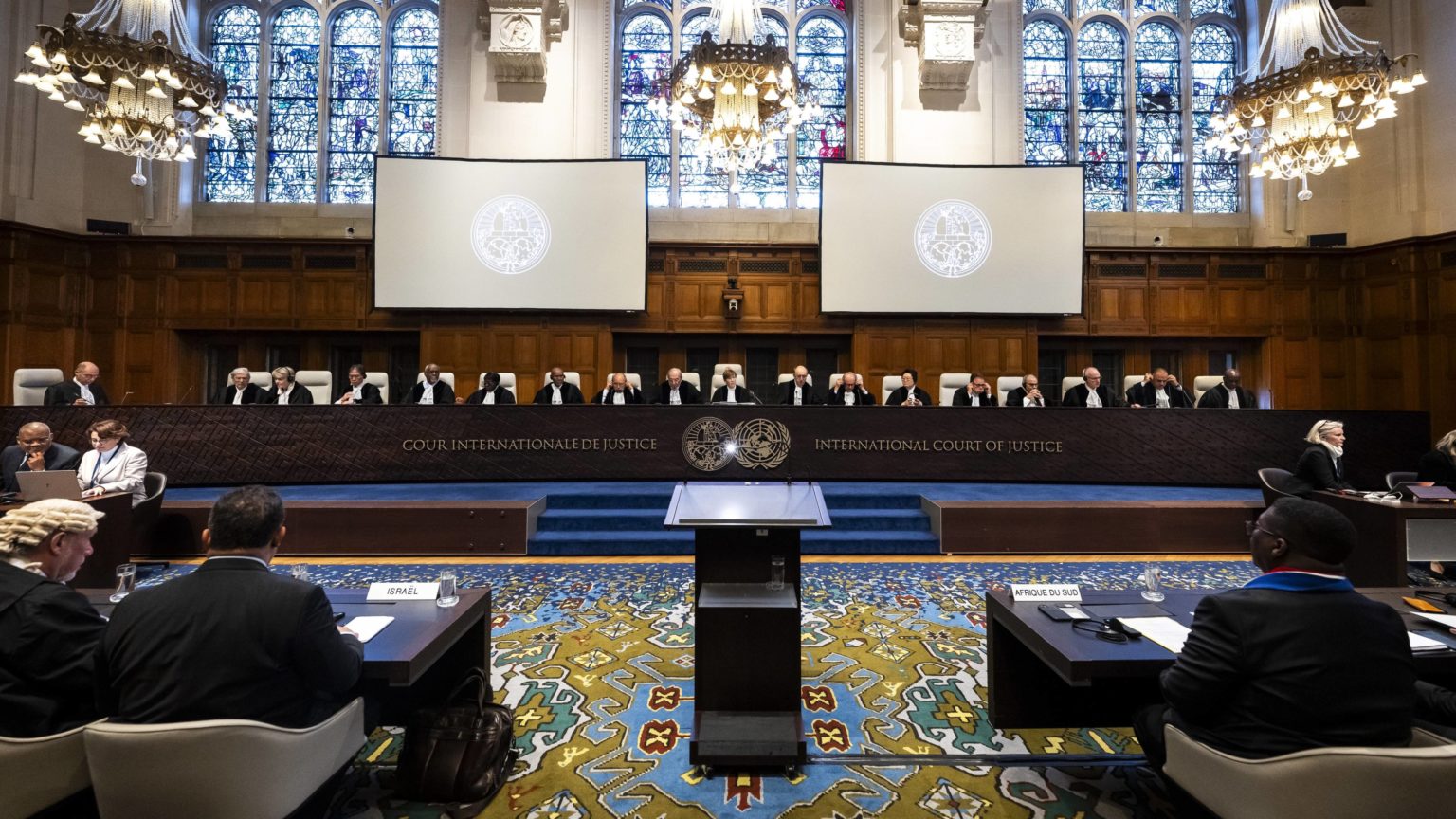
    While the Court did not grant South Africa’s request for an immediate suspension of Israel’s military operations, it has ordered Israel take “all measures” to prevent acts of genocide in Gaza, including by its military

    The International Court of Justice (ICJ) has ruled in favor of South Africa’s request for provisional measures in its case against Israel over the ongoing war on Gaza. The request is part of an application filed by Pretoria, accusing Israel of violating its obligations under the Convention on the Prevention and Punishment of the Crime of Genocide.

    In a ruling issued on January 26, the Court determined that it had jurisdiction over the matter, and as such, rejected Israel’s request for the case to be dismissed.

    While reading Friday’s ruling, Judge Joan Donoghue reiterated that at the stage for the request for provisional measures, the court is not required to ascertain whether any violations of Israel’s obligations under the Genocide Convention have occurred, but whether the acts complained of “appear to be capable” of falling under its provisions.

    “In the court’s view, at least some of the acts and omissions alleged by South Africa have been committed by Israel in Gaza appear to be capable of falling within the provisions of the Convention”, the ICJ’s order states.

    The Court also recognized that the Palestinians in Gaza formed a substantial part of the Palestinian people as a protected group under Article II of the Convention, which defines genocide as “acts committed with intent to destroy, in whole or in part, a national, ethnical, racial or religious group.”

    “The Court notes that the military operation being conducted by Israel following the attack of 7 October 2023 has resulted in a large number of deaths and injuries, as well as massive destruction of homes, forcible displacement of the vast majority of the population and extensive damage to civilian infrastructure.”

    Donaghue went on to cite statements by the UN humanitarian chief, Martin Griffiths, who had stated on January 5 that Gaza had “become a place of death and despair”, and that its people were witnessing “daily threats to their very existence.” She also quoted statements from the WHO, as well as the head of the UN Relief and Works Agency for Palestine Refugees in the Near East (UNRWA) , Philippe Lazzarini, who stated on January 13 that the “clock is ticking fast towards famine.”

    The Court recognized the right of the Palestinian people to be protected from acts of genocide.

    Importantly, the ICJ took note of the statements made by senior Israeli officials — statements meticulously documented in Pretoria’s application as evidence of an intent to commit genocide.

    Donaghue read aloud Israeli defense minister Yoav Gallant’s declaration of the “complete siege of Gaza,” his reference to Palestinians as “human animals,” and his call to “eliminate everything.” Also mentioned were Israeli President Isaac Herzog’s remarks that there is “an entire nation out there that is responsible” and “we will fight until we break their backbone.”

    Noting that Israel’s military operations in Gaza strip were ongoing, quoting Israeli Prime Minister Benjamin Netanyahu that the war would take “many more long months” — at a time when Palestinians did not have access to food, water, electricity, medicines or heating, as well as indications that maternal and newborn death rates are expected to increase— the Court stated that the “catastrophic humanitarian situation in the Gaza strip is at serious risk of deteriorating further before the court renders its final judgment.”

    The Court further stated that the steps Israel had taken to address the conditions in Gaza, and the remarks by its Attorney General that a call for intentional harm to civilians may amount to a criminal offense of incitement, were insufficient.

    Pending a final decision in the case, “the Court considers that there is an urgency…there is a real and imminent risk that irreparable prejudice will be caused to the rights found by the Court to be plausible…The court concludes…that the conditions required …for provisional measures are met.”

    The first provisional measure sought by South Africa was an immediate suspension of Israel’s military operations in and against Gaza. On January 25, Hamas had also stated that it would abide by a ceasefire if it was ordered by the ICJ, as long as Israel did the same.

    The ICJ in its order made no mention of this request, and as observers have highlighted, did not discuss military action, a ceasefire, or the question of self-defense— in its advisory opinion in 2004, the ICJ had determined that Israel could not claim this right in relation to a territory it was occupying.

    However, it has indicated a series of provisional measures, each approved with an overwhelming majority among the 17-judge-panel, which are binding in effect and place “international legal obligations” to the State Party to whom they are addressed — in this case, Israel.

    First, by 15 votes to 2, Israel must “take all measures within its powers to prevent the commission of all acts within the scope of the Convention.” These acts include a) killing members of the group, b) causing serious bodily or mental harm” and c) deliberately inflicting on the group conditions of life calculated to bring about its physical destruction in whole or in part and d) imposing measures intended to prevent births within the group.

    Second, with 15 votes in favor, Israel shall ensure with immediate effect that its military does not commit any acts described in point 1. By 16 to 1 votes, Israel shall take all measures within its power to prevent and punish the direct and public incitement to commit genocide in relation to Palestinians in Gaza.

    Fourth, with 16 votes, Israel has been ordered to “take immediate and effective measures to ensure the provision of urgently needed basic services and humanitarian assistance to address the adverse conditions of life” in Gaza. By 15 to two votes, Israel must also take “effective measures to prevent the destruction and ensure the preservation of evidence” related to allegations under the Genocide Convention. In its application, South Africa had also requested that Israel “shall not act to deny or otherwise restrict access by fact-finding missions, international mandates and other bodies to Gaza to assist in ensuring the preservation and retention of said evidence.”

    Finally, Israel has to submit a report to the ICJ on “all measures taken to give effect to this order” within one month as from the date of the order (January 26). This was approved with 15 votes in favor.

    Under the statute of the ICJ, it will now notify the UN Security Council of the provisional measures ordered. Given that the Court lacks an enforcement mechanism, questions remain on how these measures will be operationalized.

    Prime Minister Netanyahu responded to Friday’s ruling by calling the charge of genocide as “false” and “outrageous,” adding that “Israel would continue to defend itself against Hamas.”

    Senior Hamas official, Sami Abu Zahri, told Reuters that the ruling was an “important development that contributes to isolating the occupation and exposing its crimes in Gaza. We call for compelling the occupation to implement the court’s decision.”

    The Palestinian foreign ministry stated that the ruling “breaks Israel’s entrenched culture of criminality and impunity, which has characterized its decades-long occupation, dispossession, persecution and apartheid in Palestine…Governments must ensure that they are not complicit in this genocide…This is now a binding legal obligation.”

    The Court’s ruling will raise significant questions of the obligations of other State Parties to the Genocide Convention.

    As South Africa noted in its statement on Friday, “Third States are now on notice of the existence of a serious risk of genocide against the Palestinian people in Gaza. They must, therefore, also act independently and immediately to prevent genocide by Israel and to ensure that they are not themselves in violation of the Genocide Convention including by aiding or assisting in the commission of genocide.”

    “This necessarily imposes an obligation on all States to cease funding and facilitating Israel’s military actions, which are plausibly genocidal.”

    It further warned that “the veto power wielded by individual states [in the Security Council] cannot be permitted to thwart international justice, not least in light of the ever-worsening situation in Gaza brought about by Israel’s acts and omissions in violation of the Genocide Convention.”

    Original article by Tanupriya Singh republished from peoples dispatch under a Creative Commons Attribution-ShareAlike 4.0 (CC BY-SA) licence.
  • As World Awaits Friday’s ICJ Verdict, Israeli Pounding of Gaza Civilians Continues

    Spread the love

    Original article by JULIA CONLEY republished from Common Dreams under Creative Commons (CC BY-NC-ND 3.0). 

    Should the court rule in South Africa’s favor, said one advocate, “it is the international community’s responsibility to ensure that Israel obeys this verdict without delay.”

    A global human rights coalition expressed hope Thursday that the imminent verdict by the International Court of Justice will be a step toward “stopping the genocide in Palestine” as authorities in Gaza reported new attacks on civilians and alleged violations of international law.

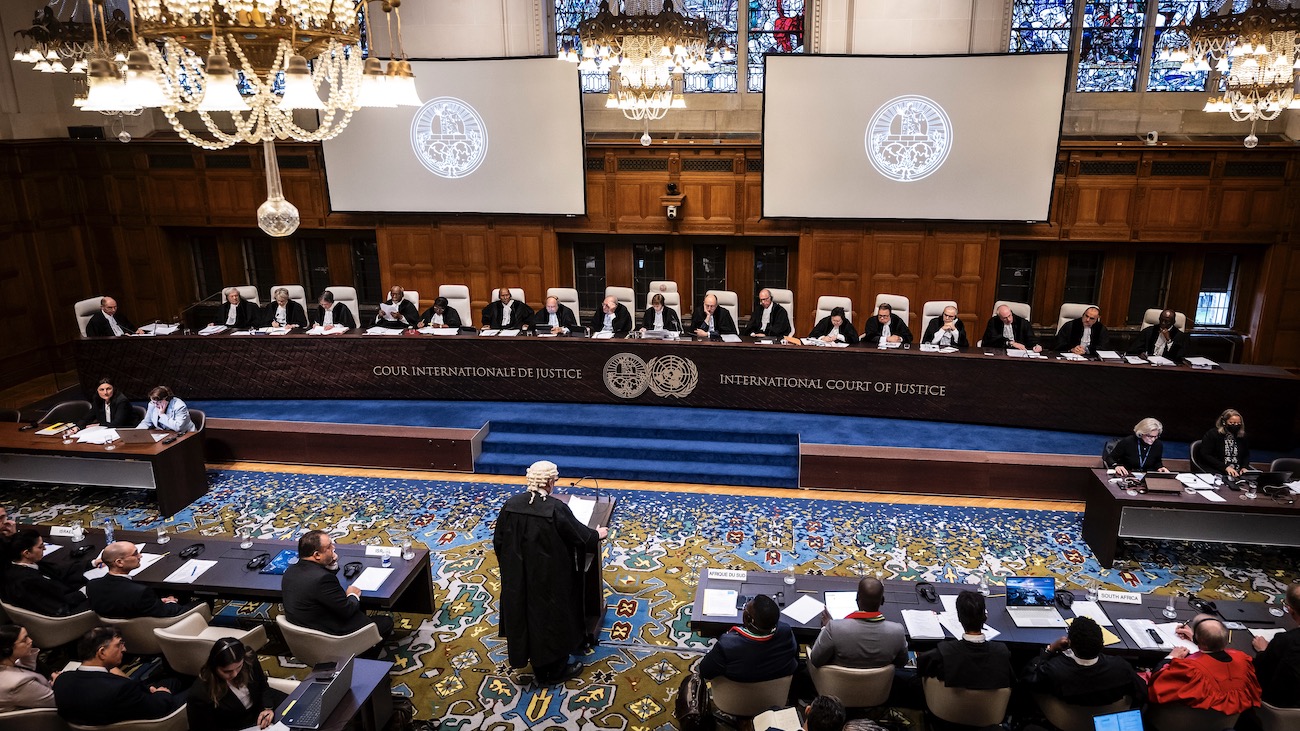
    The ICJ said this week that it will announce its verdict on Friday at 7:00 am ET in the genocide case brought by South Africa against Israel.

    The verdict comes two weeks after South African officials presented evidence not only that Israel is carrying out the “mass killing of Palestinians in Gaza,” but also that top Israeli officials have made clear that their goal in the military operation that’s now stretched on for nearly four months is to clear Gaza of the 2.3 million people who live there—either by killing them with air and ground attacks or by forcing them to leave.

    Along with United Nations officials, international human rights experts, and a growing number of policymakers from across the globe, South Africa has argued that Israel is engaged in a genocidal assault in Gaza and has committed numerous violations of international law. The country called on the ICJ to adopt “provisional measures” to force Israel—which does not recognize the court’s jurisdiction but is a party to the Genocide Convention—to stop its mass killing and displacement of Gazans.

    Rights groups including the PAL Commission on War Crimes, the International Coalition to Stop Genocide in Palestine (ICSGP), the Global Legal Alliance for Palestine, and the Palestinian Assembly for Liberation (PAL) said Thursday that they plan to hold a press conference outside the U.N. headquarters following the announcement of the verdict.

    Regardless of the ICJ’s decision, noted PAL Commission on War Crimes founder Lamis Deek, South Africa and its supporter s will have to determine “how to deal with the anticipated U.S.-Israeli obstruction of that decision.”

    “On Friday we will respond to the court’s decision and issue calls on state parties to the ICJ and the Genocide Convention as regards their compliance obligations, and address our legal colleagues and our communities regarding the next steps we think will be most critical on the heels of this decision,” said Deek. “The brutal Israeli genocide and torture in Gaza, alongside the targeted assassinations, destruction of civilian infrastructure including all of Gaza’s hospitals and universities, blocking of aid, and use of starvation and spread of disease as a war tactic, constitute a grotesque series of the highest war crimes.”

    “The situation in Khan Younis underscores a consistent failure to uphold the fundamental principles of international humanitarian law: distinction, proportionality and precautions in carrying out attacks.”

    Should the court rule in South Africa’s favor, added Adrienne Pine, co-coordinator of the ICSGP, “it is the international community’s responsibility to ensure that Israel obeys this verdict without delay.”

    Ahead of the ICJ’s verdict, the death toll in Gaza reached at least 25,700, including at least 10,000 children. Israel has claimed that it is targeting Hamas in retaliation for its October 7 attack, and numerous top officials have said they view all Gaza residents as legitimate military targets—a potential violation of the Geneva Conventions, which prohibit collective punishment of a population for the actions of a government or armed group.

    On Thursday, human rights experts made clear that Israel’s assault is showing no signs of slowing as the world awaits the verdict, with U.N. Relief and Works Agency (UNRWA) affairs director Thomas White reiterating that attacks on civilians are “utterly unacceptable.”

    White said fighting intensified in Khan Younis near hospitals, shelters, and a UNRWA training center, all of which are hosting displaced people.

    “Twelve people have now been confirmed dead with over 75 injuries, 15 of whom are in a critical condition. Yesterday, the center was hit by two shells and caught fire,” said White. “Heavy fighting near the remaining hospitals in Khan Younis, including Nasser and Al Amal, has effectively encircled these facilities, leaving terrified staff, patients, and displaced people trapped inside. Al Khair hospital has shut down after patients, including women who had just undergone C-section surgeries, were evacuated in the middle of the night.”

    “The situation in Khan Younis underscores a consistent failure to uphold the fundamental principles of international humanitarian law: distinction, proportionality, and precautions in carrying out attacks,” said White. “This is unacceptable and abhorrent and must stop.”

    Al Jazeera reported that at least 20 Palestinians were killed and 150 more were injured when the Israel Defense Forces (IDF) launched an attack on people waiting for humanitarian relief in Gaza City.

    “The Israeli occupation committed a new massacre against thousands of hungry mouths who were waiting for aid,” said Ashraf al-Qudra, a spokesperson for the Gaza Ministry of Health—whose reporting on casualties has long been backed by the U.N.

    Meanwhile, the Palestinian Environmental Quality Authority warned that two-thirds of Palestinians in Gaza are now suffering from water-borne illnesses because Israel’s blockade on fuel and aid has left the enclave without sufficient potable water and the ability to run desalination plants.

    Deek said the ICJ’s verdict “could profoundly reshape the geopolitical and legal topography” of how the world responds to Israel’s treatment of Palestinians.

    “Billions of people have been waiting with bated breath for this historic moment,” said Deek, “that is poised to change international and domestic approaches—military, legal, and political—to stopping the genocide in Palestine.”

    Original article by JULIA CONLEY republished from Common Dreams under Creative Commons (CC BY-NC-ND 3.0). 

  • ICJ to respond to South Africa’s genocide case against Israel

    Spread the love

    Original article by Tanupriya Singh republished from peoples dispatch under a Creative Commons Attribution-ShareAlike 4.0 (CC BY-SA) license.

    The ICJ hearings on South Africa’s case against Israel. Photo: ICJ

    South Africa has asked the UN’s International Court of Justice (ICJ) to issue emergency measures, including ordering Israel to stop all military operations in Gaza, where it has killed over 25,000 Palestinians in an ongoing genocide.

    This Friday January 26, the International Court of Justice (ICJ) will issue a decision on South Africa’s request for provisional measures to bring an end to Israel’s ongoing genocide in Gaza. The order will come two weeks after South Africa and Israel presented their arguments before the court in the historic case.

    On December 29, 2023, Pretoria had approached the ICJ, which is the chief judicial institution of the United Nations, accusing Israel of violating its obligations under the 1948 Genocide Convention in relation to its months-long war on the besieged Gaza Strip.

    The application asserted that Israel’s actions were “genocidal in character because they are intended to bring about the destruction of a substantial part of the Palestinian national, racial, and ethnical group”.

    Pretoria’s application calls on the ICJ to determine and declare that Israel has violated its obligations as a party to the Convention on the Prevention and Punishment of the Crime of Genocide. However, pending a final ruling on the case, it urged the court to indicate provisional (or emergency) measures to “protect against further, severe, and irreparable harm” to the Palestinian people and to “ensure Israel’s compliance” with the Genocide Convention not to engage in genocide, and to prevent and to punish genocide”.

    Read more: South Africa takes Israel to ICJ for crime of genocide in Gaza

    Hearings on this request for provisional measures were held on January 11 and 12.

    The measures sought by South Africa include an immediate suspension of Israel’s military operations in and against Gaza, for it to “desist” from committing all acts defined as genocide under the 1948 Convention. This includes inflicting conditions of life calculated to bring about the “physical destruction” of Palestinians as a group through acts such as forced displacement, deprivation of food, water, and humanitarian assistance and “the destruction of Palestinian life in Gaza”. Israel must also prevent the destruction of evidence of the crimes outlined in the application.

    The application notes importantly that in order to indicate these measures, the ICJ does not at this stage need to definitively determine if Israel has indeed violated the 1948 Convention and committed genocide. Rather, it only needs to establish that the acts described are capable of falling within the provisions of the Convention, or at the very least, can be characterized as “ plausibly “genocidal”.

    Read more: Genocide as pattern and policy: ICJ hears South Africa’s case against Israel

    South Africa outlined a series of “compelling circumstances” that require urgent action from the court including that— “nowhere is safe in Gaza”, “besieged and bombed hospitals are no longer able to treat the sick and wounded”, “international experts are warning of imminent mass starvation”, “Palestinians in Gaza are being killed at the rate of approximately one person every six minutes”, and “Israel continues to prevent sufficient humanitarian assistance to Palestinians in Gaza”.

    Each of the circumstances described by South Africa in its submission made over three weeks ago persist in Gaza today. In fact, Israel killed more than 1,000 Palestinians in the week following the adjournment of hearings at the ICJ.

    Read more: Deflect and deny: Israel responds to South Africa’s accusation of genocide at ICJ

    The genocide continues

    Despite claims, including by the US, that Israel has shifted to “low intensity phase” of warfare, the Occupation has continued its massacres in Gaza, “encircling” the city of Khan Younis in the south of the Strip on January 23. Over 200 Palestinians were killed over the course of 24 hours. As attacks continued on Wednesday, at least nine people were killed after Israel hit a United Nations shelter in the city.

    The Palestinian Ministry of Health had also stated on Tuesday that the Nasser and Al Amal hospitals were under “extreme danger” from Israeli bombardment.

    The Palestinian Red Crescent Society (PRCS) reported that Israeli drones were firing at “anyone moving” around the Al Amal hospital, and that ambulances were unable to reach the wounded. The siege on the hospital continued on January 24, accompanied by intense shelling and gunfire around the hospital.

    The risk of famine in Gaza is “increasing each day”, as at least one in four households or over 500,000 people are facing “catastrophic” hunger characterized by “extreme lack of food, starvation, and exhaustion of coping capabilities”. Reports have emerged of Palestinians resorting to consuming animal fodder to survive, while aid agencies continue to face “access denials” and restrictions by Israel, especially in northern Gaza.

    “No one will stop us”

    The decisions issued by the ICJ are legally binding. However, the court does not have a mechanism to enforce compliance. Israeli Prime Minister Benjamin Netanyahu has already declared that “no one will stop us, not the Hague…and not anyone else”.

    The ICJ will notify the UN Security Council of the provisional measures it has ordered. The Court has the authority to determine these measures, and as such, may differ from what has been requested by Pretoria. If South Africa considers that Israel has failed to abide by the judgment, it can approach the Security Council to determine what action has to be taken. However, all signs indicate that Israel be protected by the veto power held by the US.

    The decision that the Court will take on Friday is also being considered as a test of the “rules-based international order” of which the US considers itself the sole arbiter. As Irish lawyer Blinne Ní Ghralaígh had said in her remarks to the court, “the very reputation of international law — its ability and willingness to bind and to protect all peoples equally — hangs in the balance”.

    Meanwhile, just days before Friday’s decision, Nicaragua announced that it requested permission from the ICJ to intervene in the case brought by South Africa, citing its own obligations to prevent genocide under the 1948 Convention.

    “Nicaragua, like the international community, considers that the actions undertaken by Israel constitute clear violations of the [Genocide Convention], acts which have been accompanied by statements from the highest authorities of Israel that clearly reveal the genocidal intention and dehumanization to which the Palestinian people have been subjected”, the government said in a statement.

    It added that Nicaragua’s decision reflected the “commitment of the Government of Reconciliation and National Unity and the people of Nicaragua in the liberation of the Palestinian people and humanity in general from the scourge of genocide”.

    Original article by Tanupriya Singh republished from peoples dispatch under a Creative Commons Attribution-ShareAlike 4.0 (CC BY-SA) license.

  • Israel’s collective punishment of Palestinians in Gaza not acceptable, says UN Chief

    Spread the love

    Original article by Abdul Rahman republished from peoples dispatch under a Creative Commons Attribution-ShareAlike 4.0 (CC BY-SA) license.

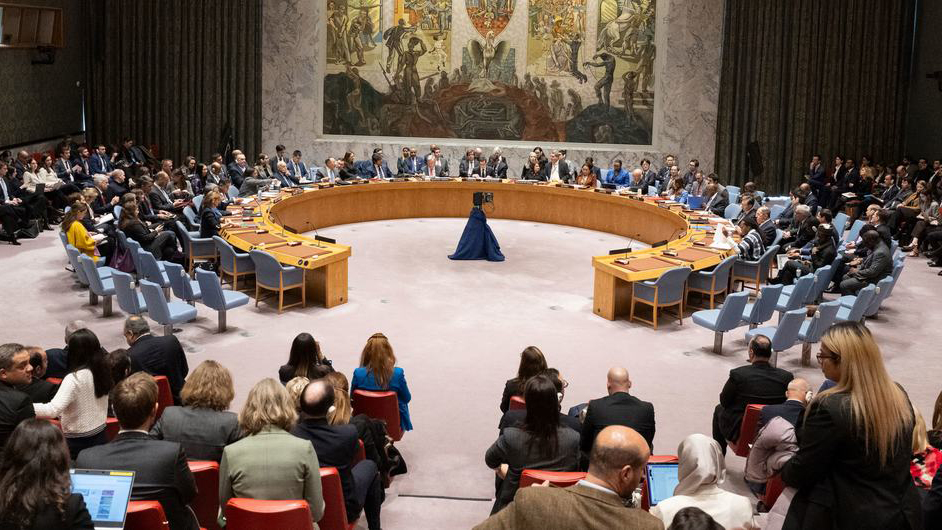
    The UN Security Council meets on the situation in the Middle East, including Palestine (Photo via United Nations)

    Participants in the UN Security Council highlighted need for a ceasefire in Gaza and a long term solution to the Palestinian question as necessary for peace

    On January 23, speaking during the two day extended meeting of the UN Security Council on Palestine, UN Secretary General Antonio Guterres underlined that “Israel’s clear and repeated rejection” of a two-state solution is unacceptable. He also warned that this refusal and “denial of the right to statehood to the Palestinian people would indefinitely prolong a conflict that has become a major threat to global peace and security.”

    Most of the countries which participated in the two day proceedings demanded an immediate humanitarian ceasefire and a two-state solution, claiming it necessary for regional and global peace.

    Invoking ever deteriorating humanitarian conditions in Gaza, Guterres termed it “collective punishment” executed by Israeli forces, asserting that “nothing can justify it.”

    More than 25,700 Palestinians have been killed, over 63,000 have been wounded, and nearly 90% of Gaza’s population has been displaced due to relentless bombings and ground offensives carried out by Israeli armed forces since October 7.

    Israel has maintained that its war in Gaza is in response to Palestinian resistance forces, mainly Hamas, attacking inside its borders on October 7, in which nearly 1,200 people were killed and nearly 250 Israelis were taken as hostages.

    Speaking in the meeting, Gilad Erdan, the Israeli ambassador to the UN, claimed that until persons involved in the October 7 attacks are handed over and hostages are released, war in Gaza will not end.

    Most of the members of the UN Security Council repeated the call for an immediate ceasefire and called for better delivery of humanitarian aid to Gaza.

    The Chinese ambassador to the UN, Zhang Jun, also noted that the Israeli leadership’s repeated rejection of a two-state solution is unacceptable, and demanded that it must be rejuvenated by granting Palestinians full membership to the UN.

    Israeli Prime Minister Benjamin Netanyahu had, earlier this month, rejected the calls for a Palestinian state, calling it untenable and a threat to Israeli security.

    The need for a two-state solution was raised by the Palestinian Foreign Minister Riyad Maliki, who denounced the war in Gaza as Israel’s “premeditated effort to inflict maximum pain on the Palestinian population.”

    “No home, hospital, school, mosque, church or UNRWA shelter is safe from Israeli bombardments, 2,000 pound bombs dropped with no care whatsoever for civilian lives,” he noted.

    South Africa, which has taken Israel to the International Court of Justice for its genocide of Palestinians, maintained that there cannot be selective implementation of international law and Israel must face consequences for its repeated violations of the same.

    US positions provide a carte blanche to Israeli crimes

    Speaking during the meeting, the US representative Uzra Zeya claimed the centrality of a two-state solution. She claimed that the US has been making efforts to prevent greater civilian casualties in the Israeli war in Gaza. However, US policies in Gaza were heavily criticized by both the permanent members of the UNSC and others as detrimental to peace.

    Chinese ambassador Jun condemned the repeated use of veto by the US in earlier UNSC meetings on ceasefire resolutions, identifying them as impeding all efforts to peace.

    The US had vetoed resolutions proposing a ceasefire in the UNSC in previous months and tried to excuse Israeli bombings in Gaza as the Zionist state’s right to self defense.

    Jun hoped that all members of the international community must prioritize ceasefire in Gaza, and ways to stop the spread of the war in the region.

    Russian Foreign Minister Sergei Lavrov asserted that the UNSC must take steps to prevent further destabilization in the region, which has been caused by US policies which vetoes ceasefire resolutions and provides carte blanche to Israeli acts of “collective punishment of Palestinians.”

    Lavrov emphasized that until a ceasefire is implemented the talks about future solutions to the conflict are useless.

    Iranian Foreign Minister Hussein Amir Abdollahian warned the US against violating Yemeni sovereignty by carrying out repeated air strikes against it. He alleged that it is a trap laid down by Israel with the objective of expanding the war in Gaza to the regional level.

    Abdollahian proposed that a referendum among all Palestinians must be held to find a permanent solution to the Palestinian question.

    Lebanese Foreign Minister Abdallah Bou Habib emphasized that all stakeholders, including the US, should see that Israel wants to expand the war across the region, and underlined that his country does not want war.

    He emphasized that “what happened on October 7 did not happen in a vacuum” and if no attempts are made to secure a lasting solution “it will happen again,” as there is no peace in the region until there is justice for Palestinians.

    Speaking in the meeting on Tuesday, the Saudi delegate Waleed El-Khereiji said that because of the “Israeli war machine,” tensions in the region, including in the Red Sea and Yemen, are increasing. He demanded that the Security Council make sure that Israel stops its violations of international law.

    On Sunday, in an interview with CNN, Saudi Foreign Minister Faisal bin Farhad al-Saud denied any possibility of normalization of relations with Israel, as proposed by the US, until there is a road map for a two-state solution and an independent Palestinian state. “What we are seeing is Israelis crushing Gaza, the civilian population of Gaza. This is completely unnecessary, completely unacceptable, and has to stop.”

    Original article by Abdul Rahman republished from peoples dispatch under a Creative Commons Attribution-ShareAlike 4.0 (CC BY-SA) license.