NHS news review

Spread the love

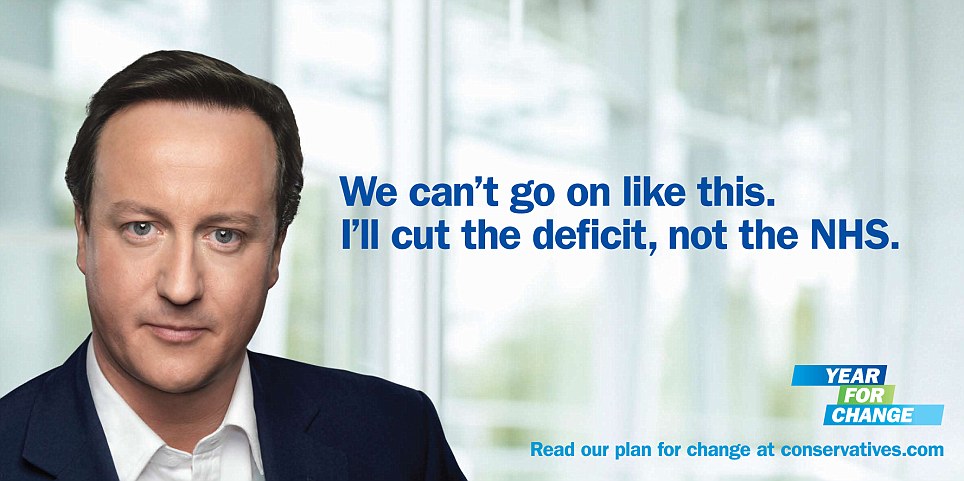
Conservative election poster 2010

A few recent news articles about the UK’s Conservative and Liberal-Democrat (Conservative) coalition government – the ConDem’s – brutal attack on the National Health Service.


Backers of NHS shake-up turn against Andrew Lansley’s plans

Leading doctors voice concerns that reforms will suffocate GPs and jeopardise promised freedom to commission care

Two prominent backers of the coalition’s NHS shake-up have joined the growing chorus of critics by claiming that GPs will be “suffocated rather than liberated” by the planned changes.

Dr Charles Alessi and Dr Michael Dixon have helped Andrew Lansley claim credibility for his plans among doctors over the past 18 months by strongly supporting his radical restructuring. They are leading lights in the NHS Alliance and the National Association of Primary Care, two key pro-reform organisations.

But they now fear that the new consortiums of local doctors, which will start commissioning healthcare for patients in England from next year, will not have the freedom that the health secretary has repeatedly pledged. Lansley has attempted to persuade sceptics that his reorganisation will put family doctors in charge of healthcare.

NHS primary care trusts (PCTs) and strategic health authorities (SHAs) are due to be abolished next year.

But the doctors are worried that the GP-led clinical commissioning groups (CCGs), which will replace PCTs, will find themselves unexpectedly under the control of another organisation, the NHA National Commissioning Board (NCB).

In July the NHS chief executive, Sir David Nicholson, said “CCGs will be the engine of the new system” and that the reformed NHS “gives pride of place to clinical leaders”. But the reality is that primary care doctors and clinical commissioners will not have the promised ability to make key decisions because the current bureaucracy is simply being replaced by another that is growing up around the NCB, the pair claim.


MP believes Prime Minister is pushing NHS to the brink of collapse

SLOUGH MP Fiona Mactaggart has claimed the Prime Minister is pushing the NHS to the brink of collapse – with patients waiting even longer for their treatments.

The latest data shows that 44 more patients were forced to wait longer than 18 weeks for treatment in the Berkshire East PCT area, between November 2010 and November 2011.

Waiting times are also up nationally with an increase of more than a third in the number of patients waiting more than four-and-a-half months for treatment.

Ms Mactaggart said “The chaos caused by the Health Bill is starting to take its toll. By the time Labour left office, waiting times had fallen to a historic low, but this Government is throwing that legacy away.

“It is hard to get this right and we have had some particular local challenges with our hospital, but we must keep our focus on patient care, and patients who are left to wait are not being cared for.

“If the Prime Minister succeeds in allowing hospitals to fill 49% of hospital beds with private patients, this will get worse.

Nurses at the first NHS general hospital to be run by the private sector risk shouldering the burden for deep financial problems that are out of their control, the Royal College of Nursing has warned.

Private company Circle was awarded a 10-year contract to run Hinchingbrooke Health Care Trust in November. Last week it unveiled a 16-point plan for turning round the financially troubled Cambridgeshire trust, with a major focus on nursing. The trust is in the red by around £40m.

The widely publicised plan included devoting two thirds of nurses’ time to contact with patients, a culture of “complete transparency” around patient harm, reducing rates of preventable falls and pressure sores to the lowest in the region. Staff will also be subject to “360 degree” performance reviews, with assessments from both their peers and line managers.

In addition, staff will be organised into “clinical units” each run by a nurse, a doctor and a manager. The three will have authority to take all decisions about a patient’s care and have responsibility for their own quality measures and costs.

But RCN director of policy Howard Catton warned that Circle’s “public relations strategy” was placing too much responsibility on nurses for overcoming the hospital’s huge financial challenges.

“Nursing could lead improvements, but it’s beyond nursing’s control to turn around all the cost pressures and [find] a £40m saving,” he told Nursing Times. He said: “What we’ve had this week is nursing and the workforce standing on their own at the front of this PR strategy.”

Mr Catton said the RCN wanted to see the same level of “transparency” expected of nurses placed on the work of Circle’s management team and the returns expected from the company’s shareholders.

Terminally ill care turmoil as NHS suspends company

THE care of dozens of terminally ill people in South Yorkshire has been thrown into turmoil after NHS chiefs yesterday suspended a contract with a care firm.

More than 30 people and their families, mainly in Rotherham and Sheffield, have been affected by the decision to suspend the services of care provider Abacus.

NHS officials are carrying out an investigation following allegations over patient safety and quality of care, believed to include claims staff have failed to attend home visits or cut them short.

Patients and their families were told only yesterday that the contract was being suspended.

Margaret Kitching, nurse director for the South Yorkshire and Bassetlaw cluster of primary care trusts, said: “An investigation is currently taking place into Abacus following a number of allegations.”

NHS reforms: the bill that will cost us dear

It is hard to think of a starker failure in domestic government since the poll tax

No one, but no one, thinks that the health and social care bill returning to parliament this week is any good. Nurses and doctors have lined up to denounce it – even GPs, whom the legislation claims to put in charge. Professional resistance can be dismissed as “producer interest”, but not so the joint editorial published by three specialist periodicals, including the Health Service Journal. The journal is generally supportive of exposing medicine to competition, yet it damns the particular market-based reforms on offer as “unnecessary, poorly conceived, badly communicated” and “a dangerous distraction”. Meanwhile, a committee dominated by coalition MPs has just concluded that the current upheaval “complicates” necessary cost-cutting, and displaces “truly effective” reforms.

Even the health secretary cannot any longer really believe in the watered-down product he is saddled with punting. The one hope for the bill which Andrew Lansley had originally articulated intelligibly was removing politics from healthcare. But, after a year of amendments and grudging stand-offs with the Liberal Democrats, he has utterly failed in this – as is underlined by the latest concession, which explicitly reaffirms that he will retain full political responsibility to parliament.

Having foolishly nodded the legislation through in the Commons, the Lib Dems blundered again by failing to kill the bill – as they could have done – when their members and peers revolted. Instead, they settled for fudge. The bill before parliament is littered with warm words such as “integrated”, which mean entirely different things to advocates of planning and cheerleaders for restructured competition. It may well fall to the courts to determine what on earth whole passages mean. And yet – carried along only by the crack of the government whip – this unloved legislation rolls towards the statute book. The strongest remaining argument for passing it is that the hard-to-manage mess of half-disbanded care trusts could descend into uncontrollable chaos if new rules and structures of some sort, however flawed, are not agreed on soon.

Mr Lansley’s great error was to allow the charged words “Tory”, “cuts”, “health” and above all “privatisation” to combine to become the story of the bill. The technocrat imagined that he could quietly impose a new healthcare market, and that England would soon bow to its logic. He not only misread opinion, but also mistook a well-founded concern to restrain medical profiteering for socialistic superstition. Last month the Guardian revealed that millions were being diverted to the likes of KPMG and McKinsey to teach “business skills” to GPs. On Friday, it emerged that a cash-strapped health department was having to stump up £1.5bn to trusts that cannot afford repayments under the PFI – the last great brainwave for getting the private sector involved. Public fear of racketeering is not boneheadedness. The medical marketplace will never be one where consumers (or, as they were once known, patients) can be sovereign – the knowledge gap with “producers” is too great.

The NHS bill could finish the health service – and David Cameron

NHS reforms: the plans and the results so far

in other news:

Treasury Wrote Off £11bn In Unpaid Tax

Revenue and Customs wrote off almost £11bn in unpaid tax in one year, according to the first joint audit of every government department.

The Treasury was not fully aware of the figure until it appeared in the Whole of Government Accounts (WGA) for 2009 to 2010, according to the Public Accounts Committee.

The PAC said it also had “no knowledge” of whether plans were in place to cut the taxpayer’s huge £15.7bn liability for clinical negligence claims.

PAC chair Margaret Hodge said the document also “currently falls short of giving a true and fair view of the UK’s financial position”.

“The Treasury has departed from accounting standards by leaving out of the accounts of such bodies as Network Rail and the publicly-owned banks,” the Labour MP said.

“This has led to the accounts being qualified by the Comptroller & Auditor General. We want the Government to provide the necessary information so that these accounts are comprehensive and credible.”

war of terrorism BS

‘Lone wolf’ terror threat warning

Continue ReadingNHS news review

NHS news review & other news

Spread the love

Conservative election poster 2010

A few recent news articles about the UK’s Conservative and Liberal-Democrat (Conservative) coalition government – the ConDem’s – brutal attack on the National Health Service.

Hundreds of GPs issue a rebuttal to a letter that appeared on Monday by an unrepresentative group of doctors claiming that the British Medical Association is not representative of GPs’ views on ConDem plans to destroy the NHS.

Doctors rebut claim most favour health reforms – Telegraph

Opening it up to “competing private providers” will lead to “fragmentation, chaos and damage to the quality and availability of patient care”, according to 365 GPs, specialists and health academics.

The letter is a tit-for-tat move in response to one from 56 in favour, published in Saturday’s edition.

It was written and signed by senior GPs who are leading the set up of clinical commissioning groups (CCGs), which will be handed the lion’s share of the NHS budget when primary care trusts are abolished.

They had warned that the Bill’s failure would put the health service “in peril”, arguing: “The risks of derailing the development of clinical commissioning cannot be underestimated.”

But today’s letter, signed by more than six times as many doctors, throws that language back at them.

“The NHS is not in peril if these reforms don’t go ahead,” they write. “On the contrary, it is the Bill which threatens to derail and fragment the NHS into a collection of competing private providers.”

They argue the Bill “will result in hundreds of different organisations pulling against each other leading to fragmentation, chaos and damage to the quality and availability of patient care”.

BBC News – Government offers NHS bill concessions

The government is to promise the health secretary will keep ultimate control over the NHS in England, as it pushes for Parliament to pass its NHS bill.

The legislation, which would bring a fundamental reorganisation of the service, has encountered opposition from peers and various groups.

But ministers will later table amendments aimed at quelling unrest.

These will include giving more powers to the health watchdog and doing more to encourage medical research.

Through the Health and Social Care Bill, Health Secretary Andrew Lansley is proposing the biggest shake-up since the NHS was founded in 1948.

‘Backdoor privatisation’

Under the plans, groups of GPs will take charge of much of the NHS budget from managers working for primary care trusts, while more competition with the private sector will be encouraged.

The British Medical Association, the Royal College of Nurses and the Royal College of Midwives have all opposed the proposals, with some critics claiming they are unworkable and amount to “backdoor privatisation”.

BBC News – Private firm starts running NHS Hinchingbrooke Hospital

A private firm has become the first to start running an NHS hospital.

Circle, which is co-owned by doctors, has taken on managing Hinchingbrooke Hospital, Cambridgeshire, which had been threatened with closure as it grappled with £40m of debt.

Circle aims to find a solution to the debt problems of the hospital by attracting new patients.

Union Unison said although the hospital had been saved, it was concerned at involving private firms in the NHS.

Lansley pledges a million more people will have access to an NHS dentist | Mail Online

NHS dentists are to treat an extra million patients following a shake-up in funding.

Health Secretary Andrew Lansley will today pledge that everyone who lost their NHS dentist since 2006 will now have access to one.

The Coalition has set aside £28million, trimmed from the NHS budget via efficiency savings, to pay for the new patients.

The funding will be given to primary care trusts, who have bid for the cash by setting out proposals to expand local services.

They will fund new dentists, increase the number of appointments with existing ones, or provide care in people’s homes for patients who cannot travel to a surgery. Between 2006 and 2008, a million Britons lost access to an NHS dentist.

In other news:

There’s a difference between a veto and an abstention or voluntary exclusion. The difference is that a veto prevents something from happening. David Cameron has a different interpretation of a veto.

Any suggestions for an improved name for this beer? Unloved, Discarded Mutt Ale? Muttley Ale? What a howler? Barking Mad?

Why that veto looks less like a victory | Mail Online

Less than two months ago David Cameron said ‘no’ to Europe. He vetoed a treaty agreed by every other EU member state to impose tighter fiscal disciplines across Europe.

As a result of his veto, Britain rejoiced. Just in time for Christmas, the Prime Minister won his best ever press coverage. His ratings soared. Finally we had someone in Downing Street who wasn’t afraid to upset other EU leaders.

The moment seemed exciting, even historic. Many on both sides of the great European debate – sceptics and enthusiasts – concluded that Britain was now in the EU’s departure lounge and it was only a matter of time before Britain formed a very different relationship with Brussels.

But today Cameron’s Christmas veto looks much less significant than it did. After he used it, he repeatedly promised to stop the countries which had signed that new treaty from using European institutions such as the European Court of Justice – which are part funded by British taxpayers – to implement and police it.

This week it became clear that he was not going to fulfil that promise. His resounding ‘no’ has become a tepid ‘oh, go on then’. Little wonder that Ed Miliband taunted the Prime Minister yesterday, saying the veto turned out to be just for Christmas, not for life.

Wheelchair users block Oxford Circus to protest at disability cuts | Society | The Observer

‘We’re not scroungers and fakers’ say wheelchair protesters

Disability activists blocked one of central London’s busiest road junctions on Saturday with a line of wheelchair users chained together in the first of a series of promised direct action protests against government welfare cuts.

The demonstration, which brought much of Oxford Circus to a standstill for more than two hours, was the product of an alliance between disabled groups and UK Uncut, which came to prominence by staging similar direct actions against corporations accused of avoiding tax.

Planned cuts to the disability living allowance could see 500,000 disabled people losing money, the charity Mencap has said.

Many of those taking part said they had never before joined a demonstration, let alone taken such direct action, but felt angry at the proposed cuts and the associated rhetoric from ministers and the media.

“The tabloids have created this idea that we’re scroungers, or fakers,” said Steven Sumpter, 33, who left his home in Evesham, Worcestershire, at 6.30am. “This has allowed the government to do this [propose the cuts]. Disabled people are seen as a good scapegoat.”

BBC News – Ministers seek to overturn peers’ welfare bill changes

The government will seek to overturn seven defeats inflicted by the House of Lords to its Welfare Reform Bill later.

Ministers will urge the Commons to reject peers’ amendments to the bill, including those to disability allowances proposed on Tuesday.

They will also rule out Labour calls to scrap a £26,000 benefits cap in favour of variable limits for different localities, calling them “unworkable”.

Labour says the government needs to create jobs before cutting benefits.

Far-reaching changes to welfare entitlements are needed, ministers argue, to help people out of dependency on the state, increase incentives for work and make the benefits system fair to both claimants and taxpayers.

But campaigners say the proposals – which ministers also hope will save billions – risk pushing already vulnerable people into further hardship and distress.

A reputation shredded: Sir Fred loses his knighthood | Business | The Guardian

Ex-RBS chief executive pays price for role in the recession, leading to calls for others to be stripped of honours

The former chief executive of the Royal Bank of Scotland, Fred Goodwin, has been stripped of his knighthood by the Queen for his role in the creation of the biggest recession since the second world war.

With unceremonial haste, a committee of five senior civil servants took away the knighthood given to Goodwin by the last Labour government in 2004 for services to banking.

The chancellor, George Osborne, welcoming the move, said: “RBS came to symbolise everything that went wrong in the British economy over the past decade.”

Which is a handy distraction for the ConDems from this story whereby they were previously claiming that they could not intervene in obscene bonuses for bankers.

Labour vows to maintain pressure on RBS bonuses | Business | The Guardian

Ed Miliband says Stephen Hester bonus row cannot be a one-off as party pledges to look at payments to other senior bank staff

Labour has said it will put further pressure on RBS executives to rein in excessive bonuses after helping to force the bank’s chief executive, Stephen Hester, to abandon his plan to take a £1m share bonus.

The shadow business secretary, Chuka Umunna, described RBS employees as public sector workers and said Labour would be taking a close look at the bonuses offered to the bank’s senior staff.

The threat of a Commons vote to condemn the size of Hester’s bonus was pivotal in persuading him to forgo his bonus, even though it had been sanctioned by the board and had the implicit endorsement of David Cameron.

The Labour leader, Ed Miliband – looking for victories to strengthen his leadership – can reasonably claim that his party effectively led the charge demanding Hester’s rethink, but now faces the challenge of setting out the wider criteria by which he will judge other salaries and bonuses in the City.

Apple criticism grows as ‘accidental activists’ make their point | Technology | guardian.co.uk

Almost 150,000 people sign online petition which calls for tech giant to clean up its act on alleged human rights abuses in China

Mark Shields, a communications worker in Washington DC, did not intend to become an activist calling for Apple to clean up its act over allegations of brutal labour abuses in its Chinese supplier network.

But, listening to a recent radio show on the subject, Shields, a dedicated user and fan of Apple products, felt he had to act. He was going to write a letter to Apple until a friend suggested he start a petition at change.org, an online group that facilitates campaigning on controversial subjects.

In its first 48 hours, Shield’s petition attracted more than 140,000 signatures. Now more 147,000 people from all around the world have signed up, and it has become one of the main focuses of consumer discontent at the way Apple makes its sleek computer products that have become a mainstay of much of modern life. “I am an accidental activist here. I have never started a petition before,” Shields, 35, told the Guardian. “I am an Apple person, I have my MacBook and iPhone. I love all that stuff. These products have changed my life, but they are coming at a cost in human suffering,” he added.

Whistleblower: MONSANTO wants to kill the bees to make way for its super bee. – World Affairs – China Forum

Soon to be whistleblower who worked for Monsanto will be releasing documents detailing how Monsanto planned to kill off bee colonies in order to introduce a “new and improved” species of bee that will only pollinate Monsanto crops

Relevant: Monsanto buys company researching death of bees:

        http://www.businessweek.com/ap/financialnews/D9Q1M0UO0.htm

        And for those who said crops aren’t pollinated by bees? You’re wrong. Alfalfa is http://blog.targethealth.com/?p=58

        And if you think Monsanto isn’t dominating our government? Read some cables released by wikileaks all about our officials asking for

talking points from them, our ambassadords urging trade wars on their behalf:

        http://themomu.wordpress.com/2011/04/02/wikileaks-cables-show-u-s-threatening-retaliation-if-europe-wont-accept-monsanto-corn/

        Are they evil enough to do this? Read up about Monsanto:

        http://www.vanityfair.com/politics/features/2008/05/monsanto200805?currentPage=1

        http://www.pakalertpress.com/2012/01/26/whistleblower-monsanto-wants-to-kill-the-bees-to-make-way-for-its-super-bee/?utm_source=feedburner&utm_medium=email&utm_campaign=Feed%3A+pakalert+%28Pak+Alert+Press%29

posted by Armando Rozário ¹²³ macanese – Cabo Frio, Brazil     –    January 30, 2012.

Continue ReadingNHS news review & other news

NHS news review

Spread the love

Conservative election poster 2010

A few recent news articles about the UK’s Conservative and Liberal-Democrat (Conservative) coalition government – the ConDem’s – brutal attack on the National Health Service.

The Guardian has consistently been the best of corporate reporting on the NHS. This article is recommended.

Andrew Lansley forced into major climbdown on planned health reforms | Politics | The Observer

Threat of Lords revolt compels health secretary to change NHS bill amid claims of ‘sheer panic’ in government over opposition

The health secretary will perform a dramatic climbdown over his reforms this week in a desperate attempt to prevent a cross-party revolt among peers who fear that the changes would lead to the fragmentation of the NHS.

Amid growing concern in Downing Street that health policy is becoming the government’s achilles heel, ministers will table a series of amendments to the health and social care bill that will oblige Andrew Lansley to maintain the NHS as a national public service and, his critics say, limit his ambitions to expand the role of the private sector.

The changes will also spell out the kind of services that must be offered by GPs and will effectively ban them from withholding certain forms of care from patients.

An unrepresentative group of doctors claims that the British Medical Association is not representative of GPs’ views on ConDem plans to destroy the NHS. The ConDem’s attack on the NHS is opposed by the British Medical Association, the Royal College of General Practitioners, the Royal College of Nursing, the Royal College of Midwives and many more professional medical bodies. The ConDem’s attack on the NHS is nearly universally opposed by the medical profession.

NHS ‘in peril’ if health reforms fail, warn senior GPs – Telegraph

In a letter to The Daily Telegraph, the heads of more than 50 new doctors’ groups argue that the British Medical Association’s policy of “blanket opposition” to the Health and Social Care Bill fails to represent GPs’ views.

The letter has been signed by 56 GPs who are helping set up clinical commissioning groups (CCGs) across England. Under the Bill these will effectively replace primary care trusts (PCTs) and be handed their budgets.

Continue ReadingNHS news review

NHS news review

Spread the love

Conservative election poster 2010

A few recent news articles about the UK’s Conservative and Liberal-Democrat (Conservative) coalition government – the ConDem’s – brutal attack on the National Health Service.

The Academy of Medical Royal Colleges intended to issue a joint statement of opposition to Health Secretary Andrew Lansley and the Con-Dem coalition government’s proposed changes to the NHS.

Lansley became aware of the letter and lobbied secretaries of the Royal Colleges to prevent the letter being issued.

The statement was not issued after objection by the Royal College of Surgeons. There are suggestions of another objection by the Royal College of Obstetricians and Gynaecologists.

A draft of the statement is published by the Guardian. Medical leaders may seek Cameron talks over health bill concerns | Politics | The Guardian

Andrew Lansley attacks the BMA (British Medical Association) as being “politically poisoned” for opposing the Con-Dem government’s attack on the NHS.

Speaking at Liverpool’s Alder Hey children’s hospital, Lansley said: “Look back to 1948 when the BMA denounced Aneurin Bevan as ‘a would-be Führer’ for wanting them to join a National Health Service. And Bevan himself described the BMA as ‘politically poisoned people’. A survey at the time shows only 10% of doctors backed the plans.”

Andrew Lansley calls BMA ‘politically poisoned’ for opposing NHS shakeup | Society | The Guardian

The same Guardian article claims defeat for the government in it’s attempt to abolish the Health Secretary’s responsibility to provide the NHS.

However, later in the day, Lansley performed his most significant U-turn yet on the bill over the highly charged issue of the health secretary’s “constitutional responsibilities” to the NHS, which a House of Lords committee had warned would be “diluted” by the proposals.

Faced by a united front – led by Labour’s Lady Thornton and the Liberal Democrats’ Lady Williams – health minister Earl Howe conceded defeat by withdrawing proposals that had sparked major concern and backing the alternative amendment. It explicitly states: “The secretary of state retains ministerial responsibility to parliament for the provision of the health service in England.”

This claim appears unreported elsewhere and I’ve tried to verify using Lords’ Hansard without success.

I am likely to return to Lansley’s comments on the BMA since it seems a particularly nasty, underhand attack.

Andrew Lansley calls BMA ‘politically poisoned’ for opposing NHS shakeup | Society | The Guardian

Andrew Lansley announces new NHS property company | Healthcare Network | Guardian Professional

How US private insurance healthcare is failing | Rose Ann DeMoro | Comment is free | guardian.co.uk

Continue ReadingNHS news review

NHS news review: Lansley responds to criticism

Spread the love

Conservative election poster 2010

A few recent news articles about the UK’s Conservative and Liberal-Democrat (Conservative) coalition government – the ConDem’s – brutal attack on the National Health Service.

Health Secretary Andrew Lansley responds to criticism by a committee of MPs by calling their brand new report “out of date” and “unfair”.

MPs criticise Lansley over viability of health cuts / Britain / Home – Morning Star

The government’s controversial NHS shake-up is hindering efforts to find ways of slashing health spending without cutting vital services, MPs warned yesterday.

In a highly critical report, the health select committee said hospitals were resorting to short-term “salami slicing” as they try to find £20 billion in efficiency savings by 2014/15.

But in a stinging criticism of Health Secretary Andrew Lansley’s reorganisation, it said the process “continues to complicate the push for efficiency gains.”

There was a “marked disconnect between the concerns expressed by those responsible for delivering services and the relative optimism of the government” over achieving cuts, the committee noted.

The attack is especially wounding as the committee is chaired by former Tory health minister Stephen Dorrell and is dominated by Conservative and Lib Dem MPs.

It comes days after all the major health unions – representing doctors, nurses and midwives – expressed their “outright opposition” to the Health and Social Care Bill.

The British Medical Association, the Royal College of Nursing and the Academy of Medical Royal Colleges are also holding a summit on Thursday evening to discuss the Bill.

RCN concerns echoed by MPs – RCN

The Royal College of Nursing has today (24 January) responded to a Health Select Committee report into public expenditure saying it agrees that forging ahead with reforms has caused disruption and distraction at a time of austerity within the NHS.

“We concur with the report findings,” said RCN Chief Executive & General Secretary Dr Peter Carter. “We feel that the dual impact of the reform process and the full extent of the efficiency savings is now seriously destabilising the NHS. Indeed, in our opinion the bill has created such turmoil that it should be stopped. Now is the time for the Government to get a grip of the situation and work with organisations such as the RCN to stabilise the health service.”

The findings of the Health Select Committee chime with many of the concerns nursing staff have raised about efficiency savings. RCN research has shown that some NHS trusts are making short-term cuts to services and nursing posts in an attempt to make savings, rather than engaging in intelligent service redesign. The RCN says that in England alone, 48,000 NHS posts are earmarked to go.

“This will undoubtedly have a deep and potentially dangerous impact on patient care,” added Dr Carter. “As the report acknowledged, long-term planning and more integrated health and social care services could provide huge benefits for patient care.

Andrew Lansley: criticism of NHS reforms is ‘out of date and unfair’ – Telegraph

Andrew Lansley, the Health Secretary, has defended his NHS reforms, describing a highly critical report by MPs as “out of date” and “unfair” to the health service.

Mr Lansley insisted that the NHS was delivering efficiency savings and improvements for patients following a warning from MPs that the overhaul of the NHS is hindering efforts to slash health spending without cutting vital services.

“I think the select committee’s report is not only out of date but it is also, I think, unfair to the NHS, because people in the NHS, in hospitals and in the community services are very focused on ensuring that they deliver the best care to patients and that they live within the financial challenges that clearly all of us have at the moment,” Mr Lansley told ITV Daybreak.

“I am afraid the evidence points to the fact that they are doing that extremely well.”

His remarks follow a highly critical report from the Commons Health Select Committee which said hospitals were resorting to short-term “salami slicing” as they try to find £20 billion in efficiency savings by 2014/15.

In a stinging criticism of Mr Lansley’s reorganisation, it said the process “continues to complicate the push for efficiency gains”.

Continue ReadingNHS news review: Lansley responds to criticism