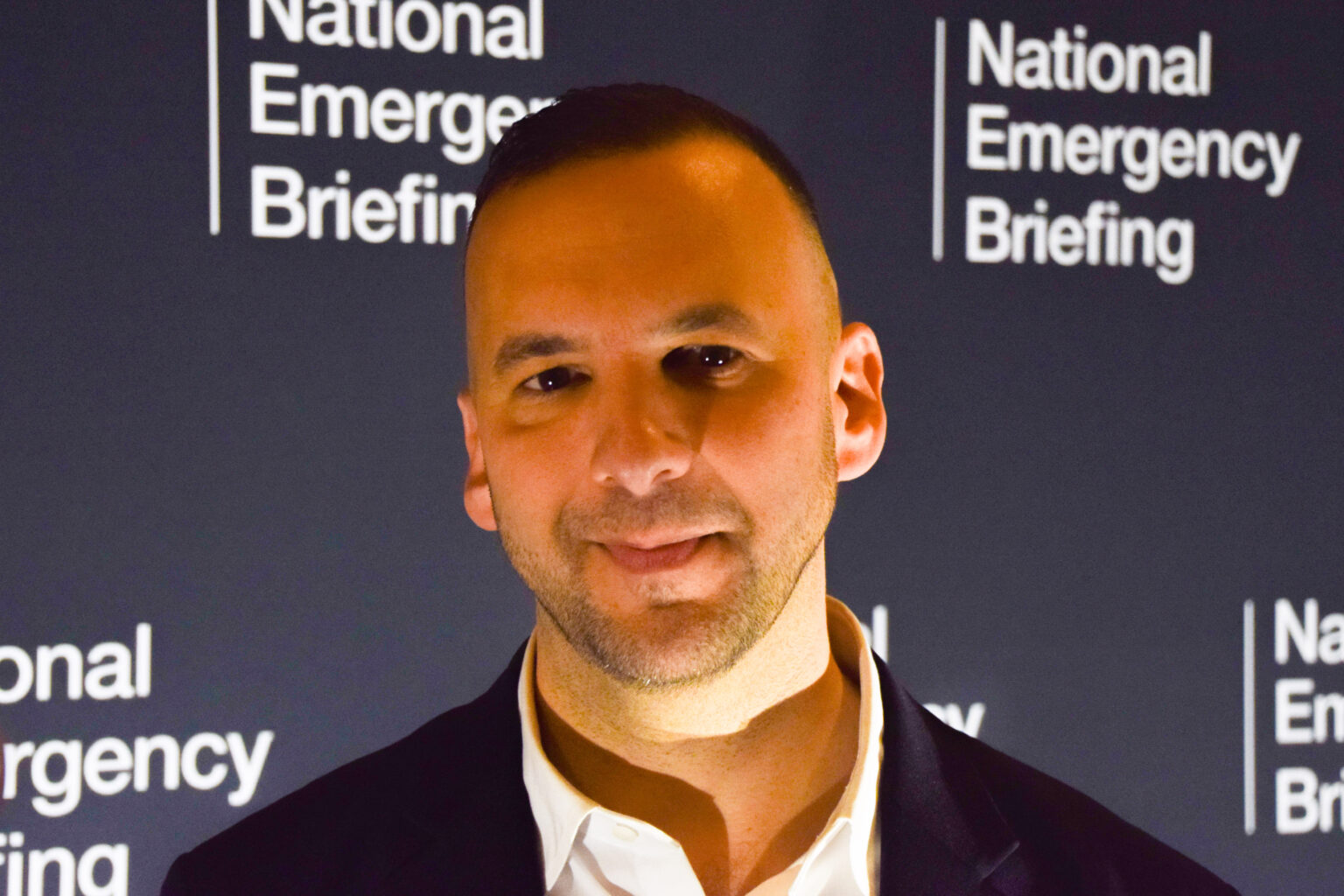
Green party leader Zack Polanski speaks to media following the National Emergency Briefing on climate and nature at the Central Hall Westminster, 27 November 2025, London, UK. Vuk Valcic/ZUMA Press Wire
It predicts a UK national security crisis with war, pandemics and food shortages.
Zack Polanski is calling on the government to publish the full, unredacted version of a report outlining how ecosystem collapse will plunge Britain into a national security crisis.
The report from UK intelligence chiefs warns that global ecosystem degradation and collapse will have devastating security consequences for Britain, including price rises, geopolitical instability, food and water shortages, greater pandemic risk, increased migration and conflict.
The Joint Intelligence Committee’s report was published in a redacted version in January and despite pressure from MPs and journalists, the Labour government has so far refused to release it in full.
Green party leader Polanski called on prime minister Andy Burnham to “tell the truth”, arguing that the public has a right to know the full scale of the threat.
Speaking at the Wild Summit in Bristol, Polanski said: “We’ve already seen how fragile our food systems are this year, with farmers warning that we could see empty shelves as a result of drought and flooding, and the government whispering that we should start stocking up on tinned food and bottled water.
“And these buried reports lay bare how unprepared we are for what is coming.”
Donald Trump urges you to be a Climate Science denier like him. He says that he makes millions and millions for destroying the planet, Burn, Baby, Burn and Flood, Baby, Flood.Nigel Farage urges you to ignore facts and reality and be a climate science denier like him and his Deputy Richard Tice. He says that Reform UK has received £Millions and £Millions from the fossil fuel industry to promote climate denial and destroy the planet.
Former Labour Party leader co-founder and leader, Jeremy Corbyn, takes part in the protest against the war with Iran in Parliament Square, as the USA and Israel launch attacks on Iran. Photo by Vuk Valcic/SOPA Images/LightRocket via Getty Images
“Blair dragged the UK into an illegal war that triggered a spiral of hatred, conflict, and misery,” Corbyn said. “Twenty-three years later, another Labour prime minister is doing his best to follow in Blair’s footsteps.”
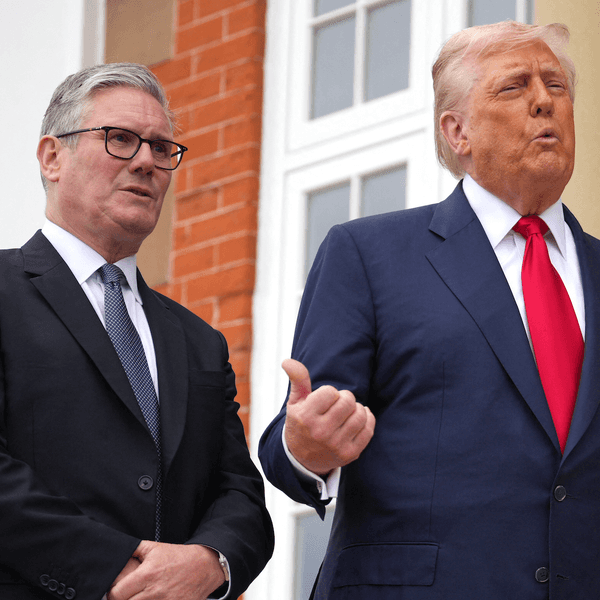
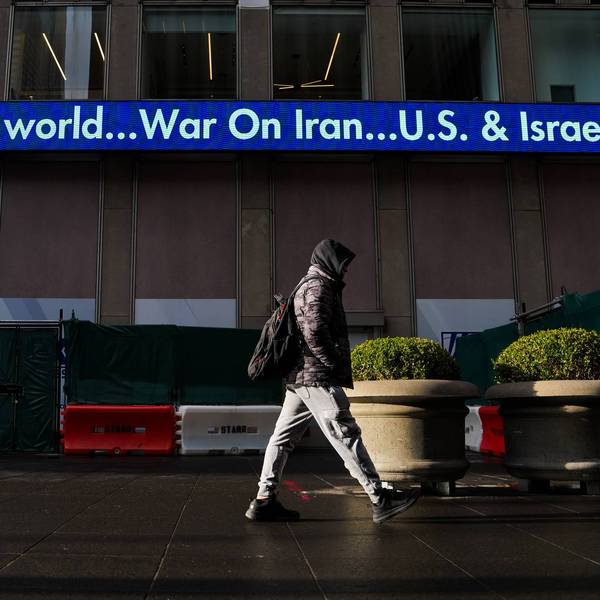
As UK Prime Minister Keir Starmer allows British bases to be used as part of the US-Israeli war against Iran, the former leader of his Labour Party says he’s making the same mistake that another Labour PM made 23 years ago.
Jeremy Corbyn, the socialist member of Parliament who led Labour from 2015 to 2020, said on Tuesday that Starmer was “echoing Tony Blair’s obedience to Washington”, referring to the then-prime minister’s decision in 2003 to join US President George W. Bush’s war in Iraq.
“Ignoring the wisdom of ordinary people who could see the catastrophe ahead, Blair dragged the UK into an illegal war that triggered a spiral of hatred, conflict, and misery. More than a million Iraqi men, women, and children paid the price.” Corbyn wrote in a Tuesday piece for the democratic socialist publication Tribune.
Infamously pledging to Bush, “I will be with you, whatever,” Blair helped to promote the false claims that Iraqi President Saddam Hussein possessed weapons of mass destruction. And despite a lack of support from the United Nations, he joined Bush’s “coalition of the willing,” committing 46,000 British troops to the war.
“This was the last time a Labour prime minister blindly backed the wishes of the US and its warmongering president,” Corbyn said. “Twenty-three years later, another Labour prime minister is doing his best to follow in Blair’s footsteps and drag us into a catastrophic, illegal war.”
Unlike Bush, US President Donald Trump has not yet put boots on the ground in Iran, instead waging a destructive campaign of aerial bombings and missile strikes that have taken out the nation’s Supreme Leader, Ayatollah Ali Khamenei, and other senior Iranian officials.
As of Monday, the Human Rights Activists News Agency (HRANA), a US-based monitor of human rights in Iran, reported that at least 742 civilians had been killed since Saturday by US and Israeli attacks, with nearly 1,000 injured and more than 600 deaths still under review.
While Starmer has stressed that the UK “had no role” in launching the war, he has lent credence to the questionable case the US and Israel have made to justify it, including emphasizing that Iran “must never have nuclear weapons.”
Iran has always contended its nuclear program was not for military purposes, and it had no desire to produce a nuclear weapon. Prior to Saturday’s strikes, reports indicated that Iranian negotiators had offered to give up the nation’s entire stockpile of enriched uranium.
And though he has accused Iran of launching “indiscriminate strikes” across the Gulf, Starmer has been reticent to criticize similar actions by the US and Israel, which have had vastly larger death tolls, including the bombing of a girls’ school that reportedly killed 165 people, most of them girls between ages 7 and 12, and attacks on several hospitals.
Prime Minister Sir Keir Starmer says that “Britain will not” join forces with strikes on Iran carried out by the US and Israel.
The UK is allowing American forces to use its bases in the region to help launch attacks, but stresses the UK military will only act defensively. pic.twitter.com/8fqPOxPLMp
One day after the first strikes were conducted, and following mounting pressure from Trump, Starmer announced that he’d given the US approval for “specific, limited defensive” use of three Royal Air Force (RAF) bases—Fairford in England, Akrotiri in Cyprus, and Diego Garcia in the Indian Ocean—in order to destroy Iran’s missiles “at source” after a drone hit Akrotiri, causing minimal damage.
However, Starmer continued to claim that the UK had learned the “mistakes of Iraq,” and “will not join offensive action now.”
Corbyn said that Starmer’s insistence that bases would only be used “defensively” was merely “meaningless vocabulary that reveals Starmer’s contempt for the intelligence of the British people.”
In Parliament on Monday, Starmer said that “the use of the bases is to allow the US to use its ability to take out the ability of Iran to launch the attacks in the first place.”
US Secretary of State Marco Rubio on Monday used similar reasoning to justify launching the war, explaining that Iran was likely to retaliate against a planned Israeli attack and that it therefore posed an “imminent threat” to US personnel even though that threat was contingent on Israel attacking first.
Corbyn described the idea of a “preemptive strike” as a contradiction in terms. “Under this convoluted reasoning,” he said, “almost any attack on anybody can be classified as a defensive measure. Starmer’s words are Newspeak—and cannot shield his government from complicity in the devastation ahead.”
Mark my words: Starmer’s decision to drag Britain into another illegal war will prove to be a catastrophic, historic mistake. pic.twitter.com/2iSFpnDHdw
Like in the United States, the British public has expressed low support for American and Israeli actions against Iran. According to a YouGov poll published on Monday, 49% disapprove of US military action, compared to 28% who support it. Fewer than 1 in 5 Labour voters said they supported it.
Voters also said they oppose their government’s involvement. Compared with just 32% of Brits who said they supported letting the US use British bases, 50% said they opposed it.
“For too long, Britain has blindly followed the US as it indulges in disastrous imperial fantasies,” Corbyn said, noting the UK’s continued support for Israel over two years of US-sponsored genocide in Gaza.
Corbyn is now an independent MP who co-founded a new political party after being thrown out of Labour in 2020 over dubious accusations of antisemitism, which he has alleged stem from his strong criticism of Israel.
“It’s time to forge a different path. Now is not the time to try to rescue a ‘special relationship’ characterised by impunity, genocide, and war,” he said. “Now is the time to forge an independent foreign policy based on international law and peace.”
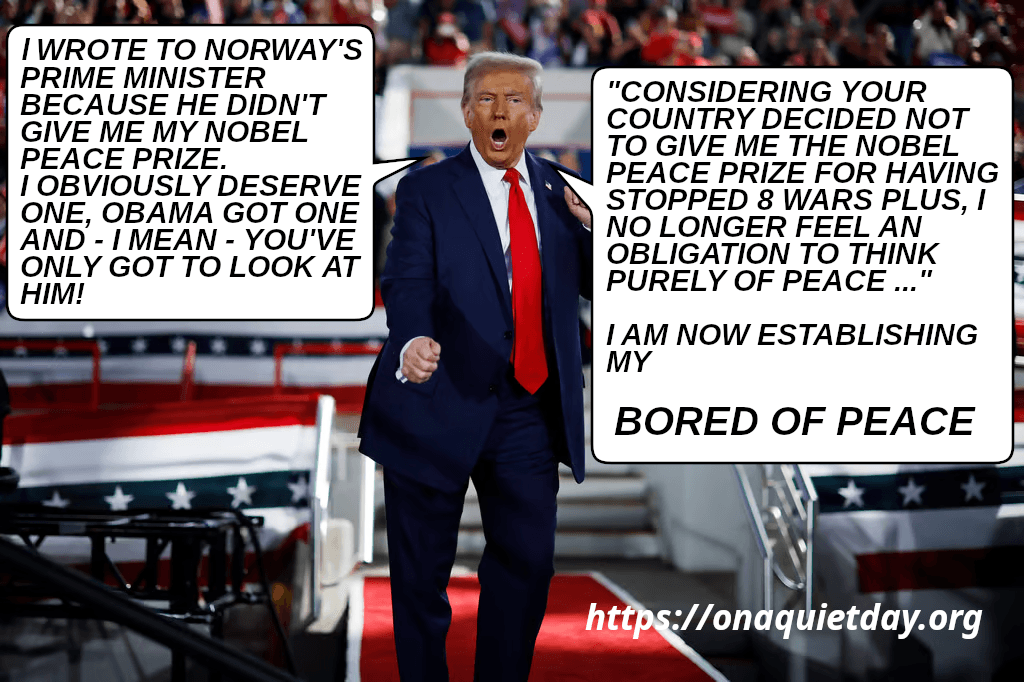
Orcas discuss Donald Trump and the killer apes’ concept of democracy. Front Orca warns that Trump is crashing his country’s economy and that everything he does he does for the fantastically wealthy.Donald Trump explains why he established his Bored of PeaceOrcas discuss rotting brain. Front Orca says “Wish someone would lock him up”.
Stories of conflict continue at Your Party’s Founding conference. Zarah Sultana has apparently boycotted the first day over exclusions. This appears quite bizarre but take a look at this video – it appears that exclusions are made on spurious grounds. The party doesn’t – or perhaps hardly – exists, who is making these exclusions?
Statement of interests: I signed up to receive emails and made a donation to Your Party when it was announced. I’ve not been getting emails now I mention it … I am not a member but of course interested in the founding of a new Socialist party and also want to report on it here.
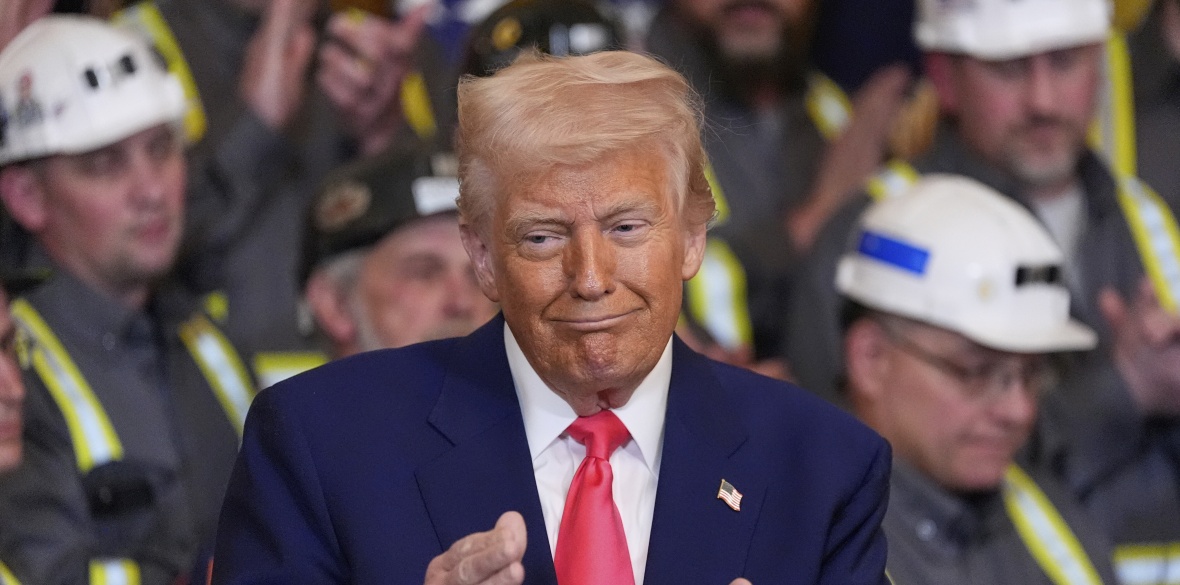
President Donald Trump listens to Jeff Crowe speak during an event on energy production in the East Room of the White House, April 8, 2025, in Washington
TRUMP’S 90-day tariff reprieve spells 90 days of geopolitical turbulence, US bullying and the threat of war.
All three have been constant features of the period of US “unipolar” power, especially since the beginning of what even US presidents have termed the “forever wars.” But Trump’s aggression is global.
That is not changed by the 90-day pause on tariffs (above a 10 per cent base line) on everyone except China, on whose products tariffs are now being hiked well above 100 per cent.
Yes, it identifies China as his main target. Yes, it is an affronted response to the one big country which has met his threats with defiance.
But the escalation against China and suspension — not removal — of threatened tariffs elsewhere are part of the same strategy. Trump is trying to browbeat the world into siding with the United States against China in a conflict the US, not China, has decided on.
Successive US governments have slapped sanctions (which, not being UN-authorised, have no international legal standing) on Chinese products.
But the universal tariff threat ratchets up the pressure. Align with our demands, the US says, or we have already identified the level of economic pain we are going to inflict on you.
Those demands are intended to force all markets open to whatever the US wants. Economist Michael Roberts points to the catch-all list of supposedly unfair practices the US objects to, including “currency manipulation, ‘opaque’ licensing, ‘discriminatory’ product standards, ‘burdensome’ customs procedures, data localisation and so-called ‘lawfare’ of taxes and regulation.”
This is the extraterritorial imposition of US power writ large. Other countries may not decide their own policies on procurement, the quality or safety of goods, tariffs (!), protecting their citizens’ data from US acquisition, or how to tax and regulate US companies operating on their territory. It is outrageous.
Neo-Fascist Climate Science Denier Donald Trump says Burn, Baby, Burn.Elon Musk urges you to be a Fascist like him, says that you can ignore facts and reality then.
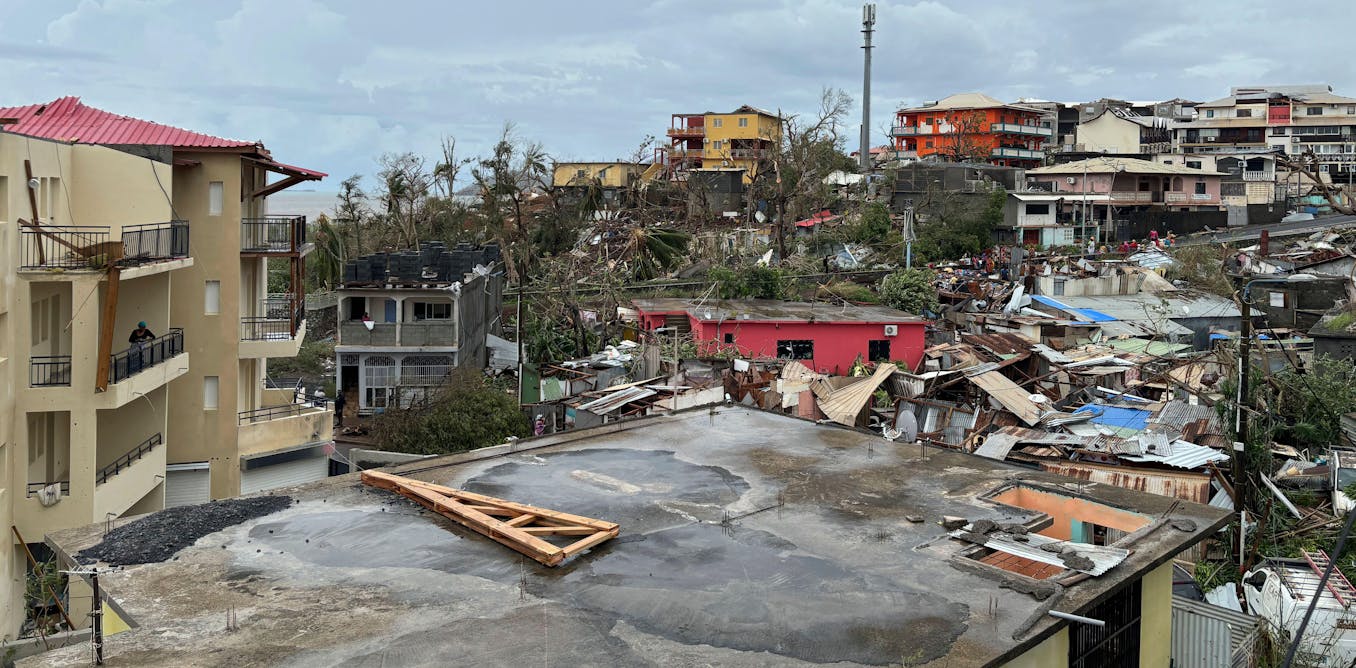
Damaged houses in Mamoudzou, in the French Indian Ocean territory of Mayotte on December 16 2024 after being battered by the islands’ worst cyclone in nearly a century. Associated Press / Alamy Stock Photo
Cyclone Chido was an “intense tropical cyclone”, equivalent to a category 4 hurricane in the Atlantic. It made landfall in Mayotte, a small island lying to the north-west of Madagascar on December 14, generating wind gusts approaching 155mph (250km/hr). Later on, it hit Mozambique, East Africa with the same ferocity.
This storm skirted north of Madagascar and affected the Comoros archipelago before making landfall in Mozambique. It is well within the range of what is expected for this part of the Indian Ocean. But this region has experienced an increase in the most intense tropical cyclones in recent years. This, alongside its occurrence so early in the season, can be linked to increases in ocean temperatures as a result of climate change.
News of the effects of tropical cyclone Chido in Mayotte, Mozambique and Malawi continues to emerge. Current estimates suggest 70% of Mayotte’s population have been affected, with over 50,000 homes in Mozambique partially or completely destroyed.
Ongoing conflict in Mozambique and undocumented migration to Mayotte will have played a key role in the number of deaths and the infrastructure damage.
Assessing how these cyclones characteristics are changing across southern Africa is part of the research we are involved in. Our team also studies how to build resilience to cyclones where conflict, displacement and migration magnify their effects.
A human-made disaster?
The risk that tropical cyclones pose to human life is exacerbated by socioeconomic issues. Migrants on Mayotte, many of whom made perilous journeys to escape conflict in countries such as the Democratic Republic of Congo, now make up more than half of the island’s population.
Precarious housing and the undocumented status of many residents reportedly made the disaster more deadly, as people feared evacuation would lead them to the police. On islands with poor infrastructure such as Mayotte, there is often simply nowhere safe to go. It takes many days for the power network and drinking water supply to be restored.
The situation is particularly complex in Mozambique. The ongoing conflict and terrorist violence, coupled with cyclones, including Kenneth in 2019, has caused repeated evacuations and worsening living conditions. Cabo Delgado and Nampula in the far north of Mozambique, the provinces most affected by both Chido and the conflict, rank among the poorest and most densely populated in the country due to limited education, scarce livelihood options and an influx of people displaced by violence.
As of June 2024, more than half a million people remained without permanent homes in the region, many living in displacement camps. That number is likely to rise significantly after Chido.
Compounding the crisis, Chido’s landfall so early in the cyclone season meant that the usual technical and financial preparations were not yet fully ramped up, with low stock levels delaying the timely delivery of aid. Unrest following elections in November hampered preparations further, cutting the flow of resources and personnel needed for anticipatory action and early response.
Tropical cyclones in a warmer world
Warmer sea surface temperatures not only provide more fuel for stronger storms, but may also expand the regions at risk of tropical cyclones.
Climate simulations predict that storms will continue getting stronger as we further warm our world, and could even lead to an unprecedented landfall as far south as the Mozambican capital, Maputo.
Scientists carry out attribution studies to determine how climate change contributed to specific events. Scientists undertaking rapid attribution studies of Chido have found that the ocean surface temperatures along the path of the storm were 1.1°C warmer than they would have been without climate change. So, temperatures this warm were made more than 50 times more likely by climate change. Another study focusing on Chido itself concluded that the cyclone’s winds were 5% faster due to global heating caused by burning fossil fuels, enough to bump it from a category 3 to a category 4 storm.
Intense winds are not the only hazard. Scientists are confident that tropical cyclones will dump more rain as a result of climate change. A trend towards slower-moving storms has been observed, causing more of that rain to accumulate in a single location, resulting in floods.
Cyclone Freddy delivered a year’s worth of rain to southern Malawi in just four days in March 2023. Storm surges, exacerbated by sea level rise, also raise the scale of flooding, as in the devastating Cyclone Idai in March 2019. An increase in the number of storms that rapidly intensify, as Chido did before landfall in Mayotte has also been linked to climate change, which makes it harder to provide early warnings.
To improve resilience to future cyclones, conflict, migration and social dynamics must be considered alongside climate change, without this, displaced and migrant communities will continue to be the most affected by the risks that climate change poses.