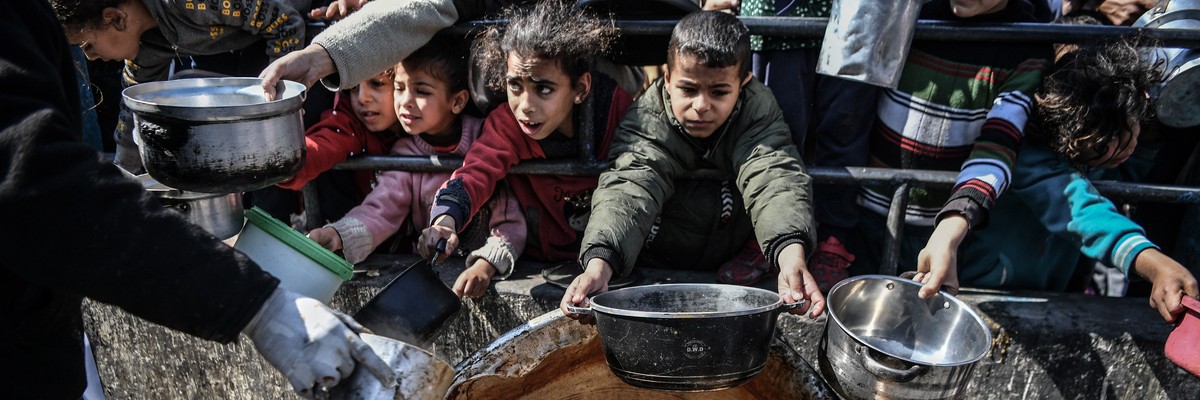
Gaza’s unquenchable thirst: The water tragedy amid relentless bombardment and total blockade
This work by Middle East Monitor is licensed under a Creative Commons Attribution-NonCommercial-ShareAlike 4.0 International License.

Under the weight of war and a suffocating blockade, more than two million people in the Gaza Strip are facing an unprecedented water crisis that threatens their daily survival. What was already a dire situation before the escalation has now turned catastrophic due to the ongoing bombardment and the widespread destruction of water infrastructure. The UN report from 2022 unveils a grim reality: over 97 per cent of Gaza’s drinking water is unfit for drinking or human consumption as a result of contaminants infiltrating groundwater reserves, whether it was caused by the excessive pumping of polluted water by the Israeli Occupation into Wadi Gaza, leakage from deteriorating sewage networks into the aquifer or the intrusion of the polluted saltwater into the aquifer by 75 per cent to meet the water deficit of the increased demand caused by the increased population. Compared to that, natural rain that does not exceed 30 per cent of natural replenishment. The situation is further exacerbated by the leakage of residues from Israeli munitions into groundwater sources.
Gaza’s water crisis: Numbers dripping with pain
Gaza’s water reality reveals a prolonged and profound deficit. While the Israeli Occupation enjoys a near-universal coverage of clean water (more than 99 per cent), as well as a substantial control over the aquifer, Gaza languishes among the world’s lowest water access rates, with a coverage below 10 per cent, placing it in a state of constant water emergency.
OPINION: The Zionist enemy will not manage to seize the Resistance’s weapons
Over the past years, Israel, through its national water company, Mekorot, supplied Gaza with around 18 million cubic meters of water annually through three pipelines, amounting to only 9 per cent of Gaza’s needs. Yet, the water sector in Gaza suffers from a severe deficit exceeding 120 million cubic meters per year (approximately 60 per cent of total demand). With the outbreak of the latest war, these limited supplies have been repeatedly disrupted and, today, they are completely cut off following the destruction of transmission networks. During the war, these pipelines provided up to 70 per cent of Gaza City’s water supply, after most local water sources were destroyed. More than 85 per cent of Gaza’s water and sewage networks have been bombarded, causing destruction and damage to 2,263 kilometres of pipelines and 47 pumping stations, as well as the cessation of all operations of wastewater treatment plants. Currently, only 30 per cent of Gaza’s wells remain operational. The capacity of desalination plants has plummeted to their lowest levels due to continuous bombardment and the shortages of electricity and fuel. Consequently, water supplies available to Gaza’s people have dropped by 95 per cent, with the average daily water consumption per capita reduced to just 3–5 litres, far below the 15-liter minimum emergency threshold set by the United Nations.
Gaza’s displaced: Long queues and arduous journeys for a few drops of water
Since the beginning of the escalation, thousands of Gaza’s residents have endured the tragedy of displacement, which has only deepened their daily suffering. Hundreds of families, forced to flee their homes under heavy bombardment, now face the exhausting challenge of searching for water in distant areas or in overcrowded shelters lacking even the most basic necessities of life. Long queues at water distribution points and wells have become a daily reality, fraught with the constant risks of air strikes, fear and loss of life.
“We wait for long hours just to access unsafe and contaminated water, and sometimes we only manage to get our share after complete exhaustion,” says Fatima, a 35-year-old mother of four, who was displaced with her children to a shelter in western Gaza. “The distance we have to walk every day just to collect water can stretch for several kilometres and, with each passing day, the journey becomes even more difficult.”
Contaminated water: An immediate and long-term health threatThe health situation in Gaza has become catastrophic due to the acute shortage of clean water and the forced reliance on contaminated sources for drinking and hygiene, if available, which has led tothe widespread outbreak of acute diseases such as diarrhoea, kidney infections, urinary tract infections and waterborne diseases, as well as skin infections due to poor hygiene conditions or the use of polluted water for personal care.
OPINION: Euphemistic practices: The IDF, killing aid workers and self-investigation
These health risks are even more severe for children under the age of five, who are particularly vulnerable to malnutrition, intestinal infections, and severe diarrhoea, which can lead to dehydration or death. Pregnant women also face higher risks of early miscarriage, premature delivery and reduced breast milk production due to dehydration and exposure to contaminated water. The elderly are not spared, either, as they face an increased risk of kidney diseases, kidney failure and challenges in managing chronic conditions in the absence of safe and sufficient water supplies.
Impact of the water crisis on food security and forced displacement
The water crisis in Gaza is not only a health emergency but also a growing threat to food security. The destruction of agricultural irrigation networks has further worsened the already fragile economic situation, increasing poverty and hunger across the Gaza Strip due to a sharp decline in agricultural and livestock production. Agricultural productivity in the limited available farmland has dropped by 60 per cent as a result of using contaminated water, not to mention that farmlands have become either unsuitable for cultivation or located in unsafe areas due to the ongoing conflict. Moreover, the scarcity of clean and safe water has intensified forced displacement, with many residents compelled to leave their homes in search of areas where drinking water is available.
A grave breach of International Law: Denying people their right to life
The targeting and destruction of water sources and infrastructure in Gaza constitute a grave breach of international humanitarian law.
According to the 1977 Additional Protocol I to the Geneva Conventions, it is prohibited to attack resources indispensable to the survival of civilians, such as water supplies. Denying water to civilians amounts to a war crime under the Fourth Geneva Convention and represents a blatant violation of Article 25 of the Universal Declaration of Human Rights.Such acts may also qualify as crimes against humanity under the Rome Statute of the International Criminal Court.
In the face of tragedy: An urgent call for action
In light of this tragic reality, there is an urgent need for immediate and coordinated action. Internationally, the United Nations must activate emergency protection mechanisms, while international organisations, including the Organisation of Islamic Cooperation and the Arab League, should play a key role in intensifying political pressure on the United States to compel Israel to stop the war, halt the supply of weapons to the Occupying forces and ensure the immediate entry of humanitarian aid into Gaza. The Human Rights Council is also expected to issue investigative reports on these violations, and the International Criminal Court should open immediate investigations into the crimes committed.
OPINION: Deporting dissent: The dangerous precedent set by the persecution of pro-Palestine activists
On the humanitarian level, aid organisations must intensify efforts to find emergency solutions for providing clean water to the population in Gaza by repairing damaged water networks, maintaining wells and desalination plants using locally available resources, operating mobile desalination units powered by solar energy, expanding water distribution through water trucks to shelters and displacement camps and providing households with simple tools for water purification and desalination.
On the relief level, it is essential to pre-position water-related equipment, including well supplies, fixed and mobile desalination units, generators, solar energy systems, spare parts for water networks and fuel in both Egypt and Jordan. These should be ready for immediate delivery as soon as border crossings are opened for humanitarian aid. It would be a grave mistake to wait until Crossings re-open before starting to procure these critical supplies, given the time required for sourcing and delivery.
For the recovery and development of Gaza’s water system, it is equally critical not to wait until the war ends to begin planning and preparation. Delaying the restoration and development of the water sector will only prolong the suffering of a population that has already endured unimaginable hardship for over 17 months. Efforts must begin now by developing a comprehensive recovery plan, securing supply chains, mobilising funding and preparing technical teams to respond without delay, ensuring the most vital resource for life, water, is restored for Gaza’s population.
Between a suffocating siege and relentless bombardment, the people of Gaza struggle for every drop of water, much like a drowning person gasping for their final breath. They call for water but receive none; they cry out for help but are left unheard. Has humanity truly turned its back on them? Is water not a right for every living soul, including those trapped and besieged in Gaza?
OPINION: The Israeli genocide in Gaza targets foetuses, newborns and pregnant women
The views expressed in this article belong to the author and do not necessarily reflect the editorial policy of Middle East Monitor.
This work by Middle East Monitor is licensed under a Creative Commons Attribution-NonCommercial-ShareAlike 4.0 International License.