‘No Tennis on a Dead Planet’: Climate Activists Disrupt US Open

Spread the love

Original article by JAKE JOHNSON republished from Common Dreams under Creative Commons (CC BY-NC-ND 3.0). 
“The climate is already more disruptive than any activists can possibly be,” said a spokesperson for Extinction Rebellion.

A group of climate activists wearing shirts that read “End Fossil Fuels” delayed the semifinal match of the U.S. Open Tennis Championships by around 45 minutes Thursday night in an effort to call greater public attention to the planetary emergency that is wreaking deadly havoc worldwide.

One of the demonstrators glued his bare feet to the concrete in the stands at New York City’s Arthur Ashe Stadium, requiring additional effort by medical personnel and police to remove him and take him into custody.

The protesters were associated with the climate group Extinction Rebellion NYC, which said in a statement Thursday that there is “no tennis on a dead planet.”

“The climate and ecological crisis threatens everything on our planet, including sports,” the group said. “This action and similar actions are the response of a movement that has no other recourse than to engage in unconventional means of protest to bring mass attention to the greatest emergency of our time.”

Nineteen-year-old Coco Gauff won the semifinal match after it resumed. In an interview following her victory, Gauff said she supports “preaching about what you feel and what you believe in.”

“It was done in a peaceful way, so I can’t get too mad at it,” she said of the demonstration. “Obviously I don’t want it to happen when I’m winning up 6-4, 1-0, and I wanted the momentum to keep going. But hey, if that’s what they felt they needed to do to get their voices heard, I can’t really get upset at it.”

The U.S. Open—which counts JPMorgan, a major funder of fossil fuels, as an official partner—kicked off late last month amid growing concerns about the impact of extreme heat on the sport.

During a match earlier this week, Russian player Daniil Medvedev looked into a courtside camera between points and warned that an athlete is “gonna die” from the scorching temperatures.

The Associated Press reported that “it got so hot and humid at the U.S. Open on Tuesday that the folks in charge adopted a new policy for the rest of this year’s tournament: They will partially shut the Arthur Ashe Stadium roof in extreme conditions to offer some extra shade.”

“An Associated Press analysis showed the average high temperatures felt during the U.S. Open and the three other major tennis tournaments steadily have gotten higher and more dangerous in recent decades, reflecting the climate change that created record heat waves around the globe this summer,” the outlet noted. “For athletes, it can keep them from playing their best and, worse, increases the likelihood of heat-related illness.”

Earlier this week, the European Union’s Copernicus Climate Change Service confirmed that this summer has been the hottest on record, and a separate global report led by the U.S. National Oceanic and Atmospheric Administration showed that greenhouse gas concentrations hit a record high last year as fossil fuel extraction continued.

recent survey found that experts on social movements believe disruptive protests of the kind launched by Extinction Rebellion are important to the success of a particular cause, even though the initial public reaction to such tactics can often be negative. The U.S. Open protest drew loud boos from attendees.

Miles Grant, an Extinction Rebellion spokesperson, said Thursday that “the climate is already more disruptive than any activists can possibly be.”

“Just look at the U.S. Open and other big tennis events—year after year, the average temperatures have been rising, making it hotter and more dangerous for the players and spectators,” said Grant. “At some point, there will be fewer outdoor sporting events due to excessive heat.”

Original article by JAKE JOHNSON republished from Common Dreams under Creative Commons (CC BY-NC-ND 3.0). 

Continue Reading‘No Tennis on a Dead Planet’: Climate Activists Disrupt US Open

‘Terrifying’: Scientists Raise Alarm Over Unprecedented Global Ocean Heat

Spread the love
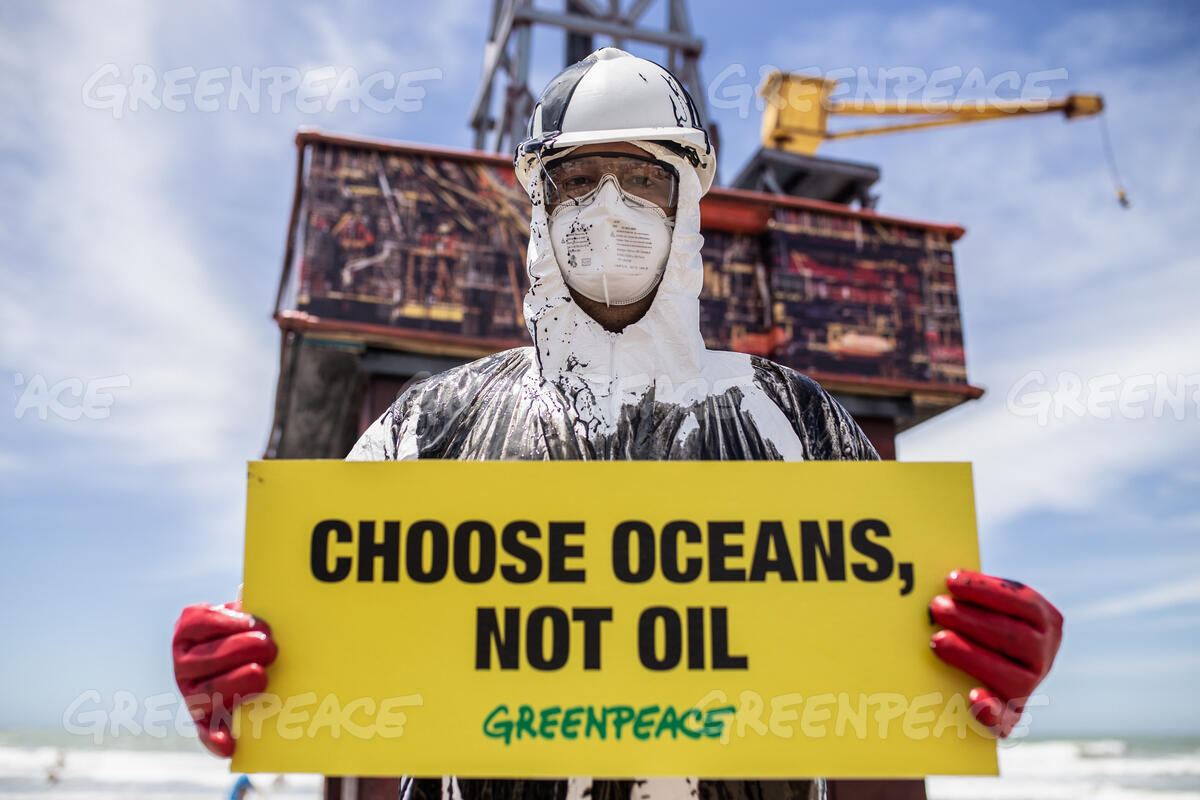
Greenpeace image, sign reads CHOOSE OCEANS, NOT OIL

Original article by JULIA CONLEY republished from Common Dreams under Creative Commons (CC BY-NC-ND 3.0).

The global average ocean surface temperature is expected to rise even further in the coming months as El Niño strengthens.

Climate scientists on Friday said the rapidly rising temperature of the planet’s oceans is cause for major concern, particularly as policymakers in the top fossil fuel emissions-producing countries show no sign of ending planet-heating oil and gas extraction.

The European Union’s climate agency, Copernicus Climate Change Service, reported this week that the average daily global ocean surface temperature across the planet reached 20.96°C (69.7°F), breaking the record of 20.95°C that was previously set in 2016.

The record set in 2016 was reported during an El Niño event, a naturally occurring phenomenon which causes warm water to rise to the surface off the western coast of South America. The weather pattern was at its strongest when the high ocean temperature was recorded that year.

El Niño is forming this year as well, but has not yet reached its strongest point—suggesting new records for ocean heat will be set in the coming months and potentially wreak havoc in the world’s marine ecosystems.

Samantha Burgess, deputy director of Copernicus, told the BBC that March is typically when the oceans are at their hottest.

“The fact that we’ve seen the record now makes me nervous about how much warmer the ocean may get between now and next March,” she told the outlet.

The warming oceans are part of a feedback loop that’s developed as fossil fuel emissions have increasingly trapped heat in the atmosphere.

Rising levels of carbon dioxide in the atmosphere are warming the oceans, leaving them less able to absorb the emissions and contributing to intensifying weather patterns.

“Warmer sea surface temperatures lead to a warmer atmosphere and more evaporation, and both of these lead to more moisture in the atmosphere which can also lead to more intense rainfall events,” Burgess told “Today” on BBC Radio 4. “And warmer sea surface temperatures may also lead to more energy being available for hurricanes.”

The warming ocean could have cascading effects on the world’s ecosystems and economies, reducing fish stocks as marine species migrate to find cooler waters.

“We are seeing changes already in terms of species distributions, prevalence of harmful algae blooms popping up maybe where we would not necessarily expect them, and the species shifting from warmer southern locations up into the colder regions as well which is quite worrying,” Helen Findlay, a biological oceanographer at the Plymouth Marine Laboratory in the United Kingdom, toldThe Evening Standard.

“We are also seeing more species coming up from the south, things like European anchovy or recently examples of Mediterranean octopus coming up into our waters and that is having a knock-on impact for the fish that we catch, and consequences of economics,” she added.

Certain parts of the world’s oceans provoked particular alarm among scientists in recent days, with water off the coast of Florida hitting 38.44°C—over 101°F—last week.

The National Oceanic and Atmospheric Administration told the BBC that ocean temperatures in that area typically hover between 23°C and 31°C at this time of year.

Since scientists first began measuring ocean temperatures using satellites and research buoys about four decades ago, the global average sea surface temperature has gone up by roughly 0.6°C.

On social media, climate scientists urged news outlets to explicitly connect the rising ocean temperatures to fossil fuel companies and the policymakers who are enabling them to continue fueling the climate emergency—such as British Prime Minister Rishi Sunak, who announced more than 100 new oil and gas licenses in the North Sea this week.

The New York Times this week reported “terrifying Earth breakdown but barely [mentioned] the cause is the fossil fuel industry,” said National Aeronautics and Space Administration climate scientist Peter Kalmus.

“The more we burn fossil fuels, the more excess heat will be taken out by the oceans, which means the longer it will take to stabilize them and get them back to where they were,” Burgess told the BBC.

Original article by JULIA CONLEY republished from Common Dreams under Creative Commons (CC BY-NC-ND 3.0).

Continue Reading‘Terrifying’: Scientists Raise Alarm Over Unprecedented Global Ocean Heat

Climate change causing ‘heat stress’ in Europe, says new report

Spread the love

https://morningstaronline.co.uk/article/w/climate-change-causing-more-heat-stress-europe-says-new-report

EUROPEANS, particularly in the south of the continent, are being subjected to more heat stress during the summer months as climate change causes longer periods of extreme weather, a new study said today.

The European Commission’s Copernicus Climate Change Service said that comparisons of data over decades show record heat last year resulted in hazardous conditions for human health.

The report said: “Southern Europe experienced a record number of days with ‘very strong heat stress’,” defined as temperatures from 38°C to 46°C.

The number of summer days with “strong” (32°C to 38°C) or “very strong” heat stress is rising across the continent, while in southern Europe this is also the case for “extreme heat stress” days above 46°C, Copernicus said.

https://morningstaronline.co.uk/article/w/climate-change-causing-more-heat-stress-europe-says-new-report

Continue ReadingClimate change causing ‘heat stress’ in Europe, says new report