Senior Conservatives have repeatedly promoted a pothole repair machine made by a company which has donated huge sums to the party and its MPs
Conservative politicians have repeatedly promoted a pothole-repairing machine, after their party took millions of pounds in donations from the company that makes it.
Conservative Deputy Chair Jonathan Gullis told MPs in December about his local council’s purchase of the “JCB Pothole Pro”, which he described as “revolutionary”, claiming that it “fixes potholes twice as fast and at half the cost of other machinery”. He also repeated his endorsement on Facebook.
He later went on to register a £10,000 donation from the company.
Other Conservative politicians to endorse the product include the Transport Secretary Mark Harper, who took part in a photo opportunity with JCB and the Pothole Pro last October.
Harper went on to tell MPs in December that “I was lucky enough to visit JCB myself and see the Pothole Pro in action, as well as the innovative work it is doing, as a fantastic world leader in innovation, on some of its hydrogen engines for its mobile off-road machinery.”
…
Boris Johnson stands on JCB machine alongside JCB chairman Lord Bramford during his visit to the new JCB Factory in India in April 2022. Photo: Ben Stansall/ AP
…
Deputy Chairman Jonathan Gullis’ own endorsement of the Pothole Pro came before he declared the acceptance of a £10,000 personal donation from the company, which employs hundreds of people in his constituency.
As Byline Timesrevealed last week, Gullis accepted the donation just weeks before the company announced it would be closing its warehouse in Stoke on Trent.
…
Another Conservative MP also promoted the ‘Pothole Pro’ after receiving a donation from JCB.
Last week Theo Clarke, who is standing for re-election as the MP for Stafford, posted a series of social media posts referring to JCB and its’ ‘Pothole Pro’ machine, after having previously registered a £5,000 donation from the company in 2020. She did not declare to her followers about her previous funding from the company.
There has been criticisms of the decision by some Conservative councils to purchase the Pothole Pro.
According to the Gloucestershire Live news website, Gloucestershire County Council approved a “last minute” amendment to its budget earlier this year in order to purchase a JCB Pothole Pro, worth an estimated £200,000.
Liberal Democrat Councillor David Willingham raised concerns that the purchase had not been “properly audited for probity reasons” and pointed to criticisms about the effectiveness and value for money of the machines.
Despite the high cost of the machines, the Pothole Pros do not actually fill potholes, but are merely used for preparing the holes to be filled by hand.
This story goes far wider than PPE Medpro and Baroness Michelle Mone Photo: Justin Tallis/PA/Alamy
Byline Times has been unravelling the dealings behind the procurement of personal protective equipment (PPE) in the UK since the very early days of the pandemic. Here’s what we learnt – and what we still need answers to…
Within weeks of the first lockdown, Nafeez Ahmed on Byline Times became arguably the first journalist to break the story of the emerging personal protective equipment (PPE) scandal.
On April 2 2020, he exposed how lucrative contracts were being awarded to Conservative Party associates.
Boris Johnson’s Government had appointed a giant haulage firm with financial ties to the Tory Party to be in charge of a new supply channel for PPE to the NHS. Its founding executive chairman was Steven N. Parkin, a top Conservative Party donor who has attended exclusive ‘Leaders Group’ meetings and donated almost £1 million to the party in the preceding five years.
This set the tone for an extensive investigation into COVID-19 contracts, shedding light on a concerning trend of cronyism.
That May, Stephen Delahunty on Byline Times revealed that another Conservative donor was involved in the COVID-19 contracts.
Europa Worldwide Group – the managing director of which was a personal donor to Johnson – was found to be arranging PPE supplies for the NHS and manufacturing testing kits.
…
In July 2020, Delahunty revealed that companies with no prior experience or expertise were inexplicably receiving multi-million-pound contracts. This was despite the looming threat of legal challenges over what was to be dubbed the ‘VIP Lane’: pathways for firms to win government contracts with little oversight and through referrals from well-connected politicians.
…
In quick succession, we found that a recruitment firm with just £322 in net assets had received an £18 million Government contract.
…
Things got even weirder that August, when Byline Times revealed the companies linked to the exclusive Plymouth Brethren religious sect which were mopping up huge COVID contracts. And still the warning signs kept flashing, as we dug up dormant firms which emerged from seemingly nowhere to win millions in PPE deals.
All these contracts could be justified if they were effective in saving lives. But in August 2020, we began to see the true picture: much of the PPE purchased at vast sums couldn’t actually be used. It wasn’t up to scratch. Meanwhile, NHS staff continued to complain of shortages and shoddy equipment.
…
In 2021, the COVID cash machine just kept giving – to a select few.
Pulling together a year of evidence, Byline Times and The Citizens revealed that deals worth at least £2 billion had been awarded to top Conservative Party associates during the Coronavirus crisis.
A firm that gave £400,000 to the Conservatives won a £93.8 million PPE deal. The figures being handed to the Plymouth Brethren sect alone hit £1.1 billion.
And, as before, vast amounts of the PPE were useless.
…
This newspaper was the first to reveal Mone’s links to the firm – links which were vigorously denied under threat of libel action, but which we now know to have been true. (Mone and PPE Medpro are under investigation by the National Crime Agency but deny any illegality).
It was one of many companies that were referred by Conservative MPs and peers to the expedited ‘VIP Lane’ for PPE contracts during the pandemic.
PPE Medpro took in the region of £60 million in profits. Much of its PPE was also deemed unusable by the NHS.
Overall, the value lost to dodgy PPE was nearly £9 billion – a quarter of the annual UK budget for housing and the environment put together.
Is there any other country in the world that has witnessed sleaze and scandal on such a scale around COVID contracts?
And did the £200 million-plus COVID ‘bungs’ to the press – the Government’s ‘All in, All Together’ public information campaign subsidising profitable newspapers – help Johnson’s administration get away with it?
Donations raise eyebrows with Rishi Sunak expected to reject Climate Change Committee advice on banning expansions
A dirty jet passenger aircraft
Airport operators have lavished Britain’s last three prime ministers with VIP services worth more than £200,000 since the 2019 election, analysis by openDemocracy has found.
Liz Truss, Boris Johnson and Theresa May are among the Conservative MPs who have accepted more than £275,000 in donations-in-kind from airport operators, while Conservative Party HQ has also taken more than £13,500 in donations from airport operators.
It comes as the government signals its backing for airport expansions, in contrast with advice from its own climate advisers that adding runways to Heathrow and Gatwick would be incompatible with the UK’s net zero goals. The Department of Transport told openDemocracy it was “supportive of airport expansion where it can be delivered in a sustainable way”.
Peter Barclay, the chair of Gatwick Area Conservation Campaign, said gifts to the Conservative Party were “all part of the industry’s efforts to oil the government machine in their favour”.
“It makes you very suspicious of politicians,” he said.
Sarah Clayton, coordinator of climate campaign group AirportWatch said: “Rishi Sunak has no interest in the environment, his only interest is keeping the Conservative Party going.
“The airports will use every little trick in the book in order to make sure that the law isn’t changed so they can get their expansion plans through.”
Truss, Johnson and May have accepted tens of thousands of pounds in donations in kind from Heathrow Airport Ltd and Gatwick Airport Ltd in the last four years. Both airports are hoping to open additional runways.
Theresa May alone accepted donations in kind worth more than £183,000 for the use of the VIP Windsor suite at Heathrow Airport a staggering 44 times, according to declarations made on the Register of Members’ Financial Interests.
Heathrow advertises the private suite as a “unique and luxurious service” that includes a chauffeur and dinner prepared by a Michelin starred chef “served by your own personal butler”.
Boris Johnson also used the suite at least 34 times, accepting stays worth £58,000 from the airport, four of them while still in office. In addition, he made use of a VIP suite at Gatwick Airport for him and his family on three occasions after leaving office, a donation in kind worth more than £4,000.
His short-lived successor Liz Truss also made use of VIP suites at Heathrow and Gatwick, accepting 14 stays worth more than £24,000 after resigning as prime minister.
Theresa May accepted donations in kind worth more than £183,000 for the use of the VIP Windsor suite at Heathrow Airport a staggering 44 times
Tory Party HQ also accepted a £12,500 cash donation from London City Airport Ltd just days after it won the 2019 election, according to the Electoral Commission’s records, while Heathrow Airport Ltd made a “non-cash” donation worth the equivalent of £1,680.00 to the party in October 2022. It did not respond to questions about what the donation actually was.
A further six Conservative MPs have accepted gifts worth almost £7,000 in total from London City Airport Ltd since 2019. Orpington MP Gareth Bacon declared in the Register of Members’ Financial Interests that he received tickets to sporting fixtures worth £1,849 from the airport last year, which is the closest to his constituency.
Tory MPs Nigel Evans, Robert Neill, Paul Scully, Kevin Hollinrake and Gagan Mohindra also declared that they had accepted tickets to sporting events from the airport.
London City had an application to increase the size of its terminal refused by Newham Council in July, but has appealed the decision.
Operators of British airports including Heathrow and Gatwick, as well as the Airport Operators Association (AOA), also sponsor the Future of Aviation All-Party Parliamentary Group of MPs by donating £10,000 a year to pay for its secretariat.
Karen Dee, the chief executive of AOA, recently wrote that she had been “working with MPs on the Future of Aviation All Party Parliamentary Group to lobby the prime minister and chancellor to allow airports to establish arrivals duty-free stores and to restore VAT-free shopping for international tourists”.
Corporate lobbyists have successfully pushed Keir Starmer’s party to ditch its progressive policies
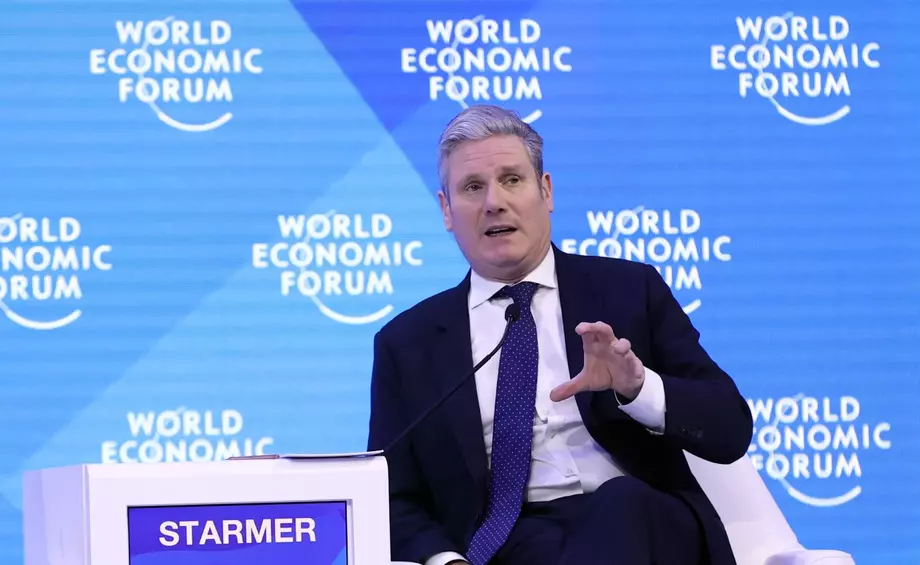
Keir Starmer sucking up to the rich and powerful at World Economic Forum, Davos.
Over the summer, Keir Starmer’s Labour Party for the first time articulated a clear vision for government: everything will continue to be awful. Nothing will get better. Hope is for fools. And, most importantly, no one with wealth or power need worry themselves that any of either will be taken from them.
Because despite two-thirds of voters wanting the government to increase wealth taxes, shadow chancellor Rachel Reeves last month emphasised that she won’t. And although 63% of Brits think taxes on the rich are too low, Starmer has made clear that he doesn’t want to raise income tax for top earners, saying his driving principle is, rather, to lower taxes. Only 5% think the rich pay too much tax.
Meanwhile, Labour’s £28bn-a-year pledge to invest in a Green New Deal – a plan to boost the transition to a zero-carbon economy – has been cancelled by Reeves, who stressed a need for ‘fiscal discipline’. The policy has wide support among voters, particularly in key marginals in England’s North and Midlands.
A certain portion of the press – both Conservative hacks and Blairite shills – see all this as genius: if Labour steals the Tories’ story, how can Rishi Sunak attack? And in a way, though not the way they mean, they may be right.
Wealth and political power are enormously concentrated in Britain. Since 1945, Labour has only ever got into government when it’s made very clear that it doesn’t intend to challenge the ruling elite.
As we saw with Jeremy Corbyn, our oligarch-controlled media, the City and even army generals won’t allow any suggestion that the party plans to govern in line with the egalitarian desires of the overwhelming majority of voters.
In the battle of a general election, the cultural grip of the UK’s establishment is strong enough to override voters’ policy preferences. Actually doing the things voters want – taxing the rich, renationalising key services and tackling the climate crisis – would mean taking on institutions powerful enough to take you down. Or, at least, that’s what many Labour strategists have effectively concluded, even if that’s not how they would express it.
Of course, you can argue against that. Maybe establishment institutions are losing their grip. Perhaps the Tories would still lose the next election if Starmer stuck to his promise to run on the left.
On the other hand, it’s possible that the Labour leader being such an obvious liar – getting himself elected by his party on one set of promises and then immediately breaking them – will allow the Tories to successfully take him down. But more likely, it will make his first term as prime minister very difficult, and leave a festering anger that the right will exploit.
Cock-ups and corruption
Over the past few weeks, I’ve revealed a series of scandals about Labour.
Most of these stories boil down to at least one of the various C-words that shape so much of our politics: cock-up, conspiracy, co-option, coercion, collusion, corruption, capture, cooperation and class interest. Each is, in its own way, revealing.
In the first story, I showed that the Barnes and Richmond Labour Club had given the central party an illegal donation of just under £600,000. This seems to have been an example of the first C – a cock-up.
The money came from a local Labour club selling a building that had once been used as a social club for members. The club’s treasurer had given the cash to his local party through the national party in order to comply with regulations. But the national party seems to have failed to deliver it: within five minutes of going through their donor list, I could see that they’d broken the rules.
One local Labour club messing up isn’t a big deal. The fact that the central party cared so little about obeying transparency laws that one of its biggest donors in recent years inadvertently broke them, is. For all of Starmer’s emphasis on competence, the party he leads seems not to have invested enough in training its staff in the laws governing political finance.
It’s much harder to see Google as the bad guy when you’ve sung along to Elton John with its team, while tipsy on its tab
When we broke the second story, about Starmer’s freebies, and the third, about Jonathan Reynolds’ trip to Glasto with Google, there was a pretty ferocious reaction online. The word people kept coming back to was ‘corruption’. But I’m sure that, in his mind, Starmer doesn’t think there is any transaction going on; he’s not accepting gifts from the gambling industry in exchange for future laxity with gambling laws. They are just inviting him, he presumably thinks, because they enjoy the glamour of having the likely next prime minister on their arm.
And, the labour leader’s internal monologue might argue, it’s perfectly appropriate for him to hear from and experience the wares of various British industries. In any case, if a politician was selling elements of public policy, they could do a lot better than a four-course meal with fizz in a special box at the races.
A better word for what is going on is ‘co-option’.
Co-option
The social theorist Ralph Miliband – dad of Ed and David – documented how the same thing was done to the very first Labour MPs, a century ago. While some of the establishment was horrified by the arrival of these cloth-capped working-class men in the hallowed halls of the Palace of Westminster, its cleverer figures knew just what to do. They took them out for dinner at their smart London clubs. They introduced them to their wives, and to fine wines. They inducted them into the ruling class.
The consequence was that the first Labour administrations in the 1920s governed very much within the rules set by the establishment they had been socialised into, including pushing through massive public spending cuts after the Wall Street Crash, rather than devaluing the pound. What we’re seeing now is the same process of co-option in post-Corbyn Labour. Only now, it’s not so much co-option into the old ruling class – though we get a whiff of that in Starmer’s days out at the races – but into the glitz of big business: tickets to the Brit Awards, the best seats in the nation’s swankiest football stadiums, the luxury end of Glastonbury.
Part of the message these businesses are trying to convey to Labour folk will be expressed verbally, over sips of champagne or between the amuse bouche and the appetiser. But part of it comes in the setting itself: it’s much harder to see Google as the bad guy when you’ve sung along to Elton John with its team, while tipsy on its tab. It’s much easier to go soft on elites once you feel part of them, to see things from the perspective of a multi-millionaire if you’re watching the football from the premium suite than if you’re cheering from the stands with the fans.
You see a similar phenomenon with sponsored events at Labour Party conference, as revealed by my colleague Ruby recently. Often, these are luxurious affairs – I can still remember the delicious beef and truffle canapés I got from a firm pushing freeports a few years back.
Businesses with policy agendas invest time and money in buying nice things for politicians and their staff because it works – not in the simple transactional way that a word like ‘corruption’ implies. But in subtler, softer ways. If it didn’t, they wouldn’t do it.
Co-operation
Cooperation is important, too. While members of the cabinet have special advisers funded through the civil service, their shadows don’t get equivalent staffing support – and the resources aren’t distributed equally. Some members of the shadow cabinet have just one adviser, funded by the Labour Party, others have whole teams, paid for by major donors.
It’s generally those associated with the right of the Labour Party who seem able to attract the funding of the handful of hedge funders and millionaires who chip in to such things. As a result, they get the researchers and spinners who make them look more competent, allowing them to deliver more, to grow their profiles, to succeed.
In 2018, the party took £700,000 in donations. So far this year, it’s already taken £12m
Peter Kyle, for example, who has recently been appointed shadow secretary of state for science, and who is associated with the right of the party, has been given £50,000 by wealthy financiers over the past year. Jonathan Ashworth, who was shadow secretary of state for work and pensions and who is seen as being on the soft left of the party, got no such donations, and was demoted to paymaster general in the recent reshuffle.
Other recipients of large amounts of private cash include shadow chancellor Rachel Reeves, shadow health secretary Wes Streeting, and shadow home secretary Yvette Cooper – all of whom are associated with the right of the party. Shadow cabinet members who come from the ‘soft left’ don’t get anything like the same support.
There is no suggestion of impropriety here. Kyle and pals genuinely believe in policies that are good for their banker backers, while Ashworth et al are less keen. But the result is that the one on the side of the super-rich gets to have a super-sized staff team, and the political muscle which comes with it.
This phenomenon is not limited to shadow cabinet members. The Labour Party has changed its policy over the past few months, and has subsequently been richly rewarded with a surge in large donations.
Since becoming leader in 2020, Starmer’s Labour has struggled for money. Membership – and the revenue it provides – has dropped by 170,000 in the past three years, while trade union contributions have fallen by more than a million since 2018.
But the party’s latest accounts, which came out this week, show that the shortfall has now been more than bridged by large donations from rich people and companies. In 2018, the party took £700,000 in donations above the £7,500 reporting threshold (or £1,500 for local parties and the like). So far this year, it’s already taken £12m.
The policies that Labour has ditched in recent months may have been overwhelmingly popular among voters. But they weren’t, it seems, with its wealthy potential donors.
Collusion
It’s not surprising that lots of businesses want to shape Labour policy. Polls show that the party will likely form the next government, and corporations want to make sure it won’t get in the way of their plans to extract as much profit as they can.
In one of its newsletters this week, Politico quotes Alice Perry, associate director at H/Advisors Cicero and a former chair of Labour’s ruling National Executive Committee, as saying that demand for insider advice on how to lobby Starmer’s team has rocketed since last year. According to the website: “You can’t move in SW1 without meeting one of the new bespoke ‘Labour units’ being set up by lobbying shops or their latest ex-Labour hire.”
The revolving door goes the other way, too. As I revealed earlier this week, at least ten current staffers for shadow cabinet ministers previously worked as corporate lobbyists.
But the revolving door between lobbying agencies and the top of politics is old news. And at least a revolving door means you are either in or out at any given moment. Starmer and his colleagues, however, seem to have found a new way to blur the lines: taking on staff who are still employed as corporate lobbyists – seconded from their usual work to the Labour Party. Much of the shadow cabinet is, in other words, directly collaborating with the lobbying firms trying to sell access to them.
Commercial lobbying exists to help those with money get extra influence over governments. The inevitable corollary is that ordinary citizens will get, relatively, less say. As such, its point is to distort democratic processes, to bend them to the will of capital.
In the dying days of the last Labour government, a string of former cabinet ministers were caught offering themselves for hire as lobbyists. The ensuing scandal contributed to a sense that the party’s time in office was coming to a somewhat sordid end, and coincided with a dip in the polls. But that was after 13 years in power.
If the party is willing to so openly collude with corporate lobbyists when it ought to be fresh faced and ready for office, then voters will hear its message loud and clear: don’t expect anything to get better.
BBC chairman Richard Sharp’s position is “untenable,” Labour insisted today after MPs found that he had made “significant errors of judgement” when acting as a go-between on a loan for disgraced former prime minister Boris Johnson.
Shadow culture secretary Lucy Powell argued that Mr Sharp’s help, offered when the former Tory donor was applying to the government for the post in early 2021, “throws into serious doubt the impartiality and independence that is so fundamental to trust in the BBC.”
In a highly critical report published today, the digital, culture, media and sport committee, which interviewed Mr Sharp last week, said that he had not supplied the “full facts” when it was considering his suitability for the BBC role.
The former banker’s “failure to disclose his actions constitute a breach of the standards expected of individuals applying for such public appointments,” the cross-party panel of MPs added.
“Mr Sharp should consider the impact his omissions will have on trust in him, the BBC and the public appointments process.”