NHS news review

Spread the love

The third and final reading of the Destroy the NHS / Health and Social Care Bill is taking place now. I think that the vote is yet to be taken.

Many doctors and other health professionals have spoken out against the bill.

During Prime Ministers Questions David Cameron falsely claimed that the Royal College of GPs and the Royal College of Nursing backed the government’s NHS plans.

Tory minister Lord Howe caused a row by describing the huge opportunities for private companies by the proposed ‘reforms’.

I regret and apologise for my recent comments.

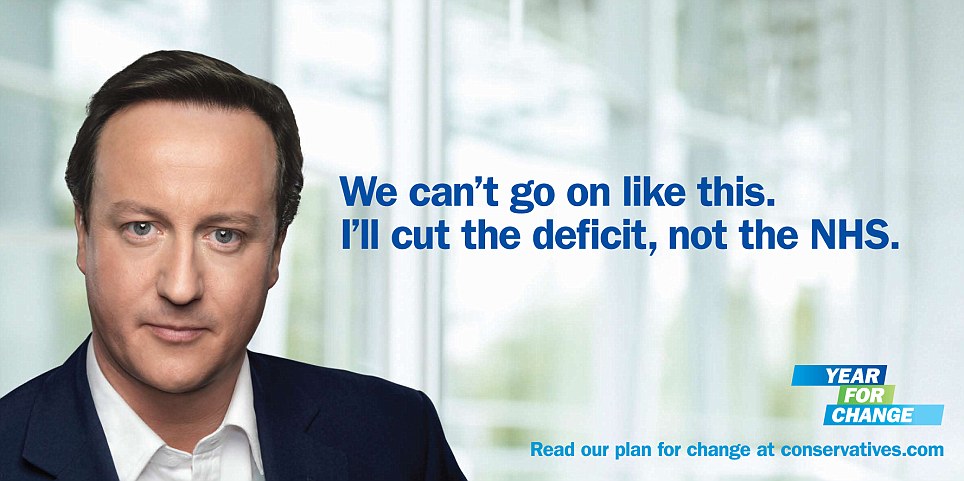
Conservative election poster 2010

A few recent news articles about the UK’s Conservative and Liberal-Democrat coalition government – the ConDem’s – brutal attack on the National Health Service.

Black mood in Westminster as NHS vote looms

John Healey spent the afternoon as Labour’s attack dog, challenging the facts of the prime minister and publicising slip-ups by ministers while online activists frantically lobbied their MPs to oppose the bill.

A stormy PMQs session saw David Cameron insist that the Royal College of GPs and the Royal College of Nursing backed the government’s NHS proposals, a fact the shadow health secretary challenged immediately afterwards.

“When experts criticise Cameron’s health bill, he doesn’t just ignore them – he pretends they support him,” he said.

RCGP rejects David Cameron’s claim that it supports NHS reforms | GPonline.com


RCGP chairwoman Dr Clare Gerada said while the college supports putting clinicians at the centre of health service planning, it continues to have a ‘number of concerns’ about the government’s reforms.

‘As a college we are extremely worried that these reforms, if implemented in their current format, will lead to an increase in damaging competition, an increase in health inequalities, and to massively increased costs in implementing this new system. These concerns have been outlined and reiterated pre- and post-pause.’

BBC News – Private sector have huge NHS opportunity – minister

The overhaul of the NHS in England presents “huge opportunities” to the private sector, a health minister says.

He said that the changes being made presented “huge opportunities” to private groups who could provide high quality care.

And he added: “In the coming months and years, the NHS is going to evolve and grow into a very different animal.”

However, after the speech he released a statement once again reiterating that the government would never privatise the NHS.

City doctors back call for rethink on NHS reforms | This is Bristol

SEVEN Bristol doctors have signed a letter calling on the government to completely scrap its health reforms.

GPs and specialists were among the 400 medics who said the changes would cause “irreparable harm” to the NHS.

Their intervention came at a critical time for the controversial legislation as it was last night debated on the floor of the House of Commons.

Doctors in revolt over NHS shake-up (From The Northern Echo)

A NORTH-EAST doctor at the forefront of a campaign against the Government’s controversial plan to overhaul the NHS last night insisted: “We will continue to fight it.”

As MPs prepared to vote on the Health and Social Care Bill, nearly 30 health professionals from across the North- East and North Yorkshire signed a letter saying the reworked Bill would “cause irreparable harm to the health service”.

The protest also accused David Cameron of “misleading the public by repeatedly stating that there will be no privatisation of the NHS”.

Last night, Dr Clive Peedell, a cancer consultant at The James Cook University Hospital, in Middlesbrough, said: “The overwhelming feeling is that doctors want the Bill withdrawn.”

Dr Peedell represents the North-East on the national council of the British Medical Association and proposed the motion calling for a public campaign against the Bill.

He said the Bill was a “clear drive towards increasing privatisation that goes completely against what the coalition Government is saying”.

News & Star | News | Government changes could harm NHS, claim Cumbrian doctors

Three Cumbrian doctors are demanding the Government scrap its health proposals amid fears that it will destabilise the NHS.

Dr Gavin Young, of Temple Sowerby Medical Practice, Dr Kate Keohane, of Caldbeck Surgery and retired west Cumbrian GP Dr Mary Henman, are among more than 400 doctors across the country worried the reforms will not improve patient care.

Southampton doctors join NHS reforms protest (From Daily Echo)

FIVE Southampton doctors have signed a letter calling on the Government to scrap its health reforms.

GPs and specialists were among the 400 medics who said the changes would cause “irreparable harm” to the NHS.

Their intervention came at a critical time for the controversial legislation as it was last night debated for one of the last times on the floor of the House of Commons.

Health reforms ‘threaten future of NHS’, claims leading Manchester doctor | Manchester Evening News – menmedia.co.uk

A top Manchester doctor has hit out at plans to reform the NHS – saying it could lead to chaos.

Raymond Tallis, emeritus professor of geriatric medicine at the University of Manchester, has spoken out to warn the government’s planned shake-up could ruin decades of progress.

Prof Tallis, 64, from Bramhall in Stockport, fears the Health and Social Care Bill could open the way to privatisation of care and an American-style health service.

He has written to the British Medical Association and senior politicians to voice his concerns and urge health secretary Andrew Lansley to reconsider the proposals.

Continue ReadingNHS news review

NHS news review

Spread the love

Jacqueline Davis has an article in the Guardian arguing that the ‘listening exercise was a PR coup for the government. “Very little of significance had changed and the bill is still on course to achieve its underlying intention, accelerating the privatisation of the health service, turning the NHS into a kitemark attached to a ragbag of competing and largely private providers.”

Spending cuts and resulting longer waiting times.

Longer waiting times for diagnostic tests.

Top heart specialist Professor Roger Boyle said he planned to retire, partly in protest at government reform of the health service. He launched an angry attack on health secretary Andrew Lansley’s plans, saying they would abolish ‘large chunks of the NHS’.

Conservative election poster 2010

A few recent news articles concerning the UK’s Conservative and Liberal-Democrat coalition government – the ConDem’s – brutal attack on the National Health Service.

This NHS U-turn was a fake | Jacqueline Davis | Comment is free | The Guardian

Andrew Lansley’s privatisation remains on track, hidden by a public relations smokescreen

After the so-called “listening exercise” many commentators are talking about a humiliating U-turn by the government over the NHS “reforms” and claiming there have been significant changes to Andrew Lansley’s health and social care bill. But they are the victims of a massive PR coup by the government, which must be delighted with its strategy.

A well-orchestrated political storm greeted the report of the Future Forum, with Liberal Democrats claiming they had ticked nearly all their boxes and Conservative backbenchers complaining that the “reforms” had been betrayed by their coalition partners. Even Alan Milburn was dusted off to say that the “reforms” were now a “car crash” as a result of being watered down too much.

But, if you had listened carefully while all this was going on, you would have heard Lansley reassuring his backbenchers that the core principles of the bill remained in place and that no red lines had been crossed, and he was quite right. Very little of significance had changed and the bill is still on course to achieve its underlying intention, accelerating the privatisation of the health service, turning the NHS into a kitemark attached to a ragbag of competing and largely private providers.

All the mechanisms to do this are still in place. Private companies can still be involved in commissioning NHS services and these services will still be delivered by any “qualified” provider. Thus the commercial sector can still hold the budget and provide the care. Competition, the aspect of the reforms that most worries doctors, emerges almost intact.

The rhetoric has been toned down and been rebranded as “choice”. However, the code of practice that governs it will be put on a statutory footing, and the responsibility for ensuring that competition trumps other considerations is passed to the Orwellian Co-operation and Competition Panel. They move into Monitor, so claims that Monitor is no longer concerned with competition are premature, if not misleading.

Foundation trust timetables have been relaxed but there is still no cap on their private income, meaning that many will be tempted to boost their dwindling resources by increasing private patient numbers, inevitably at the expense of NHS patients. The secretary of state’s “duty to provide” comprehensive health care is now so obscure that teams of lawyers are working their way through the legalese in an attempt to understand it. If this is meant to be straightforward, why not return to the original wording? Worrying evidence is also emerging that the bill will specifically make provision for private equity companies to buy NHS facilities and asset strip them. Is this really what David Cameron intended when he claimed that he loved the NHS?

Spending cuts will mean longer waiting times, say NHS managers – UK Politics, UK – The Independent

Hospital waiting times will grow and patients’ access to treatments will be limited because of the squeeze on health spending, more than half of NHS chief executives and chairmen believe.

The warning from the heads of nearly 250 health providers comes as the NHS sets out to save £20bn from its budget over four years. Yesterday Andrew Lansley admitted that the NHS would have to find £4bn of savings next year because of the increased demands on the service.

“We are taking steps to cut the costs of administration and focus resources on the front line,” he said.

But in the first survey of NHS organisations since the Government’s efficiency drive was implemented, managers said reducing administration costs alone would not be enough and that tough decisions on cutting and merging services would have to be made.

One in five said they believed the quality of care their institutions offer will decrease over the next 12 months while almost a third thought care would get worse over the next three years.

Nearly 50 per cent said the financial situation facing their organisation was “the worst they had ever experienced”, while an additional 47 per cent said it was “very serious”.

NHS waiting times increase for diagnostic tests | Society | The Guardian

Patients’ health and treatment could suffer because NHS waiting-times for x-rays, cardiology tests and ultrasound scans are increasing sharply, doctors are warning.

Longer waits to access diagnostic tests could cause anxiety for patients and mean that identification of serious illnesses such as cancer is delayed, they say.

Their warning comes as new NHS figures show that 15,667 patients waited more than six weeks to undergo a diagnostic procedure in May alone – a more than fourfold increase on the same month in 2010, when 3,378 did so.

The figures again call into question David Cameron’s promise to ensure that waiting times do not rise, despite the growing demand for healthcare and tough financial climate in the NHS. He made that one of his “five personal pledges” to voters on the NHS last month.

The flagship 18-week target for patients to be treated after first consulting a GP is also under pressure. Quarterly data in that area, due next week, is expected to show another fall. Performance on other waiting-time markers is also slipping, such as the four-hour wait to be seen in A&E.

The latest statistics covering access to diagnostic procedures, covering May 2011, showed that 2.7% of patients were left waiting for six weeks or longer for diagnosis results. A further 1,800 patients waited more than three months – an almost tenfold increase on last year’s figure of 217. Average waiting times also increased year-on-year, but to a lesser degree. The typical wait for diagnosis increased to 1.9 weeks in May 2011 versus 1.8 weeks a year before.

Top heart specialist quits NHS role in protest at reforms | Manchester Evening News – menmedia.co.uk

The expert charged with reviewing heart services at a Greater Manchester hospital is quitting his role with the NHS.

The country’s top heart specialist Professor Roger Boyle said he planned to retire, partly in protest at government reform of the health service.

He launched an angry attack on health secretary Andrew Lansley’s plans, saying they would abolish ‘large chunks of the NHS’.

His announcement threw a question mark over his review of heart services at Rochdale Infirmary – but bosses told the MEN his report has been completed and will still be used by hospital chiefs.

Prof Boyle visited the hospital in March and said major cutbacks at the Rochdale heart unit – the third biggest in the region – had made it unsafe.


27/11/13 Having received a takedown notice from the Independent newspaper for a different posting, I have reviewed this article which links to an article at the Independent’s website in order to attempt to ensure conformance with copyright laws.

I consider this posting to comply with copyright laws since
a. Only a small portion of the original article has been quoted satisfying the fair use criteria, and / or
b. This posting satisfies the requirements of a derivative work.

Please be assured that this blog is a non-commercial blog (weblog) which does not feature advertising and has not ever produced any income.

dizzy

Continue ReadingNHS news review

NHS news review

Spread the love

The Future Forum is due to report on the “listening exercise” on NHS ‘reforms’ today. It is expected to recommend many far-reaching changes to the proposed Abolition of the NHS bill. For example, it is likely to recommend that the Secretary of State for Health remains responsible for providing a health service and changes to the role of Monitor.

The Liberal Democrats are claiming that they have achieved victory in protecting the NHS. Unions Unite and Unison are far more reasonably cautious in their assessment and repeat their call that the bill should be abandoned in its entirety. It is a mistake to assume that the battle has been won.

It is absolutely ridiculous that Clegg and the Liberal-Democrats should claim that they have protected the NHS when Clegg & Co were fully supportive of the bill initially. While the Liberal-Democrat Spring Conference played a role, that is far removed from Clegg & Co. Many groups and individuals – and most notably many professional medical groups of GPs, nurses and surgeons – are united in their opposition to the destruction of the NHS. Clegg & Co were forced to respond to the pressure of opposition.

Conservative election poster 2010

A few recent news articles concerning the UK’s Conservative and Liberal-Democrat coalition government – the ConDem’s – brutal attack on the National Health Service.

NHS Bill “not fit for purpose” / Britain / Home – Morning Star

Unions demanded today that the government’s Health Bill be scrapped on the eve of new recommendations from the hastily assembled body overseeing the coalition’s official “listening exercise.”

The NHS Future Forum, made up of handpicked staff, community and patient representatives, will set out today why and how it believes the government should amend its stalled Health and Social Care Bill.

The forum, established by Mr Cameron, has been tasked with gathering the views of doctors, nurses and patients.

Mr Cameron claimed that the government had listened to concerns about the Bill raised during the initiative, which saw more than 200 events held across the country.

But Unite the union national officer for health Rachael Maskell dismissed the ploy, calling for the Bill to go altogether.

She said: “It is time to scrap the Bill and conduct a proper review of what is needed for the long-term needs of the NHS and our nation’s health, rather than rush through a biased, lop-sided listening exercise.”

A Unison spokeswoman also reiterated the union’s view that the Bill should be scrapped, adding that “fiddling around on the edges is not going to make this Bill any more sensible for patients and is no more than a smokescreen for £20 billion of cuts being driven through the NHS.”

Letters: Marketisation and the healthcare bill | Society | The Guardian

It is not voters who “will not tolerate any further delays” (David Cameron and Nick Clegg to ‘show unity’ over NHS reforms report, 7 June) but the coalition government – which is trying to push through its proposals to turn the NHS into a market before the summer recess. Many campaigners feel the bill should be scrapped and that the stated aims could be achieved more cheaply without legislation. This position was also endorsed at the Lib Dem conference in March in a resolution: “Conference recognises however that all of the above policies and aspirations can be achieved without adopting the damaging and unjustified market-based approach that is proposed.”

Unless part 3 of the bill which relates to Monitor is withdrawn, marketisation will continue; if Scotland, Wales and Northern Ireland can manage without such a body, why do we need one in England? I note that the budget for GPs, which was originally said to be £80bn until March when Mr Lansley told the health select committee that it would be £60bn, has now increased to £65bn.

The government needs to stop implementing the bill before it has finished its passage through parliament, have a hard look at the figures emanating from the Department of Health, and stop trying to win this battle via spinning stories to the media. Ideally it should withdraw the bill.

Wendy Savage

Co-chair, Keep Our NHS Public

John Healey: NHS needs evolution, not Tory revolution – Commentators, Opinion – The Independent

David Cameron’s first year as Prime Minister has been a year of chaos, confusion and waste for the NHS. He promised at the election to “protect the NHS” and “stop the top-down reorganisations that have got in the way of patient care”.

Since then, we’ve had weak leadership, poor communication, bad policy and rushed legislation as part of the biggest top-down reorganisation in NHS history. Even Professor Steve Field, whose advice as chair of the Prime Minister’s Future Forum will be published tomorrow, has said the Government’s NHS changes are “unworkable” and could “destroy key services”.

All efforts now should be dedicated to reforms that the NHS needs to rise to the three biggest challenges – improving the quality, safety and consistency of care for patients; integrating services better, especially for elderly people and those living with long-term health problems; and increasing efficiency, as public finances are squeezed. But as doctors, nurses, patients groups, NHS experts and even the Tory-led Health Select Committee have all cautioned, the NHS reorganisation makes meeting these challenges harder, not easier.

The Government’s declared aims – a stronger role for clinicians in commissioning care, greater involvement of patients, less bureaucracy and more stress on improving results for patients – could all be achieved by the evolution of gains that Labour made, without legislation.

But the legislation is needed to pursue the revolution of turning the NHS into a full-scale market, modelled on the privatised utilities and driven by the force of competition law. This Tory revolution removes proper public accountability, and breaks up the NHS so patients will see greater inequality in services.

Opening the door to NHS privatisation / Features / Home – Morning Star

David Cameron is a shrewd tactician.

His five promises on the NHS, made in early June, are a classic drawing-out manoeuvre.

By provoking responses from friends and enemies, he is able to gauge the level of support for the NHS reforms and the strength of the opposition.

The Tories are in disarray over the health service – polls suggest that the majority of the population believe they have a hidden privatisation agenda.

The Liberal Democrats play to this, if only because they are desperate to regain some public support.

The durability of the coalition government depends on the continued engagement of the Lib Dems, so their pressure against Andrew Lansley’s Bill matters.

Shire Tories are taking a “if it’s not bust, don’t fix it” attitude towards the NHS.

The Conservative Party’s middle ground believes that a dose of competition would do the NHS a power of good, but do not want wholesale privatisation.

Only the metropolitan chattering classes are interested in root and branch commercialisation.

Just a few weeks ago there was a real prospect that the whole of Lansley’s Bill would be discarded.

Cameron will try to avoid that – he dare not risk a U-turn because his party’s right would not forgive him for appeasing the Lib Dems and backing away from a confrontation with the public sector.

The response of the NHS professional bodies to Cameron’s promises will matter a lot.

What the British Medical Association, the Royal Colleges and the senior managers’ body the NHS Confederation now say will influence what their members do.

Without commitment to change in the people who do the work, the reforms will stall. After some guardedly positive comments like “a significant step in the right direction,” the professions are awaiting the details of the revised reform Bill.

NHS Bill “not fit for purpose” / Britain / Home – Morning Star

Unions demanded today that the government’s Health Bill be scrapped on the eve of new recommendations from the hastily assembled body overseeing the coalition’s official “listening exercise.”

The NHS Future Forum, made up of handpicked staff, community and patient representatives, will set out today why and how it believes the government should amend its stalled Health and Social Care Bill.

The forum, established by Mr Cameron, has been tasked with gathering the views of doctors, nurses and patients.

Mr Cameron claimed that the government had listened to concerns about the Bill raised during the initiative, which saw more than 200 events held across the country.

But Unite the union national officer for health Rachael Maskell dismissed the ploy, calling for the Bill to go altogether.

She said: “It is time to scrap the Bill and conduct a proper review of what is needed for the long-term needs of the NHS and our nation’s health, rather than rush through a biased, lop-sided listening exercise.”

A Unison spokeswoman also reiterated the union’s view that the Bill should be scrapped, adding that “fiddling around on the edges is not going to make this Bill any more sensible for patients and is no more than a smokescreen for £20 billion of cuts being driven through the NHS.”

Shirley Williams: Lib Dems should take credit for thwarting Lansley – Commentators, Opinion – The Independent

NHS Forum ‘listening’ report unlikely to assuage health service fears | Ekklesia

The NHS Future Forum is due to submit its report on proposed health reforms today (Monday 13 June). It will recommend some changes to government plans, but is expected largely to fall in with Prime Minister David Cameron’s wishes for more competition and private involvement.

Concerns about NHS privatisation are likely to remain strong, however, after a joint investigation by Pulse and The Bureau of Investigative Journalism has revealed that at least half the board members of some GP consortia have links with a single, large private healthcare company.

The official NHS Future Forum review of the health service in England has been led by former Royal College of GPs chief Professor Steve Field, has carried out more than 200 consultation events with doctors, nurses and patients.

The exercise, billed by government as ‘independent’, has been running for two months, after Health Secretary Andrew Lansley’s proposals ran into a political firestorm.

But critics are suspicious that the Forum is reporting only a week after the end of the government commissioned “listening” exercise, and that its findings were already heavily shaped by the agenda set out by the Coalition.

Dr Laurence Buckman, chair of the General Practitioner Committee, told GP magazine on 10 June: “We are not so much fascinated by what the NHS Future Forum says, it’s what the government’s response will be [that interests us]… Why do governments always run to enthusiasts and advisers with a vested interest first? We [doctors] have been telling this government what we think – and we will know [soon] whether they have been listening to us.”


27/11/13 Having received a takedown notice from the Independent newspaper for a different posting, I have reviewed this article which links to an article at the Independent’s website in order to attempt to ensure conformance with copyright laws.

I consider this posting to comply with copyright laws since
a. Only a small portion of the original article has been quoted satisfying the fair use criteria, and / or
b. This posting satisfies the requirements of a derivative work.

Please be assured that this blog is a non-commercial blog (weblog) which does not feature advertising and has not ever produced any income.

dizzy
Continue ReadingNHS news review

NHS news review

Spread the love

The UK Con-Dem – Conservative and Liberal-Democrat – coalition government have paused progress of the controversial health bill intended to abolish the NHS.

Nick Clegg – the discredited leader of the Liberal-Democrats who claims that he can’t remember that he was a Tory at University – has pledged to listen to ‘legitimate’ concerns about the bill. His words are very measured and unconvincing. I object to GPs being given unaccountable power to move money around from one pocket to the other BTW.

Labour Party leader Ed Miliband made an unsubstantive speech. The Labour Party was very slow to show it’s opposition to the bill and it’s worth pondering on whether they actually oppose it.

Looks like you get a different shade of blue whoever you vote for.

Conservative election poster 2010

A few recent news articles concerning the UK’s Conservative and Liberal-Democrat coalition government – the ConDem’s – brutal attack on the National Health Service.

New Statesman – NHS reforms: a lesson in how not to do it

“It all seems slightly dramatic to me, but I tend to hope that Lansley knows what he’s doing,” sums up what friends in the Conservative Party have said to me about the NHS reforms over the past few months.

This remains the danger within any government: to assume someone else is getting on with it and knows what they are doing. I remember a friend in the Labour Party once saying to me, as we debated during the lead up to the Iraq War, “The thing is I trust Tony. I assume he knows what he is doing.” Well the rest, as they say, is history.

Within government, within Cabinet, everything should be challenged and nothing assumed.

We must change NHS to protect it, says Ed Miliband | Society | guardian.co.uk

Ed Miliband has set out the three principles a Labour government would bring to reforming the NHS, telling party members the “status quo” is not enough.

The Labour leader said that “to protect the NHS we need to change it”, and offered the coalition support in changing the NHS if they met the principles.

He said he came to the debate as a “reformer”, adding: “A reformer of the state as well as the market”.

New Statesman – Full Transcript | Ed Miliband | RSA Future of the NHS Speech | 4 April 2011

UNISON News | The public service union | ‘It’s our future and it’s not for sale’

(04/04/11) “Let’s send a message to this government loud and clear: the NHS is our future and it’s not for sale.”

That was the rousing welcome UNISON health delegates received from service group executive chair Lilian Macer when she opened the union’s health conference in Liverpool this morning.

Recalling that the last time conference met, before the general election, “we were concerned, fearful, at the prospect of a Tory government. But few of us thought we’d be fighting on so many fronts, so early, with so much at stake.”

NHS reforms: Lansley agrees to change health bill | Society | guardian.co.uk

Andrew Lansley, the health secretary, has acknowledged that people have “genuine” concerns about his reforms to the NHS as he announced that the government would table amendments to the bill.

Amid fears in Downing Street that Lansley has failed to explain the thinking behind his reforms, the health secretary said he would use a “natural break in the passage of the bill” to offer reassurances that the government’s sole intention is to improve the NHS.

Leading article: Revolution finally gives way to pragmatism – Leading Articles, Opinion – The Independent

The Coalition’s revolutionaries appear to have gone into reverse. In recent months we have had a comprehensive retreat from the Government on its forests policy, embarrassing disarray on tuition fees, and now ministers are signalling a change of course on their NHS reforms. David Cameron and Nick Clegg have promised a “listening exercise” on the Coalition’s health service plans. Action is out and consultation is in. Ideology has given way to pragmatism.

It remains to be seen whether this is a prelude to a watering-down of the Health and Social Care Bill, or merely an attempt to sell the reforms better. The Health Secretary, Andrew Lansley, insisted in the House of Commons yesterday that the substance of the Bill will still be implemented. But it is clear that the Government is determined to ditch the revolutionary posture – “Maoist”, as Vince Cable memorably put it – adopted in the early months of the Coalition.

This change of approach on health, in particular, has a profound political significance. The NHS was one of the pillars of David Cameron’s modernisation of the Conservative Party. The Government’s ring-fencing of the health budget from the cuts imposed across the rest of the public sector was intended to demonstrate to the public that the Tories could be trusted with the NHS. But now Downing Street has woken up to the fact that the old suspicions about Conservative attitude to the public provision of healthcare are still very much alive. The medical profession has been uniformly critical of the Government’s health Bill and the general public is increasingly alarmed. Mr Cameron is pushing the pause button because he realises the seriousness of the threat to his project of detoxifying the Tory brand.

Anger over plan to close small maternity units – Health News, Health & Families – The Independent

Small NHS maternity units face closure to improve safety standards and help economies across the health service.

Experts said yesterday that those maternity units lacking access to specialist expertise should be closed to protect the lives of mothers and babies – although such closures will mean some expectant mothers having to travel further to give birth.

Responding to yesterday’s investigation by The Independent into the crisis in maternity care, Nigel Edwards, the acting chief executive of the NHS Confederation, representing NHS trusts, said: “There is a broad consensus that there needs to be a substantial change in the provision of maternity services involving the downgrading or closure of smaller units to provide safer services. The changes are necessary in order to have appropriate consultant cover but it is important they are not seen as a cost-saving measure, though they may prevent trusts spending more.”

BBC News – GPs ‘should not get sole control of NHS budget’

MPs have heaped more pressure on the government for its overhaul of the NHS in England by suggesting GPs should not be allowed to take control of the budget all by themselves.

The House of Commons’ health committee said they should be joined by a range of staff including nurses and hospital doctors to decide how funds are spent.

The move would improve accountability and decision-making, the MPs said.

It came as ministers plan a new push to convince people of the need for change.

NHS reform plans to be re-examined

The Government’s controversial NHS reforms are to be re-examined after the Health Secretary admitted some groups had “genuine concerns” about the plans, including the speed of the changes.

In the face of mounting opposition, Andrew Lansley was forced to make a Commons statement on Monday defending aspects of the Health and Social Care Bill, which completed its committee stage last week.

He said the Government would take the opportunity of a “natural break” in the passage of the Bill to “pause, listen and engage” over the concerns and bring forward amendments to “improve the plans further”.

Clegg pledge over NHS shake-up concerns – Health News, Health & Families – The Independent

Deputy Prime Minister Nick Clegg has promised to address concerns over the Government’s controversial NHS reforms as MPs called for “significant changes” to the plans.

The cross-party Commons Health Committee urged a rethink of the proposals, with former Tory health secretary and committee chairman Stephen Dorrell saying it is not a case of merely recommending “minor tweaking” of the Health and Social Care Bill.

One of the points the committee stressed is that GPs should not be solely in charge of commissioning services for patients. However, Mr Clegg said he believed it was an “uncontroversial idea” to hand them more responsibility.

Reform of NHS ignites rebellion (From The Northern Echo)

THE flagship NHS shake-up is savaged by a Tory-led committee of MPs today – just hours after the government was forced to slam the brakes on its progress, to calm public fears.

Key aspects of the Health and Social Care Bill are torpedoed by the Commons health select committee, which warns of lax controls over £60bn of taxpayers’ cash and the risk of free-market competition harming care.

The damning report comes after Health Secretary Andrew Lansley announced a “natural break” in the Bill’s passage, to allow ministers to “pause, listen and engage”, to counter a rising tide of criticism.

Health Bill – must be no way back for coalition’s destructive NHS plan

Reacting to the publication today (Tuesday) of the report by the influential cross-party health select committee, Unite the union said that the coalition’s chaotic changes to the NHS are now so widely reviled they cannot be saved by the government.

The select committee has warned that the forthcoming changes lack accountability and that the secretary of state cannot abandon his role as the politician responsible for the performance of the health service. It also warns that the new system of GPs taking charge of both purchasing and providing care could result in serious conflicts of interest. The report is the latest in a long line of criticism of the government’s health and social care bill.

Len McCluskey, Unite general secretary said: “The committtee raises profound questions about the government’s competence when it comes to the NHS. It rightly warns that massive £20 billion cuts to health spending at a time of rising care demands is a fundamental challenge to the NHS’s operations. To then pile a chaotic, bureaucratic restructuring of the service on top of massive cuts can only be regarded as irresponsible. Far from improving our NHS this government is setting it on the road to certain ruin – and privatisation.


27/11/13 Having received a takedown notice from the Independent newspaper for a different posting, I have reviewed this article which links to an article at the Independent’s website in order to attempt to ensure conformance with copyright laws.

I consider this posting to comply with copyright laws since
a. Only a small portion of the original article has been quoted satisfying the fair use criteria, and / or
b. This posting satisfies the requirements of a derivative work.

Please be assured that this blog is a non-commercial blog (weblog) which does not feature advertising and has not ever produced any income.

dizzy

Continue ReadingNHS news review

Cameron’s Multicultural Speech :: Part 3

Spread the love

Here’s the final part of my analysis of David Cameron’s Multiculturalism speech delivered on 5 February 2011. Here’s the first and second part.

Cameron’s speech was widely reported as opposing what he termed ‘state multiculturalism’ – that the state supports groups that actively oppose “our values”. Apart from the fact that “our values” is mostly undefined and that a unified set of values does not actually exist, this thesis would not be particularly controversial. Cameron extends far beyond this superficial argument and it is understandable that Muslim groups objected to his speech. Cameron repeatedly repeats the rhetoric of the previous administration under Tony Blair.

Cameron argues that young Muslims are drawn to so-called ‘extremist ideology’ since they do not either identify with traditional Islam or a British identity.

I notice that the way it’s stated is noteworthy “We’ve failed to provide a vision of society to which they feel they want to belong.” Notice that it’s not a society to which they feel they want to belong but a vision, an image.

Cameron: “We’ve even tolerated these segregated communities behaving in ways that run completely counter to our values.” ‘Our values’ is somewhat defined in terms of intolerance.

Cameron proceeds in his prejudice “So, when a white person holds objectionable views, racist views for instance, we rightly condemn them.  But when equally unacceptable views or practices come from someone who isn’t white, we’ve been too cautious frankly – frankly, even fearful – to stand up to them.  The failure, for instance, of some to confront the horrors of forced marriage, the practice where some young girls are bullied and sometimes taken abroad to marry someone when they don’t want to, is a case in point.” This is prejudice since it is generalising to all from a few examples. That’s prejudice.

Cameron continues by discussing what he calls ‘a process of radicalisation’.”Internet chatrooms are virtual meeting places where attitudes are shared, strengthened and validated.  In some mosques, preachers of hate can sow misinformation about the plight of Muslims elsewhere.  In our communities, groups and organisations led by young, dynamic leaders promote separatism by encouraging Muslims to define themselves solely in terms of their religion.  All these interactions can engender a sense of community, a substitute for what the wider society has failed to supply.  Now, you might say, as long as they’re not hurting anyone, what is the problem with all this?”

I certainly do say what is the problem with all this? Cameron is discussing simple fellowship and support common to many – if not all – religious groups. He is saying that it’s acceptable for all religious groups except Islam. It’s ok for Jews and born-again Christians, but not Muslims.

“Well, I’ll tell you why.  As evidence emerges about the backgrounds of those convicted of terrorist offences, it is clear that many of them were initially influenced by what some have called ‘non-violent extremists’, and they then took those radical beliefs to the next level by embracing violence.  And I say this is an indictment of our approach to these issues in the past.  And if we are to defeat this threat, I believe it is time to turn the page on the failed policies of the past.  So first, instead of ignoring this extremist ideology, we – as governments and as societies – have got to confront it, in all its forms.  And second, instead of encouraging people to live apart, we need a clear sense of shared national identity that is open to everyone.”

David ‘Tony Blair’ Cameron talking. The trouble is that all sorts of other so-called extremism is tolerated. Cameron is saying that it is unacceptable for one distinct sector of society to discuss or hold radical views.

“At the same time, we must stop these groups from reaching people in publicly-funded institutions like universities or even, in the British case, prisons.  Now, some say, this is not compatible with free speech and intellectual inquiry.  Well, I say, would you take the same view if these were right-wing extremists recruiting on our campuses?  Would you advocate inaction if Christian fundamentalists who believed that Muslims are the enemy were leading prayer groups in our prisons?  And to those who say these non-violent extremists are actually helping to keep young, vulnerable men away from violence, I say nonsense.”

That’s interfering with the rights of freedom of expression and association and he can hardly argue that Universities are publicly funded, can he?

“Now, governments cannot do this alone.  The extremism we face is a distortion of Islam, so these arguments, in part, must be made by those within Islam.  So let us give voice to those followers of Islam in our own countries – the vast, often unheard majority – who despise the extremists and their worldview.  Let us engage groups that share our aspirations.”

The Labour party were keen on aspirations. Peoples’ aspirations could mean what they strive to achieve without any chance of success. Also means breaths ;)

“Now, second, we must build stronger societies and stronger identities at home.  Frankly, we need a lot less of the passive tolerance of recent years and a much more active, muscular liberalism.  A passively tolerant society says to its citizens, as long as you obey the law we will just leave you alone.  It stands neutral between different values. But I believe a genuinely liberal country does much more; it believes in certain values and actively promotes them.  Freedom of speech, freedom of worship, democracy, the rule of law, equal rights regardless of race, sex or sexuality.  It says to its citizens, this is what defines us as a society: to belong here is to believe in these things.  Now, each of us in our own countries, I believe, must be unambiguous and hard-nosed about this defence of our liberty.”


He’s saying that ‘our values’ is what defines us as a society – notice that wealth is conspicuously absent from that list?

That muscular liberalism is nothing like liberalism and far more like Fascism – that the State actively promotes an authoritarian ideology.

Cameron fails to mention equality before the law. I could never lie to Parliament and the British people and engage in uncounted hundreds of thousand of murders and expect to get away with it. Yet, here’s Cameron using His words and phrases. The implicit message must be that former prime minister war criminals have nothing to fear. Cameron’s values.

What about murders by police and immigration officers, even defenestrations by private companies? Cameron’s values.

Then there is Oxford’s Bullingdon Club. Some may have spent the night in a police cell. How many of them will have been served an ASBO, prosecuted for a crime or have a criminal record? I’ve seen somebody given an ASBO for peeing in a hedge never mind smashing restaurant windows. Cameron’s values.

The message to Cameron is that we most definitely do not share your values.

“There are practical things that we can do as well.  That includes making sure that immigrants speak the language of their new home and ensuring that people are educated in the elements of a common culture and curriculum.  Back home, we’re introducing National Citizen Service: a two-month programme for sixteen-year-olds from different backgrounds to live and work together.  I also believe we should encourage meaningful and active participation in society, by shifting the balance of power away from the state and towards the people.  That way, common purpose can be formed as people come together and work together in their neighbourhoods.  It will also help build stronger pride in local identity, so people feel free to say, ‘Yes, I am a Muslim, I am a Hindu, I am Christian, but I am also a Londonder or a Berliner too’. It’s that identity, that feeling of belonging in our countries, that I believe is the key to achieving true cohesion.

So, let me end with this. This terrorism is completely indiscriminate and has been thrust upon us.  It cannot be ignored or contained; we have to confront it with confidence – confront the ideology that drives it by defeating the ideas that warp so many young minds at their root, and confront the issues of identity that sustain it by standing for a much broader and generous vision of citizenship in our countries.  Now, none of this will be easy.  We will need stamina, patience and endurance, and it won’t happen at all if we act alone.  This ideology crosses not just our continent but all continents, and we are all in this together.  At stake are not just lives, it is our way of life.  That is why this is a challenge we cannot avoid; it is one we must rise to and overcome.  Thank you.”

I know that it’s not indiscriminate.

Continue ReadingCameron’s Multicultural Speech :: Part 3