Top Tory Think Tank’s North Sea Oil and Gas ‘Vested Interests’

Spread the love

Original article republished from DeSmog.

‘Shocking’ findings show how board members at the Tufton Street think tank are tied to fossil fuel firms.

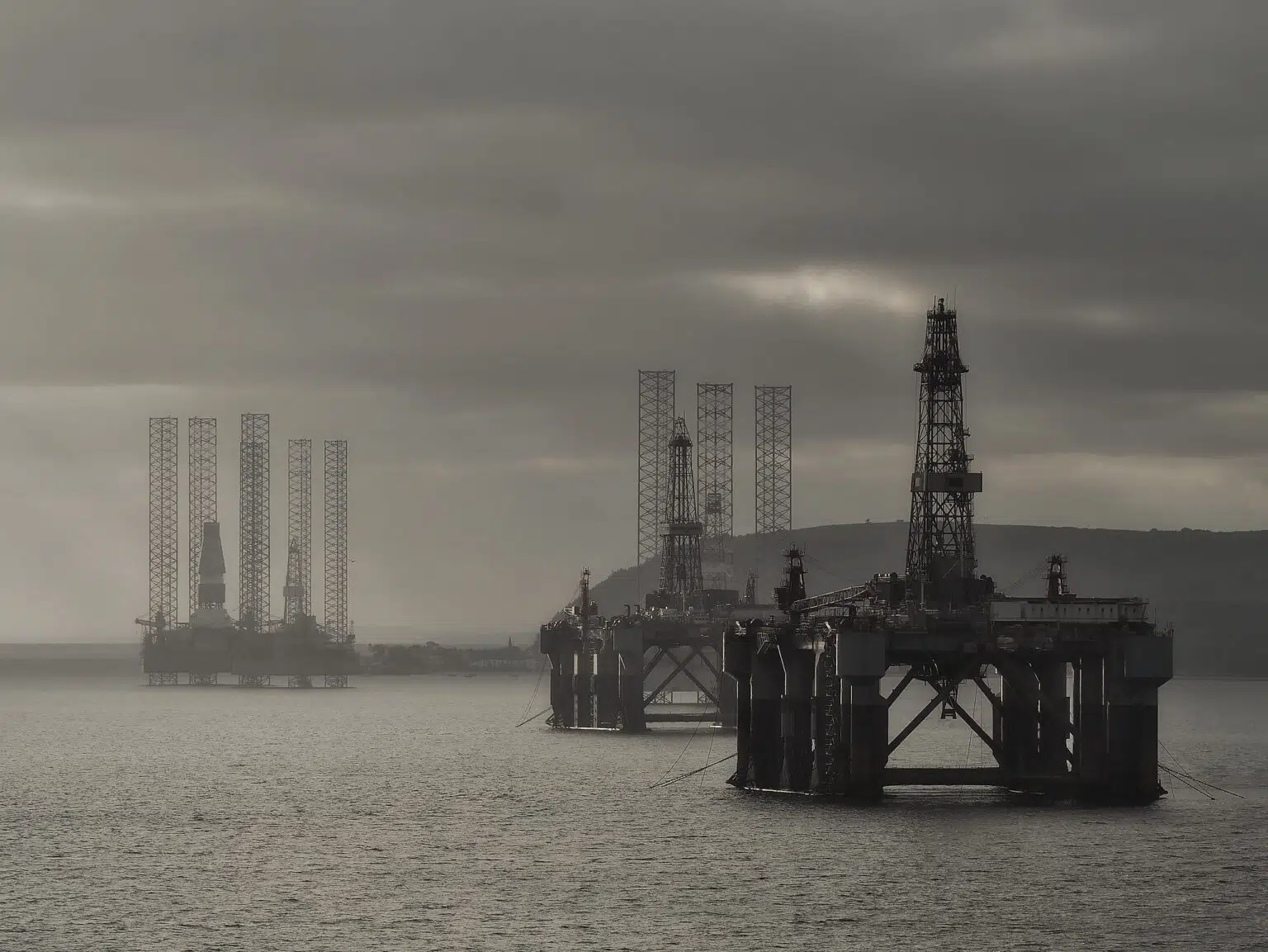
North Sea oil rigs in Cromarty Firth, Scotland. Credit: joiseyshowaa (CC BY-SA 2.0)
North Sea oil rigs in Cromarty Firth, Scotland. Credit: joiseyshowaa (CC BY-SA 2.0)

The influential Conservative-linked Centre for Policy Studies (CPS) has been pushing for further North Sea oil and gas drilling while several of its board members hold financial interests in the industry, a DeSmog investigation has found.

The news follows the government’s approval of the major Rosebank oilfield and the issuing of new North Sea licences, which the government intends to turn into a mandatory annual process, as announced in this week’s King’s Speech.

Five of the think tank’s board have financial interests in North Sea oil and gas, including its chair Lord Spencer, a major Conservative Party donor whose exploration company is bidding for licences in the current round.

The think tank, which is based at 57 Tufton Street in Westminster, meets regularly with ministers. It has called for new oil and gas projects to be accelerated, labelled the windfall tax on energy companies a “terrible idea”, and argued for a more generous fiscal environment for the UK’s fossil fuel producers.

Prime Minister Rishi Sunak is quoted on the organisation’s website as saying that “Lots of exciting ideas are being generated at the CPS… many of which are finding their way into government.”

Tessa Khan, executive director of climate group Uplift, said the findings were an example of how some think tanks have “long been little more than lobbying vehicles for private interests, including oil and gas”. The CPS denies that it is a lobbying group.

Khan added that organisations like the CPS “amplify the voices” of the oil and gas industry.

“This maybe goes some way to explaining why this government is set on subsidising new oil and gas fields when they represent such a bad deal for the public, in that they won’t lower bills, won’t increase energy security but will make the climate crisis worse,” she said.

Nature broadcaster Chris Packham, who is threatening to take the government to court over its recent watering down of climate measures, said: “Just weeks after we learn that not a single new offshore wind project will be going ahead this year due to the government’s intransigence – and as Rishi Sunak tears up vital climate policies – these findings are shocking.

“They provide further evidence that Number 10’s fossil fuel agenda is far from accidental. There are powerful vested interests at work and the Centre for Policy Studies seems to be at the heart of it. The government’s plan to hand out more than a hundred new North Sea drilling licences in the coming months is looking grubbier than ever.”

DeSmog previously revealed that the Conservative Party received £3.5 million from fossil fuel interests in 2022, including from the North Sea industry. This week, DeSmog also revealed that the government watered down its windfall tax on the excess profits of energy firms after a lobbying blitz by the oil and gas industry.

When asked about its board members’ business interests, a CPS spokesperson said that the think tank is “grateful for all our supporters, especially the support of our board members, but the investments of other boards on which they sit have no bearing on their relationship with the CPS”.

They claimed that DeSmog was “cherry-picking in order to manufacture an incorrect picture of the CPS’s position” and that it was “misleading and below journalistic standards.”

They added that “the Centre for Policy Studies has been one of the most prominent champions of free-market environmentalism, with a dedicated workstream on net zero” and that “Where our work is sponsored, this is made clear in the report acknowledgments, in press releases, and in event invitations.”

The North Sea Transition Authority (NSTA), the regulator in charge of issuing drilling licences, said that oil and gas were “forecast to play an important role in the energy mix for decades to come”. A spokesperson said the NSTA was “pleased” with the number of applications received in the current oil and gas licensing round and that the process of assessing them was “progressing well”.

The Department for Energy Security and Net Zero declined to add any further comment.

At the end of September, the International Energy Agency, of which the UK is a member, released a report reiterating the need for a phaseout of fossil fuels if climate goals are to be met. 

Lord Deben, the recently retired chair of the UK’s Climate Change Committee, which advises the government, argued in August that the government should stop approving North Sea licences.

Deltic Energy

Lord Spencer, who has chaired the CPS since the start of 2020, is the largest shareholder of Deltic Energy, which holds stakes in 18 North Sea areas, known as blocks, according to NSTA data.

A former Conservative Party treasurer, Spencer was given a life peerage by Boris Johnson. Official data shows that he has donated more than £7.5 million to the Conservative Party, individual Tory politicians and officially affiliated groups since 2015. He also sits on the board of the party’s multi-million-pound endowment fund. DeSmog revealed earlier this year that many of its directors have significant fossil fuel interests.

Through his holding company, IPGL, Spencer owns a £17.5 million stake in Deltic, according to Refinitiv data – nearly a fifth of the firm. He has held a significant shareholding since at least 2018, and bought more shares in 2019 from its founder Algy Cluff, a pioneer of the original North Sea oil boom in the 1970s who himself later joined the CPS board.

Responding to an enquiry from DeSmog, Cluff said that although the value of the company “may have increased in the view of management”, the stock market is “unimpressed and very much aware of the risks associated with any oil investments nowadays”. He described the “small number” of options he holds in the company as “presently worthless”.

Cluff has nevertheless spoken of the North Sea’s “second coming”, claiming that there is “a lot more oil to be found” and a “huge amount of gas”.

Deltic has made significant discoveries in recent years, touting its “enviable reputation as proven hydrocarbon finders” on its website, and has seen its market value rise in tandem.

It won blocks in North Sea licensing rounds in both 2018 and 2020, with the former is said to represent an area the “size of Bedfordshire”.

In its latest annual report, for the 2022 calendar year, Deltic criticises the government’s windfall tax but praises its accompanying investment allowance, which provides North Sea companies with tax breaks to encourage investment.

A presentation it gave investors in March describes its strategy as “Identify. Explore. Monetise. Repeat.” It says the investment allowance “significantly enhances economics from investment in Deltic exploration”, touts controversial gas-derived “blue hydrogen” as environmentally friendly, and highlights “established export infrastructure” and “regular licensing rounds” as attractive features of the North Sea.

Deltic is chaired by Mark Lappin, a former technical director of fracking company Cuadrilla who has publicly called for more oil and gas production, criticising opposition to new drilling.

Lord Spencer’s Conservative donations, made either personally or through IPGL and ICAP, include £25,000 gifts to the 2022 leadership campaigns of Sunak, Liz Truss, and Penny Mordaunt.

Spencer made £20,000 donations to Johnson, Jeremy Hunt, Michael Gove and Sajid Javid in 2019, and has made smaller donations to numerous other leading figures within the party in recent years, including Kwasi Kwarteng, Dominic Raab, Theresa May, Brandon Lewis, and Andrew Griffith.

Spencer has also funded “Blue Collar Conservatism”, a large caucus of Conservative MPs working to “champion working people”, with donations totalling £25,000 in 2019 and 2020. The group has campaigned against fuel duty rises.

Spencer’s Other Fossil Fuel Interests

Lord Spencer has also publicly talked up the fossil fuel industry, telling LBC’s Nick Ferrari last September that the UK “sadly has opposed further investment in North Sea oil and gas”. During the interview, he praised then Prime Minister Liz Truss for speaking out against windfall taxes on the sector, calling them “not Tory policy” and “not pro-business”.

He also expressed support for fracking, praised Truss’s “strategy” and “ideology”, and called for investment in renewable energy, but omitted to mention his interests in oil and gas.

In addition to the North Sea, Spencer has various other fossil fuel interests. According to Refinitiv, he holds the second largest stake in Pantheon Resources, a UK company exploring for oil in Alaska that recently hailed a potentially enormous discovery.

His brokerage firm ICAP also includes an oil and gas trading arm. Until December last year, Spencer held shares in Petrofac, an oilfield services firm heavily involved in the North Sea, including the controversial Cambo project.

Spencer’s shareholdings are disclosed to the House of Lords – indicating either a stake worth more than £70,000 or significant control over the company. They include Cluff Energy Africa, described as an “early stage oil prospecting company, seeking licences in Africa (Angola and Sierra Leone)”.

Its founder, Algy Cluff, told DeSmog that they had “wound the company up” because they “found the premium being asked by governments for the right to explore not to be consonant with the rewards”.

Cluff was a director of the CPS between 1995 and 2006, coinciding with the executive directorship of the late Tessa Keswick. Cluff confirmed to DeSmog that Keswick helped him find investors for his North Sea consortium in the 1970s, as has been reported.

Tessa’s husband Henry Keswick, chairman emeritus of the conglomerate Jardine Matheson and a major Tory donor, used to own the influential conservative Spectator magazine and sold it to Cluff in the early 1980s. Cluff was its chairman until 2004, during which Charles Moore, Dominic Lawson, and Boris Johnson were editors.

The magazine was edited in the 1960s by the late Nigel Lawson, who would become Thatcher’s chancellor and in later life promote climate science denial through the Global Warming Policy Foundation, based at 55 Tufton Street.

Cluff’s remaining business interests include Cluff Mineral Resources, an Africa-focused gold and coal exploration company, which was temporarily based at 55 Tufton Street before moving next door to share an address with the CPS.

The Board

Another CPS board member, Lord Strathclyde, is a senior strategic adviser to Hibiscus Petroleum, a Malaysian oil and gas company that has amassed stakes in 11 North Sea blocks in recent years

Ithaca, the firm behind the high-profile Rosebank and Cambo projects, is partnering with Hibiscus on one of the blocks.

Hibiscus is also one of the firms to have been awarded stakes in the latest round of oil and gas licences.

Strathclyde, who was leader of the House of Lords under David Cameron, is an adviser to oil trading giant Trafigura.

Sir Douglas Flint, chair of Abrdn – formerly, Standard Life Aberdeen – also sits on the CPS board. Abrdn has been targeted by protesters for its investments in oil and gas, which climate researchers Urgewald estimate at £2.9 billion. According to the latest figures, they include oil majors like BP, Shell and Exxon, as well as North Sea-focused firms Serica Energy, Harbour Energy, and EnQuest.

The major asset manager was reportedly one of a group of financial institutions recently summoned by the Treasury to increase investment in the North Sea.

Lord Spencer’s entry in the register of interests indicates he also holds a stake worth more than £70,000 in Abrdn.

Other CPS board members include Jon Moulton, chair of FinnCap, a financial advisory firm whose activities include raising finance for North Sea oil and gas companies, and Roger Orf, a partner at Apollo Global Management, a US private equity firm with £349 million of investments in BP and Shell, both major North Sea players.

Two further CPS board members have wider interests in oil and gas: Ian Molson, deputy chair of Central European Petroleum, which is exploring for oil in Germany and Poland; and major Tory donor Lord Bamford, chair of construction giant JCB, a sector still heavily reliant on fossil fuels.

In April 2023, DeSmog revealed that CPS board members had donated more than £600,000 to the Conservatives since Rishi Sunak became prime minister. 

The CPS also leans on its board for funding. According to the group’s latest accounts – for the period up to September 2022 – its directors donated £1 million to the company during the year. Turnover was £650,000 during the year and ‘other operating income’ hit £1.5 million, meaning that the CPS board contributed nearly half (47%) of its income during the period.

North Sea Push

The Centre for Policy Studies has strongly supported new North Sea oil and gas drilling in recent years.

In a March 2022 economic bulletin, it recommended that the government “look at accelerating regulatory approval for upcoming oil and gas projects such as Rosebank [Phase 1], Clair South, Glengorm, Cambo and Bentley [Phase 2]”. 

The bulletin added that introducing a windfall tax on profits would be a “terrible idea” and “completely self-defeating”. It welcomed “reports” suggesting the government was planning to launch another licensing round for fossil fuel projects.

A month later, the CPS welcomed the government’s “energy security strategy”, calling the return of annual North Sea licensing rounds “overdue”. A 33rd licensing round was launched in October.

In September 2022, an economic bulletin from the think tank called for “improved tax incentives for firms operating in the North Sea”.

In February this year, one of the CPS’s senior researchers criticised the “punishment beatings inflicted on the North Sea oil and gas industry from George Osborne onwards” – despite the sector having enjoyed one of the most generous tax regimes in the world until the recent windfall tax.

Other articles published on CapX, a commentary website run by the CPS, have labelled the Labour Party’s policy of no new North Sea licences “more than a little nuts” and the SNP’s similar position a “dangerous gambit”.

Andy Mayer, chief operations officer at the BP-funded Institute of Economic Affairs, writes regularly for CapX. He has used the platform to describe opposition to the Rosebank project as “shrill hysteria”, Shell’s bumper profits this year as “brilliant stuff”, and North Sea companies being fined for gas flaring as a “dotty investment message to send”. Following the announcement of the latest North Sea licences, Mayer wrote a story for CapX headlined “Hurrah for new North Sea oil licences!”

CPS Influence

The CPS has significant political access, having conducted private, one-to-one meetings with ministers on 27 occasions since 2014 and attended many other larger ministerial meetings, according to data compiled by Transparency International from government disclosures.

A number of the think tank’s former employees are now working as government advisers and its homepage carries supportive quotes from former prime ministers Liz Truss and Boris Johnson. 

Rishi Sunak spoke at a CPS event at the Conservative Party conference in 2019 and wrote a report for the organisation in 2016 backing the roll-out of freeports, which have since been introduced.

The think tank, which was co-founded by Margaret Thatcher, hosted a “dedicated space” at this year’s party conference, with speakers including Jeremy Hunt, Michael Gove, and Grant Shapps.

The chair of Times Newspapers, which publishes The Times and Sunday Times, and the editor of The Spectator, both sit on the CPS board. All of the titles editorially support new North Sea oil and gas.

Richard Sharp, who was forced to resign as chairman of the BBC earlier this year over his connection to a secret £800,000 loan to Boris Johnson, sat on the CPS board for 19 years before joining the BBC in 2021.

The CPS, which does not disclose its funding, has offices on Tufton Street in Westminster, alongside several other “free market” pressure groups and think tanks, including the climate science denying Global Warming Policy Foundation.

Other board members include Rachel Wolf, a co-author alongside CPS Director Robert Colvile of the 2019 Conservative manifesto, which said the “North Sea oil and gas industry has a long future ahead” and supported a deal with the sector that allows for new drilling projects.

Original article republished from DeSmog.

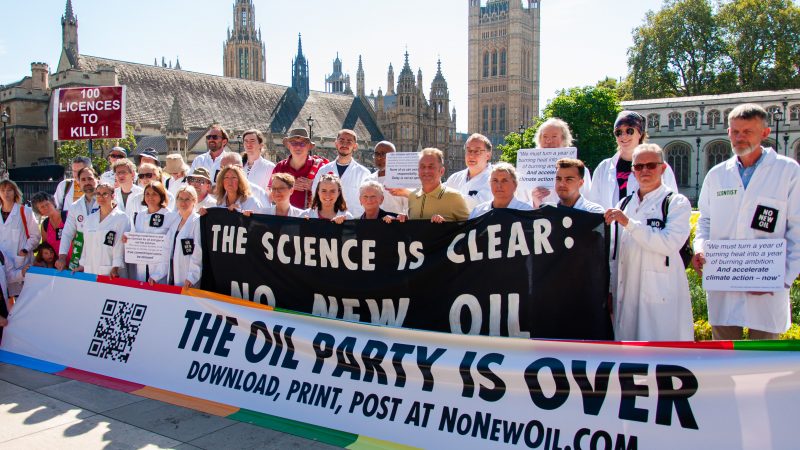
Scientists protest at UK Parliament 5 September 2023.
Continue ReadingTop Tory Think Tank’s North Sea Oil and Gas ‘Vested Interests’

GB News Owner’s Hedge Fund Has $2.2 Billion Fossil Fuel Investments

Spread the love

Original article by Sam Bright and Joey Grostern republished from DeSmog.

One of the owners of GB News runs a hedge fund that has a major financial stake in more than 100 oil and gas firms, DeSmog can reveal. 

This news comes after former prime minister Boris Johnson was announced as a new presenter on the television broadcaster on Friday.

An investigation by DeSmog in May found that one in three GB News presenters had spread climate science denial on air in 2022, while more than half had attacked climate action. GB News presenters have used their platforms to urge the UK to “drill, baby, drill” for more coal, oil and gas.

Paul Marshall is the chairman and chief investment officer of Marshall Wace, a London-based hedge fund that he co-founded in 1997.

Marshall Wace is now one of the world’s largest hedge funds – an investment vehicle that bets on rising and falling share prices – with around $63 billion (£51.9 billion) in assets under management.

According to DeSmog’s analysis of Marshall Wace’s filings with the US financial regulator, the Securities and Exchange Commission (SEC), his fund owns shares worth $2.2 billion (£1.8 billion) in fossil fuel firms. This includes companies that specialise in extracting, refining, transporting and distributing fossil fuels.

In its latest SEC filing, for the quarter ending 30 June 2023, Marshall Wace reports a $213 million (£175.6 million) shareholding in the oil and gas supermajor Chevron, as well as stakes in Shell, Equinor, and 109 other fossil fuel companies. 

The value of Marshall Wace’s stake in Chevron, the world’s eighth largest fossil fuel company, has more than doubled from $105 million (£86.6 million) to $213 million (£175.6 million) in two years, even though its total number of shares and equity options has increased over that period by just 35 percent. 

The hedge fund’s stake in Chevron appears to be one of its top 50 most valuable investments, among the thousands of companies in which it currently holds shares.

This reflects the soaring value of fossil fuel companies following Russia’s 2022 invasion of Ukraine, which pushed up the price of fossil fuels and therefore the profits of suppliers. At the end of June 2021, Chevron’s share price stood at $107.30 (£88.27), rising to $157.35 (£129.45) by June 2023.

Marshall Wace held shares in 112 fossil fuel companies as of June 2023. Two years earlier, in June 2021, the hedge fund held shares in 50 of these firms. The value of the stakes in these 50 firms almost trebled over the period, from $565.4 million (£466.1 million) to $1.4 billion (£1.15 billion). 

“I’ve always wondered why anyone would invest in comically inept, loss-making GB News,” said John Nicolson MP, a member of Parliament’s influential Digital, Culture, Media and Sport (DCMS) Committee. “Step forward one major investor who makes bundles of cash from fossil fuels. Meanwhile, a disturbing number of GB News presenters question climate science. I’m beginning to see a connection.”

Marshall Wace has 22 partners and its latest company accounts, for the period ending February 2022, show that they shared bumper profits of more than £720 million as the firm’s annual turnover jumped 62 percent to more than £1.5 billion. The average salary at Marshall Wace is £561,000 a year.

Paul Marshall, who is one of these partners, is also a lead investor in the startup broadcaster GB News, holding a 45 percent stake. Marshall, estimated to be worth £800 million, reportedly invested £10 million in GB News when it first launched two years ago. In August 2022, he joined the Dubai-based investment firm Legatum Group in a £60 million capital injection and buyout of GB News’s other major investor, Discovery. 

On the announcement of the buyout, Marshall said: “This is more than a financial investment. As investors we’re proud of what GB News [sic] doing for media plurality in the UK, bringing fresh perspectives to the national conversation on issues that matter to real Britain.”

Marshall also owns UnHerd, a publication founded in 2017 that claims to give a platform to marginalised views. UnHerd has published multiple articles and videos critical of climate action, including an interview in July with Bjorn Lomborg about “how global warming will save lives”.

Marshall is involved in other projects that are linked to key opponents of climate action. He is one of the directors of the Alliance for Responsible Citizenship (ARC), a new group established by the backers of GB News. The ARC advisory board features a host of individuals who have denied climate science, downplayed the extent of the climate crisis, and attacked net zero policies. A number of these advisers are speaking at a conference hosted by ARC in London this week, alongside Cabinet ministers Michael Gove and Kemi Badenoch.

It has been reported that Marshall is preparing to expand his media investments and is “readying a bid” for the right-wing Telegraph newspaper and Spectator magazine, with both expected to be put up for sale in the coming weeks.

The Conservative Party has also received funds from Marshall, who donated £500,000 in 2019. 

GB News lost more than £30 million during its first year on air and has been hit by multiple scandals over its use of Conservative MPs as presenters, its alleged lack of impartiality, and its habit of platforming of conspiracy theories

The broadcast regulator Ofcom ruled in March that Mark Steyn had broken its rules on harmful content by claiming on GB News that the third Covid vaccine was causing higher infection, hospitalisation and deaths. Steyn’s claims were “potentially harmful and materially misleading,” Ofcom ruled. Steyn, who has also questioned the existence of climate change, resigned from the channel in February after GB News reportedly demanded he personally pay the fines issued if found in breach of the broadcasting code.

Ofcom currently has 12 open investigations into GB News. Its TV output reached 2.87 million viewers in December, while its website had a UK audience of 5.7 million in April. 

Paul Marshall’s investments in GB News and UnHerd have been made in a personal capacity and there is no evidence that Marshall Wace’s investments have influenced the editorial output of either outlet. 

Marshall Wace claims on its website that “sustainable investing is an organisational focus” and that the firm is “committed to achieving positive social and environmental impact”.

GB News and UnHerd did not respond to DeSmog’s request for comment. Marshall Wace declined to comment.

‘State Control Over Your Life’

Since it launched in June 2021, GB News has been a prominent mouthpiece for individuals who support more fossil fuel extraction and oppose the UK’s target to reduce emissions to net zero by 2050.

The UK’s 2050 net zero target is legally binding and is backed by the world’s top climate scientists. They agree that rapidly cutting carbon emissions is necessary to limit global warming to 1.5C above pre-industrial levels in order to avoid the worst impacts of climate change, including drought, famine, and ill health.

On 5 November last year, GB News host Neil Oliver used his show to attack “net zero [and] the green agenda”, which he claimed was part of “a hellish potpourri of policies guaranteed to condemn hundreds of millions to death by poverty, death by starvation”. 

Host Nigel Farage – who has a long record of opposing climate action – used his GB News platform to launch a campaign for a Brexit-style referendum on net zero. 

GB News host and Conservative MP Philip Davies was one of five MPs to vote against the Climate Change Act in 2008. Fellow presenters and Tory MPs Jacob Rees Mogg, Lee Anderson and Esther McVey are all supporters of the anti-climate action Net Zero Scrutiny Group of backbench Conservative MPs. 

This opposition to net zero is often tied to a denial of established climate science, which has been expressed repeatedly by GB News presenters. 

During last summer’s record UK heatwave, on 16 July 2022, then GB News host Calvin Robinson accused the Met Office of “alarmism”, adding: “Man-made climate change, I don’t buy it, because how much of an impact do we really make if we’re talking about carbon levels?”

Five days later, presenter Beverley Turner called summer heat warnings “fear mongering” in order to “facilitate state control over your life”.

The IPCC has warned that false and misleading information “undermines climate science and disregards risk and urgency” of cutting emissions.

Several GB News hosts have also been vocal about their support for policies that would maintain and even extend the UK’s reliance on oil and gas. 

Flagship presenter Dan Wootton argued on 10 March 2022 that the war in Ukraine meant “for now the rush to net zero must die”. He urged the government to “frack, frack, frack” for shale gas. Wootton has recently been suspended by the channel.

In a 9 December show, host Mark Dolan praised plans to open a new coal mine in Cumbria. He said the UK should “drill, baby, drill” for coal, oil and gas,  adding: “I think the push for net zero here is another element of liberal progressivism which is infecting the West.”

The International Energy Agency (IEA) has said that any new fossil fuel projects would be incompatible with limiting warming to 1.5C.

‘Genuinely Independent Thinking’

Marshall has defended GB News’s output on the basis that “in a world of too much groupthink”, the broadcaster provides a “space for genuinely independent thinking”. 

However, Marshall appears to share the opposition to net zero, and support for more fossil fuel extraction, expressed by a number of GB News presenters.

In July, Marshall shared a post on X (formerly Twitter) from Reform UK Leader Richard Tice, on the subject of Norway’s approval of new oil and gas projects worth $18 million. Tice’s post claimed that these fossil fuel resources are “essential to Europe’s energy security” and that the UK “could have these jobs and prosperity. But selfish wallies in Westminster want to make us poorer and colder with net zero”.

Tice has recently been hired by GB News.

A month later, Marshall claimed in a post that “The public are still being shamefully ill informed by the BBC about differing views on climate change policy”. This post linked to an article by Charles Moore, which argued that “Voters can see the disparity between the highly speculative and distant achievement of global net zero and the concrete and imminent prospect of becoming colder and poorer”. 

In fact, the UK government’s failure to implement green reforms has added an estimated £2.5 billion to domestic energy bills due to the rising costs of fossil fuels and poor energy efficiency in homes. A reliance on gas has also cost the UK an additional £50-60 billion since Russia’s invasion of Ukraine in February 2022, equivalent to around £1,000 for every adult.

Original article by Sam Bright and Joey Grostern republished from DeSmog.

Continue ReadingGB News Owner’s Hedge Fund Has $2.2 Billion Fossil Fuel Investments

Cabinet Ministers Set to Speak at GB News Linked Conference Alongside Climate Science Deniers

Spread the love

Original article by Sam Bright republished from DeSmog.

Cabinet ministers Michael Gove and Kemi Badenoch. Credit: Simon Dawson / No 10 Downing Street, CC BY 2.0

The Alliance for Responsible Citizenship, run by the owners of GB News, is hosting an event next week that it claims will be attended by 100 parliamentarians from across the world.

Michael Gove and Kemi Badenoch are due to speak at a major event next week alongside leading critics of climate action, DeSmog can report.

The three-day conference is being hosted in London by the Alliance for Responsible Citizenship, which shares its directors with the startup broadcaster GB News

ARC was launched in March to address six “fundamental issues of our time”, including “energy and resources” and “environmental stewardship”. The group is fronted by psychologist Jordan Peterson and its advisory board includes senior politicians and academics from the UK and abroad.

As revealed by DeSmog, a number of ARC advisers have a history of attacking net zero policies and questioning climate science, many of whom are speaking at next week’s conference.

Levelling Up Secretary Gove and Business and Trade Secretary Badenoch will be speaking alongside these individuals at the conference, which culminates on 1 November in a public event at the 20,000-seat O2 arena.

Peterson, who is headlining the O2 event, has regularly posted about “climate apocalypse insanity” and “eco fascists” to his millions of online followers. He claimed in a Telegraph article in October that “eco-extremists are leading the world towards despair, poverty, and starvation”. 

Gove and Badenoch will also be speaking alongside Republican presidential hopeful Vivek Ramaswamy, who has called climate change a “hoax”, and former Australian prime minister Tony Abbott – a director of the Global Warming Policy Foundation, the UK’s leading climate science denial group.

Badenoch has not always been supportive of climate action. During the 2022 Conservative leadership contest, she suggested that the UK government’s legally binding target of achieving net zero emissions by 2050 should be pushed back.

ARC claims that over 1,000 people will be attending its conference, “including over 100 parliamentarians from across Europe, the UK, and Australia, as well as a delegation of congressional leaders from the USA”.

This news comes after UK Prime Minister Rishi Sunak last month watered down a number of flagship policies designed to achieve net zero emissions – moves that were welcomed by climate science deniers. 

ARC, the Department for Levelling Up, Housing and Communities, and the Department for Business and Trade were approached for comment.

ARC’s Origins

ARC has extensive ties to GB News, which has prominently platformed climate science denial since its launch in June 2021. 

According to Companies House, the same five individuals who own GB News’s parent company are also the people who control the Alliance for Responsible Citizenship Limited: Paul Marshall, Alan McCormick, Richard Douglas, Mark Stoleson, and Christopher Chandler.

McCormick, Chandler, and Stoleson are all executives at Legatum Group, the Dubai-based investment fund that, alongside Marshall, is a principal financial backer of GB News. 

ARC’s CEO, Tory peer Baroness Stroud, formerly served as chief executive of the Legatum Institute think tank, founded by the Legatum Group. The institute received $77,000 in 2018 from the Charles Koch Foundation, funded by the proceeds of Koch Industries, one of the largest privately owned companies in the United States, which trades heavily in fossil fuels.

Conservative peer Helena Morrissey, one of the directors of GB News’s parent company, is an ARC adviser, as is ex-GB News presenter Colin Brazier. Two Conservative MPs – Danny Kruger and Miriam Cates – are also ARC advisers. 

Morissey, Marshall, Kruger and Cates are all set to speak at the ARC conference.

GB News has been a prominent opponent of climate action since it launched in June 2021. A DeSmog investigation in May revealed that one in three GB News hosts spread climate science denial on air in 2022, while half attacked climate policies.

Its presenters have claimed that net zero will cause “death by poverty and starvation”, that the policy “poses an existential threat to the free world”, and have called for the UK to “drill, baby, drill” for more fossil fuels. 

ARC’s 44-member advisory board includes a number of climate science deniers and leading critics of climate action.

Writer Douglas Murray, who will be speaking alongside Peterson at the O2, has suggested that climate policies will “impoverish” Brits, and has argued that “terrifying our children with doom-mongering propaganda on climate change is nothing less than abuse”. 

ARC adviser Tony Abbott has previously said that “climate change is probably doing good” and is a long-standing advocate for coal power, the most carbon-intensive fossil fuel.

Abbott is joined on the ARC advisory board by fellow ex-Australian prime minister John Howard, who told Sky News in March that he was “increasingly sceptic [sic]” about climate policies, adding that Australia should “continue to benefit” from coal and gas.  

ARC adviser Vivek Ramaswamy, who will be speaking at the conference alongside Gove, Badenoch, Abbott and Howard, recently tweeted to his 1.3 million followers on X (formerly known as Twitter) that the “real emergency isn’t climate change, it’s the man-made disaster of climate change policies that threaten U.S. prosperity.”

Tupy and Cato

ARC also plans to publish regular research papers, which it claims will be “written by leading thinkers and researchers across the world” and “provide deep analysis and offer solutions to the problems we face”.

The first papers were published earlier this month, including one from Cato Institute researcher Marian Tupy on the topic of “superabundance” – in other words, if the world and its natural resources can sustain population growth.

In the report, Tupy suggests that critics of established climate science have been censored by the media. He claims that “Inconvenient questions about ‘sensitive’ issues, such as the extent of climate change and the long-term threats posed by global warming, are being silenced in the media, and their proponents are being condemned as ‘denialists’”. 

In reality, climate science denial is given a significant platform in the press and via social media. DeSmog reported in September that otherwise fringe climate crisis deniers are being exposed to millions more people due to the promotional efforts of ARC’s Jordan Peterson.

Tupy echoes Peterson’s language in his ARC study, claiming that the “precursors” to “extreme environmentalism” include “fascism and communism”. He claims that extreme environmentalism maintains a hold “on the public imagination, thus contributing to a sense of despair and decline”.

Tupy has commented on the topics of natural resources and global warming for a number of years. 

Interviewed in April 2021 about “the true risk of global warming”, Tupy said that “I’m more or less convinced that human economic activity contributes to slight increases in global warming that we are currently experiencing”. 

However, he suggested that the planet was merely “lukewarming”, and that “it is not… an existential crisis”. Tupy argued that humanity would be able to “adapt and technologically innovate” its way out of the problem. He said this would happen by slowly lessening our reliance on fossil fuels and creating solutions that allow people to adapt to the consequences of climate change. 

“We don’t need to do it immediately; we don’t need to do it in the scope of 10 or 20 years, but it would be nice if say in 40 years time most of the world’s energy was provided by energy sources that do not spew CO2 into the atmosphere,” he said.

For 21 years, Tupy has worked at the Cato Institute, a libertarian think tank based in Washington, D.C.. He currently holds the position of senior fellow at the group’s Center for Global Liberty and Prosperity. 

The Cato Institute was founded in 1977 by Charles Koch of Koch Industries. Charles Koch and his late brother David have channelled millions into right-wing organisations over recent decades, donating almost $9 million to the Cato Institute between 1997 and 2015. 

The institute has downplayed the need to take urgent action on climate change and has in the past suggested that lawmakers shouldn’t pass any legislation to restrict the emissions of carbon dioxide.

Tupy’s arguments around “lukewarming” and technological innovation reflect the statements of the Cato Institute towards global warming. 

“Fortunately, and contrary to much of the rhetoric surrounding climate change, there is ample time to develop such technologies, which will require substantial capital investment by individuals,” claims the institute’s public statement on global warming. 

In December 2015, Patrick J. Michaels and Chip Knappenberger wrote a Cato Institute “working paper” making the “case for lukewarming”.

“[W]e conclude that future global warming will occur at a pace substantially lower than that upon which US federal and international actions to restrict greenhouse gas emissions are founded. It is high time to rethink those efforts,” they wrote.

In 2009, Cato’s “Handbook for Policymakers” on global warming began with the suggestions that Congress should “pass no legislation restricting emissions of carbon dioxide”. In the same year, more than 100 scientists signed a statement, circulated by the institute, disputing the climate change “consensus”.

A number of climate consensus studies conducted between 2004 and 2015 found that between 90 percent and 100 percent of experts agree that humans are responsible for climate change. A study published in 2021, which reviewed over 3,000 scientific papers, found that over 99 percent of climate science literature says that global warming is caused by human activity.

The UN’s Intergovernmental Panel on Climate Change (IPCC), the world’s foremost climate science body, has stated it is “unequivocal that human influence has warmed the atmosphere, ocean and land”. 

The IPCC also states that global warming will cause “increases in the frequency and intensity of hot extremes, marine heatwaves, heavy precipitation, and, in some regions, agricultural and ecological droughts; an increase in the proportion of intense tropical cyclones; and reductions in Arctic sea ice, snow cover and permafrost.”

The IPCC’s chair, Jim Skea, has said that “Without immediate action to reduce emissions and adapt to continued warming, threats to planetary health and human systems are inevitable.”

The Cato Institute and Marian Tupy were approached for comment.

Original article by Sam Bright republished from DeSmog.

Related: GOP Climate Denier Vivek Ramaswamy Headlining Jordan Peterson’s ARC Conference

Continue ReadingCabinet Ministers Set to Speak at GB News Linked Conference Alongside Climate Science Deniers

Influential Conservative Think Tank’s Funders Include BP, Shell and Equinor

Spread the love
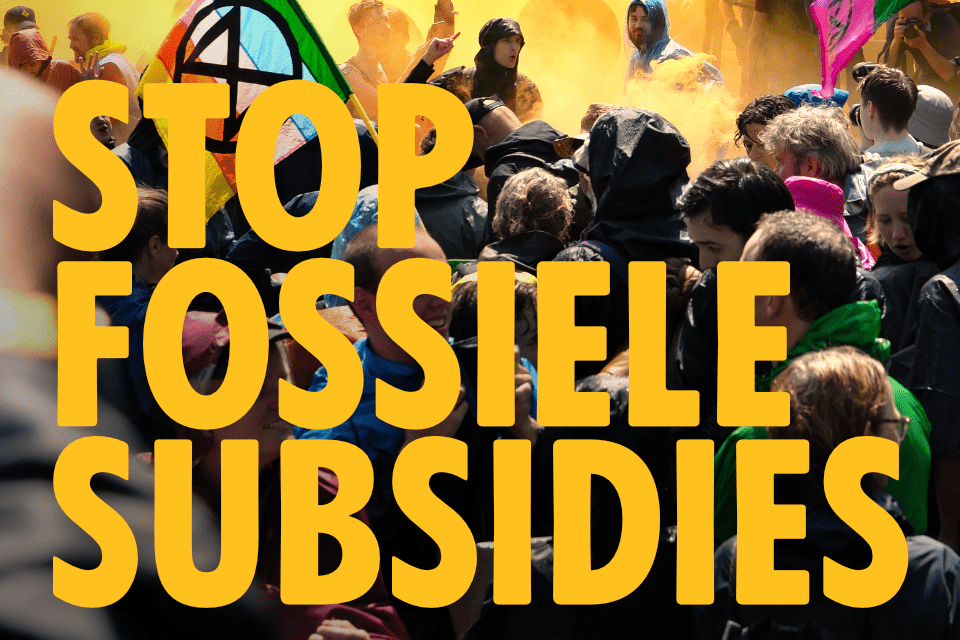
Extinction Rebellion NL image reads STOP FOSSIELE SUBSIDIES

Original article by Peter Geoghegan republished from DeSmog.

Major fossil fuel companies are among Onward’s “corporate partners”.

Onward has had a meteoric rise. Since its inception in 2018, five of its founding advisory board members have taken roles in Conservative cabinets and its reports regularly feature in print and broadcast media.

Onward, which describes itself as “a modernising think tank” with “bold and practical ideas for the centre right”, was ubiquitous at Tory conference in Manchester this week. It hosted two dozen fringe sessions, and it will be out in force at Labour conference in Liverpool this weekend.

While Tufton Street’s free market think tanks refuse to declare their donors, Onward is something of a novelty on Britain’s right-wing think tank scene – twice a year it publishes names of anyone who contributes £5,000 or more (although the value of donations is not declared, nor what the funding is for). 

Fossil fuel giants Shell and BP are members of Onward’s “business network”, where for £12,000 (plus VAT) members get invites to networking opportunities, briefings and previews of reports. 

Onward has been vocal on energy issues. It has called for the Tory government to apply windfall taxes on renewables rather than oil and gas giants and has proposed diversifying “energy supplies through greater use of oil and coal in the short term”.

Last week, another Onward donor, Equnior, received government approval to develop the Rosebank oil field in the North Sea.

Green Party co-leader Carla Denyer said that it’s “a huge concern to see that a think tank with so much influence right at the heart of the government and the opposition is funded by fossil fuel companies”, adding that “we need to get fossil fuel funding out of politics”.

Onward said it does not accept corporate sponsorship of research reports, noting that it published a report last week making the case for government to go further and faster on decarbonisation. 

In all, Onward lists more than 20 “corporate partners”, including Al Altep Holdings Inc, a New York-registered holding company controlled by Len Blavatnik, according to 2021 US filings. Blavatnik made his fortune trading commodities in post-Soviet Russia and topped the Sunday Times Rich List in 2021.

Al Altep Holdings has donated millions of dollars to both Republicans and Democrats in the US, including GOP Senate leader Mitch McConnell. Another company owned by Blavatnik previously donated $1 million to Donald Trump’s inauguration committee. 

Blavatnik, a dual US-British citizen, is best known in the UK for his sponsorship of the Tate and the Blavatnik School of Government at the University of Oxford. He has not made political donations in the UK, but he has funded the influential conservative think tank Policy Exchange.

Blavatnik did not respond to a request for comment.

‘Unparalleled Branding Opportunities’

Onward’s disclosures give a rare insight into how a think tank’s funding pool grows. Five years ago, Onward had only a handful of backers, including some charitable foundations and the Tory-linked public affairs firm WPI Strategy.

By 2021, the think tank had more than a dozen corporate partners, including Amazon, energy giant SSE, the National Union of Farmers, and the Solicitors Regulation Authority.

The think tank has also received funding from leading Conservative funders, including mega-donors such as current party treasurer Graham Edwards, former Tory CEO Sir Mick Davis, and IPGL Limited, which is owned by Conservative Foundation board member Lord Michael Spencer.

Onward is well plugged into Tory circles. Conservative MP Neil O’Brien was a co-founder – along with former Theresa May staffer Will Tanner – and the think tank’s current director, former journalist Sebastian Payne, has put himself forward as a Conservative general election candidate.

At Conservative conference, Onward advertised drinks reception sponsorship deals for £30,000 that would give “unparalleled branding opportunities” at an event “for around 200 MPs, special advisers, journalists and industry leaders. It includes a speech from a senior Cabinet minister and remarks from our partner.”

But Onward has been building bridges with Labour, too. Onward’s pre-conference promotional material includes Labour MP Lucy Powell MP saying: “I think Onward are a fantastic think tank”.

At Labour conference, Onward is offering “partnering opportunities” that include funding a private roundtable “led by a senior MP or shadow minister”, priced at £17,500. 

Responding to questions about its funding, an Onward spokesperson said that the think tank “is committed to openness about our funding. 

“We are a not-for-profit organisation and rely entirely on the generosity of our network to support our research programme”.

This article was originally published on Peter Geoghegan’s Substack, Democracy for Sale. [a subscription site]

Original article by Peter Geoghegan republished from DeSmog.

Continue ReadingInfluential Conservative Think Tank’s Funders Include BP, Shell and Equinor

‘Deeply Troubling’ Lack of UK North Sea Oil and Gas Monitoring

Spread the love

Original article by Andrew Kersley republished from DeSmog.

A North Sea oil rig. Credit: Gary Bembridge / FlickrCC BY 2.0

Fossil fuel giants are largely left to submit their own extraction and emissions data, a freedom of information request shows.

The main regulator of North Sea oil and gas doesn’t conduct physical inspections to ensure companies operating in the region are following the rules, DeSmog can reveal.

The revelations, labelled “deeply troubling” by campaigners, come as the government and the regulator, the North Sea Transition Authority (NSTA), have announced plans to approve drilling at a new oil field, Rosebank, that could produce 69,000 barrels of oil and 44 million cubic feet of gas a day.

DeSmog filed a freedom of information request (FOI) to the NSTA asking the regulator how it ensured companies stayed within the oil and gas extraction maximums outlined in their licences. These rules govern, among other things, how much oil and gas companies are allowed to extract, and the amount of emissions they can produce in the process.

In its response, the NSTA told DeSmog that a company “must notify” the NSTA if a production limit is breached in the North Sea, but that the NSTA itself “does not undertake offshore inspections to ensure compliance with production consents”.

When asked how, given the lack of inspections, the regulator would ensure that companies are being accurate when they self-report the emissions being produced, the regulator said it hosted “an annual consents exercise” (seemingly a single meeting) during which they remind operators of “their obligations and how to ensure they remain in regulatory compliance”.

The findings suggest that operators in the North Sea are left to largely self-regulate – declaring themselves when they break the legal rules governing their operations.

According to Violation Tracker UK, the NSTA has issued just two fines worth £100,000 since 2021 related to companies exceeding the oil and gas extraction limits in their licence.

“This FOI reveals deeply troubling findings about the lack of proper regulation of North Sea oil and gas extraction,” said Matthew Lawrence, the director of the Common Wealth think tank.

Daniel Jones, a researcher at the campaign and research group Uplift, added that The NSTA has never acted like a regulator in the normal sense, preferring to steer and encourage the industry into behaving responsibly, rather than mandating that companies reduce their environmental impact.

“It’s only very recently, in 2021, that the NSTA introduced any mechanisms at all to tackle the huge emissions from producing oil and gas, which account for 4 percent of all UK emissions, and even these require companies to do very little”.

‘Light Touch Regulation’

The NSTA, formerly the Oil and Gas Authority, is a private company wholly owned by the government, which primarily seeks to “maximise” the economic output of North Sea oil and gas, and aid the transition to net zero.

This month, the company awarded the UK’s first ever licences for carbon capture and storage (CCS), which it said “could store up to 30 million tonnes of CO2 per year”. However, the role of CCS in the energy transition is hotly contested. 

Climate scientists point to the failure of CCS to remove significant amounts of CO2 emissions, while campaigners warn of the high costs compared to renewable energy. The vast majority of companies also use the captured CO2 to extract more oil through a process called “enhanced oil recovery”.

Stuart Haszeldine, professor of carbon capture and storage at the University of Edinburgh, has compared commissioning CCS sites as well as new oil fields to ordering a truckload of cigarettes for someone giving up smoking.

DeSmog’s new findings also raise concerns about the monitoring of illegal flaring – the burning of excess natural gas produced during the oil and gas drilling process, which produces hundreds of millions of tonnes of CO2 emissions a year.

According to Violation Tracker UK, the NSTA has issued two fines for flaring since 2021, worth a total of £215,000.

In 2022, £65,000 fine was imposed on Equinor, the firm that owns much of the new Rosebank oilfield. Two years prior, Equinor had flared at least 348 tonnes of CO2 over and above the amount it was permitted to burn. Even that failure was considered an “administrative breach” by the NSTA. In the first six months of 2023, the Norwegian-owned energy company posted profits of £17.1 billion.

The UK’s operations in the North Sea produce almost three times the direct greenhouse gases per barrel of oil than our neighbour Norway, largely due to a significantly higher use of flaring on UK-regulated oil rigs. In 2022, UK North Sea operations burned 22 billion cubic feet of gas in offshore flaring.

DeSmog’s findings come just days after the NSTA announced it was approving plans for the Rosebank oilfield, with a government minister claiming the move would lead to “lower emissions” in the UK.

The field has the potential to produce 500 million barrels of oil in its lifetime, which when burned would emit as much carbon dioxide as running 56 coal-fired power stations for a year.

Campaigners including Greta Thunberg have expressed their anger at the proposals, with Green Party MP Caroline Lucas describing the project as “the greatest act of environmental vandalism in my lifetime”.

The government has also said it will imminently issue hundreds of new licences for oil and gas exploration in the North Sea, while Prime Minister Rishi Sunak has announced the watering down of several key net zero targets.

The International Energy Agency warned in May 2021 new fossil fuel developments were incompatible with the effort to limit global temperature increases to 1.5C above pre-industrial levels.

There are currently 283 active oil and gas fields in the North Sea, and the production process alone generated 13.1 million tonnes of direct CO2 emissions in 2019.

Matthew Lawrence of Common Wealth added that, “Decades of light touch regulation and privatisation have led to an energy system – from North Sea extraction to the super profits being made in energy generation and distribution – geared toward profit maximisation at the expense of people and planet.

“In this context, the government’s decision to approve the Rosebank oilfield and issue 100 new licences for fossil fuel extraction pose an even more grave risk to the climate.

“The alternative is a clean energy system based around meeting public and environmental needs”.

A spokesperson for NSTA did not address any of the findings in the freedom of information request, but stressed that the majority of flares “are fitted with metres” and the group is working to “increase the use of direct measurements”.

They added that government departments receive “actual emission data” on North Sea oil operations and that the NSTA was “working with [the Offshore Petroleum Regulator for Environment and Decommissioning] to improve the visibility of this data and help industry increase the accuracy of emissions measurement”.

Original article by Andrew Kersley republished from DeSmog.

Continue Reading‘Deeply Troubling’ Lack of UK North Sea Oil and Gas Monitoring