Autumn Statement: Greens offer 10-point plan of distinctive tax and spend policies to create a fairer, greener society

Spread the love
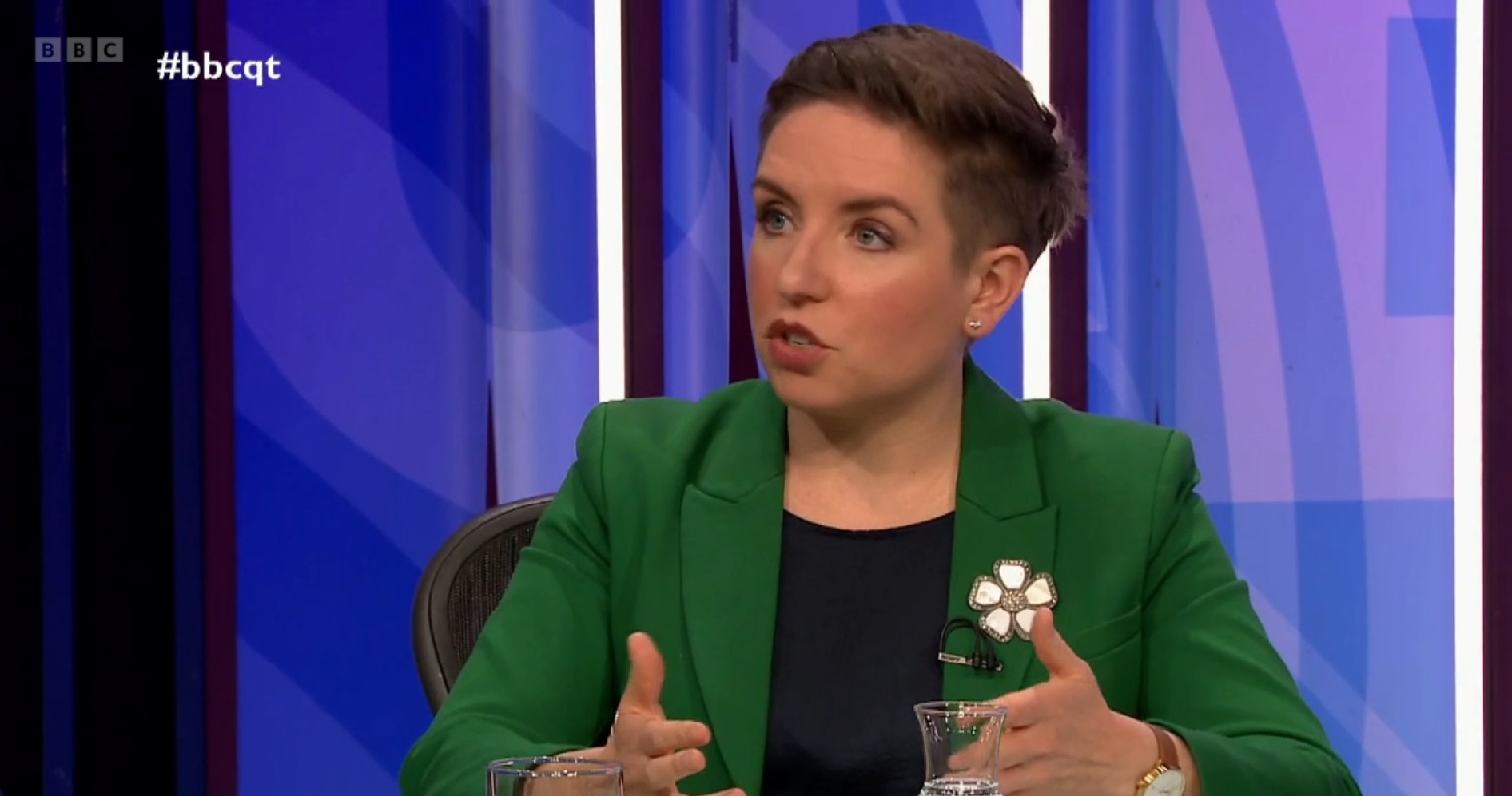
Image of the Green Party's Carla Denyer on BBC Question Time.
Image of the Green Party’s Carla Denyer on BBC Question Time.

Green Party co-leader Carla Denyer has outlined a 10-point plan of distinctive tax and spend policies aimed at delivering a fairer, greener country. She will dismiss the chancellor’s Autumn Statement, saying it will be “another failed opportunity to end the cost-of-living crisis, tackle the climate crisis and restore crumbling public services on which we all rely.”    

Denyer said: 

“Our 10-point plan identifies around £30 billion of additional funds that would be available from simply rebalancing the tax system so that the super-rich pay their fair share and both people and planet benefit.”  

“The extra revenue raised would enable the government to pay NHS staff an inflation-matching pay award, increase access to NHS dentists, increase Universal Credit, abolish the two-child benefit cap, improve bus services and help small businesses take advantage of the opportunities offered by greening the economy. 

“Instead, the chancellor’s Autumn Statement will be another failed opportunity to end the cost-of-living crisis, tackle the climate crisis or restore crumbling public services. It’s clear that as the Tories continue to languish in the polls, Jeremy Hunt has more interest in electoral gimmickry that he has in creating a fairer and greener country.”  

The Green Party’s 10-point plan would:   

  • Restore the public health budget by increasing spending by £1.4 billion  
  • Immediately increase NHS spending by £8 billion, to ensure NHS staff can be paid an inflation matching pay award
  • Meet the Government’s current plan to increase access to NHS dentists by increasing spending 50 per cent – £1.5 billion – of the total NHS dentistry budget
  • End the rise in homelessness caused by the cap on Local Housing Allowances at a cost of £700 million
  • Increase Universal Credit by £40 per week at a cost of £9bn  
  • Abolish the two-child benefit cap to reduce poverty for some of the most vulnerable children in the country by increasing the welfare budget by £1.3 billion
  • Provide the necessary powers and funding to rural local authorities to take back control of bus services so they can increase routes and service frequencies at a cost of £3bn
  • Turn ISAs green by linking their tax exemptions to investments in green bonds 
  • Invest an additional £3billion in Green Transition Grants for small businesses to help them prepare for and take advantage of the opportunities offered by greening the economy 
  • Rebalance the tax system to raise an extra £30 billion through changes to Capital Gains Tax, National Insurance and the abolition of “non dom status” which would pay for the proposed measures 

Championing the Green’s alternative Autumn Statement, Carla Denyer said: 

“These fairer, greener alternatives give just a flavour of what could be done if we had a Government willing to tackle the long-term crises we face. They would start to remove the fundamental injustice that means that wealthier people who own more assets often see a lower effective tax rate than less well-off people. 

“Everyone deserves easy access to a dentist, improved public health, properly paid and supported doctors and nurses working with decent facilities, reduced poverty and homelessness, and accessible public transport.  

“There is enough money in the economy to make our country fairer and greener. What is lacking is the political will to change priorities. And Starmer’s official opposition seems no more ready to offer this than the Government is. That is why we so desperately need more Greens in Parliament to make the case for the common-sense changes that can deliver a fairer greener country.” 
Continue ReadingAutumn Statement: Greens offer 10-point plan of distinctive tax and spend policies to create a fairer, greener society

Around a million children in the UK are living in destitution – with harmful consequences for their development

Spread the love

spixel/Shutterstock

Emma Louise Gorman, University of Westminster

Millions of people in the UK are unable to meet their most basic physical needs: to stay warm, dry, clean and fed. This is known as destitution.

Recent analysis from charity the Joseph Rowntree Foundation (JRF) estimates that around 3.8 million people in the UK experienced destitution at some point during 2022. This is a 61% increase since 2019 – and a 148% increase since 2017.

Living in destitution means severe material hardship. The JRF’s 2022 survey of crisis service users in the UK found that 61% reported going without food in the month before the survey. They often put other needs, such as accommodation or feeding their children, over feeding themselves.

About half of the people surveyed were not able to afford adequate clothing and basic necessities, such as toiletries. Many talked of living in insecure and low quality housing.

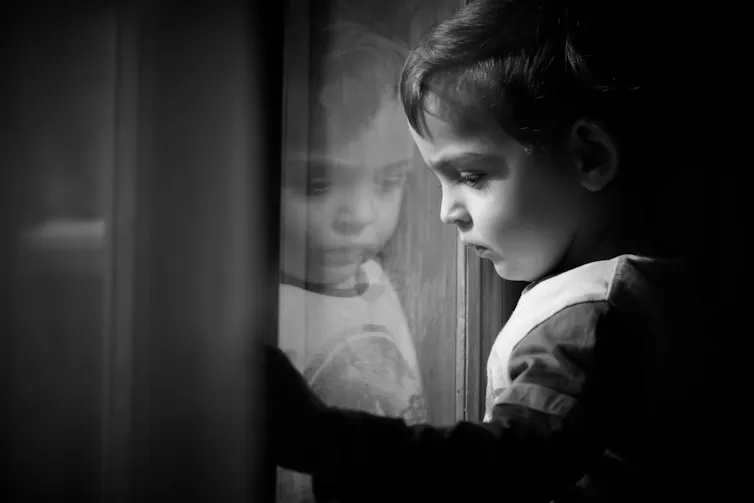
One particularly alarming aspect of these most recent statistics is the steep increase in the number of children living in destitution. In 2022, around 1 million children lived in households who experienced destitution. This is an increase of 88% since the charity’s corresponding 2019 study, and a 186% increase since the 2017 study.

Impact on children

Destitution causes immediate suffering. But for these children, this experience of hardship at a young age will have consequences that last throughout their lives. There is little doubt that both money and environment (housing quality, parental mental health and nutrition, for example) contribute to inequalities in child development. Both of these factors are affected by living in destitution.

When children reach the age of three, stark differences are already evident between those who live in poverty and those who do not. Children from more well-off families have better developed skills in both cognitive tasks, such as understanding basic concepts like colours, letters, numbers and shapes, as well as socio-emotional skills, such as self-control and resilience.

Other factors that are important in shaping children’s skills include housing quality and parental mental health.

Inequalities so early in life can compound and widen over time. These differences between the disadvantaged and the better off can be seen in educational achievement, health and criminal activity.

These types of inequalities were also exacerbated by the pandemic. While pupils everywhere missed out on education, these learning losses were not equally distributed: young people from lower socio-economic background fell further behind.

Despite large increases in funding for the early-year sectors, socio-economic inequalities in child development have not generally narrowed, particularly in recent years.

And now, the sharp increase in the share of children living in destitution does not paint a optimistic picture for the future.

Making a difference

However, many of these issues can be changed by government policy. For example, we know that being hungry at school makes it difficult to concentrate and learn. Measures that address hunger, then, can make a difference. Analysis of a trial of breakfast clubs in English schools, which offered free breakfast to disadvantaged children aged six and seven, found that the free breakfast lead to the equivalent of two months’ extra progress in reading, writing and maths across the course of one year.

Research has shown that many early interventions – such as high quality childcare and education programmes for at-risk children – can have long-lasting positive effects. From an economic perspective, acting early to lift children out of poverty and improve their home and learning environments can be a cost-effective way of helping in the long run, both for individuals as well as wider society.

Another option would be reform of the benefits system to make sure families have enough money to live. In the 2022 Joseph Rowntree Foundation survey of people who used crisis centres, 72% did receive social security benefits – but were still destitute.

This rise in children living in household experiencing destitution must be given serious attention. Successive governments claim to hold upward social mobility as a important goal – that is, the ability of people to move up the economic and social ladder, regardless of their own upbringing and social background. Reducing destitution would not only benefit children right now, but would help them throughout life.The Conversation

Emma Louise Gorman, Principal Research Fellow, Centre for Employment Research, University of Westminster

This article is republished from The Conversation under a Creative Commons license. Read the original article.

Continue ReadingAround a million children in the UK are living in destitution – with harmful consequences for their development

UK government is ‘violating international law’ over poverty levels, says UN official

Spread the love
Image of a prepayment meter and banknotes

https://leftfootforward.org/2023/11/uk-government-is-violating-international-law-over-poverty-levels-says-un-official/

The UK government is in breach of international law over failing to tackle extreme levels of poverty and destitution in the country, according to a scathing assessment made by the UN’s special rapporteur on extreme poverty and human rights.

It comes after the Joseph Rowntree Foundation recently released a report showing that almost 4 million people experienced destitution in 2022, including more than a million children.

Government data recently revealed that 14.4 million people lived in relative poverty in 2021-22 – a million more than the previous year.

With a cost of living crisis and soaring food and fuel prices as well as increasing housing costs, Olivier De Schutter, the UN’s special rapporteur on extreme poverty and human rights, slammed the UK’s woefully inadequate welfare system, citing research showing universal credit payments of £85 a week for single adults over 25 were “grossly insufficient” and described the UK’s main welfare system as “a leaking bucket”.

https://leftfootforward.org/2023/11/uk-government-is-violating-international-law-over-poverty-levels-says-un-official/

Continue ReadingUK government is ‘violating international law’ over poverty levels, says UN official

Here’s how the Tories will continue their war on the less well-off in the King’s speech

Spread the love
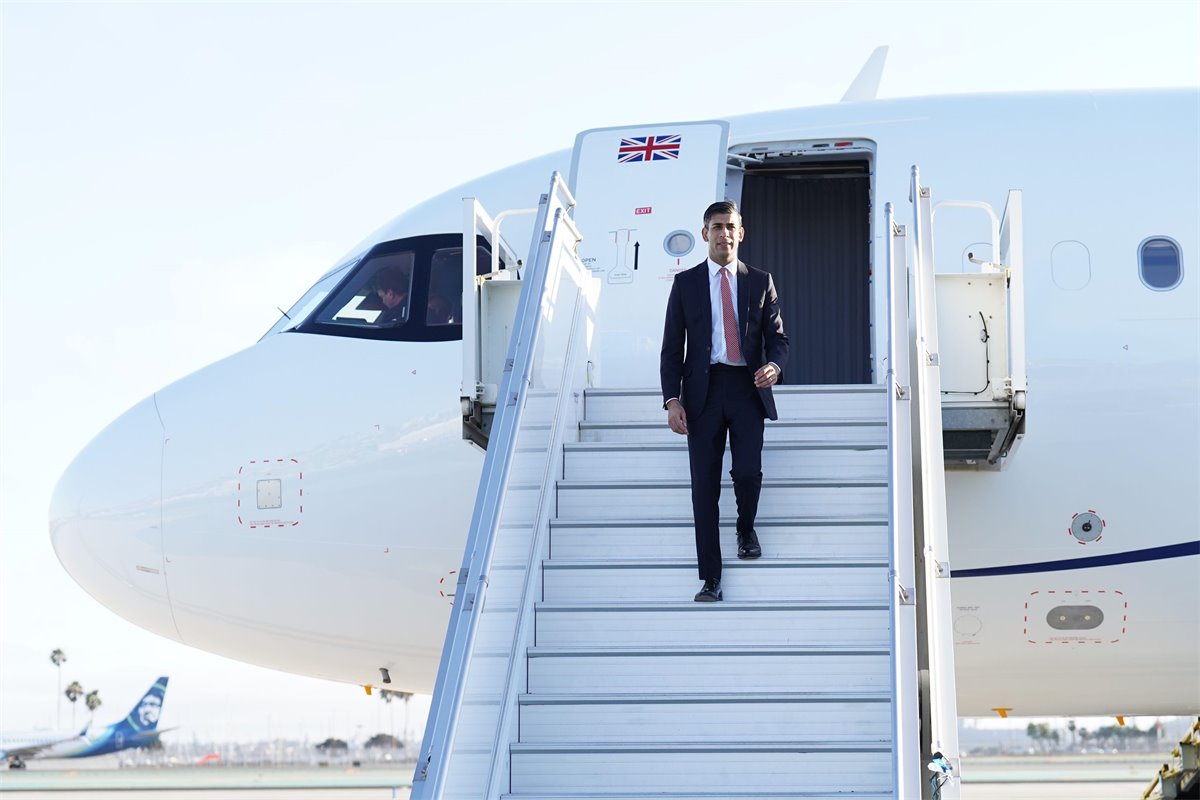
One of the many occasions climate change denier and UK Prime Minister Rishi Sunak uses a private jet.

https://leftfootforward.org/2023/11/heres-how-the-tories-will-continue-their-war-on-the-less-well-off-in-the-kings-speech/

On 7th November, King Charles III will open the next session of the UK parliament. It is likely to be the last before the general election expected to take place towards the end of 2024.

The King’s speech, written by the government, is the key part of state opening of parliament. It sets out the government’s policy priorities and legislative programme. So what can we expect, or not expect, the Conservative government to do to save its skin?

After 13 years in office and five Prime Ministers the government is spent and is unlikely to reverse any of its economic policies that have resulted in the highest ever public debt of £2.6 trillion (97.8% of GDP) and highest rate of inflation for 41 years.

The government won’t end austerity and real wage cuts. The average real wage is lower than in 2005. 14.4m were living in poverty in 2021/2022. 3.8m people experienced destitution in 2022, including around one million children. In the period 2012-2019, government imposed austerity caused nearly 335,000 excess deaths (nearly 48,000 a year) in England and Scotland.

A government obsessed with privatisation, outsourcing and cuts to public spending may pay lip-service to public investment, but won’t do much to deal with crumbling schools and public buildings. Parts of the National Health Service have been privatised by stealth and the government won’t do much to relieve the healthcare crisis. Some 7.8m people in England are waiting for hospital appointment (1 in 7 of the population). Some .2.6m are chronically ill and unable to work. In the five years to 2022, around 1.5m died whilst awaiting a hospital appointment.

The government is trapped by its subservience to defunct ideologies. It won’t modify Brexit and reach out to Europe to boost investment, trade and jobs. It won’t increase investment in infrastructure. In an OECD league table of investment in productive assets, the UK is ranked at number 35 out of 38 countries.

https://leftfootforward.org/2023/11/heres-how-the-tories-will-continue-their-war-on-the-less-well-off-in-the-kings-speech/

Continue ReadingHere’s how the Tories will continue their war on the less well-off in the King’s speech

1,000,000 children living in most extreme poverty as figure almost trebles since 2017, report finds

Spread the love
Image of cash and pre-payment meter key

https://leftfootforward.org/2023/10/1000000-children-living-in-most-extreme-poverty-as-figure-almost-trebles-since-2017-report-finds/

A damning new report from the Joseph Rowntree Foundation (JRF) on the scale of destitution in the UK, has found that more than a million children experienced the most extreme form of poverty last year, with the figure almost trebling since 2017.

The report – the fourth in a series of Destitution in the UK studies published regularly in recent years, also revealed that almost 4 million people experienced destitution in 2022. Destitution is when people cannot afford to meet their most basic physical needs to stay warm, dry, clean and fed.

The damning figures shame us as a nation, with the rise in levels of destitution down to the cost of living crisis, low incomes as well as high levels of debt. The JRF report also highlighted how the social security system is failing to protect people from destitution, with almost three quarters (72%) of those destitute being in receipt of benefits.

The number of people experiencing destitution has increased by 61% since the last Destitution in the UK survey in 2019, an increase of almost two-and-a-half times (148%) compared to 2017. The report stated: “Single people of working age continue to be the worst-affected group by far, but for the first time in 2022 around a million children were living in households that experienced destitution. The shocking statistics revealed in this report reflect a social security system now so full of holes that it falls to charities – such as food banks – to try to prevent people from experiencing the worst of destitution, but the task is too great for them.

https://leftfootforward.org/2023/10/1000000-children-living-in-most-extreme-poverty-as-figure-almost-trebles-since-2017-report-finds/

1.20pm: From the report:

The study findings emphasise the need for urgent action to address the profoundly detrimental impact of
living in destitution and prevent more people experiencing this most severe form of material hardship.
Destitution impacts on health, mental health and people’s prospects. At a societal level, it puts strain on

already overstretched services. It is morally unacceptable that people have to rely on food banks and other
voluntary efforts to meet their basic physical needs. We need a stronger state safety net providing crisis
support to everyone experiencing destitution, regardless of where they live or who they are, with cash-first
assistance and ready access to free high-quality advice. While this would make an immediate difference to
those most in need, we need bolder action to address the drivers of destitution, starting with a commitment
to ending destitution in the UK and moving on to ‘design out’ destitution from our social security and
immigration systems.

Continue Reading1,000,000 children living in most extreme poverty as figure almost trebles since 2017, report finds