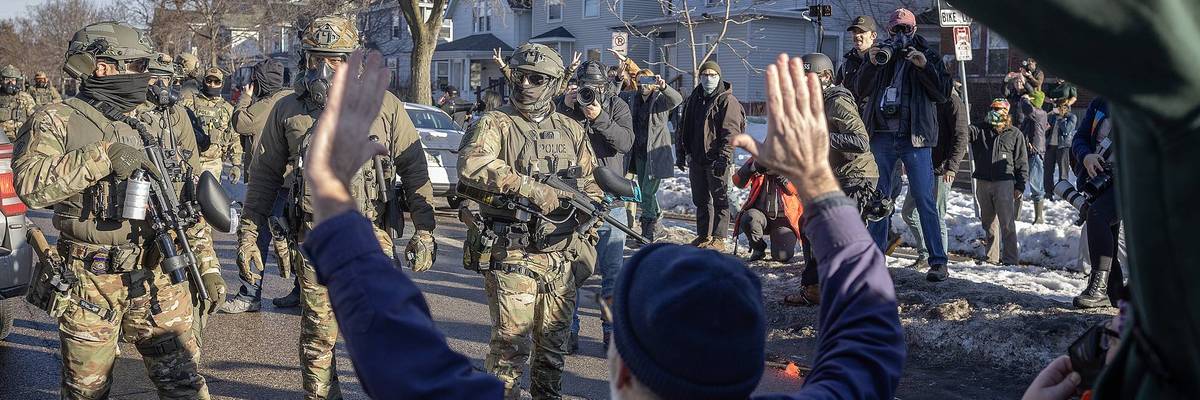
US Immigration and Customs Enforcement agents and anti-ICE protesters face off near the area where Renee Good was killed by a federal immigration agent the previous week, in Minneapolis, on January 13, 2026. (Photo by Elizabeth Flores/The Minnesota Star Tribune)
“These are exactly the kind of intelligence activities J. Edgar Hoover adopted to suppress the Civil Rights and anti-war movements in the 1960s,” said one retired FBI agent.
The Trump administration is conducting what some experts believe is the largest government surveillance campaign targeting American leftists in over half a century, deploying undercover agents, drones, financial investigators, and digital monitoring against opponents of President Donald Trump’s deadly immigration crackdown, according to reporting published Wednesday.
Wired reporter Ali Winston examined court records regarding the prosecution of the so-called “Minnesota 15,” a group of activists facing federal conspiracy charges after organizing and taking part in protests and other resistance to US Immigration and Customs Enforcement’s (ICE) deadly Operation Metro Surge crackdown in the Twin Cities.
The Minnesota 15 are members of the groups Direct Action Minnesota and Black Cat Workers, and are accused of impeding the Department of Homeland Security’s (DHS) anti-immigrant crackdown in Minneapolis, where US citizens Renee Good and Alex Pretti were separately killed earlier this year by ICE and Customs and Border Protection (CBP) officers and where Julio César Sosa-Celis survived being shot by an ICE agent.
Winston’s investigation centers on Operation Puppet Master and Project Whipple Shield, probes conducted by Homeland Security Investigations, which is part of ICE. More than 120 HSI agents were assigned to the Minnesota campaigns, including at least 11 undercover operatives who infiltrated activist meetings, marches, training sessions, and encrypted Signal chats.
Those operations were authorized under National Security Presidential Memorandum 7 (NSPM-7), which was signed by Trump following last year’s assassination of Charlie Kirk in an effort to target the left—even though leftists had nothing to do with the racist influencer’s murder.
Federal agents also spied on gatherings in other states, photographed vehicles, deployed unarmed Reaper drones, and examined activists’ digital records and financial transactions.
Civil liberties advocates and former law enforcement officials said the campaign evokes the Federal Bureau of Investigation’s notorious COINTELPRO program, which surveilled, infiltrated, and sought to disrupt Civil Rights, Black liberation, anti-war, American Indian, and other movements during the tenure of FBI Director J. Edgar Hoover—including by funding and arming murderous far-right militants to terrorize leftists.
As Winston noted:
According to a 2011 book by former [Central Intelligence Agency] officer Frank Rafalko, the CIA secret investigation into suspected foreign influence on the New Left and anti-Vietnam War movement had 42 officers working the case at its peak. Court records show 119 HSI agents worked on the Minnesota 15 case alone.
“Broad monitoring of social media, communications, and financial transactions are used to link an ever-increasing number of people as potential subjects of investigation and prosecution,” Mike German, a retired FBI agent critical of the post-9/11 surveillance state, told Winston. “These are exactly the kind of intelligence activities J. Edgar Hoover adopted to suppress the Civil Rights and anti-war movements in the 1960s.”
Secretary of State Marco Rubio looks on as US President Donald Trump meets with China’s President Xi Jinping at the Great Hall of the People in Beijing on May 14, 2026. (Photo by Brendan Smialowski/AFP via Getty Images)
“Like any country, Cuba has the right to defend itself against external aggression,” said the Cuban embassy. “It is called self-defense, and it is protected by International Law and the UN Charter.”
Cuban officials said the Trump administration is making “increasingly implausible accusations” against the country as it pushes to justify, “without any excuse, a military attack against Cuba,” after an unnamed White House official told the news outlet Axios that the Cubans have been “discussing plans” to launch drones against the US.
“Cuba is the country under attack,” said the Cuban embassy in a statement, months into a ramped-up oil blockade by the US that has left the island’s electric grid in a “critical state” and forced frequent rolling blackouts as well as causing a healthcare crisis, with tens of thousands of people waiting for surgeries.
But in Axios’ article, the Trump administration official took pains to push the notion that the US, with its nearly $1 trillion-per-year military, could face attacks from the tiny Caribbean nation 90 miles south of Florida because officials there have been preparing defensive capabilities.
Axios reported that, according to classified intelligence it viewed, Cuba has acquired more than 300 drones and has been considering plans to attack the US military base at Guantanamo Bay, various US military vessels, and Key West, Florida.
The country has been acquiring drones from Russia and Iran since 2023 and has sought more aid from Russia in recent months, according to the report. Intelligence intercepts have also shown Cuba is “trying to learn about how Iran has resisted us,” the official said, referring to Iran’s use of unmanned aircraft, its closure of the Strait of Hormuz, and its attacks on US military outposts in the Middle East in response to the US-Israel war on the country that began in February.
The Cuban embassy further responded with a reminder that “like any country, Cuba has the right to defend itself against external aggression.”
Like any country, Cuba has the right to defend itself against external aggression. It is called self-defense, and it is protected by International Law and the UN Charter.
Those from the US who seek the submission and, in fact, the destruction of the Cuban…
“Those from the US who seek the submission and, in fact, the destruction of the Cuban nation through military aggression and war, do not waste a single moment fabricating pretexts, creating and spreading falsehoods, and distorting as extraordinary the logical preparation required to face a potential aggression,” said the embassy.
Journalist José Luis Granados Ceja, who is based in Mexico City and covers Latin America for Drop Site News, emphasized that “Cuba has the right to self-defense.”
“It would be arguably be wise for Cuba to incorporate a tool that has proven to be an extraordinary effective weapon and a powerful tool of dissuasion as part of its self-defense strategy,” said Granados Ceja.
Axios said the classified intelligence “could become a pretext for US military action” that President Donald Trump has expressed an interest in taking numerous times, before acknowledging toward the end of the article that “US officials don’t believe Cuba is an imminent threat, or actively planning to attack American interests.”
Rather, the intelligence showed that Cuban officials “have been discussing drone warfare plans in case hostilities erupt as relations with the US continue to deteriorate”—suggesting they could use drones in self-defense if attacked by the US.
.@Axios fabricates a "drone threat", only to confess paragraphs later: "US officials don't believe Cuba is actively planning to attack." This contradictory disinformation is a transparent, ludicrous pretext to justify US hostility. We categorically reject these baseless smears. https://t.co/YPgwket1p6
The reporting carried echoes of Secretary of State Marco Rubio’s rationale for attacking Iran in February. He stunned legal experts days after the war began by explaining that the US had decided to wage war on the Middle Eastern country because it feared Iran would retaliate after Israel began attacking it.
“The imminent threat was that we knew that if Iran was attacked, and we believed they would be attacked, that they would immediately come after us,” Rubio said.
The claim that Cuba’s reported preparations make the island a threat to US security “is a lie—with purpose,” said David Adler, co-general coordinator of Progressive International.
“Marco Rubio and his stenographers at Axios are manufacturing consent for the invasion of Cuba,” said Adler. “To fall for this flimsy propaganda is to fail the most basic test of civic literacy. And the stakes are millions of Cuban lives off our coast.”
Cuban drone attack with Iranian help? Now we know why Rubio has been hammering the message that Cuba is a threat and host to U.S. adversaries.
It reads like something out of a bad spy novel, but this regime-change propaganda represents a very real danger. https://t.co/bq1TAbLNt1
— José Luis Granados Ceja (@GranadosCeja) May 17, 2026
Rubio, the son of Cuban immigrants, has long sought regime change in the socialist country.
Axios’ reporting came days after CIA Director John Ratcliffe traveled to Cuba to pressure officials into complying with US demands, likely including political and economic reforms, heightening fears that the US could be planning a military attack unless the country complies.
White House officials also told CBS News Friday that the Department of Justice is preparing to criminally indict former Cuban President Raúl Castro for shooting down planes that belonged to a US group that had flown into Cuba’s airspace in the 1990s. In January, US forces invaded Venezuela and abducted President Nicolás Maduro, bringing him to the US where he was charged with drug trafficking, and pleaded not guilty.
Former Obama administration staffer and Pod Save America co-host Tommy Vietor said Sunday that “lots of signals pointing towards an imminent US regime change operation against Cuba.”
“The latest,” he said of the Axios article, “is this blatant effort to launder a pretext for war through the media.”
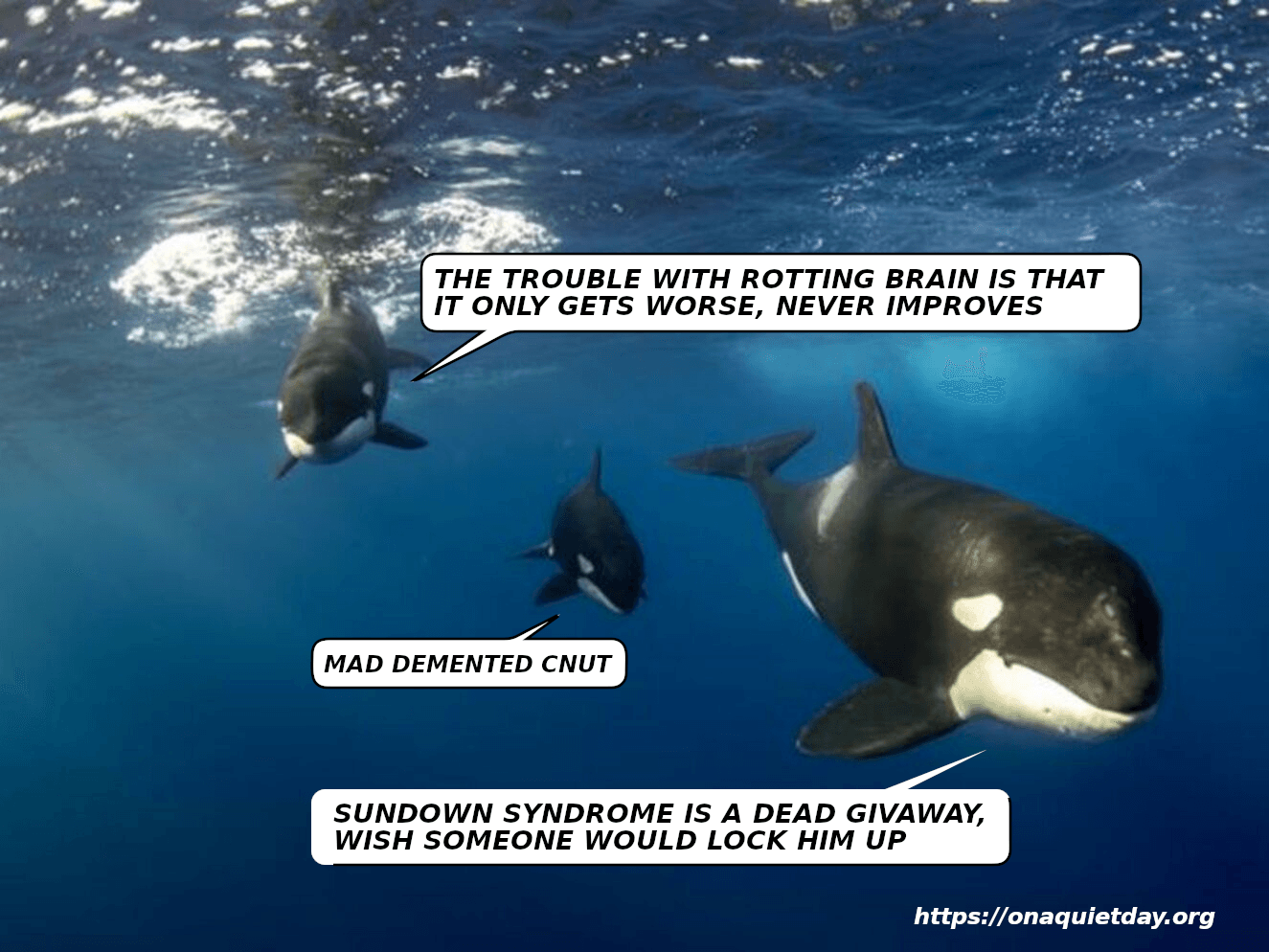
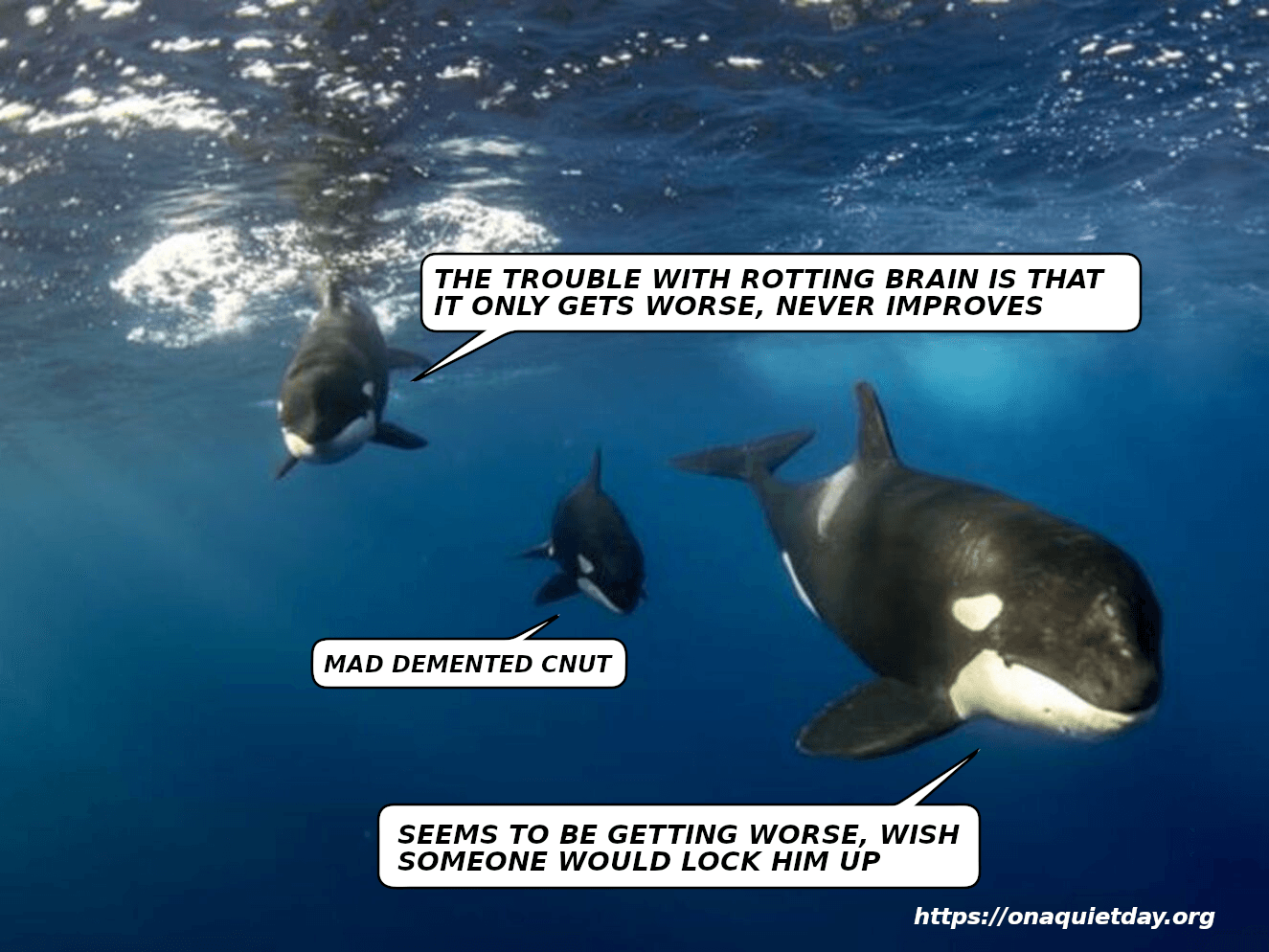
Donald Trump sings and dances, says that it’s fun to kill everyone …Orcas discuss rotting brain, front Orca says disinhibition and swearing are typical and common symptoms, small Orca speaks bluntly.
This work by Middle East Monitor is licensed under a Creative Commons Attribution-NonCommercial-ShareAlike 4.0 International License.
Firefighters work where rockets fired by Hezbollah reportedly struck several locations in Nahariya, Israel’s northern Galilee region, on March 16, 2026. [Samir Abdalhade – Anadolu Agency]
The Israeli public broadcaster Kan reported that Hezbollah launched at least 40 drones towards northern Israel on Monday, causing significant damage. Among them was a drone deployed for the first time, equipped with an optical guidance system that makes it difficult to detect.
According to the broadcaster, one of the drones crashed in the settlement of Kiryat Shmona.
It said only a small number of the drones were intercepted, while the rest struck targets, causing heavy damage, without providing further details.
Kan added that the new drone is considered an advanced aerial system, resistant to electronic warfare and difficult to detect or stop. It said the drone can manoeuvre inside buildings, carry up to 5 kilograms of explosives, and reach ranges of tens of kilometres.
Separately, the Israeli website Globes reported that Hezbollah has recently begun using FPV (first-person view) drones to target Israeli tanks and armoured personnel carriers in southern Lebanon.
Keir Starmer explains that UK is actively supporting Israel’s genocidal expansion and repeats his previous quotation that he supports Zionism “without qualification”. Keir Starmer said “I said it loud and clear – and meant it – that I support Zionism without qualification.” here: https://www.jewishnews.co.uk/keir-starmer-interview-i-will-work-to-eradicate-antisemitism-from-day-one/Donald Trump sings and dances, says that it’s fun to kill everyone …
Two women from the Iranian Red Crescent Society stand as a thick plume of smoke from a U.S.-Israeli strike on an oil storage facility late Saturday rises in the sky in Tehran, Iran, March 8, 2026
IRAN launched fresh waves of strikes at Israel and US and energy assets in the Gulf states today as it continued to retaliate against devastating US and Israeli air raids.
Sirens warned of incoming missiles in Dubai and in Bahrain, authorities said an Iranian attack hit a residential building in the capital, killing a woman and wounding eight others.
Saudi Arabia said it destroyed two drones over its oil-rich eastern region and Kuwait’s National Guard said it shot down six drones.
Later in the morning sounds of explosions could be heard in Tel Aviv.
“We are definitely not looking for a ceasefire,” Iran’s parliament speaker Mohammad Bagher Qalibaf wrote on X.
“We believe that the aggressor should be punched in the mouth so that he learns a lesson so that he will never think of attacking our beloved Iran again.”
Keir Starmer explains that UK is participating defensively in Trump and Israel’s criminal war for Israel’s genocidal expansion in Iran and states that he supports Zionism “without qualification”. Starmer said it here: https://www.jewishnews.co.uk/keir-starmer-interview-i-will-work-to-eradicate-antisemitism-from-day-one/Donald Trump warns against following the https://onaquietday.org blog, says that it’s easy atm, she only needs to report war crimes supporting Israel’s genocidal expansion.Orcas discuss how Trump was re-elected and him being an obviously insane, xenophobic Fascist.
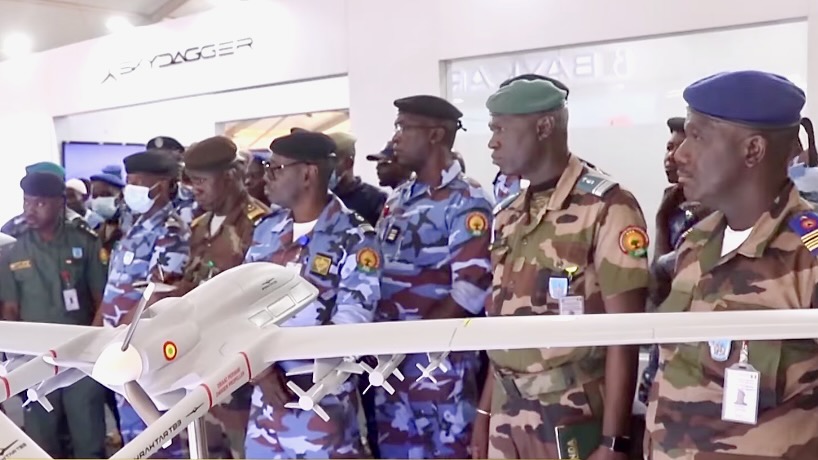
BAMEX 25 is Mali’s first international defense expo. Photo: screenshot
As panic-inducing travel advisories and doomsaying media reports prophesy the fall of Mali to an Al Qaeda affiliate attacking fuel convoys, the government has re-secured supply routes and hosted Mali’s first international defense expo in a supposedly besieged capital.
Amid a barrage of media reports prophesying the fall of Mali to an Al Qaeda affiliate disrupting its fuel supply by attacking tankers, delegates from ten African countries, Iran, and Turkey attended a defense expo in the capital Bamako from November 11 to 14.
Dismissing this portrayal as a scenario “concocted in the office of foreign intelligence services”, Foreign Minister Abdoulaye Diop insisted that “the fate of Mali, and the destiny of the people in the West African region will not be decided” by the media.
He made these remarks on November 12, addressing a press conference on the sidelines of BAMEX 25, Mali’s first international defense expo, aimed at building “an autonomous security architecture” for Africa in the face of “unprecedented security and geopolitical challenges”.
This expo, he said, is yet another indication of the Malian government’s priority to strengthen its defense and security to combat the threat of terror groups that were spawned across the Sahel by NATO’s destruction of Libya in 2011.
French-spawned terror groups
Mali was among the first and worst affected by these terror groups. Its former colonizer, France, which was a key participant in Libya’s destruction, then deployed its troops, ostensibly to protect Mali. Over the years, its military presence expanded across the Sahel. Alongside, the armed groups also grew in strength, increasing attacks and the area under their control.
This led to a growing perception that French troops in the region were not fighting the terror groups it helped create but guarding its own economic and political interests in maintaining its neocolonial grip over the troubled former colonies.
In 2021, then-prime minister Choguel Kokalla Maïga recalled in an interview the active role played by France in handing over Mali’s territory to terror groups.
“Upon arriving in” the northern town of Kidal in 2013, “France forbade the Malian army from entering. It created an enclave,” and handed it over to Al-Qaeda affiliate Ansar al Dine and Tuareg separatists brought together, he said. Later in 2017, Ansar al Dine coalesced with other terrorist groups to form the Jama’at Nusrat al-Islam wal-Muslimin (JNIM), which became one of the most dangerous groups in the Sahel.
“It’s an enclave controlled by France. They have armed groups trained by French officers. And we have evidence of this,” Maiga added in his 2021 interview. “Mali has no access to Kidal.”
However, the new government retook Kidal in November 2023, less than a year and a half after expelling the French troops.
“On the ground today, terrorist groups are no match for Mali’s defense and security forces,” Diop told reporters at the press conference. “There have been enormous efforts to equip Mali’s defense and security forces, which have achieved resounding successes” against the terror groups, he said, adding that this has “forced them to change their strategy and now attack softer targets.”
Attacks on fuel convoys
Early this September, the JNIM started attacks on drivers and their tankers carrying fuel from the Ivory Coast in the Sikasso region of southern Mali. “Due to disruptions in fuel supplies that are affecting the movement of school staff,” the Education Ministry suspended classes for two weeks on October 26.
“Do Not Travel to Mali for any reason due to crime, terrorism, kidnapping, unrest, and health,” the US State Department said in a travel advisory on October 25. Three days later, the department issued a second alert, insisting that its citizens in Mali “should” leave the country “using commercial aviation, as overland routes to neighboring countries may not be safe for travel due to terrorist attacks along national highways.”
Australia followed suit on October 29, warning, “If you’re in Mali, you should depart immediately using commercial means while the international airport in Bamako remains open and flights are available. If you decide to remain in Mali, be prepared to shelter in place for an extended period.” Italy and Germany also asked their citizens to leave the country.
Amid the panic-inducing travel advisories and doomsaying media reports, Mali’s president, Col. Assimi Goïta, inaugurated the country’s second Lithium mine on November 3, setting Mali en route to becoming Africa’s leading Lithium producer by 2026.
“There have been disruptions in the supply system,” but “the state organized itself, put in place a strategic plan to resume supplies, to ensure the security of convoys … And gradually, you see that hundreds of trucks are arriving every day to resume supplies to Bamako and other localities,” Diop added in his press conference. “As I speak, Mali is able to ensure the supply of hydrocarbons and petroleum products to its population.”
However, two days after the fuel convoys started arriving, France “advised” its citizens on October 7 to leave Mali “as soon as possible using the remaining available commercial flights” because the “security situation has been deteriorating.”
Mali’s first-ever National Electronic Payments Exhibition was organized in the capital that day by the Professional Association of Banks and Financial Institutions of Mali (APBEF-Mali) and the West African Economic and Monetary Union’s Interbank Electronic Payment Group (GIM-UEMOA).
Schools reopened on schedule on November 10. That day, President Goïta inaugurated the Presidential Emergency Hospital Project to upgrade six existing health centers in Bamako to district hospitals by the end of 2026, for which a health budget of USD 349.2 million has been allocated. The inauguration also marked the start of construction of nine new hospitals, including in Bougouni, Bandiagara, and Nioro, where attacks had been reported in the recent past.
Despite these indications of improving security, the UK government claimed on November 13 that “Terrorist group Jama’a Nusrat ul-Islam wa al-Muslimin (JNIM) has implemented blockades on key routes throughout Southern and Western Mali, including the capital city of Bamako,” where the international defense expo was underway.
“These blockades are targeting fuel trucks and are enforcing checkpoints for individuals attempting to pass through them. Attacks can occur at any time,” added its travel advisory.
A proxy war
“We must not think we are simply facing terrorist groups,” Diop maintains. “No, this is a proxy war, where certain powers, cowardly and unable to confront us directly, are using terrorist groups and asymmetric forces to fight us … These terrorist groups have drones. Where do they come from? Who manufactures them? Who provides them in areas where people cannot even eat?”
Le Monde had reported last year that Ukrainian authorities are training an armed group to use drones. Spokesperson of Ukraine’s military intelligence, Andriy Yusov, had said in an interview that it provided “information, and not only information,” to armed groups fighting the state in Mali.
Earlier in 2022, Diop had written a letter to the UN Security Council, saying Mali had evidence that France was flying missions in Malian airspace to collect intelligence and airdrop arms and ammunition to terror groups.
Mali’s southern neighbor, Burkina Faso, and eastern neighbor, Niger, have also since accused France of supporting terror groups to destabilize their countries after its troops were expelled following a similar sequence of anti-France protests and popular coups.
“Africa is now the epicenter of terrorism,” Nicolas Lerner, head of France’s General Directorate for External Security (DGSE), told France Inter radio on November 10. Calling it a threat to Europe, he insisted it “directly threatens our interests,” effectively trying to set up the case for another military intervention.
Curiously, he went on to add that while the “JNIM wants the fall of the junta and the installation of authorities who back the establishment of a caliphate,” the group itself “is not necessarily capable of controlling Mali, nor does it actually want to.”
Lerner is “saying … it is not even their intention to take Bamako … How [does he] know their intention? Is it you who gives them this intention? Is it you who commands them? Is it you who decides,” questioned Diop.
“This should help us understand how deep the collusion is today between hybrid forces. These are not terrorists – it is a proxy war. But I can assure you that Mali will endure.”
He reiterated that Mali, Burkina Faso, and Niger, which have formed the Alliance of Sahel States (AES), are fighting together, convinced that this proxy war is waged on them because they “chose to break the chain of dependency, to break the chain of subjugation to colonial domination.”
He added, “Our countries are being attacked first to break this dynamic and then to prevent other African countries from following this path. And we have understood the political message behind this.” The African Union (AU), however, has not.
“We are not reaching out to the so-called international community to come to our aid”
Amid the chorus by Western countries, the AU’s chairperson, Mahamoud Ali Youssouf, called for “a robust, coordinated, and coherent international response to counter terrorism and violent extremism in the Sahel.”
“No action can be … taken in Mali without Malians, without the consent of the Malian state, without the Malian state requesting it,” Diop retorted, affirming, “we are not reaching out to the so-called international community to come to our aid.”
“This call for international action is all the more worrying since Mali has emerged from this type of paradigm,” he added. Having expelled the French troops and asserted sovereignty, “the new paradigm [in the AES] is to trust ourselves and take charge … to ensure the security of our countries rests first and foremost on the shoulders of the people and leaders of our countries.”




 Two women from the Iranian Red Crescent Society stand as a thick plume of smoke from a U.S.-Israeli strike on an oil storage facility late Saturday rises in the sky in Tehran, Iran, March 8, 2026