Tag: European Union

  • Outrage After Israeli Occupation Forces Shoot Live Rounds at Foreign Diplomats in West Bank

    Spread the love

    Original article by Brett Wilkins republished from Common Dreams under Creative Commons (CC BY-NC-ND 3.0).

    Members of an international diplomatic delegation scramble for cover after coming under Israeli fire during a May 21, 2025 visit to the besieged Jenin refugee camp in the illegally occupied West Bank of Palestine. (Photo: Mohammad Ateeq/AFPTV/AFP via Getty Images)

    Among those shot at were representatives of three nations that threatened “concrete actions” if Israel doesn’t end its assault and siege on Gaza and others that support a genocide case against the country.

    Israeli occupation forces fired what they called “warning shots” at a large delegation of international diplomats visiting the besieged Jenin refugee camp in the West Bank on Wednesday, an incident many critics said was an attempt to intimidate countries that just two days earlier issued an ultimatum to stop annihilating Gaza and others that have joined a genocide case against Israel.

    Palestinian officials were briefing a group of more than 20 diplomats about the crisis in the illegally occupied West Bank—where Israeli soldiers and settlers have killed and wounded thousands of Palestinians including hundreds of children since October 2023 while pushing ahead with massive land theft and colonization—when they came under fire.

    According to the Israeli Foreign Ministry, the delegation “deviated” from the route approved by Israeli occupation authorities “and entered an area where they were not authorized to be,” prompting Israel Defense Forces (IDF) soldiers to fire “warning shots to distance them away.”

    “The IDF regrets the inconvenience caused,” the ministry added.

    Israeli soldiers intentionally fired at a delegation of about 30 Arab & EU diplomats, ambassadors and consuls, visiting Jenin refugee camp, in the West Bank. Israel claims “it was an accident” and that they fired “warning shots” because they “felt in danger”. Israel was trying to intimidate them.

    [image or embed]
    — Anonymous ( @youranoncentral.bsky.socialMay 21, 2025 at 6:06 AM

    Israeli media reported IDF troops fired shots in the air. However, video footage of the incident appears to show soldiers aiming their guns and firing straight ahead in the direction of the diplomats as they scrambled for cover. Israeli officials have often been caught lying about the actions of IDF troops in Palestine.

    The delegation included diplomats from the European Union and countries including Austria, Brazil, Bulgaria, Canada, Chile, China, Egypt, France, India, Japan, Jordan, Lithuania, Mexico, Morocco, Poland, Portugal, Romania, Russia, Spain, Sri Lanka, Turkey, and the United Kingdom.

    On Monday, three of those countries—France, the United Kingdom, and Canada—issued a rare joint statement condemning Operation Gideon’s Chariots, the ongoing Israeli campaign to conquer and indefinitely occupy all of Gaza and ethnically cleanse much of its population.

    On Tuesday, the U.K. announced it is suspending negotiations with Israel on a free trade agreement, explaining that “it is not possible to advance discussions on a new, upgraded FTA” with a government “that is pursuing egregious policies in the West Bank and Gaza.”

    Israeli Prime Minister Benjamin Netanyahu and Yoav Gallant, his former defense minister, are wanted by the International Criminal Court for alleged war crimes and crimes against humanity in Gaza including extermination and forced starvation.

    The U.K. additionally sanctioned three far-right Israeli extremists, including settler leader Daniella Weiss, as well as three illegal settlement outposts and two groups “that have supported, incited, and promoted violence against Palestinian communities in the West Bank.”

    Also on Tuesday, European Commission Vice President Kaja Kallas—who is the E.U.’s foreign policy chief—said the 27-nation bloc would review its political and economic agreement with Israel in light of the “catastrophic” situation in Gaza.

    Brazil, Chile, China, Egypt, Jordan, Mexico, Spain, and Turkey have either joined or expressed support for the South Africa-led genocide case against Israel currently before the International Court of Justice—which last year found that Israel’s 58-year occupation of the West Bank, including East Jerusalem, and Gaza is an illegal form of apartheid that must be ended as soon as possible.

    Israel’s 592-day assault and siege on Gaza has left more than 189,000 Palestinians dead, maimed, or missing and over 2 million others forcibly displaced, starved, or sickened, according to the Gaza Health Ministry.

    The Palestinian Authority Ministry of Foreign Affairs condemned what it called Wednesday’s “heinous crime” against the diplomats.

    “The delegation was undertaking an official mission to observe and assess the humanitarian situation and document the ongoing violations perpetrated by the occupying forces against the Palestinian people,” the ministry said. “This deliberate and unlawful act constitutes a blatant and grave breach of international law and of the fundamental principles of diplomatic relations as enshrined in the 1961 Vienna Convention on Diplomatic Relations.”

    Kallas said Wednesday that “any threats on diplomats’ lives are unacceptable.”

    “Israel is also a signatory to the Vienna Convention, I mean the obligation to guarantee the security of all foreign diplomats,” Kallas noted. “We definitely call on Israel to investigate this incident and also hold accountable [those] who are responsible for this.”

    The governments of other countries whose diplomats were targeted on Wednesday condemned the incident, with some, including France and Italy, summoning their Israeli ambassadors.

    Original article by Brett Wilkins republished from Common Dreams under Creative Commons (CC BY-NC-ND 3.0).

    Experiencing issues with this image not appearing. I suspect because it's so critical of Zionist Keir Starmer's support of and complicity in Israel's genocides.
    Genocide denier and Current UK Prime Minister Keir Starmer is quoted that he supports Zionism without qualification. He also confirms that UK air force support has been essential in Israel’s mass-murdering genocide. Includes URLs https://www.declassifieduk.org/keir-starmers-100-spy-flights-over-gaza-in-support-of-israel/ and https://youtu.be/O74hZCKKdpA
    UK Labour Party government ministers Keir Starmer, Angela Rayner and Rachel Reeves explain that they are partners complicit in Israel's Gaza genocide. The UK has provided Israel with arms, military and air force support. They explain that they don't do gas chambers but do do forced marches, starvation, destroy hospitals, mass-murders of journalists and healthcare workers.
    UK Labour Party government ministers Keir Starmer, Angela Rayner and Rachel Reeves explain that they are partners complicit in Israel’s Gaza genocide. The UK has provided Israel with arms, military and air force support. They explain that they don’t do gas chambers but do do forced marches, starvation, destroy hospitals, mass-murders of journalists and healthcare workers.
  • Exclusive: Norway’s Equinor Forced to Withdraw Key Carbon Capture Claim

    Spread the love

    Original article by Edward Donnelly republished from De Smog.

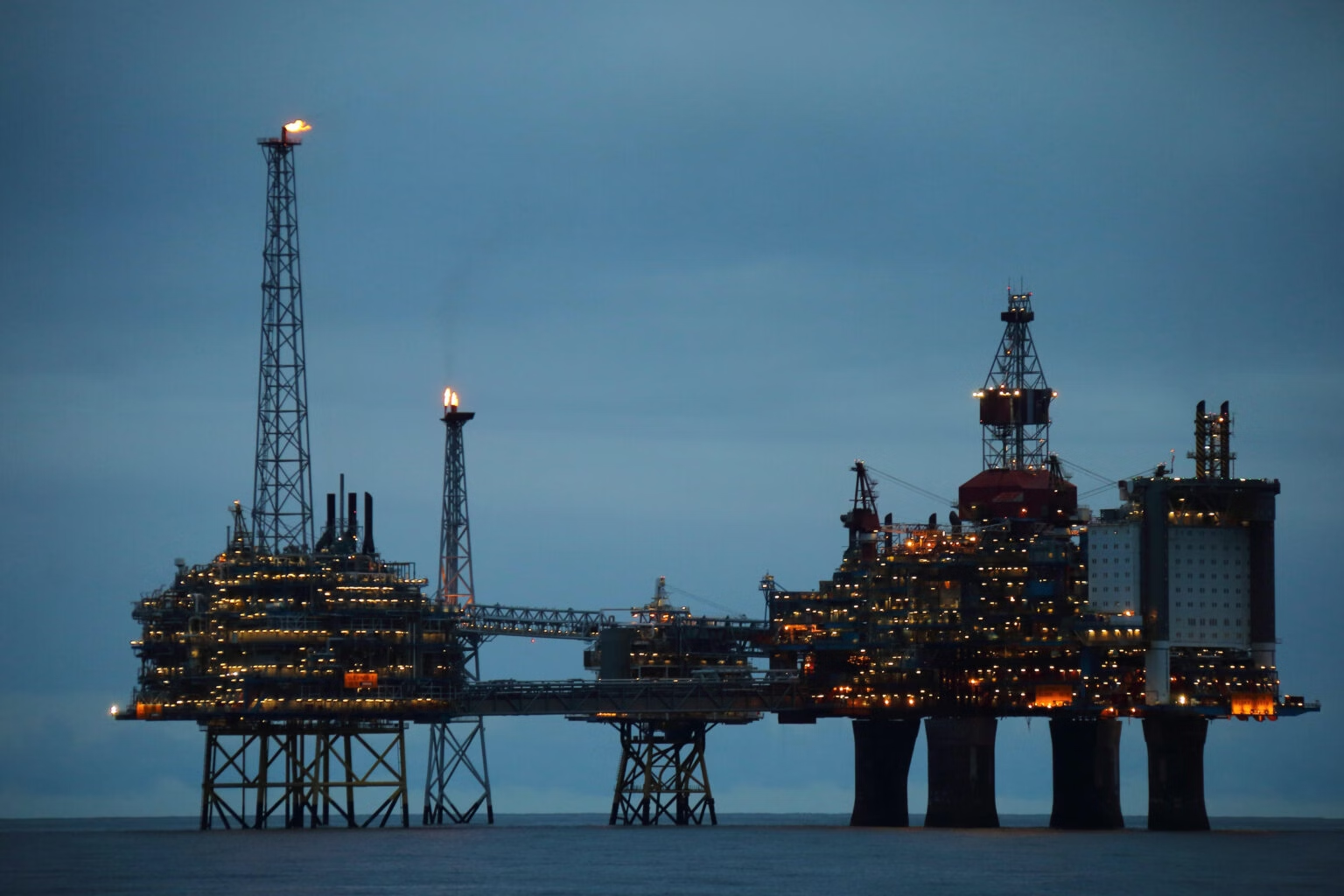
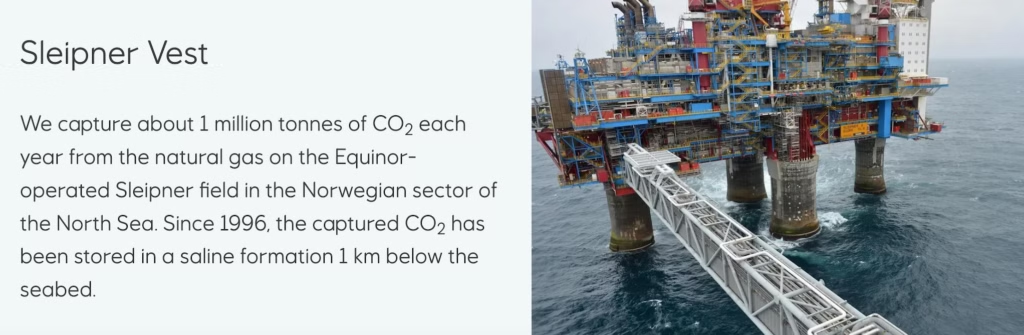
    Equinor’s Sleipner offshore gas field. Philip Stephen/ Nature Picture Library / Alamy Stock Photo.

    Oil company was storing a fraction of advertised amount of CO2 at offshore project, data shows.

    This story is the tenth part of a DeSmog series on carbon capture and was developed with the support of Journalismfund Europe.

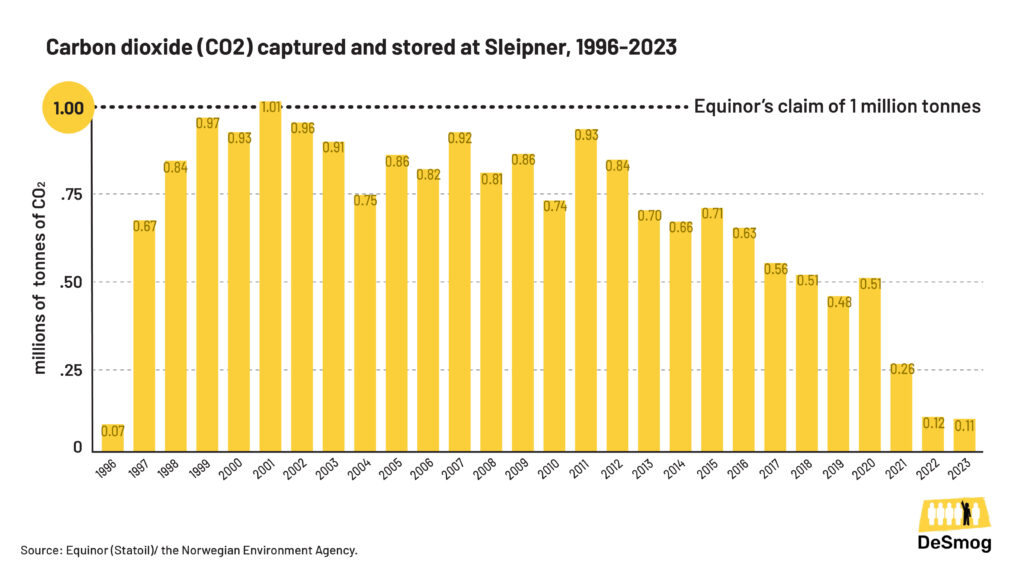
    Equinor has retracted a claim that it stores about a million tonnes of carbon dioxide annually at its flagship carbon capture project after DeSmog obtained data showing the real figure was as little as a tenth of that amount. 

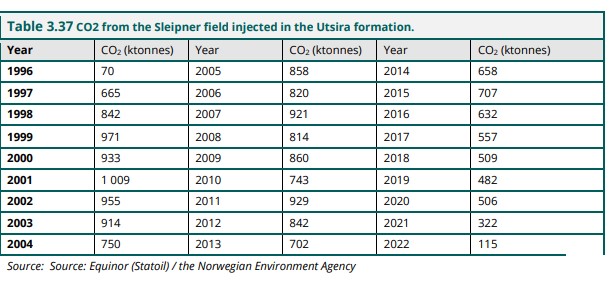
    The Norwegian oil company scrubbed the estimate from its website in November, when presented with official figures showing that it captured 106,000 tonnes of carbon dioxide (CO2) at its Sleipner carbon capture and storage (CCS) facility in 2023. 

    Equinor has not captured 1 million tonnes of CO2 per year at the site since 2001, according to the data, provided by the Norwegian Environment Agency.  

    The company put the reason for the discrepancy between the official figures and its public-facing claim to be capturing “about 1 million” tonnes of CO2 a year down to a failure to update a “static” webpage.

    “We have now removed this error from our website and updated this section with the correct information,” Equinor spokesman Gisle Ledel Johannessen said via email. 

    Equinor has been capturing CO2 from a gas processing plant at the Sleipner gas field in the North Sea since 1996. The field has particularly high concentrations of CO2, which Equinor filters out during the gas purification process and then injects below the seabed. 

    The project has been cited by carbon capture advocates, and Equinor itself, as evidence that the technology is reliable enough to help meet global climate goals, despite its long history of cost-overruns and failed targets.

    A screenshot of Equinor’s website, taken on 13 October, 2024 Credit: Edward Donnelly.
    The claim has since been removed.

    Expansion Plans

    Equinor is positioning itself to play a key role in the European Union’s plans to massively increase carbon capture. The bloc has adopted an official target to deploy an annual 50 million tonnes of CO2 storage capacity by 2030 from roughly three million tonnes available across the continent today, though the pace of the existing roll-out is nowhere near on track to achieve that goal.

    Norway, not an EU member, is home to almost all of Europe’s operational carbon capture capacity, which is comprised of Sleipner and a similar project also operated by Equinor at its Snøhvit gas field in the Barents Sea. The two sites stored a total of 763,000 tonnes of CO2 in 2023, according to the Norwegian Environment Agency figures, less than half of their combined capacity of 1.7 million tonnes of CO2.

    Equinor’s statement that it was capturing “about 1 million tonnes of CO2 each year” at Sleipner alone appears to have first been published on the company’s “carbon capture and storage (CCS)” webpage in 2022, according to archived internet data. That year, the Sleipner field captured 260,000 tonnes of CO2, according to the Norwegian Environment Agency, which regulates the oil and gas industry.

    DeSmog asked Equinor for its data on carbon capture at Sleipner in October. When the company declined to provide it, DeSmog obtained the figures from the Norwegian Environment Agency, which collates companies’ self-reported data. 

    Equinor spokesman Johannessen said that Sleipner had been capturing less CO2 in recent years because of declining gas production at the site.

    Credit: Sabrina Bedford.

    Broken Equipment

    Equinor had previously acknowledged that faulty monitoring equipment at Sleipner caused it to over-estimate the amount of CO2 it was capturing at the field for several years, as DeSmog reported in October. During a more than four-year period from January 2017 through March 2021, the company said that it had captured a cumulative total of about 2.7 million tonnes of CO2 at the site. Equinor later amended the figure to 2.1 million tonnes, about a 28-percent decrease. 

    The gulf between Equinor’s public claims and Sleipner’s actual performance underscores concerns among climate advocates that the oil industry is hyping the potential of carbon capture as a climate solution to deflect pressure to cut production of fossil fuels. 

    At least 480 carbon capture lobbyists attended the latest annual UN climate conference in Azerbaijan in November, according to the nonprofit Center for International Environmental Law. In October, DeSmog revealed that Equinor had been holding more meetings with ministers to lobby the UK government over CCS than any other company, part of its plans to play a leading role in the country’s carbon capture plans. 

    Equinor suggested that carbon capture could be the “best-kept secret” for climate action in a 2019 video, concluding that renewable energy sources such as wind and solar were “not enough.” In sponsored content currently viewable on the Financial Times website, Equinor says that CCS “has emerged as one of the key technologies in mitigating global warming” and addresses “misconceptions,” such as concerns over high costs and links to continued oil and gas production

    Ketan Joshi, an Oslo-based climate consultant, said that the way Equinor presents its CCS operations as a climate solution is “misleading” because its existing projects only capture a small proportion of emissions, while total fossil fuel emissions in Norway remain high. 

    “Equinor uses ‘ambitious’ CCS targets as a way of simulating action without actually performing it,” Joshi said. “They report the amount of CO2 they capture each year and it does not increase.” 

    *A screenshot of a table showing the amount of CO2 captured at Sleipner provided to DeSmog by the Norwegian Environment Agency. The agency noted in an email that the 2021 volume should be 260 kilotonnes and not 322 kilotonnes, and that it will correct the figure in the next edition. The 106 kilotonne figure (106,000 tonnes) for 2023 was provided separately by email.

    CO2 Tax

    The Sleipner CCS project was devised by Equinor (then Statoil) in the mid-1990s as a way to reduce its exposure to Norway’s newly implemented CO2 emissions tax. The company established its CCS project at Snøhvit in 2008 also to reduce its tax burden from CO2 released during gas processing.

    “Sleipner and Snøhvit are CCS projects with high quality that rightly enjoy worldwide recognition from academia, industry, governmental bodies and science institutions as proven and safe CO2 storages over decades where Equinor and our partners so far have stored over 25 million tonnes of CO2 since 1996,” said Equinor spokesman Johannessen.

    He added that over the past five years, the company has “injected 99.7 percent of the CO2 that has been captured on Sleipner into the ground.”

    The amount of CO2 captured by Equinor’s two CCS projects is dwarfed by the emissions released by burning the oil and gas sold by the company. In 2023, Equinor recorded a total of 262 million tonnes of CO2 emissions — including the emissions produced by its operations, and the emissions from burning the oil and gas those operations extracted, according to company sustainability data. 

    In contrast, the company captured and stored a total of about 0.8 million tonnes of CO2 at Sleipner and Snøhvit, more than 300 times less than the amount emitted into the atmosphere by burning its products. 

    And even with a functioning carbon capture facility onsite, net CO2 emissions at Sleipner far exceeded the amount of the gas that was stored. 

    The Sleipner offshore platform provides power to several nearby gas fields by burning gas in turbines — a process that released 658,000 tonnes of CO2 into the atmosphere in 2023, according to the company’s sustainability reporting. That’s more than six times the 106,000 tonnes of CO2 that Equinor captured and stored from gas processing at Sleipner that year. 

    To reduce the offshore platform’s CO2 footprint, Equinor announced last April that it would introduce an electrification plan for Sleipner, rather than opting to expand CCS operations at the field. The company is also planning an electrification project to reduce emissions from the gas export facility at Snøhvit.

    Government Subsidies

    In September, Equinor and partners Shell and TotalEnergies inaugurated the Northern Lights CO2 transport and storage facility near the Norwegian port of Bergen, which the companies say will store 1.5 million tonnes of CO2 a year from industrial sources on the Norwegian mainland at full capacity when it starts operations.

    The project is mostly financed by $1.2 billion in Norwegian government subsidies, with an additional $141 million pledged by the European Union.  

    By 2035, Equinor says it aims to store 30 to 50 million tonnes of CO2 a year from new projects announced in Norway, Denmark, the UK, and the United States — an exponential increase from its current capacity.

    While Equinor has signalled that it will need substantial subsidies to go forward with its CCS plans, the company continues to direct most of its investments into extracting more fossil fuels. In August, chief executive Anders Opedal announced up to $6.7 billion a year to fund new Norwegian oil and gas drilling until 2035.

    In contrast, Equinor said in November that it will cut its renewable energy division’s workforce by 20 percent — about 250 jobs — citing economic headwinds in the sector.

    “At the most basic level, Equinor presents CCS in a similar way to many other major oil and gas companies: a ‘necessary’ part of the climate solutions mix,” said Joshi, the climate consultant. “This is presented alongside the company’s aggressive expansionist agenda: opening many new oil and gas fields.”

    Original article by Edward Donnelly republished from De Smog.

    Orcas comment on killer apes destroying the planet by continuing to burn fossil fuels.
    Orcas comment on killer apes destroying the planet by continuing to burn fossil fuels.
  • General strike brings Greece to a standstill

    Spread the love

    NB This article a week old

    Original article by Ana Vračar republished from peoples dispatch under a Creative Commons Attribution-ShareAlike 4.0 (CC BY-SA) license.

    Source: PAME Greece

    Thousands of people across Greece joined a general strike and mass protests, demanding action against high living expenses, restrictions on union organizing, and excessive military spending

    Greece was brought to a halt on Wednesday, November 20, as a 24-hour general strike brought workers from across sectors—including education, logistics, construction, public transportation, and health—to the streets of dozens of cities. The mass mobilization, which began early in the morning, followed a media strike on Tuesday that included both public and private outlets.

    The striking workers demanded the repeal of anti-worker laws, including measures that extended working hours, and called for wage restoration. Over the past decade, successive governments, most recently led by Prime Minister Kyriakos Mitsotakis, have implemented austerity policies under pressure from the European Union and international financial institutions. These policies have led to drastic income reductions, with wages remaining about 14% lower than in 2011, according to trade unions.

    Read more: Workers in Greece mobilize against austerity, announce general strike in November

    Protesters warned that current conditions mean they cannot lead dignified lives. With a minimum wage of approximately 900 euros, they face housing and food costs comparable to those in European countries with higher income. While the government has boasted about recent improvements in unemployment rates, unions highlighted that these figures mask the economy’s heavy reliance on tourism and fail to account for poor working conditions.

    Greek unions emphasized that anti-worker legislation has persisted for over a decade, including wage cuts and freezes, extended working hours, and severe restrictions on collective bargaining. These policies have left only a small fraction of workers benefiting from collective agreements. “At the same time, they are further commodifying the functioning of critical sectors such as health, education, energy, water, transport, social security, infrastructure and civil protection services for natural disasters,” stated the All Workers Militant Front (PAME) ahead of the strike. In response, unions demanded guarantees of universal, public, and free education and healthcare, alongside accessible housing solutions.

    The push to privatize and commodify basic rights highlights how successive administrations have prioritized fiscal targets over people’s interests. This has led to a situation where financial organizations commend Greece’s economic recovery, while the working class continues to face systemic denial of basic rights. On top of that, Greece has allocated millions of euros to military spending through NATO—a decision that has become a significant point of contention for trade unions.

    “We do not accept our basic and daily needs to be sacrificed to give billions to NATO armaments, for missiles, frigates, war planes,” PAME stated. Hundreds of thousands of euros have been allocated for the frigate in the Red Sea—”money that is equivalent to the annual budget of a hospital”—the workers’ organization concluded.

    Read more: Athens dockworkers block ammunition shipment bound for Israel

    Marches on November 20 highlighted international solidarity as opposed to war and militarization. Palestinian flags were prominently displayed at the rallies, reflecting the longstanding support of Greek workers for the people of Gaza and other occupied territories. Trade unions called for an immediate end to the Israeli genocide against Palestinian and Lebanese people. This message resonated with the general strike’s motto: “Out of the war slaughterhouses; fund wages, health, and education instead.”

    “The large participation in the strike and rallies demonstrates the workers’ strong opposition to the government’s anti-people policies and its alignment with business interests,” PAME stated on the day of the strike. The organization reaffirmed its commitment to continue with the mobilizations, aiming to pressure the government to shift its priorities toward addressing workers’ rights and peace.

    Original article by Ana Vračar republished from peoples dispatch under a Creative Commons Attribution-ShareAlike 4.0 (CC BY-SA) license.

  • 2024 ‘Virtually Certain’ to Be Hottest Year on Record: EU Climate Agency

    Spread the love

    Original article by Julia Conley republished from Common Dreams under Creative Commons (CC BY-NC-ND 3.0). 
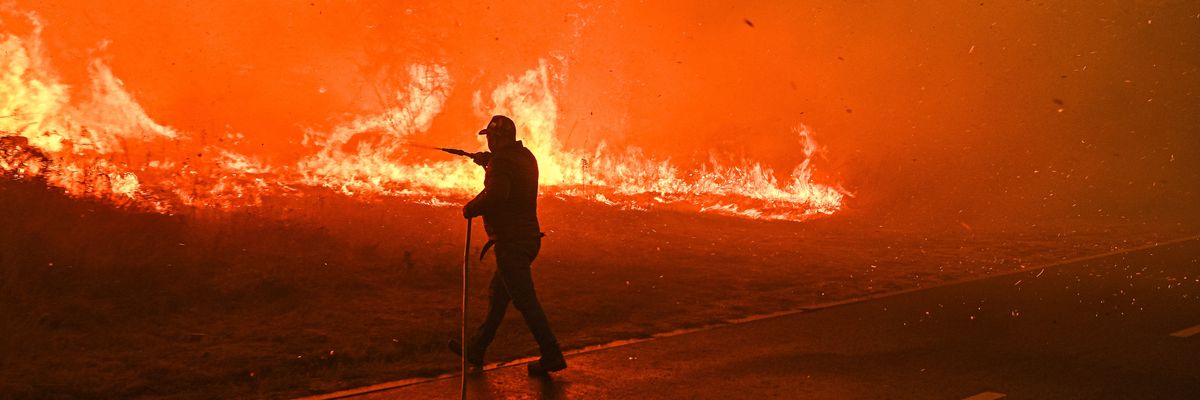
    A resident tries to fight a wildfire burning on September 17, 2024 in Marco de Canaveses, Portugal. (Photo: Octavio Passos/Getty Images)

    A new report contained “the bleakest news possible, especially with a climate denier U.S. president in office for the next four years,” said one climate scientist.

    A day after U.S. voters elected climate-denying Republican Donald Trump in the presidential race, soon ushering in an administration that is sure to expand fossil fuel drilling, the European Union’s Earth observation agency announced that 2024 is “virtually certain” to be the hottest year on record and to hit a worrying temperature milestone.

    The year is expected to be the first on record in which the temperature is more than 1.5°C hotter than before the Industrial Revolution, according to the Copernicus Climate Change Service (CCCS). The Paris climate agreement of 2015 urged countries to curb greenhouse gas emissions with the goal of limiting planetary heating to 1.5°C by the end of the century.

    Over the past 12 months, said CCCS, global temperatures were 1.6°C warmer than the yearly average from 1850-1900.

    https://twitter.com/OceanTerra/status/1854419940087906769?ref_src=twsrc%5Etfw%7Ctwcamp%5Etweetembed%7Ctwterm%5E1854419940087906769%7Ctwgr%5E603fae17c6b14c6a10b87145e07821d8631d7159%7Ctwcon%5Es1_c10&ref_url=https%3A%2F%2Fwww.commondreams.org%2Fnews%2F2024-hottest-year

    Sorry, this content could not be embedded.
    X

    “The average temperature anomaly for the rest of 2024 would have to drop to almost zero for 2024 to not be the warmest year,” said CCCS.

    Last month was the second-hottest October ever recorded, with temperatures 1.65°C higher than preindustrial levels. It was the 15th month in the past 16 to be hotter than 1.5°C over preindustrial temperatures.

    While a single year above the 1.5°C mark does not necessarily indicate that the Paris climate goal is out of reach, CCCS director Carlo Buontempo said the planet has “never had to cope with a climate as warm as the current one.”

    “This inevitably pushes our ability to respond to extreme events—and adapt to a warmer world—to the absolute limit,” he told The Guardian.

    Climate scientist Bill McGuire called the Copernicus report “the bleakest news possible, especially with a climate denier U.S. president in office for the next four years.”

    Trump has pledged to expand fossil fuel extraction and do away with climate regulations introduced by the Biden administration, telling oil executives he would do so if they contributed $1 billion to his campaign in what was described as a quid pro quo.

    The CCCS—which based its analysis on billions of measurements from satellites, ships, aircraft, and weather stations—noted in its report that October saw numerous extreme weather events tied to the warming planet. Heavy rains led to severe flash flooding in Spain, killing more than 200 people. Above average precipitation was also seen in Norway, France, China, southern Brazil, and parts of Australia, while Florida faced Hurricane Milton just two weeks after Hurricane Helene killed more than 230 people.

    The World Meteorological Organization last week announced that carbon dioxide concentrations in the atmosphere are accumulating faster than at any other time in human history, rising more than 10% in the last two decades.

    “The most effective solution to address the climate challenges is a global commitment on emissions,” Buontempo told The Guardian.

    BBC journalist Navin Singh Khadka said on the news network that if the 1.5°C breach continues “in the long term, then we are warned there will be catastrophic consequences.”

    https://twitter.com/NavinSinghKhadk/status/1854542180431343837?ref_src=twsrc%5Etfw%7Ctwcamp%5Etweetembed%7Ctwterm%5E1854542180431343837%7Ctwgr%5E603fae17c6b14c6a10b87145e07821d8631d7159%7Ctwcon%5Es1_c10&ref_url=https%3A%2F%2Fwww.commondreams.org%2Fnews%2F2024-hottest-year

    Sorry, this content could not be embedded.
    X

    Original article by Julia Conley republished from Common Dreams under Creative Commons (CC BY-NC-ND 3.0). 
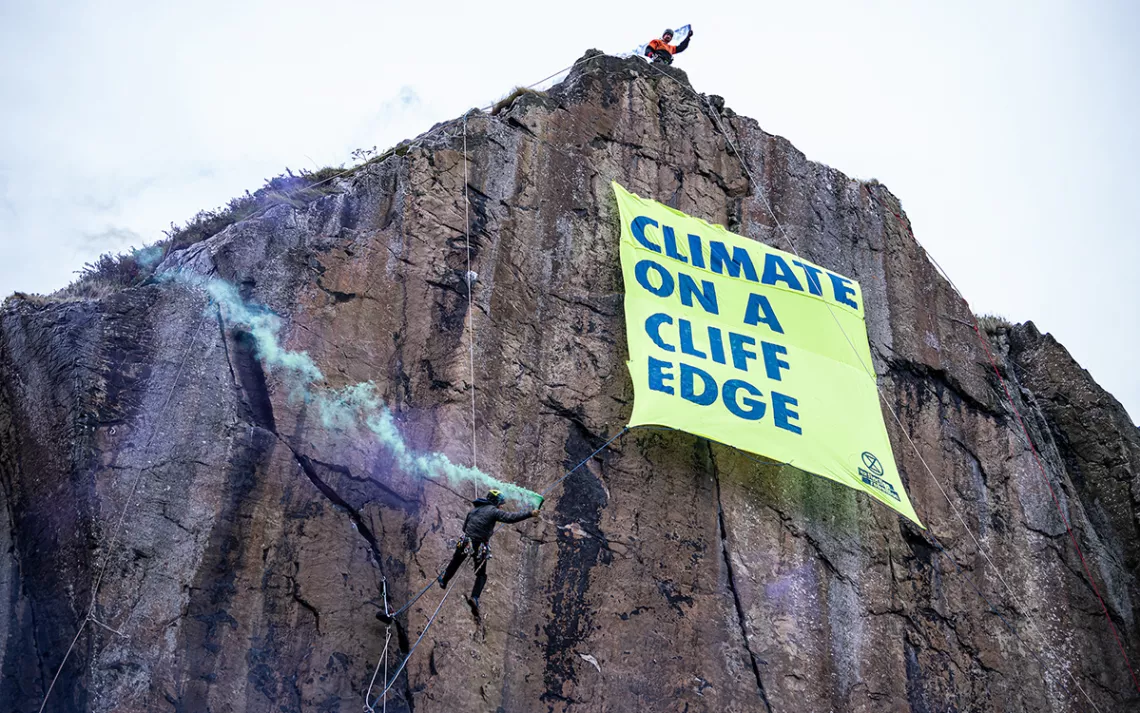
    Experienced climbers scale a rock face near the historic Dumbarton castle in Glasgow, releasing a banner that reads “Climate on a Cliff Edge.” One activist, dressed as a globe, symbolically looms near the edge, while another plays the bagpipes on the shores below. | Photo courtesy of Extinction Rebellion and Mark Richards
    Experienced climbers scale a rock face near the historic Dumbarton castle in Glasgow, releasing a banner that reads “Climate on a Cliff Edge.” One activist, dressed as a globe, symbolically looms near the edge, while another plays the bagpipes on the shores below. | Photo courtesy of Extinction Rebellion and Mark Richards
  • Greta Thunberg Detained at Brussels Climate Protest Against Fossil Fuel Subsidies

    Spread the love

    Original article by Edward Carver republished from Common Dreams under Creative Commons (CC BY-NC-ND 3.0). 
    Swedish activist Greta Thunberg is detained during a climate protests against fossil fuel subsidies in Brussels on October 5, 2024. (Photo: John Thys/AFP via Getty Images)

    Renowned activist Greta Thunberg was detained on Saturday at a climate protest in Brussels aimed at ending European Union fossil fuel subsidies.

    The protest included hundreds of campaigners from Extinction Rebellion and other groups; they came together under the name United for Climate Justice (UCJ). One group of them marched in an area near the European Parliament, while another group that included Thunberg blocked a section of the Boulevard du Jardin Botanique.

    “Our politicians have failed us,” Paolo Destilo, a UCJ spokesperson, told Politico. “European leaders’ continued support for the fossil fuel industry raises serious questions about their commitment to effective climate action.”

    Another UCJ spokesperson, Angela Huston Gold, pointed to devastating floods that recently hit Europe and Africa as a warning sign for the planet.

    “Increasingly frequent and extreme natural disasters are likely to claim a billion victims by the end of the century, mainly due to the use of fossil fuels,” Huston Gold said in a statement, citing a 2023 study in Energies, a journal. “To avoid ecological and social collapse, fossil fuel subsidies must end now.”

    The European Commission published a report last year showing that the EU spent 123 billion euros ($135 billion) on fossil fuel subsidies in 2022, an increase on previous years that was caused by policy decisions following Russia’s invasion of Ukraine. (2022 was the last year included in the report.) The Organization for Economic Co-operation and Development listed still higher figures for 2022.

    EU’s Eighth Environment Action Program, which entered into force in May 2022, calls for a phaseout of fossil fuel subsidies, but national governments haven’t taken action, so progress is “uncertain,” according to the European Environment Agency, which is part of the EU.

    Thunberg on Saturday told Politico that European Commission President Ursula von der Leyen, who’s been in office since 2019, was not a green champion.

    UCJ on Tuesday sent an open letter to von der Leyen and other EU institutional leaders calling for a phaseout of fossil fuel subsidies by 2025. “The EU should provide technical and financial assistance to member states facing challenges in meeting phaseout deadlines and offer incentives for achieving milestones ahead of schedule,” it says.

    Staffers at the European Commission were in fact among the demonstrators in Brussels on Saturday, Politico reported.

    “There’s a lot of tools the institutions have now to fight climate change, but since the [European Parliament elections in June] there’s been a lot of backtracking,” one commission staffer told Politico, given anonymity in order to speak freely.

    “It’s now all about competitiveness and the ‘clean industrial deal,’ whatever that means,” the staffer added. “The urgency has been lost—the Parliament has shifted to the right, the commission in many ways has shifted to the right—and discussion of the climate has faded into the background.”

    Thunberg, who’s now 21, came to fame as a 15-year-old activist in Sweden who helped form the global school strikes for climate movement. She’s been arrested numerous times, including at a pro-Palestinian demonstration in Denmark earlier this month.

    Thunberg and other activists who sat with interlocked arms on the Boulevard du Jardin Botanique were arrested and taken to the police station, according to The Brussels Times.

    Original article by Edward Carver republished from Common Dreams under Creative Commons (CC BY-NC-ND 3.0).