Lawsuit Challenges Trump’s Illegal Spying and Retaliation Targeting ICE Monitors

Spread the love

Article by Brett Wilkins republished from Common Dreams under Creative Commons (CC BY-NC-ND 3.0).
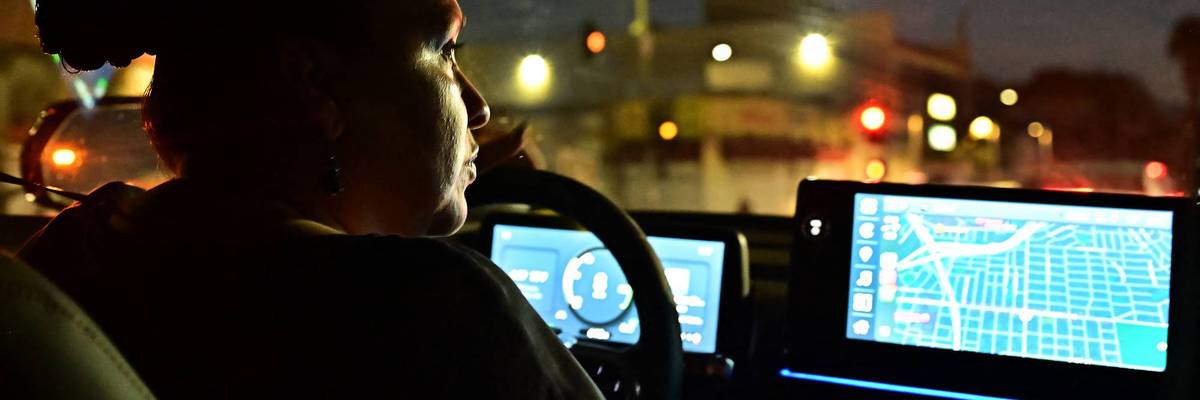
Union del Barrio volunteer Lupe Carrasco Cardona drives while monitoring US Immigration and Customs Enforcement operations in the Boyle Heights neighborhood of Los Angeles on September 24, 2025. (Photo by Frederic J. Brown/AFP via Getty Images)

“The federal government cannot build secret dossiers on people because they exercise their First Amendment right to peacefully observe, document, or criticize its actions,” said the head of Democracy Forward.

“The federal government cannot build secret dossiers on people because they exercise their First Amendment right to peacefully observe, document, or criticize its actions,” said the head of Democracy Forward.

RECOMMENDED…
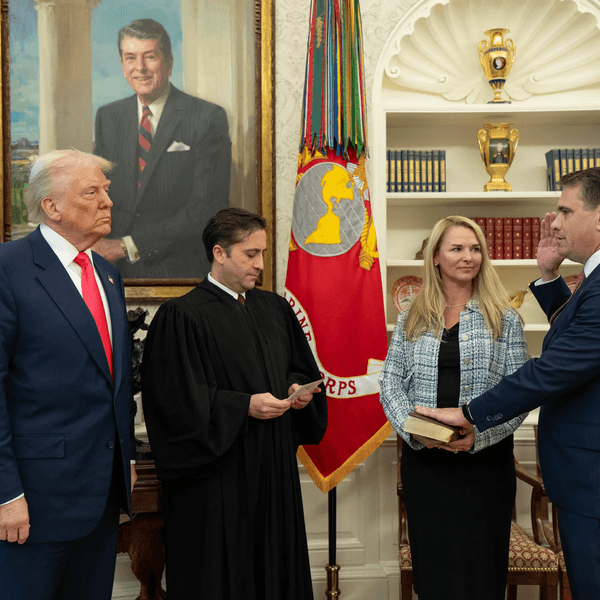
Trump watches Todd Blanche being sworn in as acting deputy attorney general

‘Impeachment Is Next,’ Says Senate Dem After Judge Voids Trump Slush Fund Settlement

Two humanoid robots fight at ​the Ultimate Robot Knock-out Legend

Amid Fears of Killer Robots, Humanoid MMA Fight in China Ends With Decapitation

The plaintiffs—the Electronic Privacy Information Center (EPIC) and legal observers Nicole Cleland, Jacquelyn Ivey, and Anna Walker—argued that the US Department of Homeland Security (DHS), US Immigration and Customs Enforcement (ICE), and other federal agencies created and maintained databases of people who observed, documented, or protested immigration enforcement activities without providing notification or safeguards, as required under the Privacy Act of 1974.

That law was passed after the exposure of illegal government surveillance, including longtime former Federal Bureau of Investigation Director J. Edgar Hoover’s infamous COINTELPRO program, under which the FBI, in addition to conducting unlawful spying, funded and armed murderous far-right militants to terrorize anti-Vietnam War protesters, anti-nuclear weapons activists, civil rights leaders including Martin Luther King, Jr., and other leftists.

“The federal government cannot build secret dossiers on people because they exercise their First Amendment right to peacefully observe, document, or criticize its actions,” Democracy Forward president and CEO Skye Perryman said in a statement announcing the lawsuit. “That is exactly the kind of government surveillance Congress sought to prevent when it enacted the Privacy Act after some of the darkest chapters in our nation’s history.”

The lawsuit accuses the Trump administration of collecting the names, photographs, vehicle information and license plate numbers, social media accounts, and other identifying information about legal observers, volunteers, journalists, clergy, and community members engaged in First Amendment-protected activities during the government’s deadly anti-immigrant crackdown.

“When the Department of Homeland Security dramatically ratcheted up its immigration enforcement, people across the country—of all ages and backgrounds—did what anyone is supposed to do when they disagree with government action: They exercised their First Amendment rights,” the suit states. “They peacefully protested. And, as matters here, they observed and recorded how law enforcement agents acted in public.”

DHS is using facial recognition technology, body cameras, license plates, mobile devices, and other surveillance tools to identify, track, and punish people who legally observe immigration enforcement in public. This is a clear violation of the Privacy Act. We’ll see them in court.

Democracy Forward (@democracyforward.org) 2026-07-24T17:36:46.803836578Z

“In response, DHS decided to record the Americans who were peacefully observing its agents, adopting a secret Protester Surveillance Policy enabling its agents to first collect records on Americans engaging in First Amendment exercise and then maintain them in DHS systems, where they can be used to retaliate against those Americans,” the complaint continues.

“Beginning sometime in 2025, DHS deployed a dragnet of drones, bodycams, face-scanning apps, license plate scanners, and camera phones to, as one memo instructed, ‘capture all images, license plates, identifications, and general information on hotels, agitators, protestors, etc., so we can capture it all in one consolidated form,’” the document notes.

“DHS agents have not been shy about gathering this information or its purpose,” the plaintiffs contended. “In Maine, DHS agents told multiple observers that they were being added to a database of ‘domestic terrorists.’ In Chicago, agents routinely used facial irecognition scans on members of the public.”

“In Minneapolis, observers simply watching agents on public streets have been led by those agents to their own houses, despite never having interacted with an agent—a practice so common that it has been named ‘being driven home by ICE,’” the suit says. “And across the country, DHS agents have approached observers and addressed them by their full names, even though those observers never identified themselves to the agents or showed them any form of identification.”

“As a result of its Protester Surveillance Policy, DHS has recorded and retaliated against each individual plaintiff,” the filing alleges. “It’s bad enough that DHS publicly collected information on Americans engaged in lawful First Amendment exercise. But worse, DHS also decided to maintain the information in one or more of its systems, enabling it to later retaliate against observers and protestors—including by canceling Trusted Traveler status,” which includes Transportation Security Administration Pre-Check and Global Entry.

The plaintiffs are asking the court to declare the DHS surveillance policy unlawful, end it, and ban the agency from continuing to collect and keep records of individuals’ protected First Amendment activities.

“Now more than ever, those of us who have the privilege to speak out have a responsibility to defend the rights of everyone in our communities,” Walker said in a statement. “When people are punished for exercising their First Amendment rights, we begin losing the democratic principles that protect all of us. Every American should be alarmed by retaliatory action against one’s free speech.”

Cleland said: “I believe government accountability starts with transparency. People should be free to peacefully observe and document what their government does in public without worrying they’ll be tracked or retaliated against. This case is about protecting that right for everyone.”

EPIC deputy director John Davisson warned, “When our government compiles secret dossiers on everyday people for exercising their constitutional rights, it sends a chilling message: If you speak up, watch your back.”

“If every protest, every recording, every act of dissent opens us up to surveillance and retribution, privacy and free speech are at risk of collapse,” he added. “But the laws of this nation don’t permit that, and we won’t either.”

Article by Brett Wilkins republished from Common Dreams under Creative Commons (CC BY-NC-ND 3.0).
Continue ReadingLawsuit Challenges Trump’s Illegal Spying and Retaliation Targeting ICE Monitors

Why the shooting of Alex Pretti in Minneapolis is so significant – expert Q&A

Spread the love
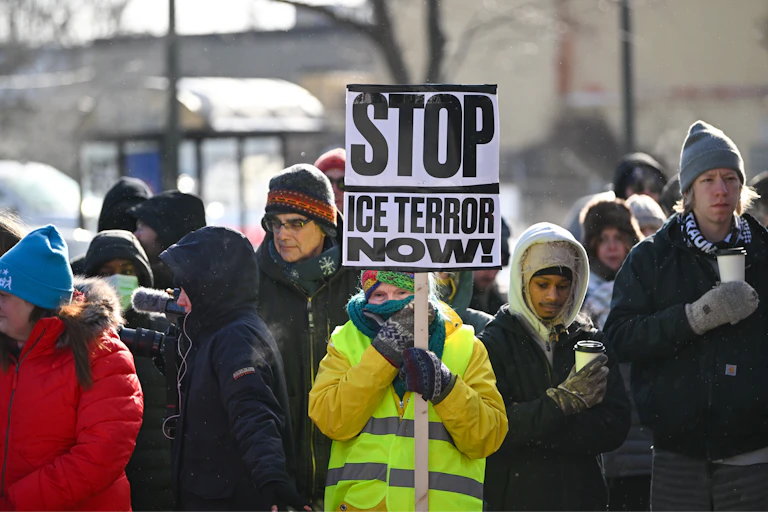
A woman holds a sign reading ‘Stop ICE terror now!’ at a memorial for Alex Pretti in Minneapolis, Minnesota, on January 25. Craig Lassig / EPA

Mark Shanahan, University of Surrey

Federal immigration agents in the city of Minneapolis are accused of having wrestled a 37-year-old intensive care nurse called Alex Pretti to the ground and then shooting him dead. The killing took place just over a mile from where another American citizen, Renee Good, was allegedly fatally shot by federal agents weeks earlier.

The latest incident prompted angry protests from people in Minneapolis who want the immigration enforcement operation in their city to end. We spoke to Mark Shanahan, an associate professor of political engagement at the University of Surrey, to address several key issues.

Why has sending in federal immigration agents caused such trouble in Minnesota?

Since returning to the White House in January 2025, the national guard has been deployed to several US cities to quell what have generally been Donald Trump-inflated crises, with illegal migration among the most prominent. However, in December, the Supreme Court ruled that Trump did not have authority for such deployments.

So, since then we have seen federal agents with US Customs and Border Protection and Immigration and Customs Enforcement taking the battle largely to minorities in cities with Democratic party leadership as part of the president’s violent attack on illegal immigration, a situation he has described as “the greatest invasion in history”.

Minneapolis is a Democrat-run city in a Democrat-led state. The governor is Tim Walz who ran for vice-president on the Kamala Harris ticket against Trump in the 2024 election. Walz has faced allegations, which he denies, of overlooking alleged widespread fraud in the financing of public safety net programmes, supposedly involving segments of the Somali-American community.

While most of these allegations have been refuted, they gave Trump reason to send in federal agents. This has ramped up tensions between state officials and the administration, causing brutal and unnecessary deaths in the community and pitting ordinary Minnesotans against federal government officials.

How does the situation in Minnesota reflect the second amendment right to bear arms?

It’s a reversal of virtually all of the second amendment debates that have been seen in recent years. The second amendment was introduced to the US constitution in 1791 through the Bill of Rights due to a deep mistrust of centralised military power and a desire to ensure that the newly formed federal government could not disarm the populace.

The founding fathers envisaged a “natural right of resistance and self-preservation”. Trump’s actions in sending in armed federal agents to conduct enforcement operations in various states appear to fulfil the founding fathers’ concerns.

The agents are trampling all over not only citizens’ second amendment right to bear arms (officials seemingly connected Pretti’s killing to him carrying a weapon) but also their first amendment right to freedom of assembly.

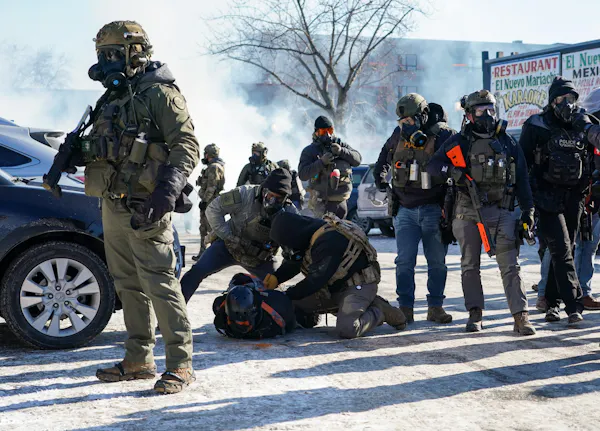
Federal officers detain a protester in Minneapolis, Minnesota, on January 24. Craig Lassig

How have the fatal shootings affected Trump’s popularity?

Trump’s popularity is on the decline. His failure to deliver on the economic promises outlined in his election campaign, scatter-gun approach to international relations and the widening gulf between rhetoric and achievement have all damaged his standing in the polls.

In a CNN poll published on January 16, almost six in ten respondents described Trump’s first year back in office as a failure with the president focused on the wrong priorities.

And what support he does have is ebbing rapidly as federal immigration agents appear out of control, targeting many more documented citizens than illegal migrants, spreading fear and operating as if they are above the law.

With what looks like high levels of gaslighting coming from Homeland Security officials, voters are turning against the increasing autocracy of this administration, believing in the evidence widespread across the media rather than highly contentious statements from Trump’s lieutenants.

Is it unusual for former presidents to speak out the way Barack Obama and Bill Clinton have?

It certainly is. There is a longstanding tradition in the US of, and implicit agreement among, former presidents to avoid public criticism of the incumbent. Such reticence to speak is generally a sign of respect for the office and an acknowledgement of the unique and difficult challenges of the presidency.

But Trump 2.0 is no normal presidency. The 47th president’s style is both combative and retributive, and there seems to be an increasing feeling of it being out of step with the desires and best interest of the country he leads.

Trump’s march to autocracy creates crises where he regards himself as the hero the country needs to overcome its ills. His predecessors take a different view.

Whether it’s Obama calling out the assault on core American values or Clinton’s condemnation of the “horrible scenes” in Minneapolis as “unacceptable” and avoidable, Democrat past presidents have not held back. Notably, the only living previous Republican president, George W. Bush, has so far kept his own counsel.

What can be done to prevent further violence?

Most simply, Trump could end the deployment of federal immigration agents to Minneapolis and refrain from similar actions in the future. He is clearly looking for an off-ramp and sending his “border czar”, Tom Homan, to Minneapolis to direct operations could be the first step to de-escalation. But Trump abhors being called out as wrong and, at least beyond Minneapolis, is far more likely to double down on the immigration enforcement activities.

Realistically, the most likely de-escalator is Congress showing some teeth and refusing to fund further federal immigration enforcement activity. Democrats could force another government shutdown over the issue, and need just a handful of Republicans to flip in order to refuse to sanction a 2026 budget for the Department of Homeland Security.

At a public level, the greater the scrutiny of immigration enforcement agencies, the closer the fact-checking of official statements and the more cohesive the opposition to Trump’s deportation policy, the greater the chance of effectively opposing it.

It is midterm year – and the greater the public pressure, the more likely Republican legislators are to cleave away from the Trump line. While he currently controls the levers of power, that control remains fragile. Even Trump may soon realise that overt, violent, coercive autocracy is not a vote winner.

Mark Shanahan, Associate Professor of Political Engagement, University of Surrey

This article is republished from The Conversation under a Creative Commons license. Read the original article.

Elon Musk urges you to be a Fascist like him, says that you can ignore facts and reality then.
Donald Fuhrump says that Amerikkka doesn't bother with crimes or charges anymore, not being 100% Amerikkkan and opposing his real estate intentions is enough.
Donald Fuhrump says that Amerikkka doesn’t bother with crimes or charges anymore, not being 100% Amerikkkan and opposing his real estate intentions is enough.
Orcas discuss how Trump was re-elected and him being an obviously insane, xenophobic Fascist.

Continue ReadingWhy the shooting of Alex Pretti in Minneapolis is so significant – expert Q&A