From grey water to cool spaces: 10 climate crisis policies Britain needs right now

Spread the love

See the original Guardian article at https://www.theguardian.com/environment/2026/aug/12/urgent-climate-policies-uk-should-implement-now
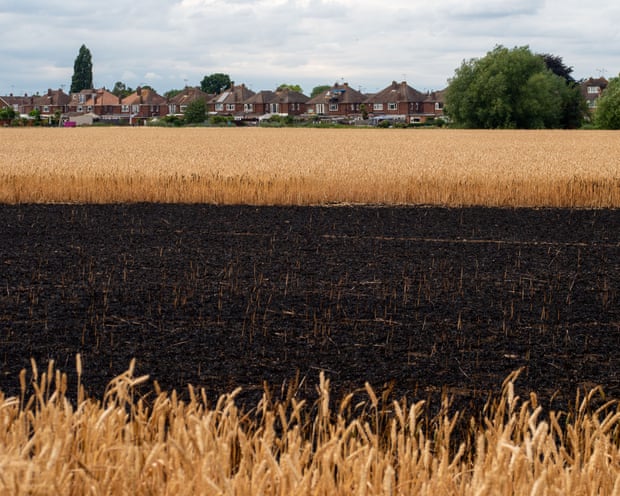
A burned field of wheat in Eton Wick, Windsor, in July. Experts say the UK should regenerative agriculture approaches to increase food resilience. Photograph: Maureen McLean/REX/Shutterstock

Rejecting North Sea drilling licences and protecting nature are just some measures Andy Burnham must implement to ready country

From record-smashing temperatures, wildfires, hosepipe bans and thousands of premature deaths, the climate crisis has left its mark across the summer of 2026.

Tackling the root cause – the burning of fossil fuels – and ending the crisis will take years. So will fixing the UK government’s calamitous failure to protect lives and livelihoods against the long-predicted affects of global heating.

But the climate emergency is right here, right now, and here are 10 policies that Andy Burnham’s government should consider announcing urgently.

1. Reject drilling licences for the Jackdaw and Rosebank oil and gasfields

This would be a vital and confidence-boosting sign that the UK is committed to putting a rocket-booster under the clean, green and very fast-growing economy of the 21st century, not the fossil-fuelled one of the last. It would also give diplomatic weight to the UK as it works internationally to cut emissions and end the climate crisis.

The supposed benefits of approving the North Sea oil and gasfields are mostly fantasy. They will have no impact on UK energy prices – oil and gas are commodities whose price is set by international markets. As the UK Energy Research Council says: “Assertions that drilling the North Sea will provide energy resilience and affordability in the face of current fuel price shocks are a delusion.”

As for jobs, the licences would support very few – again, unlike the growing green economy. Some also argue North Sea production is less carbon intensive than imports, but that ignores the far cleaner record of our main gas importer, Norway, as well as the methane emissions from LNG, and in any case the differences are small compared with CO2 savings of using renewable energy and storage instead of gas.

2. Increase windfall tax on fossil fuel giants to pay for adaptation measures

3. Make grey water reuse mandatory in new buildings and incentivise rainwater harvesting

4. Bring the water industry under national control

5. Invest in proper equipment for firefighters

6. Implement a maximum workplace temperature

7. Fund cool spaces in every community

8. Launch a national retrofit programme

Homes in the UK are among the draughtiest and least energy-efficient in Europe. This means they are often too hot in summer and too cold in winter, leading to high bills and spiralling carbon emissions.

Efforts to persuade the private sector to take on the challenge of making homes fit for the changing climate have failed. But a report earlier this year suggested councils could take the lead on a retrofitting programme backed by national government. Under the plan, councils would train and employ their own retrofitting workforce and, starting with key public services such as hospitals and care homes, then work through council and social housing before moving on to privately owned homes. The report said it would not only make the country’s homes and public services more climate resilient, but it would also tackle the cost of living, create secure jobs and stimulate growth. They added it would also be a more efficient way of spending the public funds already allocated for insulation.

9. Plant more trees and protect existing nature

10. Encourage regenerative agriculture approaches to increase food resilience

Guardian’s article is at https://www.theguardian.com/environment/2026/aug/12/urgent-climate-policies-uk-should-implement-now

Andy Burnham addresses the climate crisis by considering banning disposable barbecues.
Nigel Farage urges you to ignore facts and reality and be a climate science denier like him and his Deputy Richard Tice. He says that Reform UK has received £Millions and £Millions from the fossil fuel industry to promote climate denial and destroy the planet.
Orcas comment on killer apes destroying the planet by continuing to burn fossil fuels.

dizzy:

11. Make private jets and superyachts history

12. Tax the rich so much that they’re not able to destroy the planet

The rich hugely drive climate breakdown. Tax them out of existence.

13. Recognise Carbon Capture and Storage as a false solution and abandon it

14. End all fossil fuel subsidies

15/8/26 9.50pm

15. Abandon nuclear power

Nuclear is far too expensive, too centralised and takes far too long. Renewables is the way to go and will create far more employment for more people.
Continue ReadingFrom grey water to cool spaces: 10 climate crisis policies Britain needs right now

Canada Fossil Fuel Subsidies Hit $30 Billion Amid Pipeline Push, Study Reveals

Spread the love

Original article by Taylor Noakes republished from DeSmog.

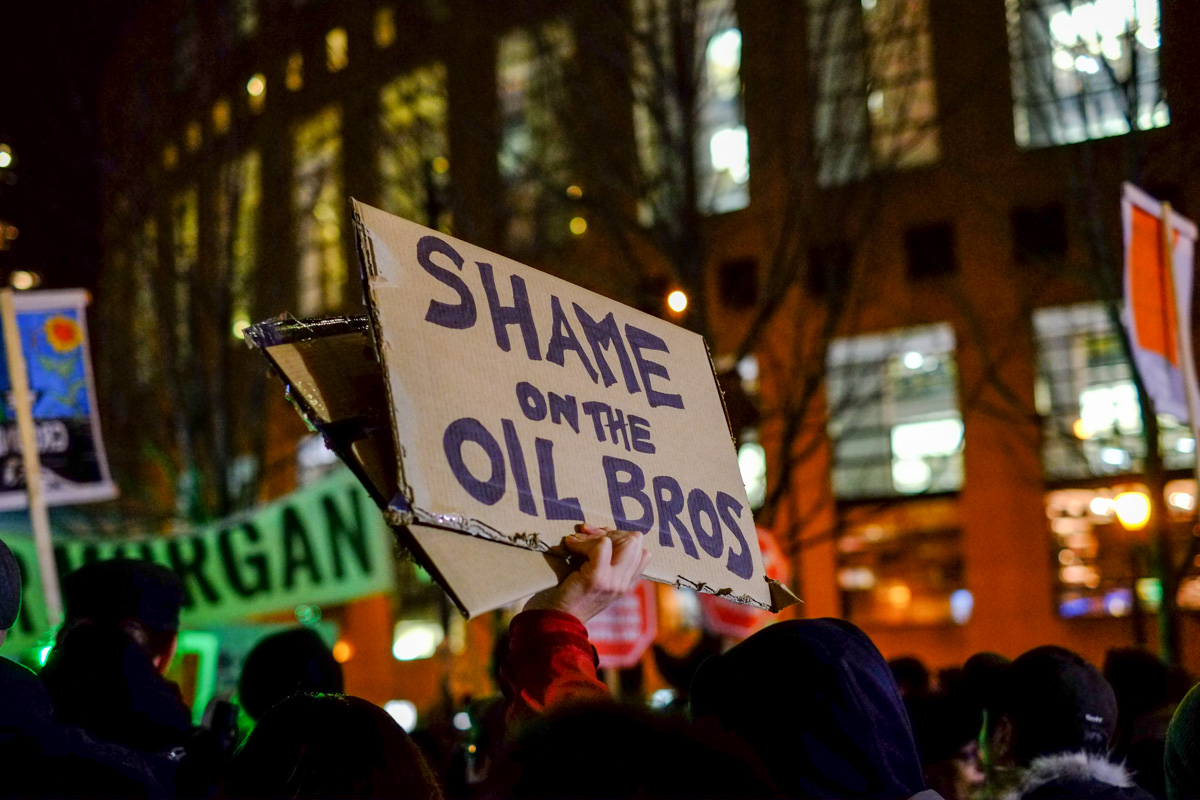
Shame Oil Bros on cardboard sign
Federal subsidies to the oil and gas sector totalled $74.6 billion over five years, Environmental Defence found. Credit: David Niddrie / Flickr (CC BY NC 2.0)

Amid trade war talk of expanding Canadian energy infrastructure, a new report reveals that direct Canadian subsidies to the fossil fuel and petrochemical sectors reached nearly $30 billion in 2024.

For comparison’s sake, Canada spent between $38 billion and $39 billion on defense in 2024. 
 
 “Oil and gas companies – emboldened by their influence over President Trump – are exploiting the current economic uncertainty to call on governments to double down on fossil fuels,” Julia Levin, associate director of national climate with nonprofit group Environmental Defence, which put out the report, said in a statement.

Levin notes that oil and gas companies have been vocal in their demand that politicians work to expand pipelines and related projects, and seek new export markets for Canadian fossil fuels. Meanwhile, Canadian taxpayers, who fund the companies’ subsidies, face the expensive consequences of climate change and related disasters.

In recent weeks, the chief executives of Canada’s major oil and gas companies — including Suncor, Cenovus, Enbridge, and Imperial — signed an open letter to the leaders of four of Canada’s major political parties. In it, they demand federal party leaders to eliminate regulations, emissions caps, tanker bans on the West Coast, and carbon levees on major emitters.

The open letter was endorsed by prominent Canadian conservatives, including Conservative Party leader Pierre Poilievre. Alberta Premier Danielle Smith recently repeated many of the same industry talking points in defending her taxpayer-funded trip to attend a controversial PragerU fundraiser where she shared a stage with far-right influencer Ben Shapiro.  
 
 Last month, Liberal leader Mark Carney indicated his interest in building new east-west pipelines, ostensibly to reduce dependence on foreign imports and develop new trade opportunities. 

“This push ignores the fact that fossil fuels come at a high price — not just at the pump, but through rising costs of groceries, worsening health outcomes, damage to property and huge government handouts,” said Levin in the statement. 

“It also ignores the rapid energy transition towards renewable energy that is happening globally.”

Among Environmental Defence’s principal findings is that the Canadian government spent $29.6 billion on the fossil fuel sector in 2024, which is nearly $6 billion more than what it would cost to build interprovincial grid connection infrastructure. Recent research from the International Institute for Sustainable Development suggests that a national electrical grid could lower electricity costs nationwide, create hundreds of thousands of new clean tech jobs, stabilize electricity costs, improve Canadians’ health, and provide Canada with the energy security currently threatened by the Trump trade war.

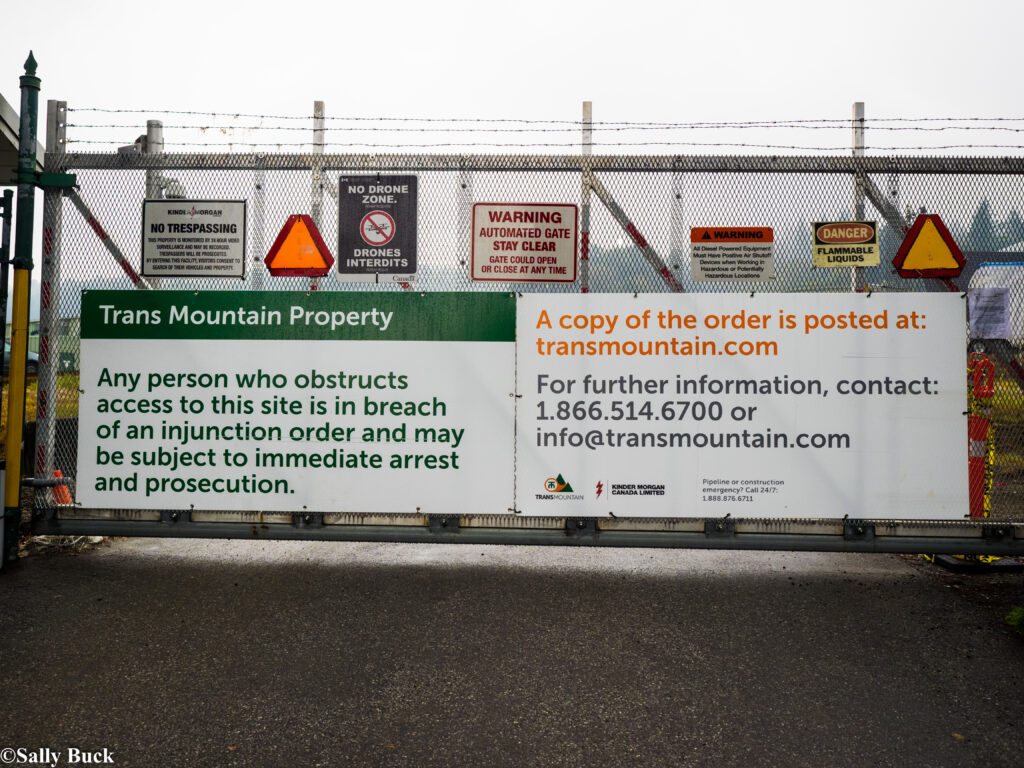
The Trans Mountain project has received $21 billion in government financing. Credit: Sally T. Buck / Flickr (CC BC NC ND 2.0)

Canada’s direct subsidies includes approximately $21 billion in financing for the Trans Mountain Pipeline, $7.5 billion from Export Development Canada (which included money for LNG and carbon capture, and financing for Canadian companies and companies and governments seeking to buy Canadian products), and another $700 million for LNG infrastructure.
 
Big Oil regularly promotes LNG and carbon capture as potential solutions for the climate crisis, though these arguments have been thoroughly debunked. LNG advocates in Canada often characterize it as a “bridge fuel” that could be used to help developing nations transition away from coal. Recent research indicates that the world’s two largest coal users — India and China — are in fact transitioning directly to renewable energy systems like solar and wind.

Moreover, LNG is a deadly fossil fuel that also happens to be resource intensive to produce, and often results in large volumes of methane emissions. Methane is estimated to be 80 times more potent a greenhouse gas than carbon dioxide. As for carbon capture, recent research from the Institute for Energy Economics and Financial Analysis poured cold water on Canada’s premier industry-driven carbon capture project — Pathways Alliance — determining that it is not financially viable and is unlikely to provide any environmental benefit. This determination is consistent with expert analyses of other carbon capture projects, both in Canada and globally.

Canada Has Given Away $74.6 Billion in Subsidies 

Environmental Defence estimates Canada spent $2.4 billion on carbon capture projects in 2024, more than in previous years.

The group’s report also determined that federal subsidies to the oil and gas sector over the last five years amounted to $74.6 billion. Their analysis of what constitutes federal fossil fuel funding includes direct grants, tax breaks, loans, and loan guarantees from the government of Canada and some federal agencies (such as Export Development Canada).

Despite oil industry claims that fossil fuel companies are investing in climate solutions (claims that have led the federal government to introduce anti-greenwashing legislation), Environmental Defence found that none of Canada’s four largest industry companies reported investments in climate initiatives or emissions reductions as part of their capital spending.

The report has also reveals that pollution created by oil and gas companies reached an estimated $53 billion in 2024. This includes increased health costs, property damage from extreme weather events, as well as decreased agricultural productivity, a consequence of changing weather patterns.

“The calls for a new oil pipeline pose real risks to Canadian taxpayers,” said Levin in an email to DeSmog, noting not only that global demand for oil is set to peak in the next four years and then significantly decline, but that oil demand is already showing signs of plateauing in major energy markets like China.

“No company is willing to bet its own money on what is guaranteed to quickly become a massive stranded asset,” said Levin. “Instead, oil and gas companies want taxpayers to pay the price for new fossil fuel infrastructure as their wealthy shareholders reap the rewards.”

Levin is particularly critical of the under reported fact that federal subsidies to the fossil fuel sector have deepened Canada’s economic vulnerability.

“The Canadian public is already on the hook for the new Trans Mountain Pipeline — to the tune of somewhere around $30 to $40 billion and rising. And the project has done nothing to reduce our dependence on the United States, with nearly half its oil still flowing south of the border,” she said.

Original article by Taylor Noakes republished from DeSmog.

Orcas comment on killer apes destroying the planet by continuing to burn fossil fuels.
Continue ReadingCanada Fossil Fuel Subsidies Hit $30 Billion Amid Pipeline Push, Study Reveals

Spread the love

Climate Adam discusses climate capture and storage. The video is over a year old and Adam refers to COP28 while COP29 was the most recent. Does he mention that there are huge fossil fuel subsidies from governments to the fossil fuel industry for CCS i.e. yet more profit on top of huge profits for destroying the climate and planet?

Continue Reading

Climate Emergency Causes Extreme Wildfires to Double in Frequency: Study

Spread the love

Original article by JULIA CONLEY republished from Common Dreams under Creative Commons (CC BY-NC-ND 3.0).

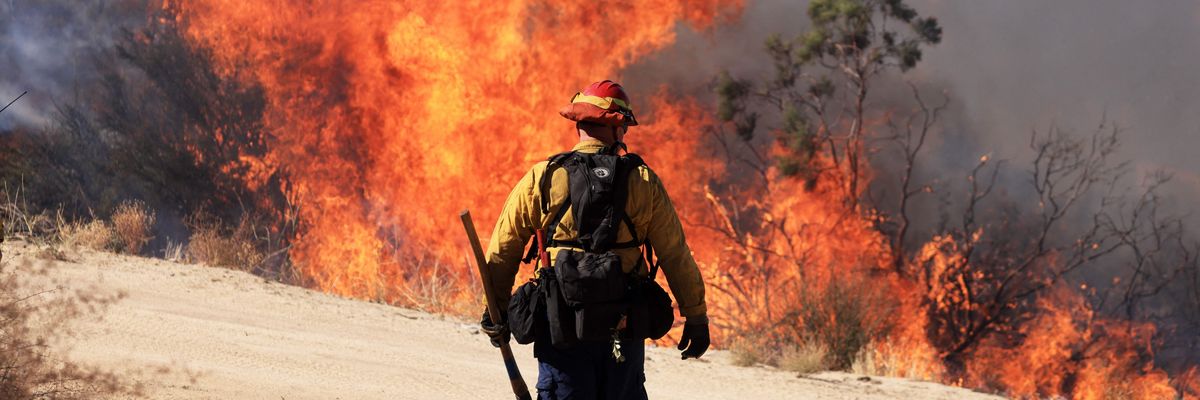
A firefighter walks toward flames as the Highland Fire burns in Aguana, California, on October 31, 2023. 
(Photo: David Swanson/AFP via Getty Images)

“Climate change is not something off in the future,” said one scientist. “It’s happening before our very eyes.”

New findings about the rising frequency of extreme wildfires have “the fingerprints of climate change” all over them, according to an Australian scientist who led a study published on Monday.

Calum Cunningham, a postdoctoral researcher at the University of Tasmania in Australia, told The Washington Post that he was driven to examine current trends in the frequency of wildfires after climate deniers suggested that because the global area being burned in blazes is declining, the idea of a growing wildfire crisis is being overblown by concerned scientists.

While the area destroyed by wildfires is indeed on the decline, analyses that include all fires—the majority of which are small and cause relatively little damage—obscured how the most extreme and destructive wildfires are rapidly growing more frequent.

Cunningham and his team analyzed data from National Aeronautics and Space Administration satellites, collecting four images of wildfires around the world per day over 21 years. They used the images to identify the 0.01% most extreme wildfires—those that release the most smoke and greenhouse gas emissions due to their size and uncontrollable nature.

Out of 30 million fires across the world over two decades, the researchers identified the 2,913 most extreme fire events and found that the frequency and intensity of such wildfires has more than doubled since 2003.

“Climate change is making fire weather more extreme and more frequent in a lot of the world.”

The problem is rapidly getting worse, the team found: The six years with the most extreme wildfires had all occurred since 2017.

Trends were particularly troubling in particular regions, like temperate conifer forests in the western United States and the Mediterranean, where the number of extreme fires rose by more than 10 times in 20 years.

In boreal forests in places like northern Europe and Canada, the frequency of the most intense and hard-to-control blazes increased by seven times.

“It’s absolutely in keeping with what climate change is doing to fire weather around the world,” Cunningham told the Post. “Climate change is making fire weather more extreme and more frequent in a lot of the world.”

The “fire weather” that’s driven the increase includes hotter and drier conditions, with temperatures staying high even overnight when they ordinarily would have have dropped in previous decades, giving firefighters a chance to make headway in putting out blazes.

“Rarely did we have 100,000-acre fires 20 years ago,” veteran firefighter Bobbie Scopa told the Post. “But now, it’s not uncommon.”

The researchers pointed to a “scary” feedback loop created as extreme wildfires create carbon emissions—leading to more planetary heating and even more fires.

“Climate change is not something off in the future,” Cunningham told the Post. “It’s happening before our very eyes. This is the manifestation of the reshaping of the climate we are doing.”

The study was published in Nature Ecology & Evolution days after wildfires scorched more than 14,000 acres in Southern California and more than 24,000 acres in New Mexico, where two people were killed. Last year, climate scientists were stunned by an unprecedented wildfire season in relatively damp Eastern Canada, where wildfires were made twice as likely by the climate emergency according to the World Weather Attribution.

Climate scientist and author Bill McGuire called the findings “terrifying, of course, but just not a surprise,” considering governments in the countries that produce the most fossil fuels are continuing to support and subsidize energy sources that heat the planet.

“This is certifiably insane,” McGuire said.

Original article by JULIA CONLEY republished from Common Dreams under Creative Commons (CC BY-NC-ND 3.0).

Continue ReadingClimate Emergency Causes Extreme Wildfires to Double in Frequency: Study

Belgian Police Arrest 132 Climate Defenders Demanding End to Fossil Fuel Subsidies

Spread the love

Original article byBRETT WILKINS republished from Common Dreams under Creative Commons (CC BY-NC-ND 3.0). 

“The fact that national governments are subsidizing fossil fuels is akin to a crime against humanity,” said one Extinction Rebellion organizer.

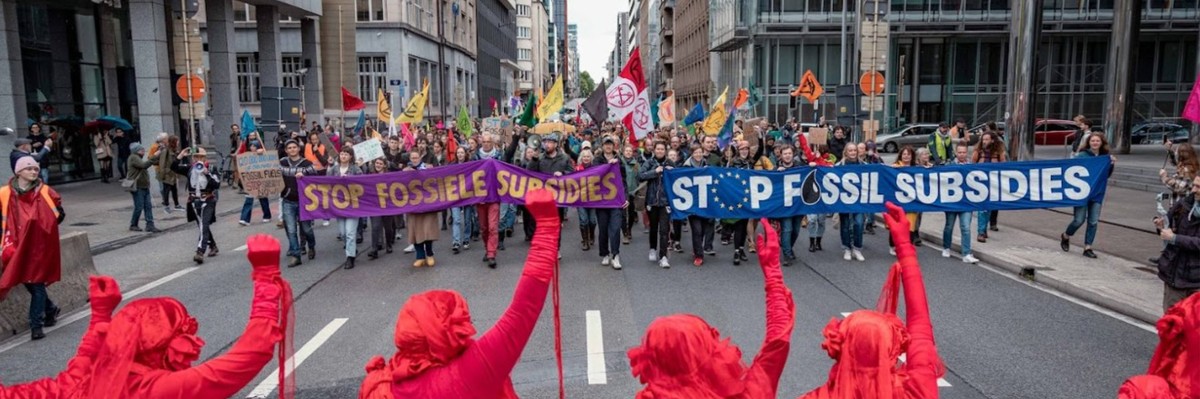
The climate action group Extinction Rebellion Belgium on Saturday decried what it called “disproportionate police violence” against nonviolent demonstrators who were arrested during a protest in Brussels demanding an end to fossil fuel subsidies.

Hundreds of Extinction Rebellion-led climate defenders blocked Rue Belliard in the European Quarter, the de facto European Union capital, during EU Open Day, when agencies of the 27-nation bloc open their doors to the public. In what Extinction Rebellion called an “unprecedented police response,” officers allegedly struck protesters with batons and used chemical agents against demonstrators.

Brussels police said 132 activists—some of whom glued themselves to the ground—were arrested.

“This police behavior toward nonviolent protesters exercising their freedom of assembly is illegal and authoritarian,” Extinction Rebellion Belgium said in a statement Saturday.

“We call on the police to exercise restraint and respect the right to demonstrate peacefully and without violence,” the group added.

The activists are calling on European governments to stop subsidizing fossil fuels amid a worsening planetary crisis. They’re also demanding the declaration of a climate emergency.

“National and European governments are spending at least €405 billion each year subsidizing major fossil fuel corporations,” protest spokesperson Bertina Maes toldThe Brussels Times. “That’s ten times more than what’s spent on climate policy.”

Maes said the Belgian government alone spent as much as €20 billion ($21.5 billion) on fossil fuel subsidies in 2020, more than 2% of the country’s gross domestic product.

“The fact that national governments are subsidizing fossil fuels is akin to a crime against humanity,” she asserted.

This weekend’s demonstration and arrests come a month before E.U. parliamentary elections. According to an April Eurobarometer survey conducted by the European Parliament, climate action is the fifth-most important issue to voters, after poverty and social exclusion, health, jobs, and defense and security.

Original article byBRETT WILKINS republished from Common Dreams under Creative Commons (CC BY-NC-ND 3.0). 

Continue ReadingBelgian Police Arrest 132 Climate Defenders Demanding End to Fossil Fuel Subsidies