73% of US Voters Want Emissions Cut in Half by 2030: Poll

Spread the love

Original article by JESSICA CORBETT republished from Common Dreams under Creative Commons (CC BY-NC-ND 3.0). 
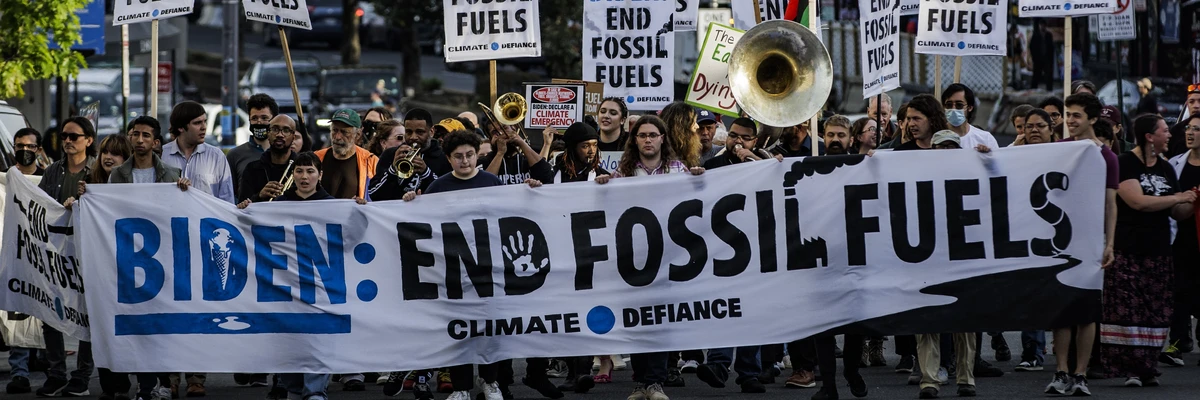
Climate protestors march in Washington DC
Climate protestors take part in a march on April 29, 2023 in Washington, D.C.  (Photo: Samuel Corum/Getty Images)

One expert expressed hope that Democrats “realize that strong positions on abortion and climate change are no longer ‘partisan’ or ‘divisive’—religious freedom, bodily privacy, and saving the world are BIG TENT, winning issues.”

Polling results released Friday by CNN show that 73% of U.S. voters across the political spectrum believe the government should design policies to meet its commitment to cut planet-heating emissions in half by the end of this decade.

End Climate Science founding director Genevieve Guenther noted on social media that the overall figure includes 95% of Democrats, 76% of Independents, and even 50% of Republicans.

She expressed hope that the Democratic Party will now “realize that strong positions on abortion and climate change are no longer ‘partisan’ or ‘divisive’—religious freedom, bodily privacy, and saving the world are BIG TENT, winning issues.”

The survey was conducted by SSRS last month and the results were revealed during the United Nations Climate Change Conference (COP28) set to run through Tuesday—which U.S. President Joe Biden has been criticized for blowing off.

As CNN detailed:

Americans give Biden a 43% approval rating for his handling of environmental policy, which is several points above his overall approval rating and well above his numbers for handling the economy. But few Americans, only 2%, see climate change as the most important issue facing the country, giving higher priority to the economy and cost of living.

But climate change and clean energy are increasingly intertwined with the economy. Climate change-fueled disasters don’t just impact commerce, they also strike at the heart of the American dream: homeownership.

The approval and disapproval responses strongly correlate to political party, with far more Democrats backing Biden’s environmental policy.

Most Americans disapprove of President Biden’s handling of environmental policy
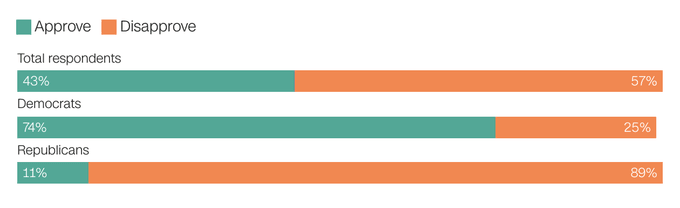
(Graphic: Matt Stiles/CNN)

Pollsters found that 58% of voters worry about the effects of extreme weather, 68% worry about the risks of climate change, and 79% think that climate change contributed to extreme weather in their area.

Large majorities of voters from the partisan spectrum agreed that humanity as a whole, the energy and automobile industries, and the U.S. and Chinese governments have some or even a great deal of responsibility to try to reduce climate change. Slightly smaller majorites said that those entities are doing “too little” to address the emergency.

Two-thirds of voters said that “requiring that all electricity in the U.S. be produced using renewable sources like solar and wind by the year 2035” as well as “offering federal tax credits for purchasing and installing home solar panels should be important, or even top priorities.

Even more (71%) noted the importance of “offering federal tax credits for purchasing and installing ultra-efficient home heating and cooling systems” along with “prioritizing investments in clean energy sources over energy from fossil fuels.” A slim majority (54%) prioritized “offering federal tax credits for purchasing an electric vehicle.”

While Biden—who is seeking reelection next year—campaigned on the promise of being a “climate president,” during his first term so far he has faced criticism from campaigners and frontline communities for declining to declare a national climate emergency, supporting the Willow oil project and Mountain Valley Pipeline, backing the expansion of liquefied natural gas exports, and continuing fossil fuel lease sales for public lands and waters.

The president has also had to contend with Republicans and right-wing Democrats in Congress who want to kill or water down climate policies. For example, this week, the House GOP has voted to block a proposed Biden administration rule meant to accelerate the transition to electric vehicles and advance various fossil fuel industry-friendly bills, including one that would saddle taxpayers with the cost of cleaning up oil and gas wells on federal lands.

This article’s headline has been corrected to say 73% of voters want U.S. emissions cut in half by 2030. A previous version stated voters want the emissions slashed by 2023.

Original article by JESSICA CORBETT republished from Common Dreams under Creative Commons (CC BY-NC-ND 3.0). 
Continue Reading73% of US Voters Want Emissions Cut in Half by 2030: Poll

World’s richest countries gave record sums of public money to fossil fuel industry last year

Spread the love

https://leftfootforward.org/2023/08/worlds-richest-countries-gave-record-sums-of-public-money-to-fossil-fuel-industry-last-year/

$1.4 trillion of public money went to the fossil fuel sector last year

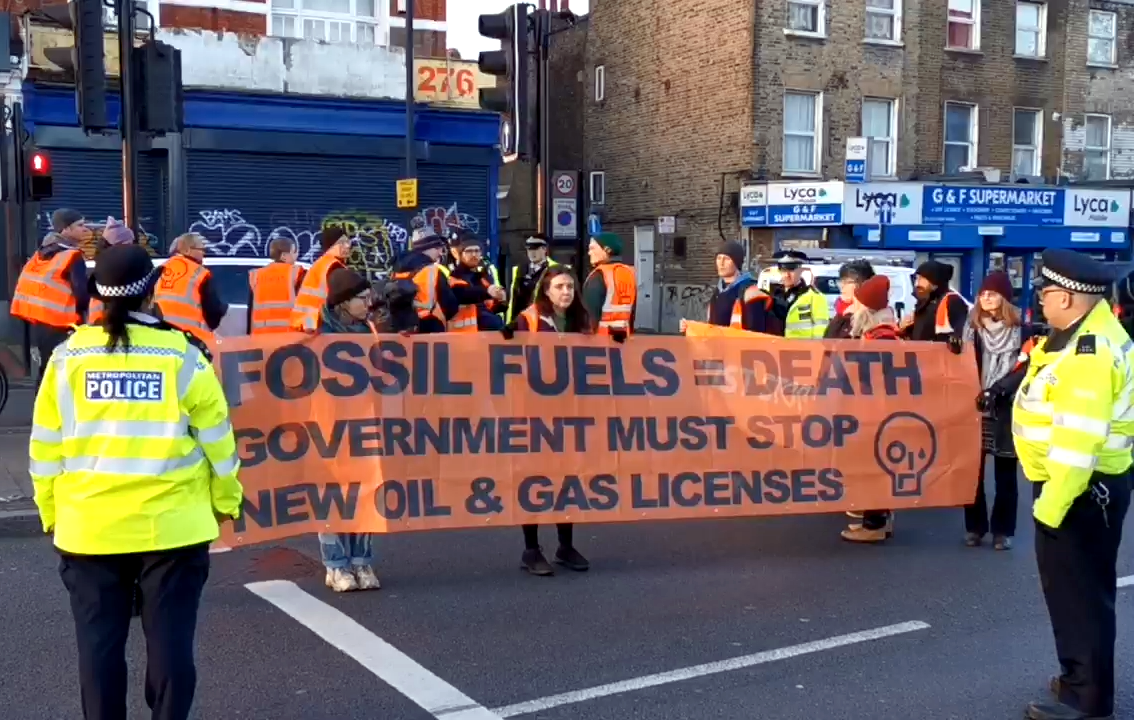
Just Stop Oil protesting in London 6 December 2022.

Public financing of the fossil fuel industry by G20 countries reached record levels in 2022, a new report has found. The fossil fuel industry is among the sectors most directly responsible for driving the climate crisis.

According to a report by the International Institute of Sustainable Development (IISD), $1.4 trillion of public money flowed into the industry last year in G20 countries, which are among the world’s largest economies. The staggering sums are more than double that of the pre-covid period, despite commitments made at the Glasgow COP26 climate summit in which world leaders pledged to the phasing out ‘inefficient’ subsidies for fossil fuels.

The IISD research found that much of the support related to mitigating the cost of energy for consumers, but that one third was driving investment in new fossil fuel production, equivalent to around $440 billion.

The report’s authors wrote: “This support perpetuates the world’s reliance on fossil fuels, paving the way for yet more energy crises due to market volatility and geopolitical security risks. It also severely limits the possibilities of achieving climate objectives set by the Paris Agreement by incentivizing greenhouse gas (GHG) emissions while undermining the cost-competitiveness of clean energy.

https://leftfootforward.org/2023/08/worlds-richest-countries-gave-record-sums-of-public-money-to-fossil-fuel-industry-last-year/

Continue ReadingWorld’s richest countries gave record sums of public money to fossil fuel industry last year

I’ve spent 40 years studying Antarctica. The frozen continent has never needed our help more

Spread the love

Patti Virtue

Dana M Bergstrom, University of Wollongong

After decades immersed in Antarctic science, I’ve learned that physical and biological changes rarely occur smoothly. More often than not, they unfold in sharp steps. Right now, Antarctica’s climate and ecosystems are experiencing disturbing changes.

Much of this winter’s sea ice is missing. A crucial ocean current is slowing down, and glaciers and ice shelves are disintegrating.

On land, fragile moss ecosystems are collapsing. Majestic emperor penguins may be headed for extinction. And pollution from human activity in Antarctica has left a toxic legacy.

It’s almost certain things will get worse. On Friday, hundreds of international scientists called for an urgent expansion – not contraction – of Southern Ocean science in response to the emerging climate crisis. This adds to the scientific chorus claiming we have only a narrow window to save the planet.

I’ve spent 40 years in Antarctic and subantarctic research. Some 22 of those were spent at the federal government’s Australian Antarctic Division; my final day there was last Thursday. No longer a public servant, I feel compelled, as a private citizen now, to publicly stand up for the icy continent and the benefit of Antarctic science to society.

Crucial to life as we know it

Antarctica matters. What happens there affects global weather patterns and sea levels.

But Antarctica’s climate is changing. Record-breaking stored heat is melting ice shelves from underneath, setting off a chain reaction. Without the buttressing of the ice shelves, glaciers flow faster to the sea. In West Antarctica, the Thwaites “doomsday glacier” is melting faster than predicted. In East Antarctica, lesser-known ice shelves have collapsed and glaciers are shrinking, adding to sea-level rise.

Antarctica is governed by the Antarctic Treaty, negotiated by 12 countries, including Australia, during the Cold War in 1959. Australia’s territory in Antarctica comprises 42% of the continent.

In my view, the treaty is magnificent. It represents a grand vision: a continent set aside for conservation, peace and science.

But Antarctica remains under threat. And the biggest threat of all is climate change.

In June this year, all treaty nations, including Australia, collectively stated:

changes in Antarctic and Southern Ocean environments are linked to, and influence, climate impact drivers globally.

They added “further irreversible change is likely” without “accelerated efforts” to reduce greenhouse gas emissions.

Scientific research is crucial in the face of these threats, to help better understand these changes now and over the longer term, and to feed into policy interventions.

Surprisingly a budget shortfall appears to be inadvertently curtailing plans for science this summer, according to the Guardian Australia.

In July, the ABC reported the Antarctic Division told staff A$25 million in budget savings was needed this financial year. This led to a review of plans for field research this summer. Reportedly, two out of three permanent research stations (Mawson and Davis) will not be filled with the normal number of scientists this season. That means some planned and approved projects will not be going ahead this year, including surveys on sea-ice thickness and landfast sea ice.

The Greens claim the $25 million hit to the Antarctic Division represents a 16% cut to its operating budget for the current financial year.

Seizing an opportunity, the Greens and Liberal Party established a Senate inquiry into what they refer to as funding cuts, to report by November 30.

Generally speaking, Antarctic activities receive overwhelmingly bipartisan support. For many decades Australia’s record in Antarctic protection has been impressive. For example, Environment Minister Tanya Plibersek recently tripled the size of the marine protected area around Macquarie Island.

Former Labor environment minister Peter Garrett advanced whale conservation. He was instrumental in the campaign against so-called “scientific whaling” in the Antarctic, backed by government scientists, which culminated in Australia’s successful challenge to Japanese whaling in the International Court of Justice in 2014.

Liberal prime minister Malcolm Turnbull funded Australia’s new icebreaker and feral pest eradication from Macquarie Island. And Labor prime minister Bob Hawke, with treasurer Paul Keating, collaborated with French prime minister Michel Rocard in 1991 to ensure a mining ban and sign the Madrid Protocol to protect Antarctic ecosystems.

Support for Antarctic Division activities contributed to curtailing the illegal toothfish fishing in Antarctic waters. A regulated, sustainable industry is now in place. Krill fisheries operate according to science-based decisions. Efforts to reduce albatross bycatch in longline fishing were also led by Antarctic Division scientists.

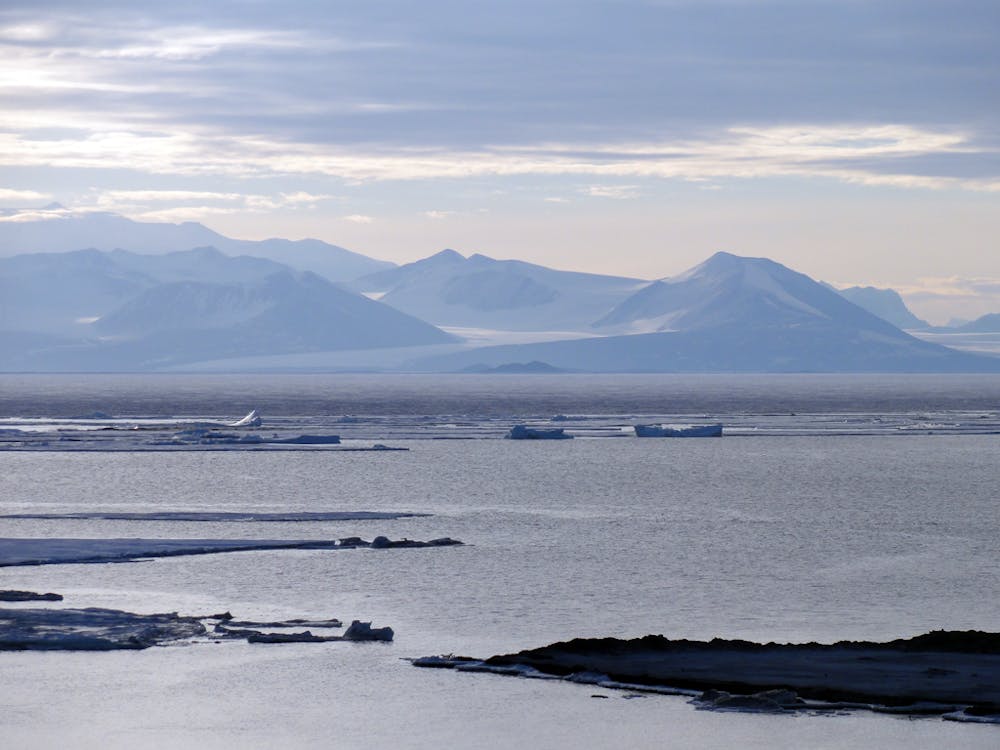
A photo of icy mountains looming over Ross Sea in east Antarctica
Mount Martin looms over the Ross Sea in east Antarctica.
Dana M Bergstrom

Cleaning up the mess in Antarctica

The story of Antarctica serves as a compelling reminder humanity must end our reliance on fossil fuels. We must also do a far better job of environmental stewardship – including paying for the scientific research so urgently needed.

Failing to fully support vital Antarctic science in a rapidly unfolding climate emergency, in my view, is unwise.The Conversation

Dana M Bergstrom, Honorary Senior Fellow, University of Wollongong

This article is republished from The Conversation under a Creative Commons license. Read the original article.

Continue ReadingI’ve spent 40 years studying Antarctica. The frozen continent has never needed our help more

As Biden Touts the IRA Anniversary, Here Are 5 Carbon Bombs He Leaves Out

Spread the love
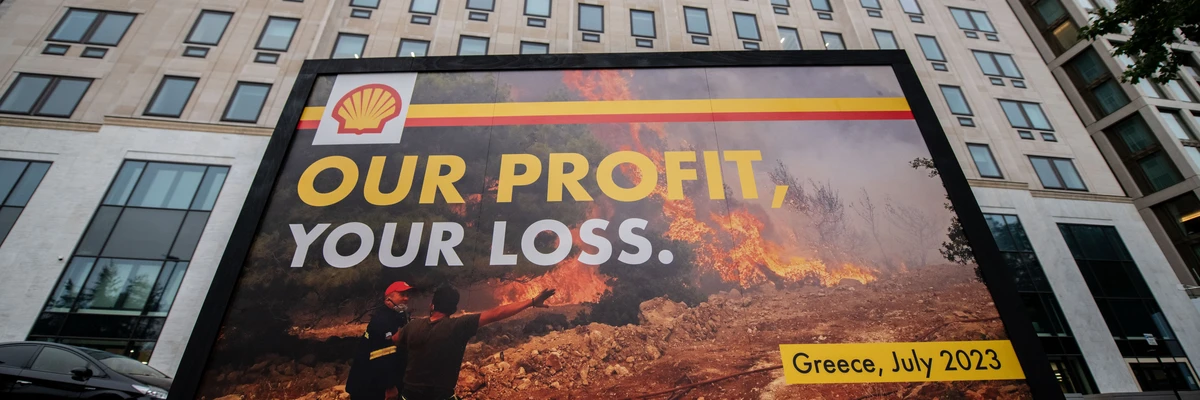
Greenpeace activists display a billboard during a protest outside Shell headquarters on July 27, 2023 in London.
Greenpeace activists display a billboard during a protest outside Shell headquarters on July 27, 2023 in London. (Photo: Handout/Chris J. Ratcliffe for Greenpeace via Getty Images)

https://www.commondreams.org/opinion/biden-5-carbon-bombs

Despite his big talk on climate, when it comes to fossil fuels, President Biden’s policies just build on previous expansion.

A slew of White House actions are undermining efforts to address climate change, and under Biden, the country is producing more energy from fossil fuels than it did under former President Donald Trump.

The science is clear: Building any new fossil fuel infrastructure is incompatible with a livable climate. Yet, while President Joe Biden touts the Inflation Reduction Act, or IRA, as the country’s biggest climate law ever, he’s glossing over all the ways his administration has advanced fossil fuels, including in the IRA.

A slew of White House actions are undermining efforts to address climate change. And under Biden, the country is producing more energy from fossil fuels than it did under former President Donald Trump. In 2022, the U.S. broke its record for most fossil fuels produced in a year. Worse, it’s on track to break that record for 2023.

We know that to stem the tide of climate chaos, we need to move off fossil fuels, period. Instead, the Biden administration has approved and supported several projects that will unleash carbon bombs on our climate and lock in decades of drilling, burning, and emitting.

https://www.commondreams.org/opinion/biden-5-carbon-bombs

Continue ReadingAs Biden Touts the IRA Anniversary, Here Are 5 Carbon Bombs He Leaves Out

Green Groups Slam Biden Admin for Awarding $1 Billion to ‘Unproven’ Carbon Capture Projects

Spread the love

Original article by JULIA CONLEY republished from Common Dreams under Creative Commons (CC BY-NC-ND 3.0).

“Fossil fuel interests see a clear benefit in promoting direct air capture as a means to preserve the dominance of dirty fossil fuels,” said one advocate.

Campaigners demand far-reaching climate action at a rally.  (Photo: michael_swan/flickr/cc)

Climate action groups on Friday said the U.S. Department of Energy’s newly announced $1.2 billion in grants for two carbon capture projects are far from the climate action that scientists and advocates have demanded for years—despite the Biden administration’s claim that the “next-generation technologies” must be used alongside renewable energy sources to draw down carbon emissions.

The department said it will invest $1.2 billion to build the nation’s first commercial plants that will conduct “direct air capture,” in which “giant vacuums… can suck decades of old carbon pollution straight out of the sky,” as Energy Secretary Jennifer Granholm told reporters on Thursday.

The unproven technology has been a key focus of oil and gas lobbyists, who argue that fossil fuel companies can continue their planet-heating extraction activities if plants are built to remove the pollution they cause.

Advocacy group Food & Water Watch noted that one oil company, Occidental, stands to benefit directly from the grants because its wholly owned subsidiary, 1Point5, was selected by the Energy Department as one of the recipients.

“Direct air capture is expensive, unproven, and will ultimately make almost no difference in reducing climate pollution… Capturing just a quarter of our annual carbon emissions would require all of the power currently generated in the country.”

“Fossil fuel interests see a clear benefit in promoting direct air capture as a means to preserve the dominance of dirty fossil fuels,” said Jim Walsh, the group’s policy director. “The federal government is handing them hundreds of millions of dollars in subsidies, when it should be pursuing policies to end the era of fossil fuels.”

Occidental plans to build one of the plants in Kleberg County, Texas, while nonprofit research firm Battelle will build another in Calcasieu Parish, Louisiana—one of the state’s air pollution hotspots, according to New Orleans Public Radio.

“Frontline communities that have borne the brunt of environmental racism and climate change for generations say, ‘Enough!'” said Marion Gee, co-executive director of the national grassroots coalition Climate Justice Alliance. “In an effort to move quickly and carelessly to balance a ‘carbon budget,’ the backyards that he’s talking about building in won’t be [White House Deputy Chief of Staff John] Podesta’s, President [Joe] Biden’s, or their neighbors. It’ll be Black folks, Indigenous communities, and poor BIPOC neighbors—sacrificed, yet again, in the name of protecting corporate interests.”

Critics note that carbon capture is expensive and requires a huge amount of energy to run the “capturing” mechanisms, increasing the very emissions companies aim to remove from the atmosphere.

Former Vice President Al Gore said in a TED Talk last month that turning to carbon capture—as the Biden administration did when it included $3.5 billion to fund a total of four direct air capture plants in the 2021 bipartisan infrastructure law—is a “moral hazard” that will give fossil fuel giants “an excuse for not ever stopping oil.”

“That gives them a license to continue producing more and more oil and gas,” he said.

Basav Sen, climate justice policy director at the Institute of Policy Studies, accused the Biden administration of playing “cynical political game of squandering public funds on unproven, expensive, and potentially dangerous schemes such as direct air capture, purportedly to gain credibility for backing climate solutions, while doubling down on expanding fossil fuels.”

The grants were announced days after President Joe Biden angered campaigners by claiming that “practically speaking,” he has already declared a climate emergency, despite his approval earlier this year of a massive oil drilling project in Alaska and his recent proposal to update rules for—but not end—fossil fuel leasing on public lands.

As Common Dreams reported in May, Food & Water Watch recently unveiled an interactive online website titled Carbon Capture Scam to expose the “false narratives” being pushed by the fossil fuel industry and lawmakers to promote a “dangerous distraction from the pressing need to move off oil and gas.”

“Direct air capture is expensive, unproven, and will ultimately make almost no difference in reducing climate pollution,” said Walsh on Friday. “Capturing just a quarter of our annual carbon emissions would require all of the power currently generated in the country.”

“Even if the technology was effective, there are still serious questions about whether there is a safe and effective way to store the captured carbon dioxide,” he added. “A more practical and effective approach would be to invest money in wind and solar energy—which would be far more effective in actually reducing climate pollution.”

Original article by JULIA CONLEY republished from Common Dreams under Creative Commons (CC BY-NC-ND 3.0).
Continue ReadingGreen Groups Slam Biden Admin for Awarding $1 Billion to ‘Unproven’ Carbon Capture Projects