‘This may be our last chance’: Cop28 talks enter final phase

Spread the love
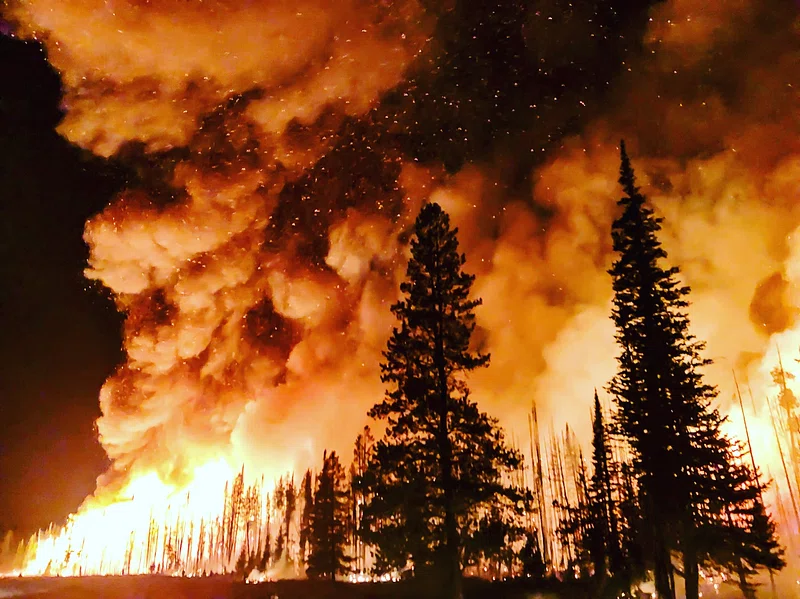
Canadian wildfire 2023

https://www.theguardian.com/environment/2023/dec/08/this-may-be-our-last-chance-cop28-talks-enter-final-phase

The next few days could be the world’s last chance of keeping global heating within safe limits, nations meeting for the Cop28 UN climate summit have been told.

With talks in Dubai now entering their final phase, the world’s governments are still far apart on the central question of whether to phase out fossil fuels.

Dan Jørgensen, Denmark’s climate minister, who has been charged with one of the key roles in forging an agreement among deeply divided governments, said: “We cannot negotiate with nature. The climate cannot compromise. No well meaning words will change a single thing unless we act. This week may be our last opportunity to bring us on course to keeping 1.5C alive.”

Jørgensen, along with the South African minister Barbara Creecy, will chair negotiations on the global stocktake, a process under the 2015 Paris climate agreement that assesses progress – or the lack of it – towards meeting the treaty’s goals of holding global temperature rises “well below” 2C and “pursuing efforts” to keep them to 1.5C above pre-industrial levels.

It is well established that the world is far off track to stay within those limits, which scientists say are vital to staving off the worst impacts of the climate crisis. Average temperatures for this year are likely to break records and come close to the 1.5C threshold, and on current trends the world will hit 3C of heating, rendering swathes of the planet effectively uninhabitable.

For those reasons, the global stocktake will also contain recommendations to governments for a “course correction”, asking them to change policies and bring in measures that will reduce greenhouse gas emissions drastically. The latest draft was published on Friday, and is currently being examined, but there are likely to be more iterations of it before the end of the talks.

Romain Ioualalen, global policy manager at Oil Change International, a pressure group, said: “It shows unprecedented momentum for an agreement on phasing out all fossil fuels, owing to the relentless pressure from people and governments that are aligned with the science. The Cop president emphasised again today that 1.5C is his north star – and he must deliver on that promise with a Cop decision to build a fast, fair, full and financed fossil fuel phase-out rooted in equity, and enabled by governments redirecting trillions in finance from fossil fuel industry handouts to the real solution: renewable energy and energy efficiency.”

As well as phasing down fossil fuels, countries are being asked to triple global renewable energy generation and to double energy efficiency. The former is already likely to be met, on current trends, and the latter should save money amid high fossil fuel prices and a cost of living crisis around the world.

Developing countries are also concerned that a target to double the amount of finance they get to help them adapt to the impacts of the climate crisis has also not been met. Stiell called for more progress on this issue. “I don’t want to see diversions and political tactics that hold climate adaptation hostage,” he warned.

https://www.theguardian.com/environment/2023/dec/08/this-may-be-our-last-chance-cop28-talks-enter-final-phase

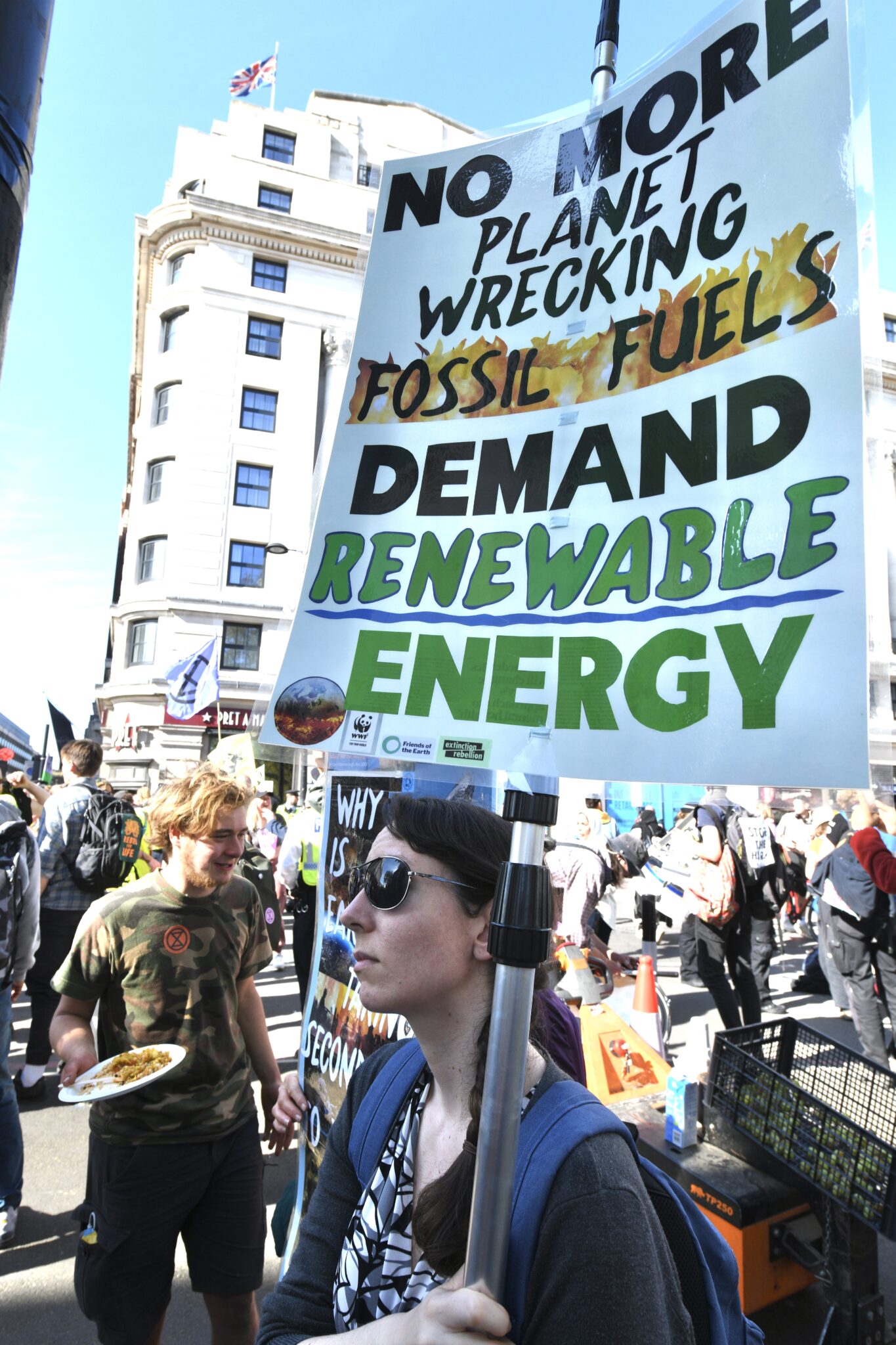
Extinction Rebellion protest, banner reads NO MORE PLANET WRECKING FOSSIL FUELS DEMAND RENEWABLE ENERGY

Failure to agree fossil fuel phase-out at Cop28 ‘will push world into climate breakdown’

Failure to agree a phase-out of fossil fuels at the UN Cop28 climate summit would push the world beyond the crucial 1.5C temperature limit and into climate breakdown, the UK’s former climate chief has warned.

Alok Sharma, who was president of the Cop26 summit in Glasgow, said it was vital that governments made a clear commitment in the next few days to eliminate coal, oil and gas.

“If you’re going to keep 1.5C alive, you’re going to have to have language on a phase-out of fossil fuels,” he told the Observer in an interview. “And you’re going to need to accompany that with a credible implementation plan.”

He urged governments to act. “We are running out of time. The window on 1.5C is closing fast, and unless we are willing to act now, with the urgency that this issue demands, we will lose that 1.5C,” he said. “We are literally in the last chance saloon to save our children’s future.”

More than 190 governments are meeting in Dubai for the final days of the Cop28 summit, which runs until Tuesday, with the question of whether to phase out fossil fuels at the top of the agenda. At least 100 countries are in favour of a phase-out, but some major fossil fuel producers – including Saudi Arabia, China and India – are opposed.

Sharma was credited with keeping 1.5C “alive” against the odds at the Glasgow summit he led in 2021, when he managed to forge a deal among more than 190 squabbling countries that focused on the goal of limiting global temperature rises to 1.5C above pre-industrial levels.

https://www.theguardian.com/environment/2023/dec/09/failure-to-agree-to-phase-out-fossil-fuels-at-cop28-will-push-world-into-climate-breakdown

Greenpeace: COP28 must answer the call for a fossil fuel phase out

Dubai, UAE – As COP28 resumes for a second week, negotiators will be faced with answering the call for a commitment to a Fossil Fuel Phase Out in Dubai. Never before have we heard so many voices, coming from so many directions to seize the moment and commit to phasing out oil, coal and gas. And never before have alternative formulations on fossil fuel phase out made it this far into a draft text. But there are still no guarantees on a decision on fossil fuels, so all is in play.

Kaisa Kosonen, Head of the Greenpeace COP28 delegation said: “We are here to make fossil fuels history. By now governments know they can’t leave this summit without an agreement to end fossil fuels, in a fast and fair manner. Now the question is what is the package of solutions, support and cooperation that will get us over the finishing line. It’s clear that developed countries are the ones that need to take the lead here.

The solutions are ready – a fast and fair transition to renewable energy is possible – but it won’t happen fast enough unless we push the fossil fuel industry out of the way.
George Monbiot: Cop28 is a farce rigged to fail, but there are other ways we can try to save the planet

Continue Reading‘This may be our last chance’: Cop28 talks enter final phase

COP28: how bad is climate change already and what do we need to do next to tackle it?

Spread the love

As the global stocktake has found, policies on cutting emissions remain a long way off what is needed to hold temperatures to well below 2°C – let alone 1.5°C. The recently published 2023 UN emissions gap report, which tracks our progress in limiting global warming, echoes the same concern. The report revealed that the world is on track for 2.9°C of global warming, and maybe considerably more, before the end of this century.

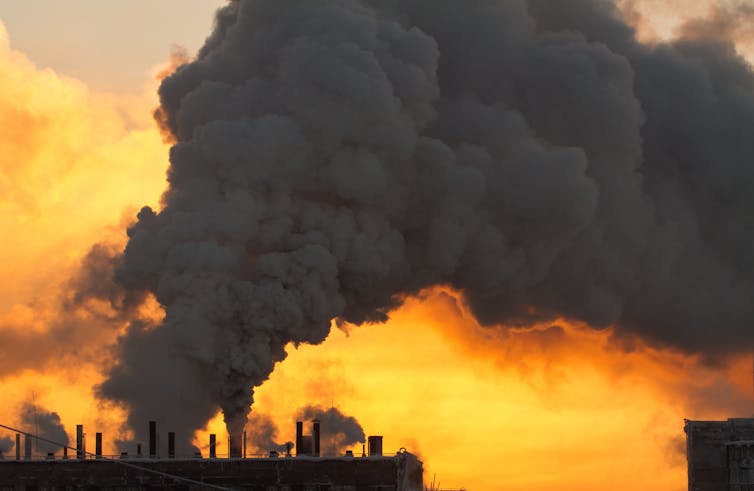
Olga Gordeeva/Shutterstock

Piers Forster, University of Leeds

As the latest UN climate change summit (COP28) gets underway in Dubai, conversations around limiting global warming to 1.5°C will confront a harsh reality. Global temperatures have surged over the past year, with the monthly global average surpassing 1.5°C above pre-industrial levels during the summer. Some days in November have even breached 2°C of warming for the first time.

Since the Glasgow Climate Summit in 2021, the UN has been conducting a review of our progress towards limiting temperature rise in line with the Paris Agreement. This review, which is set to conclude in Dubai, aims to make countries ratchet up their emission reduction commitments.

The evidence from this two-year “stocktake” is now available, and it shows just how far off track we are. To restrict global warming to 1.5°C, countries must reduce greenhouse gas emissions by more than 40% by 2030, yet emissions are currently on the rise.

Countries around the world have borne the human and economic toll. The United Arab Emirates itself is one of the latest countries to be hit by severe flooding, with parts of Dubai under water for the first time. This has led some, including the legendary climate scientist James Hansen, to speculate that climate scientists have underestimated the pace of change.

The evidence itself presents a more balanced view. Climate change has indeed accelerated, but this uptick in pace was entirely predicted by climate models and is expected due to greenhouse emissions being at an all-time high.

The potential for confusion as we approach 1.5°C of global warming makes it all the more crucial to track rising temperatures and climate change as they develop between the comprehensive Intergovernmental Panel on Climate Change assessments. The next assessment isn’t expected until around 2030.

A broken record

As the global stocktake has found, policies on cutting emissions remain a long way off what is needed to hold temperatures to well below 2°C – let alone 1.5°C. The recently published 2023 UN emissions gap report, which tracks our progress in limiting global warming, echoes the same concern. The report revealed that the world is on track for 2.9°C of global warming, and maybe considerably more, before the end of this century.

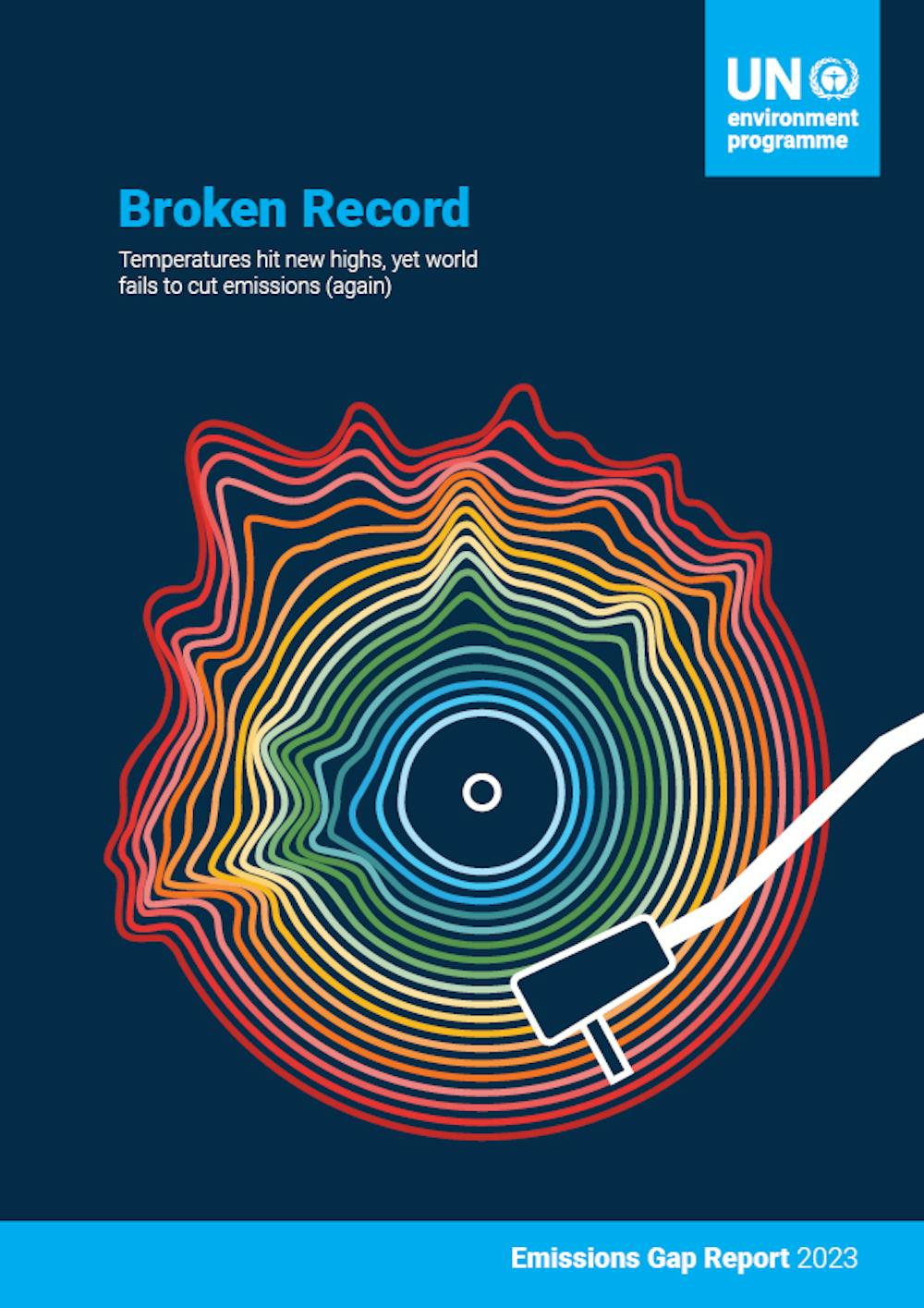
If this sounds like a broken record – as emphasised by the report’s cover art – it is. The message that we need urgent action and stronger emissions cuts to avoid the worst climate impacts is far from new, but still somehow needs to hit home.

The front cover of the UN's 2023 emissions gap report.
The emission gap report’s cover art.
UN Environment Programme / Emissions Gap Report 2023, CC BY-NC-SA

The UN emissions gap report finds that 80% of climate change can be attributed to G20 countries, a group consisting of the world’s major economies. Within the bloc, western countries generally have ambitious emissions reduction targets, but are failing to deliver on them. By contrast, countries including China, India, Mexico and Indonesia are largely overachieving much weaker targets, but are failing on ambition.

This divide is evident in national submissions to the global stocktake process. Western countries are urging the rest of the world to increase ambition, while other nations are urging western governments to deliver on their finance and other commitments, especially in providing sufficient funding to help developing countries adapt to the harmful effects of climate change.

Inequalities in how emissions vary across a country’s population were highlighted in the UN Emissions Gap report and also in a dedicated report by Oxfam. The report revealed that the world’s wealthiest 1% account for 16% of global emissions. These wealthy people each emit more than 100 tonnes of CO₂ every year, 15 times the global average.

Inequality drives vulnerability. The same report showed that floods kill seven times as many people in countries with higher levels of inequality than they do in more equal ones.

A crucial period

The gloomy picture places a clear focus on the need for transformative progress at COP28 and beyond. In a report that was released ahead of COP, the International Energy Agency places the challenge firmly at the door of the oil and gas sector.

This report found that only 1% of clean energy investment comes from the industry, and that oil and gas use needs to decline by 75% or more to be compatible with net zero targets. The industry needs to undergo radical change.

If oil and gas firms urgently remove emissions from their operations, especially around methane leaks, and invest in trebling global renewable energy capacity by 2030 instead of extraction, they can be a force for change.

Discussions around the role of oil and gas will be a recurring theme both at COP28 and at future climate change summits. But concerted efforts to reduce methane emissions, build renewable energy infrastructure, roll out electric vehicles and halt deforestation globally could also see emissions fall significantly by 2030, consequently slowing down the rate of warming.

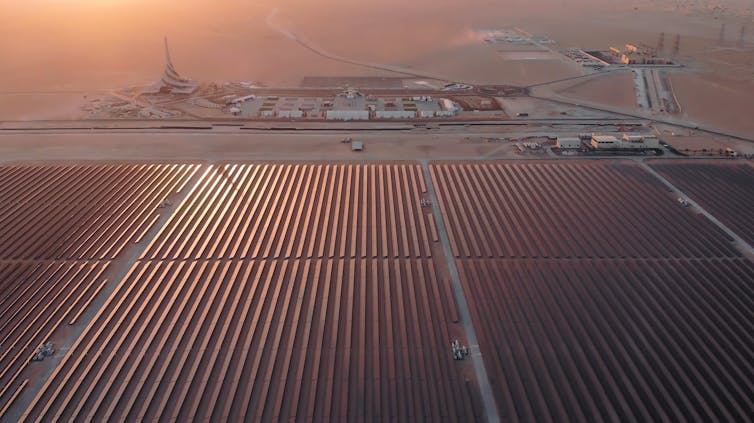
Aerial view of a huge solar power plant in the UAE.
Investment in global renewable energy capacity needs to be trebled by 2030.
SkyMediaPro/Shutterstock

Whether the discussions in Dubai lead to the transformative change we need remains to be seen. However, it is essential to continue offering independent, expert and respected advice to governments through organisations like the UK Climate Change Committee, which I currently chair, and the International Climate Councils Network. This effort is crucial in advocating for transformative change across all sectors and in providing consistent and ambitious national emission reduction policies that are based on evidence.

As we approach 1.5°C of global warming, we need to work even harder. To quote from a recent article in US magazine Scientific American: “Declarations that 1.5°C is dead make no sense. Global temperature limits don’t die if we surpass them. People do.”


Imagine weekly climate newsletter

Don’t have time to read about climate change as much as you’d like?

Get a weekly roundup in your inbox instead. Every Wednesday, The Conversation’s environment editor writes Imagine, a short email that goes a little deeper into just one climate issue. Join the 20,000+ readers who’ve subscribed so far.The Conversation


Piers Forster, Professor of Physical Climate Change; Director of the Priestley International Centre for Climate, University of Leeds

This article is republished from The Conversation under a Creative Commons license. Read the original article.

Continue ReadingCOP28: how bad is climate change already and what do we need to do next to tackle it?

Five Key Narratives to Watch For at COP28

Spread the love

Original article republished from DeSmog.

Here’s DeSmog’s take on what to expect at this year’s climate summit, from Big Oil’s influence, to a new Big Ag agenda, to promotion of sketchy solutions that would keep oil and gas burning for decades to come.

The United Arab Emirates’ pavilion at COP27. Credit: Adam Barnett

The annual United Nations climate negotiations are just a week away. Known as COP28 — since it’s the 28th year of the “conference of the parties” to the United Nations climate agreement — it will be hosted by the United Arab Emirates in Dubai from November 30 through December 12. 

COP28 will be especially significant, as it will feature the first-ever “global stocktake,” of how much progress — or lack thereof — countries and other stakeholders have made toward meeting the goal established in 2015’s Paris Agreement of limiting warming to “well below” 2º degrees Celsius. 

Negotiators at COP28 will also aim to make progress on key climate issues including loss and damage finance, a just energy transition, and closing the emissions gap.

As the climate crisis accelerates, so, too, do efforts by the fossil fuel industry to derail steep reductions in carbon pollution by mid-century, in part by promoting false solutions. Below, we’ve rounded up recent coverage to help you make sense of the key denial and greenwashing narratives that will be front and center during the event.

A Big Presence from Big Oil

After all, this is the first annual climate conference with a Big Oil exec at the top: COP28 President Sultan Ahmed Al Jaber

Al Jaber, the person leading these global climate negotiations, is the CEO of the Abu Dhabi National Oil Company (ADNOC). He has openly called for fossil fuel companies’ “help to drive the solutions,” and advocated overcoming “the hurdles to scale up and commercialize hydrogen and carbon capture technologies” — two so-far unproven climate solutions being heavily promoted by the fossil fuel industry. A big presence from Big Oil would be in line with trends at the past two summits: 636 fossil fuel lobbyists registered to attend last year’s conference in Sharm el-Sheikh, Egypt, while 503 registered for 2021’s gathering in Glasgow.

Dive deeper with our Climate Disinformation Database profile of Sultan Ahmed Al Jaber, our coverage of his appointment as COP28 president, and our reporting last year on fossil fuel lobbyists at COP27.

An Industry Push for CCS

The fossil fuel industry will paint carbon capture and storage (CCS) as a climate solution during this year’s conference. Critics argue it is anything but. 

Of the 32 commercial CCS facilities operating worldwide, 22 use most, or all, of their captured carbon dioxide (CO2) to pump more oil out of depleted wells. Burning that oil creates far more CO2 than what is captured. 

DeSmog recently analyzed 12 large-scale CCS projects around the world and found countless missed carbon capture targets, as well as cost overruns, with taxpayers picking up the tab via billions of dollars in subsidies. Despite these failures, Big Oil publicly champions CCS and pushes projects over communities’ objections. Privately, the industry shares critics’ concerns.

With the Biden administration channeling billions of dollars into investments and tax credits for CCS, the United States is likely to be a key CCS supporter at the conference.

Dive deeper with our explainer on how CCS is used for “enhanced oil recovery,” our investigation into CCS’s biggest fails, hear what Big Oil is saying about CCS in private.

Greenwashing by Big Agriculture

This year’s climate conference is coming on the heels of the world’s hottest year, with devastating floods around the world affecting the global food supply, and more than 330 million people worldwide facing famine. So COP28 leaders have released a four-point “food and agriculture” agenda for the summit that calls for governments and industry to collaborate on finding new solutions to climate change–driven food insecurity. 

However, some of the biggest companies in agribusiness, are using greenwashing to shift the debate away from meaningful action. DeSmog has debunked six concepts that the world’s largest food and farming companies will be co-opting in hopes of swaying debates and discussions in  Dubai — including “regenerative agriculture,” “nature-based solutions,” and “climate neutrality.” Stay tuned for DeSmog’s coverage from Dubai — our team will be keeping a close eye on Big Ag.

Dive deeper with our coverage of how food systems are linked to fossil fuel consumption, investigations into the meat and dairy groups downplaying their industries’ climate impacts, and the ties between Big Ag and right-wing politicians in the EU.

PR Spin That Promotes Denial and Delay

Ever wonder how a top oil-producing nation like the United Arab Emirates earned hosting duties for this year’s climate summit, or why the chief of UAE’s state oil company ADNOC, Sultan Ahmed Al Jaber, has ascended to one of the top roles in global climate negotiations? Reporting by DeSmog revealed that from 2007 to 2009, Edelman, the largest public relations firm in the world, ran a campaign to bolster the UAE and Al Jaber’s green images. 

Advertising and PR agencies like Edelman have long burnished the public’s perceptions of fossil fuel interests, and are still creating advertising campaigns for big polluters that distract from and delay climate action — such as sponsored-content for a pesticides giant or leading climate communications while catering to Big Oil. Still, within the ad industry, pressure is mounting to stop working with fossil fuel clients. Some companies and organizations are even dropping ad and PR firms for taking on new fossil fuel industry accounts

Follow DeSmog’s coverage as we highlight the PR spin at COP28.

Dive deeper with our Climate Disinformation Database profiles of PR and ad firms EdelmanOgilvy, and FleishmanHillard, our investigation into Edelman’s campaign to burnish Al Jaber and the UAE’s green creds, and our coverage of the backlash to Havas winning Shell’s business.

Anticipate Disinformation 

Disinformation strategies and narratives will be on display throughout the summit — much as we reported during COP27, where fossil fuel-linked groups spent around $4 million on social media ads that spread false climate claims. 

The disinformation may flow thicker and faster than ever during COP28. As DeSmog has reported, over the past five years climate greenwashing has “gone through the roof,” as major polluters turn to greenwashing to avoid accountability for the climate crisis. In part, this may be a response to the increasing number of climate lawsuits and legal complaints against misleading climate claims. Attorneys general across the U.S. have charged fossil fuel companies with defrauding consumers by lying about the impacts of burning coal, oil, and gas — while activists and campaigners in Europe seek to hold Big Oil accountable under regulations against misleading advertising.

To understand disinformation tactics and where they come from, dig into DeSmog’s reporting about past greenwashing campaigns. We recently shone a light on the way the gas industry borrowed Big Tobacco’s tactics to promote doubt over the health effects of gas stoves. Or read our investigation into how corporate polluters and their political allies have been using the same rhetoric of delay for the past six decades when faced with the prospect of regulation.

Dive deeper with our column on why greenwashing works and how to fight it, our Q&A with Climate Investigations Center researcher Rebecca John, and our investigation into Shell’s knowledge of climate change.

Original article republished from DeSmog.

Continue ReadingFive Key Narratives to Watch For at COP28