Tag: International Court of Justice

  • Amnesty Says Cutting Off Aid to UNRWA While Arming Israel Is ‘Stark’ Hypocrisy

    Spread the love

    Original article by JAKE JOHNSON republished from Common Dreams under under Creative Commons (CC BY-NC-ND 3.0). 
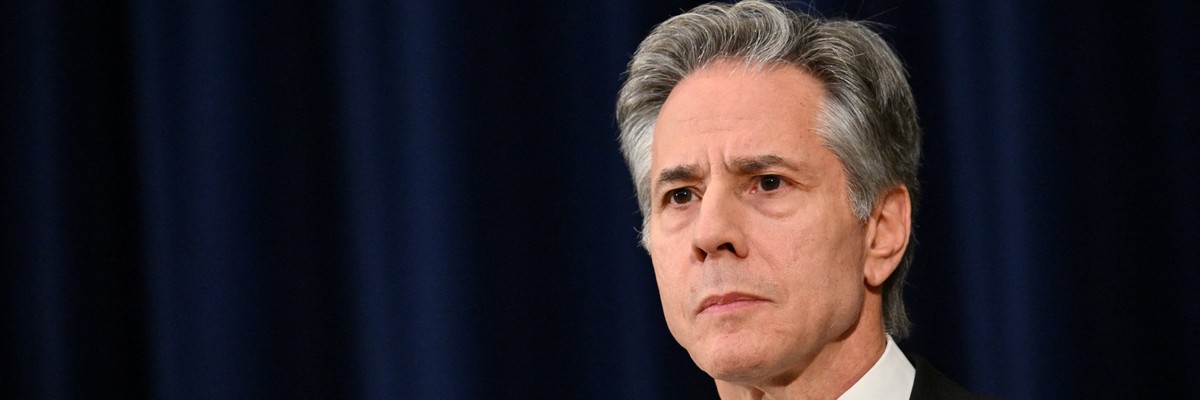
    U.S. Secretary of State Antony Blinken speaks during a press conference in Washington, D.C. on January 29, 2024.  (Photo: Mandel Ngan/AFP via Getty Images)

    “Some of the very governments that announced they will cut off funds to UNRWA over these allegations have, in the meantime, continued to arm Israeli forces despite overwhelming evidence that these arms are used to commit war crimes.”

    Amnesty International on Monday joined the growing global chorus denouncing Israel’s allies for suspending aid to the United Nations’ Palestinian refugee agency even as they continue to support the Israeli military’s war on the Gaza Strip, risking complicity in genocide.

    Agnès Callamard, Amnesty’s secretary-general and the former U.N. special rapporteur on extrajudicial killings, said that while Israel’s claim that a dozen staffers at the refugee agency played a role Hamas’ October 7 attack is “serious and must be independently investigated,” the “alleged actions of a few individuals must not be used as a pretext for cutting off lifesaving assistance in what could amount to collective punishment.”

    “Some of the very governments that announced they will cut off funds to UNRWA over these allegations have, in the meantime, continued to arm Israeli forces despite overwhelming evidence that these arms are used to commit war crimes and serious human rights violations,” said Callamard. “Rushing to freeze funds for humanitarian aid, based on allegations that are still being investigated, while refusing to even consider suspending support for the Israeli military is a stark example of double standards.”

    “Instead of suspending vital funding to those in need,” Callamard added, “states should be working to halt arms transfers to Israel and Palestinian armed groups and pushing for an immediate and sustained cease-fire and full humanitarian access to help alleviate devastating suffering.”

    “The humanitarian crisis has reached catastrophic levels, and any additional limitations on aid will result in more deaths and suffering.”

    The United States announced last week that it would temporarily cut off UNRWA funding as it reviews Israel’s allegations against the low-level agency employees—a decision that came just hours after the International Court of Justice (ICJ) ruled that Israel must ensure the provision of humanitarian aid to Gazans, tens of thousands of whom have been killed or wounded by Israeli bombs and shells in less than four months.

    Francesca Albanese, the U.N. special rapporteur for the occupied Palestinian territories, said that “defunding UNRWA at this critical time overtly defies” the ICJ’s ruling.

    Médecins Sans Frontières, also known as Doctors Without Borders, similarly warned Monday that “the consequences these cuts in funding will have on the ground contradict the provisional measures issued by the International Court of Justice.”

    “The humanitarian crisis has reached catastrophic levels,” the group added, “and any additional limitations on aid will result in more deaths and suffering.”

    Just over a week before the Biden administration decided to suspend its UNRWA contributions, a spokesperson for the U.S. State Department described the agency’s work as “invaluable” and “lifesaving.”

    On Monday, U.S. Secretary of State Antony Blinken acknowledged that the UNRWA “has played and continues to play an absolutely indispensable role in trying to make sure that men, women, and children who so desperately need assistance in Gaza actually get it.”

    “And no one else can play the role that UNRWA’s been playing, certainly not in the near term,” he added. “So that only underscores the importance of UNRWA tackling this as quickly, as effectively, and as thoroughly as possible, and that’s what we’re looking for.”

    At least a dozen countries—including the United Kingdom, Canada, Australia, Germany, Italy, and the Netherlands—have joined the U.S. in suspending aid to the UNRWA, the most critical humanitarian aid organization in the famine-stricken Gaza Strip.

    The moves have put the UNRWA’s operations in jeopardy, with the U.N. chief warning that the agency’s current funding levels won’t be enough to meet all of its requirements in February. The agency has no strategic financial reserves.

    Amnesty said the countries that have suspended aid to the UNRWA thus far provided more than half of the agency’s budget in 2022.

    Several major nations, including Norway and Spain, have refused to join the U.S.-led freeze of aid to the UNRWA, which the Israeli government has been targeting for years and is hoping to push out of Gaza entirely. The UNRWA quickly fired nine of the 12 workers that Israel accused of taking part in the October 7 attack and has launched an investigation.

    On Monday, Spanish Foreign Minister José Manuel Albares said his country will not suspend UNRWA funding, which he said helps “alleviate the terrible humanitarian situation in Gaza.”

    Albares also pledged to continue pushing for an end to Israel’s assault on Gaza, the release of hostages, and a lasting diplomatic solution.

    “We will not resign ourselves to watching more innocent women, men, and children killed in Gaza and more suffering of Palestinian families,” he said. “We will not resign ourselves to keep watching the suffering of the families of hostages. The violence must stop.”

    Original article by JAKE JOHNSON republished from Common Dreams under under Creative Commons (CC BY-NC-ND 3.0). 
  • ‘Relentless Hate’: Late 2023 Saw Surge in Anti-Muslim Crimes, Discrimination

    Spread the love

    Original article by JESSICA CORBETT republished from Common Dreams under Creative Commons (CC BY-NC-ND 3.0). 
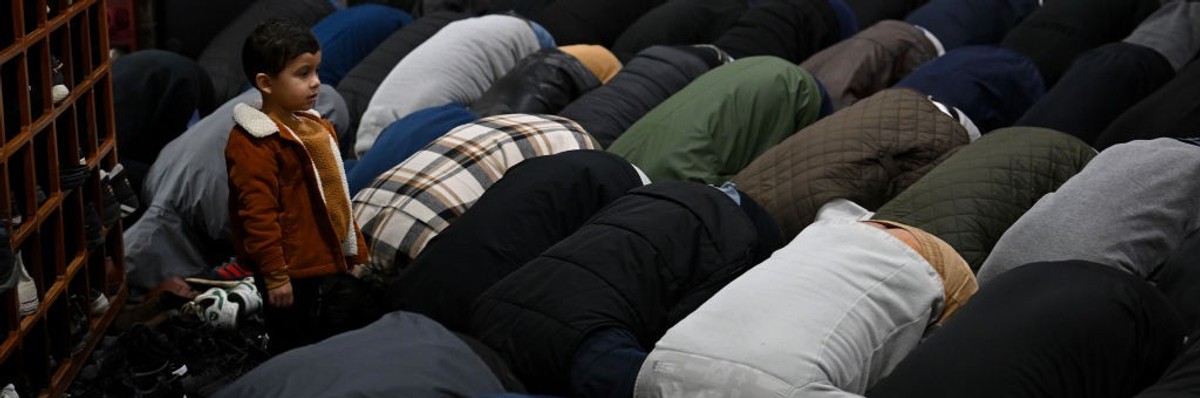
    A young boy watches as people pray during a funeral service for 6-year-old Palestinian American Wadea Al-Fayoumi at the Mosque Foundation on October 16, 2023 in Bridgeview, Illinois.  (Photo: Joshua Lott/The Washington Post via Getty Images)

    “The way to stop the hate is to end the apartheid, occupation, and genocide occurring in Palestine,” said one CAIR leader.

    Nearly four months into Israel’s war on the Gaza Strip, the largest Muslim civil rights and advocacy group in the United States on Monday highlighted that the U.S. saw a dramatic rise in Islamophobic hate during the final three months of 2023.

    In line with data released last month, the Council on American-Islamic Relations (CAIR) revealed that it received 3,578 complaints from October through December—a 178% jump from a similar three-month period the previous year.

    The highest reported categories last quarter were employment discrimination (19%), hate crimes and incidents (13%), and education discrimination (13%), according to CAIR, which plans to release a full analysis and dataset in the months ahead.

    Victims of high-profile incidents have included six-year-old Wadea Al-Fayoume, who was stabbed to death in Illinois; three university students shot and wounded in Vermont; and a New York City food cart vendor harassed by a former U.S. State Department official.

    “Despite this disturbing wave of bias targeting the Muslim, Arab American, and Palestinian communities, we are witnessing an impressive resilience in the face of bigotry.”

    “Despite this disturbing wave of bias targeting the Muslim, Arab American, and Palestinian communities, we are witnessing an impressive resilience in the face of bigotry,” said CAIR national executive director Nihad Awad in a statement.

    CAIR’s Monday release comes as the death toll in Gaza has topped 26,600 people—including at least 11,500 children—with over 65,300 others injured and thousands more missing. The vast majority of Gaza’s 2.3 million residents are displaced and hungry.

    Despite the International Court of Justice (ICJ) on Friday ordering Israel to “take all measures within its power” to prevent genocide in Gaza, the U.S.-backed Israeli assault on the besieged enclave continues, and fears of a wider regional war keep mounting.

    The ICJ’s initial ruling last week also emboldened supporters of a cease-fire, who have repeatedly taken to the streets around the world since Israel launched its current military campaign against Gaza in retaliation for a Hamas-led attack on October 7.

    “In the face of relentless hate and bogus smears, American Muslims, Arabs, and a broad coalition of Jewish, Christian, African American, Asian Americans, and others continue calling for justice for Palestine,” CAIR research and advocacy director Corey Saylor said Monday. “This coalition knows the way to stop the hate is to end the apartheid, occupation, and genocide occurring in Palestine.”

    As Common Dreams reported earlier this month, since Israel declared war, there has also been a significant rise in antisemitism in the United States and worldwide—though reliable figures have been hard to come by, as some individuals and groups conflate protests against the war or criticism of the right-wing Israeli government with hostility toward Jews.

    U.S. Attorney General Merrick Garland said in the early weeks of the war that the Department of Justice was monitoring the increase in threats against Jewish, Muslim, and Arab communities nationwide and the Department of Homeland Security last month released resources to help houses of worship and faith-based groups enhance their security.

    However, the United States also gives Israel $3.8 billion in annual military aid, and since October 7, U.S. President Joe Biden has sought a new $14.3 billion package while also bypassing Congress to arm Israeli forces—degrading many Arab and Muslim Americans’ trust in the Democrat, who is seeking reelection in November.

    As a federal court on Friday held a hearing for a case accusing Biden, Secretary of State Antony Blinken, and Secretary of Defense Lloyd Austin of complicity in genocide, some local leaders in Michigan—a key swing state with the nation’s biggest Arab American population—refused to meet with a delegation from the president’s campaign.

    Dawud Walid, the executive director of CAIR’s Michigan chapter, told CNN on Saturday: “There is no possibility of repair while he is supporting an act of genocide. So, there is no reason to have communication.”

    Original article by JESSICA CORBETT republished from Common Dreams under Creative Commons (CC BY-NC-ND 3.0). 
    dizzy: I’ve been considering Islamaphobia recently. The term doesn’t do it justice – it’s more of a relentless hatred as the title of this article suggests than a fear or similar. It appears to be a form of Neo-Fascism with Muslims as the scapegoat with the classic German Fascist concept of untermensch applied to them.

    Opposition to or criticism of Zionism is not anti-semitism of course, they are obviously and clearly distinct. The Zionist UK Labour Party claims that they are equal.

  • 20+ NGOs Condemn ‘Reckless’ Decision to Cut Off UNRWA Aid

    Spread the love

    Original article by BRETT WILKINS republished from Common Dreams under under Creative Commons (CC BY-NC-ND 3.0). 
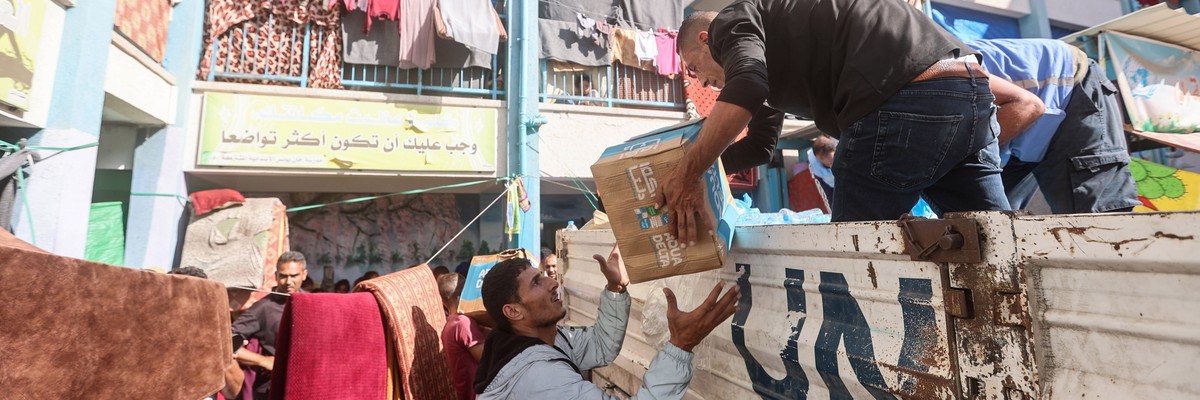
    United Nations workers and volunteers unload aid from a truck at a school housing displaced Palestinians on the 29th day of fighting between Israel and the armed Palestinian factions in Khan Yunis on November 8, 2023.  (Photo: Ahmed Zakot/SOPA Images/LightRocket via Getty Images)

    “Countries must reverse these funding suspensions, uphold their duties towards the Palestinian people, and scale up humanitarian assistance for civilians in dire need in Gaza and the region.”

    More than 20 humanitarian aid organizations on Monday condemned the decision by the United States and a growing list of nations to suspend funding for the United Nations agency that provides vital services to Palestinians suffering through a genocidal Israeli assault on the Gaza Strip.

    Following Israeli claims—reportedly extracted from Palestinian prisoners in an interrogation regime rife with torture and abuse—that 12 of the more than 13,000 United Nations Relief and Works Agency for Palestine Refugees in the Near East (UNRWA) workers in Gaza were involved in the October 7 Hamas-led attacks on southern Israel, the United States and nine other nations cut off funding to the largest humanitarian aid organization operating in the besieged coastal enclave.

    UNRWA has fired several employees in the wake of the Israeli allegations, while the U.N. Office of Internal Oversight Services, the world body’s highest investigative authority, has launched a probe of the matter.

    “We welcome UNRWA’s swift investigation into the alleged involvement of a small number of U.N. staff members in the October 7 attacks. We are shocked by the reckless decision to cut a lifeline for an entire population by some of the very countries that had called for aid in Gaza to be stepped up and for humanitarians to be protected while doing their job,” the 21 NGOs said in a statement.

    “This decision comes as the International Court of Justice ordered immediate and effective action to ensure the provision of humanitarian assistance to civilians in Gaza,” the groups continued, referring to last week’s ICJ interim ruling in a South African-led case that found Israel is “plausibly” perpetrating genocide. “The countries suspending funds risk further depriving Palestinians in the region of essential food, water, medical assistance and supplies, education, and protection.”

    “We urge donor states to reaffirm support for the vital work that UNRWA and its partners do to help Palestinians survive one of the worst humanitarian catastrophes of our times,” the statement added. “Countries must reverse these funding suspensions, uphold their duties towards the Palestinian people, and scale up humanitarian assistance for civilians in dire need in Gaza and the region.”

    According to UNRWA chief Phillipe Lazzarini, more than 2 million of Gaza’s 2.3 million people depend upon UNRWA for their “sheer survival.” With more than 90% of Gazans displaced by Israel’s bombardment and invasion, over 1 million Palestinians are living in UNRWA-run shelters. As Gaza teeters on the brink of famine and hundreds of thousands of its residents suffer infectious diseases, the agency is providing critical food, medicine, and healthcare. It also runs hundreds of schools in the strip.

    All this while working under relentless Israeli bombardment that’s sometimes targeted UNRWA convoys, schools, shelters, and other facilities. The agency says at least 152 of its employees have been killed by Israeli bombs and bullets since October 7. Overall, more than 26,600 Palestinians have been killed and over 65,300 others wounded during Israel’s 115-day onslaught, according to Gaza officials. Most of these casualties have been women and children.

    “We urge donor states to reaffirm support for the vital work that UNRWA and its partners do to help Palestinians survive one of the worst humanitarian catastrophes of our times.”

    This isn’t the first time the U.S. has suspended funding for UNRWA. The Trump administration did so in 2018, describing the agency as “irredeemably flawed.” In 2021, U.S. President Joe Biden restored funding for UNRWA as it reeled from a crisis caused largely by the loss of around $360 million in American financial contributions.

    U.S. Congresswoman Alexandria Ocasio-Cortez (D-N.Y.) on Monday urged the Biden administration to “immediately” restore UNRWA funding, which came a day after U.N. Secretary-General António Guterres said that while the alleged complicity of a few UNRWA employees in the October 7 attacks “must have consequences,” the “tens of thousands of men and women who work for UNRWA, many in some of the most dangerous situations for humanitarian workers, should not be penalized.”

    “The dire needs of the desperate populations they serve must be met,” he added.

    Helen Clark, a member of the Elders and a former prime minister of New Zealand, on Monday praised countries—including New Zealand, Norway, Spain, and Ireland—that “have shown a better approach” by continuing to financially support UNRWA.

    “Gazans cannot suffer further collective punishment through suspension of UNRWA funding,” Clark said on social media.

    Norway’s Representative Office to Palestine affirmed on social media that “the situation in Gaza is catastrophic, and UNRWA is the most important humanitarian organization there.”

    “Norway continues our support for the Palestinian people through UNRWA,” the office added. “International support for Palestine is needed now more than ever.”

    Original article by BRETT WILKINS republished from Common Dreams under under Creative Commons (CC BY-NC-ND 3.0). 

  • ICJ upholds South Africa’s case against Israel, orders measures to prevent genocide in Gaza

    Spread the love

    Original article by Tanupriya Singh republished from peoples dispatch under a Creative Commons Attribution-ShareAlike 4.0 (CC BY-SA) licence.

    While the Court did not grant South Africa’s request for an immediate suspension of Israel’s military operations, it has ordered Israel take “all measures” to prevent acts of genocide in Gaza, including by its military

    The International Court of Justice (ICJ) has ruled in favor of South Africa’s request for provisional measures in its case against Israel over the ongoing war on Gaza. The request is part of an application filed by Pretoria, accusing Israel of violating its obligations under the Convention on the Prevention and Punishment of the Crime of Genocide.

    In a ruling issued on January 26, the Court determined that it had jurisdiction over the matter, and as such, rejected Israel’s request for the case to be dismissed.

    While reading Friday’s ruling, Judge Joan Donoghue reiterated that at the stage for the request for provisional measures, the court is not required to ascertain whether any violations of Israel’s obligations under the Genocide Convention have occurred, but whether the acts complained of “appear to be capable” of falling under its provisions.

    “In the court’s view, at least some of the acts and omissions alleged by South Africa have been committed by Israel in Gaza appear to be capable of falling within the provisions of the Convention”, the ICJ’s order states.

    The Court also recognized that the Palestinians in Gaza formed a substantial part of the Palestinian people as a protected group under Article II of the Convention, which defines genocide as “acts committed with intent to destroy, in whole or in part, a national, ethnical, racial or religious group.”

    “The Court notes that the military operation being conducted by Israel following the attack of 7 October 2023 has resulted in a large number of deaths and injuries, as well as massive destruction of homes, forcible displacement of the vast majority of the population and extensive damage to civilian infrastructure.”

    Donaghue went on to cite statements by the UN humanitarian chief, Martin Griffiths, who had stated on January 5 that Gaza had “become a place of death and despair”, and that its people were witnessing “daily threats to their very existence.” She also quoted statements from the WHO, as well as the head of the UN Relief and Works Agency for Palestine Refugees in the Near East (UNRWA) , Philippe Lazzarini, who stated on January 13 that the “clock is ticking fast towards famine.”

    The Court recognized the right of the Palestinian people to be protected from acts of genocide.

    Importantly, the ICJ took note of the statements made by senior Israeli officials — statements meticulously documented in Pretoria’s application as evidence of an intent to commit genocide.

    Donaghue read aloud Israeli defense minister Yoav Gallant’s declaration of the “complete siege of Gaza,” his reference to Palestinians as “human animals,” and his call to “eliminate everything.” Also mentioned were Israeli President Isaac Herzog’s remarks that there is “an entire nation out there that is responsible” and “we will fight until we break their backbone.”

    Noting that Israel’s military operations in Gaza strip were ongoing, quoting Israeli Prime Minister Benjamin Netanyahu that the war would take “many more long months” — at a time when Palestinians did not have access to food, water, electricity, medicines or heating, as well as indications that maternal and newborn death rates are expected to increase— the Court stated that the “catastrophic humanitarian situation in the Gaza strip is at serious risk of deteriorating further before the court renders its final judgment.”

    The Court further stated that the steps Israel had taken to address the conditions in Gaza, and the remarks by its Attorney General that a call for intentional harm to civilians may amount to a criminal offense of incitement, were insufficient.

    Pending a final decision in the case, “the Court considers that there is an urgency…there is a real and imminent risk that irreparable prejudice will be caused to the rights found by the Court to be plausible…The court concludes…that the conditions required …for provisional measures are met.”

    The first provisional measure sought by South Africa was an immediate suspension of Israel’s military operations in and against Gaza. On January 25, Hamas had also stated that it would abide by a ceasefire if it was ordered by the ICJ, as long as Israel did the same.

    The ICJ in its order made no mention of this request, and as observers have highlighted, did not discuss military action, a ceasefire, or the question of self-defense— in its advisory opinion in 2004, the ICJ had determined that Israel could not claim this right in relation to a territory it was occupying.

    However, it has indicated a series of provisional measures, each approved with an overwhelming majority among the 17-judge-panel, which are binding in effect and place “international legal obligations” to the State Party to whom they are addressed — in this case, Israel.

    First, by 15 votes to 2, Israel must “take all measures within its powers to prevent the commission of all acts within the scope of the Convention.” These acts include a) killing members of the group, b) causing serious bodily or mental harm” and c) deliberately inflicting on the group conditions of life calculated to bring about its physical destruction in whole or in part and d) imposing measures intended to prevent births within the group.

    Second, with 15 votes in favor, Israel shall ensure with immediate effect that its military does not commit any acts described in point 1. By 16 to 1 votes, Israel shall take all measures within its power to prevent and punish the direct and public incitement to commit genocide in relation to Palestinians in Gaza.

    Fourth, with 16 votes, Israel has been ordered to “take immediate and effective measures to ensure the provision of urgently needed basic services and humanitarian assistance to address the adverse conditions of life” in Gaza. By 15 to two votes, Israel must also take “effective measures to prevent the destruction and ensure the preservation of evidence” related to allegations under the Genocide Convention. In its application, South Africa had also requested that Israel “shall not act to deny or otherwise restrict access by fact-finding missions, international mandates and other bodies to Gaza to assist in ensuring the preservation and retention of said evidence.”

    Finally, Israel has to submit a report to the ICJ on “all measures taken to give effect to this order” within one month as from the date of the order (January 26). This was approved with 15 votes in favor.

    Under the statute of the ICJ, it will now notify the UN Security Council of the provisional measures ordered. Given that the Court lacks an enforcement mechanism, questions remain on how these measures will be operationalized.

    Prime Minister Netanyahu responded to Friday’s ruling by calling the charge of genocide as “false” and “outrageous,” adding that “Israel would continue to defend itself against Hamas.”

    Senior Hamas official, Sami Abu Zahri, told Reuters that the ruling was an “important development that contributes to isolating the occupation and exposing its crimes in Gaza. We call for compelling the occupation to implement the court’s decision.”

    The Palestinian foreign ministry stated that the ruling “breaks Israel’s entrenched culture of criminality and impunity, which has characterized its decades-long occupation, dispossession, persecution and apartheid in Palestine…Governments must ensure that they are not complicit in this genocide…This is now a binding legal obligation.”

    The Court’s ruling will raise significant questions of the obligations of other State Parties to the Genocide Convention.

    As South Africa noted in its statement on Friday, “Third States are now on notice of the existence of a serious risk of genocide against the Palestinian people in Gaza. They must, therefore, also act independently and immediately to prevent genocide by Israel and to ensure that they are not themselves in violation of the Genocide Convention including by aiding or assisting in the commission of genocide.”

    “This necessarily imposes an obligation on all States to cease funding and facilitating Israel’s military actions, which are plausibly genocidal.”

    It further warned that “the veto power wielded by individual states [in the Security Council] cannot be permitted to thwart international justice, not least in light of the ever-worsening situation in Gaza brought about by Israel’s acts and omissions in violation of the Genocide Convention.”

    Original article by Tanupriya Singh republished from peoples dispatch under a Creative Commons Attribution-ShareAlike 4.0 (CC BY-SA) licence.

  • ICJ to respond to South Africa’s genocide case against Israel

    Spread the love

    Original article by Tanupriya Singh republished from peoples dispatch under a Creative Commons Attribution-ShareAlike 4.0 (CC BY-SA) license.

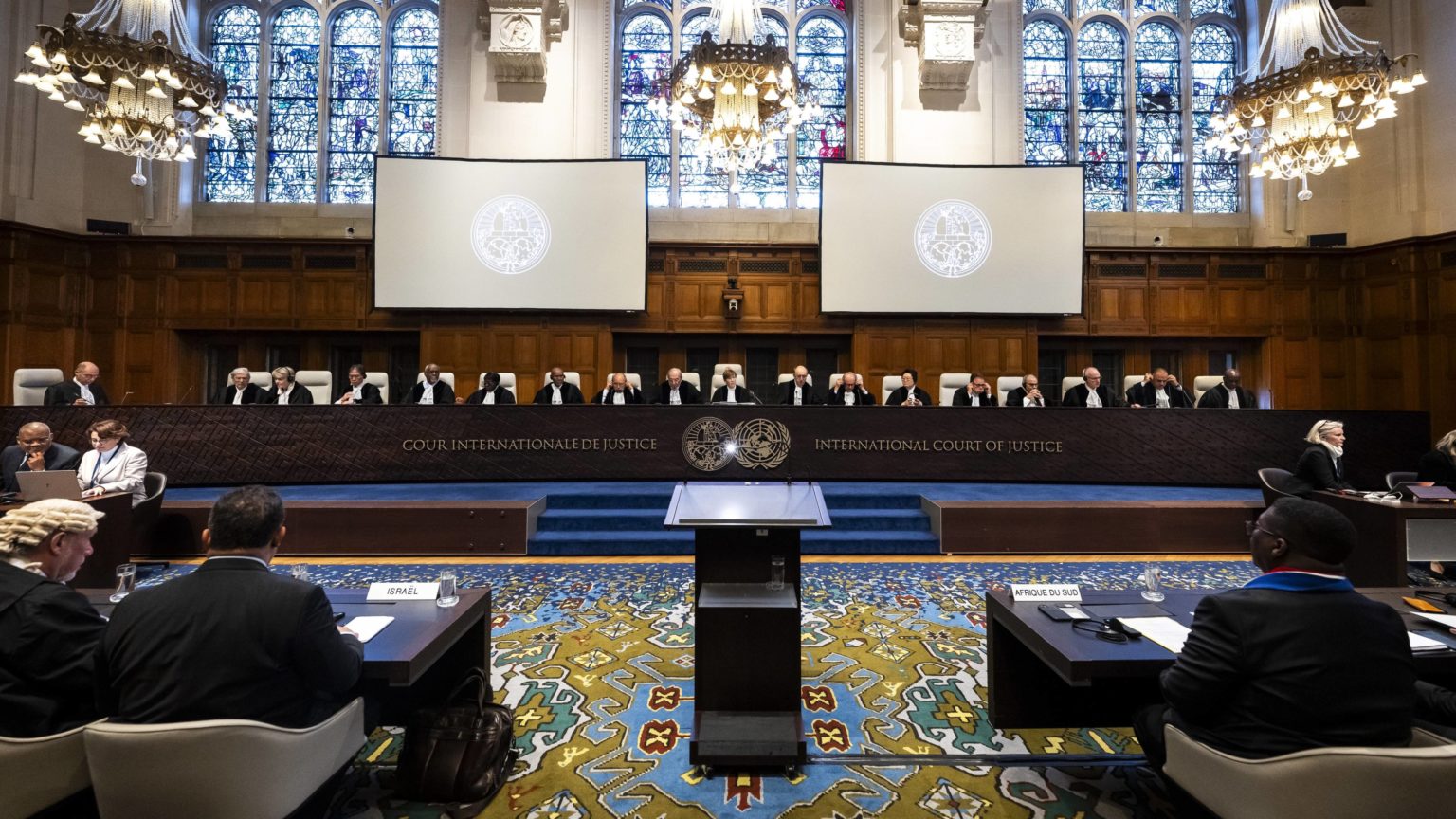
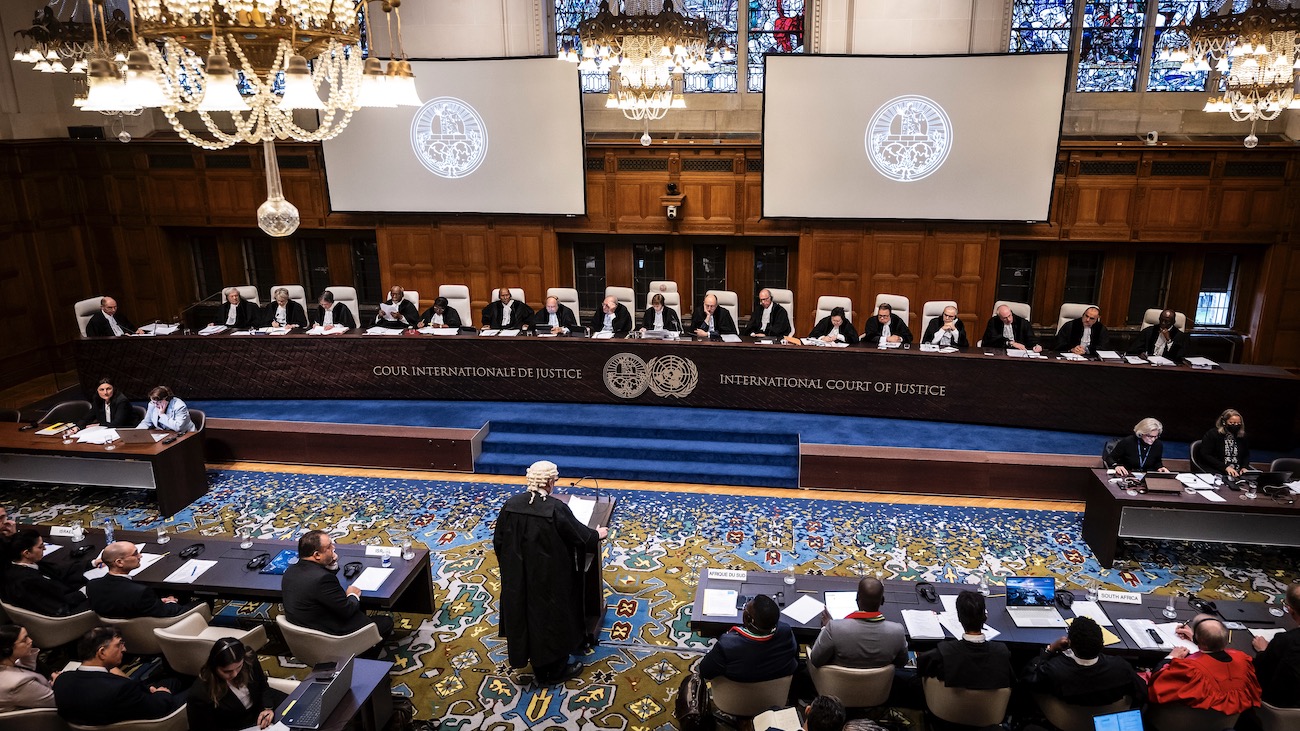
    The ICJ hearings on South Africa’s case against Israel. Photo: ICJ

    South Africa has asked the UN’s International Court of Justice (ICJ) to issue emergency measures, including ordering Israel to stop all military operations in Gaza, where it has killed over 25,000 Palestinians in an ongoing genocide.

    This Friday January 26, the International Court of Justice (ICJ) will issue a decision on South Africa’s request for provisional measures to bring an end to Israel’s ongoing genocide in Gaza. The order will come two weeks after South Africa and Israel presented their arguments before the court in the historic case.

    On December 29, 2023, Pretoria had approached the ICJ, which is the chief judicial institution of the United Nations, accusing Israel of violating its obligations under the 1948 Genocide Convention in relation to its months-long war on the besieged Gaza Strip.

    The application asserted that Israel’s actions were “genocidal in character because they are intended to bring about the destruction of a substantial part of the Palestinian national, racial, and ethnical group”.

    Pretoria’s application calls on the ICJ to determine and declare that Israel has violated its obligations as a party to the Convention on the Prevention and Punishment of the Crime of Genocide. However, pending a final ruling on the case, it urged the court to indicate provisional (or emergency) measures to “protect against further, severe, and irreparable harm” to the Palestinian people and to “ensure Israel’s compliance” with the Genocide Convention not to engage in genocide, and to prevent and to punish genocide”.

    Read more: South Africa takes Israel to ICJ for crime of genocide in Gaza

    Hearings on this request for provisional measures were held on January 11 and 12.

    The measures sought by South Africa include an immediate suspension of Israel’s military operations in and against Gaza, for it to “desist” from committing all acts defined as genocide under the 1948 Convention. This includes inflicting conditions of life calculated to bring about the “physical destruction” of Palestinians as a group through acts such as forced displacement, deprivation of food, water, and humanitarian assistance and “the destruction of Palestinian life in Gaza”. Israel must also prevent the destruction of evidence of the crimes outlined in the application.

    The application notes importantly that in order to indicate these measures, the ICJ does not at this stage need to definitively determine if Israel has indeed violated the 1948 Convention and committed genocide. Rather, it only needs to establish that the acts described are capable of falling within the provisions of the Convention, or at the very least, can be characterized as “ plausibly “genocidal”.

    Read more: Genocide as pattern and policy: ICJ hears South Africa’s case against Israel

    South Africa outlined a series of “compelling circumstances” that require urgent action from the court including that— “nowhere is safe in Gaza”, “besieged and bombed hospitals are no longer able to treat the sick and wounded”, “international experts are warning of imminent mass starvation”, “Palestinians in Gaza are being killed at the rate of approximately one person every six minutes”, and “Israel continues to prevent sufficient humanitarian assistance to Palestinians in Gaza”.

    Each of the circumstances described by South Africa in its submission made over three weeks ago persist in Gaza today. In fact, Israel killed more than 1,000 Palestinians in the week following the adjournment of hearings at the ICJ.

    Read more: Deflect and deny: Israel responds to South Africa’s accusation of genocide at ICJ

    The genocide continues

    Despite claims, including by the US, that Israel has shifted to “low intensity phase” of warfare, the Occupation has continued its massacres in Gaza, “encircling” the city of Khan Younis in the south of the Strip on January 23. Over 200 Palestinians were killed over the course of 24 hours. As attacks continued on Wednesday, at least nine people were killed after Israel hit a United Nations shelter in the city.

    The Palestinian Ministry of Health had also stated on Tuesday that the Nasser and Al Amal hospitals were under “extreme danger” from Israeli bombardment.

    The Palestinian Red Crescent Society (PRCS) reported that Israeli drones were firing at “anyone moving” around the Al Amal hospital, and that ambulances were unable to reach the wounded. The siege on the hospital continued on January 24, accompanied by intense shelling and gunfire around the hospital.

    The risk of famine in Gaza is “increasing each day”, as at least one in four households or over 500,000 people are facing “catastrophic” hunger characterized by “extreme lack of food, starvation, and exhaustion of coping capabilities”. Reports have emerged of Palestinians resorting to consuming animal fodder to survive, while aid agencies continue to face “access denials” and restrictions by Israel, especially in northern Gaza.

    “No one will stop us”

    The decisions issued by the ICJ are legally binding. However, the court does not have a mechanism to enforce compliance. Israeli Prime Minister Benjamin Netanyahu has already declared that “no one will stop us, not the Hague…and not anyone else”.

    The ICJ will notify the UN Security Council of the provisional measures it has ordered. The Court has the authority to determine these measures, and as such, may differ from what has been requested by Pretoria. If South Africa considers that Israel has failed to abide by the judgment, it can approach the Security Council to determine what action has to be taken. However, all signs indicate that Israel be protected by the veto power held by the US.

    The decision that the Court will take on Friday is also being considered as a test of the “rules-based international order” of which the US considers itself the sole arbiter. As Irish lawyer Blinne Ní Ghralaígh had said in her remarks to the court, “the very reputation of international law — its ability and willingness to bind and to protect all peoples equally — hangs in the balance”.

    Meanwhile, just days before Friday’s decision, Nicaragua announced that it requested permission from the ICJ to intervene in the case brought by South Africa, citing its own obligations to prevent genocide under the 1948 Convention.

    “Nicaragua, like the international community, considers that the actions undertaken by Israel constitute clear violations of the [Genocide Convention], acts which have been accompanied by statements from the highest authorities of Israel that clearly reveal the genocidal intention and dehumanization to which the Palestinian people have been subjected”, the government said in a statement.

    It added that Nicaragua’s decision reflected the “commitment of the Government of Reconciliation and National Unity and the people of Nicaragua in the liberation of the Palestinian people and humanity in general from the scourge of genocide”.

    Original article by Tanupriya Singh republished from peoples dispatch under a Creative Commons Attribution-ShareAlike 4.0 (CC BY-SA) license.