The war Iran prepared for: How Tehran is raising the cost of war

Spread the love

This work by Middle East Monitor is licensed under a Creative Commons Attribution-NonCommercial-ShareAlike 4.0 International License

Missiles fired from Iran toward Israel are seen in the skies over Ramallah, West Bank on March 8, 2026. [Issam Rimawi – Anadolu Agency]

by Dr Ramzy Baroud  RamzyBaroud

Iran is pursuing a multi-layered strategy—military, economic, political, and diplomatic—to raise the cost of war and prevent regime change.

Iran’s strategy in the current war

As the war on Iran continues to expand across multiple fronts, Tehran appears to be pursuing a complex strategy that combines military escalation, economic leverage, domestic mobilization, and diplomatic signaling.

Rather than relying on what Iranian officials once described as “strategic patience,” the current approach suggests that Iran is attempting to fundamentally reshape the battlefield by increasing the costs of the war for the United States, Israel, and any regional actors that choose to participate.

The strategy appears to rest on several interconnected pillars designed not only to respond to military attacks but also to prevent the broader objective that Iranian leaders believe lies behind the war: regime change.

Overwhelming the battlefield

The most visible element of Iran’s strategy has been its attempt to expand the battlefield geographically and operationally.

Rather than focusing solely on Israeli territory, Iran has targeted a wide range of US and allied assets across the region. These include military bases, intelligence facilities, radar systems, and logistical infrastructure that support American operations.

The aim appears to be twofold.

First,

Iranian strikes are intended to impose a form of “strategic blindness” on opposing forces by degrading radar systems, surveillance networks, and early-warning capabilities.

Such attacks reduce the ability of the United States and Israel to monitor Iranian movements and respond effectively to missile launches or other military operations.

Second, by targeting US bases in multiple countries across the region, Iran is sending a clear message that the conflict will not remain geographically contained.

In practical terms, this means that any country hosting American military facilities risks becoming part of the battlefield.

Iranian officials have repeatedly emphasized that these strikes are directed at US military infrastructure rather than the sovereignty of host nations. Nevertheless, the message is unmistakable: if regional territory is used to launch attacks on Iran, that territory may also become a site of retaliation.

READ: Iran’s Assembly of Experts selects Mojtaba Khamenei as new Supreme Leader

This approach reflects a major shift away from Iran’s previous policy of measured responses and limited escalation.

Instead, Tehran appears to be pursuing a strategy designed to overwhelm the enemy on multiple fronts simultaneously, raising the political and military cost of continuing the war.

Economic warfare

Alongside its military operations, Iran is also leveraging one of the most powerful tools at its disposal: the geography of global energy supply.

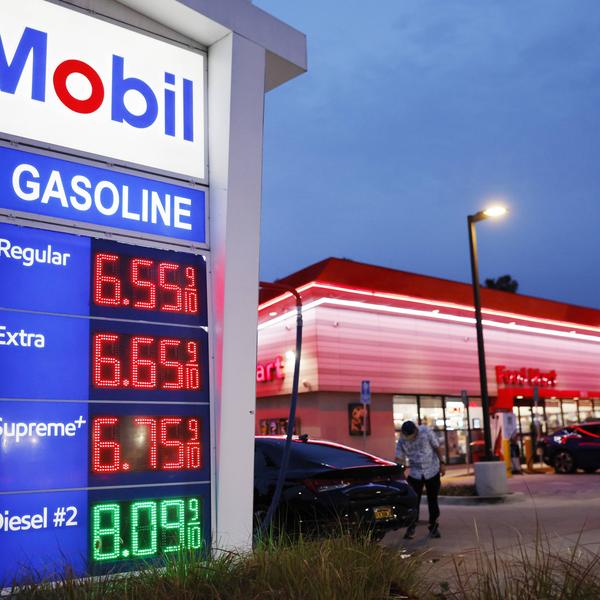
The Strait of Hormuz—through which roughly a fifth of the world’s oil supply passes—has effectively become a war zone. Although Iran has not formally declared a blockade, the conditions created by the conflict have produced a functional shutdown of the waterway.

Missile exchanges, naval deployments, maritime attacks, and the growing threat environment have drastically reduced the willingness of commercial shipping companies to operate in the area. Insurance costs for tankers have surged, while several shipping operators have suspended or rerouted voyages altogether.

In practice, this means that the strait is not closed by decree but by the realities of war.

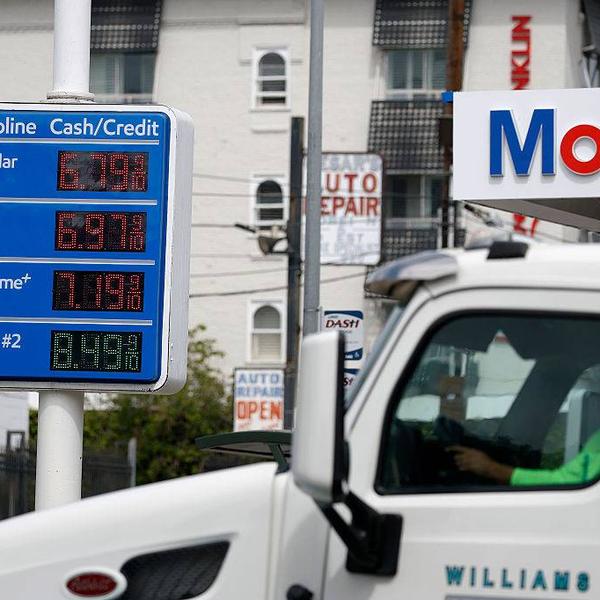
This distinction is important. Iran does not need to announce a blockade to achieve the strategic effects of one. The instability itself disrupts energy flows, drives oil prices upward, and injects uncertainty into global markets.

The consequences are felt far beyond the Gulf.

European economies—already weakened by energy shocks following the war in Ukraine—are particularly vulnerable to renewed volatility in oil and gas markets. Rising shipping costs, supply disruptions, and market speculation all compound the economic pressure.

For Tehran, this dynamic serves as a powerful form of indirect leverage.

The longer the war continues, the greater the economic consequences for the global system that underpins Western power. In this sense, the Strait of Hormuz functions not merely as a geographic chokepoint but as a strategic pressure valve capable of transmitting the costs of the conflict far beyond the battlefield.

Domestic cohesion

Another key pillar of Iran’s strategy lies within the country itself.

Western analysts had widely speculated that sustained military pressure—or a leadership decapitation strategy—could produce internal instability or even trigger a political crisis within Iran.

The killing of senior political and military figures, including high-ranking officials, appeared to be designed in part to create such a vacuum.

Yet the anticipated fragmentation has not materialized.

Instead, Iranian authorities have focused on projecting unity and political cohesion. Mass rallies and public demonstrations have taken place across multiple cities, with large crowds gathering in public squares to express support for the government and condemnation of the attacks.

These displays serve an important political function.

By filling public spaces with supporters, the government is attempting to pre-empt the emergence of alternative movements that might claim to represent a popular response to the war.

In effect, the strategy denies external actors the ability to argue that military intervention is intended to support domestic opposition or restore democratic governance.

For Washington and Tel Aviv, the assumption that internal unrest could become a decisive factor appears to have been a significant miscalculation.

Calibrated diplomacy

Despite the widening military confrontation, Iran has also sought to maintain a careful diplomatic balance with Arab governments.

Iranian officials have repeatedly emphasized that their strikes are directed at US military installations rather than the countries that host them.

This distinction is important.

Tehran’s broader objective appears to be preventing Arab states from becoming full participants in the conflict. While warning that any government enabling US military operations could face retaliation, Iran has simultaneously signaled that it does not seek confrontation with the region as a whole.

The message to Arab governments has therefore been dual-layered: do not allow your territory to be used for attacks on Iran, but if you avoid direct involvement, Iran does not consider you an enemy.

Such messaging reflects Tehran’s understanding that regional alignment could dramatically reshape the war’s dynamics.

READ: US intelligence assessment questions whether war could topple Iran’s regime

Strategic weaknesses

Despite the coherence of Iran’s overall approach, several weaknesses remain.

One of the most significant challenges lies in the realm of communication.

Iranian media outlets, operating under heavy pressure and frequent targeting, have struggled to project their narrative effectively to global audiences. Compared with the sophisticated international media infrastructure available to Western governments and Israel, Iran’s messaging often fails to reach wider international publics.

This limits Tehran’s ability to frame the conflict on its own terms.

A second challenge concerns the global anti-war movement.

While protests against the war have emerged in various cities around the world, they have not yet reached a scale capable of exerting decisive political pressure on governments supporting the conflict.

For Iran, the expansion of such protests could become a critical factor in constraining the military options available to Washington and its allies.

A war of strategy

Taken together, Iran’s actions suggest a leadership attempting to wage war according to a clearly defined strategic framework.

Military escalation, economic disruption, domestic mobilization, and diplomatic signaling all appear to function as parts of a single integrated approach designed to raise the cost of the conflict beyond what its adversaries may be willing to bear.

Whether the strategy ultimately succeeds remains uncertain.

What is increasingly evident, however, is that the war is evolving into a contest not only of military capabilities but also of strategic coherence.

For now, Iran appears to be operating according to a calculated plan, while its adversaries continue to search for a sustainable path forward in a rapidly expanding conflict.

OPINION: Instead of defeating China, Trump is accelerating its rise on the global stage

The views expressed in this article belong to the author and do not necessarily reflect the editorial policy of Middle East Monitor.

This work by Middle East Monitor is licensed under a Creative Commons Attribution-NonCommercial-ShareAlike 4.0 International License

Keir Starmer explains that UK is participating defensively in Trump and Israel's criminal war for Israel's genocidal expansion in Iran and states that he supports Zionism "without qualification".
Keir Starmer explains that UK is participating defensively in Trump and Israel’s criminal war for Israel’s genocidal expansion in Iran and states that he supports Zionism “without qualification”.
Orcas discuss rotting brain. Front Orca says "Wish someone would lock him up".
Orcas discuss rotting brain. Front Orca says “Wish someone would lock him up”.
Donald Trump warns against following the https://onaquietday.org blog, says that it's easy atm, she only needs to report war crimes supporting Israel's genocidal expansion.
Donald Trump warns against following the https://onaquietday.org blog, says that it’s easy atm, she only needs to report war crimes supporting Israel’s genocidal expansion.

Continue ReadingThe war Iran prepared for: How Tehran is raising the cost of war

104 killed in US attack on Iranian warship off Sri Lanka, Iran’s army says

Spread the love

This work by Middle East Monitor is licensed under a Creative Commons Attribution-NonCommercial-ShareAlike 4.0 International License

IRIS Dena warship [Fars Media Corporation/Wikipedia]

Iran’s army said Sunday that 104 crew members of the Iranian warship IRIS Dena were killed and 32 others injured in a US attack last week, Anadolu reports.

According to the state news agency IRNA, the army said the vessel was attacked by the US Navy on March 4 in the water off Sri Lanka as it was returning from the Milan Peace 2026 naval drills in India.

Washington confirmed that an American submarine launched a torpedo attack on the Iranian vessel.

Sri Lanka said it launched a joint rescue operation after receiving a distress call from the ship, off the southern coast of Galle city. It added that 32 crew members were wounded and rushed to a local hospital.

The attack occurred as the US and Israel continued large-scale airstrikes on Iran that began on Feb. 28, killing more than 1,200 people, including Supreme Leader Ali Khamenei, and injuring over 10,000 others, according to Iranian authorities.

Tehran retaliated with missile and drone attacks targeting Israel, Iraq, Jordan and Gulf countries that are home to US military assets.

READ: US service member dies from injuries sustained in Iran’s attack on Saudi Arabia, death toll rises to 7

This work by Middle East Monitor is licensed under a Creative Commons Attribution-NonCommercial-ShareAlike 4.0 International License

Keir Starmer explains that UK is defensively bombing Iraq in support of Israel's genocidal expansionism. He explains that while his bombs still kill people that they are especially called defensive for the gullible and to be harder to convict of war crimes.
Keir Starmer explains that UK is defensively bombing Iraq in support of Israel’s genocidal expansionism. He explains that while his bombs still kill people that they are especially called defensive for the gullible and to be harder to convict of war crimes.
Donald Trump warns against following the https://onaquietday.org blog, says that it's easy atm, she only needs to report war crimes supporting Israel's genocidal expansion.
Donald Trump warns against following the https://onaquietday.org blog, says that it’s easy atm, she only needs to report war crimes supporting Israel’s genocidal expansion.
Orcas discuss Genocide-supporting and complicit Zionists. Donald Trump, Keith Starmer, David Lammy, Rachel Reeves, Angela Rayner and Wes Streeting are acknowledged as evil genocide-complicit and supporting cnuts.

Continue Reading104 killed in US attack on Iranian warship off Sri Lanka, Iran’s army says

Iran adds US economic assets to ‘target list’: Media

Spread the love

This work by Middle East Monitor is licensed under a Creative Commons Attribution-NonCommercial-ShareAlike 4.0 International License

Thousands of Iranians march during a protest held against the United States and Israel after performing Friday prayer at the Imam Khomeini Grand Musalla Mosque in Tehran on March 06, 2026. [Fatemeh Bahrami – Anadolu Agency]

Iran has expanded its list of potential targets to include American economic assets, Iranian media reported Sunday, Anadolu reports.

The Fars News Agency, citing an unnamed Iranian official, said that Tehran had revised its targeting strategy so that it would no longer focus solely on US and Israeli military sites.

According to the official, Iran has broadened its “list of targets” to include “American capital and interests.”

The official said the decision followed what he described as changes in statements by US and Israeli officials “that now include direct threats against the Iranian people.”

Late Sunday, the US and Israel carried out airstrikes targeting oil storage facilities in and around Tehran. The attacks caused significant damage to several storage facilities, including the Shahran Oil Depot.

Regional escalation flared up since Israel and the US launched a joint attack on Iran on Feb. 28, killing more than 1,200 people, including Supreme Leader Ali Khamenei, and injuring over 10,000 others, according to Iranian authorities.

Tehran retaliated with missile and drone attacks targeting Israel, Iraq, Jordan and Gulf countries that are home to US military assets.

READ: Trump says Iran’s next supreme leader would need US approval

This work by Middle East Monitor is licensed under a Creative Commons Attribution-NonCommercial-ShareAlike 4.0 International License

Keir Starmer explains that UK is defensively bombing Iraq in support of Israel's genocidal expansionism. He explains that while his bombs still kill people that they are especially called defensive for the gullible and to be harder to convict of war crimes.
Keir Starmer explains that UK is defensively bombing Iraq in support of Israel’s genocidal expansionism. He explains that while his bombs still kill people that they are especially called defensive for the gullible and to be harder to convict of war crimes.
Donald Trump warns against following the https://onaquietday.org blog, says that it's easy atm, she only needs to report war crimes supporting Israel's genocidal expansion.
Donald Trump warns against following the https://onaquietday.org blog, says that it’s easy atm, she only needs to report war crimes supporting Israel’s genocidal expansion.
Orcas discuss Genocide-supporting and complicit Zionists. Donald Trump, Keith Starmer, David Lammy, Rachel Reeves, Angela Rayner and Wes Streeting are acknowledged as evil genocide-complicit and supporting cnuts.

Continue ReadingIran adds US economic assets to ‘target list’: Media

Switzerland says US-Israeli strikes on Iran violate international law

Spread the love

This work by Middle East Monitor is licensed under a Creative Commons Attribution-NonCommercial-ShareAlike 4.0 International License

Martin Pfister on 11 March 2025 [Bundeskanzlei/Wikipedia]

Swiss Defense Minister Martin Pfister criticized the United States and Israel for airstrikes against Iran, saying their actions, along with those of Tehran, violated international law, Sonntags Zeitung newspaper reported on Sunday, Anadolu reports.

“The Americans and Israel have attacked Iran from the air. In doing so, they, like Iran, have violated international law,” Pfister said, calling on the warring parties to cease violence and protect the civilian population.

He also warned that Europe could be drawn into the conflict, not only through conventional military engagement but through asymmetric warfare such as terrorist attacks.

“There is a risk of terrorist attacks in Switzerland. In addition, the war could trigger a wave of refugees that will also reach us,” Pfister said.

While he does not believe Switzerland is directly threatened by Iranian long‑range missiles, Pfister said the possibility of collateral damage cannot be ruled out.

“We currently have nothing to defend against long-range attacks,” he said.

READ: UAE denies Israeli media reports about attacking water desalination facility in Iran

He stressed the need for a comprehensive approach to security that goes beyond purely military preparedness, citing the importance of police and intelligence services.

The minister said that threat assessments had been underestimated in recent decades, adding: “Our perfected society with its prosperity is still a long way from the current conflicts… This war, as bad as it is, could also trigger a rethink in this country, which is urgently needed.”

Tensions in the Middle East have soared since the US and Israel launched a large-scale attack on Iran on Feb. 28, killing more than 1,200 people to date, including Iranian Supreme Leader Ali Khamenei, over 150 schoolgirls, and senior military officials.

Iran has retaliated with sweeping strikes targeting US bases, diplomatic facilities, and military personnel across the region, as well as multiple Israeli cities.

This work by Middle East Monitor is licensed under a Creative Commons Attribution-NonCommercial-ShareAlike 4.0 International License

Keir Starmer explains that UK is defensively bombing Iraq in support of Israel's genocidal expansionism. He explains that while his bombs still kill people that they are especially called defensive for the gullible and to be harder to convict of war crimes.
Keir Starmer explains that UK is defensively bombing Iraq in support of Israel’s genocidal expansionism. He explains that while his bombs still kill people that they are especially called defensive for the gullible and to be harder to convict of war crimes.
Donald Trump warns against following the https://onaquietday.org blog, says that it's easy atm, she only needs to report war crimes supporting Israel's genocidal expansion.
Donald Trump warns against following the https://onaquietday.org blog, says that it’s easy atm, she only needs to report war crimes supporting Israel’s genocidal expansion.
Orcas discuss Genocide-supporting and complicit Zionists. Donald Trump, Keith Starmer, David Lammy, Rachel Reeves, Angela Rayner and Wes Streeting are acknowledged as evil genocide-complicit and supporting cnuts.

Continue ReadingSwitzerland says US-Israeli strikes on Iran violate international law

US service member dies from injuries sustained in Iran’s attack on Saudi Arabia, death toll rises to 7

Spread the love

This work by Middle East Monitor is licensed under a Creative Commons Attribution-NonCommercial-ShareAlike 4.0 International License

The United States Navy destroyer USS Frank E. Petersen Jr. (DDG-121) conducted a live-fire military exercise in the Arabian Sea on February 27, 2026. [US CENTCOM/Handout – Anadolu Agency]

A US service member has succumbed to injuries sustained during an Iranian attack on US troops in Saudi Arabia on March 1, bringing the death toll of US service members to seven, US Central Command (CENTCOM) announced Sunday, Anadolu reports.

“The service member was seriously wounded at the scene of an attack on US troops in the Kingdom of Saudi Arabia,” CENTCOM said on the US social media company X, adding that the person died last night.

The identity of the fallen member will be withheld until next of kin are notified, it said.

All of the previously reported deaths were from an attack in Kuwait; this is the first death reported outside that country.

US President Donald Trump has repeatedly warned that more casualties are likely as the campaign continues. “Sadly, there will likely be more before it ends,” he said earlier this month, noting “we’ll do everything possible where that won’t be the case.”

The announcement came as the US-Israeli joint attacks on Iran entered their ninth day.

The campaign, launched last Saturday, has reportedly killed more than 1,200 people in Iran, including Supreme Leader Ali Khamenei. Tehran has retaliated with drone and missile strikes targeting US military assets and Gulf countries across the region.

READ: US-Israeli attack hits irradiation sterilization facility in central Iran

This work by Middle East Monitor is licensed under a Creative Commons Attribution-NonCommercial-ShareAlike 4.0 International License

Keir Starmer explains that UK is defensively bombing Iraq in support of Israel's genocidal expansionism. He explains that while his bombs still kill people that they are especially called defensive for the gullible and to be harder to convict of war crimes.
Keir Starmer explains that UK is defensively bombing Iraq in support of Israel’s genocidal expansionism. He explains that while his bombs still kill people that they are especially called defensive for the gullible and to be harder to convict of war crimes.
Donald Trump warns against following the https://onaquietday.org blog, says that it's easy atm, she only needs to report war crimes supporting Israel's genocidal expansion.
Donald Trump warns against following the https://onaquietday.org blog, says that it’s easy atm, she only needs to report war crimes supporting Israel’s genocidal expansion.
Orcas discuss Genocide-supporting and complicit Zionists. Donald Trump, Keith Starmer, David Lammy, Rachel Reeves, Angela Rayner and Wes Streeting are acknowledged as evil genocide-complicit and supporting cnuts.

Continue ReadingUS service member dies from injuries sustained in Iran’s attack on Saudi Arabia, death toll rises to 7