JEREMY CORBYN reports from Hiroshima where he represented CND at the 80th anniversary of the bombing of the city by the US
…
Hundreds of thousands died in Hiroshima and Nagasaki from the bombs and the cancers that followed. Probably two million lives have been lost by testing and the medical effects of radiation emitted.
Hiroshima’s bombing in 1945 did not serve any military purpose. Japan was already on the verge of surrender and was reaching out via the Soviet Union for an end to the conflict.
This was well known to the US and Britain at the time. In reality, it was the last bomb of WWII, and the first bomb of the cold war. The US had spent $2 billion on the Manhattan Project to develop the bomb, despite the opposition of many scientists including Albert Einstein who had initially supported it. They opposed it because they realised the indiscriminate killing of civilians was then, as it is now, an inevitable consequence of nuclear war.
The horrors of the atomic bombings still haunt the now aged survivors. Known as the Hibakusha, they were awarded the Nobel Peace Prize for their work in pleading with the world to abolish the nuclear weapons that had killed their friends and family.
…
Eighty years on from the horrors of Hiroshima (and Nagasaki), and the weapons now available are many times more powerful. There are no winners in nuclear war; only burnt bodies, a destroyed environment and a nuclear winter for the whole planet.
After 80 years, we need to make the Global Ban Treaty a reality — and rid this world of nuclear weapons once and for all.
This work by Middle East Monitor is licensed under a Creative Commons Attribution-NonCommercial-ShareAlike 4.0 International License.
Commissioner-General of the United Nations Relief and Works Agency for Palestine Refugees in the Near East (UNRWA) Philippe Lazzarini (L) is welcomed by Japan’s Prime Minister Shigeru Ishiba at the prime minister’s office in Tokyo on May 27, 2025. [Photo by KAZUHIRO NOGI/POOL/AFP via Getty Images]
Japanese Prime Minister Shigeru Ishiba said on Wednesday that his country will work to deliver humanitarian aid to Palestinians in the Gaza Strip, which is currently besieged by Israel.
The Japanese Prime Minister’s office said in a statement that Ishiba received the Commissioner-General of the United Nations Relief and Works Agency for Palestine Refugees (UNRWA), Philippe Lazzarini, in Tokyo.
Ishiba stressed “Creating an environment in which aid is possible is extremely important,” expressing his respect for UNRWA’s support for Palestinian refugees.
Lazzarini, in turn, expressed his gratitude to Ishiba for the Japanese government’s efforts to improve the humanitarian situation in Gaza.
The two sides reiterated their commitment to continuing cooperation to support Palestinian refugees.
According to the UN, through deliberate starvation in order to achieve forced displacement, Israel has pushed 2.4 million Palestinians to the brink of famine by closing the Gaza Strip’s crossings to humanitarian aid, particularly food, since 2 March.
This work by Middle East Monitor is licensed under a Creative Commons Attribution-NonCommercial-ShareAlike 4.0 International License.
UK Labour Party government ministers Keir Starmer, Angela Rayner and Rachel Reeves explain that they are partners complicit in Israel’s Gaza genocide. The UK has provided Israel with arms, military and air force support. They explain that they don’t do gas chambers but do do forced marches, starvation, destroy hospitals, mass-murders of journalists and healthcare workers.
Members of an international diplomatic delegation scramble for cover after coming under Israeli fire during a May 21, 2025 visit to the besieged Jenin refugee camp in the illegally occupied West Bank of Palestine. (Photo: Mohammad Ateeq/AFPTV/AFP via Getty Images)
Among those shot at were representatives of three nations that threatened “concrete actions” if Israel doesn’t end its assault and siege on Gaza and others that support a genocide case against the country.
Israeli occupation forces fired what they called “warning shots” at a large delegation of international diplomats visiting the besieged Jenin refugee camp in the West Bank on Wednesday, an incident many critics said was an attempt to intimidate countries that just two days earlier issued an ultimatum to stop annihilating Gaza and others that have joined a genocide case against Israel.
Palestinian officials were briefing a group of more than 20 diplomats about the crisis in the illegally occupied West Bank—where Israeli soldiers and settlers have killed and wounded thousands of Palestinians including hundreds of children since October 2023 while pushing ahead with massive land theft and colonization—when they came under fire.
According to the Israeli Foreign Ministry, the delegation “deviated” from the route approved by Israeli occupation authorities “and entered an area where they were not authorized to be,” prompting Israel Defense Forces (IDF) soldiers to fire “warning shots to distance them away.”
“The IDF regrets the inconvenience caused,” the ministry added.
Israeli soldiers intentionally fired at a delegation of about 30 Arab & EU diplomats, ambassadors and consuls, visiting Jenin refugee camp, in the West Bank. Israel claims “it was an accident” and that they fired “warning shots” because they “felt in danger”. Israel was trying to intimidate them.
Israeli media reported IDF troops fired shots in the air. However, video footage of the incident appears to show soldiers aiming their guns and firing straight ahead in the direction of the diplomats as they scrambled for cover. Israeli officials have often been caught lying about the actions of IDF troops in Palestine.
The delegation included diplomats from the European Union and countries including Austria, Brazil, Bulgaria, Canada, Chile, China, Egypt, France, India, Japan, Jordan, Lithuania, Mexico, Morocco, Poland, Portugal, Romania, Russia, Spain, Sri Lanka, Turkey, and the United Kingdom.
Another video documenting the moment the diplomats and representatives from over 24 countries and the EU were intimidated by Israeli soldiers as they gathered in front of the besieged Jenin Camp. pic.twitter.com/5uJTOE9pRi
On Monday, three of those countries—France, the United Kingdom, and Canada—issued a rare joint statement condemning Operation Gideon’s Chariots, the ongoing Israeli campaign to conquer and indefinitely occupy all of Gaza and ethnically cleanse much of its population.
On Tuesday, the U.K. announced it is suspending negotiations with Israel on a free trade agreement, explaining that “it is not possible to advance discussions on a new, upgraded FTA” with a government “that is pursuing egregious policies in the West Bank and Gaza.”
Israeli Prime Minister Benjamin Netanyahu and Yoav Gallant, his former defense minister, are wanted by the International Criminal Court for alleged war crimes and crimes against humanity in Gaza including extermination and forced starvation.
The U.K. additionally sanctioned three far-right Israeli extremists, including settler leader Daniella Weiss, as well as three illegal settlement outposts and two groups “that have supported, incited, and promoted violence against Palestinian communities in the West Bank.”
Also on Tuesday, European Commission Vice President Kaja Kallas—who is the E.U.’s foreign policy chief—said the 27-nation bloc would review its political and economic agreement with Israel in light of the “catastrophic” situation in Gaza.
Brazil, Chile, China, Egypt, Jordan, Mexico, Spain, and Turkey have either joined or expressed support for the South Africa-led genocide case against Israel currently before the International Court of Justice—which last year found that Israel’s 58-year occupation of the West Bank, including East Jerusalem, and Gaza is an illegal form of apartheid that must be ended as soon as possible.
France's Foreign Minister confirms that Israeli soldiers shot at EU ambassadors and diplomats in Jenin.
Had any other country done this, it would have been considered an act of war. Imagine if Russia had done this?
Israel’s 592-day assault and siege on Gaza has left more than 189,000 Palestinians dead, maimed, or missing and over 2 million others forcibly displaced, starved, or sickened, according to the Gaza Health Ministry.
The Palestinian Authority Ministry of Foreign Affairs condemned what it called Wednesday’s “heinous crime” against the diplomats.
“The delegation was undertaking an official mission to observe and assess the humanitarian situation and document the ongoing violations perpetrated by the occupying forces against the Palestinian people,” the ministry said. “This deliberate and unlawful act constitutes a blatant and grave breach of international law and of the fundamental principles of diplomatic relations as enshrined in the 1961 Vienna Convention on Diplomatic Relations.”
Kallas said Wednesday that “any threats on diplomats’ lives are unacceptable.”
“Israel is also a signatory to the Vienna Convention, I mean the obligation to guarantee the security of all foreign diplomats,” Kallas noted. “We definitely call on Israel to investigate this incident and also hold accountable [those] who are responsible for this.”
The governments of other countries whose diplomats were targeted on Wednesday condemned the incident, with some, including France and Italy, summoning their Israeli ambassadors.
Genocide denier and Current UK Prime Minister Keir Starmer is quoted that he supports Zionism without qualification. He also confirms that UK air force support has been essential in Israel’s mass-murdering genocide. Includes URLs https://www.declassifieduk.org/keir-starmers-100-spy-flights-over-gaza-in-support-of-israel/ and https://youtu.be/O74hZCKKdpAUK Labour Party government ministers Keir Starmer, Angela Rayner and Rachel Reeves explain that they are partners complicit in Israel’s Gaza genocide. The UK has provided Israel with arms, military and air force support. They explain that they don’t do gas chambers but do do forced marches, starvation, destroy hospitals, mass-murders of journalists and healthcare workers.
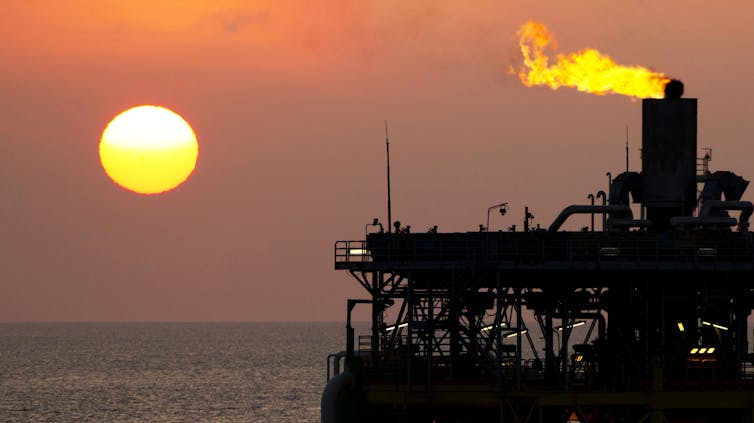
The UK government is about to host a summit with the International Energy Agency (IEA) on the future of energy security. It does so as the world grapples with war, geopolitical realignments and trade barriers, against a backdrop of accelerating climate upheavals. One of the expected outcomes of this summit is a new, agreed definition of what constitutes energy security in the 21st century.
Common understandings of energy security have focused on making supplies reliable and affordable, with less attention paid to ensuring sources of energy are sustainable and less volatile over the medium- and long-term. This neglect compromises our collective security.
The IEA’s 31 member countries and 13 associates include most of the world’s most powerful states. Its influence means that this new definition of energy security will be used to inform government policies and investment decisions around the world. Given the cost of energy infrastructure, and the lengthy time it takes to build these projects, this definition is set to shape our future, economically and climatically.
But there is a very real risk that this definition will open the door to further investments into fossil fuel production under the guise of energy security.
International Energy Agency (IEA) member and ‘association member’ countries. IEA, CC BY-SA
After Russia invaded Ukraine, governments rushed to cut their reliance on Russian fossil fuels. This caused major disruptions as prices spiked and millions were pushed into energy poverty.
Europe alone spent an extra €517–€831 billion (£444–£713 billion) on energy in 2021 and 2022, even though some imports from Russia continued through so-called “shadow fleets”. Some argued that high fossil fuel prices only embolden leaders like Putin and help fund their conflicts.
Governments responded with “energy nativism”, as they sought to secure as much energy as possible for their citizens at whatever cost. This typically meant boosting renewables and bulk buying oil and gas. In the UK’s case, it also meant the previous government issuing hundreds of new licenses to drill for oil and gas to “increase energy security” – licenses the current government says it will honour).
Shipments of liquified natural gas (LNG) were also redirected from poorer countries like Pakistan and Bangladesh towards the highest bidders in Europe and Asia. This raises the question of who exactly is becoming more energy secure and at what cost.
Meanwhile, large fossil fuel exporters like Qatar, the US and Australia ramped up production. A US official even referred to its gas exports as “molecules of freedom”. Australia has exported so much natural gas it may have to buy its own gas back from Japan at market price.
The sheer volume of investment in new oil and gas infrastructure like offshore rigs or LNG terminals, combined with long build times, has locked in higher fossil fuel production and pushed emissions to record levels. This poses significant risks for both exporters and importers, especially as future demand is uncertain and energy markets remain volatile.
Fossil fuels remain dominant
More fundamentally, continued reliance on fossil fuels is making humanity less secure. The vast majority of emissions still come from burning coal, oil or gas. Preventing climate catastrophe therefore requires us to phase out fossil fuels as fast as possible – with wealthy nations leading the charge. In their place, we’ll have to generate energy from renewable sources that do not replicate the volatility of globally traded fossil fuels.
Yet despite some progressive policies, fossil fuels remain dominant across the global economy. Investment in oil and gas today is almost double the level it must fall below if the world is to reach net zero by 2050, according to the IEA’s own modelling.
The pursuit of energy security has boosted renewables, but adding additional clean energy isn’t enough – it must ultimately displace fossil fuels entirely. This will require a whole-economy shift. That means cutting production of fossil fuels while also reducing demand, stabilising prices and building out clean energy fast enough to support the electrification of transport, industry and heating.
But supply chains for batteries, solar panels and other key technologies are vulnerable. Delays and shortages could mean electricity prices spike, sparking social unrest. This is yet another risk of getting energy security wrong: if inflationary pressures drive the immiseration of the general public, governments and their energy plans will be short lived.
The definition of energy security that comes out of the IEA summit should reflect the fact we’re now in a world of constant crises. True energy security means charting a path towards a world that is more socially, economically and environmentally secure. This means developing a well-managed global plan to phase out fossil fuels.
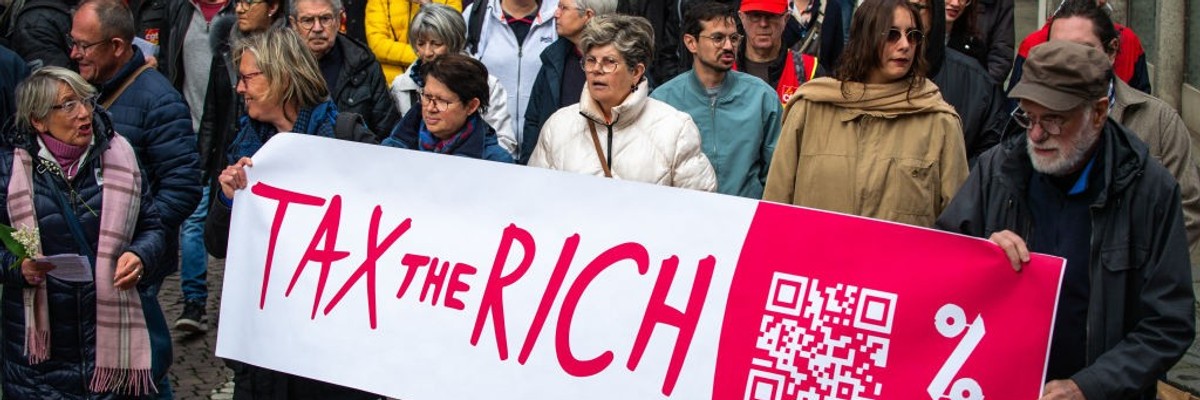
A crowd of demonstrators marches in Saint-Brieuc, France on May 1, 2024. (Photo: Emmanuelle Pays/Hans Lucas/AFP via Getty Images)
“The U.K. and the U.S. are both among the biggest enablers and the biggest losers of this lose-lose tax system,” said the chief executive of the Tax Justice Network.
A study published Tuesday estimates that tax dodging enabled by the United States, the United Kingdom, and other wealthy nations is costing countries around the world nearly half a trillion dollars in revenue each year, underscoring the urgent need for global reforms to prevent rich individuals and large corporations from shirking their obligations.
The new study, conducted by the Tax Justice Network (TJN), finds that “the combined costs of cross-border tax abuse by multinational companies and by individuals with undeclared assets offshore stands at an estimated $492 billion.” Of that total in lost revenue, corporate tax dodging is responsible for more than $347 billion, according to TJN’s calculations.
“For people everywhere, the losses translate into foregone public services, and weakened states at greater risk of falling prey to political extremism,” the study reads. “And in the same way, there is scope for all to benefit from moving tax rule-setting out of the OECD and into a globally inclusive and fully transparent process at the United Nations.”
The analysis estimates that just eight countries—the U.S., Canada, the U.K., Japan, Israel, South Korea, Australia, and New Zealand—are enabling large-scale tax avoidance by opposing popular global reform efforts. Late last year, those same eight countries were the lonely opponents of the United Nations General Assembly’s vote to set in motion the process of establishing a U.N. tax convention.
According to the new TJN study, those eight countries are responsible for roughly half of the $492 billion lost per year globally to tax avoidance by the rich and large multinational corporations, despite being home to just 8% of the world’s population.
“The hurtful eight voted for a world where we all keep losing half a trillion a year to tax-cheating multinational corporations and the super-rich,” Alex Cobham, chief executive of the Tax Justice Network, said in a statement Tuesday. “The U.K. and the U.S. are both among the biggest enablers and the biggest losers of this lose-lose tax system, and their people consistently demand an end to tax abuse, so it’s absurd that the U.S. and U.K. are seeking to preserve it.”
“It’s perhaps harder to understand why the other handful of blockers, like Australia, Canada, and Japan, who don’t play anything like such a damaging role, would be willing to go along with this,” Cobham added.
TJN released its study as G20 nations—a group that includes most of the “hurtful eight”—issued a communiqué pledging to “engage cooperatively to ensure that ultra-high-net-worth individuals are effectively taxed.” Brazil, which hosted the G20 summit, led the push for language calling for taxation of the global super-rich.
The document drew praise from advocacy groups including the Fight Inequality Alliance, which stressed the need to “transform the rhetoric on taxing the rich into global reality.”
The communiqué was released amid concerns that the election of far-right billionaire Donald Trump in the U.S. could derail progress toward a global solution to pervasive and costly tax avoidance.
The new TJN study cites Trump’s pledge to cut the statutory U.S. corporate tax rate from 21% to 15% and warns such a move would accelerate the global “race to the bottom” on corporate taxation.
“People in countries around the world are calling in large majorities on their governments to tax multinational corporations properly,” Liz Nelson, TJN’s director of advocacy and research, said Tuesday. “But governments continue to exercise a policy of appeasement on corporate tax.”
“We now have data from these governments showing that when they asked multinational corporations to pay less tax, the corporations cheated even more,” Nelson added. “It’s time governments found the spines their people deserve from their leaders.”