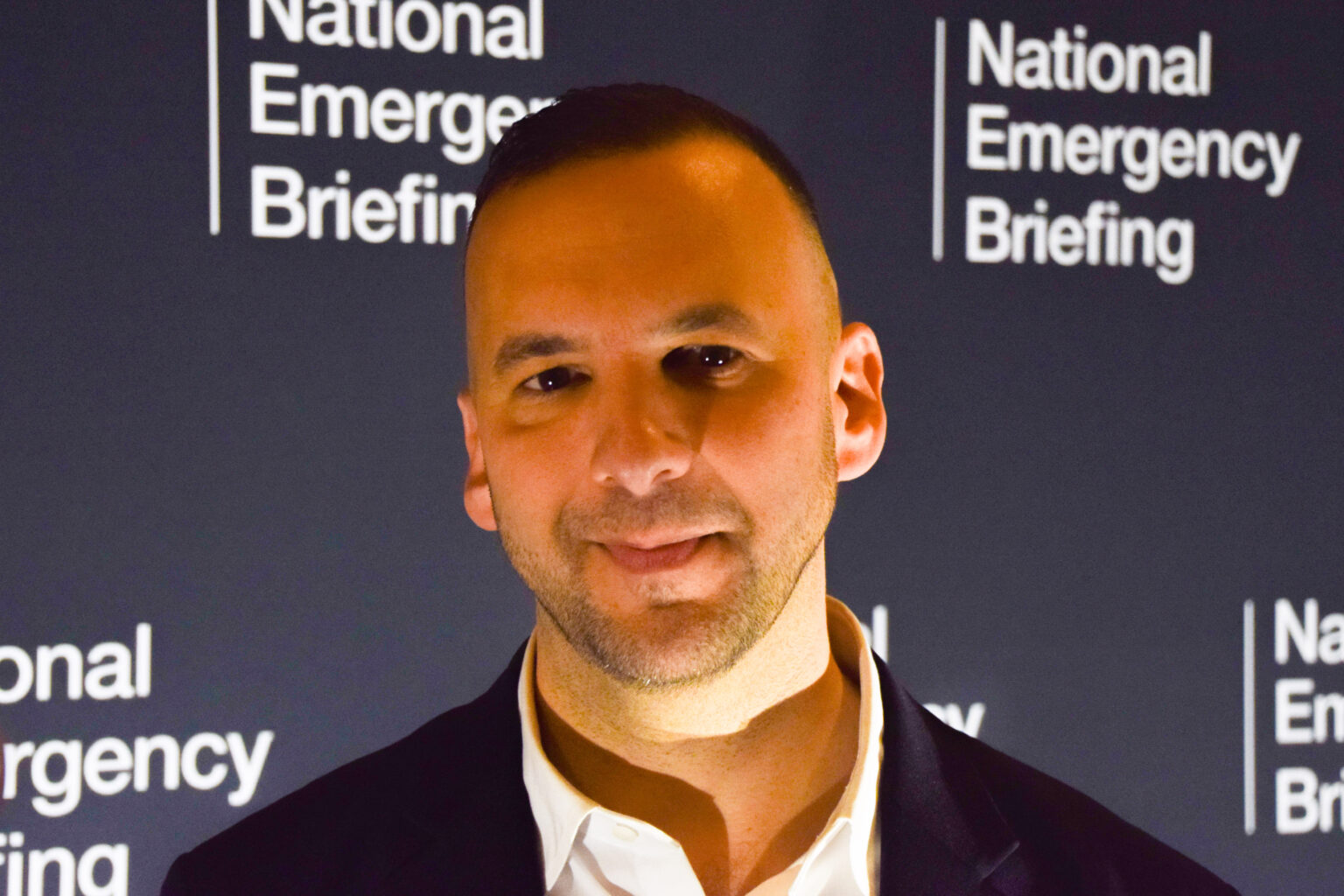
Green party leader Zack Polanski speaks to media following the National Emergency Briefing on climate and nature at the Central Hall Westminster, 27 November 2025, London, UK. Vuk Valcic/ZUMA Press Wire
It predicts a UK national security crisis with war, pandemics and food shortages.
Zack Polanski is calling on the government to publish the full, unredacted version of a report outlining how ecosystem collapse will plunge Britain into a national security crisis.
The report from UK intelligence chiefs warns that global ecosystem degradation and collapse will have devastating security consequences for Britain, including price rises, geopolitical instability, food and water shortages, greater pandemic risk, increased migration and conflict.
The Joint Intelligence Committee’s report was published in a redacted version in January and despite pressure from MPs and journalists, the Labour government has so far refused to release it in full.
Green party leader Polanski called on prime minister Andy Burnham to “tell the truth”, arguing that the public has a right to know the full scale of the threat.
Speaking at the Wild Summit in Bristol, Polanski said: “We’ve already seen how fragile our food systems are this year, with farmers warning that we could see empty shelves as a result of drought and flooding, and the government whispering that we should start stocking up on tinned food and bottled water.
“And these buried reports lay bare how unprepared we are for what is coming.”
Donald Trump urges you to be a Climate Science denier like him. He says that he makes millions and millions for destroying the planet, Burn, Baby, Burn and Flood, Baby, Flood.Nigel Farage urges you to ignore facts and reality and be a climate science denier like him and his Deputy Richard Tice. He says that Reform UK has received £Millions and £Millions from the fossil fuel industry to promote climate denial and destroy the planet.
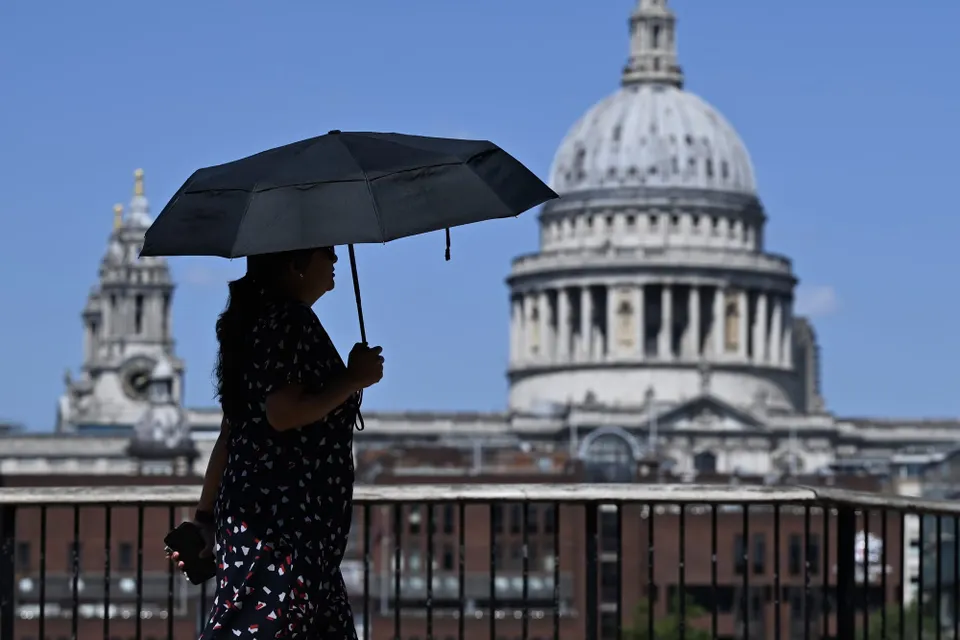
A woman uses an umbrella to try to cope with the scorching heat in London on 8 July. Rasid Necati Aslim/Anadolu via Getty Images
For months, ministers have refused to publish a report on how climate crisis will affect the UK. Burnham must release it
The past two months have seen exceptionally hot weather across much of Western Europe, with even the UK witnessing record temperatures. Even now, England and Wales are well into their third heatwave this year, with some areas on their 13th consecutive day of temperatures above 30°C.
More than 2,700 people are thought to have died as a result of the extreme heat in England and Wales, with scientists estimating that 440 people died during each of the three peak days of June’s record-breaking heatwave, when temperatures reached 37.7°C.
The situation was perhaps best summarised by the Met Office’s State of the UK Climate report for 2025, published last week: “What we used to think of as extreme, we increasingly see as normal.”
Introducing the report, its lead author, climate information scientist Mike Kendon, notes that “2025 was the UK’s warmest year on record, the sixth time this record has been broken in the 21st century so far”. He adds: “The latest 10-year period (2016-2025) is 1.33°C warmer than the period from 1961-1990”.
In these elevated temperatures, wildfires are a particular concern. This week, local authorities across France cancelled many Bastille Day events to minimise fire risks, not least from firework displays, and in the UK there were fears about what are becoming known as “firewaves”. Less cold winters mean more vegetation earlier in the spring, which, when dried out by heatwaves like those seen this year, increases the risk of wildfires. Last Tuesday, emergency services dealt with 19 such fires, including two major incidents, according to the National Fire Chiefs Council.
Speaking to the Guardian, Maria Barbosa of the UK Centre for Ecology and Hydrology said: “What we are witnessing is climate change actively rewriting the vulnerability of the British landscape.” Perhaps the key element to draw out here is that this is not a change likely to affect us in the future; it is happening now.
Moreover, it relates to one of the surprising elements of the June heat: a public disconnect in the UK between acceptance of climate breakdown and relating this to carbon dioxide emissions from burning coal, oil or gas. People seemed unwilling or unable to make this link, even with the widespread personal experience of heat, the risk of wildfires and those reports of thousands of deaths.
One explanation is that many of our biggest media outlets often fail to point to the connection.
Researchers at the Energy and Climate Intelligence Unit reviewed 2,500 news reports on the heatwaves from the nine main national daily newspapers, finding that nearly three-quarters made no mention of climate breakdown. The Financial Times was most likely to mention the climate crisis, doing so in 50 of its 78 articles on the heatwaves, while The Sun was least likely to do so – making the link in only four of its 69 articles.
All too often, the reports gave the impression that the main challenge regarding the heatwaves will be adapting to the “new normal” of a hotter world, with plenty of coverage on changing our behaviour, converting buildings and being prepared for new health concerns.
But the challenge we face goes way beyond that. Adapting to a world where average temperatures are 2.5°C above current levels might be possible at considerable cost and human suffering, but unless we also cut carbon dioxide emissions, then we will have to keep on adapting to ever-higher temperatures. Concentrating on current adaptation alone is barely half the answer.
This is a known issue within government and is causing such concern that publicity is unwelcome, as shown by events relating to a study prepared by the Joint Intelligence Committee, which was officially described as a “national security assessment” and titled somewhat ominously: Global biodiversity loss, ecosystem collapse and national security.
The study was supposed to be launched at a landmark event on 9 October last year, but was held back, with one source telling The Guardian that insiders “feared it was being suppressed because the government was unwilling to face the issues raised.”
After pressure from MPs, including the official environmental audit committee, and Freedom of Information requests to publish the report, the government eventually released a redacted 14-page version in January this year. It warns of a high probability that the UK’s national security, financial prosperity and food security will come under threat from the climate crisis and the subsequent collapse of vital ecosystems that support food production.
Even that makes for very sober reading. The report identifies nine “planetary boundaries” as the safe limits identified for human pressure on nine Earth system processes crucial to maintaining a stable planet, such as climate change, biosphere integrity and oceanic acidification. Six have already been crossed.
The report concludes that ecosystem degradation is occurring across all global regions and every critical ecosystem is on a “pathway to collapse”, which it helpfully defines as “irreversible loss of function beyond repair”.
The implications are huge. This is an official government study by the combined intelligence agencies, and even if redacted, it is unable to hide the crisis ahead. One conclusion is obvious: if this is the greatest threat to our security and the integrity of the global ecosystem, we should be redirecting money away from conventional military spending and towards human and environmental security.
A key requirement of Andy Burnham as incoming prime minister should be the immediate release of the full report, followed by a vigorous public debate on where we go from here.
Donald Trump urges you to be a Climate Science denier like him. He says that he makes millions and millions for destroying the planet, Burn, Baby, Burn and Flood, Baby, Flood.Nigel Farage urges you to ignore facts and reality and be a climate science denier like him and his Deputy Richard Tice. He says that Reform UK has received £Millions and £Millions from the fossil fuel industry to promote climate denial and destroy the planet.Orcas comment on killer apes destroying the planet by continuing to burn fossil fuels.