Article by Ethan Shone republished from OpenDemocracy under a Creative Commons Attribution-NonCommercial 4.0 International licence.
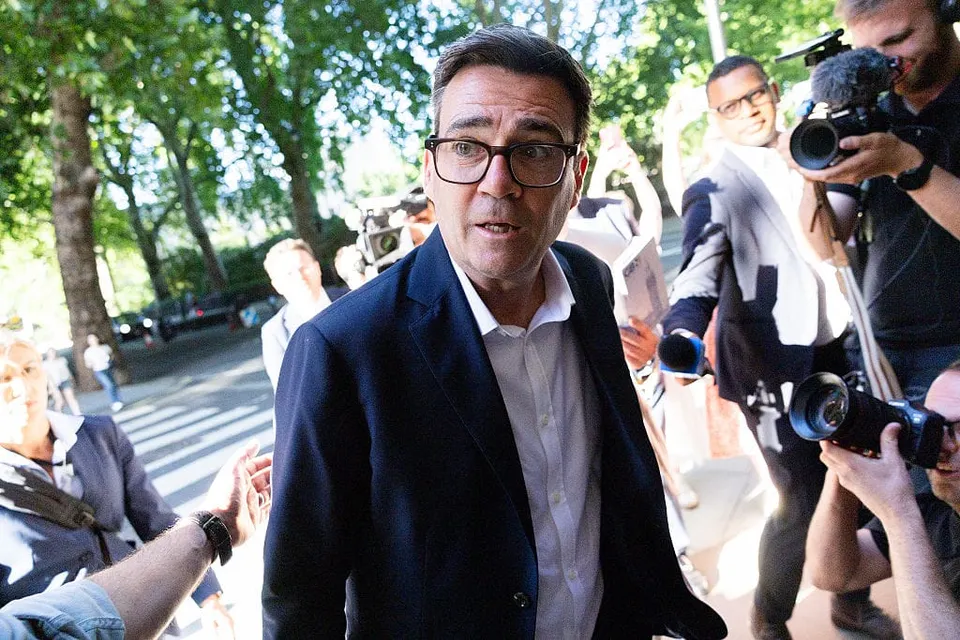
UK’s weak lobbying laws leave public in the dark about Flint Global’s vast access to government under James Purnell
Flint Global, the lobbying firm run by Andy Burnham’s incoming chief of staff, James Purnell, held extensive meetings with ministers, senior officials and special advisers with minimal disclosure, openDemocracy can reveal.
Our analysis of public transparency releases revealed Flint’s staff members met with officials from at least nine government departments on 38 occasions – for meetings, breakfasts, lunches, dinners and roundtables – since Labour took office. Attendees included cabinet ministers Jonathan Reynolds, Douglas Alexander and Nick Thomas-Symonds. This figure is likely an undercount as records of such meetings are published months in arrears.
While Flint Global opts not to reveal its client list in the UK, EU transparency disclosures reveal it has lobbied politicians in Brussels on behalf of Microsoft, Apple, BP and Uber. In the UK, the firm is known to have advised Thames Water – the utility Burnham has said “should be” nationalised.
Our findings raise fresh questions about the interests of Purnell, a former Blair-era cabinet minister who is poised to become one of the UK’s most powerful unelected officials when Burnham enters No 10, and have sparked fresh calls for the UK’s weak lobbying laws to be reformed.
One government log appears to confirm just how routine its engagements with Flint were.
A September 2024 meeting between the lobbying firm and the Department for Business and Trade’s then top-ranking civil servant, Gareth Davies, is described as a “regular meeting to discuss latest business updates”. Purnell is also recorded as having hosted “evening drinks to discuss latest business updates” with Davies in March this year.
Yet despite this regular access to government officials, Flint’s quarterly entries to the Office of the Registrar of Consultant Lobbyists have only ever declared lobbying for two clients. The firm said it lobbied on behalf of the British Standards Institution, which produces technical standards on a range of products and services, in late 2024, and Hellen Systems, a tech firm working on long-range navigation, between July and September 2025.
Across the remaining six quarters that Labour has been in office – covering a total of 18 months – Flint declared having made “no communications which meet the definition of consultant lobbying”.
There is no suggestion that Flint has broken any rules. Rather, its near-empty register reflects major flaws in Westminster’s lobbying transparency rules. While few companies enjoy such extensive access to such wide-ranging government departments, much of Flint’s lobbying activity does not meet the threshold for statutory registration.
The 2014 Lobbying Act requires consultant lobbyists to register only direct communications with ministers or permanent secretaries made on a client’s behalf. They do not have to declare meetings with government special advisers, director generals and senior officials, nor roundtables and briefings that they attend or organise, nor strategic advice they give clients about who to speak to in government, what to say, and when to say it.
The result is that a firm such as Flint Global can maintain a regular presence across Whitehall – breakfasting with officials, dining with ministers, pre-briefing advisers – while lawfully declaring that it does no consultant lobbying at all. Many similar lobbying firms sign up to the industry body’s voluntary code of conduct, which requires them to publish a client list, but Flint has not opted to do so.
This means the public has no way of knowing whether decisions that cross Purnell’s desk in No 10 could benefit his former clients.
Duncan Hames, senior director of policy at Transparency International UK, told openDemocracy: “That a lobbying company can have dozens of meetings across government with so little public information about the purpose of these engagements shows how opaque Westminster remains.
“If the next prime minister wants change from the broken politics-as-usual, they should recognise that keeping things behind closed doors and poorly managing conflicts of interest are recipes for disaster.
“Government should create a firewall between any new appointments and their past interests in the private sector, as well legislating to bring lobbying out of the shadows.”
Vast access to Whitehall
Purnell, who resigned from Flint Global last week, joined the company as chief executive in June 2024 – weeks before Labour’s election win. Although the lobby firm had previously secured meetings with Conservative government officials, its engagement with the government appears to have ramped up that summer.
In July 2024, the firm hosted a roundtable with then-business secretary Jonathan Reynolds alongside Barclays, Google and Virgin Atlantic to discuss “opportunities and challenges relating to business growth”. It is not known whether Flint counts these firms among its UK clients, though EU transparency records reveal it has lobbied for Google in Brussels.
Over the following 20 months, Flint met ministers or officials from the Department for Business and Trade at least 13 times, including three meetings with trade minister Douglas Alexander and repeated meetings, breakfasts, dinners and drinks with civil servant Gareth Davies.
Over at the Treasury, Flint discussed the contents of the chancellor’s January 2025 growth speech with a senior official the day it was delivered, attended a roundtable on financial services policy with then City minister Emma Reynolds, and met a senior official to “discuss policy for Autumn Budget” in October 2025.
Department for Transport special adviser Stef Lehmann, who previously worked in Flint’s transport team, accepted lunch or dinner from Flint on three separate occasions, while the department’s permanent secretary, Bernadette Kelly, recorded a “speaking commitment” with the firm.
Flint also hosted or briefed senior officials at the Department for Science, Innovation and Technology on digital policy; met officials from the Department for Energy, Security and Net Zero to discuss new publicly owned energy investment firm Great British Energy; and discussed planning “blockers” with Chris Stark, the head of the government’s clean power mission.
The firm also had contact with the Cabinet Office, the Department for Education, the Ministry of Housing, Communities and Local Government and the Department for Health and Social Care, whose special adviser, Heather Iqbal – another ex-Flint employee – was taken to breakfast by Purnell in August 2025.
Several of the engagements were roundtables organised around Flint’s corporate network. A March 2025 meeting with Douglas Alexander to discuss “the current trading environment” brought together more than 20 companies, including Amazon, Uber, Diageo, Unilever, GSK and Quadrature – the hedge fund that donated £4m to Labour before the 2024 election. The British Standards Institution, one of the only two clients Flint has ever been required to declare, was also present, although Flint did not declare any consultant lobbying for the company in this quarter.
Speaking to openDemocracy last week, Green Party leader Zack Polanski called for the publication of Flint’s clients if Purnell takes up the key role in No 10.
Following Purnell’s resignation, Flint Global said Purnell “has recused himself from all client activity and has no ongoing financial interest in the company of any kind.”
Flint Global and Andy Burnham’s team were approached for comment.
Article by Ethan Shone republished from OpenDemocracy under a Creative Commons Attribution-NonCommercial 4.0 International licence.