Tag: journalism

  • Australian lawmakers call for Julian Assange’s release ahead of extradition appeal

    Spread the love

    Original article by Tanupriya Singh republished from peoples dispatch under a Creative Commons Attribution-ShareAlike 4.0 (CC BY-SA) license.
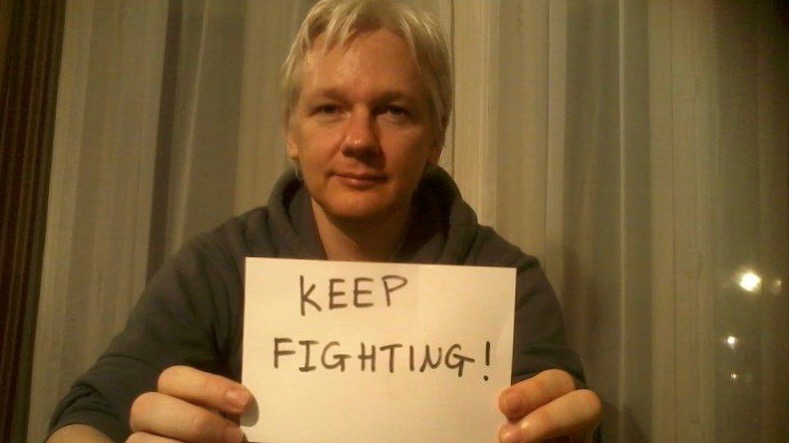
    The motion in parliament, which was supported by Prime Minister Anthony Albanese, has called for the return of imprisoned WikiLeaks founder Julian Assange to his family in Australia. Assange is days away from a final court hearing in the UK against his extradition to the US.

    On February 14, lawmakers in Australia’s parliament voted 86-42 in support of a motion calling on the UK and the US to return arbitrarily imprisoned WikiLeaks founder and journalist, Julian Assange, to his home and family in Australia.

    The move, which was also supported by Prime Minister Anthony Albanese, came just days before the High Court of Justice in London will decide if Assange can continue to contest his extradition to the US through the UK’s legal system.

    The US has indicted Assange on 18 charges, 17 of which are under the notorious Espionage Act, in relation to the publication of confidential documents on WikiLeaks that exposed the war crimes and atrocities committed by US forces during the invasions of Iraq and Afghanistan. If convicted, Assange would face up to 175 years in a maximum security prison.

    The 52-year-old journalist has already been held at the UK’s high security Belmarsh prison for nearly five years, without charge or conviction, amid serious concerns over his mental and physical health.

    “Mr. Assange has been deliberately exposed, for a period of several years, to progressively severe forms of cruel, inhuman or degrading treatment or punishment, the cumulative effects of which can only be described as psychological torture.” Nils Melzer, the former UN Special Rapporteur on torture, had said of the journalist’s condition back in 2019.

    Addressing a press conference on February 15, Assange’s partner, Stella, stated that his “life is at risk every single day he stays in prison– and if he is extradited he will die”, warning that Assange could be “on a plane within days”.

    The public hearings on February 20 and 21 will mark the culmination of a protracted legal battle for Assange. A two-judge bench of the High Court will review a June 6, 2023 decision by Justice Jonathan Swift, in which he had rejected all eight grounds of appeal filed by Assange’s legal team.

    If approved, the appeal will challenge the extradition order approved by the UK Home Office in June 2022.

    Read more: Assange completes four years in UK jail, struggle against US extradition continues

    On Wednesday, independent lawmaker Andrew Wilkie introduced a motion in the Australian parliament, calling on the US and the UK to bring “the matter to a close so that Mr. Assange can return home to his family in Australia”.

    “This will be the time for all of us to take a stand, to stand up and to take a stand, and to stand with Julian Assange, stand for the principles of justice, stand for the principles of media freedom and the rights of journalists to do their job…This has gone on too long, that it must be brought to an end.”

    Commenting directly on the matter in Parliament on February 15, PM Albanese stated that there was a “common view” that “enough is enough”. “People will have a range of views about Mr. Assange’s conduct… but regardless of where people stand, this thing cannot just go on and on indefinitely.”

    He went on to state, “I hope it can be resolved amicably. It’s not up to Australia to interfere in the legal processes of other countries, but it is appropriate for us to put our very strong view that those countries need to take into account the need for this to be concluded.”

    The Prime Minister’s ambiguous statements throughout the legal proceedings, including a refusal to outrightly call for a withdrawal of the extradition order, has been criticized by progressive, anti-imperialist forces, with the late renowned journalist John Pilger having called it a “betrayal” in March 2023.

    Read more: The betrayers of Julian Assange 

    Addressing reporters outside Parliament House on Thursday, Assange’s brother, Gabriel Shipton, warned that his extradition would mean that “all the ties to his family, his lifeline that are keeping him alive inside that prison will be cut off and he’ll be lost into a horrific prison system in the United States”.

    He added that the vote in parliament had given the Australian government a “real mandate to advocate very, very strongly for a political solution” to bring Assange home.

    “It’s not just about being extradited. Julian should never have been put in prison in the first place,” Stella Assange implored on Thursday, as journalists and activists across the world have warned of the impact Assange’s case could have on the press.

    “We are seeing a critical attack on press freedom worldwide. It is like a disease, an anti-press pandemic, creeping up on us that has been incrementally taking shape over the years”, said WikiLeaks editor-in-chief Kristinn Hrafnsson, adding that Assange had been the “canary in the gold mine”.

    Read more: Julian Assange case: 4 things that the media doesn’t tell you

    Assurances about conditions in US prison are “dubious”, say advocates

    This was reiterated by over 35 law professors in the US in a letter sent to the Department of Justice on February 14, stating that Assange’s prosecution posed an “existential threat” to the freedom of speech and press enshrined under the First Amendment.

    These “constitutional implications” could “extend beyond the Espionage Act and beyond national security journalism [to] enable prosecution of routine newsgathering under any number of ambiguous laws and untested legal theories.”

    Assange’s extradition to the US was approved on the basis of supposed “assurances” given by the US regarding his safety, including the avoidance of what are called “special administrative measures” (SAMs) — a horrific punitive measure that combines “the brutality and isolation of maximum-security units with additional restrictions that deny individuals almost any connection to the human world”.

    However, human rights organizations and observers had immediately warned that these “assurances” were unreliable and could be arbitrarily revoked.

    “The US assurances cannot be trusted. Dubious assurances that he will be treated well in a US prison ring hollow considering that Assange potentially faces dozens of years of incarceration in a system well known for its abuses, including prolonged solitary confinement and poor health services for inmates,” stated Julia Hall, the international expert on counter-terrorism and criminal justice in Europe at Amnesty International.

    If the High Court of Justice in London does not rule in favor of Julian Assange next week, Stella Assange has stated that he will then approach the European Court of Human Rights (ECHR), seeking urgent measures to halt his extradition under Rule 39— granted when there is an “imminent risk of irreparable harm” — pending a full consideration of his case.

    The present UN Special Rapporteur Dr. Alice Edwards, has also pointed out that outside of the legal process, the ultimate decision to actually proceed with the extradition will lie with the US Secretary of State. Antony Blinken, for his part, had rebuffed calls by the Australian government last year to drop the prosecution.

    “The UK is a party to the UN convention against torture as well as the European convention on human rights, both of them have Article 3 which prohibits states from sending people to where they may face this type of treatment [torture],” Edwards said.

    Original article by Tanupriya Singh republished from peoples dispatch under a Creative Commons Attribution-ShareAlike 4.0 (CC BY-SA) license.

  • Julian Assange: Day X

    Spread the love

    Day X is here: The last chance in the British courts to stop Julian Assange’s extradition

    The UK High Court has confirmed that a public hearing will take place on Tuesday 20 February and Wednesday 21 February 2024. The two-day hearing may be the final chance for Julian Assange to prevent his extradition to the United States. If extradited, Julian faces a sentence of 175 years for exposing war crimes committed by the United States in the Afghan and Iraq wars.

  • ‘Eradication of Journalism in Gaza’ Continues as Israel Kills Two More Reporters

    Spread the love

    Original article by JAKE JOHNSON republished from Common Dreams under Creative Commons (CC BY-NC-ND 3.0). 

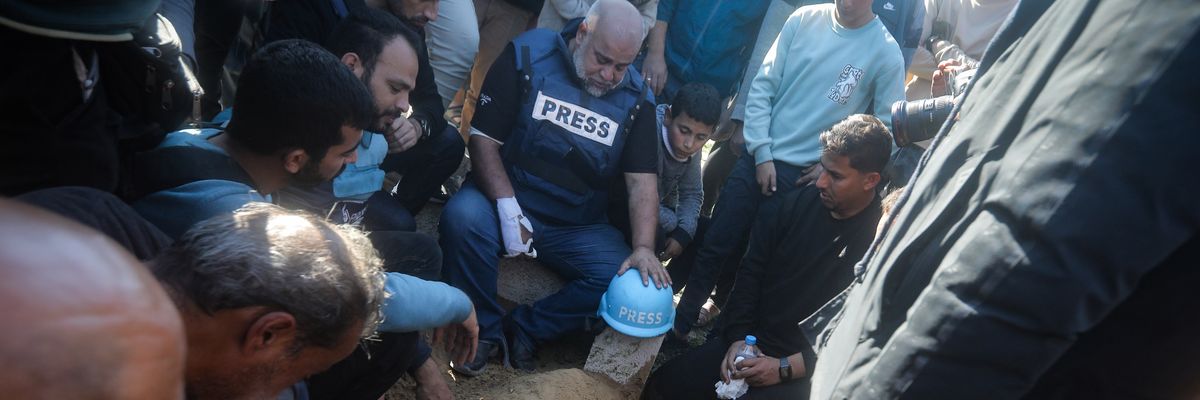
    A press helmet is placed over the grave of Hamza Dahdouh, a Palestinian journalist who worked for Al Jazeera and was killed in an Israeli airstrike on Rafah on January 7, 2024. (Photo: Mohammed Talatene/picture alliance via Getty Images)

    The international community must “hold Israel accountable for its heinous crimes,” said the Al Jazeera Media Network.

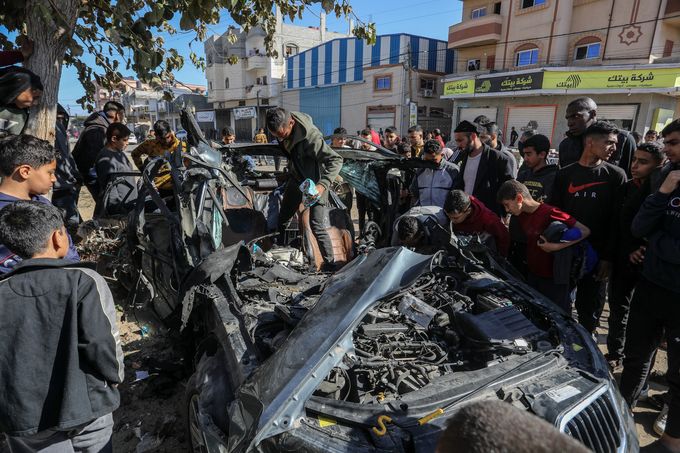
    An Israeli airstrike in the southern Gaza city of Rafah on Sunday killed two Palestinian journalists and seriously wounded a third, adding to the war’s grisly toll on media workers.

    The Al Jazeera Media Network said in a statement that the Israeli military targeted the journalists’ car as they were driving through the northern part of Rafah. The strike killed Hamza Dahdouh, the 27-year-old son of Al Jazeera‘s Gaza bureau chief, and Mustafa Thuraya, a freelance videographer working with Agence France-Presse. Hazem Rajab was injured in the Israeli strike.

    “The assassination of Mustafa and Hamza, Al Jazeera correspondent Wael Dahdouh’s son, whilst they were on their way to carry out their duty in the Gaza Strip reaffirms the need to take immediate necessary legal measures against the occupation forces to ensure that there is no impunity,” the network said, imploring the international community to “hold Israel accountable for its heinous crimes.”

    Hamza is the fifth member of Wael Dahdouh’s family killed in Israel’s assault on the Gaza Strip. Earlier in the war, Israeli strikes killed Dahdouh’s wife, younger son, daughter, and grandson. Wael himself was wounded by an Israeli drone strike that killed Al Jazeera journalist Samer Abu Daqqa.

    “Hamza was everything to me, the eldest boy, he was the soul of my soul,” Wael said in anguished remarks from the cemetery where his son was buried. “These are the tears of parting and loss, the tears of humanity.”

    Christophe Deloire, secretary-general of Reporters Without Borders, expressed “shock” in response to news of Dahdouh and Thuraya’s killing.

    “This unbearable massacre must stop,” Deloire wrote on social media. “Israel must be held accountable for this eradication of journalism in Gaza. We will continue to refer to the International Criminal Court so that maximum priority is given to crimes against journalists. Justice must be served.”

    (Photo: Abed Rahim Khatib/Anadolu via Getty Images)

    Since October 7, Israeli forces have killed dozens of media workers in the Gaza Strip, where around 1,000 journalists were working before the assault. According to the Committee to Protect Journalists (CPJ), more journalists were killed in the first 10 weeks of the war “than have ever been killed in a single country over an entire year.”

    “CPJ is particularly concerned about an apparent pattern of targeting journalists and their families by the Israeli military,” the group said last month. An investigation by Reporters Without Borders concluded that Reuters video journalist Issam Abdallah and his colleagues were deliberately targeted in October 13 strikes in southern Lebanon.

    Reporters Without Borders has filed two war crimes complaints with the International Criminal Court since early October. The second complaint, submitted last month, accuses the Israel Defense Forces of intentionally killing seven Palestinian journalists.

    “Targeting reporters is a war crime,” the group wrote in a social media post on Sunday.

    Original article by JAKE JOHNSON republished from Common Dreams under Creative Commons (CC BY-NC-ND 3.0). 

    800+ Global Groups Back South Africa’s Genocide Case as ICJ Prepares for Hearing

    Protests Urging Gaza Cease-Fire Block NYC Tunnel, Bridges

    In MSNBC Farewell, Mehdi Hasan Honors Palestinian Journalists Killed by Israel

  • UK court to hear Assange’s final appeal against extradition in February

    Spread the love

    Original article by Anish R M republished from peoples dispatch under a Creative Commons Attribution-ShareAlike 4.0 (CC BY-SA) license.
    In the hearing, two judges will review an earlier decision to reject Assange’s appeal against his extradition to the US

    The High Court of Justice in London has decided to hear what could be Julian Assange’s final appeal against his extradition to the United States. A statement released by Wikileaks on Tuesday, December 19, announced that the High Court has confirmed a two-day hearing on February 20-21, 2024.

    The two-day hearing will be held before a bench of two judges and review the decision by Justice Jonathan Swift of the High Court to reject Assange’s plea against his extradition. In this last ditch attempt by Assange’s defense, the two judges will decide whether the Wikileaks founder will have any further chance to appeal his case in a British court or prepare for the looming extradition.

    The 3-page long decision by Justice Swift handed down on June 6 this year, rejected all eight grounds of appeal raised by Assange’s defense team. The appeal, if approved by the High Court, will challenge the extradition sanctioned by the UK Home Office in June 17, 2022

    Immediately after the court announced the dates, supporters and press freedom advocates called for a protest demonstration to be held outside the courthouse in London and in cities around the world, on the first day of the hearing.

    John Rees of the Free Assange Campaign said in the Wikileaks statement that if the US is allowed to “get away with [their attempts to prosecute Assange], they will have succeeded in redefining journalism as spying.”

    Stating that the extradition and a federal trial will have an impact on all journalists and broadcasters, Rees said that “every journalist will be intimidated. Every newspaper and journalist will look at material critical of the government and feel significant pressure not to publish for fear of prosecution and imprisonment.”

    “This is the most important press freedom case of the 21st century and we need to ensure we don’t lose any hard-won freedoms.”

    If extradited, Assange will stand trial before a federal grand jury in the US on 18 charges that carry a combined prison sentence of 175 years. Of the 18 charges leveled against him, 17 are under the infamous US Espionage Act.

    Stella Assange, advocate and Julian’s wife, raised concerns of his safety and the nature of the looming trial in the event the US does succeed in his extradition. She, along with other members of Assange’s family and his colleagues, have been campaigning for his release ever since he was arrested in April 2019.

    “With the myriad of evidence that has come to light since the original hearing in 2019, such as the violation of legal privilege and reports that senior US officials are involved in formulating assassination plots against my husband, there is no denying that a fair trial, let alone Julian’s safety on US soil, is an impossibility were he to be extradited,” she said. “The persecution of this innocent journalist and publisher must end.”

    Read more: Julian Assange case: 4 things that the media doesn’t tell you

    Kristinn Hrafnsson, editor-in-chief of Wikileaks, also echoed these concerns. “There is no press without the protection to operate freely,” Hrafnsson said. “Julian’s case is a landmark moment; the UK needs to decide if it wishes to be a haven for free press or if it wishes to be complicit in the degradation of a core value of our democracy.”

    The US indictment against Assange, initiated under the Donald Trump administration and continued under President Joe Biden, is the first time ever a publisher has been charged under the Espionage Act.

    In the meantime, Assange has remained imprisoned without charges since April 2019, in a high-security prison in Belmarsh on the outskirts of London, at the behest of the extradition request by the US.

    His extradition was initially rejected by a district judge in London in January 2021 on grounds of Assange’s mental health and the risk of suicide and other bodily harm if he was extradited.

    This decision was overturned by the High Court in London in December that year based on diplomatic assurances given by the US after the district court’s decision. In June 2022, the UK Home Office sanctioned the extradition based on the High Court’s decision.

    US lawmakers call for Assange’s release

    Even as the UK prepares for the court hearing in February, calls for Assange’s release have reached the US Congress.

    A bipartisan resolution was introduced on December 16, in the US House of Representatives by Republican representative Paul Gosar, and co-sponsored by eight congress members seeking to drop all charges against Assange.

    The draft resolution seeks to drop all charges against Assange and reinforce the fact that his journalistic activities, including the publication of classified government documents and diplomatic cables to expose US war crimes and other wrongdoings, were protected under the First Amendment rights of the US Constitution.

    The resolution, co-sponsored by the likes of James McGovern, Thomas Massie, Marjorie Taylor Greene, and Ilhan Omar, also highlighted that the successful prosecution of Assange “would set a precedent allowing the United States to prosecute and imprison journalists for First Amendment protected activities, including the obtainment and publication of information, something that occurs on a regular basis.”

    Similarly on November 14, another bipartisan group of members of Congress, led by McGovern and Massie, sent a letter to president Biden calling for the charges to be dropped. Aside from co-sponsors of the House draft resolution mentioned above, the signatories to the letter include the likes of Alexandria Ocasio-Cortez, Rashida Tlaib, Ayanna Presley, and Rand Paul.

    Original article by Anish R M republished from peoples dispatch under a Creative Commons Attribution-ShareAlike 4.0 (CC BY-SA) license.
    https://dontextraditeassange.com

  • US Lawmakers Renew Call for Biden to Drop Charges Against Julian Assange

    Spread the love

    Original article by BRETT WILKINS republished from Common Dreams under Creative Commons (CC BY-NC-ND 3.0).

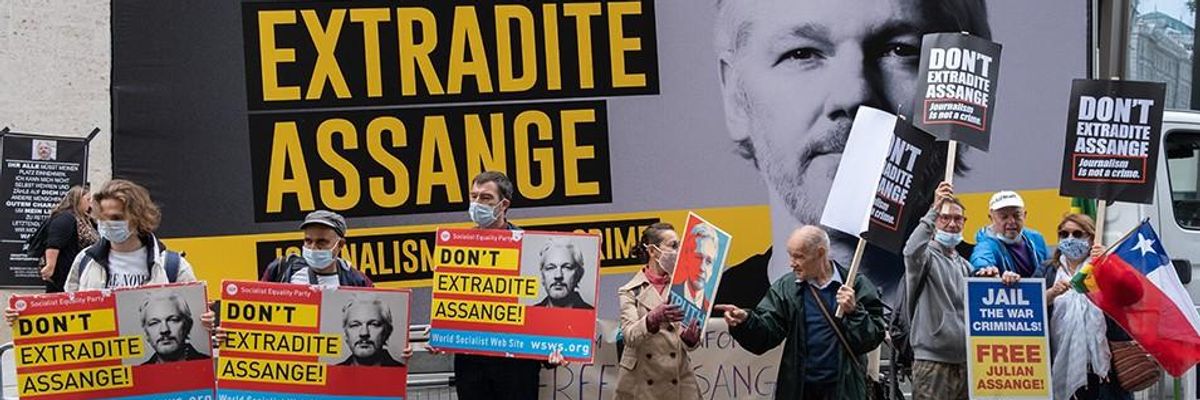
    Supporters of WikiLeaks founder Julian Assange protest outside London’s Old Bailey court on September 7, 2020 as his fight against extradition to the U.S. resumed. (Photo: Richard Baker/Getty Images)

    “The bottom line is that journalism is not a crime,” said Rep. Jim McGovern. “The stakes are too high for us to remain silent.”

    Imploring the Biden administration to “not pursue an unnecessary prosecution that risks criminalizing common journalistic practices,” a bipartisan group of 16 U.S. lawmakers have signed a letter dated Wednesday to President Joe Biden urging him to end the attempted extradition of Julian Assange and drop all charges against the jailed publisher.

    “Assange, the founder of WikiLeaks, faces multiple charges under the Espionage Act due to his role in publishing classified documents about the U.S. State Department, Guantánamo Bay, and wars in Iraq and Afghanistan,” states the letter, which is led by Reps. Jim McGovern (D-Mass.) and Thomas Massie (R-Ky.). “He has been detained on remand in London since 2019 and is pending extradition to the U.S., having lost his appeal of the extradition order in the courts of the United Kingdom.”

    Assange—who suffers from physical and mental health problems including heart and respiratory issues—published materials, many of them provided by whistleblower Chelsea Manning, exposing U.S. and allied war crimes, including the “Collateral Murder” video showing a U.S. Army helicopter crew killing a group of Iraqi civilians, the Afghan War Diary, and the Iraq War Logs.

    “Deep concerns about this case have been repeatedly expressed by international media outlets, human rights, and press freedom advocates, and members of Congress,” the lawmakers wrote. “In April of this year… members of the House argued to Attorney General Merrick Garland that ‘every day that the prosecution of Julian Assange continues is another day that our own government needlessly undermines our own moral authority abroad and rolls back the freedom of the press under the First Amendment at home.’”

    The new letter has been signed by Reps. Alexandria Ocasio-Cortez (D-N.Y.), Jamaal Bowman (D-N.Y.), Ayanna Pressley (D-Mass.), Greg Casar (D-Texas), Ilhan Omar (D-Minn.), Cori Bush (D-Mo.), Rashida Tlaib (D-Mich.), Eric Burlison (R-Mo.), Marjorie Taylor Greene (R-Ga.), Paul Gosar (R-Az.), Jesús “Chuy” García (D-Ill.), Pramila Jayapal (D-Wash.), Matthew Rosendale (R-Mont.), and Sen. Rand Paul (R-Ky.).

    In a message last month inviting congressional colleagues to sign the letter, McGovern and Massie explained that their goal is”to strongly encourage the Biden administration to withdraw the U.S. extradition request currently pending against Australian publisher Julian Assange and halt all prosecutorial proceedings against him as soon as possible.”

    McGovern said last month in a statement to The Intercept that “the bottom line is that journalism is not a crime.”

    “The work reporters do is about transparency, trust, and speaking truth to power,” he added. “When they are unjustly targeted, we all suffer the consequences. The stakes are too high for us to remain silent.”

    The new letter follows last month’s official state visit of Australian Prime Minister Anthony Albanese, an Assange supporter who raised the jailed journalist’s case with President Joe Biden, insisting that “enough is enough.” A cross-party delegation of Australian lawmakers also traveled to the U.S. ahead of Albanese’s visit in an effort to pressure the Biden administration “to cease its pursuit and prosecution of Julian Assange.”

    Imploring Americans to put themselves in Australian shoes, former Australian Deputy Prime Minister Barnaby Joyce told reporters after meeting with U.S. officials during the lawmakers’ trip: “Imagine if the Australian government said, ‘Hey you in Murfreesboro, Tennessee, as far as we’re concerned, you committed a crime, and you’re going to Canberra where we’re going to send you to jail for 175 years,‘ you’d be up us like a rat up a drainpipe.”

    According to the United Nations Working Group on Arbitrary Detention, Assange has been arbitrarily deprived of his freedom since he was arrested on December 7, 2010. Since then he has been held under house arrest, confined for seven years in the Ecuadorean Embassy in London while he was protected by the administration of former Ecuadorean President Rafael Correa, and jailed in London’s notorious maximum-security Belmarsh Prison, where he is now.

    If fully convicted of the Espionage Act charges, Assange—who fathered two children with attorney Stella Morris, whom he married last year, while holed up in the Ecuadorean Embassy—could be sentenced to 175 years in prison.

    Original article by BRETT WILKINS republished from Common Dreams under Creative Commons (CC BY-NC-ND 3.0).