On November 29, hundreds of thousands marched across Europe in support of Palestine and against government complicity in Israel’s genocide.
The Palestine solidarity movement in Europe again brought record numbers to the streets on the UN’s International Day of Solidarity with the Palestinian People, November 29, reaffirming demands for an end to government complicity in the ongoing genocide in Gaza and the occupation of Palestine. Hundreds of thousands marched across the region, with demonstrations in London and Rome each reaching an estimated 100,000 participants.
“On this day, people around the world express their support for the inalienable rights that are currently denied to Palestinians: the right to live free from discrimination, the right to self-determination, and the right to return to their lands,” the Palestine Solidarity Campaign (PSC) wrote on social media. “Despite this Britain continues to arm Israel and refuses to implement meaningful sanctions or end its diplomatic support. It still provides parts for Israel’s F-35 fighter jets, used to bomb Palestinians in Gaza and maintains contracts with Israeli weapons manufacturers like Elbit Systems.”
Saturday’s demonstration was the 33rd national march for Palestine in Britain. In addition to local activists, it also welcomed international guests who have stood with Palestinians since the beginning of the genocide, including Belgian MEP Marc Botenga of the Workers’ Party of Belgium (PTB-PVDA), French parliamentarian Nadège Abomangoli of France Unbowed (LFI), and Sinn Féin leader Mary Lou McDonald. While addressing the crowd in London, they emphasized the internationalist character of the mobilization and echoed demands that could be heard in their home countries around the same time.
As thousands marched in Paris and Dublin, they insisted on the need to continue organizing despite political obstruction and attacks. Irish actor Liam Cunningham, a vocal supporter of Palestine, helped lead Dublin’s demonstration. Responding to artists being de-platformed for speaking out against genocide, he said: “If anyone doesn’t want to employ me because I’ve taken a stand against injustice, against the refusal to give self-determination to a group of people who are politically, culturally on the same track that my country was on for 800 years […] they’re not going to be very good at their job, because they’ve no soul.”
Another recurring message across Europe refused the mainstream media allegation of a “ceasefire” in Gaza. “There’s no ceasefire just because it’s written on a Western media banner,” Cunningham added. “Let’s come up with another word, ‘ceasefire’ is not working.”
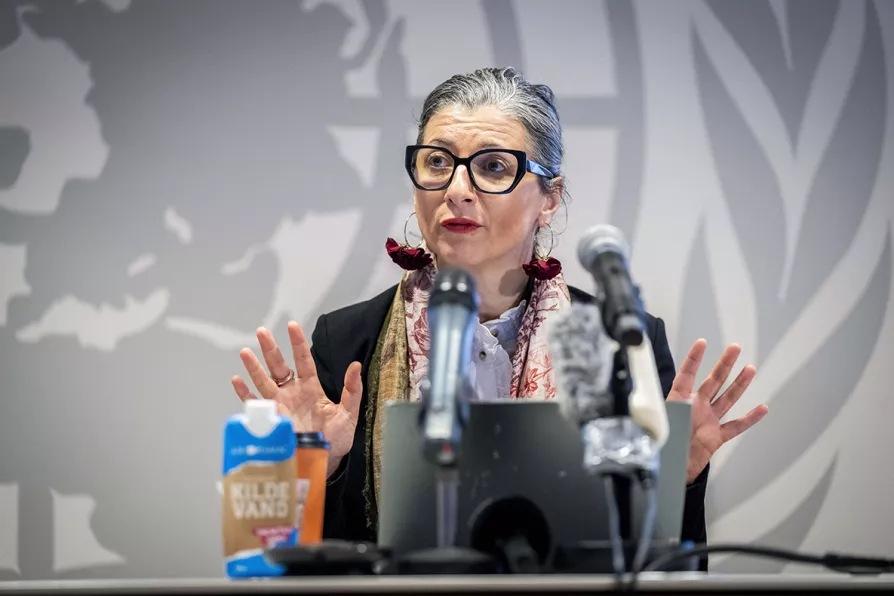
In Italy, the central mobilization followed a successful day of general strike organized by the grassroots union Unione Sindacale di Base (USB). The march welcomed UN Special Rapporteur Francesca Albanese and Freedom Flotilla activists Greta Thunberg and Thiago Ávila. Dockworkers and firefighters affiliated with USB, who have played key roles in earlier protests and faced reprisals for this, also formed notable protest blocs. The response of Italy’s political establishment to growing support for Palestine mirrors that of other European governments: attempting to suppress dissent and insisting that further militarization is the only path forward.
Palestine solidarity march in London, November 29, 2025. Source: Marc Botenga/Facebook
“Today we see what this path has created: a genocide, broadcast live, carried out with the complicity of Western governments; massacres in the Mediterranean; NATO wars; bombs across the world,” said Marta Collot, spokesperson for the left party Potere al Popolo, during the Rome demonstration. “But something has changed too. The September mobilizations, the three general strikes called by USB that brought everything to a halt, and our march today show that they were wrong […] Our demonstration is the message coming from Palestine, from socialist Cuba resisting, from Venezuela. It shows that an alternative path is not only necessary, but that it’s possible.”
“Today there are two Europes,” Marc Botenga emphasized in London. “There is the Europe of the establishment, the Europe of the governments that have funded this genocide, that have supported this genocide, and that are continuing to do so. And then, there’s the other Europe, there’s the Europe that we incarnate here today. That is the Europe of liberation, the Europe that says no to occupation.”
Orcas discuss Genocide-supporting and complicit Zionists. Donald Trump, Keith Starmer, David Lammy, Rachel Reeves, Angela Rayner and Wes Streeting are acknowledged as evil genocide-complicit and supporting cnuts.Genocide denier and Current UK Prime Minister Keir Starmer is quoted that he supports Zionism without qualification. He also confirms that UK air force support has been essential in Israel’s mass-murdering genocide. Includes URLs https://www.declassifieduk.org/keir-starmers-100-spy-flights-over-gaza-in-support-of-israel/ and https://youtu.be/O74hZCKKdpAKeir Starmer objects to criticism of the IDF. He asks how could anyone object to them starving people to death, forced marches like the Nazis did, bombing Gaza’s hospitals and universities, mass-murdering journalists, healthworkers and starving people queuing for food, killing and raping prisoners and murdering children. He calls for people to stop obstructing his genocide for Israel.
‘We are winning’, claims politician Enoch Powell to students at York University in 1969 following his notorious ‘rivers of blood’ speech. Alamy/PA Images
Prime Minister Keir Starmer thinks that racism is returning to British society. He has accused Nigel Farage’s Reform UK of sowing “toxic division” with its “racist rhetoric”.
Starmer’s comments follow a trend that has seen senior Labour party officials portray their political opponents on the far-right as sowing division with racist rhetoric.
Recently, Wes Streeting, the Labour health secretary, warned that an “ugly” racism is on the rise again, pointing to worrying figures showing an increase of race-based abuse of NHS staff.
And in October, senior Labour officials attacked Farage’s plans to strip millions of legal migrants of their Indefinite Leave to Remain status as a racist policy. Home Secretary Shabana Mahmood said that Farage’s plans sounded like a “very loud dog whistle to every racist in the country”.
Labour officials portray the rise in racist incidents and rhetoric as the return of attitudes that had all but disappeared from British society. Streeting expressed his worry that “1970s, 1980s-style racism has apparently become permissible again in this country”. Starmer similarly stated that “frankly I thought we had dealt with” the problem of racist abuse “decades ago”.
This is an appealing story because it conveys a neat and simple message: racism was defeated decades ago and it is now being revived by racist agitators. But in truth, the history of post-war racism is much more complex.
In my new book, I investigate how ideas of race and racism have changed since the second world war. History shows that racism never disappeared from public life. Rather, it assumed different shapes, some of which are harder to discern than others.
The experience of fascism
The defeat of Nazism in 1945 marked a key moment in the history of racism. Prior to the second world war, ideas of racial difference and even racial hierarchy were firmly entrenched in elite society.
In Victorian Britain, for example, a belief in the racial superiority of Europeans was decisive to maintaining colonial rule across large parts of central and east Asia, Africa, and the Caribbean. This sentiment was famously captured in Rudyard Kipling’s 1899 poem, The White Man’s Burden, which depicted colonial rule as the moral duty of white nations.
The Insights section is committed to high-quality longform journalism. Our editors work with academics from many different backgrounds who are tackling a wide range of societal and scientific challenges.
Likewise, pseudosciences like eugenics and physical anthropology enjoyed significant prestige among British elites well into the 20th century. The British Eugenics Society, dedicated to improving the genetic stock of the British population, flourished in the interwar period. At this time the eugenics movement was an ideological broad church, appealing to progressive as much as conservative elites.
But the second world war irrevocably changed this landscape. The experience of fascism made it clear for all to see just how dangerous the concept of racial superiority was. Ideas of racial purity, racial hierarchy, and eugenics had driven the Nazis to commit genocide. It had led to a world war that many experienced as a straightforward conflict between good and evil.
There was no Nazi atrocity – concentration camps, wholesale maiming and murder, defilement of women or ghastly blasphemy of childhood – which Christian civilization or Europe had not long been practicing against colored folk in all parts of the world in the name of and for the defense of a Superior Race born to rule the world [sic].
Adolf Hitler on the third day of the Nazi party conference Nuremberg, Germany, in 1929. Shutterstock/Andreas Wolochow
The cumulative effect of these experiences was that ideas of racial superiority came to be seen an unscientific relic of the past.
Squashing ‘scientific racism’
This was exemplified by the United Nations, which in November of 1945 established Unesco (United Nations Educational, Scientific and Cultural Organisation) with the explicit aim of battling racism. Unesco’s constitution, adopted on November 16 of that year, drew a direct connection between racism and the second world war:
The great and terrible war which has now ended was a war made possible by the denial of the democratic principles of the dignity, equality and mutual respect of men, and by the propagation, in their place, through ignorance and prejudice, of the doctrine of the inequality of men and races.
In 1949, Unesco appointed a panel of prominent scientists to formulate a critique of scientific racism. Reporting in 1950, the panel concluded that there is no scientific basis for any claims of racial superiority of one group over another. As the panel wrote, “the likenesses among men are far greater than their differences”.
While a small number of academics remained committed to race science and eugenics, they were forced into the margins of the academic world. The Eugenics Society, though it continued to exist, lost much of its prestige.
Going forward, race science or political appeals to racial superiority were no longer deemed acceptable, even among ruling elites. The language of race lost the scientific legitimacy and political purchase it once had.
This did not mean that racism disappeared, however. Rather, it changed shape.
Immigration and culture
Explicit appeals to race remained politically unacceptable for many decades after the war. This forced intellectuals and politicians on the right, especially those with divisive views about racial and ethnic differences, to develop an alternative language in which to express their ideas.
The backlash against these migration trends was exemplified by Enoch Powell, a Conservative MP and former Minister of Health. In the late 1960s, Powell developed a vocal critique of immigration numbers.
Powell’s rhetoric was inflammatory and racially charged. In his infamous ‘Rivers of Blood’ speech, delivered in 1968 in Birmingham, Powell claimed that unless immigration was restricted, people of colour would soon have “the whip hand over the white man”. In another speech, from 1970, Powell complained that it was no longer politically acceptable to say that “the English are a white nation”.
Powell made no appeal to the idea of biological difference. Instead, his emphasis was on cultural difference. He claimed that migrants and white British people were culturally too dissimilar for assimilation to be possible in large numbers.
Powell’s speeches on immigration cost him his political career. He was dismissed from the Shadow Cabinet following his “Rivers of Blood” comments. Yet his views were soon echoed by other political figures.
In 1976, Ivor Stanbrook, a Conservative MP, said in the House of Commons: “Let there be no beating about the bush. The average coloured immigrant has a different culture, a different religion and a different language. That is what creates the problem.”
And in 1978, Margaret Thatcher said in a TV interview that British “people are really rather afraid that this country might be rather swamped by people with a different culture”. Migration was a threat to Britain’s national identity.
Thatcher added: “We are a British nation with British characteristics. Every country can take some small minorities and in many ways they add to the richness and variety of this country. The moment the minority threatens to become a big one, people get frightened.”
In the 1979 general election, which Thatcher won with a landslide, the Conservative party manifesto pledged to tighten immigration controls and restrict citizenship. This pledge was enacted in 1981.
The denial of racism
The rhetoric of people like Powell, Stanbrook, and Thatcher represented a new kind of racial vocabulary. What is striking about this rhetoric is that it pretended not to concern race at all. Each of them explicitly denied that their rhetoric appealed to racist sentiment.
Powell often distanced his critique of immigration from concerns over race. In a 1970 interview, Powell said:
I’m not talking about race at all. I am talking about those differences, some of which are related to race, between the members of different nations which make the assimilation of the members of one nation into another nation more difficult or less difficult.
Stanbrook also denied that his comments about “coloured immigrants” were racist. In a parliamentary debate, he insisted that to highlight problems with cultural integration “is not racialism, if by that one means, as I do, an active hostility to another race”. This was because, in his view, “a preference for one’s own race is as natural as a preference for one’s own family”. A dislike of immigration, therefore, is not based on racist animosity. “It is simply human nature,” Stanbrook added.
Even Thatcher complained that whenever she tried to address concerns about immigration she was “falsely accused of racial prejudice” by her political opponents. She claimed that because mainstream political parties were not willing to talk about immigration, voters were instead turning to the far-right National Front. “If we do not want people to go to extremes, and I do not, we ourselves must talk about this problem and we must show that we are prepared to deal with it,” she said.
These denials of racism indicate that during this period, the language of race itself remained socially unacceptable. Powell, Stanbrook and Thatcher all felt the need to distance themselves from it.
This helps to explain why they preferred to focus on ideas of cultural difference and national identity. These ideas did not carry the same negative connotations as race, yet could be used to convey a similar message – namely that some groups did not belong in Britain.
The rise of inflammatory rhetoric surrounding immigration in the 1960s and 70s had an immediate impact on policy. During this period, successive governments responded to the growing clamour over immigration by selectively tightening migration controls and nationality legislation.
However, this rhetoric has also had a more gradual, long-term effect on racism’s place in society. Powell’s and Thatcher’s views on immigration have been echoed again and again, often framed in the same vocabulary. This continues to this day.
Last month, Katie Lam, the shadow home office minister, appeared to argue that Ukrainian and Gazan refugees should be treated differently because the former are better able to assimilate to British culture, as well as being more likely to go back to rebuild their country of origin.
And earlier this month, nationalist writer and academic Matthew Goodwin, who is formally linked to Reform, wrote in his personal newsletter that the “cultures that our hapless politicians are now importing into our country at speed are not just radically different and incompatible to our own; they are inferior, primitive, stuck in cultural codes and practices we moved on from centuries ago”.
The gradual normalisation of this kind of rhetoric has allowed it to re-enter mainstream public discourse. This has caused the erosion of the anti-racist norms established in the wake of the second world war. For many years after the war, these social norms meant that public figures who expressed views that were considered racist paid a high social or professional cost. Powell’s dismissal from the shadow cabinet following his Rivers of Blood speech is a forceful example of this.
Today, these anti-racist norms are under increasing pressure. To be sure, they have not fully disappeared. In recent years, anti-racist movements like the Black Lives Matter have enjoyed broad popular support in Britain and elsewhere.
Likewise, officials who express inflammatory rhetoric can still expect to be challenged. Politicians including Starmer, Robert Jenrick and Katie Lam have recently been met with criticism for divisive comments or policies on race, migration, and culture.
Starmer, for instance, was criticised for saying that migration numbers are turning Britain into an “island of strangers”. This comment was likened to Powell’s rhetoric on immigration, who also said that immigration left Britons feeling like “strangers in their own country”. When confronted with criticism, Starmer said he deeply regretted using that phrase.
Meanwhile, Farage has faced pressure to distance himself from racist comments he is alleged to have made in the past – allegations which he has strongly denied.
Yet, the prospect of a politician being dismissed from a cabinet role for racially inflammatory comments is very remote today. Neither Jenrick nor Lam has been dismissed from the shadow cabinet for their comments, with Conservative Party leader Kemi Badenoch expressly defending Jenrick.
Various forms of racism persist. Today, cultural racism is the most widespread and politically consequential kind. Derogatory and stereotyped views on cultural differences and national identity are now an everyday feature of public discourse, especially in debates over immigration.
Yet cultural racism remains poorly understood. In most media reporting and political discourse, the term “racism” continues to refer primarily to individual prejudice based on outward appearance or group belonging. When Streeting talks about “1970s, 1980s-style racism” he specifically means “abuse based on people’s skin colour”.
While it is undeniably a good thing that racist abuse is being vocally challenged by politicians, this narrow definition of racism obscures as much as it reveals. It fails to challenge forms of racism that do not appeal to physical traits but to cultural traditions. And it gives political agitators intent on sowing division on themes like immigration the opportunity to deflect criticism by denying that their ideas are racist.
At the structural level, racism causes certain individuals or communities to be more vulnerable to violence, exclusion, marginalisation, poverty, and other harmful outcomes on the basis of their membership of a particular racial, cultural, or religious group. Rhetoric that intensifies this vulnerability feeds racism, even when it is not expressed in the language of “race” or when there is no prejudicial intent.
So long as these structural factors are not taken into consideration, more subtle forms of racism will continue to hide in plain sight and exert a corrosive influence on the health and wellbeing of those it targets.
To hear about new Insights articles, join the hundreds of thousands of people who value The Conversation’s evidence-based news. Subscribe to our newsletter.
Elon Musk urges you to be a Fascist like him, says that you can ignore facts and reality then.A parody ‘Tesla – The Swasticar’ advert posted at a London bus stop. Photograph: People vs ElonKeir Starmer refuses to be outcnuted by Nigel Farage’s chasing the racist bigot vote.
dizzy: I tend to regard racism and misogyny as inherent and necessary to Capitalism, part of the divide and rule strategy providing an implied differentiation and continuum of perceived statuses. “No dogs, blacks or Irish”. It’s so ridiculously stupid and obviously transparent really.
I sometimes experience racism as a Welshman in England and as a perceived Englishman in Wales. It must be strange when I say the odd Welsh phrase “Diolch yn fawr” (most Welsh people will recognise and understand that). FM,(*1) an Englishman who’s learned Welsh, what’s the World coming to?
Strange hypocrisy that these Labour politicians can so readily condemn racism while supporting the explicitly racist and genocidal Israel apartheid regime …
*1
Orcas discuss the formation of UK’s new Socialist party and ask if the killer apes have finally come to their senses.
This work by Middle East Monitor is licensed under a Creative Commons Attribution-NonCommercial-ShareAlike 4.0 International License.
Thousands of demonstrators march through the streets of Paris during a rally held in support of the Palestinian people, in Paris, France, on November 29, 2025. [Ümit Dönmez – Anadolu Agency]
Thousands of people marched through the streets of Paris on Saturday, Nov. 29, to mark the International Day of Solidarity with the Palestinian People, Anadolu reports.
Demonstrators called for an immediate ceasefire and urged a boycott of Israel as they moved through the French capital.
Protesters carried Palestinian flags and held banners reading “Boycott Israel,” “Genocide, apartheid, occupation… Justice for Gaza,” “Stop the genocide in Gaza,” and “78 years of Nakba, 2 years of genocide.”
The UN designated this day in 1977 as an international occasion to express support for the inalienable rights of the Palestinian people, foremost among them the right to self-determination, national independence, sovereignty, and the return of refugees to the homes from which they were displaced in 1948.
Israel has killed nearly 70,000 people, mostly women and children, and injured over 170,000 others in its genocide in Gaza since October 2023.
In November 2024, the International Criminal Court issued arrest warrants for Netanyahu and his former Defense Minister Yoav Gallant for war crimes and crimes against humanity in Gaza.
The Israeli army has also escalated its attacks in the West Bank since the outbreak of the Gaza war in October 2023.
More than 1,085 Palestinians have since been killed, and 10,700 others injured in attacks by the army and illegal settlers in the occupied territory. More than 20,500 people have also been arrested.
In a landmark opinion last July, the International Court of Justice declared Israel’s occupation of Palestinian territory illegal and called for the evacuation of all settlements in the West Bank and East Jerusalem.
This work by Middle East Monitor is licensed under a Creative Commons Attribution-NonCommercial-ShareAlike 4.0 International License.
Orcas discuss Genocide-supporting and complicit Zionists. Donald Trump, Keith Starmer, David Lammy, Rachel Reeves, Angela Rayner and Wes Streeting are acknowledged as evil genocide-complicit and supporting cnuts.Keir Starmer objects to criticism of the IDF. He asks how could anyone object to them starving people to death, forced marches like the Nazis did, bombing Gaza’s hospitals and universities, mass-murdering journalists, healthworkers and starving people queuing for food, killing and raping prisoners and murdering children. He calls for people to stop obstructing his genocide for Israel.Genocide denying UK Foreign Secretary David Lammy says that UK is suspending 30 of 350 arms licences to Israel. He also confirms the UK government’s support for Israel’s Gaza genocide and the UK government and military’s active participation in genocide.
This work by Middle East Monitor is licensed under a Creative Commons Attribution-NonCommercial-ShareAlike 4.0 International License.
Israeli forces and Israeli settlers block Palestinian farmers trying to access to their agricultural fields, with stun grenades and tear gas in the town of Tarqumiyah, in Hebron, West Bank on November 28, 2025. [Mamoun Wazwaz – Anadolu Agency]
At least 10 Palestinians suffered injuries after illegal Israeli settlers attacked the village of Khalayel al-Louz near Bethlehem, in the northern occupied West Bank, Anadolu reports.
The Palestinian Red Crescent reported one gunshot wound to the thigh and nine cases of beating, adding that medics moved three people to a hospital and treated the rest at the scene.
Illegal settlers entered the village, targeted several homes, and set fire to plastic greenhouses used for farming, locals told Anadolu.
Separately, the Israeli army withdrew its forces from the town of Tammun and the al-Faraa refugee camp near Tubas, while continuing its operation in the city and in the towns of Aqaba and Tayasir.
Tammun Mayor Samir Bisharat told Anadolu that troops vacated houses they had turned into military posts and released all detainees except six, who were transferred to Israeli detention centers.
Israeli forces continued to target Tubas and nearby towns with movement restrictions and new military positions, local sources told Anadolu.
Nidal Odeh, director of ambulance and emergency services in Tubas, told Anadolu that the troops have injured about 130 people since the operation started early Wednesday, including dozens beaten by soldiers.
The Palestinian Prisoners’ Society said Israeli forces detained 162 people during the operation and later released most of them after field interrogations and mistreatment.
The Israeli army has escalated its attacks in the West Bank since the outbreak of the Gaza war in October 2023.
More than 1,085 Palestinians have since been killed, and 10,700 others injured in attacks by the army and illegal settlers in the occupied territory. More than 20,500 people have also been arrested.
In a landmark opinion last July, the International Court of Justice declared Israel’s occupation of Palestinian territory illegal and called for the evacuation of all settlements in the West Bank and East Jerusalem.
This work by Middle East Monitor is licensed under a Creative Commons Attribution-NonCommercial-ShareAlike 4.0 International License.
Orcas discuss Genocide-supporting and complicit Zionists. Donald Trump, Keith Starmer, David Lammy, Rachel Reeves, Angela Rayner and Wes Streeting are acknowledged as evil genocide-complicit and supporting cnuts.Keir Starmer objects to criticism of the IDF. He asks how could anyone object to them starving people to death, forced marches like the Nazis did, bombing Gaza’s hospitals and universities, mass-murdering journalists, healthworkers and starving people queuing for food, killing and raping prisoners and murdering children. He calls for people to stop obstructing his genocide for Israel.Genocide denying UK Foreign Secretary David Lammy says that UK is suspending 30 of 350 arms licences to Israel. He also confirms the UK government’s support for Israel’s Gaza genocide and the UK government and military’s active participation in genocide.
IOF soldiers carrying out a raid in Jenin, in January 2025, as part of Operation Iron Wall. Photo: IOF Spokesperson’s Unit
The IOF claims that the extensive military campaign aims to crackdown on new Palestinian armed resistance groups in the making.
After Israel’s 10-month “Iron Wall” operation in the northern governorates of the occupied West Bank had failed to eradicate Palestinian resistance, the Israeli Occupation Forces (IOF) launched yet another extensive military campaign on Wednesday, November 26, targeting the same areas.
The IOF and the Israel Security Agency (known as Shin Bet) said in a joint statement on Wednesday morning, that the new operation aims to prevent emergent Palestinian resistance groups from being established in several areas in the northeast of the West Bank, including Tubas, Tammun, and Aqaba.
According to Israeli newspaper Yedioth Ahronoth, the intensive military action involves three IOF brigades, forces from the Commando Brigade, Samaria and Menashe regional brigades, Shin Bet agents and Border Police officers.
The Israeli Air Force is also taking part in the operation by carrying out strikes “to isolate and seal off” the targeted areas.
The broad assault expanded to the northern governorate of Jenin on Wednesday night, resulting in the killing of Osama Kameel (20) in Qabatia town.
On Thursday, November 27, the IOF announced that the Israeli Air Force targeted seven sites allegedly used as hideouts by resistance groups in different parts of the West Bank with airstrikes.
Furthermore, over 220 sites were searched, dozens of Palestinians were interrogated and several others were detained.
Citing the Israeli Army Radio, Palestinian Ma’an news agency reported that the Israeli forces assassinated three Palestinian resistance fighters during a raid in the neighborhood of Jabal Abu Dhuhair, in the outskirts of Jenin refugee camp on Thursday. However, the identities of the slain Palestinian men have not been revealed yet.
The operation was preceded by bloody days across the West Bank
Israel’s new wide-scale offensive followed some of the bloodiest days across the West Bank, during which the IOF had murdered a number of Palestinian youths.
On Friday, November 21, Israeli soldiers shot dead Amr Al-Marboua (18), and Sami Mashaikha (16) during a military incursion in the town of Kafr Aqab, north of occupied Jerusalem.
Palestinian police officer Younis Shtayyeh (24) was also killed by the IOF on Friday, in the town of Tell near the northern West Bank city of Nablus.
On Sunday, November 23, Adel Qazzaz (26) succumbed to injuries he sustained after being shot by Israeli troops days earlier in Dura town, in the West Bank southern governorate of Hebron.
That same day saw the killing of Baraa Maali (20) at the hands of the IOF, while he was confronting an attack by illegal Israeli settlers on the village of Deir Jarir northeast of the Ramallah and Al-Bireh governorate, in the central occupied West Bank.
“Resistance is a viable and continuous effort”
The current Israeli military campaign in the northern West Bank marks a crucial development, because it has once again confirmed the determination of the Palestinian people to continue resisting Israel as a fascist occupying power.
Analysts claim that while Netanyahu’s government has relentlessly sought to resolve the Arab-Israeli conflict by waging a brutal indefinite multi-front war across West Asia, its goal seems to be far from attainable, as facts on the ground show that the peoples of the region continue to support the path of resistance.
This approach brings to mind the legacy of late Palestinian resistance icon and writer, Basel Al-Araj, who once said: “Resistance is a viable and continuous effort”.
Genocide denier and Current UK Prime Minister Keir Starmer is quoted that he supports Zionism without qualification. He also confirms that UK air force support has been essential in Israel’s mass-murdering genocide. Includes URLs https://www.declassifieduk.org/keir-starmers-100-spy-flights-over-gaza-in-support-of-israel/ and https://youtu.be/O74hZCKKdpAKeir Starmer objects to criticism of the IDF. He asks how could anyone object to them starving people to death, forced marches like the Nazis did, bombing Gaza’s hospitals and universities, mass-murdering journalists, healthworkers and starving people queuing for food, killing and raping prisoners and murdering children. He calls for people to stop obstructing his genocide for Israel.Orcas discuss Genocide-supporting and complicit Zionists. Donald Trump, Keith Starmer, David Lammy, Rachel Reeves, Angela Rayner and Wes Streeting are acknowledged as evil genocide-complicit and supporting cnuts.