The UK government is about to host a summit with the International Energy Agency (IEA) on the future of energy security. It does so as the world grapples with war, geopolitical realignments and trade barriers, against a backdrop of accelerating climate upheavals. One of the expected outcomes of this summit is a new, agreed definition of what constitutes energy security in the 21st century.
Common understandings of energy security have focused on making supplies reliable and affordable, with less attention paid to ensuring sources of energy are sustainable and less volatile over the medium- and long-term. This neglect compromises our collective security.
The IEA’s 31 member countries and 13 associates include most of the world’s most powerful states. Its influence means that this new definition of energy security will be used to inform government policies and investment decisions around the world. Given the cost of energy infrastructure, and the lengthy time it takes to build these projects, this definition is set to shape our future, economically and climatically.
But there is a very real risk that this definition will open the door to further investments into fossil fuel production under the guise of energy security.
International Energy Agency (IEA) member and ‘association member’ countries. IEA, CC BY-SA
After Russia invaded Ukraine, governments rushed to cut their reliance on Russian fossil fuels. This caused major disruptions as prices spiked and millions were pushed into energy poverty.
Europe alone spent an extra €517–€831 billion (£444–£713 billion) on energy in 2021 and 2022, even though some imports from Russia continued through so-called “shadow fleets”. Some argued that high fossil fuel prices only embolden leaders like Putin and help fund their conflicts.
Governments responded with “energy nativism”, as they sought to secure as much energy as possible for their citizens at whatever cost. This typically meant boosting renewables and bulk buying oil and gas. In the UK’s case, it also meant the previous government issuing hundreds of new licenses to drill for oil and gas to “increase energy security” – licenses the current government says it will honour).
Shipments of liquified natural gas (LNG) were also redirected from poorer countries like Pakistan and Bangladesh towards the highest bidders in Europe and Asia. This raises the question of who exactly is becoming more energy secure and at what cost.
Meanwhile, large fossil fuel exporters like Qatar, the US and Australia ramped up production. A US official even referred to its gas exports as “molecules of freedom”. Australia has exported so much natural gas it may have to buy its own gas back from Japan at market price.
The sheer volume of investment in new oil and gas infrastructure like offshore rigs or LNG terminals, combined with long build times, has locked in higher fossil fuel production and pushed emissions to record levels. This poses significant risks for both exporters and importers, especially as future demand is uncertain and energy markets remain volatile.
Fossil fuels remain dominant
More fundamentally, continued reliance on fossil fuels is making humanity less secure. The vast majority of emissions still come from burning coal, oil or gas. Preventing climate catastrophe therefore requires us to phase out fossil fuels as fast as possible – with wealthy nations leading the charge. In their place, we’ll have to generate energy from renewable sources that do not replicate the volatility of globally traded fossil fuels.
Yet despite some progressive policies, fossil fuels remain dominant across the global economy. Investment in oil and gas today is almost double the level it must fall below if the world is to reach net zero by 2050, according to the IEA’s own modelling.
The pursuit of energy security has boosted renewables, but adding additional clean energy isn’t enough – it must ultimately displace fossil fuels entirely. This will require a whole-economy shift. That means cutting production of fossil fuels while also reducing demand, stabilising prices and building out clean energy fast enough to support the electrification of transport, industry and heating.
But supply chains for batteries, solar panels and other key technologies are vulnerable. Delays and shortages could mean electricity prices spike, sparking social unrest. This is yet another risk of getting energy security wrong: if inflationary pressures drive the immiseration of the general public, governments and their energy plans will be short lived.
The definition of energy security that comes out of the IEA summit should reflect the fact we’re now in a world of constant crises. True energy security means charting a path towards a world that is more socially, economically and environmentally secure. This means developing a well-managed global plan to phase out fossil fuels.
The broadcaster’s in-house content studio has been paid to promote fossil fuel firms and petrostates with a history of persecuting journalists.
The BBC has produced dozens of films and articles for oil and gas companies, agricultural giants, fossil fuel states, and high-emission transport firms in recent years, DeSmog can reveal.
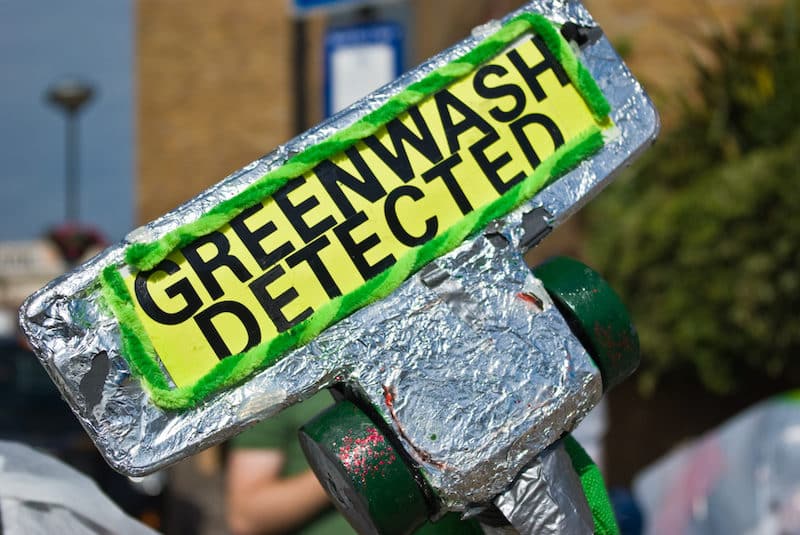
Experts say the BBC has been “greenwashing” the image of companies and countries contributing to global emissions by trumpeting their dubious climate credentials and promoting their favoured solutions to the crisis.
The content was produced by BBC StoryWorks, a studio that produces videos, podcasts, and articles paid for commercial clients, which it publishes on BBC channels outside the UK.
On its website, BBC StoryWorks boasts that it leverages the reputation of the BBC – “our century-long pedigree as the world’s most trusted storytellers” – to create content for commercial clients “that moves and inspires curious minds, across platforms and across the globe”.
BBC StoryWorks produces traditional adverts for its clients, as well as content “with an editorial style” (known as “branded” or “native” content).
Branded content appears outside the UK on the BBC website – the most viewed news platform in the world – and on its non-UK broadcast channels, in a similar format to normal editorial output. However, branded content promotes the paying client and typically features interviews with the client’s senior executives. It is only distinguished by a disclaimer that it has been paid for by an external organisation.
BBC Studios – which includes StoryWorks – generated £1.8 billion of sales in the year 2023/24, according to the broadcaster’s annual accounts. The BBC‘s financial deficit is projected to reach nearly £500 million next year, with the licence fee – its primary funding source – having been frozen for several years by the last Conservative government.
In recent months, the BBC has created content for a number of oil and gas companies, including the French fossil fuel company Engie, which owns a number of coal-fired power plants and relies heavily on gas for its energy production.
BBC StoryWorks has also produced content for liquified natural gas (LNG) companies, and has touted the energy source as a cleaner alternative to other fossil fuels. This is despite experts warning that the booming LNG industry could contribute more heavily to the climate crisis than the ongoing use of coal, the most carbon-intensive fossil fuel.
Agriculture accounts for 21 percent of global greenhouse gas emissions, and BBC StoryWorks has produced films for some of the world’s biggest food and farming firms, including Nestlé and Bayer, often promoting the disputed green technologies backed by the industry. As previously revealed by DeSmog, BBC StoryWorks has produced dozens of documentaries sponsored by the pesticide giant Corteva, publicising the technologies developed and sold by the firm.
Petrostates with a history of human rights abuses – including the imprisonment of journalists – have also been promoted by BBC StoryWorks.
An investigation by DeSmog and Drilled previously revealed that many of the world’s most trusted English-language news outlets regularly promote the fossil fuel industry’s narratives on climate-related topics. Bloomberg, The Economist, the Financial Times, the New York Times, Politico, Reuters, and the Washington Post all have internal commercial studios that create advertising content for fossil fuel firms.
The BBC is committed to science-led climate reporting and in 2021 signed the Climate Content Pledge, promising to do “more and better climate story-telling on screen across all genres.”
However, critics say that BBC StoryWorks is using the broadcaster’s reputation – including its role as a public service broadcaster – to make money from commercial content that often flouts its editorial values.
“The contracts to make this sort of content are won on the back of the BBC’s reputation as an honest and impartial broadcaster,” Patrick Howse, the BBC’s former Baghdad bureau chief, told DeSmog. “Accepting money from sources like this, to make content like this, risks undermining the BBC’s own hard-won reputation and will ultimately put it on the wrong side of history.
“This is a huge disservice to the BBC’s audiences, and a betrayal of the many brave and conscientious BBC journalists around the world who see holding power to account and telling the truth as their raison d’etre.”
Last year was the warmest year since global records began in 1850. The world’s foremost climate science body, the UN’s Intergovernmental Panel on Climate Change (IPCC), has said that “immediate and deep emissions reductions” are needed “across all sectors” to limit global warming to 1.5C – the global target established by the 2015 Paris Agreement.
In June 2024, UN Secretary-General António Guterres said that advertising agencies had “aided and abetted” the fossil fuel industry, “acting as enablers to planetary destruction”.
“Fossil fuels are not only poisoning our planet – they’re toxic for your brand,” he said.
A BBC StoryWorks spokesperson said that the studio “operates entirely separately from the BBC’s editorial operations” and that its output “is clearly labelled as commercial content”.
However, content labelling doesn’t always help readers and viewers to understand that it has been paid for by a commercial client. A 2018 Boston University study found that only one in 10 people recognised native advertising – which includes branded content – as advertising rather than reporting.
The BBC StoryWorks spokesperson added that, “BBC StoryWorks operates under robust and established governance and is required to comply with the BBC’s guidelines as set out in the publicly available Advertising and Sponsorship Guidelines.
“Central to these guidelines is a commitment to factual accuracy in any piece of content. All of the content cited in this article was approved as compliant with the BBC’s advertising guidelines prior to its publication.”
Fossil Fuel Firms and False Solutions
In April and June, BBC StoryWorks published two articles paid for by Engie, a global energy company with annual revenues of $60 billion, which is part-owned by the French state. The articles promoted Engie’s green credentials, claiming it has a mission “to accelerate the energy transition”, despite the firm’s extensive fossil fuel interests.
Though ENGIE has ambitious renewable development objectives, it plans to expand its LNG terminals in Europe, is one of the top European developers of gas power plants globally, and has agreed to import American shale gas beyond 2040.
Between 2016 and 2022, the firm sold 16 of its coal plants – a 60 percent reduction in its coal capacity. However, Engie chose to sell these assets rather than close them down. This transferred the polluting plants to different owners, meaning that the plants will still contribute to global emissions.
The BBC StoryWorks articles didn’t provide information about the company’s existing polluting activities, or the global need to rapidly scale-down oil, gas, and coal production.
Professor Peter Newell, an academic at the University of Sussex specialising in environmental politics, told DeSmog: “Because branded content looks like regular BBC journalism which the public trust as independent, it compromises the integrity of the organisation and its public role, including to help society respond seriously to the climate crisis.”
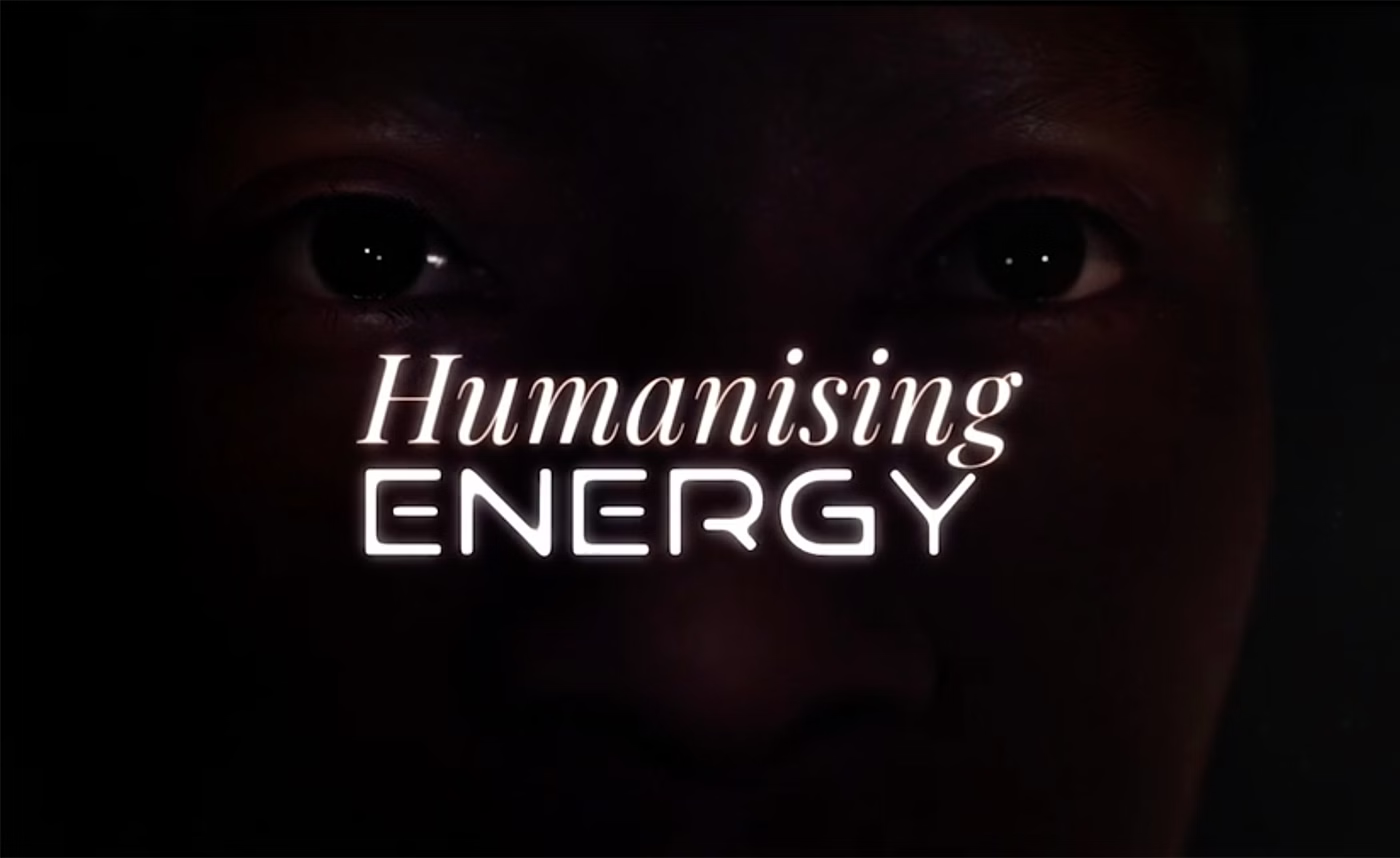
In 2021, the broadcaster launched a “Humanising Energy” series “presented by” the World Energy Council, a global forum for sustainable energy development, followed by a second series in 2023.
The two series featured dozens of five-minute films paid for by individual firms, showcasing their supposed climate solutions. These films typically involved one-on-one interviews with people either creating or benefiting from these green innovations, as well as cinematic shots of the technologies being deployed.
A screenshot of a BBC StoryWorks film from its ”Humanising Energy“ series. Credit: BBC
Sponsors of films in the two Humanising Energy series included the fossil fuel companies Engie Brazil, Gasum (the largest distributor of LNG in the Nordic countries), CLP Holdings (which has said it won’t phase out its coal assets before 2040, and hasn’t committed to phasing out its gas assets), Mabanaft, and Invenergy, the energy services firm Voith, and the engine manufacturer Cummins.
All of these films touted the supposed climate credentials of the featured companies, without examining their contribution to global emissions or the viability of the featured technologies.
In January 2024, Cummins agreed to pay a record $1.7 billion fine – the second largest environmental penalty ever in the U.S. – after facing charges that it equipped roughly one million vehicles with devices that bypassed emissions sensors. The company didn’t admit wrongdoing.
Just a few months earlier, BBC StoryWorks produced a film for Cummins boasting of the firm’s efforts to help decarbonise commercial vehicles.
The Invenergy film focused on its construction of an LNG plant in El Salvador. While the content attempted to show how the plant was providing energy and jobs to the local community, it also tried to tout the environmental benefits of natural gas.
During the film, an Invenergy spokesperson suggested that natural gas generates 30 percent less carbon dioxide than other fossil fuels, neglecting the fact that natural gas is composed largely of methane, which is over 80 times more potent than CO2 across a 20 year period. Even relatively small methane leaks during the process of extracting, shipping, and processing natural gas contribute significantly to global emissions.
One of the films in the Humanising Energy series – “The evolution of home energy” – promoted the role of hydrogen in supplying home heating. Yet, while green hydrogen is widely accepted as necessary for decarbonising heavy industry and other sectors where alternative renewable energy sources are unworkable, it is not considered viable for heating homes.
A peer-reviewed assessment of over 50 independent studies in 2024 concluded that hydrogen use in domestic heating is inefficient, costly and resource-intensive compared to other low-carbon options such as heat pumps.
The BBC StoryWorks film was paid for by DNV, a Norwegian company that claims to be “the world’s leading resource of independent energy experts and technical advisors”, including the oil and gas sector. DNV says on its website that it “delivers broad technical expertise and experience to enable hydrogen to play a key role in the energy transition”.
A DNV spokesperson said that, “While DNV does work with oil and gas companies and organisations across renewable energy production, it is not involved in the direct production or distribution of energy… Our approach to energy solutions is rooted in comprehensive research and rigorous testing, and our position as an independent third party is a central part of our identity and our work.”
The Humanising Energy series also featured twofilms advocating for the development and deployment of sustainable aviation fuels (SAFs) – one paid for by the aviation giant Boeing, and one paid for by the energy and chemicals company Sasol alongside the gas company Linde.
A screenshot of a BBC StoryWorks film, sponsored by Boeing, from its ”Humanising Energy“ series. Credit: BBC
SAFs have been criticised as being environmentally damaging and currently economically unviable. The Advertising Standards Authority this month banned a Virgin Atlantic advert for making the “misleading” claim that it had developed a “100 percent sustainable aviation fuel”.
In August 2022, the International Council on Clean Transportation (ICCT) said that the amount of money invested by airlines in SAFs was “insufficient” and that it seemed as though the technology was simply “about burnishing airlines’ images” by inflating their environmental credentials.
Sasol told DeSmog that its SAF initiatives were not an example of greenwashing and that it believes SAFs hold the “promise to be an enabler of our own decarbonisation and contribute to decarbonising aviation.”
Aviation contributes approximately 2.5 percent of worldwide greenhouse gas emissions, yet BBC StoryWorks has produced content for a number of airlines in recent months and years, including Uzbekistan Airways (March 2024), China Southern Airline (2022), and Korean Air (2017).
BBC StoryWorks has also worked extensively with other polluting transport companies.
It produced an advertising campaign for the shipping and cruise company Cunard that appeared on BBC StoryWorks social media pages in July 2024. Europe’s 218 cruise ships emitted as much sulphur oxides as one billion cars in 2022.
BBC StoryWorks has also produced brandedcontent for the car company Hyundai, as well as for Lexus, Volkswagen, and Jaguar. In addition, the studio has produced a six-part series paid for by the Indian multinational motorcycle company Royal Enfield.
Transport contributes roughly one quarter of all energy related greenhouse gas emissions, while outdoor air pollution is estimated to cause more than 3.2 million premature deaths worldwide every year.
“This important investigation reveals that BBC StoryWorks has been doing the greenwashing work of major polluting firms driving the climate crisis by obscuring their role and promoting their preferred ‘solutions’, however discredited by science,” Professor Newell told DeSmog.
Greenwashing is when a company falsely brands something as eco-friendly, green or sustainable. In 2017, the BBC itself produced a guide to the “seven ways to spot businesses greenwashing”.
Big Ag Polluters
BBC StoryWorks has also been paid to produce content for major agricultural polluters and their lobbyists. This content has often promoted the technological hacks that food and farming giants claim will reduce the sector’s emissions, rather than the more fundamental changes in production and consumption that scientists say will be crucial in limiting Big Ag’s climate impact.
In 2023, BBC StoryWorks produced an advertising campaign for the pesticides giant Bayer, the world’s second largest crop chemicals company, boasting of the firm’s efforts to facilitate “scientific breakthroughs”.
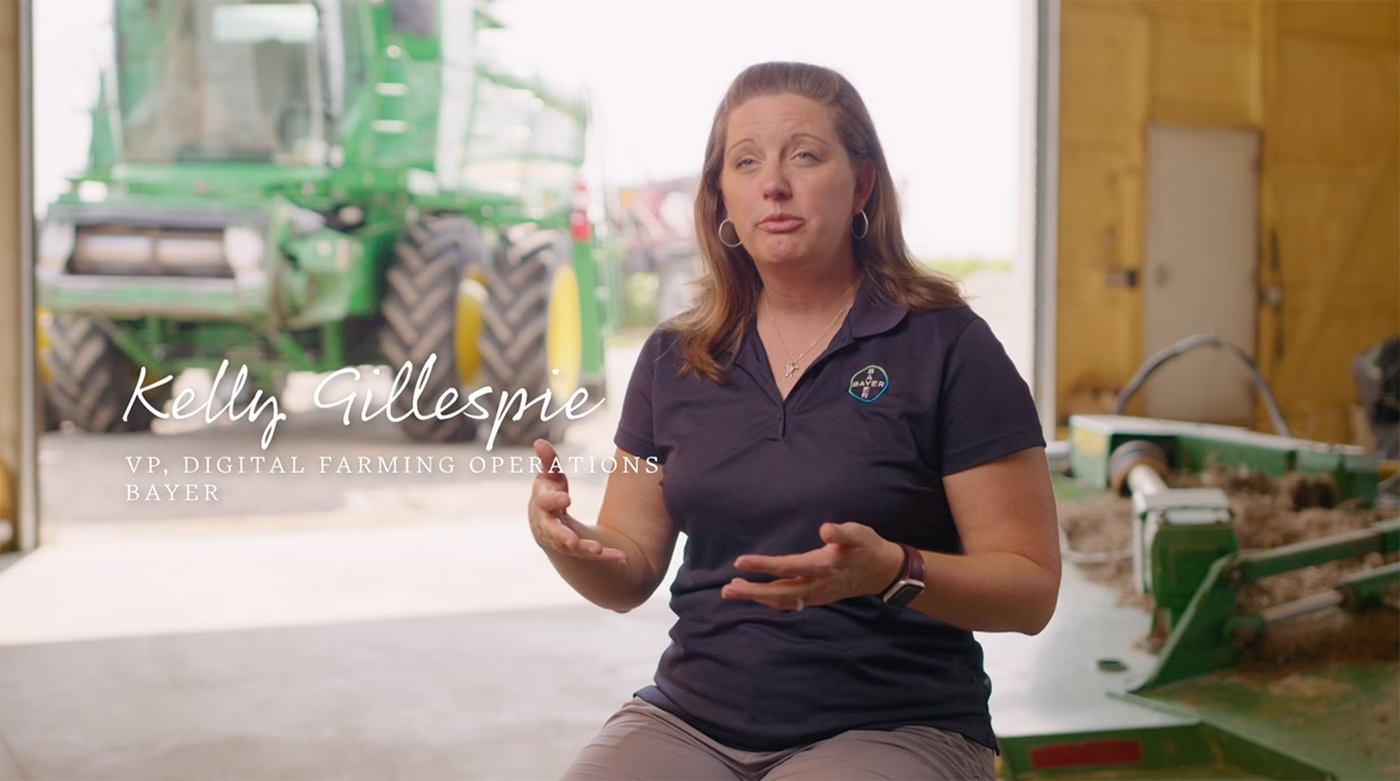
In addition, as part of a branded content series in late 2023 entitled “The Climate and Us”, BBC StoryWorks was paid by Bayer to produce a film on the digital apps helping farmers to monitor and reduce their emissions.
The film, which featured an interview with Bayer’s vice president of digital farming operations, promoted the firm’s technologies with no additional comment from experts on its efficacy, or Bayer’s stance on climate change.
A screenshot of a BBC StoryWorks film, sponsored by Bayer. Credit: BBC
According to the Pesticides Action Network, over a third of Bayer’s sales derive from products that are highly hazardous to the environment, animal or human health. (The methodology for this classification is strongly disputed by Bayer on the grounds that it uses different criteria to internationally accepted rules).
Bayer told DeSmog that it is “committed to ambitious sustainability goals and has a positive track record while recognising the ongoing challenge.”
Experts say that the overuse of chemical pesticides is harming the future of food production. Biodiversity is in sharp decline across the world, and numbers of birds and pollinators are plummeting in Europe.
Bayer, which makes almost $10 billion in agrochemical sales every year, has also faced millions of dollars in lawsuits over health issues allegedly related to its products, including from farmers.
In 2023, DeSmog revealed that BBC StoryWorks had produced three documentary series and 26 articles – viewed at least 65 million times – sponsored by Corteva, one of the world’s largest pesticide firms.
The BBC said that the Corteva-sponsored content, which focused on sustainable food production, was editorial in nature and not influenced by its corporate client. However, experts said the documentaries gave a “totally biased” picture of global food problems, while the content promoted a number of the technologies developed by Corteva.
BBC StoryWorks also produced two articles in 2023 paid for by Australian Dairy – the country’s industry trade group.
The first article promoted the supposed contribution of milk and dairy to a healthy diet, while the second advocated for “precision farming” – in other words, using technology to ensure that resources are used efficiently and to track climate impacts.
Scientists and health professionals agree that dairy products are not necessary for a healthy diet, and they agree that for people who are able to have a varied diet, lower meat and dairy consumption is healthier than diets higher in milk and dairy.
Experts also doubt that precision farming can be rolled out widely enough to meaningfully reduce agricultural emissions. The environmental group Friends of the Earth has said that: “Faced with global climate and biodiversity emergencies, better ‘optimisation’ of existing production processes cannot possibly go far enough to meet the challenges we face.”
According to a March 2024 Harvard Law paper, which surveyed more than 200 environmental and agricultural scientists, meat and dairy production must be drastically reduced – and fast – to align with the Paris Agreement. The report concluded that global emissions from livestock production need to decline by 50 percent during the next six years, with “high-producing and consuming nations” taking the lead.
Sophie Nodzenski, a senior campaign strategist on food and agriculture at Greenpeace International told DeSmog: “Tinkering with the status quo is no longer an option. Meat and dairy companies are climate killers. The livestock sector is one of the leading sources of human-made methane emissions, which move us faster and further past the 1.5C threshold, worsening global heating.
“Meat and dairy companies must stop misleading the public with pseudo solutions and focus on reducing their livestock herds drastically to bring down emissions instead. This reduction can give us a fighting chance against climate chaos.”
In 2023, BBC StoryWorks also produced content for the world’s largest food and drink company Nestlé, boasting of the company’s efforts to support sustainable farming through “regenerative agriculture”.
The film failed to acknowledge that Nestlé – whose 87.5 million tonnes of annual emissions are similar to those of Chile – spent 14 times more on “marketing and administration” in the last year than it did on regenerative agriculture over the previous five years combined.
A screenshot of a BBC StoryWorks film, sponsored by Nestlé. Credit: BBC
“Nestlé’s strong focus on using regenerative agriculture to compensate for the greenhouse gas emissions from livestock farming – one of Nestlé’s main strategies to achieve net zero – is not backed by robust scientific evidence,” Nodzenski said.
“Increasing carbon storage in soils, as well as forests and other vegetation, is necessary, but should not replace a drastic reduction of greenhouse gas emissions from livestock farming – one of the main sources of Nestlé’s emissions.”
The Nestlé film was part of a “Food for Thought” series backed by the trade body FoodDrink Europe, whose members feature major polluters including Cargill, Coca-Cola, and Unilever.
A Nestlé spokesperson said: “We continue to invest in and deliver on our net zero roadmap. By the end of 2023, we had reduced our greenhouse gas (GHG) emissions by 13.5 percent in absolute terms since 2018. Our GHG reduction targets are third-party approved by the Science Based Targets initiative and include a 20 percent absolute cut by 2025 and 50 percent by 2030 covering all sources of agricultural emissions in our supply chain.
“We continue to ramp up our climate efforts using world class research and development, including via the Nestlé Institute for Agricultural Sciences.
“Nestlé has committed to invest $1.2 billion to pay premiums to farmers for ingredients grown using regenerative agriculture practices, provide technical assistance and support investment.”
Petrostates
Over recent years, BBC StoryWorks has also produced content for some of the world’s leading fossil fuel states, many of which have a poor record on human rights and press freedom.
This year’s flagship COP29 climate summit will be held in Baku, Azerbaijan. The country is a petrostate with oil and gas production accounting for roughly half of its GDP and over 90 percent of its exports. The country, run under an authoritarian system with little effective political opposition, plans to increase fossil fuel production by a third over the next decade.
Azerbaijan’s government has also been accused by of a media crackdown by the advocacy group Human Rights Watch ahead of November’s summit, arresting 25 journalists and activists in the past year.
However, since November 2023, BBC StoryWorks has produced several adverts promoting Azerbaijan as a place to visit, while greenwashing its image.
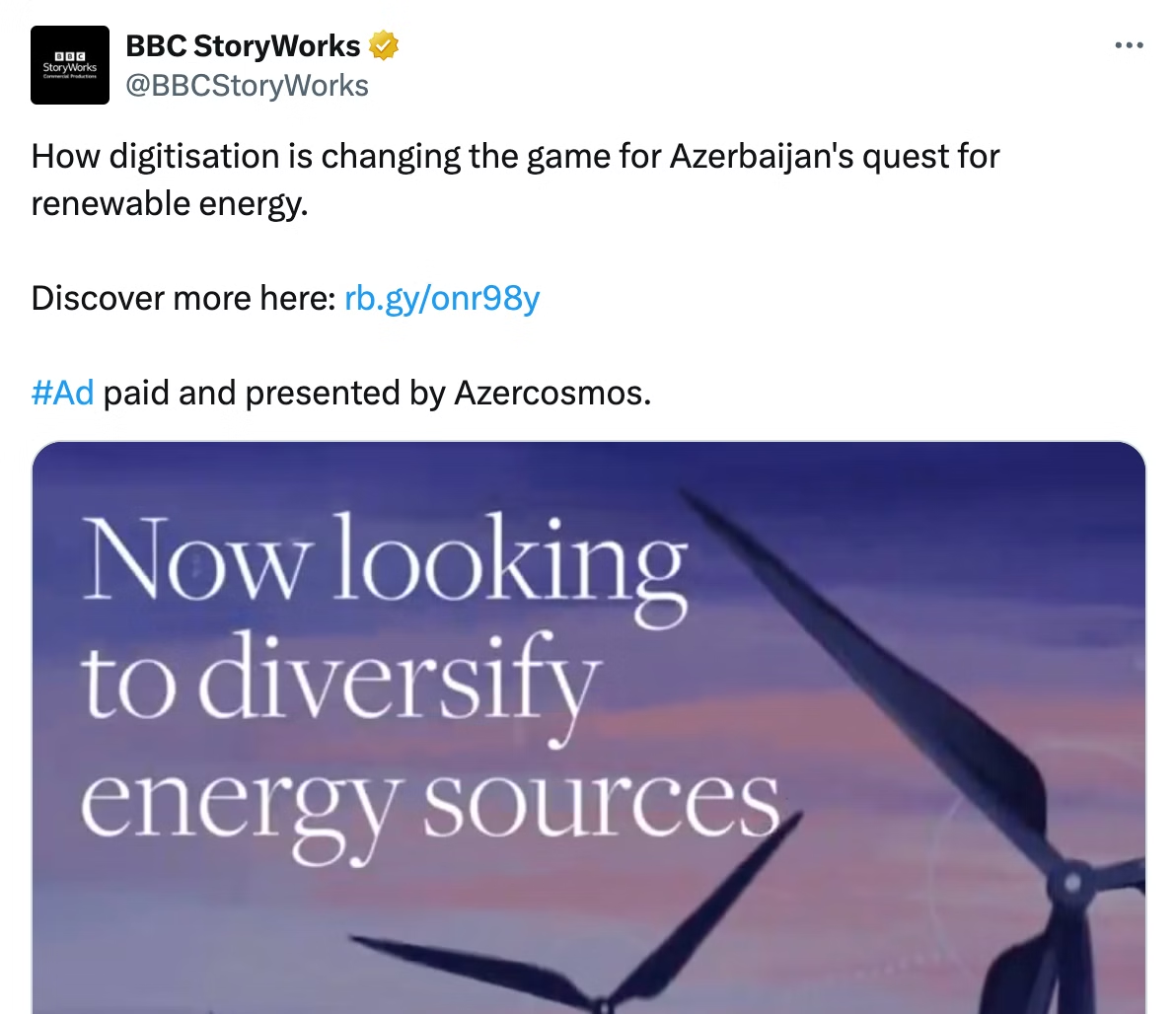
For example, in December 2023, the studio released an advert paid for by the country’s space agency Azercosmos, attempting to show “How digitisation is changing the game for Azerbaijan’s quest for renewable energy.”
The advert was accompanied by an article claiming that Azerbaijan plans to transition “from an oil- and gas-based economy into a thriving modern hub.” The article did not mention the country’s plan to expand fossil fuel production, which contravenes globally agreed efforts to limit rising temperatures.
A screenshot of a BBC StoryWorks advert, sponsored by Azercosmos. Credit: BBC
BBC StoryWorks has also produced content promoting the United Arab Emirates (UAE), the host of the 2023 COP28 climate summit and another petrostate with a poor human rights record.
In 2023, the studio produced a branded content podcast series on behalf of Abu Dhabi Tourism, featuring five 20-minute episodes each “highlighting the message that Abu Dhabi [the capital of the UAE] is a destination for every kind of traveller”.
The series was shortlisted for a 2023 World Media Award and, in the award submission, the BBC said it “challenged preconceived notions and [positioned] the city as a cultural gem worth exploring”. The series was downloaded 115,000 times, according to the BBC.
The UAE derives roughly 40 percent of its income from oil and gas, and this isn’t the only time that BBC StoryWorks has produced content promoting the petrostate.
The story stated that the UAE is “planning to increase oil production to more than five million barrels a day by 2030”, but said that the country “has been looking toward more sustainable energy sources”. It went on to say that “Clean energy projects are coming of age” in the UAE, “from record-breaking solar parks and green hydrogen to waste-to-energy plants”.
The UAE’s overall climate action has been rated as “critically insufficient” by the Climate Action Tracker, an independent scientific project that monitors government climate action and measures it against the Paris Agreement.
Weeks before COP28, the country’s national oil company, ADNOC, awarded contracts worth $17 billion for the development of new offshore gas fields.
The Gulf state also has a poor record on human rights and press freedom. The UAE continues to arrest and imprison activists, academics, and lawyers who speak out against its monarchic rulers. UAE authorities also continue to discriminate against women, LGBTQ communities, and migrants.
According to Reporters Without Borders, “The government prevents both local and foreign independent media outlets from thriving by tracking down and persecuting dissenting voices.”
“The rise of renewable energies in oil-rich regions” article also attempted to promote the ways in which “women are playing an increasing role in the renewable energy sector”. The story cited the fact that women are leading green initiatives in Kuwait, and Jordan.
However, many Gulf states routinely discriminate against women. In Kuwait for example, the country’s personal status laws discriminate against women in matters of marriage, divorce, and child custody.
Despite this, BBC StoryWorks has frequently promoted the country. In December 2023, the studio published an advert from the Kuwait Fund, the country’s state-run development agency, boasting of its efforts to help “disadvantaged regions, women and minorities”.
Reporters Without Borders states that Kuwait’s censorship laws prohibit journalists “from criticising the government, the emir, the ruling family, its allies or religion”. In particular, it is “difficult for journalists to tackle migrant worker rights, women’s rights and corruption.”
Oil and gas revenues account for roughly 60 percent of Kuwait’s GDP.
BBC StoryWorks has also produced content for the petrostate Qatar, promoting the country as a tourist destination despite its record of discriminating against women and minorities.
BBC StoryWorks has a history of working for repressive regimes, including China. The U.S. publication Deadline reported in December 2022 that BBC StoryWorks had partnered with at least nine Chinese state-affiliated bodies, including a media outlet banned from broadcasting in the UK.
“Those commissioning and paying for this content are deliberately using the BBC’s brand to greenwash or whitewash their own reputations. It’s an exercise of cynical manipulation,” the BBC’s former Baghdad bureau chief Patrick Howse told DeSmog.
“Commissions like this are lucrative and therefore attractive to a corporation that has been deliberately and severely financially squeezed by the UK government over a long period. This has forced the BBC to seek money from wherever it can find it, and this poses a risk to its editorial independence and honesty, which will ultimately undermine the trust of the BBC’s audience.”
The bank’s work for businesses expanding production of fossil fuels is a stark contrast to its climate change promises
Every year business and world leaders jet into Davos to discuss climate change and other global issues at the World Economic Forum. And every year they are met with vigorous accusations of hypocrisy. Those accusations may well be levelled at the executives from HSBC – one of the world’s top funders of fossil fuel expansion – as they mingled with their peers in the pretty Swiss ski town this week, discussing how to develop a long-term strategy for climate, nature and energy.
HSBC says delivering a net-zero global economy is “a pillar of our strategy as a business”. In December 2022, the bank made the shock announcement that it would stop financing new oil and gas fields. Environmental campaigners celebrated, with the responsible investment charity ShareAction saying the decision set “a new minimum ambition for all banks committed to net zero”.
But on the same day, HSBC bankers started selling shares in the refining business of Saudi Aramco, one of the most aggressive expanders of oil and gas. An investor in HSBC told the Bureau of Investigative Journalism that the bank’s policy has been cleverly worded to allow it to fund some of the world’s biggest polluters while boasting about its green credentials.
An analysis of Refinitiv data by TBIJ has found that in the year since HSBC’s new policy was announced, the bank has helped raise more than $47bn (£37bn) for companies that are expanding the production of oil and gas, despite dire warnings from scientists that this will push the world beyond its survivable limits.
Fatih Birol, executive director of the International Energy Agency, told ITV News: “In the world, if we make large scale oil, gas and coal development, we cannot reach our 1.5 degrees target, full stop.” He said if a bank is serious about aligning its business with net zero, it cannot continue to fund companies developing new oil and gas fields.
Andrew Harper, chief responsibility officer at Epworth, an investment manager that holds HSBC shares, said: “[HSBC’s] policy, which is supposed to act as a safety net for the climate, is by design letting the bank circumvent its pledges by allowing them to adhere to the letter rather than the spirit of what they’re claiming.
“As investors, we’re not going to be fooled by the marketing, by the pledges, by these policies. We want to see real change and for them to seriously end new fossil fuel financing, no loopholes. Anything short of that is the bank trying to dupe its key stakeholders.”
HSBC said its policy allows the bank to continue providing finance “at a corporate level” and its approach “is based on the latest science for achieving net zero and follows the UN-backed approach for climate target setting and net zero alignment for banks”.
New projects, no problem
In its feted policy, HSBC notes that global demand for oil and gas to 2050 is “more than met by existing [oil and gas] fields”. It says the bank will therefore no longer provide finance for “new oil and gas fields and related infrastructure whose primary use is in conjunction with new fields”.
However, that has not stopped HSBC from funding companies that are exploiting new oil and gas fields, and providing the necessary infrastructure to do so.
In the first half of last year, HSBC, with other banks, helped the UAE’s state oil and gas company, Adnoc, raise $3.2bn from selling shares in its gas and logistics businesses. Adnoc will receive a further cash boost of $3bn in hefty dividends from Adnoc Gas.
Separately, HSBC helped arrange a $3.2bn loan for Borouge 4, a petrochemicals plant that will be a key customer for Adnoc’s gas, and was described by its project director as “an enabler of Adnoc’s growth strategy”.
Scientists agree that we cannot develop any new oil and gas fields if we are to limit global heating to 1.5C. Adnoc plans to increase oil production by 25% between 2023 and 2027, however, which would dramatically overshoot these limits.
Last year, Adnoc rubber stamped the exploitation of a vast new gas field off the UAE coast, which threatens a vital habitat for sea cows. Burning the gas Adnoc plans to extract from this field would produce 30m tonnes of carbon dioxide per year – more than Denmark’s annual emissions.
HSBC has similarly close ties with Saudi Arabia’s national oil company. The share sale for Saudi Aramco’s refining business, Luberef – which HSBC bankers were working on as it unveiled its new oil and gas policy – raised $1.3bn. After the share sale, Saudi Aramco remains a 70% shareholder of Luberef and has management control of the business.
A couple of months later HSBC bankers helped raise $3bn in bonds for Greensaif, a company set up for the sole purpose of taking a stake in Saudi Aramco’s gas pipelines business, alongside Saudi Aramco, which retained the controlling stake.
And in another wildly successful share offering, HSBC helped raise $1.2bn for Ades Holding, which provides oil drilling rigs primarily to Saudi Aramco, among other oil and gas expanders in the region. Adnoc and Saudi Aramco declined to comment.
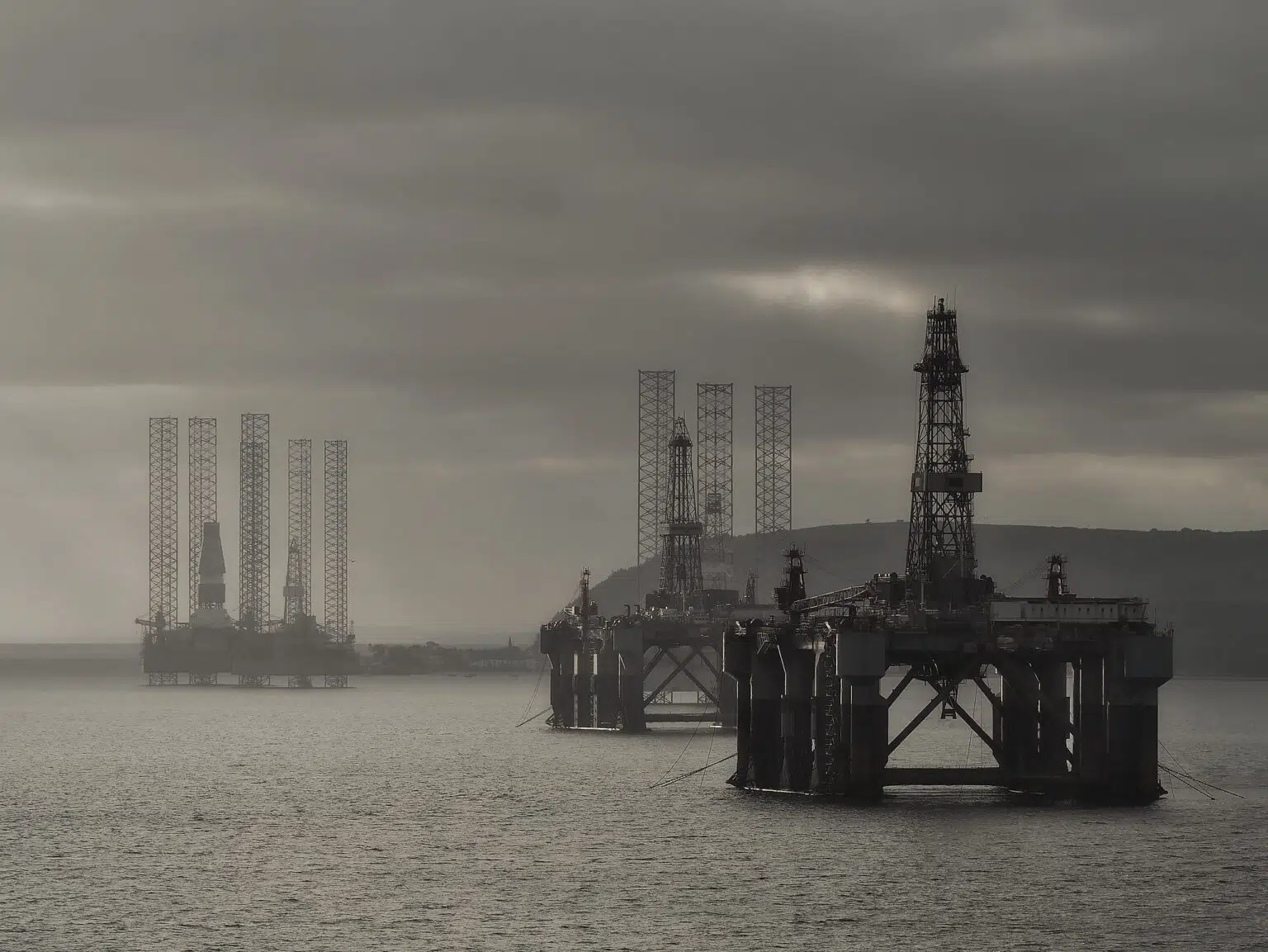
Adnoc is investing heavily in offshore expansion in the United Arab Emirates Giuseppe Cacace/AFP via Getty Images
HSBC rejected the suggestion that its policies allow for financing that is at odds with a net zero transition. “Net zero-aligned scenarios require continued, though declining, financing of fossil fuel supplies to meet energy demand, security, and affordability during the transition.”
The bank said its policy makes clear that it will continue to provide finance for companies with transition plans that align with its climate commitments. “HSBC’s approach is to engage with our major oil and gas clients on their targets and transition plans, and to align our oil and gas financing portfolio to a 2030 net zero aligned financed emissions target.”
Transition plans
Saudi Aramco, the world’s biggest polluter, does not appear to be preparing for a transition away from fossil fuels. The company expects to grow oil production by 8% by 2027, and increase gas production by up to 60% by 2030. Last year UN experts sent a letter of concern to Aramco – and its banks, including HSBC – saying its ongoing expansion of fossil fuel production threatens human rights by worsening climate change.
HSBC has chased business in the oil-rich Middle East and was last year named the region’s best bank for financing by Euromoney. Julian Wentzel, HSBC’s head of global banking in the region, told the magazine: “We have been at the nucleus of every major deal in the region, providing the full suite of banking services to our valued partners.”
Ed Matthew, campaigns director of think tank E3G, told TBIJ: “There’s a complete conflict between [HSBC’s] ambition to be at the heart of Middle Eastern oil and gas development and their commitment to start to pull out of fossil fuel financing globally.
“They can’t have their cake and eat it. Either they’re serious about delivering on the Paris Agreement or they’re not. At the moment, they’re putting short-term profits ahead of a habitable planet.”
Aggressive fossil fuel expansion
HSBC also funded oil and gas businesses far beyond the Middle East. In December, the bank helped arrange a $5bn loan for TransCanada Pipelines, which is among the top companies in the world expanding infrastructure for oil and gas, according to the Rainforest Action Network. (TC Energy, which owns TransCanada Pipelines, said: “Sustainability is foundational in everything we do.”) A few weeks later, the bank helped secure a $4.7bn loan for Occidental Petroleum, which is buying a Texas oil driller to expand its operations in the biggest shale field in the US.
In Europe, HSBC was among the banks that arranged a $3.3bn loan for Eni, the Italian oil and gas expander. Eni announced last year that it plans to increase its oil and gas extraction by 3-4% a year until 2027.
Experts have praised HSBC’s oil and gas policy for prohibiting funding for infrastructure linked to new oil and gas fields, in addition to the projects themselves. But the bank has continued to raise money for companies involved in the frantic building of export terminals for natural gas on the US southern coast.
The expansion of gas drilling and export in the region has been described as a “carbon bomb” – if all the planned projects are built, the associated annual emissions would outstrip those of Russia. Last year, HSBC, together with a slew of other banks, helped arrange loans worth $14.3bn for two of the companies building gas export hubs in the region.
HSBC was also among a group of banks to arrange loans worth $6bn for Baker Hughes, which provides oilfield services and equipment to oil and gas companies around the world. It helped raise a further $790m in share sales for oil drilling services companies Saipem and Nabors during the year.
At Davos there has been plenty of debate about how to limit global heating to 1.5C but campaigners fear it will remain just that. “Davos has always been a lot of talk and not much action,” said E3G’s Matthew. He would like to see stricter regulation of fossil fuel funding. “We can’t just leave it in the hands of banks, we need stronger action by governments and central banks to help prevent these investments. They need to introduce penalties for banks which are continuing to finance fossil fuel expansion.”
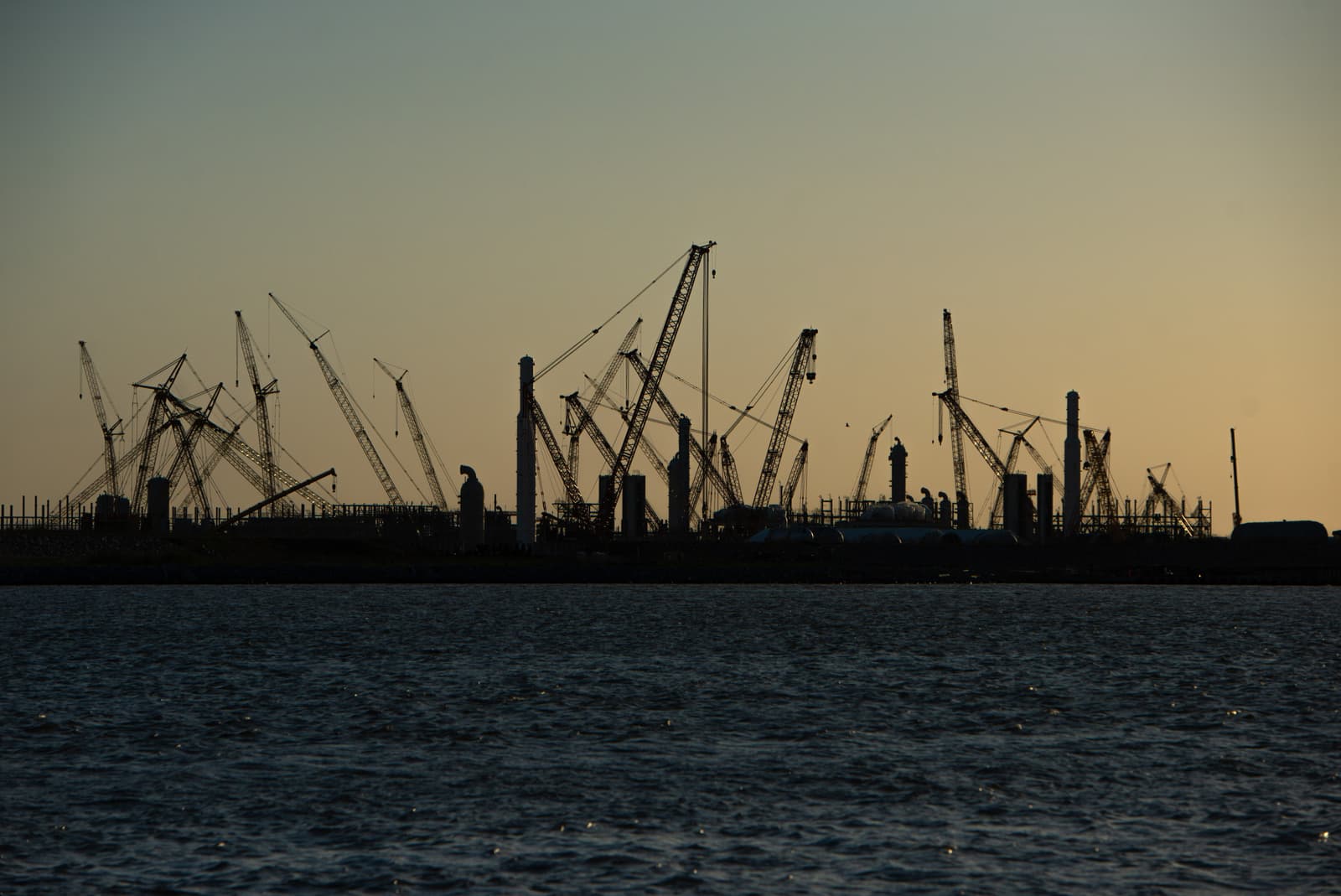
Header image: A liquified natural gas terminal on the Texas Louisiana border in the United States. Credit: The Washington Post via Getty Images.
Reporters: Josephine Moulds Environment editor: Robert Soutar Impact producer: Grace Murray Deputy editor: Chrissie Giles Editor: Franz Wild Production editor: Frankie Goodway Fact checker: Alice Milliken
This reporting is funded by the Sunrise Project. None of our funders have any influence over our editorial decisions or output.
LNG is a fossil fuel whose use is not consistent with the Paris Agreement 1.5C temperature goal. It consists primarily of methane, an extremely powerful greenhouse gas (GHG), which has climate impacts over 80 times greater than carbon dioxide over a 20-year period. Methane leaks into the atmosphere across the full production lifecycle of LNG, and once on the ships, the unburned gas escapes from the smokestacks into the air.
Despite the devastating frontloaded climate impact of methane, to date policymakers have been slow to address its use in regulation, and public awareness of the issue is low. This gives cruise companies the latitude to invest in LNG as an alternative fuel – and they have done so with gusto.
Why do cruise companies love LNG?
There are some benefits to LNG on paper: in the short term it reduces air pollution and CO2 emissions when burned, compared to standard shipping fuel. This has led to some of the world’s biggest cruise companies (including Carnival Corporation & plc and MSC Cruises and Royal Caribbean Group) to portray their cruises as sustainable, and their newest ships “clean”, “green” and “eco-friendly”.
Across the industry, company webpages are littered with references to LNG superimposed on images of idyllic blue seas, thriving coral reefs, and green forests. Most of us aren’t specialists in the climate impacts of differing fuel compositions, and it’s easy to be taken in.
But the reality is that these adverts are a very effective smokescreen for the fact that the true climate effect of LNG is likely worse than if the companies had stuck with dirty heavy marine fuel oil.
An updated database shows that more than 1,000 oil and gas companies around the world are planning to expand their planet-wrecking infrastructure.
More than a thousand fossil fuel companies around the world are currently planning to build new liquefied natural gas terminals, pipelines, or gas-fired power plants even as scientists warn that fossil fuel expansion is incompatible with efforts to prevent catastrophic warming.
That’s according to an updated database released Wednesday by Urgewald and dozens of partner groups. Described as the most comprehensive public database on the fossil fuel industry, the Global Oil & Gas Exit List (GOGEL) covers 1,623 companies that are operating in the upstream, midstream, or gas-fired power sector and collectively account for 95% of global oil and gas production.
More than a thousand fossil fuel companies around the world are currently planning to build new liquefied natural gas terminals, pipelines, or gas-fired power plants even as scientists warn that fossil fuel expansion is incompatible with efforts to prevent catastrophic warming.
That’s according to an updated database released Wednesday by Urgewald and dozens of partner groups. Described as the most comprehensive public database on the fossil fuel industry, the Global Oil & Gas Exit List (GOGEL) covers 1,623 companies that are operating in the upstream, midstream, or gas-fired power sector and collectively account for 95% of global oil and gas production.
JUST RELEASED The Global Oil & Gas Exit List (GOGEL) with fresh numbers: Despite the climate crisis, almost every upstream company is still developing new oil&gas fields. In addition, 1,023 companies planning new LNG terminals, pipelines, gas power plants. https://t.co/DsBgFMR7QZpic.twitter.com/BCUGpd5PYJ
According to the 2023 GOGEL, 96% of the 700 upstream oil and gas companies in the database are exploring or actively developing new oil and gas fields, projects that Urgewald said “severely jeopardize efforts to limit global temperature increase to 1.5 °C.”
Nearly 540 companies in the database are collectively planning to produce 230 billion barrels of oil equivalent (bboe) over the short term, the database shows.
“The seven companies with the largest short-term expansion plans are Saudi Aramco (16.8 bboe), QatarEnergy (16.5 bboe), Gazprom (10.7 bboe), Petrobras (9.6 bboe), ADNOC (9.0 bboe), TotalEnergies (8.0 bboe) and ExxonMobil (7.9 bboe),” Urgewald noted. “These seven companies are responsible for one-third of global short-term oil and gas expansion.”
The database also shows that fossil fuel companies are planning to expand global LNG capacity by 162%, a significant threat to critical climate targets. A United Nations-backed report published last week warned that fossil fuel expansion plans are “throwing humanity’s future into question.”
Urgewald pointed specifically to the LNG boom in the U.S., which the group said is “cementing its position as the world’s largest export hub for LNG” with 21 new export facilities planned along the Gulf Coast. Those facilities account for more than 40% of worldwide LNG expansion documented in the GOGEL database.
“Most of the fossil gas that will be exported from these terminals stems from the Permian Basin, the heart of the U.S. fracking industry,” Urgewald observed.
The updated database shows that nearly 80 companies—including Exxon, Chevron, and BP—are currently operating in the Permian Basin, located in the U.S. Southwest.
Climate campaigners and experts have also sounded alarm over Calcasieu Pass 2 (CP2), a planned $10 billion LNG export hub that would ship up to 24 million tons of gas annually once it is completed.
“The fossil fuel industry wants to pave undeveloped wetlands all along the coast with LNG facilities like NextDecade Corporation’s Rio Grande LNG Terminal, Rebekah Hinojosa, a member of the South Texas Environmental Justice Network said Wednesday. “Besides their environmental implications, these plans violate Indigenous sacred lands, and people working in fishing, shrimping, and eco-tourism risk losing their jobs. Our communities refuse to be sacrificed for the fracking industry’s dirty gas exports.”