Tag: Lula da Silva

  • Ten days of elections around the world may shape future of climate debate

    Spread the love

    Article by Paul Rogers republished from openDemocracy under a Creative Commons Attribution-NonCommercial 4.0 International licence.

    The results of votes in the US, Brazil, Israel and Serbia will have impacts that spread far beyond their borders. Chip Somodevilla/Getty Images

    From the US to Brazil, Israel and Serbia, the far right have been delivered a number of mammoth blows

    In the wake of the US midterm elections, the sheer size of the electoral opposition to Donald Trump is still sinking in. It will take weeks if not months for a full analysis of the results to emerge but they are already having a global impact, with US tech companies losing $3.2trn in value since the vote on Tuesday. 

    Remember, though, the political focus barely two weeks ago was not just about the US midterms but how they related to three more elections across three continents, in Serbia, Brazil and Israel. In each case, there was uncertainty over the outcome but a recognition that it could have an impact stretching way beyond its borders.

    Two of the elections came on the same day, 25 October, in Serbia and Brazil, and the third was in Israel just two days later. The first two were general elections in which the populations as a whole could cast ballots, but in Israel voting was restricted to seven million Jews and the two million Palestinians residing in Israel, with five million Palestinians living under Israeli control in Gaza and the West Bank excluded.  

    In Serbia, the Serbian Progressive Party (SBS) had been in power for 14 years and was dominant across much of society, including the media and economy, and with plenty of influence across the legal system. Its increasingly autocratic leader, Aleksandar Vucic, had long allowed persistent favouritism and a high level of corruption coupled with organised crime, and in the past two years a substantial community of student activists had demonstrated repeatedly against the SBS and Vucic, giving rise to an opposition Student List of candidates when it came to the election.

    While the students had no clear leader, by the time of the election they were reportedly neck and neck in the polls with the government. When the election came, the Student List romped home, winning 53% of the votes, to the SBS’s 39%.

    What comes next is uncertain as the List’s newly elected parliamentarians seek to establish a stable if inexperienced government. Critics fear that a combination of years of corruption coupled with the power of organised crime will ultimately dominate but that is by no means certain; many thousands of students, supported by hundreds of thousands of others, see the future very differently.

    As the political environment in Serbia evolves, one thing remains certain, it has seen mass protest transform itself into a potential government. That will be watched uncomfortably by quite a few Western states, not least France, with its continuing country-wide street protests, and the UK, where over 4,000 pro-Palestine supporters have been arrested in recent years.

    Mass action also applies to Brazil, where the progressive incumbent, Luiz Ignàcio Lula da Silva, failed to lead at the first round of the election, initially having fought a lacklustre campaign. The favourite to win the run-off was his right-wing opponent Flàvio Bolsonaro, a key Trump ally and the son of former president Jair Bolsonaro, now imprisoned for his role in an attempted coup after losing the 2022 election.

    The prospect of defeat led to a country-wide campaign of mass rallies by Lula’s supporters, with huge crowds gathering in cities right across the country. That was paralleled by far greater use of social media, an element that had not previously been prominent in Lula’s previous approach to campaigning. 

    Since the return to democracy in Brazil over 40 years ago, no candidate losing the first stage of a presidential election had reversed the result in stage two, yet Lula’s renewed campaign did just this, turning a two million voting deficit in the first round into a substantial lead in the second three weeks later, having gathered around 10 million extra votes.

    Much of the change was due to internal politics, but it is at the global level that the result is of note. During his recent four-year term, Lula had made much of the need to slow the rate of destruction of the rainforest, which makes up one of the most significant global sinks of carbon. If Bolsonaro had won that would have been reversed, which would have been music to the ears of Trump and his supporters, as well as to climate change deniers across the world.   

    As to Israel, there are two main outcomes. First, Binyamin Netanyahu’s Likud-led coalition lost its majority, but Gadi Eisenkot’s Change bloc also fell short. Second, Palestinian Arabs allowed to vote did so in much greater numbers than usual, with a turnout of just under 80%, largely because of a determination to prevent Netanyahu contriving to cling on to power. 

    Overall, Arab-led parties won 19 seats in the 120-seat Knesset, including 11 for members of the Joint List alliance – enough to hold the balance of power. Ten days after the election, the Joint List announced it would support Eisenkot as prime minister, following in the footsteps of the other Arab group, Ra’am. Israeli president Isaac Herzog is now thought likely to invite Eisenkot to form a government.

    The election itself, though, displayed thoroughly uncomfortable attitudes among Jewish Israelis during the campaign. Politics concentrated substantially on domestic issues, including the demands for accountability over the 7 October Hamas attack, with little attention given to the terrible war waged in Gaza by the Netanyahu-led government and the repeated violence perpetrated by Jewish settlers across the occupied West Bank. It was as if over 80,000 Palestinians killed or missing were best ignored.

    Not all Jewish Israelis took this position, but a majority appeared to. This, coupled with Netanyahu’s decades of experience in the Israeli government and his capacity for personal survival, suggested that any sustained political stability based on trust would be difficult to achieve. What remained though, was the transformation among Palestinian Israelis and their determination to vote and put Netanyahu out of office.

    The fourth of the elections, the United States mid-sessionals for both houses of congress, was the one that sprung by far the greatest surprise. That the Republicans lost was not unexpected, it was the massive size of the loss that counted.

    Given Trump’s past behaviour, if a modest shift in votes had given the Democrats the House but not in the Senate, Trump and his team would have carried on if somewhat tarnished. That was not to be. The extent of the failure was so great that it undermined the entire Trump machine and with it the vast numbers of supportive officials brought on to the Federal payroll in the past two years.

    That has three implications. One is at the international level, where Trump will no longer maintain his status and influence. There is a risk of hitting out where he thinks he can, but the extent of the failure in these elections means a minimal risk of Trump trying to cry foul in 2028. Times have changed and it won’t wash.

    The second is that the last two years have been hugely profitable for the Trump camp but not just for them. Wealthy elites across the entire country have made millions if not billions and will be singularly unhappy at the great gravy train being derailed. Work will already be underway in the Heritage Foundation, the think tank that authored the Project 2025 blueprint for the second Trump administration, and other right-wing think-tanks to adjust to a different era. 

    Finally, on some key domestic issues with global implications, Trump’s abject failure is very good news. Of all the disastrous policies of the Trump years, it is climate denial and the curbing of the renewables revolution that have been the most dangerous. Within a day of the election result, though, the financial press was reporting a surge in the value of renewable energy outfits, not just in the US but across the world. 

    Trump is still in the White House and his supporters will still be in the system, but their power is already ebbing away. Taking a global view, the combination of Lula’s re-election in Brazil and Trump’s failure leading to a re-energised environmental movement give the world a rare day of good news.

    Article by Paul Rogers republished from openDemocracy under a Creative Commons Attribution-NonCommercial 4.0 International licence.

    dizzy: The reference to “… 4,000 pro-Palestine supporters have been arrested in recent years.” does not make clear that this is the number of Palestine Action supporters arrested as terrorists for holding protest signs.

    Almost 140 arrested at protest against Palestine Action ban outside US embassy in London

    …

    More than 4,000 arrests have been made for supporting Palestine Action since the ban came into effect, Defend Our Juries said, representing the vast majority of terror arrests since last July.

    …

    Climate science denier Donald Trump confirms that he knows nothing about democracy and that more liquid gold is being secured according to his policy of global privateering.
    Climate science denier Donald Trump confirms that he knows nothing about democracy and that more liquid gold is being secured according to his policy of global privateering.
    Orcas discuss Donald Trump and the killer apes' concept of democracy. Front Orca warns that Trump is crashing his country's economy and that everything he does he does for the fantastically wealthy.
    Orcas discuss Donald Trump and the killer apes’ concept of democracy. Front Orca warns that Trump is crashing his country’s economy and that everything he does he does for the fantastically wealthy.
    Keir "I support Zionism without Qualification" Starmer supporting genocide. He berates Palestine Action for upholding international law and prevent his - Labour and Israel's - Gaza genocide. Starmer says that that they've got a genocide to achieve, forced marches like the Nazis did, hospitals to bomb into obliteration, journalists, healthcare workers and starving people queuing for food to mass-murder and that they have to murder all Gazans for Zionism.
    Keir “I support Zionism without Qualification” Starmer supporting genocide. He berates Palestine Action for upholding international law and prevent his – Labour and Israel’s – Gaza genocide. Starmer says that that they’ve got a genocide to achieve, forced marches like the Nazis did, hospitals to bomb into obliteration, journalists, healthcare workers and starving people queuing for food to mass-murder and that they have to murder all Gazans for Zionism.

  • Lula Blasts ‘Unjustifiable’ Israeli Detention of Gaza Flotilla Pair Amid More Reports of Torture

    Spread the love

    Article by Brett Wilkins republished from Common Dreams under Creative Commons (CC BY-NC-ND 3.0).

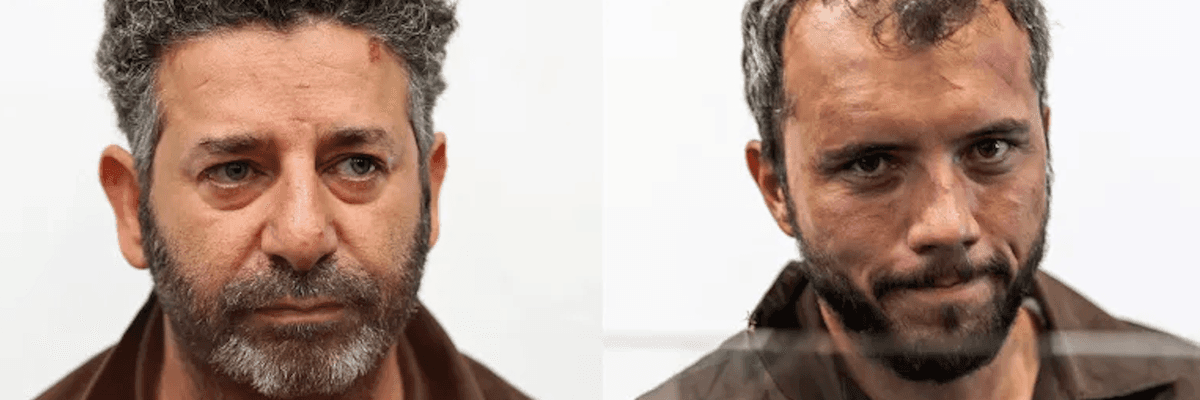
    Global Sumud Flotilla members Saif Abu Keshek (left) and Thiago Ávila (right) are seen during a May 5, 2026 court appearance in Ashkelon, Israel.(Photo by Ilia Yefimovich/AFP via Getty Images)

    Brazil’s president called Israel’s continued detention of Brazilian Thiago Ávila and Spanish-Swedish national Saif Abu Keshek “a serious affront to international law.”

    Brazilian President Luiz Inácio Lula da Silva on Tuesday condemned Israel’s twice-extended detention of two Global Sumud Flotilla members abducted last week off the coast of Greece while attempting to break the decadeslong Israeli blockade of Gaza and deliver humanitarian aid to its people amid an ongoing genocide.

    “Maintaining the imprisonment of Brazilian citizen Thiago Ávila, a member of the Global Sumud Flotilla, is an unjustifiable action by the Israeli government, causes great concern, and must be condemned by all,” Lula said on X.

    RECOMMENDED…

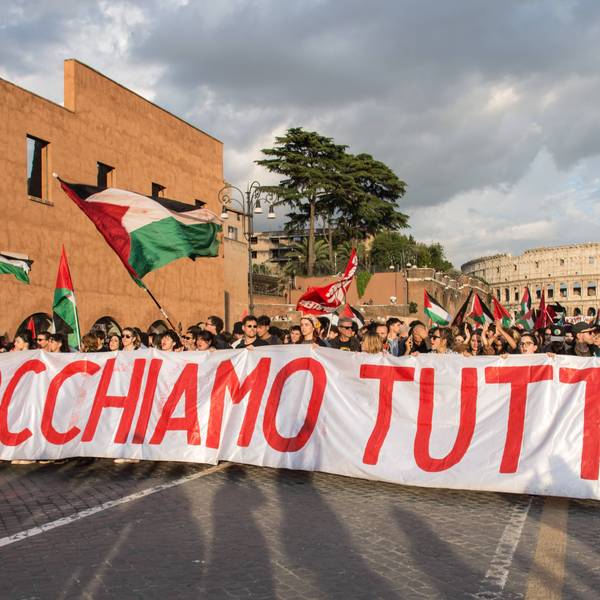
    Protesters in Rome hold a banner reading "block everything" as they march near the Colisseum

    Varoufakis Decries Western Complicity as Gaza Flotilla Leaders Abducted by Israel

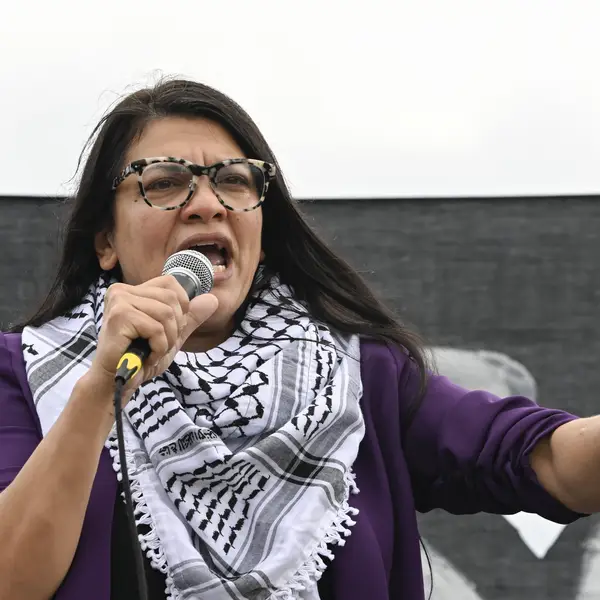
    Rashida Tlaib speaks wearing a keffiyeh

    Tlaib Leads Dems Decrying Trump Admin Failure to Protect US Citizens Abducted From Gaza Flotilla

    “The detention of the flotilla activists in international waters had already represented a serious affront to international law,” he added. “For this reason, our government, together with that of Spain, which also had a citizen detained, demands that they receive full guarantees of safety and be immediately released.”

    Spain’s government has also condemned Israel’s capture of Abu Keshek and demanded his immediate release, and like Lula, called the detention illegal because it occurred in international waters. Abu Keshek is also a citizen of Sweden, which has not condemned his detention—or even mentioned him by name—but has asked that “the rights of any Swedish citizens will be respected.”

    Adalah Legal Center, the Palestinian group in Israel representing Ávila and Abu Keshek, said Tuesday that the Ashkelon Magistrates’ Court approved Israel’s request to extend the pair’s detention through May 10. This, after the court on Sunday prolonged their detention by two days.

    “The court’s decision to extend the detention of humanitarian activists abducted in international waters amounts to judicial validation of the state’s lawlessness,” Adalah assertedad, vowing to appeal the decision, which the group said was based on “secret evidence.”

    Adalah noted that “because the activists were abducted over 1,000 kilometers away from Gaza and are not Israeli citizens, Israeli domestic law does not apply to them.”

    Israel contends that it is enforcing a lawful naval blockade of Gaza Strip, and that under the laws of naval warfare, that blockade can be enforced not only in its territorial waters, but also on the high seas.

    Adalah said, “Crucially, the court granted the full six-day extension requested by the state without imposing any limitations or judicial constraints on the interrogation period,” adding that the stated purpose of their continued detention is further interrogation.

    “Ávila reported being subjected to repeated interrogations lasting up to eight hours,” the group reported. “Interrogators have explicitly threatened him, stating he would either be ‘killed’ or ‘spend 100 years in jail.’”

    “Both activists remain in total isolation, subjected to 24/7 high-intensity lighting in their cells, and kept blindfolded whenever they are moved, including during medical examinations,” Adalah said, accusing interrogators of “trying all the time to connect the humanitarian aid with Hamas to present it as a service to Hamas.”

    Israel’s Ministry of Foreign Affairs claims that both men were affiliated with the Popular Conference for Palestinians Abroad, which the US government accuses of “clandestinely acting on behalf of” Hamas, the militant Palestinian resistance group that led the October 7, 2023 attack on Israel.

    Still, no charges have been filed against the pair, who Adalah said have been on hunger strike since April 30 in protest of their detention.

    Abu Keshek and Ávila were among the more than 170 Global Sumud Flotilla members intercepted and seized last week in international waters 45 nautical miles west of the Greek island Kythira and 600 nautical miles from Gaza in what many critics have called an act of piracy.

    All of the other flotilla members have been released. Many said they brutally abused by their Israeli captors, who threatened to kill them. The Washington Post reported 34 people—including citizens of Australia, Colombia, Italy, Ukraine, and the United States—required medical attention for broken ribs, noses, and other injuries. Detained activists also said they were denied food and water, and were forced to sleep on deliberately flooded floors. Both Abu Keshek and Ávila had visible facial injuries during their first court appearances.

    In a statement issued on Monday, Global Sumud Flotilla said Abu Keshek and Ávila “are being subjected to systemic psychological torture and explicit threats to the lives of their families.”

    The statement also noted the growing calls for their release from advocacy organizations and governments.

    “We urge the international community and their representatives to immediately take action for the safety and freedom of Saif and Thiago, the freedom of all Palestinian hostages, and the end of Israel’s illegal siege of Gaza and its genocide,” Global Sumud added.

    American journalist Alex Colston, who was aboard the flotilla on assignment for Zeteo, said he was beaten by his captors, and corroborated accounts of broken bones, concussion symptoms, and other signs of abuse inflicted by Israeli forces on flotilla members, as well as death threats, property theft, and other mistreatment.

    Hannah Smith, a representative of the flotilla’s public affairs team who was also aboard one of the vessels, told Democracy Now! on Monday that, after intercepting the boats, Israeli forces “pointed guns at us. They had lasers pointed at us. We had our hands in the air. They threatened lethal force.”

    “Many people were subject to aggressive physical force,” she said. “We were denied access to adequate water. We were denied access to sanitary supplies.”

    Smith continued:

    The nights were extremely cold. People’s jackets were stolen. When I advocated for one of the participants, who’s a doctor, who was pacing for two hours trying to stay warm—she had a short-sleeve shirt in like 50-degree weather that was cold and damp. When I advocated for blankets, they flooded the sleeping area. And then we had a dozen people pacing, trying to stay warm, trying not to get hypothermia.

    When we nonviolently resisted, many people were beat. Many people were dragged. I was held in a stress position for many hours… I heard people screaming. I heard people being dragged around. And it was absolutely horrifying.

    The reports of torture and other abuse are consistent with Israeli forces’ brutal treatment of members of past Gaza flotillas, including Ávila, who has taken part in at least three such missions. Victims have included Swedish climate campaigner Greta Thunberg, who was allegedly dragged, beaten, and made to kiss an Israeli flag in which she was allegedly wrapped after Israeli forces intercepted last October’s Global Sumud mission.

    It’s not just activists who reported Israeli brutality. Journalist Noa Avishag Schnal—who was covering last October’s flotilla—described rape threats and being “hung from the metal shackles on my wrists and ankles and beaten in the stomach, back, face, ear, and skull by a group of men and women guards, one of whom sat on my neck and face, blocking my airways.”

    In 2010, Israeli forces raided one of the first Freedom Flotilla Coalition convoys carrying humanitarian aid intended for Gaza, which Israel blockaded three years earlier. The Israeli attackers killed nine volunteers aboard the MV Mavi Marmara, including Turkish-American teenager Furkan Doğan.

    In a letter to his daughter dictated to his lawyer from prison, Ávila said, “I’m sorry for not being home with you right now.”

    “Today over a million children are suffering a genocide, being starved to death, being amputated without anesthesia, and suffering from horrific, hateful ideas, despite not knowing what Zionism and Imperialism is,” he continued.

    More than 250,000 Palestinians have been killed or wounded by Israeli forces in Gaza since October 2023. Around 2 million others have been forcibly displaced, starved, or sickened. Israeli Prime Minister Benjamin Netanyahu and former Defense Minister Yoav Gallant are wanted by the International Criminal Court for alleged crimes against humanity and war crimes in Gaza, and Israel is facing an International Court of Justice genocide case filed by South Africa and formally supported by numerous nations, including Brazil and Spain.

    “Your world will be safer because many parents decided to give everything to build this better world for you,” Ávila added. “I hope someday you understand that because I love you so much there was nothing more dangerous for you and for other children than living in a world that accepts genocide.”

    Article by Brett Wilkins republished from Common Dreams under Creative Commons (CC BY-NC-ND 3.0).

    Keir Starmer explains that UK is actively supporting Israel's genocidal expansion and repeats his previous quotation that he supports Zionism "without qualification". Keir Starmer said “I said it loud and clear – and meant it – that I support Zionism without qualification.” here: https://www.jewishnews.co.uk/keir-starmer-interview-i-will-work-to-eradicate-antisemitism-from-day-one/
    Keir Starmer explains that UK is actively supporting Israel’s genocidal expansion and repeats his previous quotation that he supports Zionism “without qualification”. Keir Starmer said “I said it loud and clear – and meant it – that I support Zionism without qualification.” here: https://www.jewishnews.co.uk/keir-starmer-interview-i-will-work-to-eradicate-antisemitism-from-day-one/

  • Lula to Trump: If you charge us 50%, we’ll charge you 50%. Brazil must be respected!

    Spread the love

    Original article by Pablo Meriguet republished from peoples dispatch under a Creative Commons Attribution-ShareAlike 4.0 (CC BY-SA) license.

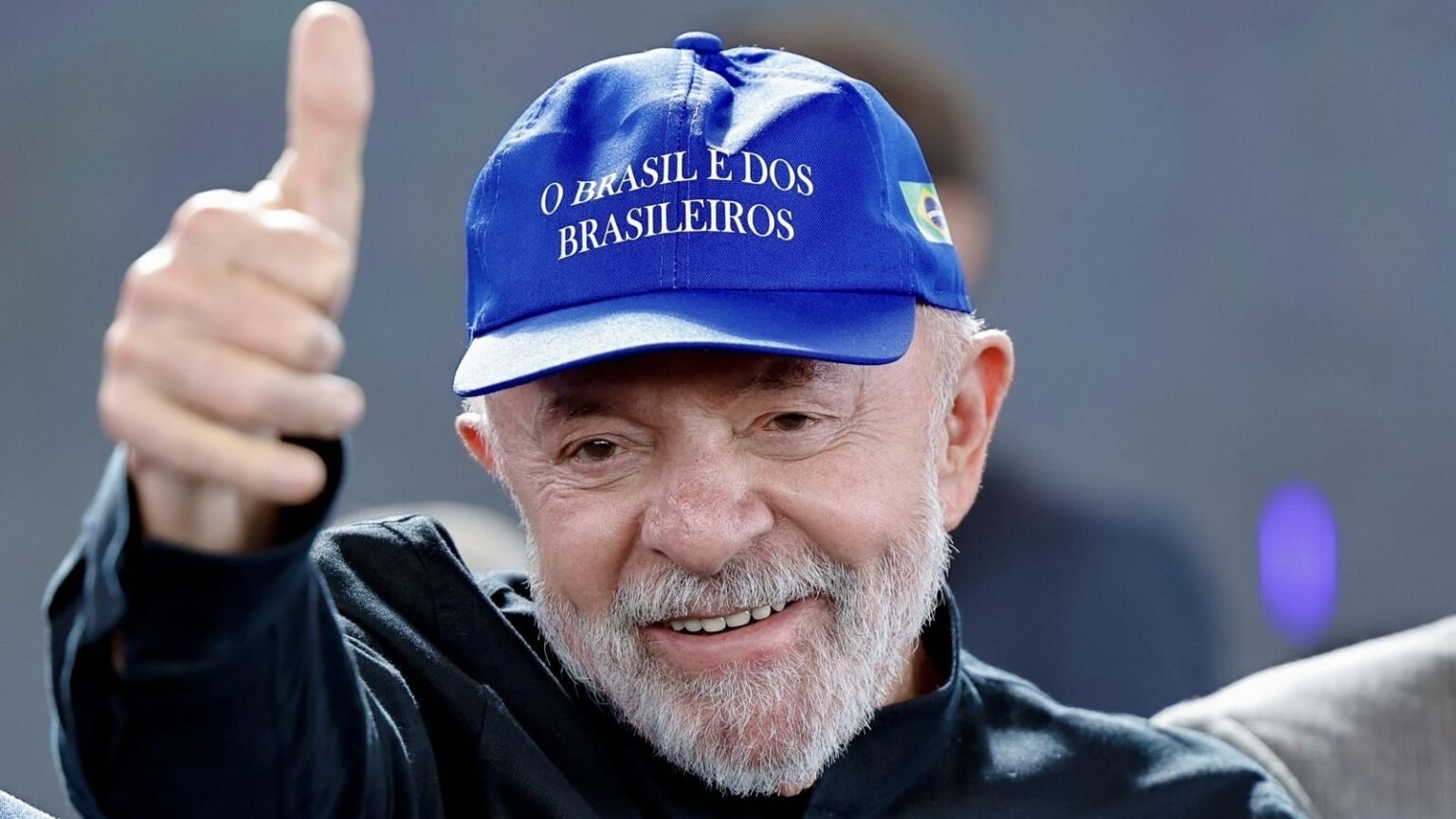
    Brazilian President Lula da Silva wearing hat “Brazil is for the Brazilians”. Photo: Lula / X

    The diplomatic row devolved into a potential trade crisis when Trump threatened Brazil with higher tariffs on Brazilian products if it did not cease the alleged persecution of the ultra-right former president Jair Bolsonaro.

    Tensions between Washington and Brasília persist. On July 7, Trump sent a letter to the Brazilian government urging an end to the alleged persecution of former Brazilian president Jair Bolsonaro and threatening a 50% tariff on Brazilian goods.

    Lula responds

    Brazilian President Lula da Silva swiftly responded to Bolsonaro’s close friend and ally, asserting that Brazil’s decisions and its judiciary are sovereign and that they reject any interference whatsoever. He announced reciprocity in the measures taken by Trump: “If he charges us 50%, we will charge him 50% … Brazil is respected!”

    In a post on X, Lula wrote: “Brazil is a sovereign country with independent institutions that will not accept being tutored by anyone. The judicial process against those who planned the coup d’état is the sole responsibility of the Brazilian justice system and is therefore not subject to any interference or threat that would harm the independence of national institutions.”

    Lula stated that the information about the “alleged US deficit is false”, pointing out the fact that the US is not currently the main country to which Brazilian products are sold. In other words, the United States sells more to Brazil than it buys from it, meaning the US may stand to lose more from a trade war.

    The Brazilian president noted: “The US government’s statistics show a surplus in trade in goods and services with Brazil of around 410 billion dollars over the last 15 years. In this sense, any measure to raise tariffs unilaterally will be responded to in light of the Brazilian Law of Economic Reciprocity. Sovereignty, respect, and the uncompromising defense of the interests of the Brazilian people are the values that guide our relationship with the world.”

    However, it is important to emphasize that Lula is not closed to talks with the Trump administration: “We have several options. We can go to the WTO [World Trade Organization], initiate international investigations, and demand explanations [from the White House]. But the main thing is to show that Brazil is respected.”

    The crisis has also involved other institutions of both countries. On July 9, the US Embassy released a public statement defending Bolsonaro: “Jair Bolsonaro and his family have been strong partners of the United States … The political persecution against him, his family, and his supporters is shameful and disrespectful of Brazil’s democratic traditions.”

    In response, the Brazilian Secretariat of State, which called the statement “undue meddling” in Brazil’s internal affairs, summoned the US chargé d’affaires, Gabriel Escobar, in an expression of diplomatic displeasure.

    Lula’s progressive government has now taken further concrete measures to respond to Trump’s threats. On Monday, July 14, Lula signed a decree regulating the country’s Reciprocity Law. According to the announcement by the President’s office, the decree, “establishes criteria for suspending trade concessions, investments, and obligations related to intellectual property rights in response to unilateral measures adopted by countries or economic blocs that negatively impact Brazil’s international competitiveness.”

    The decree also calls for the creation of a committee which will be responsible for “deciding on the application of provisional countermeasures and monitoring negotiations to overcome the unilaterally imposed measures.”

    Read more: Beijing denounces Trump’s use of “coercive tariffs” to pressure Global South to isolate China

    Bolsonaro’s case

    Bolsonaro, together with several generals and civilians aligned with his ultra-right program, is accused of participating in a plot to overturn the election that he lost to Lula at the end of 2022. According to the prosecutor’s office, part of this plot was the coup attempt on January 8 in Brasília, when thousands of Bolsonaro supporters stormed the Three Powers Square and other Brazilian government buildings, and vandalized and destroyed them.

    Read more: Jair Bolsonaro will stand trial for coup attempt

    The episode on January 8, 2023 somewhat resembled January 6, 2021, when hundreds of Trump supporters stormed the US Capitol building to protest the allegedly “stolen elections” in November 2020. Though hundreds were prosecuted for their participation in the January 6 riots, Trump pardoned 1,500 of those convicted, in one of his first actions in office.

    People’s movements in Brazil and left groups have demanded that the Lula government hold those responsible for the January 8 coup attempt responsible to ensure it does not happen again  .

    Mobilizations in Brazil

    Social and trade union movements in Brazil organized a mass mobilization on July 10 in São Paulo against a veto by the Brazilian congress that aimed to thwart Lula’s project to increase taxes on the richest and most powerful companies.

    The protest soon incorporated the tension between Washington and Brasília, with demonstrators rejecting Trump’s threats: “The demonstration had been born as a response to the Congress veto against Lula’s government projects that sought to charge more taxes on large companies and banking transactions, but given the situation it became a march to repudiate the tariffs imposed by Trump against Brazil,” said journalist Nacho Lemus on X.

    In this way, it is entirely possible that Washington’s measures could backfire: not only could they deepen the unity around a sovereigntist sentiment and behind Lula as a defender of the nation’s interests, but many businessmen may even distance themselves from a crisis that carries risks for them as well.

    Geopolitical implications

    Brazil is South America’s leading economy and is currently part of the BRICS. Its main trading partner is China, far ahead of the United States. Some analysts have seen in Trump’s statements more than a simple gesture of generosity to Jair Bolsonaro, but rather a tactic to enter negotiations from a stronger position with one of the largest economies in the Global South and one of the fundamental nations involved in building a multipolar world not subordinated to US financial hegemony.

    It is a surprise to no one that Lula, for the moment, has not approached the second Trump administration for negotiations, so there has been a kind of tense calm for the last six months between the countries. The calm, however, was abruptly ended with the back and forth messages from the top officials in the public and on social media.

    For now, it seems that Brasilia has extended its hand to negotiate a “ceasefire” on social media. Fernando Hadad, secretary of finance, has reiterated his government’s willingness to engage in dialogue with the US government. For now, it is unclear if Washington has responded to this gesture, although it is likely that the economic advisors of the White House would caution the president against ignoring the clear geo-economic reality.

    Original article by Pablo Meriguet republished from peoples dispatch under a Creative Commons Attribution-ShareAlike 4.0 (CC BY-SA) license.

  • Taxing the “super rich” pays off for Brazil’s gov’t

    Spread the love

    https://en.mercopress.com/2025/01/29/taxing-the-super-rich-pays-off-for-brazil-s-gov-t

    “We’re just bringing the super-rich into the same tax bracket as the middle class,” said Barreirinhas

    Brazilian Finance Minister Fernando Haddad’s policy of taxing the “super rich” yielded unprecedented returns of R$ 20.6 billion (US$ 3.32 billion) to the South American country’s coffers in 2024, Federal Revenue Secretary Robinson Barreirinhas confirmed Tuesday. The strategy focuses on exclusive investment funds and offshore assets, it was explained.

    Under the new scheme, previously untaxed exclusive funds now contributed R$ 13 billion (US$ 2.10 billion), while offshore investments added R$ 7.67 billion (US$ 1.24 billion), thus closing legal loopholes allowing the wealthy to dodge substantial contributions. “This is about justice,” Barreirinhas argued. According to Brazilian Government figures, the economy grew by around 3.5% last year.

    …

    https://en.mercopress.com/2025/01/29/taxing-the-super-rich-pays-off-for-brazil-s-gov-t

  • Humanity’s Chance to Reverse Amazon’s Slide Toward Tipping Point Is ‘Shrinking’

    Spread the love

    Original article by Eloise Goldsmith republished from Common Dreams under Creative Commons (CC BY-NC-ND 3.0).

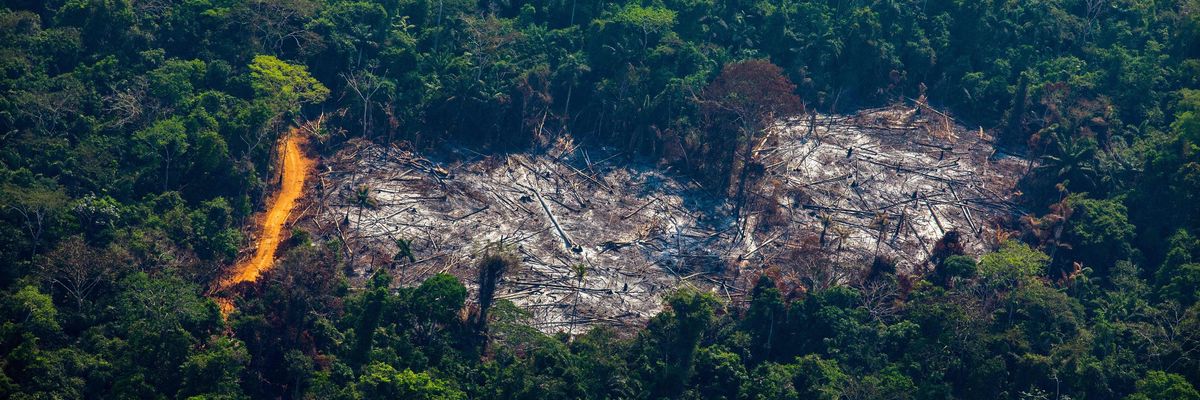
    This aerial view shows Amazon forest degradation in the Menkragnoti Indigenous Territory in Altamira, Pará state, Brazil, on August 28, 2019. (Photo: Joao Laet/AFP/Getty Images)

    The world’s largest rainforest showed “ominous indicators,” including wildfires and extreme drought, in 2024.

    The Amazon, sometimes called the “lungs of the planet,” this year showed signs of further inching toward a much-feared tipping point, threatening the very existence of the world’s largest rainforest.

    Rampant wildfires and extreme drought ravaged large parts of the Amazon in 2024. The fires and dry conditions were fueled by deforestation and the El Niño weather pattern, and also made worse by climate change, according to the World Economic Forum. “The number of fires reached its highest level in 14 years this September,” the group reported in October.

    Drought has also impacted the Amazon River, causing one of the river’s main tributaries to drop to its lowest level ever recorded, according to October reporting from The Associated Press. The drop in the river has negatively impacted local economies and food supplies.

    Andrew Miller, advocacy director at Amazon Watch, told the AP last week that the fires and droughts experienced across the Amazon in 2024 “could be ominous indicators that we are reaching the long-feared ecological tipping point.”

    “Humanity’s window of opportunity to reverse this trend is shrinking, but still open,” he said.

    The Amazon plays a vital role in keeping the planet healthy. 150-200 billion tons of carbon are stored in the Amazon, and it also carries 20% of the earth’s fresh water to sea.

    According to the World Economic Forum, if the Amazon tipping point is reached, “it will release billions of tonnes of CO2 into the atmosphere through fires and plants dying off. This would further exacerbate climate change and make the 1.5°C goal impossible to achieve. It would also alter weather patterns, which would impact agricultural productivity and global food supplies.”

    A paper published in the journal Nature in February indicates that up to half of the rainforest could hit a tipping point by the middle of the century. “We estimate that by 2050, 10% to 47% of Amazonian forests will be exposed to compounding disturbances that may trigger unexpected ecosystem transitions and potentially exacerbate regional climate change,” explained the researchers behind the paper.

    However, it wasn’t all bad news out of the Amazon in 2024. According to the AP, the amount of deforestation in Brazil and Colombia declined in this year. In Brazil, which houses the largest chunk of the Amazon, forest loss dropped 30.6% compared to the year prior, bringing it to the lowest level of destruction in nearly a decade.

    The improvement is an about-face from a couple of years ago, when the country registered 15-year high of deforestation during the leadership of former far-right President Jair Bolsonaro. Brazil is now led by the left-wing President Luiz Inácio Lula da Silva, who—despite presiding over this drop in deforestation—has also come under scrutiny, as AP noted, by environmentalist for backing projects that they argue could harm the environment.

    Original article by Eloise Goldsmith republished from Common Dreams under Creative Commons (CC BY-NC-ND 3.0).