Luiz Inácio Lula da Silva: With the world in crisis, many say end globalisation. I say that would be a mistake

Spread the love

This article is recommended https://www.theguardian.com/commentisfree/2025/jul/10/world-crisis-end-globalisation-mistake-lula-da-silva

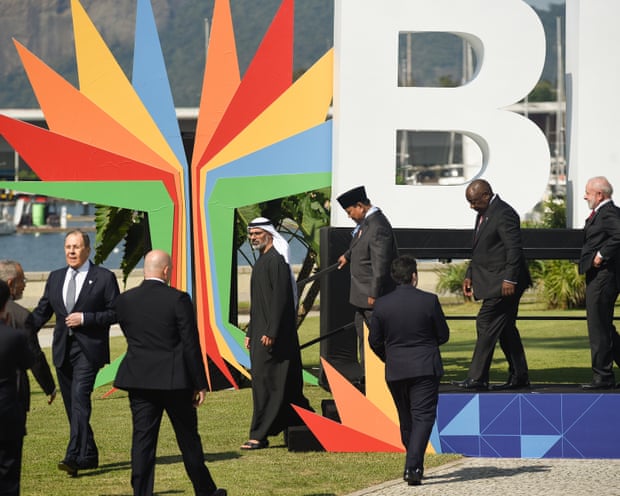
Leaders from the five nations gather for the Brics Summit 2025 in Rio de Janeiro, 6 July. Photograph: Anadolu/Getty Images

The year 2025 should be a time of celebration, marking eight decades of the United Nations’ existence. But it risks going down in history as the year when the international order built since 1945 collapsed.

The cracks had long been visible. Since the invasions of Iraq and Afghanistan, the intervention in Libya and the war in Ukraine, some permanent members of the security council have trivialised the illegal use of force. The failure to act vis-a-vis the genocide in Gaza represents a denial of the most basic values of humanity. The inability to overcome differences is fuelling a new escalation of violence in the Middle East, the latest chapter of which includes the attack on Iran.

The law of the strongest also threatens the multilateral trading system. Sweeping tariffs disrupt value chains and push the global economy into a spiral of high prices and stagnation. The World Trade Organization has been hollowed out, and no one remembers the Doha development round.

The 2008 financial collapse exposed the failure of neoliberal globalisation, but the world remained locked into the austerity playbook. The choice to bail out the ultra-wealthy and major corporations at the expense of ordinary citizens and small businesses has deepened inequality. In the past 10 years, the $33.9tn (£25tn) accumulated by the world’s richest 1% is equivalent to 22 times the resources needed to eradicate global poverty, according to a report by Oxfam.

The stranglehold on the state’s capacity for action has led to public distrust in institutions. Discontent has become fertile ground for extremist narratives that threaten democracy and promote hate as a political project.

There is an urgent need to recommit to diplomacy and rebuild the foundations of true multilateralism – one capable of answering the outcry of a humanity fearful for its future. Only then can we stop passively watching the rise of inequality, the senselessness of war and the destruction of our own planet.

  • Luiz Inácio Lula da Silva is the president of Brazil

This article is recommended https://www.theguardian.com/commentisfree/2025/jul/10/world-crisis-end-globalisation-mistake-lula-da-silva

Continue ReadingLuiz Inácio Lula da Silva: With the world in crisis, many say end globalisation. I say that would be a mistake

Trump announces 50% tariff on Brazilian goods in letter attacking the Supreme Court and defending Bolsonaro

Spread the love

Original article by Brasil de Fato republished from peoples dispatch under a Creative Commons Attribution-ShareAlike 4.0 (CC BY-SA) license.
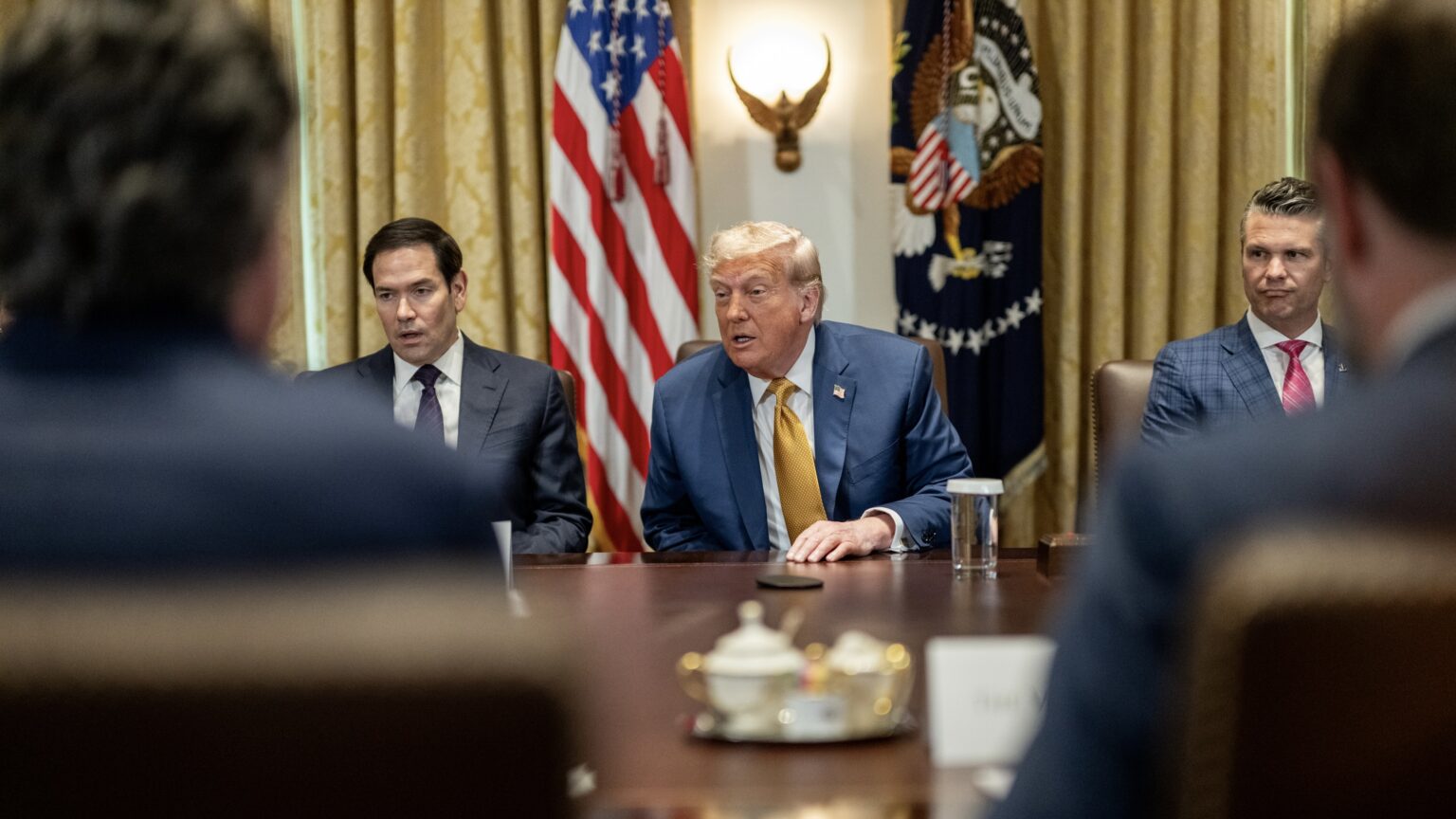
US Secretary of State Marco Rubio, US President Donald Trump, and US Secretary of Defense Pete Hegseth in a Cabinet Meeting. Photo: White House

The billionaire president claimed that trade relations with Brazil are unfair to the US. Lula has called a meeting to discuss a response.

US President Donald Trump has announced that products imported from Brazil will be subject to 50% tariffs starting in August. The application of the tariffs was announced in a letter published on Wednesday, July 9, on social media.

Addressed to the President of the Republic, Luiz Inácio Lula da Silva, the message begins with a direct defense of Jair Bolsonaro and criticism of “the way Brazil has been treating the former president”, which he classified as an “international disgrace”.

Referring to the case against Bolsonaro in the Supreme Court (STF), Trump emphasizes: “This trial should not be happening. It is a witch hunt that must end IMMEDIATELY!”

It is worth noting that the US president has no authority over the decisions of the Brazilian judiciary.

In his letter to Lula, he states that the decision on tariffs is based on attacks on free elections and freedom of expression in Brazil.

“(As lately illustrated by the Brazilian Supreme Court, which has issued hundreds of SECRET and UNLAWFUL Censorship Orders to US Social Media platforms, threatening them with Millions of Dollars in Fines and Eviction from the Brazilian Social Media market),” Trump declares.

After the political justification, he adds that trade relations with Brazil are unfair to the United States. However, the trade balance between the two nations has been in surplus for the US for more than ten years.

The percentage announced by Trump for Brazilian products is the highest among those most recently defined by the US government. In the letter, the US president argues that the country should distance itself from its trade relationship with Brazil.

He goes so far as to say that the 50% rate “is far too low” to bring about a level playing field between the two nations. According to Trump, the US Trade Representative’s Office (USTR) will launch an investigation into Brazil under the US Trade Act.

The intention of this type of approach is to determine whether there has been any violation of trade agreements. If irregularities are found, the US may take action through the World Trade Organization (WTO).

In a threatening tone, Trump states that if Brazil decides to take similar measures in response to the new tariff, the US will raise the rate by another 50%. He ends the letter by saying that the decision may be modified upward or downward depending on Brazil’s relationship with the US.

“If you wish to open your heretofore closed Trading Markets to the United States, and eliminate your Tariff, and Non-Tariff, Policies and Trade Barriers, we will, perhaps, consider an adjustment to this letter,” he writes.

Reaction

After the letter was released, President Lula called an emergency meeting to discuss Brazil’s response to Trump. According to information released in the press, Vice President Geraldo Alckmin, also minister of Development, Industry, Trade, and Services, Fernando Haddad (Finance), Mauro Vieira (International Relations), and Rui Costa (Chief of Staff) are participating in the meeting.

On social media, Workers’ Party senator and leader of the Senate, Jaques Wagner called for respect for Brazil and criticized the measure, which he attributed to a “request from the Bolsonaro family”.

“At the request of the Bolsonaro family, Donald Trump has announced a 50% tax on all Brazilian products, in an authoritarian and unilateral manner. The US president is confusing who he is addressing. Brazil will not be anyone’s backyard. We are the ones who decide our own lives. Let this be clear: Brazil belongs to Brazilians, not to lackeys!” he posted.

This was first published in Portuguese at Brasil de Fato.

Original article by Brasil de Fato republished from peoples dispatch under a Creative Commons Attribution-ShareAlike 4.0 (CC BY-SA) license.
Continue ReadingTrump announces 50% tariff on Brazilian goods in letter attacking the Supreme Court and defending Bolsonaro

Lula demands respect for Brazil’s sovereignty after Trump’s statements

Spread the love

Original article by Pablo Meriguet republished from peoples dispatch under a Creative Commons Attribution-ShareAlike 4.0 (CC BY-SA) license.
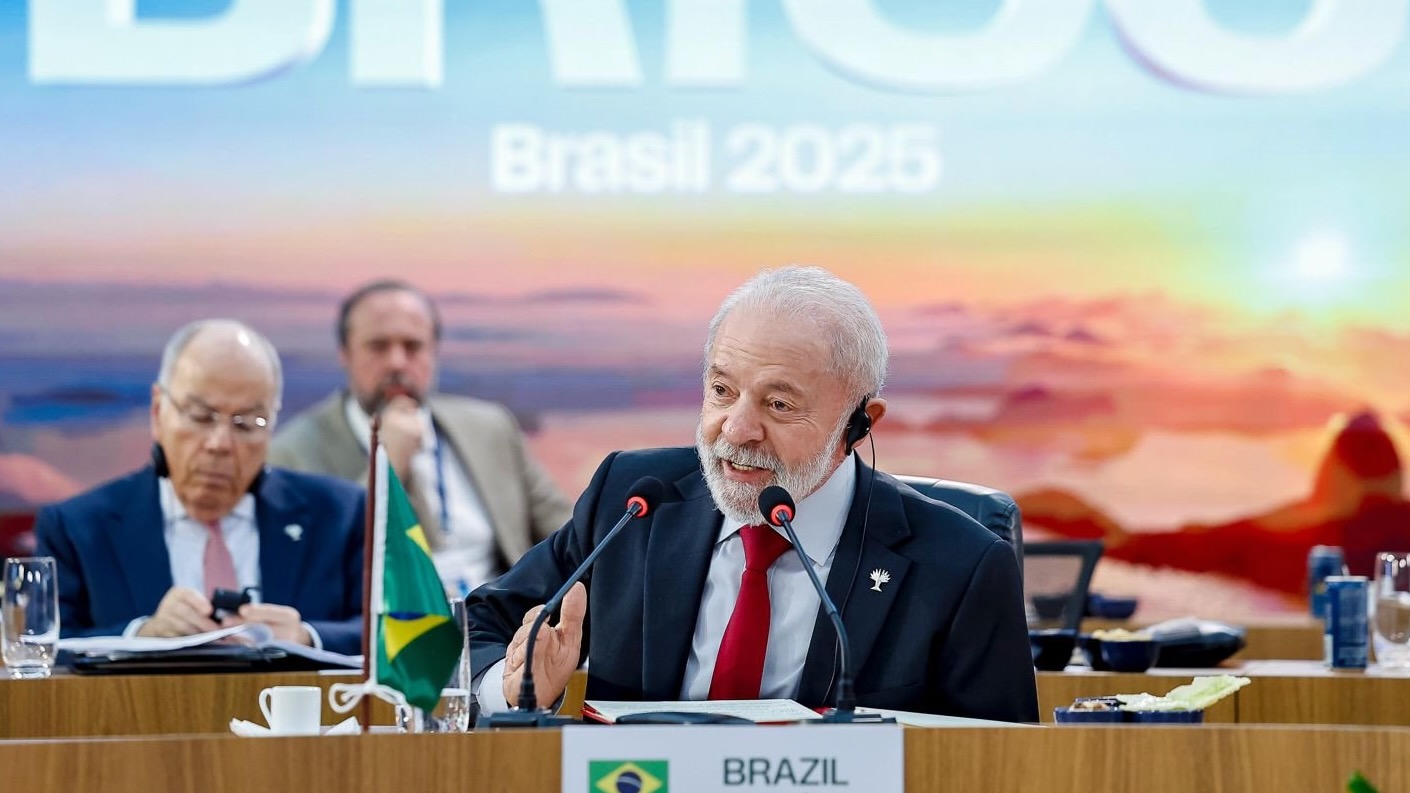
Brazilian President Lula da Silva leads the 17th BRICS Summit in Rio de Janeiro, Brazil, July 6, 2025. Photo: X

New tensions have arisen between the United States and Brazil after Trump claims that former Brazilian President Jair Bolsonaro, an ultra-right-wing leader, is innocent

On July 7, the president of the United States, Donald Trump, published a message on Truth Social defending former Brazilian President Jair Bolsonaro and claiming he has been mistreated and is innocent. Bolsonaro was los reelection in the 2022 elections and later the Supreme Court declared that he was ineligible to serve in public office due to his numerous violations.

Trump wrote: “Brazil is doing a terrible thing on their treatment of former President Jair Bolsonaro. I have watched, as has the World, as they have done nothing but come after him, day after day, night after night, month after month, year after year! He is not guilty of anything, except having fought for THE PEOPLE… This is nothing more, or less, than an attack on a Political Opponent — Something I know much about! It happened to me, times 10, and now our Country is the “HOTTEST” in the World! The Great People of Brazil will not stand for what they are doing to their former President.”

He also claimed that the alleged persecution of Bolsonaro is a “witch hunt”: “I’ll be watching the WITCH HUNT of Jair Bolsonaro, his family, and thousands of his supporters, very closely. The only Trial that should be happening is a Trial by the Voters of Brazil — It’s called an Election. LEAVE BOLSONARO ALONE!”

In response to these statements, Brazilian President Luiz Inácio Lula da Silva asserted that the US president’s declaration is interference and that Brazilian sovereignty must be respected. “The defense of democracy in Brazil is a matter for Brazilians. We are a sovereign country,” Lula reminded Trump. “We do not accept interference or tutelage from anyone. We have solid and independent institutions. No one is above the law. Especially those who attack freedom and the rule of law.”

For her part, Brazil’s secretary of state, Gleisi Hoffmann, was more confrontational: 

“Donald Trump is very mistaken if he thinks he can interfere in the Brazilian judicial process. The period when Brazil was subservient to the US was during Bolsonaro’s presidency, when he saluted his flag and failed to defend national interests. Today, he is answering for the crimes he committed against democracy and the electoral process in Brazil. You can’t talk about persecution when a sovereign country complies with due process in the democratic rule of law, which Bolsonaro and his coup plotters have tried to destroy. The US president should take care of his problems, of which there are many, and respect the sovereignty of Brazil and our judiciary.”

Trump’s comments were made while Lula leads the 17th BRICS Summit in Rio de Janeiro, where the economic bloc denounced “unilateral, punitive, and discriminatory protectionist measures” and called for the strengthening of multilateralism to create a more equitable global order.

What is Bolsonaro accused of?

Former President Jair Bolsonaro (2019-2023), a longtime friend of Donald Trump, thanked the US president for his support: “I was delighted to receive the note from President Donald Trump. This lawsuit to which I am responding is a legal aberration (Lawfare), clear political persecution, already perceived by everyone with common sense … I thank the illustrious President and friend. You went through something similar … Your struggle for peace, justice, and freedom echoes across the planet. Thank you for existing and for giving us an example of faith and resilience.”

According to the Brazilian justice system, Bolsonaro led, together with several high-ranking military officers and other far-right politicians, an attempt to delegitimize and reverse the electoral results that marked his defeat in October 2022 by the current President Lula da Silva, who obtained 50.9% of the valid votes, to the far-right’s 49.1%. On January 8, 2023, hundreds of Bolsonaro supporters stormed the headquarters of the legislative and judicial branches in Brasilia.

The protesters entered the Three Powers Square a week after Lula assumed his mandate as president of the country. Following the declaration of a state of emergency, security forces took several hours to expel Bolsonaro’s supporters, while most governments around the world condemned the incursion.

Read more: Jair Bolsonaro will stand trial for coup attempt

For his part, Bolsonaro has denied his participation in the events, in which, according to the Brazilian justice system, generals Augusto Heleno and Walter Braga (former Secretary of Defense), as well as former Secretaries, Anderson Torres, Augusto Heleno, and the 2022 electoral campaign aide, Mauro Cid, are also involved.

The charges are attempted coup d’état, participation in an armed criminal organization, attempted abolition of the democratic rule of law, aggravated damages, and deterioration of historical heritage. The final decision of justice will be known in the coming months and will surely affect the political future of the Amazonian nation.

Original article by Pablo Meriguet republished from peoples dispatch under a Creative Commons Attribution-ShareAlike 4.0 (CC BY-SA) license.
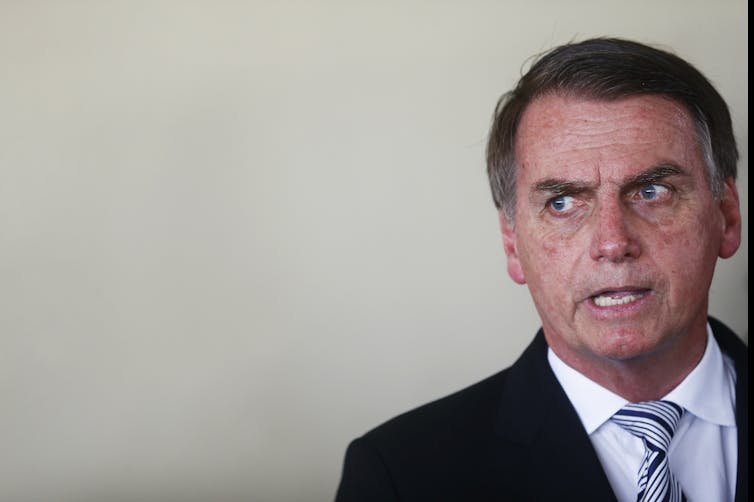
Continue ReadingLula demands respect for Brazil’s sovereignty after Trump’s statements

Bolsonaro’s indictment over alleged coup plot signals shift in Brazil’s approach to political accountability

Spread the love
Brazil’s top prosecutor has filed federal charges against Jair Bolsonaro, alleging that the former president attempted a coup in 2023. Focus Pix / Shutterstock

Felipe Tirado, King’s College London

The Brazilian attorney-general has charged the country’s former president, Jair Bolsonaro, with participating in a plot to cling to power through a coup d’etat in 2023 milo. If Bolsonaro is convicted, he could spend between 38 and 43 years in prison.

Bolsonaro, who governed Brazil between 2019 and 2022 but lost his attempt at re-election to current president Luiz Inácio “Lula” da Silva, is one of 34 people to be formally charged for offences related to the alleged coup. These include high-ranking serving and retired members of the military, as well as former ministers and politicians.

The charges levelled against them are involvement in an attempted coup d’etat, violent abolition of the democratic rule of law, and criminal organisation.

According to the attorney-general’s 272-page indictment, Bolsonaro became increasingly inclined to pursue anti-democratic measures in the months before the election. He allegedly considered taking steps to retain power even before the first round of voting.

Then, after his defeat by an extremely narrow margin, the indictment claims that Bolsonaro and his alleged accomplices decided to implement the plan before Lula took office in January 2023.

An investigation by Brazil’s federal police in November found that the insurrection in the country’s capital Brasília on January 8 2023, where rioters invaded the presidential palace, congress and supreme court, was part of this plan. The same investigation suggested the plan also included a plot to assassinate Lula and his vice-president Geraldo Alckmin, as well as supreme court judge Alexandre de Moraes.

Bolsonaro denies any wrongdoing and – at least in public – is bullish about his fate. Speaking to journalists hours before the charges were filed, he said: “I have no concerns about the accusations, zero.”

The case will now be considered by the Supreme Court, whose judges will decide whether to initiate criminal proceedings against Bolsonaro and the other defendants. This is expected to happen over the coming weeks. If the judges accept the charges and proceedings are established, the defendants will be called to answer them.

This is the first time in Brazilian history that high-ranking members of the armed forces have been indicted and charged with crimes associated with a coup d’etat. According to the indictment, the intention was for the armed forces to be called upon to act as a “moderating power”, with the aim of overturning the election result.

Army generals Augusto Heleno, Walter Braga Netto and Paulo Sérgio Nogueira de Oliveira are among those who have been charged. These men served as ministers in the Bolsonaro government, with Braga Netto also running as the vice-president on Bolsonaro’s ticket in 2022.

Another high-ranking member of the armed forces charged by the attorney-general is Almir Garnier Santos, the commander of the Brazilian navy. These four men were allegedly part of the inner nuclei that planned and prepared the attempted coup.

Several other servicemen, including generals, colonels and other officers, were charged with crimes related to the planning and execution of the initial phases of the coup. The sentences for all of these men could amount to up to 30 years in prison.

Like Bolsonaro, Braga Netto denies any guilt. In a statement released on February 18, his lawyers called the charges a “fantasy”. Lawyers for Garnier Santos and Heleno have chosen not to comment until having fully reviewed the charges.

Unlike those in the military, some of the political figures charged by the attorney general had criminal antecedents. One of the politicians named in the indictment is Filipe Martins, Bolsonaro’s former international affairs adviser and a “disciple” of the deceased far-right polemicist, Olavo de Carvalho. Martins’ lawyers released a statement on February 18 calling the accusations “unfounded”.

In December 2024, Martins was convicted of making a gesture alluding to white supremacy during a virtual session of the senate. He initially received a sentence of two years and four months in prison for inciting racial prejudice, which was replaced by 850 hours of community service.

Far-right commentator Paulo Figueiredo Filho, the grandson of Brazil’s last military dictator, João Figueiredo, was also charged. He appeared on a podcast on February 19 to criticise the charge. Figueiredo lives in the US, where he was arrested in 2019 because of problems with his immigration status.

Lessons from and to Brazil

Brazil has already offered some lessons to other countries facing similar authoritarian challenges. Its response to the insurrection in Brasília was swift and robust. Within days, hundreds of rioters had been arrested and the state governor of the federal district was suspended for his sluggish response.

Then, in 2023, Bolsonaro was banned from running for office for eight years over false claims that the electronic ballots used in the previous year’s election were vulnerable to hacking and fraud. Those involved with the attempted military coup have also been investigated and some subsequently arrested.

But the coup plot case can also serve as a lesson to the country. Brazil has a history both of successful and unsuccessful military coups. The last successful military coup led to a dictatorship that lasted from 1964 until 1985.

Brazil also has a history of amnesties, whereby crimes committed during these coups and authoritarian regimes have been pardoned. There have been 48 amnesties in Brazil since 1889, with the most recent one, in 1979, allowing the dictatorship to self-amnesty its crimes.

For over 45 years, it has hindered criminal accountability for the perpetrators of the crimes of the dictatorship. This included the murder of politician Rubens Paiva, whose disappearance was the focus of the 2024 Oscar-nominated film, I’m Still Here.

Bolsonaro and other individuals charged, as well as their supporters and aligned politicians, have been demanding a “humanitarian amnesty” for those who allegedly participated in the coup plot.

Given Bolsonaro’s history, this seems paradoxical. Throughout his decades-long public career, Bolsonaro has consistently celebrated the crimes of the military dictatorship and supported violations of human rights. At the same time, he has also opposed individuals and organisations that advocate for victims of the dictatorship.

If Bolsonaro and his alleged accomplices are found guilty, it could be an unparalleled lesson for Brazil. Punishing anyone convicted would be an opportunity to step away from the country’s tradition of impunity and move towards addressing systemic injustices.

Felipe Tirado, PhD Candidate in Law, King’s College London

This article is republished from The Conversation under a Creative Commons license. Read the original article.

Continue ReadingBolsonaro’s indictment over alleged coup plot signals shift in Brazil’s approach to political accountability

World ‘Cannot Remain Silent in the Face of This Endless Massacre,’ Says Lula

Spread the love

Original article by JAKE JOHNSON republished from Common Dreams under Creative Commons (CC BY-NC-ND 3.0). 

Palestinians, including children, wounded by Israeli airstrikes are pictured at Al-Aqsa Martyr’s Hospital in Deir al-Balah, Gaza on July 15, 2024. 
(Photo: Ashraf Amra/Anadolu via Getty Images)

“The Israeli government continues to sabotage the peace process and the cease-fire in the Middle East,” said the Brazilian president after a deadly weekend of bombings.

Brazilian President Luiz Inácio Lula da Silva condemned the Israeli government on Sunday after bombings across the Gaza Strip killed more than 140 people and wounded hundreds more, adding to the gruesome death toll and worsening the enclave’s humanitarian emergency as cease-fire talks continue.

Lula specifically decried Israel’s Saturday attack on al-Mawasi, an overcrowded town on Gaza’s southern coast to which Israeli forces previously ordered Palestinians to flee. Israel claimed to be targeting Hamas’ military chief in the attack; Hamas said Sunday that the commander was not harmed in the strikes, which killed around 90 people—including children.

The New York Times reported that one of the Israeli strikes “exploded directly in front of two vehicles clearly marked as belonging to Gaza Civil Defense, an emergency services agency, spraying them with shrapnel and apparently killing and injuring first responders.”

Lula said Sunday that “the Israeli government continues to sabotage the peace process and the cease-fire [negotiations] in the Middle East” with its relentless bombing campaign in the Gaza Strip, which has been utterly decimated by Israel’s assault—a military campaign fueled by billions of dollars of weaponry from the United States, Germany, and other major countries.

“It is appalling that they continue to collectively punish the Palestinian people,” Brazil’s president said. “There have already been tens of thousands of deaths in consecutive attacks since last year, many of them in delimited humanitarian zones that should be protected.”

“We, the political leaders of the democratic world, cannot remain silent in the face of this endless massacre,” he added. “The cease-fire and peace in the region need to be priorities on the international agenda. All our efforts must be focused on securing the release of the Israeli hostages and ending the attacks on the Gaza Strip.”

Brazil under Lula’s leadership has backed the South Africa-led genocide case against Israel at the International Court of Justice and been a vocal supporter of a permanent cease-fire and an end to Israel’s decadeslong occupation of Palestinian territory.

“I saw toddlers who are double amputees, children paralyzed and unable to receive treatment, and others separated from their parents.”

Israel’s weekend onslaught in Gaza came as “Hamas and Israel appear closer to some form of a Gaza cease-fire deal than at any time since the brief truce last November,” as Drop Site‘s Jeremy Scahill put it late last week.

“Hamas is considering an approach that would not immediately require a commitment to a permanent cease-fire and complete withdrawal of Israeli forces from Gaza as a precondition to move forward in phased negotiations,” Scahill reported. “This would mark a significant concession by Hamas, which has long insisted any agreement must include defined steps that end Israel’s war. Instead, Hamas officials said, they would consider entering an initial six-week phase that would include a conditional cease-fire and an exchange of Israeli civilian and female soldiers held in Gaza in return for the release of hundreds of Palestinians.”

The Associated Press reported Sunday that Hamas—which led the deadly October 7 attack on Israel—intends to keep participating in cease-fire talks in the face of incessant Israeli airstrikes, though a spokesperson for the group said there is “no doubt that the horrific massacres will impact any efforts in the negotiations.”

Scott Anderson, the United Nations’ deputy humanitarian coordinator, described the appalling scene he witnessed over the weekend at Nasser Hospital, the overwhelmed medical facility in southern Gaza where many wounded Palestinians were taken following Israel’s Saturday attack on al-Mawasi.

“With not enough beds, hygiene equipment, sheeting, or scrubs, many patients were treated on the ground without disinfectants,” said Anderson. “Ventilation systems were switched off due to a lack of electricity and fuel, and the air was filled with the smell of blood. I saw toddlers who are double amputees, children paralyzed and unable to receive treatment, and others separated from their parents. I also saw mothers and fathers who were unsure if their children were alive. Parents told me in despair that they had moved into the ‘so-called humanitarian zone’ in the hope that their children would be safe there.”

“Impediments to humanitarian operations prevent us from supporting people anywhere near the scale necessary,” Anderson continued. “Civilians must be protected at all times. We urgently need a cease-fire, the release of all remaining hostages, respite for the people of Gaza, and a meaningful opportunity for healing to begin.”

Original article by JAKE JOHNSON republished from Common Dreams under Creative Commons (CC BY-NC-ND 3.0). 

Zionist Keir Starmer is quoted "I support Zionism without qualification." He's asked whether that means that he supports Zionism under all circumstances, whatever Zionists do.
Zionist Keir Starmer is quoted “I support Zionism without qualification.” He’s asked whether that means that he supports Zionism under all circumstances, whatever Zionists do.
Continue ReadingWorld ‘Cannot Remain Silent in the Face of This Endless Massacre,’ Says Lula