Tag: medical supplies

  • Doctors Without Borders Warns Newborn Babies at Dire Risk as Israel Assails Gaza Hospitals

    Spread the love

    Original article by Eloise Goldsmith republished from Common Dreams under Creative Commons (CC BY-NC-ND 3.0).
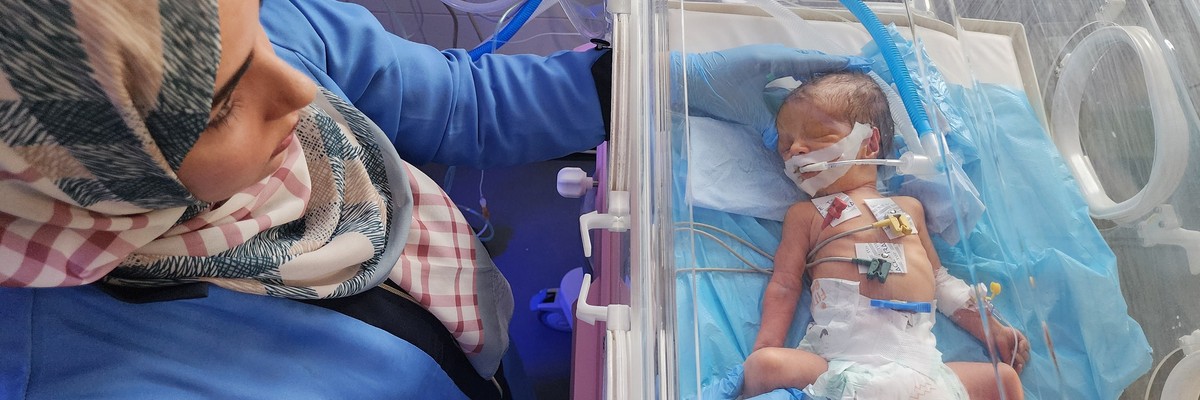
    Newborn, baby and child patients are deprived of necessary treatment due to power crisis and lack of medicines as Israeli forces cutting off electricity, preventing the entry of fuel and various supplies disrupted the functioning of all hospitals in the region, at the Nasser Hospital in Khan Yunis, Gaza on July 04, 2024. (Photo: Hani Alshaer/Anadolu via Getty Images)

    “It’s an impossible situation, because even if we prioritize the little fuel that is left to the most urgent departments, we know that they won’t last more than 36 to 48 hours,” said Julie Faucon, MSF medical team leader in Gaza.

    The international humanitarian group Médecins Sans Frontières, also kno wn as Doctors Without Borders or MSF, warned in a Wednesday statement that newborn babies and other patients are at dire risk as southern Gaza’s Nasser Hospital runs out of fuel.

    The group warned that electricity for the MSF-supported Nasser Hospital, where MSF members are providing emergency, maternity, pediatric, burn, and trauma care, may be cut off for some hospital departments leaving patients without “lifesaving care.” The hospital’s neonatal intensive care unit is currently treating children and newborns who are reliant on mechanical ventilation and incubators. All of these young patients are dependent on electricity from fuel generators, MSF wrote.

    Nasser Hospital, as well as two other facilities in the Gaza Strip, Al-Aqsa Hospital and European Gaza Hospital, are nearing the need to close due to lack of fuel, the group reported Wednesday.

    “It’s an impossible situation, because even if we prioritize the little fuel that is left to the most urgent departments, we know that they won’t last more than 36 to 48 hours,” said Julie Faucon, MSF medical team leader in Gaza, according to the statement. “While some patients are hanging on by a thread, the lack of sustained electricity is impacting the level of care we can provide to those with burns and trauma.”

    Pascale Coissard, MSF emergency coordinator, said that the situation is “a consequence of Israel’s ongoing blockade and continuous criminal looting of lifesaving supplies.”

    In mid-July, the United Nations reported that “Israeli authorities continue to tightly control allocations of incoming fuel, thereby limiting humanitarian operations, especially by local partners,” and just last week the body noted that only 16 of the region’s 36 hospitals remained partially in operation.

    Pointing to lack of medical supplies, equipment, and personnel, Rik Peeperkorn, the World Health Organization representative for the West Bank and Gaza, told a recent U.N. Security Council meeting that “the health sector is being systematically dismantled.”

    Attacks by the Israeli military have left northern Gaza’s three hospitals—the Kamal Adwan Hospital, al-Awda Hospital, and the Indonesian Hospital—either entirely out of service or barely functioning.

    Hussam Abu Safia, the head of the Kamal Adwan Hospital, was detained by Israeli forces during their raid on Kamal Adwan Hospital in late December.

    Human rights defenders and the medical community have called for his release, it’s believed that he is being held in an Israeli detention center, though the Israeli officials had given news media and human rights groups conflicting messages about his whereabouts.

    Original article by Eloise Goldsmith republished from Common Dreams under Creative Commons (CC BY-NC-ND 3.0).

  • Israel Has Killed Over 1,000 Doctors and Nurses in Gaza

    Spread the love

    Original article by Jessica Corbett republished from Common Dreams under Creative Commons (CC BY-NC-ND 3.0). 
    Hussam Abu Safiyeh, director of the Kamal Adwan Hospital, is treated by colleagues for his injuries following an Israeli strike that hit the medical compound in Beit Lahia in the northern Gaza Strip on November 23, 2024. (Photo: AFP via Getty Images)

    “These people, they target everyone, but I swear, this will not stop us from continuing our humanitarian work,” said a Gaza hospital director injured in an Israeli strike.

    More than 1,000 doctors and nurses are among at least 44,211 people killed in Israel’s 13-month assault on the Gaza Strip, officials in the Hamas-governed Palestinian enclave said Sunday.

    “Over 310 other medical personnel were arrested, tortured, and executed in prisons,” Gaza’s Government Media Office also said in a statement, according to Turkey’s state-run Anadolu Agency. “The Israeli army also prevented the entry of medical supplies, health delegations, and hundreds of surgeons into Gaza.”

    “Hospitals have been a declared target for the Israeli army, which bombed, besieged, and stormed them, killing doctors and nurses, injuring others after directly targeting them,” the office said. The statement came after the director of the main partially functioning hospital in northern Gaza was injured in an Israeli strike.

    Hussam Abu Safiyeh is the director of Kamal Adwan Hospital—which, according to Al Jazeera, Israeli forces have repeatedly attacked, damaging “the facility’s generators, fuel tanks, and main oxygen station.”

    The wounded director said: “These people, they target everyone, but I swear, this will not stop us from continuing our humanitarian work. We will keep on providing this service no matter what it costs us.”

    Since the Hamas-led October 7, 2023 attack on Israel, in addition to killing tens of thousands of Palestinians, Israeli forces have injured at least 104,567 others. Along with attacking hospitals, they have destroyed many homes, schools, and religious sites, and displaced most of the enclave’s 2.3 million people.

    Israel—which has been armed by the Biden administration and bipartisan U.S. Congress—faces a genocide case at the International Court of Justice over its conduct in Gaza. Additionally, the International Criminal Court earlier this week issued arrest warrants for Israel’s current prime minister and former defense minister, Benjamin Netanyahu and Yoav Gallant, as well as Hamas leader Mohammed Diab Ibrahim Al-Masri.

    Last month, 99 U.S. healthcare providers who have volunteered in Gaza since last fall sent U.S. President Joe Biden and Vice President Kamala Harris a letter detailing “the massive human toll from Israel’s attack” and urging them to “end this madness now!”

    “It is likely that the death toll from this conflict is already greater than 118,908, an astonishing 5.4% of Gaza’s population,” the Americans wrote. “With only marginal exceptions, everyone in Gaza is sick, injured, or both. This includes every national aid worker, every international volunteer, and probably every Israeli hostage: every man, woman, and child.”

    “We quickly learned that our Palestinian healthcare colleagues were among the most traumatized people in Gaza, and perhaps in the entire world,” they continued. “All were acutely aware that their work as healthcare providers had marked them as targets for Israel. This makes a mockery of the protected status hospitals and healthcare providers are granted under the oldest and most widely accepted provisions of international humanitarian law.”

    They added that “we wish to be absolutely clear: Not once did any of us see any type of Palestinian militant activity in any of Gaza’s hospitals or other healthcare facilities. We urge you to see that Israel has systematically and deliberately devastated Gaza’s entire healthcare system, and that Israel has targeted our colleagues in Gaza for torture, disappearance, and murder.”

    Despite such appeals and accounts, the outgoing Biden-Harris administration has declined to cut off weapons to the Israeli government and earlier this week most U.S. senators from both major parties rejected a trio of resolutions from Sen. Bernie Sanders (I-Vt.) that would have blocked some American arms sales to Israel.

    Original article by Jessica Corbett republished from Common Dreams under Creative Commons (CC BY-NC-ND 3.0). 

  • Israel’s siege now blocks 83% of food aid reaching Gaza, new data reveals

    Spread the love
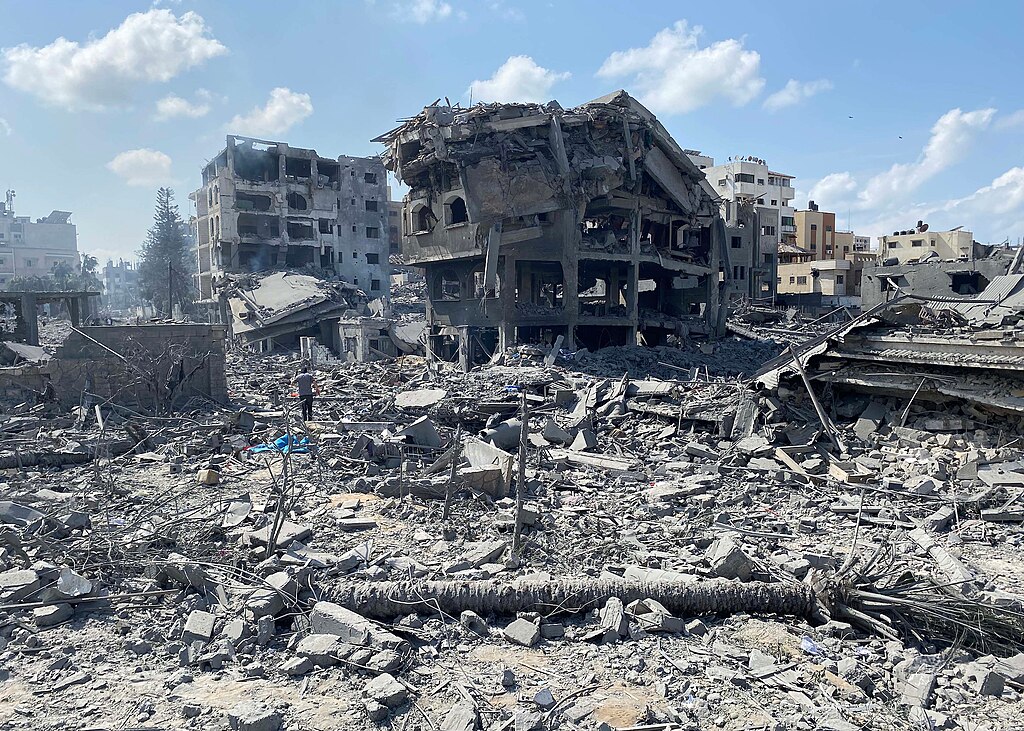
    Palestinians inspect the damage following an Israeli airstrike on the El-Remal aera in Gaza City on October 9, 2023. Israel continued to battle Hamas fighters on October 10 and massed tens of thousands of troops and heavy armour around the Gaza Strip after vowing a massive blow over the Palestinian militants' surprise attack. Photo by Naaman Omar apaimages. licensed under the Creative Commons Attribution-Share Alike 3.0 Unported license.
    Palestinians inspect the damage following an Israeli airstrike on the El-Remal aera in Gaza City on October 9, 2023. Israel continued to battle Hamas fighters on October 10 and massed tens of thousands of troops and heavy armour around the Gaza Strip after vowing a massive blow over the Palestinian militants’ surprise attack. Photo by Naaman Omar apaimages. licensed under the Creative Commons Attribution-Share Alike 3.0 Unported license.

    15 aid organisations demand international pressure for an immediate ceasefire, arms embargo, and end to Israel’s systematic aid obstruction

    New data has revealed the scale of aid obstruction, and the consequential drastic fall in aid entering Gaza. This is driving a humanitarian disaster, with the entire population of Gaza facing hunger and disease, and almost half a million at risk of starvation. 

    While Israeli military attacks on Gaza intensify, lifesaving food, medicine, medical supplies, fuel, and tents have been systematically blocked from entering for almost a year. 

    Data analysis by organisations working in Gaza has found that as a consequence of the Israeli government’s obstruction of aid: 

    • 83% of required food aid does not make it into Gaza, up from 34% in 2023.This reduction means people in Gaza have gone from having an average of two meals a day to just one meal every other day. An estimated 50,000 children aged between 6-59 months urgently require treatment for malnutrition by the end of the year.
    • 65% of the insulin required and half of the required blood supply are not available in Gaza. 
    • Availability of hygiene items has dropped to 15% of the amount available in September 2023. One million women are now going without the hygiene supplies they need. 
    • Only around 1,500 hospital beds in Gaza remain operational, compared to around 3,500 beds in 2023 which was already well below sufficient to meet the needs of a population of more than 2 million people. By comparison, cities of similar size, such as Chicago and Paris average 5 to 8 times more beds than in Gaza. 
    • 1.87 million people are in need of shelter with at least 60% of homes destroyed or damaged (January 2024). Yet tents for around just 25,000 people have entered Gaza since May 2024.

    A record low average of 69 aid trucks per day entered Gaza in August 2024, compared to 500 per working day last year; which was already not enough to meet people’s needs. In August more than 1 million people did not receive any food rations in southern and central Gaza. 

    Now, only 17 out of 36 hospitals remain partially functional. Critical infrastructure such as water networks, sanitation facilities and bread mills have been razed to the ground. 

    While humanitarian needs are ever increasing, agencies have detailed six main ways their life-saving aid is systematically obstructed on a daily basis.

    These include the denial of safety, with more than 40,000 Palestinians and nearly 300 aid workers killed since last October; the sharp tightening of a 17-year blockade to a full siege, which prevents aid from entering Gaza; delays and denials which restrict the movement of aid around Gaza; tightly restrictive and unpredictable control of imports; the destruction of public infrastructure such as schools and hospitals; and the displacement of civilians and humanitarian workers (witnessed again in recent displacement orders from the so-called “humanitarian zone” in Deir el-Balah.)

    Ahead of the UN General Assembly in New York this week, aid agencies are calling on governments to demand Israel end aid obstruction and to:

    • Secure an immediate and lasting ceasefire in Gaza. 
    • Implement an arms embargo and end the export of weapons and military equipment that risk being used in violations of international humanitarian law and human rights law. 
    • Demand compliance with the International Court of Justice’s findings and recommendations, an end to the Israeli government’s siege of Gaza, and heed the call of the ICJ in its advisory opinion to end the occupation of Palestinian territory. 

    Jolien Veldwijik, CARE Country Director in the West Bank and Gaza, said:

    “The situation was intolerable long before last October’s escalation and is beyond catastrophic now. Over 11 months, we have reached shocking levels of conflict, displacement, disease and hunger. Yet, aid is still not getting in, and humanitarian workers are risking their lives to do their jobs while attacks and violations of international law intensify. Aid, which is urgently required for 2.2 million people at risk of dying in the coming weeks and months, should never be politicised. We demand an immediate and sustained ceasefire, and the free flow of humanitarian aid into and throughout Gaza.” 

    Amjad Al Shawa, the director of the Palestinian NGOs Network (PNGO), an umbrella organisation of 30 Palestinian NGOs and a partner of ActionAid, said:

     “There is a shortage of all humanitarian items. We are overwhelmed [with] these needs and [these] urgent requirements…People [are] starving due to the shortage of aid…100% of the population depend on humanitarian aid…It’s the worst situation that we [witnessed] during …. the Israel war in Gaza.”

    1. CARE International
    2. Save the Children
    3. ActionAid
    4. Christian Aid
    5. War Child
    6. Islamic Relief
    7. HelpAge International 
    8. American Friends Service Committee
    9. Oxfam
    10. DanChurchAid
    11. Norwegian Church Aid
    12. Mennonite Central Committee
    13. Danish Refugee Council
    14. Norwegian Refugee Council
    15. KinderUSA

  • ‘As a Human Being, I Beg’: Doctors Say Cease-Fire in Gaza Only Way to Save Countless Lives

    Spread the love

    Original article by BRETT WILKINS republished from Common Dreams under Creative Commons (CC BY-NC-ND 3.0). 

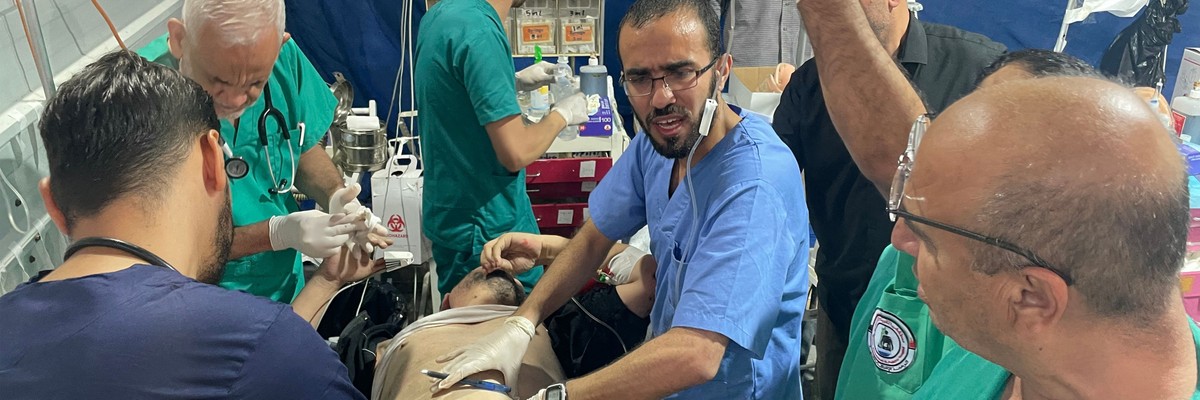
    Trauma surgeons treat an injured man after Israeli bombardment, at the Kuwaiti hospital in Rafah in the southern Gaza Strip on October 21, 2023  (Photo: Said Khatib/AFP via Getty Images)

    Fresh demands for a major increase in humanitarian aid and an end to the bombing came as Gaza’s only cancer hospital shut down due to a lack of fuel.

    As the World Health Organization warns of an “imminent public health catastrophe” in Gaza amid Israeli attacks on medical workers and infrastructure, doctors and other frontline medics said Wednesday that only an immediate cease-fire would give them a fighting chance to save countless lives.

    Responding Wednesday to the shutdown of the Turkish-Palestinian Friendship Hospital—Gaza’s only cancer treatment center—due to lack of fuel and damage from Israeli airstrikes, WHO Director-General Tedros Adhanom Ghebreyesus said that “no words can describe our concern for the patients who have just lost the only possibility to receive lifesaving cancer treatment or palliative care.”

    Tedros added: “I urge and I plead—for full medical and fuel aid access NOW! The more we wait, the more we put these fragile lives at risk.”

    The WHO chief’s plea came a day after Christian Lindmeier, a spokesperson for the Geneva-based United Nations agency, warned that “an imminent public health catastrophe… looms with the mass displacement, the overcrowding, the damage to water and sanitation infrastructure.”

    Meanwhile, James Elder, a spokesperson for the United Nations Children’s Fund (UNICEF), said Tuesday that “child deaths due to dehydration, particularly infant deaths due to dehydration, are a growing threat.”

    The U.N. Office for the Coordination of Humanitarian Affairs (OCHA) called Gaza a “graveyard” for children, more than 3,600 of whom have been killed by Israeli bombardment, with another 1,000 minors reported missing, according to Palestinian and other officials.

    Israeli forces have attacked numerous hospitals, clinics, ambulances, and medical workers, including the Turkish-Palestinian Friendship Hospital and al-Hilu Hospital. The Gaza Health Ministry said Wednesday that the bombardment that damaged al-Hilu “endangers the lives of women in the maternity wards and medical staff.”

    According to an “urgent call for protecting healthcare workers in Gaza” published Tuesday in the British medical journal The Lancet, Israeli forces have attacked 57 medical facilities since launching the war on Gaza on October 7, killing 73 workers—including doctors, nurses, paramedics, and others—as of October 24. Sixteen of the medical personnel were killed while on duty.

    As Israel’s bombardment of Gaza exacts a heavy toll on overwhelmed medical workers and infrastructure in the besieged strip, frontline medics like Dr. Noureddein al-Khateeb—a 38-year-old resident doctor in the emergency department at the Nasser Medical Center in the southern Gaza city of Khan Younis—say they are living “in a constant state of threat and fear.”

    “It’s constant fear on top of the exhaustion we’re experiencing,” al-Khateeb toldThe New Humanitarian on Wednesday. “But one shouldn’t think of that too much. I can’t. If I do, I won’t get any work done.”

    Al-Khateeb added that “we’re also afraid for our families’ safety, but what can we do?”

    Dr. Mohamed Abu Mousa, a radiologist at Nasser, said one of the few trips he’s made outside the hospital since Israeli bombardment began was to bury his 7-year-old son after he was killed in an October 15 Israeli airstrike on their family home.

    “We don’t have the luxury of pausing to grieve,” he told The New Humanitarian. “The heartache is immense, but the wounded are endless. We have to keep going.”

    Conditions are dire inside Gaza’s hospitals, which are running out of or low on fuel, medicines, equipment, and other essential services and supplies.

    “We’re operating on children without anesthetics,” Léo Cans, who heads the Doctors Without Borders (MSF) mission in Palestine, toldCNN Tuesday. “We don’t have morphine for them.”

    On Wednesday, MSF international president Dr. Christos Christou said in a video published on social media that “we’ve seen and heard the stories of the hell being unleashed on Gaza” as “helpless people are being subjected to horrific bombing” and “families have nowhere to run or hide.”

    Christou continued:

    So many people need help. What medical staff can do is just a drop in the ocean compared to the immense needs. Our teams working in Gaza are exhausted and terrified. Our staff tell us that pregnant women can’t get to hospitals to deliver. People are stuck under the rubble of shelled-out buildings. Children are having limbs amputated while lying on the floor.

    “An immediate cease-fire is the only way the people of Gaza can find safety and the essential aid they urgently need,” Christou asserted. “The bombing, the all-out assault, needs to stop now… As a human being, I beg—stop the bombing and allow people in Gaza to live.”

    The Gaza Health Ministry said Wednesday afternoon that at least 8,796 Palestinians—including nearly 2,300 women and over 3,600 children—have been killed in Israeli attacks, while around 23,000 other people have been injured.

    Original article by BRETT WILKINS republished from Common

    Dreams under Creative Commons (CC BY-NC-ND 3.0).