Mainstream UK politicians are united in supporting Maccabi Tel Aviv hooligan football supporters.


Mainstream UK politicians are united in supporting Maccabi Tel Aviv hooligan football supporters.
https://morningstaronline.co.uk/article/liberalism-far-right-cynical-trajectory-todays-top-tories

 Then prime minister David Cameron (left) welcomes then newly-elected Newark MP Robert Jenrick to the Houses of Parliament in London, June 11, 2014
Robert Jenrick’s complaints about “not seeing another white face” in Birmingham’s Handsworth show the Tories will push racism to try to grab votes.
Jenrick’s hard right turn is creepy because this formerly “Liberal” Tory, who was so blandly Cameron-centrist-pro-EU that he was called “Robert Generic,” now uses the language of the National Front.
At Tory conference anti-migrant, anti-asylum-seeker, prejudiced and racist language was ubiquitous: Mirroring Jenrick’s manoeuvre, it spread to supposedly “liberal” Tories.
I went to a conference meeting of Tory group Bright Blue. Founded when David Cameron was leader, Bright Blue see themselves as a socially conscious liberal Tory group.
Their slogan is “Our work is about defending and improving liberal society.” Their “advisory board” has Labour figures — former ministers Margaret Hodge and John Denham and former Blair adviser John McTernan — alongside a dozen leading Tories.
This supposed liberalism evaporated over migration. They had a debate on “How Conservatism can be popular and effective again.”
Shadow home secretary Chris Philp was on the panel. Philp is pushing his anti-migrant message hard: he attacks asylum-seekers as criminals. He also attacks the much greater numbers of “legal” migrants, claiming “mass migration has certainly damaged social cohesion.”
But what Philp said for the “Bright Blue” crowd was instructive: Bright Blue wrote a list of 10 Tory objectives. Philp said this wouldn’t work, because “it is hard to get attention” for the Tories, so any list had to be reduced to two: immigration and the economy. Philp was making clear the Tories are going hard on immigration mostly to get “attention.”
Philp was joined on the panel by Jesse Norman MP, a “Bright Blue” favourite, seen as a Tory liberal. In 2022 Jesse Norman wrote a “no-confidence” letter to then PM Boris Johnson, complaining “the Rwanda policy is ugly, likely to be counterproductive and of doubtful legality.”
So did Norman object to Philp and the Tories’ plan to reinstate their policy of deporting all asylum-seekers to Rwanda, or his “ugly“ language?
No. Norman argued pushing against “immigration” was essential, saying “it’s almost a threshold condition for seriousness” for would-be Tory voters.
This is the current Tory position, across the board, from former “liberals” like Jenrick to supposedly current “liberals” like Norman — they want to hammer the anti-immigrant button, because they can’t see any other way to beat Reform.
The Tory conference was quite direct about this manoeuvre: the conference slogan was “Stronger Economy. Stronger Borders.”
They want to have a “stronger economy” — which for the Tories means more privatisation, deregulation and lower taxes, and will use their “stronger borders” message — meaning their newly supercharged anti-migrant and racist prejudices — to get it.
Those cynically adopting this hard anti-migrant persona are more sinister in some ways than lifelong bigots. They are willing to play with prejudice without principle.
If the Conservatives end up in coalition with Farage — a distinct possibility — we can’t expect the Tories to blunt Reform’s prejudices in government. Quite the opposite, they might lean into them more, and deliver them with more efficiency.
Follow Solomon Hughes on X @SolHughesWriter.
https://morningstaronline.co.uk/article/liberalism-far-right-cynical-trajectory-todays-top-tories
Morning Star copyright to this article is recognised.
https://www.theguardian.com/business/2025/oct/16/uk-labour-ministers-fossil-fuel-lobbyists-analysis
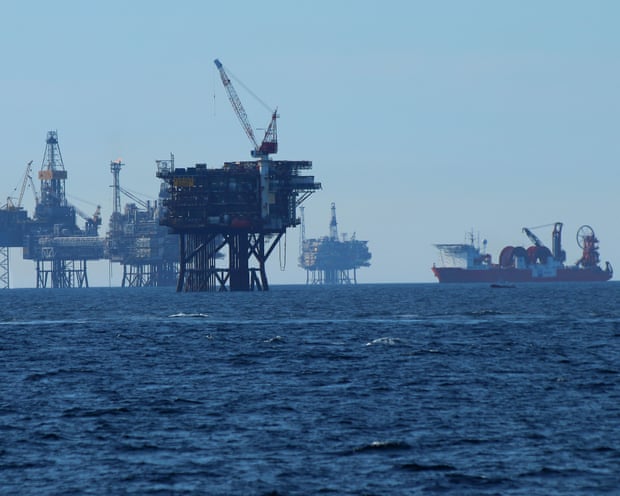
Government ministers met representatives from the fossil fuel industry more than 500 times during their first year in power – equivalent to twice every working day, according to research.
The analysis found that fossil fuel lobbyists were present at 48% more ministerial meetings during Labour’s first year in power than under the Conservatives in 2023.
The government defended the meetings, saying ministers held meetings with a wide range of representatives from “the energy industry, unions and civil society to drive forward our clean energy superpower mission”.
The findings have raised concern among critics about the extent of the fossil fuel industry’s influence over government at a time when ministers are trying to lower bills and transition to a more sustainable energy system.
A report from the International Energy Agency in 2023 found that fossil fuel companies still had “minimal” engagement with the global clean energy transition, contributing just 1% of clean energy investment globally.
…
Article continues at https://www.theguardian.com/business/2025/oct/16/uk-labour-ministers-fossil-fuel-lobbyists-analysis


https://www.bbc.com/news/articles/cx24kllyye1o
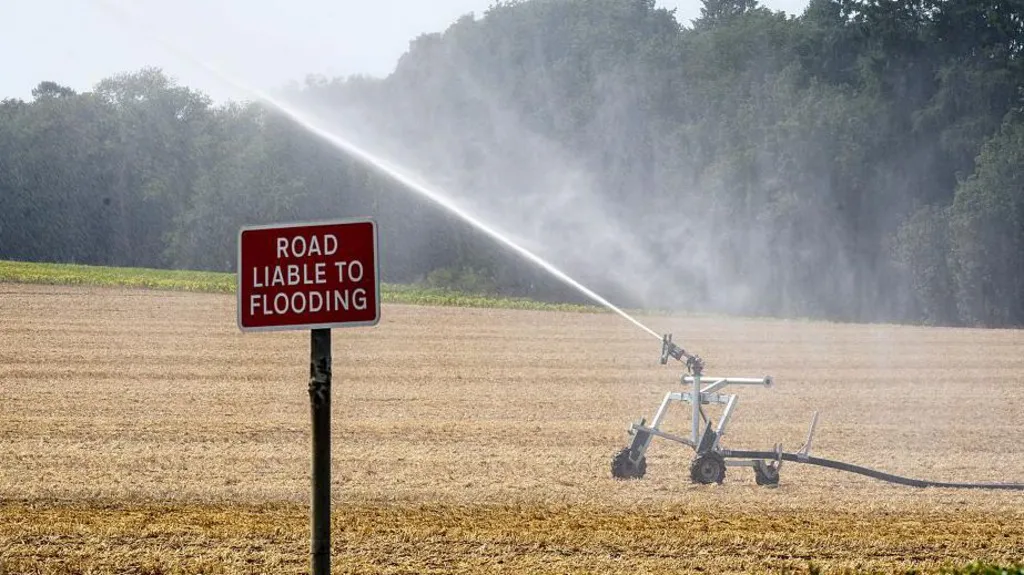
The UK should be prepared to cope with weather extremes as a result of at least 2C of global warming by 2050, independent climate advisers have said.
The country was “not yet adapted” to worsening weather extremes already occurring at current levels of warming, “let alone” what was expected to come, the Climate Change Committee (CCC) wrote in a letter addressed to the government.
The committee said they would advise that the UK prepare for climate change beyond the long-term temperature goal set out in the Paris Agreement.
The letter came as the World Meteorological Organization (WMO) confirmed that 2024 had seen a record rise of carbon dioxide (CO2) in the atmosphere.
CO2 is the gas mainly responsible for human-caused climate change and is released when fossil fuels are burnt, as well as other activities.
The CCC’s letter came after it had been asked to provide advice on a timeframe for setting adaption scenarios, based on “minimum climate scenarios”.
…
The increase of CO2 in the atmosphere between 2023 and 2024 was the largest since modern measurements started in the late 1950s, the WMO said.
This follows findings first reported by the Met Office in January.
“The heat trapped by CO2 and other greenhouse gases is turbo-charging our climate and leading to more extreme weather,” said WMO Deputy Secretary-General Ko Barrett.
“Reducing emissions is therefore essential not just for our climate but also for our economic security and community well-being,” she added.
…
Original article at https://www.bbc.com/news/articles/cx24kllyye1o

Hamish Clarke, The University of Melbourne
We’ve all seen the alarming images. Smoke belching from the thick forests of the Amazon. Spanish firefighters battling flames across farmland. Blackened celebrity homes in Los Angeles and smoked out regional towns in Australia.
If you felt like wildfires and their impacts were more extreme in the past year – you’re right. Our new report, a collaboration between scientists across continents, shows climate change supercharged the world’s wildfires in unpredictable and devastating ways.
Human-caused climate change increased the area burned by wildfires, called bushfires in Australia, by a magnitude of 30 in some regions in the world. Our snapshot offers important new evidence of how climate change is increasing the frequency and severity of extreme fires. And it serves as a stark reminder of the urgent need to rapidly cut greenhouse gas emissions.
The evidence is clear – climate change is making fires worse.

Our study used satellite observations and advanced modelling to find and investigate the causes of wildfires in the past year. The research team considered the role that climate and land use change played, and found a clear interrelationship between climate and extreme events.
Regional experts provided local input to capture events and impacts that satellites did not pick up. For Oceania, this role was played by Dr Sarah Harris from the Country Fire Authority and myself.
In the past year, a land area larger than India – about 3.7 million square kilometres – was burnt globally. More than 100 million people were affected by these fires, and US$215 billion worth of homes and infrastructure were at risk.
Not only does the heating climate mean more dangerous, fire-prone conditions, but it also affects how vegetation grows and dries out, creating fuel for fires to spread.
In Australia, bushfires did not reach the overall extent or impact of previous seasons, such as the Black Summer bushfires of 2019–20. Nonetheless, more than 1,000 large fires burned around 470,000 hectares in Western Australia, and more than 5 million hectares burned in central Australia. In Victoria, the Grampians National Park saw two-thirds of its area burned.
In the United States, our analysis showed the deadly Los Angeles wildfires in January were twice as likely and burned an area 25 times bigger than they would have in a world without global warming. Unusually wet weather in Los Angeles in the preceding 30 months contributed to strong vegetation growth and laid the foundations for wildfires during an unusually hot and dry January.
In South America, fires in the Pantanal-Chiquitano region, which straddles the border between Brazil, Bolivia and Paraguay, were 35 times larger due to climate change. Record-breaking fires ravaged parts of the Amazon and Congo, releasing billions of tonnes of carbon dioxide.

It’s clear that if global greenhouse gas emissions continue to rise, more severe heatwaves and droughts will make landscape fires more frequent and intense worldwide.
But it’s not too late to act. We need stronger and faster climate action to cut fossil fuel emissions, protect nature and reduce land clearing.
And we can get better at responding to the risk of fires, from nuanced forest management to preparing households and short and long-term disaster recovery.
There are regional differences in fires, and so the response also need to be local. We should prioritise local and regional knowledge, and First Nations knowledge, in responding to bushfire.
Fires emitted more than 8 billion tonnes of carbon dioxide in 2024–25, about 10% above the average since 2003. Emissions were more than triple the global average in South American dry forests and wetlands, and double the average in Canadian boreal forests. That’s a deeply concerning amount of greenhouse pollution. The excess emissions alone exceeded the national fossil fuel CO₂ emissions of more than 200 individual countries in 2024.
Next month, world leaders, scientists, non-governmental organisations and civil society will head to Belem in Brazil for the United Nations annual climate summit (COP30) to talk about how to tackle climate change.
The single most powerful contribution developed nations can make to avoid the worst impacts of extreme wildfires is to commit to rapidly cutting greenhouse gas emissions this decade.
Hamish Clarke, Senior Research Fellow, The University of Melbourne
This article is republished from The Conversation under a Creative Commons license. Read the original article.