Tag: Norway

  • Protesters March on NYC Transit Hubs Demanding Gaza Cease-Fire

    Spread the love

    Original article by BRETT WILKINS republished from Common Dreams under Creative Commons (CC BY-NC-ND 3.0). 

    Demonstrators demanding a Gaza cease-fire protest outside Penn Station in New York City on December 18, 2023. (Photo: caren/X)

    “We must stand up and not be silent to this injustice,” said one rabbi taking part in the demonstration.

    A coordinated wave of demonstrations against what activists called Israel’s genocidal war on Gaza targeted New York City transit hubs Monday afternoon, with protesters demanding an immediate cease-fire as heavy Israeli bombardment of the besieged strip pushed the death toll from 73 days of attacks to nearly 20,000.

    Protesters marched from Grand Central Station to the Port Authority Bus Terminal and then on to Penn Station, where at least hundreds of activists gave police the slip and occupied Moynihan Hall. Many participants prayed for peace before leaving the station.

    “We must stand up and not be silent to this injustice,” Rabbi Yisroel Dovid Weiss toldamNewYork Metro outside Grand Central Station. “We hurt and cry with the people who are dying and suffering under the stranglehold of the Zionist occupation. We want the world to know that we hurt because we are Jews, we will not be silent because we are Jews.”

    Independent photojournalist Katie Smith followed the entire demonstration—which was coordinated by the group Within Our Lifetime—documenting incidents including police “violently engaging with protesters” and a confrontation between the actor Alec Baldwin and activists.

    According to Smith, activists later marched to a building in Greenwich Village where a fundraiser for the Israel Defense Forces was reportedly being held.

    Monday’s actions followed recent protests in New York, including a Manhattan march led by artists remembering the life and work of Refaat Alareer—a Gaza poet and professor killed last week in an Israeli airstrike—and calling on Israel to free political prisoners including the members of Freedom Theater recently arrested in Jenin in the illegally occupied West Bank.

    In recent days, large protests for Gaza have also taken place in U.S. cities including Houston, Los Angeles, and Washington, D.C., as well as in cities in countries including the U.K., Canada, France, Belgium, Norway, and Germany.

    In California, workers at Google and allies held a Thursday die-in at the tech giant’s San Francisco office “to demand the company stop powering Israel’s genocide of Palestinians in Gaza” through the $1.2 billion Project Nimbus cloud computing contract.

    More protests are planned for this week, including a nationwide action by Mennonites on Tuesday and a rally by over 80 groups on Capitol Hill in Washington, D.C. that same day.

    Sponsored by the Action Center on Race and Economy, Adalah Justice Project, Grassroots Global Justice Alliance, and the U.S. Campaign for Palestinian Rights, Tuesday’s D.C. event is being held to “demand a permanent cease-fire in Gaza and oppose the Biden administration’s proposed military aid package sending billions of taxpayer dollars to Israel, U.S. southern border militarization, and immigration enforcement.”

    Original article by BRETT WILKINS republished from Common Dreams under Creative Commons (CC BY-NC-ND 3.0). 

    Zionist president Joe Biden. 27 July 2021 image by Official White House Photo by Adam Schultz. Original public domain image from Flickr
    Zionist president Joe Biden. 27 July 2021 image by Official White House Photo by Adam Schultz. Original public domain image from Flickr
  • Global Campaigners Call On Norway to Ditch Deep-Sea Mining Plan

    Spread the love
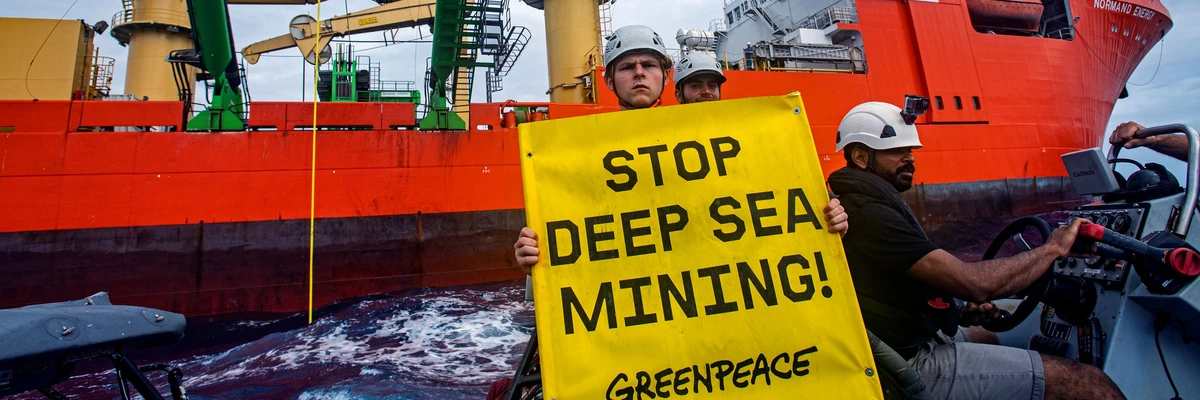
    Greenpeace International activists from the Rainbow Warrior attach a flag reading 'Stop Deep Sea Mining'' to a cable holding the prototype robot Patania II in April 2021. (Photo: Marten van Dijl/Greenpeace)
    Greenpeace International activists from the Rainbow Warrior attach a flag reading ‘Stop Deep Sea Mining” to a cable holding the prototype robot Patania II in April 2021. (Photo: Marten van Dijl/Greenpeace)

    Original article by JULIA CONLEY republished from Common Dreams under Creative Commons (CC BY-NC-ND 3.0).

    “By embarking on mining in the deep sea without sufficient knowledge, we risk destroying unique nature, eradicating vulnerable species, and disrupting the world’s largest carbon sink,” said one advocate.

    Calling on Norway to “live up to the responsibilities” it has as co-chair of an international panel on sustainable oceans, more than 30 climate and conservation organizations on Monday delivered a letter to nearly two dozen Norwegian embassies on all continents, intensifying global outcry over plans for deep-seabed mining in the Arctic.

    The groups, including Greenpeace, Sustainable Ocean Alliance, and the Blue Climate Initiative, called on officials to abandon plans to open 281,000 square kilometers—an area nearly the size of the United Kingdom—to deep-sea mining, saying the world currently lacks “the robust, comprehensive, and credible scientific knowledge to allow for reliable assessment of impacts of deep-sea minerals extraction, including impacts on the planet’s life-support systems and human rights.”

    Therefore, they said, the plan violates Norway’s “ambition to act according to a knowledge-based and precautionary approach.”

    “By embarking on mining in the deep sea without sufficient knowledge, we risk destroying unique nature, eradicating vulnerable species, and disrupting the world’s largest carbon sink,” said Sofia Tsenikli, global campaign lead for the Deep Sea Conservation Coalition. “At a time when humanity is racing against the clock to tackle both the climate crisis and the biodiversity crisis, we should protect nature—not destroy it.”

    “European countries like France, Germany and Spain have taken a precautionary position, advocating a precautionary pause, a moratorium or a ban on deep-sea mining.”

    Mining companies have lobbied for deep-sea mining, claiming it is necessary to source cobalt and copper, but advocates have noted that the minerals are already found elsewhere on the planet and have warned that the mining process could disturb the habitat of thousands of marine species.

    The advocates behind Monday’s letter, which was delivered on the day Norway’s parliament began its autumn session, noted that the country’s co-chair on the High-Level Panel for a Sustainable Ocean Economy—Palau—is among a growing number of governments that have urged caution regarding deep-sea mining.

    “European countries like France, Germany and Spain have taken a precautionary position, advocating a precautionary pause, a moratorium or a ban on deep-sea mining,” wrote the groups. “Scientists, Indigenous groups, fisheries and seafood organizations, civil society organizations, and major businesses including Storebrand, BMW, and Google are all calling for a stop to deep-sea mining. The European Investment Bank has excluded deep-sea mining from its investments as it is deemed ‘unacceptable in climate and environmental terms,’ and the European Parliament has called for a moratorium multiple times.”

    The international coalition further called on Norwegian Prime Minister Jonas Gahr Støre to “step back from the brink of introducing this destructive industry and to support a global moratorium on deep sea mining.”

    The letter was sent a week after Greenpeace activists confronted Støre and other Norwegian Labour Party politicians with a 45-foot long octopus model that displayed a banner reading, “Don’t destroy my home.”

    Greenpeace campaigners in Denmark shared on social media that on Monday, the letter was delivered by an activist dressed as a jellyfish.

    “Norway opening for deep-sea mining while chairing the international Ocean panel, and committing to 100% sustainable use of its waters, is hypocrisy and risks destroying both ecosystems in the vulnerable Arctic and Norway’s reputation internationally,” said Louisa Casson, senior campaigner for the group’s Stop Deep-Sea Mining campaign. “If Norway decides to proceed with their plans, they must give up their seat in the Ocean panel to a state that delivers on ocean protection.”

    Original article by JULIA CONLEY republished from Common Dreams under Creative Commons (CC BY-NC-ND 3.0).

  • The United States and Canada Are Among the World’s Top 5 ‘Planet Wreckers,’ New Fossil Fuel Report Contends

    Spread the love

    Original article by Dana Drugmand republished from DeSmog.

    Just ahead of U.N. climate summit in New York City, analysis calls on governments to halt planned gas and oil projects

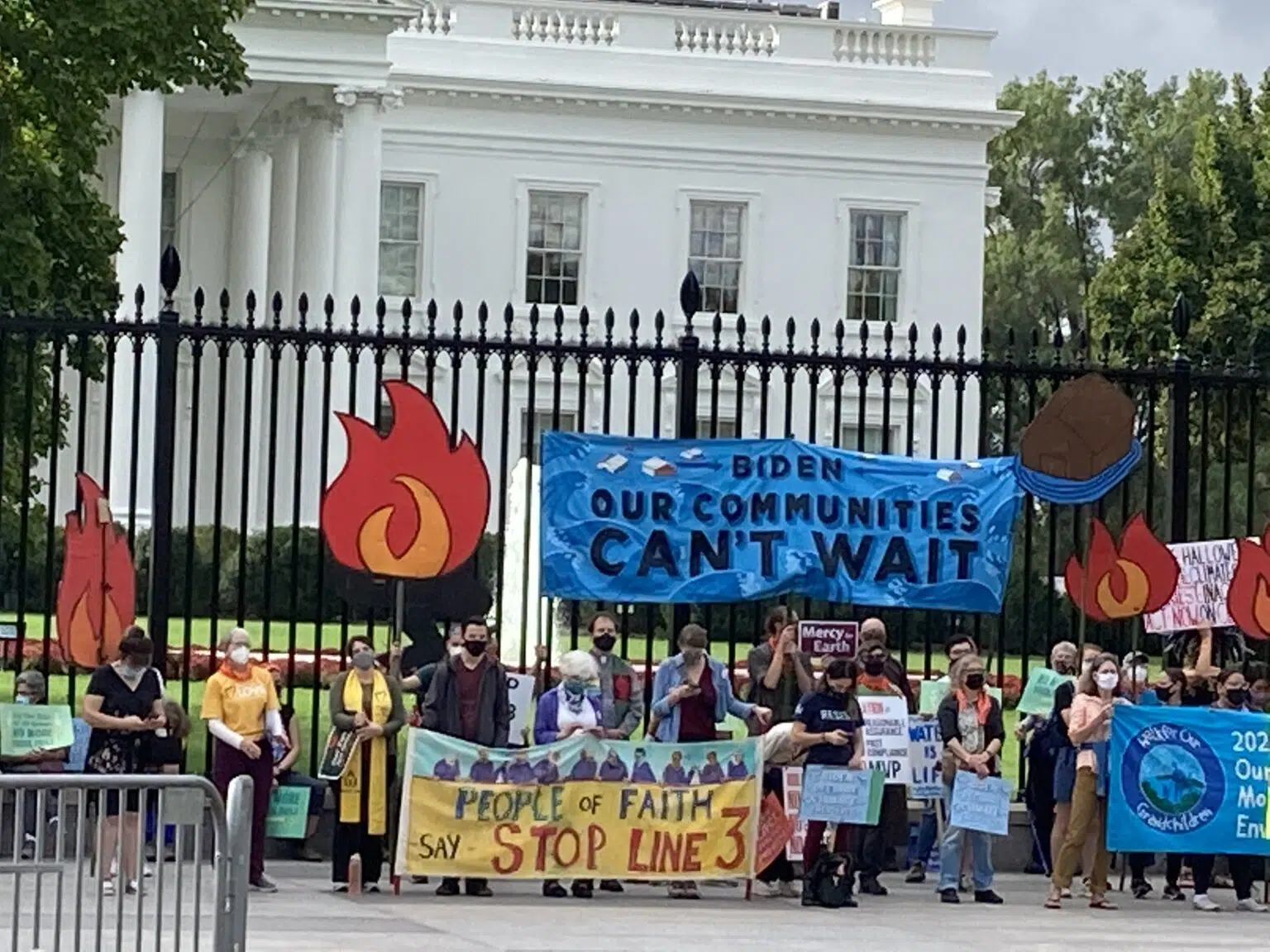
    Climate activists assembled at the White House during the People vs Fossil Fuels week of direct action in Oct. 2021. Credit: Dana Drugmand
    Climate activists assembled at the White House during the People vs Fossil Fuels week of direct action in Oct. 2021. Credit: Dana Drugmand

    United Nations chief António Guterres has called on nations to arrive at September 20’s high-level climate summit in New York City with firm commitments for ending fossil fuel production.

    So far, however, the world’s top 20 oil and gas extractors have enough production planned to generate 173 billion tons of carbon pollution by 2050 — more than enough to blow past their Paris Agreement commitments and heat the world well beyond 1.5 degrees Celsius above historical temperatures. The greatest polluter among them will be the United States.

    Those are some of the findings in a new report from the group Oil Change International, which has found that these 20 countries — dubbed the “planet wreckers” — are going to be responsible for almost 90 percent of the expected carbon emissions from planned oil and gas projects between 2023 and 2050.

    “A handful of the world’s richest nations are gambling our global future by failing to act and ignoring the scientific calls and evidence that we need to rapidly phase out fossil fuels,” said Kelly Trout, co-director of research at Oil Change International, who co-authored the report with colleague Romain Ioualalen.

    “Most countries are unfortunately still moving in the wrong direction,” she said.

    Oil and gas projects already planned by these nations will generate climate-heating CO2 emissions equivalent to 1,082 new coal plants, according to the report.  

    Based on their current plans, just five countries — the U.S. Canada, Norway, Australia, and the UK — will account for 51 percent of all new oil and gas projects through 2050, Trout found in her research.

    “Among all of the countries that we call out in the report, these are the five that have the greatest economic means and capacity to actually be phasing out their oil and gas production the fastest,” Trout said.

    The U.S. is both the largest historical carbon emitter and the world’s top oil and gas producer. Dubbed “planet wrecker in chief” in the report, it is on course to drive the most carbon pollution from planned oil and gas expansion by far. New oil and gas extraction in the U.S. will account for more than one-third of all planned projects over the next 25 years, creating 72.5 billion tons of CO2 emissions through 2050. 

    Canada, which is on track for 18.6 billion tons of cumulative carbon pollution through 2050, came in second. 

    Russia, the world’s second largest gas extractor and third largest oil producer, ranked third with 17.3 billion tons of CO2 expected from new production through 2050. Iran ranked fourth with 9.7 billion tons, and China rounded out the top five at 8.9 billion tons of expected carbon pollution.   

    Trout was not surprised by the outsized role of the U.S. “It’s a reflection of the reality that the oil and gas industry’s expansion has been unchecked for many years now in the United States,” she said. “President Biden has put very few limits on the oil and gas industry, and has even enabled the sort of expansion that we’re warning about in this report.”

    Since the beginning of 2023, the Biden administration has approved construction of multiple liquid natural gas export facilities. 

    Among the moves that have further outraged environmentalists, in March, the administration approved the Willow Project, a major ConocoPhilips oil drilling venture in the National Petroleum Reserve-Alaska, a federal wilderness on Alaska’s North Shore. Estimates put up to 600 million barrels of oil in the area where the project will be located.

    Just two weeks later, at the end of March, the Department of Interior held a large oil and gas lease sale in the Gulf of Mexico, leasing 313 tracts across 1.6 million acres.

    In June, as part of the debt ceiling deal negotiated between congressional Republicans and the White House, federal agencies fast-tracked Mountain Valley Pipeline, which will carry fracked gas about 300 miles from northwestern West Virginia to southern Virginia.   

    President Biden has also resisted calls from climate advocates to formally declare a climate emergency, even as the annual number of billion-dollar climate disasters continues to mount. Among them: Phoenix, Arizona set a new record for enduring 31 consecutive days over 110 degrees Fahrenheit, Vermont suffered its worst flooding in nearly a century, and the Hawaiian city of Lahaina was destroyed by one of the deadliest wildfires in U.S. history. 

    In an August interview on the Weather Channel, Biden said he had “practically” declared a climate emergency, a statement that angered climate activists seeking more concrete action. 

    Against this backdrop, tens of thousands are expected to take to the streets of New York on September 17 for a “March to End Fossil Fuels,” some with the explicit demand that President Biden stop U.S. expansion of oil and gas development. Mid-September actions and protests are also being planned in cities and towns worldwide.

    “Thousands of folks will be marching, not just in New York City but across the world to just say our future is on the line,” Trout said, “and a livable future for us all is completely incompatible with the expansion and continuation of the fossil fuel industry.”

    Original article by Dana Drugmand republished from DeSmog.

  • UK told to prepare for possible 30% increase in uncomfortably hot days

    Spread the love

    https://www.theguardian.com/environment/2023/jul/13/uk-told-to-prepare-for-possible-30-increase-in-uncomfortably-hot-days

    Britain and Switzerland among countries that need to adapt most for heating, says research looking at impact of 2C global rise

    The UK and Switzerland will see a 30% increase in the number of days of uncomfortably hot temperatures if the world heats by 2C, and are two of the countries which need to adapt the most for global heating, scientists have predicted.

    The research, published in Nature Sustainability on Thursday, found that while central Africa will see the most extreme temperatures overall, it is mostly northern European countries that will experience the greatest relative increases in uncomfortably hot days.

    The people and infrastructure in these countries are not prepared for periods of hot weather, the study, based on climate modelling and data from the UK Met Office, predicts. The estimates by researchers at the University of Oxford are conservative, and do not include external factors such as extreme heatwaves, which would come on top of this average increase.

    Norway will also suffer one of the world’s most dramatic increases in days that require cooling interventions, the study finds, with a 28% increase in days with uncomfortably hot temperatures if the world misses the 1.5C target. Eight of the 10 countries with the greatest relative increase in uncomfortably hot days are expected to be in northern Europe.

    …

    https://www.theguardian.com/environment/2023/jul/13/uk-told-to-prepare-for-possible-30-increase-in-uncomfortably-hot-days

  • Environment groups condemn Norway’s move to open its waters to deep sea mining

    Spread the love

    https://www.euronews.com/green/2023/06/21/environment-groups-condemn-norways-move-to-open-its-waters-to-deep-sea-mining

    Norway’s government signalled its intention to open up the country’s waters to deep sea mining, but environmental groups have slammed the move.

    Environmental groups have condemned Norway’s proposal to open up parts of the country’s continental shelf for commercial deep sea mining.

    The Norwegian government announced its intentions on Tuesday, although the move still has to be formally debated by parliament later this year.

    …

    https://www.euronews.com/green/2023/06/21/environment-groups-condemn-norways-move-to-open-its-waters-to-deep-sea-mining