Article by Jessica Corbett republished from Common Dreams under Creative Commons (CC BY-NC-ND 3.0).
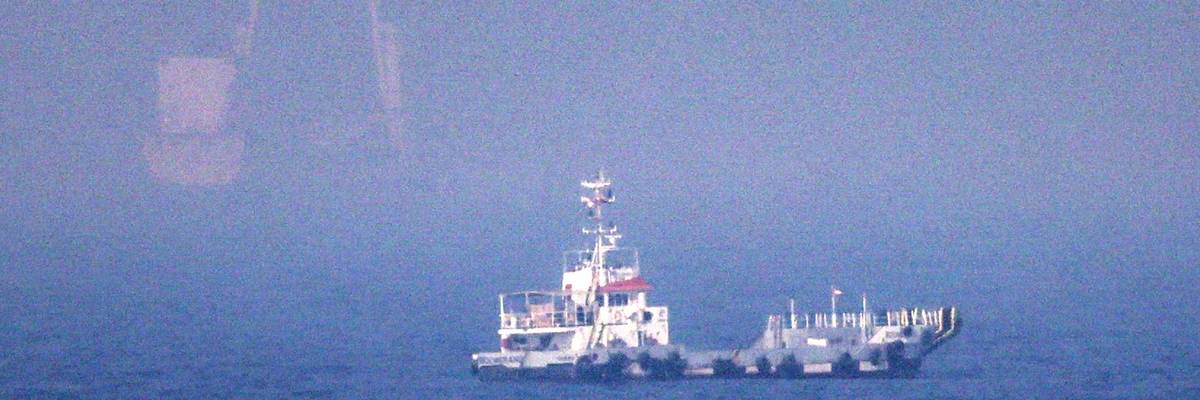
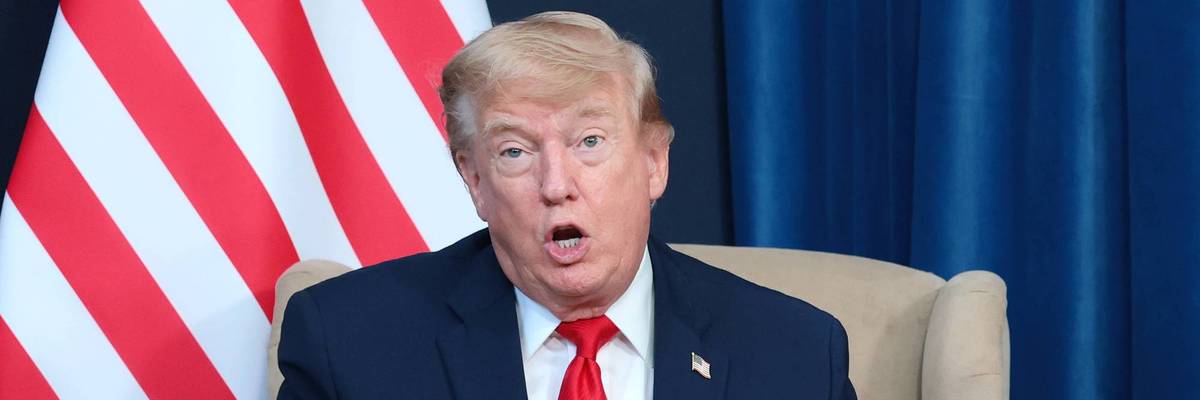
(Photo by AFP via Getty Images)
Critics noted that “20% of the value of any cargo is actually substantially MORE than Iran is seeking to charge ships to transit the strait.
Following fresh US airstrikes against Iran over the weekend, President Donald Trump said Monday that the United States would reimpose a naval blockade on the Mideast country, serve as the “guardian” of the Strait of Hormuz, and charge a 20% toll for cargo ships trying to safely travel on the key trade route.
Trump made the comments while calling in to “Fox & Friends” on Monday morning, as well as on his Truth Social platform.
RECOMMENDED…
Iranian Foreign Minister: Trump ‘Absolutely Right’ About Guarding Strait of Hormuz—But Iran Will Charge ‘Fair’ Price
US Resumes ‘Powerful Strikes’ on Iran After Attacks on Strait of Hormuz Shipping
“We’re just gonna hit them very hard, and we’re gonna keep the strait, and we’ll probably run it. We’ll become the guardian of the strait. Maybe we’ll call it the guardian angel of the strait. And we should be reimbursed for that,” Trump said on the Fox News morning show.
“When we do that, we’re gonna be reimbursed, because the other nations are very wealthy. They’re on our side, and we can’t be expected to do that for nothing,” the president said. “Now we’re gonna guard it, and we’re gonna get paid for guarding it—a lot of money.”
Later Monday morning, Trump wrote on Truth that “the Hormuz Strait is OPEN, and will remain OPEN, with or without Iran. We are reinstating the THE IRANIAN BLOCKADE, so named because it is only stopping Iran’s ships or customers from entering or leaving. All other countries will have fair and open use of the Strait.”
“The U.S.A. will be, from this point forward, known as ‘THE GUARDIAN OF THE HORMUZ STRAIT,’ but as such, and as a matter of FAIRNESS, will be reimbursed, at the rate of 20% on all cargo shipped, for any and all costs necessary to do the job of providing safety and security to this very volatile section of the World,” he added. “The process and formation will begin immediately.”
Bloomberg energy and commodities columnist Javier Blas pointed to US Secretary of State Marco Rubio’s remarks just a couple of weeks ago that “no country is allowed to charge tolls or fees on an international waterway.”
Critics and experts were also quick to note that, as immigration attorney Aaron Reichlin-Melnick put on the platform X, “20% of the value of any cargo is actually substantially MORE than Iran is seeking to charge ships to transit the strait.”
Trita Parsi, executive vice president of the Quincy Institute for Responsible Statecraft, quipped that it “seems like Trump just made a pitch for the Iranian toll system. :) Because the Iranians were going to charge $1 million per ship, which would amount to 1-2% of the value of the cargo of an oil tanker. But Trump is going to charge 20%! :)”
In an early Monday blog post, Parsi had written that “for all practical purposes, the US-Iran memorandum of (mis)understanding is over. The dispute over how to manage the Strait of Hormuz in the interim has pushed the two sides back into open war.”
As Parsi explained:
The dispute over the strait turns, at least on the surface, on paragraph 5 of the MOU: whether Iran is responsible for safe passage throughout the strait for the duration of the agreement, or only for the waterway’s northern corridor.
Beneath the surface, however, lies a more fundamental strategic disagreement. Even before the MOU was signed, Tehran believed Washington’s objective was to establish a southern shipping corridor through Omani waters that would gradually erode Iran’s control over the strait. Such a corridor would require Oman’s cooperation, which may explain why Trump at one point threatened to bomb Oman unless it abandoned its proposal for joint management of the strait, with administrative fees collected by Muscat and Tehran.
The corridor would remain operational even if war resumed and Iran sought once again to close the strait. From Tehran’s perspective, Washington used the MOU to strengthen this alternative route, and the US military’s escort of commercial shipping without coordinating with Iran marked a significant step in that direction. If successful, the strategy would deprive Iran of its most important source of leverage—which is precisely why it appeals to Washington.
“This is why Tehran has insisted that all ships transiting the strait—regardless of the corridor they use—coordinate with Iran, consistent with its reading of paragraph 5 of the MOU,” he continued. “Washington, by contrast, argues that the MOU merely assigns Iran responsibility for ensuring the safe passage of commercial vessels, without granting it operational control over all maritime traffic.”
Sina Toossi, a senior nonresident fellow at the Center for International Policy, warned in a statement about Trump’s Monday comments that “if implemented, the announced re-blockade would effectively restart the economic clock that the MOU had temporarily paused. Iran would once again face mounting pressure on its ability to export, store, and monetize oil, while the United States and the global economy would again confront the risks of prolonged disruption to Persian Gulf energy flows.”
“The strategic environment, however, is no longer what it was before the war,” he added. “US strategic petroleum reserves continued to decline during the MOU period and remain at historically low levels, while global inventories also remain tight. As a result, there is less cushion to absorb a prolonged supply disruption than in the previous round of fighting, increasing the risks of sharper energy price spikes, higher inflation, and broader economic disruption.”
This article has been updated with comment from Sina Toossi.
Article by Jessica Corbett republished from Common Dreams under Creative Commons (CC BY-NC-ND 3.0).
- Trump’s Strait of Hormuz Ploy Aims to Manufacture ‘Pretext for Escalation,’ Iran Warns ›
- ‘Don’t Talk About It’: Trump Tells Journalists to Stop Asking About Strait of Hormuz After Latest Closure ›
- Oil Rises Above $100 a Barrel as Trump’s Strait of Hormuz Blockade Begins Amid NATO Condemnation – News & Opinion – The Commons ›
- ‘Designed-to-Backfire’: Trump Slammed for Closure of Hormuz Strait as Iran Talks Falter ›