Ocean Warming Drives ‘Deeply Concerning Loss of Marine Life,’ Study Shows

Spread the love

Original article by Jessica Corbett republished from Common Dreams under Creative Commons (CC BY-NC-ND 3.0).
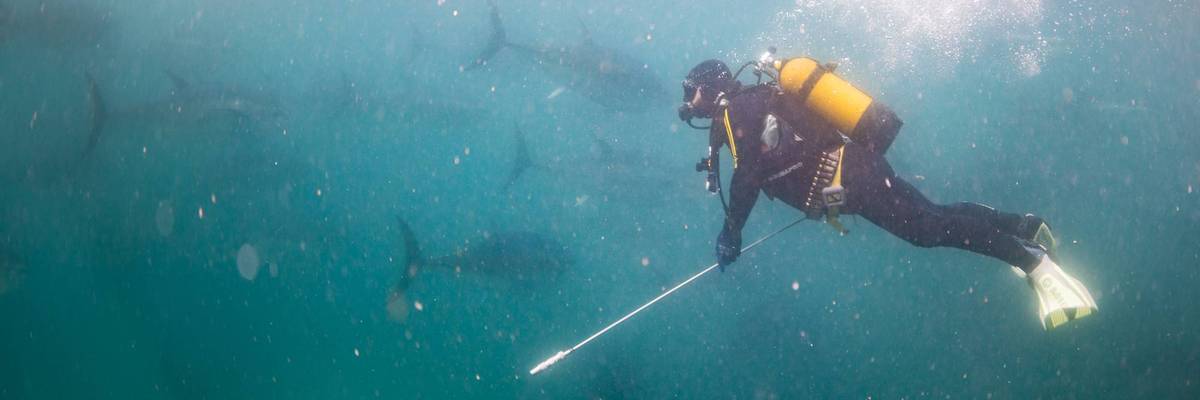
A diver hunts thunnus in Mediterranean Sea near Izmir, Turkey on November 19, 2024. (Photo by Mahmut Serdar Alakus/Anadolu via Getty Images)

Noting that species are at risk from not only warming waters but also overfishing, one expert argued that “any management reform must simultaneously address both drivers of change.”

Humanity’s continued reliance on fossil fuels led to last year being among the hottest on record, and oceans store over 90% of the excess heat from greenhouse gases. A study out Wednesday details how the related long-term heating, warm years, and marine heatwaves “pose serious but poorly quantified threats” to fish species.

“To put it simply, the faster the ocean floor warms, the faster we lose fish,” lead author Shahar Chaikin of Spain’s National Museum of Natural Sciences (MNCN) told the Guardian. “A 7.2% decline for every tenth of a degree per decade might sound small… But compounded over time, across entire ocean basins, it represents a staggering and deeply concerning loss of marine life.”

RECOMMENDED…
ARGENTINA-ENVIRONMENT-CLIMATE-FIRE

Earth Hurtling Toward ‘Hothouse Trajectory,’ Scientists Warn in Tipping Points Analysis

Data Center Giant Secures $14 Million Deal to Consume 40% of Pennsylvania Town's Excess Water

Data Center Giant Secures $14 Million Deal to Consume 40% of Pennsylvania Town’s Excess Water

For the study, published in the journal Nature Ecology & Evolution, Chaikin, his MNCN colleague Miguel B. Araújo and the National University of Colombia’s Juan David González-Trujillo analyzed 702,037 estimates of biomass change for 33,990 populations of 1,566 fish species across the Mediterranean, north Atlantic, and northeast Pacific between 1993 and 2021.

“On shorter timescales, warmer years and marine heatwaves were linked to sharp biomass losses of up to 43.4% in populations at the warm edge of the species’ range and biomass increases of up to 176% at the cold edge,” the study states. Chaikin warned in a statement that the temporary jumps in cooler areas could send misleading signals to managers of fisheries.

“Although this sudden increase in biomass in cold waters may seem like good news for fisheries, these are transient increases,” he explained. “If managers raise catch quotas based on biomass increases caused by a heatwave, they risk causing the collapse of populations when temperatures return to normal or when the effect of long-term warming prevails, because these are short-lived increases.”

González-Trujillo stressed that “unlike extreme short-term weather fluctuations, which can vary dramatically, this chronic warming exerts a constant negative pressure on fish populations in the Mediterranean Sea, the north Atlantic Ocean, and the northeastern Pacific Ocean.”

Specifically, Chaikin said that “when we remove the noise of extreme short-term weather events, the data show that this warming is associated with a sustained annual decline in biomass of up to 19.8%.”

Are warmer oceans good or bad for #fish? 🐟 The answer is a dangerous paradox. Our new paper in @natecoevo.nature.com shows how marine heatwaves may create “fake” fish gains that mask a large-scale crash. Read our findings here: www.nature.com/articles/s41…@mncn-csic.bsky.social #ClimateChange

Shahar Chaikin (@shaharchaikin.bsky.social) 2026-02-25T10:05:40.124Z

Given the findings, Araújo emphasized that fisheries’ managers “must balance localized increases with long-term declines extremely carefully to avoid overexploitation.”

“As ocean warming continues, the only viable strategy is to prioritize long-term resilience,” the study co-author said. “Management measures must plan for the biomass decline expected in an increasingly warm ocean.”

Carlos García-Soto is a scientist at the Spanish National Research Council, which manages MNCN. Although not a study co-author, he also highlighted the need for policymakers to understand the “clear risk of misinterpretation” detailed in the new paper.

“In a context of accelerated climate change, policies cannot react solely to extreme events or be based on short-term signals,” García-Soto said in a statement. “They need consistency between science, planning, and governance, especially in shared ecosystems or on the high seas.”

Also responding to the research on Wednesday, Guillermo Ortuño Crespo of the International Union for Conservation of Nature said that “I believe this is a methodologically sound and valuable study that provides valuable evidence on how different components of ocean warming affect fish biomass.”

While recognizing the well-documented and devastating impacts of fossil fuel-driven heating on marine species, Ortuño Crespo also warned that “there is a risk, in my opinion, that climate change will become the main explanation for changes in marine species biomass, leaving aside overfishing.”

“Historically, overfishing has been the main determinant of biomass declines in many fisheries around the world,” he noted, citing the United Nations Food and Agriculture Organization. “The proportion of overexploited stocks globally continues to increase, indicating that fishing pressure remains a dominant risk factor. The current challenge is that this overfishing crisis is being further exacerbated by ocean warming and deoxygenation.”

“In terms of public policy, the study is highly relevant because it emphasizes that fisheries management systems must become more climate-adaptive,” Ortuño Crespo said. “Any management reform must simultaneously address both drivers of change: climate and fisheries. Adjusting quotas solely on the basis of climate without reducing overcapacity and the impact of high-impact gear, such as bottom trawling, is likely to be insufficient to recover stocks.”

Original article by Jessica Corbett republished from Common Dreams under Creative Commons (CC BY-NC-ND 3.0).

Orcas discuss Donald Trump and the killer apes' concept of democracy. Front Orca warns that Trump is crashing his country's economy and that everything he does he does for the fantastically wealthy.
Orcas discuss Donald Trump and the killer apes’ concept of democracy. Front Orca warns that Trump is crashing his country’s economy and that everything he does he does for the fantastically wealthy.
Donald Fuhrump says that Amerikkka doesn't bother with crimes or charges anymore, not being 100% Amerikkkan and opposing his real estate intentions is enough.
Donald Fuhrump says that Amerikkka doesn’t bother with crimes or charges anymore, not being 100% Amerikkkan and opposing his real estate intentions is enough.
Elon Musk urges you to be a Fascist like him, says that you can ignore facts and reality then.

Continue ReadingOcean Warming Drives ‘Deeply Concerning Loss of Marine Life,’ Study Shows

Seabirds: 40% of UK species in trouble – bird flu, climate change and overfishing to blame

Spread the love

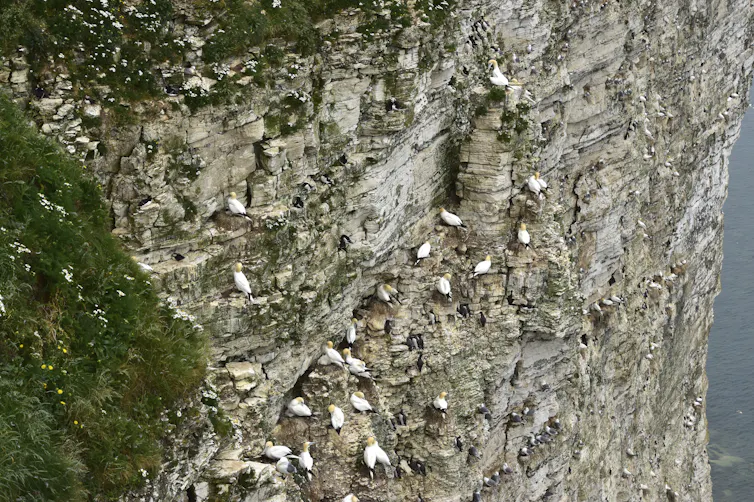
Nesting northern gannets, guillemots and razorbills at the RSPB Bempton Cliffs reserve on the Yorkshire coast. Robert Simmons

Richard Gregory, UCL

A visit to a seabird colony in summer is an assault on the senses. First there’s the noise, then the overwhelming ammonia smell that stains the memory, and then the swirl of colour and activity on the white-washed cliffs.

When you’re standing hundreds of metres above the crashing sea, there can be hundreds or thousands of breeding seabirds in the air or on the sea below, or precariously perched on poorly made nests or ridiculously narrow ledges.

In these seabird cities you can spot tender moments, like an auk delicately turning its single egg for incubation while another feeds its oversized youngster. Brutality is never far either: a chick snatched to feed a bigger brood, an incoming parent robbed of its hard-won fish supper by a piratical gull, a dead bird bobbing face down on the sea.

All life is here in the seabird colony, and the British Isles is particularly rich.

This string of islands in the North Atlantic is home to nearly 30 species of seabird and hosts large portions of their total populations. Most of the world’s Manx shearwaters (90%), northern gannets (70%) and great skuas (60%) nest here, as do more than 20% of the European population of nine seabird species.

British people have a special responsibility to protect these birds that are a harbinger of ocean health, sitting as they do at the top of a delicate food chain.

Sadly, a new scientific assessment has reported alarming declines over the last 25 years in the UK’s seabird populations. Five new species have joined the “red List”, which denotes the highest category of conservation concern: Leach’s storm-petrels, common gulls, great black-backed gulls, Arctic terns and great skuas. These join the already listed kittiwakes, herring gulls, roseate terns, Arctic skuas and puffins, which are all highly threatened.

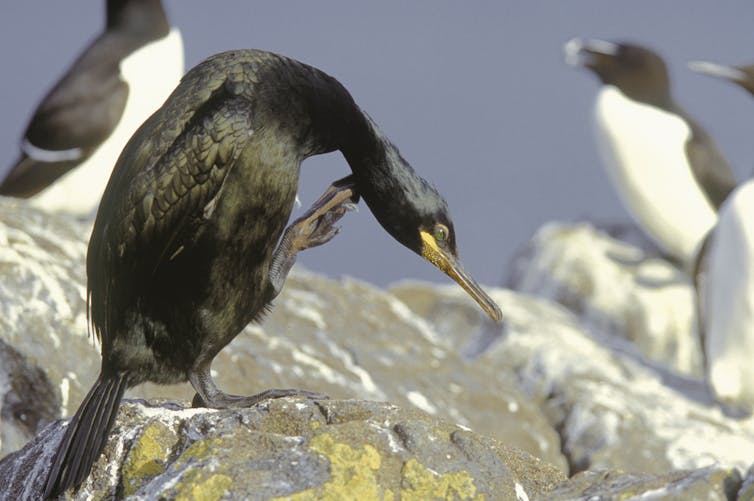
On the upside, if there is an upside, two seabirds were judged to be less threatened based on new data. Shags and black guillemots moved to the amber and green list respectively, though both are gradually declining. Nearly 40% of breeding seabirds are now red-listed in the UK – and 73 bird species overall (30% of the UK total).

A large black bird scratching its neck with a webbed foot.
A silver lining: shags have recovered enough to be removed from the red list. Andy Hay

Looking down

Seabirds face many threats. Among the gravest are changes to their food supply linked to overfishing and climate change.

Ocean warming disrupts and shifts the life cycles of seabird prey, such as sandeels, and the resulting scarcity can cause populations to collapse. Increasingly severe winter storms and summer heatwaves also kill seabirds.

The broader effects of climate change and the warming of the ocean are difficult to predict, but the associated increase in acidification and lower oxygen levels are certain to upset food webs.

Entanglement in fishing gear, invasive predators and collisions with offshore turbines present yet more challenges.

On top of all this came the highly pathogenic HPAI H5N1, a new strain of the avian influenza virus that was first detected in the UK in 2021 and has resulted in the deaths of tens of thousands of seabirds and affected almost every seabird species.

HPAI H5N1 was first identified in domestic waterfowl in southern China in 1996 and rapidly spread into their wild relatives. Migratory species carried the virus around the world, and still do. Thankfully, human deaths remain extremely rare. The jump into seabirds was unexpected as, until then, it was found mostly in wild waterfowl and domestic poultry.

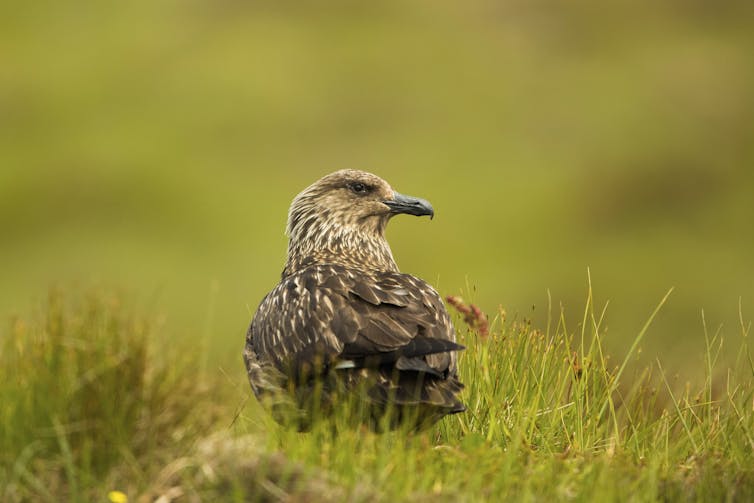
Seabirds such as terns, gulls, auks and northern gannets were hit hard but the impact on great skuas was most striking. Their numbers are down by over 70% from the last census, which was taken between 2015 and 2021.

A large brown seabird.
A great skua at nest on Handa Island off the west coast of Scotland. Louise Greenhorn

Seabird lifestyles predispose them to infectious disease and make it hard for them to recover. Seabirds typically produce just a few young (often only one) in a single brood each year. At least these birds are long-lived and can continue to breed throughout their lives. But living in dense, crowded colonies at a few sites that they can fly between means diseases can easily spread and take hold.

Looking up

The story is not all doom and gloom – much is happening to aid their recovery.

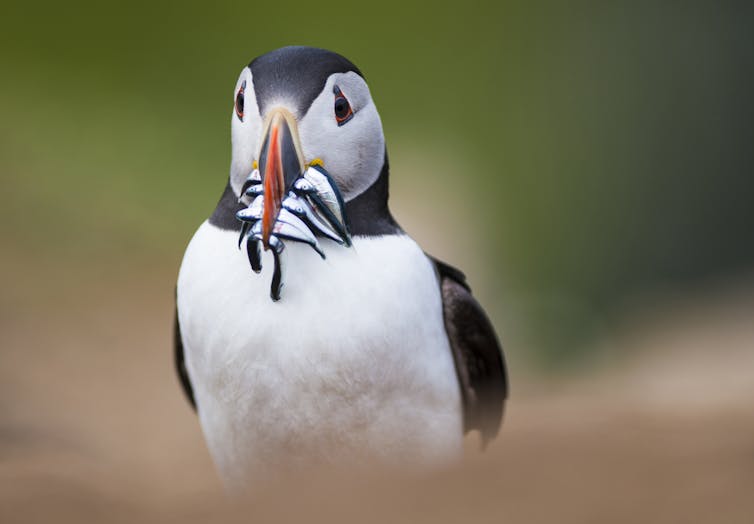
The UK and Scottish government decided to close sandeel fisheries in the English North Sea and all Scottish waters from 2024. Many seabirds, including kittiwakes and puffins, depend on sandeels to feed their chicks, and so the moratorium is a positive move that should be sustained.

Far-sighted projects to remove invasive predators, especially rats, from seabird islands across the UK are also showing great results. The removal of brown and black rats from Lundy Island, Devon, led to the immediate return of breeding Manx shearwaters and puffins after an absence of many years.

A puffin with a beak full of sand eels.
Atlantic puffins remain on the red list, but will benefit from a sandeel fishing ban. Katie Nethercoat

Marine protected areas such as Lyme Bay on the south coast of England are proof that sustainable fishing and conservation can go hand in hand (even if these sites are typically tiny). Trawlers were excluded from Lyme Bay in 2008 and the area has been managed by the local fishing industry and conservationists. A decade on from the ban, bottom-living seafans, rare corals, shellfish and fishes have all bounced back wonderfully.

More is needed to reverse the fortunes of seabirds. Well-resourced national seabird conservation strategies should protect colonies from invasive predators, extend and improve the country’s patchwork of marine protected areas, encourage more nature-friendly marine development (including for renewables) and better manage fisheries to ensure there is enough for seabirds to eat and less accidental bycatch in fishing gear, which kills thousands of seabirds in UK waters each year.

Our seabirds are special in many ways. I’d recommend a visit to a seabird colony, to drink in the spectacle and reflect on the lives of these birds and our responsibilities to them.


Imagine weekly climate newsletter

Don’t have time to read about climate change as much as you’d like?
Get our award-winning weekly roundup in your inbox instead. Every Wednesday, The Conversation’s environment editor writes Imagine, a short email that goes a little deeper into just one climate issue. Join the 35,000+ readers who’ve subscribed so far.


Richard Gregory, Honorary Professor of Genetics, Evolution & Environment, UCL

This article is republished from The Conversation under a Creative Commons license. Read the original article.

Continue ReadingSeabirds: 40% of UK species in trouble – bird flu, climate change and overfishing to blame