This work by Middle East Monitor is licensed under a Creative Commons Attribution-NonCommercial-ShareAlike 4.0 International License.
Fanatical Jewish settlers continue to raid on the Al-Aqsa Mosque, located in East Jerusalem, within the “Sukkot Holiday” (Feast of Tabernacles) in Jerusalem on October 12, 2025. [Gazi Samad – Anadolu Agency]
Pakistan on Tuesday strongly condemned the raid carried out by Israeli settlers at Al-Aqsa Mosque on Monday in occupied East Jerusalem.
In a statement, the Pakistani Foreign Ministry said the settlers’ entry into Al-Aqsa Mosque was a “clear violation” of international law and relevant UN resolutions.
The statement stressed the need to protect holy sites in line with international law and the current historical status.
Pakistan called on the international community to take urgent and effective steps to ensure the protection of holy sites, prevent further violence and attacks by settlers, and uphold UN resolutions.
According to an official statement, 198 Israeli settlers entered Al-Aqsa Mosque on Monday, while 974 tourists also entered the site.
Data from the Palestinian government’s Wall and Settlement Resistance Commission, updated to 5 October, indicates that settlers carried out 7,154 attacks in the West Bank during the two years of the Israeli war on Gaza. These attacks led to the killing of 33 Palestinians and the displacement of 33 communities.
This work by Middle East Monitor is licensed under a Creative Commons Attribution-NonCommercial-ShareAlike 4.0 International License.
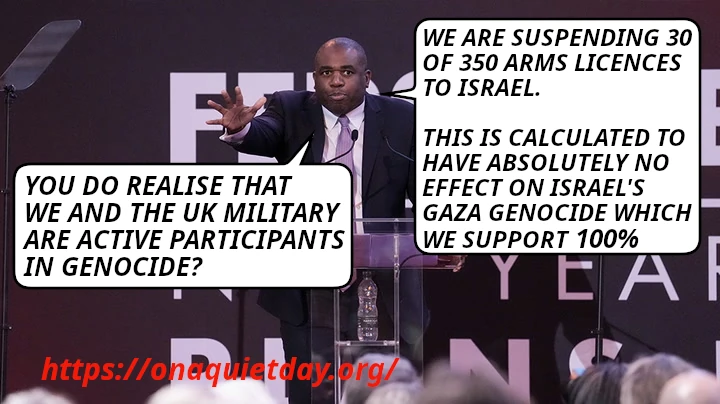
Genocide denying UK Foreign Secretary David Lammy says that UK is suspending 30 of 350 arms licences to Israel. He also confirms the UK government’s support for Israel’s Gaza genocide and the UK government and military’s active participation in genocide.Orcas discuss Genocide-supporting and complicit Zionists. Donald Trump, Keith Starmer, David Lammy, Rachel Reeves, Angela Rayner and Wes Streeting are acknowledged as evil genocide-complicit and supporting cnuts.Keir Starmer objects to criticism of the IDF. He asks how could anyone object to them starving people to death, forced marches like the Nazis did, bombing Gaza’s hospitals and universities, mass-murdering journalists, healthworkers and starving people queuing for food, killing and raping prisoners and murdering children. He calls for people to stop obstructing his genocide for Israel.
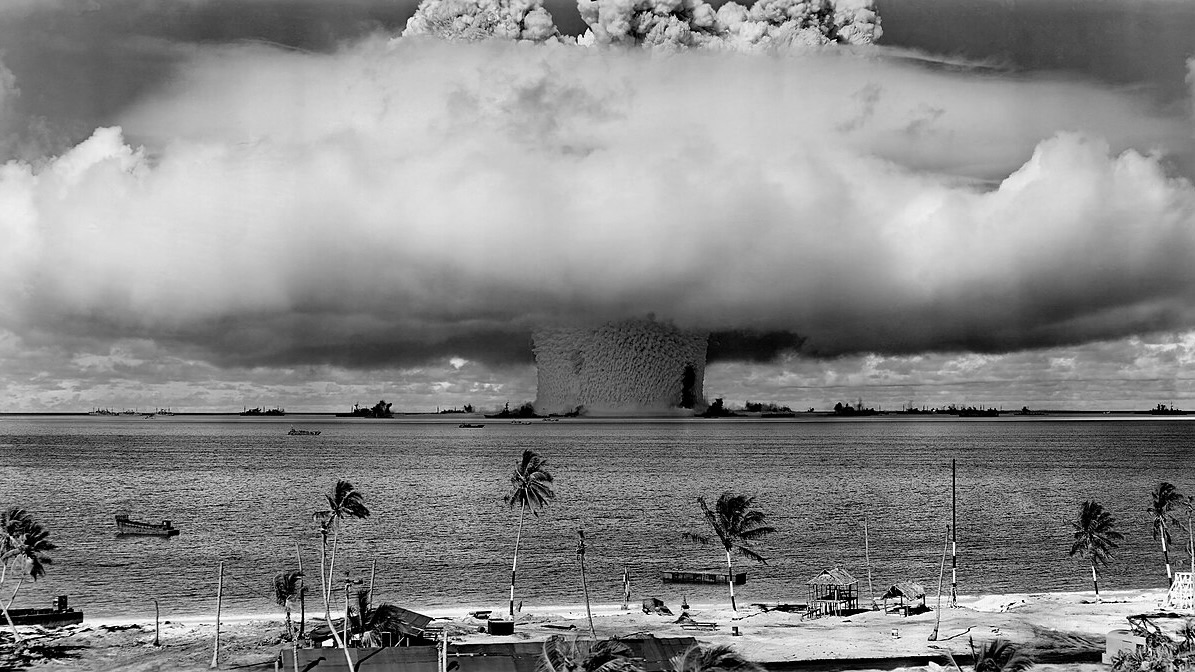
US nuclear test “Baker Shot” in 1946. Photo: US Dept of Defense
As a justification for his order to resume US nuclear tests, order to resume US nuclear tests, had claimed on Sunday that China, Russia, and Pakistan, among others, have been conducting secret nuclear tests.
China rejected accusations lodged by US President Donald Trump that it was conducting secret nuclear testing, asserting that China abides by its obligations to the Comprehensive Nuclear Test Ban Treaty (CTBT) and advised the US to adhere to the same.
Addressing a regular press conference on Monday, Mao Ning, spokesperson of the Chinese Ministry of Foreign Affairs asserted that as “a responsible nuclear-weapon state, China is committed to peaceful development, follows a policy of ‘no first use’ of nuclear weapons and a nuclear strategy that focuses on self-defense, and adheres to its nuclear testing moratorium.”
In an interview broadcasted on CBS News on Sunday, Trump had claimed that he ordered the immediate resumption of nuclear tests in the country because other countries are already conducting tests, which may compromise Washington’s superiority in terms of nuclear weapons.
In a surprising move on Thursday, before meeting Chinese President Xi Jinping in South Korea, Trump asked the Pentagon, through his social media page, to resume nuclear tests immediately.
Trump accused Russia, China, and Pakistan, along with North Korea of conducting such nuclear tests without providing any evidence. He also claimed that it is difficult to know about these tests because of the “closed” nature of those societies.
“We are going to test, because they [China and Russia] test and others test,” Trump said during the CBS News interview.
Following China, several other countries have also rejected Trump’s accusation, denying they have conducted tests secretly.
Kremlin spokesperson Demitry Peskov was quoted by Reuters saying that the world came to know about nuclear testing only after Trump’s interview. Before “we didn’t know that anyone was testing,” Peskov said.
Pakistan said on Monday it will not be the first to resume nuclear weapons’ tests in South Asia.
Ning appealed to the US to abide by the moratorium on the nuclear tests and “take concrete actions to uphold the international nuclear disarmament and non-proliferation regime, as well as global strategic balance and stability.”
Fear of proliferation
Reacting to Trump’s call for the resumption of nuclear tests, Robert Floyd, executive secretary of the Comprehensive Nuclear-Test-Ban Treaty Organization (CTBTO) said in a statement on Thursday that “any explosive nuclear weapons test by any state would be harmful and destabilizing for global non-proliferation efforts and for international peace and security.”
He appealed to world leaders to work together for a world free of nuclear weapons.
China, according to Ning, is “ready to work with all parties to jointly uphold the authority” of the CTBT and “safeguard the international nuclear disarmament and non-proliferation regime.”
Responding to Trump’s announcement of the resumption of nuclear tests, Sergei Shoigu, secretary of Russia’s security council, told the press on Friday that if the US resumes testing Russia will do the same.
The CTBT was adopted by the UN General Assembly in 1996. The treaty bans all kinds of nuclear tests for either civilian or military purposes.
It has been signed and ratified by over 178 countries in the world. However, a section of the nuclear powered nations, such as India, Pakistan, and Israel, have neither signed nor ratified the treaty.
Though both China and the US have signed the treaty neither of them have ratified it.
However, the moratorium on nuclear tests has lasted more than two decades now. Except for North Korea, no other nuclear power has conducted weapons’ tests since the 1990s.
According to Reuters, the last US nuclear test was conducted in 1992. After that a moratorium on such tests was announced by then-president George H. W. Bush. Russia and China conducted their last tests in 1990 and 1996 respectively. India and Pakistan conducted their last nuclear tests in 1998.
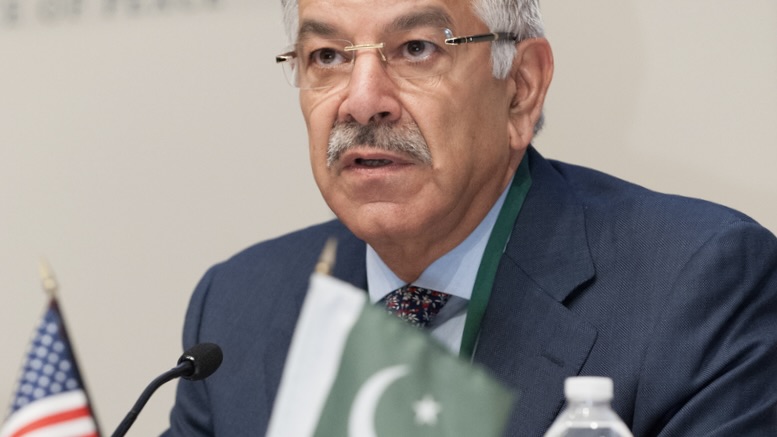
Khawaja Asif, interim Presient in South Afirica, Photo:.US – Pakistan Clean Energy Business Opportunities Conferenc
Pakistan accuses the Taliban government in Afghanistan of acting as a proxy of India and sheltering and aiding militant groups involved in carrying out attacks on its civilians and military installations.
Neighboring Afghanistan and Pakistan agreed to a temporary ceasefire on Wednesday, October 15, after almost a week-long series of heavy cross-border clashes between their armed forces killed and wounded scores of people and caused substantial damage to the civilian infrastructure.
In a statement, Pakistan’s foreign office claimed that the ceasefire was initiated at the request of Afghanistan and will last for 48 hours from 6 pm on Wednesday. It said that “during this period, both sides will make sincere efforts to find a positive resolution to this complex but solvable issue through constructive dialogue,” Dawnreported.
However, the statement posted by the Taliban’s spokesman Zabihullah Mujahid on his X page claimed the ceasefire was agreed upon Pakistan’s request and will last until it is violated.
Pakistan also acknowledged that the ceasefire was reached through the intervention of some “friendly countries”, without naming them.
Pakistan’s Defense Minister Khawaja Asif, in a TV interview, also acknowledged the role played by the “friendly countries” in achieving the ceasefire. However, he expressed his apprehensions, claiming the ceasefire may not last long.
He accused the Taliban administration in Afghanistan of fighting a proxy war against his country on India’s behalf.
India and Pakistan have fought several wars since their independence from British colonial occupation in 1947 over Kashmir and other issues. In May this year, armed forces from both countries clashed for days over the attack on tourists in Kashmir’s Pahalgam, killing scores of civilians on both sides of the border.
Though the Taliban traditionally has been close to Pakistan, where it was born as an armed religious movement during the US-backed war against Soviet presence in Afghanistan during the 1980s, the dynamics between them have changed since it took power in Afghanistan in August 2021, after the US withdrawal.
Pakistan has accused the Taliban government of aiding and supporting Tahreek-e-Taliban Pakistan (TTP) which is its offshoot in the country. The TTP has been banned by the Pakistan government after holding it responsible for carrying out several attacks and killing thousands of its civilians and armed forces.
Clashes across Durand Line
The present cross-border hostility between Afghanistan and Pakistan emerged on October 11, after the Taliban allegedly launched an attack on the Pakistani border post, killing 23 of its soldiers.
Before that, on October 9, the Taliban had accused Pakistan of carrying out airstrikes inside Afghanistan territory. Though its forces are engaged in an operation against the TTP in the border regions, Pakistan did not respond to the Taliban’s accusation.
In response to an alleged Taliban attack, Pakistan forces launched multiple military attacks inside Afghanistan, reportedly killing hundreds of Taliban soldiers and civilians.
On Tuesday, Pakistan again alleged that the Taliban launched a coordinated attack on its Chaman border in its Balochistan province, destroying the Pakistan-Afghanistan “friendship gate” and injuring several civilians.
Pakistan claimed it launched air strikes on certain targets in Kandahar and several other places inside Afghanistan on Wednesday in retaliation.
The Taliban-led government denied claims of attacks on Tuesday calling Pakistan’s attacks on Wednesday unprovoked.
There were also reports of clashes between Taliban and Pakistan army across the over 2,500 kilometers long border known as Durand line just before the ceasefire was announced.
Explosions were recorded in Kabul as well though it was not clear whether it was due to attacks carried out by the Pakistani forces.
Following the clashes, Pakistan has shut its Turkham border crossing with Afghanistan, leaving thousands of people who move across the border every day for trade and other purposes stranded.
Both the countries have warned each other not to launch further attacks, vowing stronger responses. Ishaq Dar, Pakistan’s foreign minister, also reiterated his country’s demand that the Taliban take concrete measures against TTP and other such groups.
The UN had urged both the countries to cease hostilities and resolve their differences through dialogue. Its mission in Afghanistan, UNAMA, welcomed the declaration of a ceasefire on Thursday.
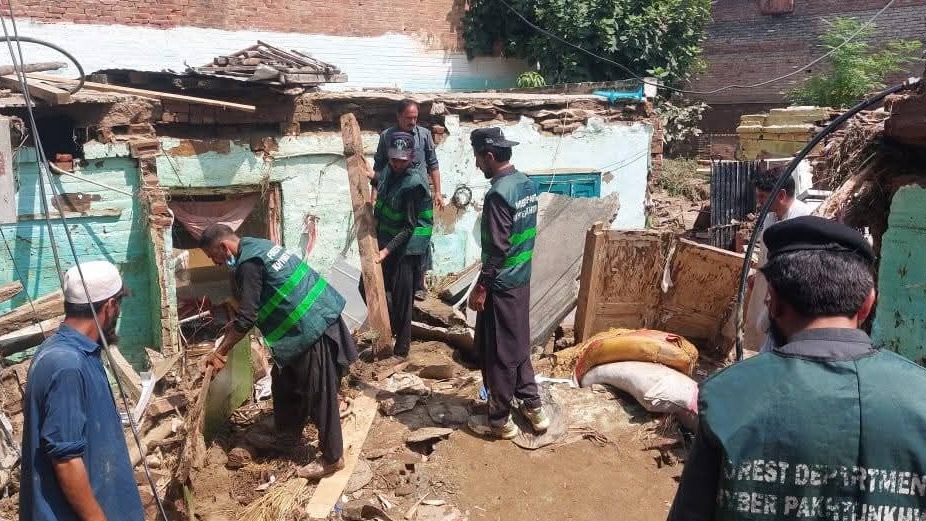
The Lower Swat Forest Division team of the Forest Department is engaged in rescue and relief activities in the flood-affected areas of Mingora, KP. Photo: Pir MusavirPTI/X
Pakistan has witnessed frequent heavy rains and floods in recent times causing massive human and material loss claimed to be the result of human-induced global changes in the climate
Pakistan is yet again facing heavy casualties and massive destruction due to unusual heavy rains and floods across the country this year. According to the country’s National Disaster Management Authority (NDMA), more than 650 people have been killed and over 900 others have been injured in rain-related incidents across the country since June 26.
The flash floods in mostly the northeastern parts of the country have also displaced hundreds of thousands with scores still reported missing.
It is estimated that Pakistan has already received 50% more rain this year in comparison to last year. The country’s meteorological department has warned that the current spell of heavy rains is expected to last until August 19 with three more spells of heavy rains through September after that.
The upcoming spells may cause massive flooding in the areas along the Indus river in the coming days, Pakistani authorities have warned.
Though death and destruction from the floods have been recorded across all the provinces of Pakistan, including the capital Islamabad, the northeastern Khyber Pukhtunkhwa (KP), and Gilgit-Baltistan have been hit the hardest.
Last week, huge flash floods washed away villages and communication networks at various places in the hilly region of KP and Gilgit-Baltistan. Heavy rains and cloud bursts have destroyed roads, railway lines, schools, hospitals, and other essential civilian infrastructure in KP, Gilgit-Baltistan, and other parts of Pakistan.
Buner in KP, which witnessed a cloud burst last week, has been the hardest-hit district, amassing more than half of all deaths recorded in the province with scores of people still missing.
According to the NDMA, KP recorded the highest number of people killed at 390, followed by Punjab, Pakistan’s largest province, which has recorded 164 deaths. Even the drier regions such as Balochistan have recorded over a dozen deaths due to the heavy rain and flash flooding.
Fresh heavy rains on Monday have made the relief and rescue operations difficult, particularly in the most affected regions in the hills.
Effects of climate change
Residents in Pakistan’s hilly areas who lost their houses in the flash floods say there were no early warnings of the heavy rains which multiplied the loss of lives and property.
Inam Haider Malik, head of the NDMA, claimed in a press conference in Islamabad on Sunday that it is difficult to predict cloud bursts and flash floods and warned that at least three more spells of heavy rain in the coming days may cause flooding in the lower areas in Pakistan. He emphasized that the “scale of loss is part of the climate change impacts”.
Pakistan’s chief meteorologist Zaheer Babar also claimed that the unusually heavy rains are a result of climate change. However, he also underlined that the impact of erratic rain is multiplied due to haphazard construction near the river valleys and unscientific disposal of waste in the river beds, Geo Tvquoted Babar saying.
“The situation in Khyber Pukhtunkhwa and Gilgit Baltistan is devastating. We are in the midst of a climate emergency,” claimed Ammar Ali Jan, leader of the Haqooq-e-Khalq Party (HKP). In his posts on X, Ammar also demanded “Pakistan should receive climate reparations, including debt relief” as it is a victim of “fossil-fuel driven model of Western development.”
Taimur Rahman, leader of the Mazdoor Kisan Party (MKP), underlined the failure of the Pakistani state to treat all its citizens equally, resulting in disproportionate losses to the poor during such floods.
Taimur claimed that the government in the country uses most of its resources on developing flood preventive mechanisms around richer localities while ignoring the needs of the majority of people.
Pakistan has faced repeated floods in the last few years with an increase in the overall rainfall during the monsoon season in particular. In 2022, in a similar situation, floods killed over 1,700 across Pakistan and affected over 33 million people, badly impacting the peoples livelihoods and the overall economy of the country as it tried to recover from the effects of COVID-19. The floods also destroyed crops, intensifying the overall food insecurity in the country.
Donald Trump urges you to be a Climate Science denier like him. He says that he makes millions and millions for destroying the planet, Burn, Baby, Burn and Flood, Baby, Flood.Nigel Farage urges you to ignore facts and reality and be a climate science denier like him. He says that Reform UK has received millions and millions from the fossil fuel industry to promote climate denial and destroy the planet.
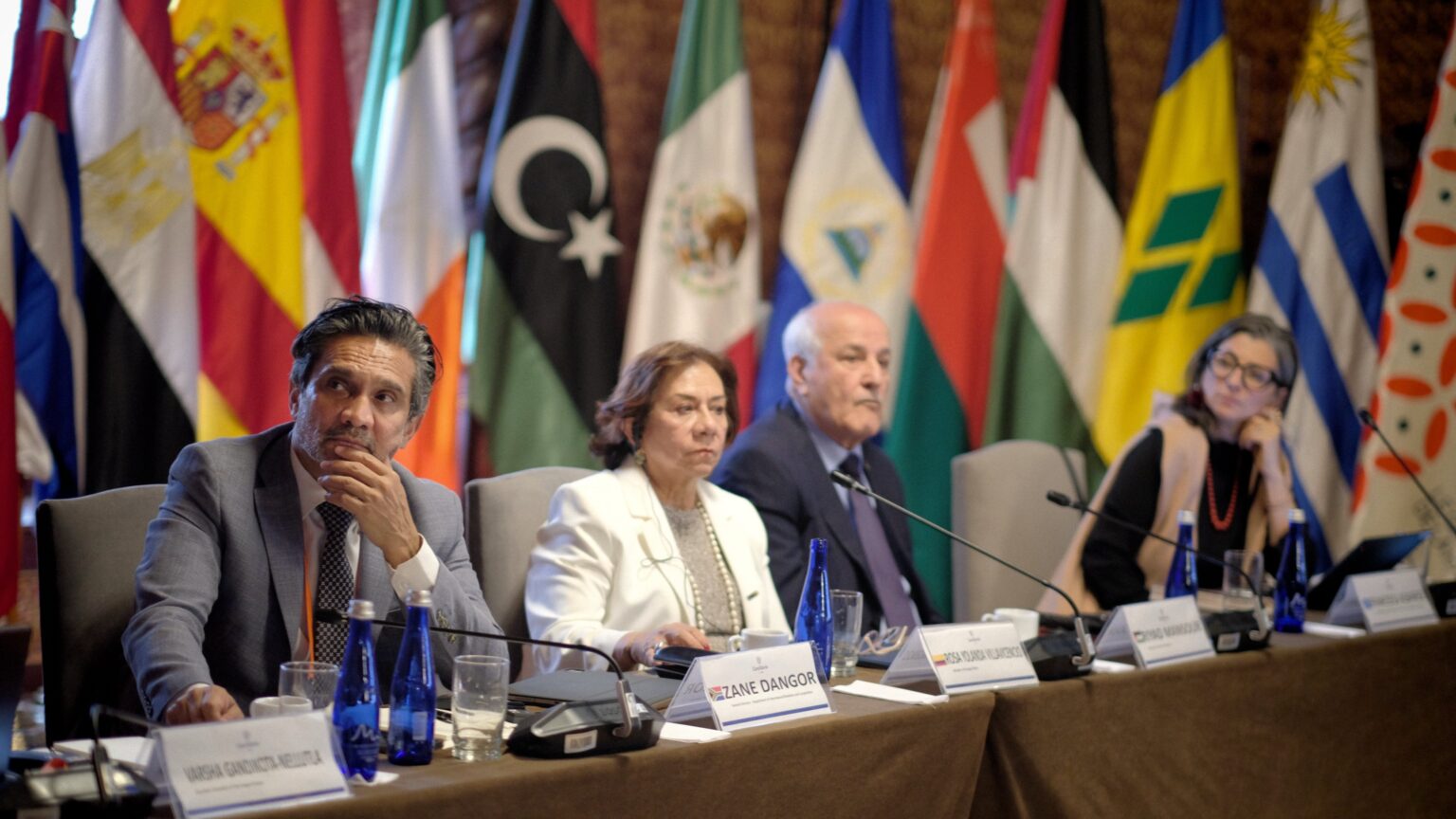
Hague Group Summit in Bogotá, Colombia. Photo: Abby Martin
In the final document, the signatory countries commit, among other things, to cease arms trade with Israel, review public contracts with that country, and seek accountability for war crimes.
Countries of the Global South have expressed their solidarity with the Palestinian people at the Emergency Ministerial Conference on Palestine organized by The Hague Group, which took place on July 15 and 16 in Bogotá, Colombia. The multilateral meeting was attended by representatives from Algeria, Bangladesh, Botswana, Brazil, Chile, China, Djibouti, Egypt, Slovenia, Spain, Honduras, Indonesia, Iraq, Ireland, Lebanon, Libya, Malaysia, Mexico, Namibia, Nicaragua, Norway, Oman, Pakistan, Palestine, Qatar, Saint Vincent and the Grenadines, South Africa, Turkey, Uruguay, and Venezuela.
Regarding the meeting, Colombia’s deputy secretary of state, Mauricio Jaramillo, said: “This conference is being convened by the Hague Group, but it is not an exclusive meeting of this group. Given the urgency of what is happening in the occupied territories, especially in Gaza, where today, for example, we have passed the threshold of 58,000 fatalities, we must commit ourselves to action.”
The conference, which was organized by the governments of Colombia and South Africa and attended by 30 countries, agreed that: “The era of impunity must end – and that international law must be enforced without fear or favor through immediate domestic policies and legislation – along with a unified call for an immediate ceasefire.”
The agreements
According to an official press release, the meeting laid out several measures to stop the genocide in Gaza:
Prevent the provision or transfer of arms, munitions, military fuel, related military equipment, and dual-use items to Israel.
Prevent the transit, docking, and servicing of vessels at any port … in all cases where there is a clear risk of the vessel being used to carry arms, munitions, military fuel, related military equipment, and dual-use items to Israel.
Prevent the carriage of arms, munitions, military fuel, related military equipment, and dual-use items to Israel on vessels bearing our flag … and ensure full accountability, including de-flagging, for non-compliance with this prohibition.
Commence an urgent review of all public contracts to prevent public institutions and funds from supporting Israel’s illegal occupation of the Palestinian Territory and entrenching its unlawful presence.
Comply with obligations to ensure accountability for the most serious crimes under international law, through robust, impartial, and independent investigations and prosecutions at national or international levels, to ensure justice for all victims and the prevention of future crimes.
Support universal jurisdiction mandates, as and where applicable in national legal frameworks and judiciaries, to ensure justice for victims of international crimes committed in the Occupied Palestinian Territory.
Although 30 countries attended the meeting, only 12 countries committed to immediately complying with the agreements outlined in the final declaration: Bolivia, Cuba, Colombia, Indonesia, Iraq, Libya, Malaysia, Namibia, Nicaragua, Oman, Saint Vincent and the Grenadines, and South Africa. The others expected to join them by September 20, 2025 – the date of the 80th UN General Assembly. The group will also be consulting various other states on an ongoing basis for participation in the measures against Israel.
Colombia’s President Gustavo Petro stated: “We came to Bogotá to make history — and we did … Together, we have begun the work of ending the era of impunity. These measures show that we will no longer allow international law to be treated as optional, or Palestinian life as disposable.”
“What we have achieved here is a collective affirmation that no state is above the law … The Hague Group was born to advance international law in an era of impunity. The measures adopted in Bogotá show that we are serious — and that coordinated state action is possible,” said South African Secretary of State Ronald Lamola.
The final agreement is historic as it is the first multilateral agreement that seeks to influence the Israeli government’s actions in its offensive against Gaza. In this sense, it is the first time that several countries have challenged the apparent immunity of the Israeli state in its actions in Gaza, which could have unpredictable diplomatic repercussions. It could also become the starting point for other countries to demand an end to the violence in Palestine jointly.