


https://democracyforsale.substack.com/p/uk-government-withholding-details
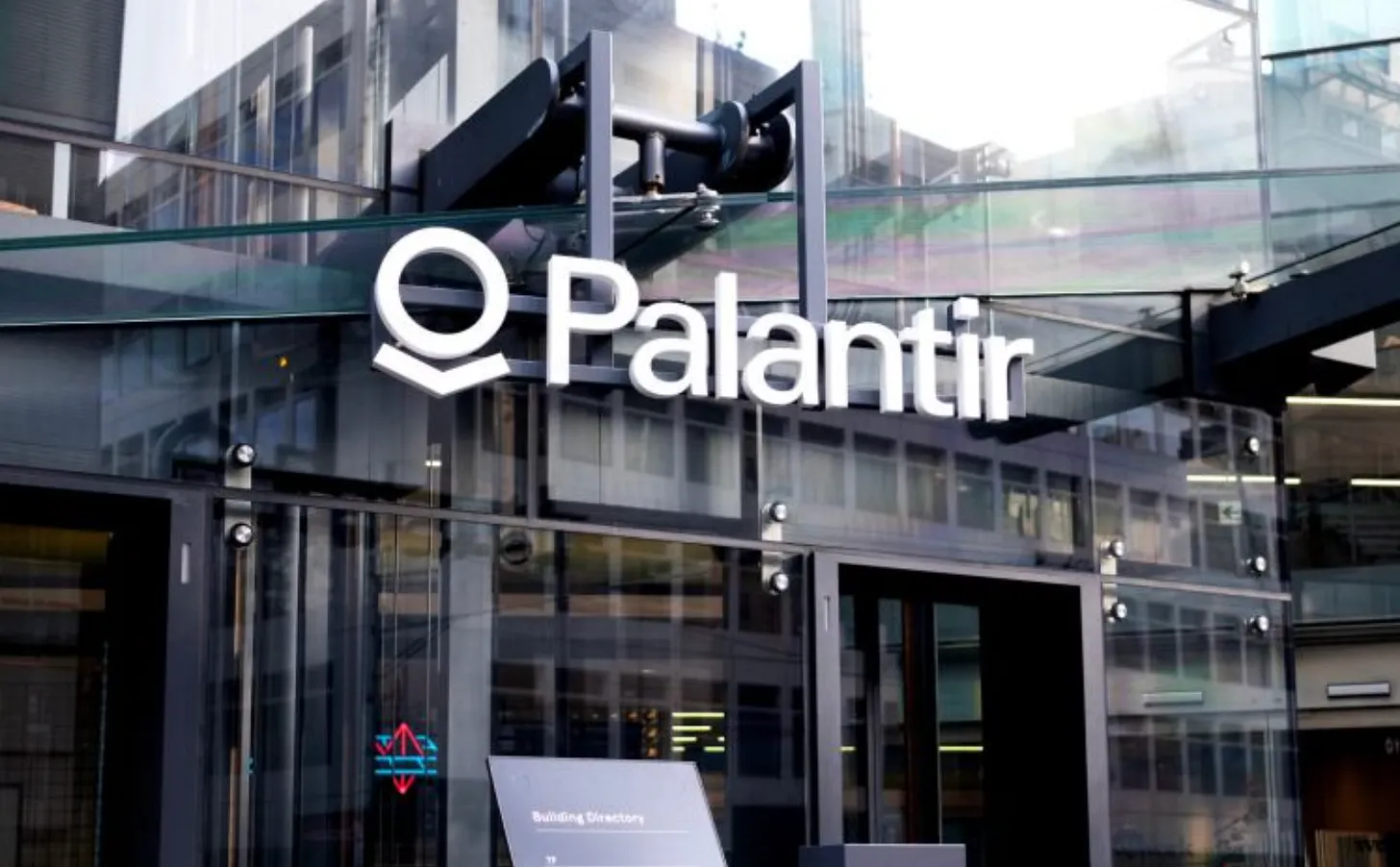
It’s been a good week for Palantir. The controversial spy-tech company, co-founded by Trump donor Peter Thiel, looks set to secure even more UK government work after the defence secretary pledged to expand the role of AI in the military.
Palantir already holds a £330 million NHS data contract. But as Democracy for Sale revealed last week, most hospitals in England are not using the software, with many complaining that it simply isn’t up to scratch.
To encourage hospitals to take it up, the government signed an £8 million deal with consultancy giant KPMG to “promote the adoption” of Palantir’s tech in the NHS.
We wanted to know more about how this money is being spent. How exactly has KPMG been promoting Palantir’s software to hospitals? And has it worked?
So, we submitted a Freedom of Information (FOI) request to the Department of Health and Social Care (DHSC), asking for reports produced by KPMG under its contract, as well as briefings prepared for Health Secretary Wes Streeting, who publicly supported the deal.
The government’s response? Silence. They’re refusing to release the information—so now we’re fighting for transparency.
Sue Hawley, executive director of Spotlight on Corruption, told us the government’s “impulse to secrecy around public money and public contracts” is “deeply concerning.”
“KPMG’s contract raises a real question: if [Palantir’s] software is so good, why does the government need to give £8 million of taxpayers’ money to a management consultancy to encourage NHS hospitals to use it?,” she added.
…
Article continues at https://democracyforsale.substack.com/p/uk-government-withholding-details
Original article by Adam Barnett republished from DeSmog.

Labour’s top diplomat to Donald Trump’s United States leads a public affairs firm that has attempted to influence the new UK government on behalf of the oil and gas giant Shell, and the coal mining company Anglo American.
Peter Mandelson – who was a Cabinet minister under former Labour prime ministers Tony Blair and Gordon Brown – has been accepted as the UK’s ambassador to the U.S. by Trump’s new administration.
In addition to his new diplomatic role, which he will formally begin in February, Mandelson is president and chair of Global Counsel, a London-based political consultancy and lobbying organisation. He will retain shares in the company even after taking up his new position in Washington DC, the Financial Times has reported.
According to official records, after July’s general election Global Counsel lobbied the new Labour government on behalf of Shell, one of the world’s most polluting companies.
Shell is still committed to exploring for new sources of oil and gas and does not have any plans to reduce the overall amount it produces by 2030, in contravention of climate science. In 2021, the District Court of the Hague found that the total CO2 emissions of the Shell group exceeded the emissions of many states, including the Netherlands.
Lobbyists must declare if they have attempted to arrange meetings or influence ministers or senior civil servants on behalf of their clients. However, the contents of these discussions are not publicly available.
Global Counsel seemingly has close ties to the Labour Party. Prior to the 4 July election, the company supplied a staff member to Tulip Siddiq, who served as financial secretary to the Treasury until 14 January, a donation in kind worth £35,835, according to the register of MPs’ financial interests.
Global Counsel is one of seven consultancies with a history of donating to Labour that have lobbied on behalf of fossil fuel clients since July’s election.
The client list at Mandelson’s lobbying firm also includes Anglo American, a British mining multinational which is a major producer of coal, and U.S. multinational bank JP Morgan, which has financed $430 billion in fossil fuel projects since the 2015 Paris Agreement, including $40 billion in 2023, according to the NGO Banktrack.
Another client, UK bank Standard Chartered, has financed $71 billion in fossil fuel projects in the same period, including $7 billion in 2023.
Other Global Counsel clients include food and beverage giant Nestle, which has emissions three times the size of its home country Switzerland, and the controversial tech firm Palantir, founded by Trump ally Peter Thiel.
Mandelson, who called Trump “reckless and dangerous to the world” in 2019, this week told Fox News his previous remarks were “ill-judged and wrong”, and that he has a “fresh respect” for the new U.S. president.
Global Counsel, and the Cabinet Office were approached for comment.
Mandelson’s appointment comes at a crucial time for climate policy, with a transatlantic network of political actors working increasingly closely to derail global action to achieve net zero emissions.
Since his inauguration last week, President Trump has removed the U.S. from the flagship 2015 Paris climate accord, banned offshore wind farms, and declared a “national energy emergency” in order to open new oil and gas projects.
His plans could add an extra four billion tonnes of carbon dioxide equivalent to U.S. emissions by 2030, according to the climate publication Carbon Brief.
Trump received more than $32 million from the oil and gas sector for his 2024 campaign. The fossil fuel industry spent $445 million on political donations, lobbying and advertising between January 2023 and November 2024 to influence Trump and Congress, according to the green advocacy group Climate Power.
As DeSmog revealed last month, Mandelson’s counterpart, Trump’s ambassador to the UK Warren Stephens, runs a firm with investments in several oil and gas companies, including one wholly owned by his family business.
The UK government is committed to removing fossil fuels from the UK’s power system by 2030, but this week approved a third runway at Heathrow Airport – the second most polluting airport in the world, according to a 2021 study – and pledged to remove environmental regulations on new building projects.
According to the UN’s Intergovernmental Panel on Climate Change (IPCC), the world’s foremost climate science body, the next few years are crucial if we want to limit the worst effects of global warming, including drought, flooding, and heat waves.
To keep within the 1.5C warming limit set by the Paris Agreement, the IPCC says that emissions need to be reduced by at least 43 percent by 2030 compared to 2019 levels, and at least 60 percent by 2035.
Original article by Adam Barnett republished from DeSmog.
Original article by Ana Vračar republished from peoples dispatch under a Creative Commons Attribution-ShareAlike 4.0 (CC BY-SA) license.

Health workers and activists in Britain are intensifying their campaign against US-based surveillance and data company Palantir, as Keir Starmer’s government accelerates its push to involve the notorious firm in managing National Health Service (NHS) data.
Palantir first gained a foothold in the NHS during the COVID-19 pandemic, securing contracts outside standard procurement processes and enjoying popularity among high-ranking health officials. The company, infamous for its involvement in operations such as the US-led invasions of Afghanistan and Iraq and migrant persecution under the US Immigration and Customs Enforcement (ICE), soon expanded its role in Britain. By last year, it had won a £330 million (USD 417 million) contract to implement the Federated Data Platform (FDP), intended to modernize medical data management across England.
Not all NHS institutions are currently able to share data because of differing systems. Both Conservative and Labour governments have identified this as the main reason for bottlenecks in the health system and claimed that resolving the problem would lead to improvements to care. However, organizations like Medact, Just Treatment, and Corporate Watch warn that entrusting this task to Palantir could deepen issues rather than solve them.
Similarly, many health experts have highlighted how the FDP would effectively lock the NHS into dependency on Palantir. The company’s systems are designed in a way to make data extraction difficult and integration with industry-standard analytics costly and complicated, so users are compelled to keep using them. “Palantir’s system pushes people to its own proprietary systems; and switching costs [for the NHS] will be very high,” Doctors’ Association and Foxglove warned in a 2023 report.
The current government is pushing forward with this form of private sector expansion in the NHS despite warnings from trusts and experts that the results will fall far short of expectations. In fact, some NHS organizations being forced to adopt the FDP under Labour’s administration have said that the new platform could result in a loss of functionality compared to the systems they currently rely on.
While there is general agreement among analysts that data sharing and usage within the NHS could be significantly improved, they argue that these improvements can and should be achieved through local and regional initiatives. In contrast to the top-down model ushered in by the FDP, these initiatives would build on existing systems and expertise, avoiding handing over control to a private company with a track record of human rights abuses.
Concerns that the FDP could make the NHS entirely dependent on Palantir are sharpened by fears over how patient data might be used. As one of the world’s largest public healthcare systems, the NHS holds an unique health dataset. While such data has immense potential to strengthen public services, entrusting it to corporate partners poses great risks. For instance, it could be exploited for purposes such as tracking and criminalizing migrants—a practice that has been systematically pursued under Britain’s hostile environment policies.
Palantir takes pride in finding new applications for data, specifically to reinforce Western dominance. Given that the full scope of the FDP remains unclear, there is significant concern that NHS data could also be exploited to boost Palantir’s surveillance tools. These tools are already being deployed in Israel’s ongoing genocide against Palestinians in the Gaza Strip.
Palantir’s leadership has been outspoken in its support for Israel, openly aligning with Benjamin Netanyahu’s government even as it proceeded to kill tens of thousands of Palestinians. The company is actively testing—or rather, showcasing—its artificial intelligence (AI) models through Israel’s attacks in Palestine and Lebanon. This indicates a clear intent to monetize these tools further by marketing them to other states preparing to go on killing sprees.
Handing over NHS medical data to Palantir would deepen the Starmer administration’s complicity in Israel’s war crimes, health justice organizations warn. Such a move risks staining the NHS’s reputation, turning its dataset into a tool for oppression internationally while undermining public trust in the healthcare system at home.
Many had hoped that a change in government in July would mean an end to the FDP. However, “instead of hitting reset, Labour hit accelerate,” Just Treatment remarked during a No Palantir in the NHS meeting in November. This response reflects Labour’s priorities when it comes to the public healthcare provider. “If the government were setting out to implement reforms in the way that our data is held to improve health outcomes and improve the NHS, they would be going about it in a way that maximizes public trust, maximizes public and health service and health worker support for those initiatives,” the organization remarked during the meeting.
Instead, the government appears more interested in using national health data for economic gain. This approach aligns closely with recommendations from neoliberal policy advisors, such as those at the Tony Blair Institute for Global Change, who have recently called for the use of NHS data as a means to boost Britain’s economic standing.
Although the implementation of the FDP is progressing, activists argue that it is not too late to stop it—especially if local groups escalate their efforts. They emphasize that by increasing pressure, health workers and activists could not only push for the cancellation of Palantir’s FDP contract but also demand the termination of all agreements with companies complicit in Israel’s occupation. While Palantir is currently a key focus, the organizations highlighted that this campaign is just the beginning, serving as a starting point for broader action.
Original article by Ana Vračar republished from peoples dispatch under a Creative Commons Attribution-ShareAlike 4.0 (CC BY-SA) license.
Original article by Ruby Lott-Lavigna republished from Open Democracy under a Creative Commons Attribution-NonCommercial 4.0 International licence.

Weapons manufacturers, fossil fuel companies and a spy-tech firm are among those sponsoring events at this year’s Labour Party conference.
Boeing and Babcock, manufacturers of missiles or missile compartments, and Palantir, a controversial spy-tech firm funded by the CIA, will sponsor fringe events hosted by centre-left media company the New Statesman Media Group.
Fossil fuel companies, private health firms, major banks and the International Airlines Group, which owns British Airways, are also among those paying to have a presence at the party’s annual conference in Liverpool, which will host politicians and policy makers – and is Labour’s third in person since Keir Starmer took over as leader.
The party has been slammed for playing host to these industries by environmental groups and anti-weapon groups, who call the sponsorships “disgusting and disappointing.” Its own MP Clive Lewis has also questioned why Labour is “cosying up” to some of the organisations involved.
The events, announced today, boast “Labour Party’s biggest names and most exciting talents,” and cover subjects such as the move to net zero, the housing crisis and healthcare. Speakers include shadow health secretary Wes Streeting, as well as Labour’s chair of the levelling up committee Clive Betts and deputy London mayor Tom Copley.
UK-based Babcock, which has arms deals with the government and has recently signed a deal with Israel Aerospace Industries (IAI), will sponsor a talk entitled “Sovereign capability: How can we make, buy and sell British?”. Speaking on the panel will be Babcock’s chief corporate affairs officer, John Howie, alongside Labour’s shadow minister for defence procurement Chris Evans and the party’s shadow international trade minister Nia Griffith.
Spy-tech firm Palantir, whose owner has donated to Donald Trump’s political campaign, will sponsor a talk on Ukraine called “How can we hold aggressors accountable for war crimes and deter future conflict?” Its executive vice president for the UK and Europe will appear on the panel.
Palantir, which has built software to support drone strikes and immigration raids, is tipped to win a £480m deal this year to build a single database that will eventually hold all the data in the NHS.
Energy company SSE, which has been accused of misleading the public over “green investments,” is sponsoring a “Delivering net zero” talk. Its own managing director of corporate affairs, regulation and strategy, will speak on the panel.
Cadent Gas will sponsor an event entitled “How can the energy sector support customers on the journey to net zero?”. Its chief strategy and regulation officer will speak on the panel.
Other events at next month’s conference will be sponsored by companies such as Offshore Energies UK (formerly known as Oil and Gas UK), National Gas, Ovo Energy and housing developer Taylor Wimpey.
Clive Lewis MP told openDemocracy that “people want change under a Labour government” and hosting some of these firms signals that “the same palms are going to be greased”.
“I do not think that organisations like Palantir and others are necessarily the kind of organisations that Labour in the year before a general election should be cosying up to,” said Lewis. “I think they should be saying: ‘Look, we’ll deal with you but frankly, some of you are part of the problem’.
“I think it’s entirely possible to be on the side of entrepreneurs…without necessarily having to get into bed with big oil companies, big corporations or the likes of Palantir – and the Labour Party should be really clear about that.”
He added: “I think there are questions there for the New Statesman and why they’re accepting sponsorship and funding from some of these ethically and morally questionable corporations.”
Campaigners against the arms industry have condemned the decision to allow weapons manufacturers to have a presence at the conference.
“It is disgusting and disappointing to hear that arms companies will be sponsoring talks at the Labour Party conference,” Emily Apple, media coordinator at Campaign Against Arms Trade (CAAT), told openDemocracy. “These companies should not be given this legitimacy or the opportunity to lobby policy makers in order to continue making profits for their shareholders from a deadly trade that causes destruction and misery around the world.”
She added: “Accepting sponsorship from these companies sends a bleak message to anyone thinking a future Labour government will adopt any kind of ethical stance towards the arms trade.”
Environmental groups have also spoken out, warning Labour against forming relationships with oil and gas companies.
“The fossil fuel lobby is no stranger to cosying up with policymakers – they’ve had a lot of success and made a lot of cash from doing so in the past,” Greenpeace UK’s policy director, Doug Parr, told openDemocracy. “But Labour must not make the same costly mistakes as the Conservatives by giving these self-serving climate-wreckers the opportunity to launder their political reputation.
“The next government must have bold policies and a strong commitment to tackling the climate crisis, not another one that ends up in the back pocket of polluters and dodgy operators.”
It’s not the first time the New Statesman Media Group has faced criticism for its choice of sponsors at its Labour Party events. Last year, protesters disrupted a talk sponsored by energy company Drax, which has been accused of polluting majority Black areas in the US.
The New Statesman’s events arm advertises a partnership with the media company as an opportunity to “showcase your brand, generate leads, nurture relationships,” with “policy makers and politicians.”
It also hosts private round table events that are not publicly advertised, which openDemocracy understands can cost a sponsor over £15,000.
openDemocracy has approached the Labour Party and New Statesman Media Group for comment.
Update, 24 August 2023: This article has been amended to reflect that Babcock does not make missiles but missile components and launch systems.
Original article by Ruby Lott-Lavigna republished from Open Democracy under a Creative Commons Attribution-NonCommercial 4.0 International licence.