CAMPAIGNERS called for the government to reverse cuts to the winter fuel payment today, with energy bills set to rise by 10 per cent from next week.
Regulator Ofgem announced it will raise its price cap starting next Tuesday, pushing bills up from £1,568 to £1,717 for a typical household.
The End Fuel Poverty Coalition warned that energy bills will be 65 per cent higher than in winter 2020/21.
Millions have already fallen into energy debt, with Ofgem data revealing that the total owed has spiralled into a record-breaking £3.69 billion.
This winter, some 1.2m pensioners in poverty and 1.6m disabled people will miss out on winter fuel payments, making it more and more difficult for them to cover the rising bills.
The Labour government has announced cuts to the payment, previously available to all pensioners, limiting it to only those receiving means-tested benefits.
Comparison service Uswitch estimated that 752,000 older people will not use heating at all this winter as a result.
Pro-Palestinian protesters take part in a Palestine Solidarity Campaign demonstration as they march to the Labour Party conference venue on September 21, 2024 in Liverpool, England. [Ian Forsyth/Getty Images]
It’s difficult to comprehend the horrors of what’s happening in Gaza, Lebanon and beyond in the Middle East. The heartbreaking scenes of dirt-encrusted toddlers screaming as they’re pulled from the rubble of what was once their homes; the small children carrying plastic bags containing the remains of their slain siblings; the white-bandaged bodies of whole families laid out next to hospitals in their hundreds; the shaking youngsters trying to hide as Israeli soldiers fire indiscriminately at anything that moves. Surely, feeling a deep, painful empathy for the victims of such savagery, especially the children, is part of what gives us our humanity.
This isn’t the same for everyone, of course. Not for the perpetrators, who use their cutting-edge western-manufactured machines of death to extinguish these innocent lives. Nor, in most cases, for politicians here in Britain. For Prime Minister Keir Starmer, these scenes are even the set up for a joke.
During the new prime minister’s triumphant speech at this week’s Labour Party conference, a heckler dared to challenge the Dear Leader on his lack of empathy for Israel’s victims. After Starmer said that, “Every child, every person, deserves to be respected for the contribution they make,” Labour member Daniel Riley, 18, shouted in response: “Does that include the children of Gaza?”
“This guy’s obviously got a pass from the 2019 conference,” quipped the smug Starmer, in a reference to years when Labour was led by pro-Palestinian Jeremy Corbyn. The more sycophantic element of Starmer’s congregation, stronger than ever thanks to Sir Keir’s purges of the left, lapped up the jibe.
It’s become a cliché to respond to such things with variations of “imagine the response if Corbyn had said something like that about Israeli children,” but sometimes you can’t help but be stunned at the double standards. Corbyn would never have said such a thing, but if he had it would have been frontpage news; irrefutable proof of his alleged anti-Semitism.
But they weren’t Israeli children. They were Arabs. And in mainstream western discourse, they don’t count. They don’t suffer. They don’t have dreams. They’re abstract numbers, if that.
They’re just Arabs, unworthy of our empathy.
To really hammer home the hypocrisy, the words “genocide” and “apartheid” had already been banned from the Labour conference. The Palestine Solidarity Campaign was forced to remove both words from the title of its fringe meeting. Some activists responded by painting the words “genocide conference” on the windows of the venue.
In many ways, the Labour government, elected in July after 14 years in the wilderness, is an improvement on their Conservative predecessors regarding Palestine. But that’s a pretty low bar. Starmer may have banned his MPs from attending the huge protests against the war on Gaza, which often numbered hundreds of thousands of people, but he didn’t go as far as former home secretary Suella Braverman, who branded them “hate marches”.
Pro-Palestinian protesters campaign near Downing Street in London, UK, on Wednesday, July 24, 2024. [Betty Laura Zapata/Bloomberg via Getty Images]
And despite Labour’s top team repeating the mantra that “Israel has the right to defend itself” like a broken record whenever the issue comes up, it has at least (and belatedly) called for a ceasefire and the establishment of a Palestinian state (however problematic that demand in itself is).
The Labour government has also drawn the ire of Israel for dropping its opposition to the International Criminal Court’s bid for an arrest warrant against Benjamin Netanyahu. A further schism was seen when the UK resumed its £21 million funding to the Palestinian refugee agency, UNRWA. Again, it was a low bar.
Much has also been made of the new government’s decision to block arms sales to Israel (although this is limited to a pitiful eight per cent of exports). Unsurprisingly, the Palestine solidarity movement says it’s not enough. And so do the British public: in May, 55 per cent of the British public wanted arms sales to Israel to be suspended until the war against the Palestinians in Gaza ends.
Even less surprisingly, it was met with fury from Israel. Benjamin Netanyahu said that it was “sending a horrible message” to Hamas. Starmer responded to Netanyahu’s comment during an interview on LBC Radio over the conference period. “No, he’s not right about that,” he tried to reassure the audience. “We had to comply with international law and our domestic law in relation to that. I’ve always been clear, I support Israel’s right to self-defence, I’ve been robust about that… I’ve taken blows in relation to that – there’s no doubting that support – but it’s got to be done in accordance with international law.”
In other words, “I’m really sorry, and I’m not saying you’re committing war crimes, it’s just that it would be a bad look for a former lawyer to end up in The Hague.”
Foreign Secretary David Lammy was also questioned on LBC during the conference about why the other 92 per cent of arms sales to Israel had not been banned, including the export of parts for F-35 fighter jets, which Israel has used, among other things, to bomb heavily-populated refugee camps in Gaza. Lammy said that a full embargo would limit Israel’s ability to fight the Houthis in Yemen “and other proxies”.
“I think that would be a mistake,” he added. “It would lead to a wider war and an escalation that we here in the UK are committed to stopping, so I’m afraid I disagree with that position.”
In Lammy’s eyes, war is peace.
By coincidence, two of the arms companies currently selling their merchandise to Israel for use in Gaza were also at the conference. According to Private Eye magazine, BAE Systems, which makes parts for the F-35, hosted a high-profile meeting with defence secretary John Healey. A separate event, featuring armed forces minister Luke Pollard, was sponsored by US arms firm Northrop Grumman. Northrop Grumman makes parts for the F-35, the F-16 and the Apache helicopter. All are being used to massacre civilians in Israel’s war in Gaza and the wider region.
To ensure compliance with the Zionist narrative, Israeli politicians came to the conference themselves. Among them was opposition leader Yair Golan, who has said that Palestinians should “starve to death” until the hostages are released. He was granted audiences with several ministers, including Lammy, and attended a meeting hosted by Labour Friends of Israel.
Nevertheless, the conference did at least spark some hope for the Palestine cause, albeit inadvertently. During its opening weekend, 15,000 protesters gathered in Liverpool to send a message to Labour over its appalling support for the occupation state.
And that’s where the hope is. The Labour government won’t stand up to Israel’s devastating behaviour without pressure. If what we’ve seen already isn’t enough to make them change this attitude, I’m not sure what would. If Israel invaded London, Keir Starmer would probably still be trying to sell them the weapons to do it with.
Labour has pretty much always backed wars that align with the needs of the British and now US empires, from the First World War to Vietnam. It wants to preserve the British state, its crown and its interests, albeit in a way that slightly improves life for its working-class base. It’s currently in the interests of the British ruling class to cling to the coattails of the United States. The US, in turn, needs Israel as its outpost in the Middle East. This is all hardwired into Establishment politics.
Politicians who deviate from such norms, such as Corbyn, are vilified. That’s not how we do grown-up politics in this country, don’t you know?
Starmer is no radical. He’s not really much at all.
His main use was to seize back control of the Labour party from the left and return it to the hands of the Establishment. He did this by standing on a left-wing manifesto during his leadership election only to abandon it, ally himself with the right of the party and purge the left once he assumed the leadership.
His domestic agenda is hampered severely by his unwillingness to tax the rich to repair the devastation left by the Conservatives. Instead, he is removing winter fuel allowances from pensioners and maintaining benefit restrictions on anyone with more than two children. These, he keeps saying, are “tough choices”, even though they are the easiest choices for him, as he is so scared of upsetting the rich and powerful.
He’s desperate to be seen as an effective manager for the British state, which means maintaining the easy ride enjoyed by the wealthy and aligning himself with US-led geopolitical interests. Moreover, the British Establishment that Starmer works for is fully behind the US and its Middle Eastern proxy, Israel.
Just as a middle manager at a fast food company would enthusiastically and unquestioningly promote its unhealthy products, despite their harmful effects on consumers, Starmer is hardwired to enthusiastically and unquestioningly execute the will of the people with real power over Britain. That’s not the electorate.
Tales of children suffering in Gaza are as irrelevant to him as children suffering under his benefit restrictions in Britain. Elderly people freezing in makeshift shelters in Lebanon are as irrelevant to him as elderly people freezing in Britain because they can’t afford to pay their energy bills.
And all the while, Starmer enjoys the patronage of the powerful. His bewilderment at a recent outcry over major donations of cash, designer clothes and tickets to football matches and concerts to him and his top team reveals his belief that he should be reaping the rewards of his subservience as much as any effective manager.
The Labour party conference showed us a government that will continue to stand firmly behind Israel, no matter what the state does or the wider horrors it looks set to unleash. Mild reprimands aside, Labour under Starmer will not abandon the apartheid state without huge pressure.
That’s why real opposition to Israel’s crimes remains in the hands of those outside parliament who take to the streets, occupy their universities and speak up loudly in defence of Palestinians. The Labour leadership’s limited concessions to Palestinian rights would not have been made without that pressure from below. It’s only when actions like these begin to challenge Starmer’s tentative grip on power that he will be forced to offer any sort of meaningful opposition to Israel’s barbarism.
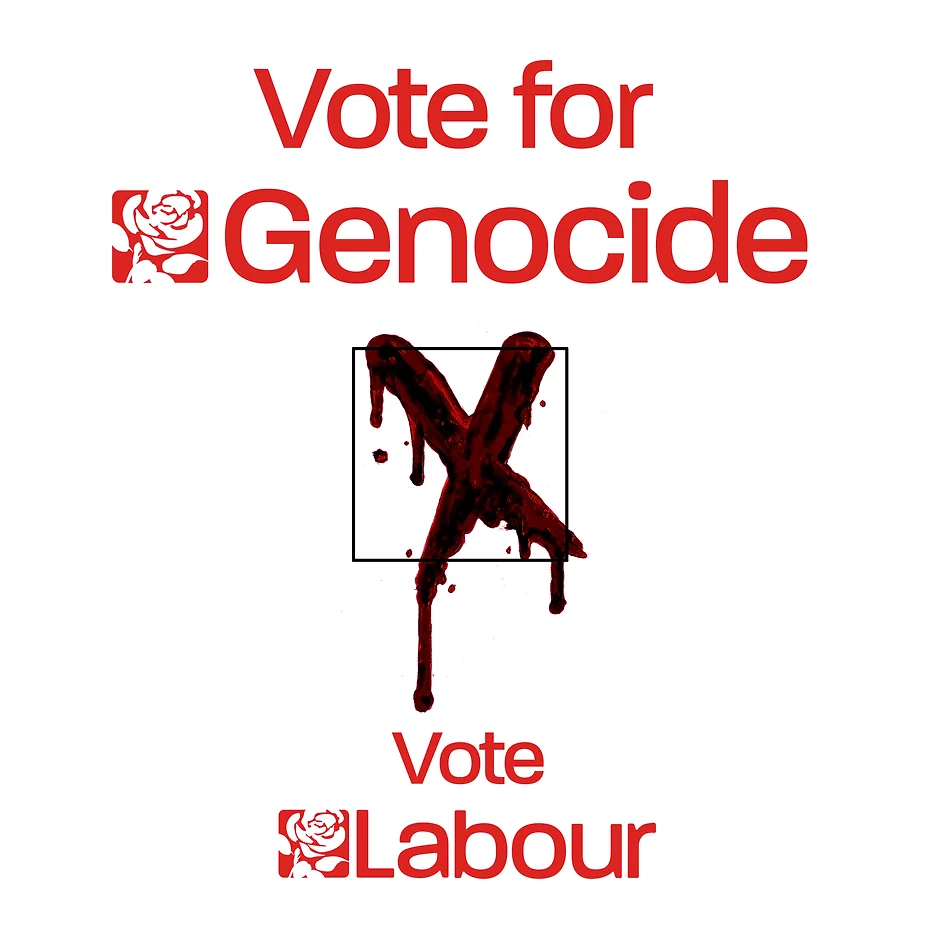
Zionist Keir Starmer is quoted “I support Zionism without qualification.” He’s asked whether that means that he supports Zionism under all circumstances, whatever Zionists do.Vote For Genocide Vote Labour.UK Foreign Secretary David Lammy says that UK is suspeding 30 of 350 arms licences to Israel. He also confirms the UK government’s support for Israel’s Gaza genocide.
Delegates defy Starmer by voting to reject the callous cut to pensioners’ winter fuel allowance after Unite chief’s barn-storming speech
LABOUR conference defied Sir Keir Starmer today and voted to reject the callous cut to pensioners’ winter fuel allowance.
Delegates backed a motion from Unite the union demanding that the government “reverse the introduction of means-testing for the winter fuel allowance.”
It also urged Labour to scrap the “fiscal rules which prevent borrowing to invest” and introduce a wealth tax on the top 1 per cent and an excess profits tax.
In a barn-storming speech, Unite general secretary Sharon Graham recalled how the 1945 Labour government had rebuilt the country despite debt ratios three times the level of today.
She said: “People simply do not understand, I do not understand, how our new Labour government can cut the winter fuel allowance for pensioners and leave the super-rich untouched.
“This is not what people voted for. It is the wrong decision and needs to be reversed.
“We are the sixth-richest economy in the world. We have the money. Britain needs investment, not austerity mark two. We won’t get any gold badge for shaving peanuts off our debt.
“These fiscal rules are self-imposed and the decision to keep them is like hanging a noose around our necks.
More than 1.7 million households plan on keeping their heating off this year, survey reveals
LIVES will be lost, campaigners warned today after a survey revealed that more than 1.7 million households do not plan on turning on their heating this year.
The number of those who said they will keep the heating off in polling for Uswitch is nearly double the 972,000 who said they did not heat their homes last year.
Fifty-five per cent of those blamed the continued rise of the cost of living, while 25 per cent of those over 65 said their decision followed the loss of winter fuel payments.
Another one million households will not turn on the heating until December to keep costs down, according to the poll.
About 43 per cent of households said they will only turn the heating on if they are too cold while 31 per cent will only heat some rooms in their home.
A pensioner struggles to keep warm at home. Photograph: Studio Romantic/Shutterstock
Call comes after government forced to reveal that 71% of pensioners with disabilities will lose entitlement despite dependence on warmer homes
Groups representing disabled people are demanding urgent meetings with ministers after it was revealed that 1.6 million pensioners with disabilities will lose their winter fuel payments because of government cuts.
The figures were released by the Department for Work and Pensions on Friday evening, in answer to a freedom of information request, despite the government having said it had done no official impact assessment on the policy. The internal DWP analysis also suggested that nine in 10 pensioners aged between 66 and 79, and eight out of 10 over-80s would lose their allowance.
Since those over 80 receive a higher payment – £300 as opposed to £200 – they would take the greatest financial hit, the document said.
The analysis revealed that although people with disabilities were more likely to retain the payment, 71% – 1.6 million – would still lose their entitlement, despite their greater dependence on heating their homes.
The analysis also estimated that of the 880,000 pensioners entitled to pension credit but who do not claim the benefit, only 100,000 are expected to sign up to it as a result of a government campaign now under way, meaning about 780,000 pensioners on low incomes would continue to miss out.