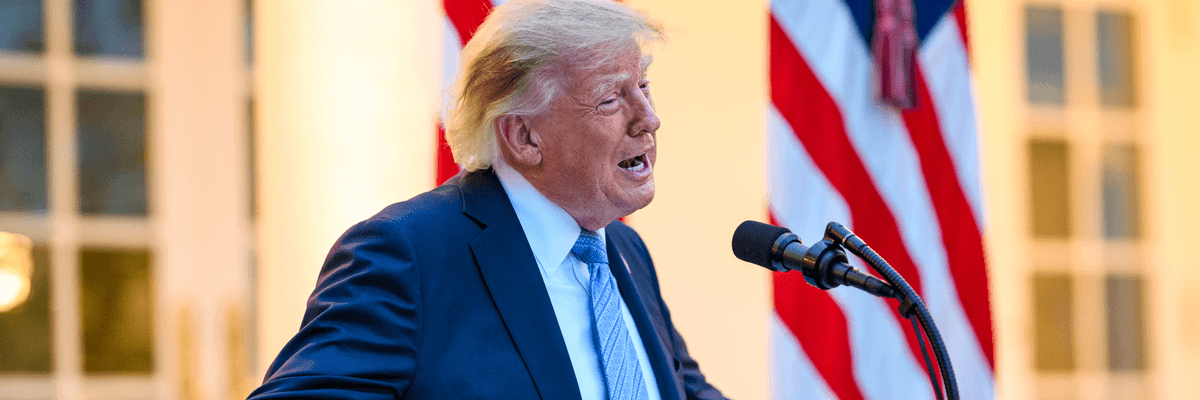
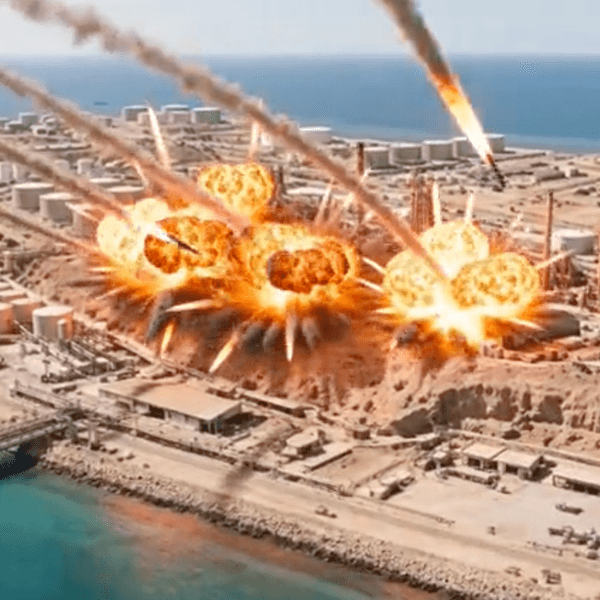
US President Donald Trump speaks in the White House Rose Garden on September 17, 2026. (Photo by Joyce N. Boghosian/White House)
A senior Iranian official said that “our conditions are an end to the war on all fronts, the release of our frozen funds, and an end to the naval blockade.”
Three days after saying that he’s weighing whether or not to “annihilate” Iran in a bid to end his increasingly unpopular and protracted war against the Middle Eastern nation, US President Donald Trump on Sunday again said that he is deciding if he should destroy the entire country of over 90 million people.
Fox News chief foreign correspondent Trey Yingst reported he “just spoke with President Trump about the situation with Iran” and that the US leader said he’s “in a deciding mode and that very big things are going to be happening in the not-so-distant future.”
Trump said he is considering three strategies for ending the 204-day war: “wiping Iran out, letting them rot economically, or making a deal.”
“My question is, if and when do I blow the entire nation up, they better behave,” Trump added, according to Yingst.
Fox correspondent: "The president said the US is in constant communication with the Houthis, and that they've agreed not to fight the United States. But the big headline here is the president said he's in a deciding mode as it relates to Iran, adding that the Iranians better… pic.twitter.com/nCTMRlEvWY
On Saturday, Mohsen Rezaei, the secretary of Iran’s Supreme National Security Council, told Al Jazeera that Tehran has conveyed its conditions for ending the war to Qatari mediators and is “awaiting President Trump’s response.”
“Our conditions are an end to the war on all fronts, the release of our frozen funds, and an end to the naval blockade,” Rezaei added. “It is in Washington’s interest to accept these conditions. Trump’s threats will not achieve any results. We are prepared for a decisive war.”
Iran’s military responded to Trump’s latest threat by warning US allies Sunday that they will be considered “complicit” if American strikes resume, vowing “painful attacks” in retaliation.
Trump—who has been threatening to destroy Iran since at least 2019—is facing pressure on multiple fronts to end his highly unpopular and illegal war of choice, in which at least 23 US troops have died and tens of thousands of Iranians have been killed or wounded.
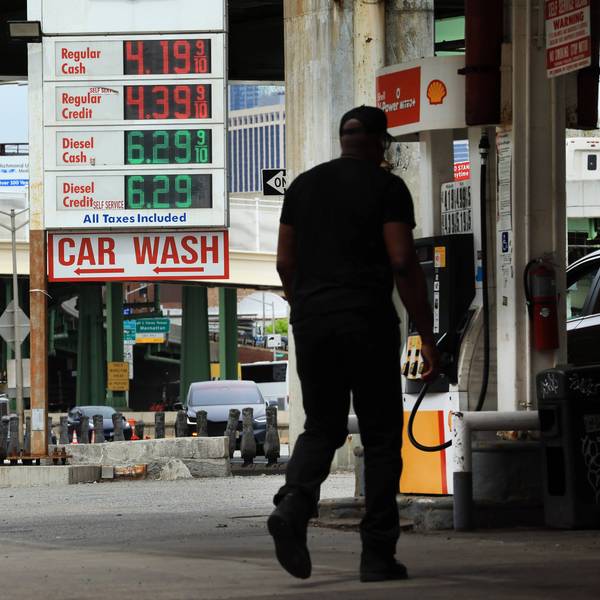
Americans are feeling the pain of higher consumer prices, especially for gasoline and diesel fuel, for a war that many say is making the country less safe. Six in 10 US voters queried in a new Fox News poll said Trump was wrong to wage war on Iran, while 7 in 10 respondents believe that his administration has no clear strategy for ending the conflict.
Republican lawmakers are also increasingly expressing dissatisfaction with the war and distancing themselves from the conflict ahead of November’s midterm elections, with some going as far as helping to pass a war powers resolution directing Trump to withdraw US forces from hostilities with Iran, and one—outgoing Rep. Thomas Massie of Kentucky—supporting the impeachment of Defense Secretary Pete Hegseth.
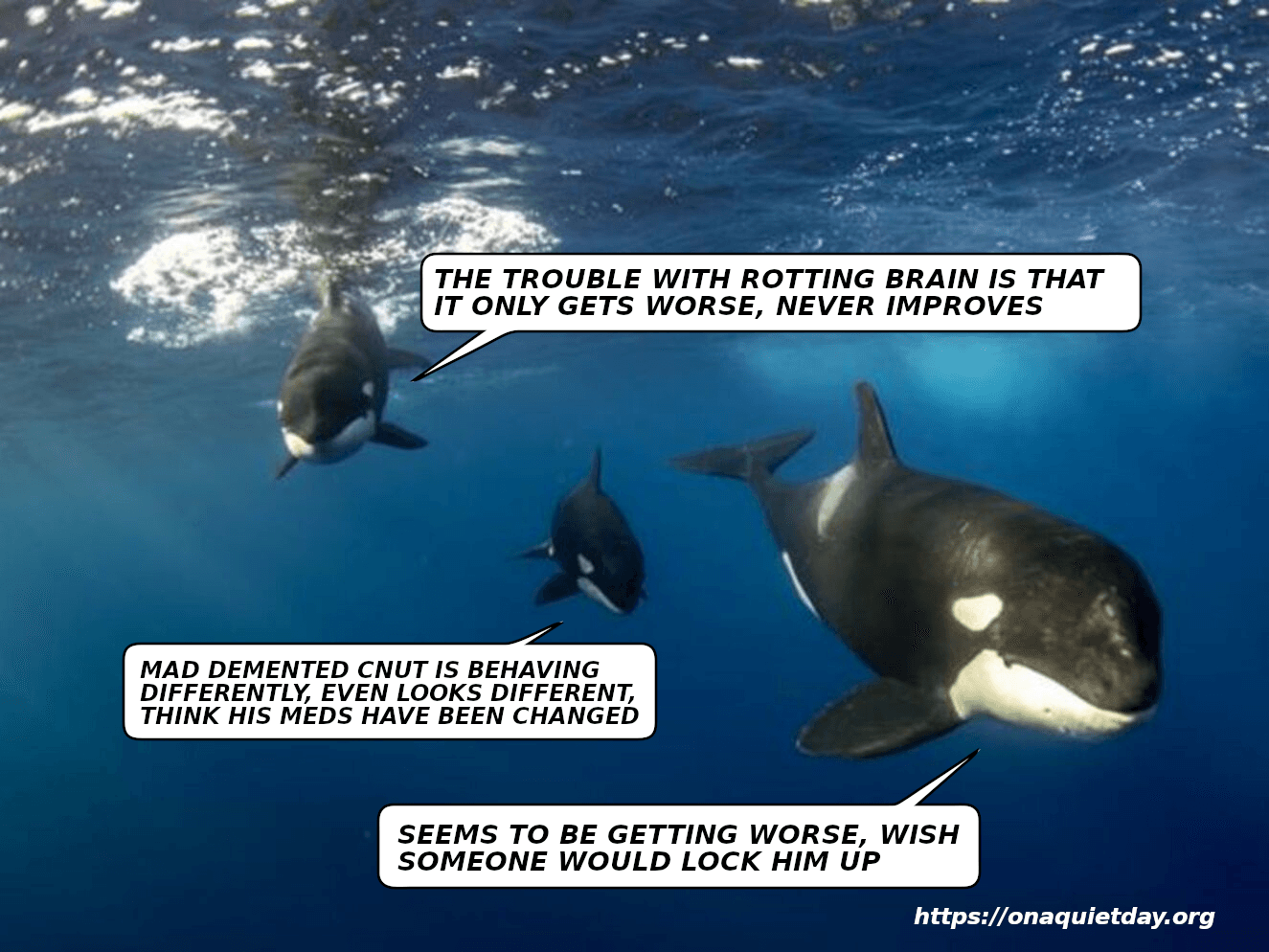
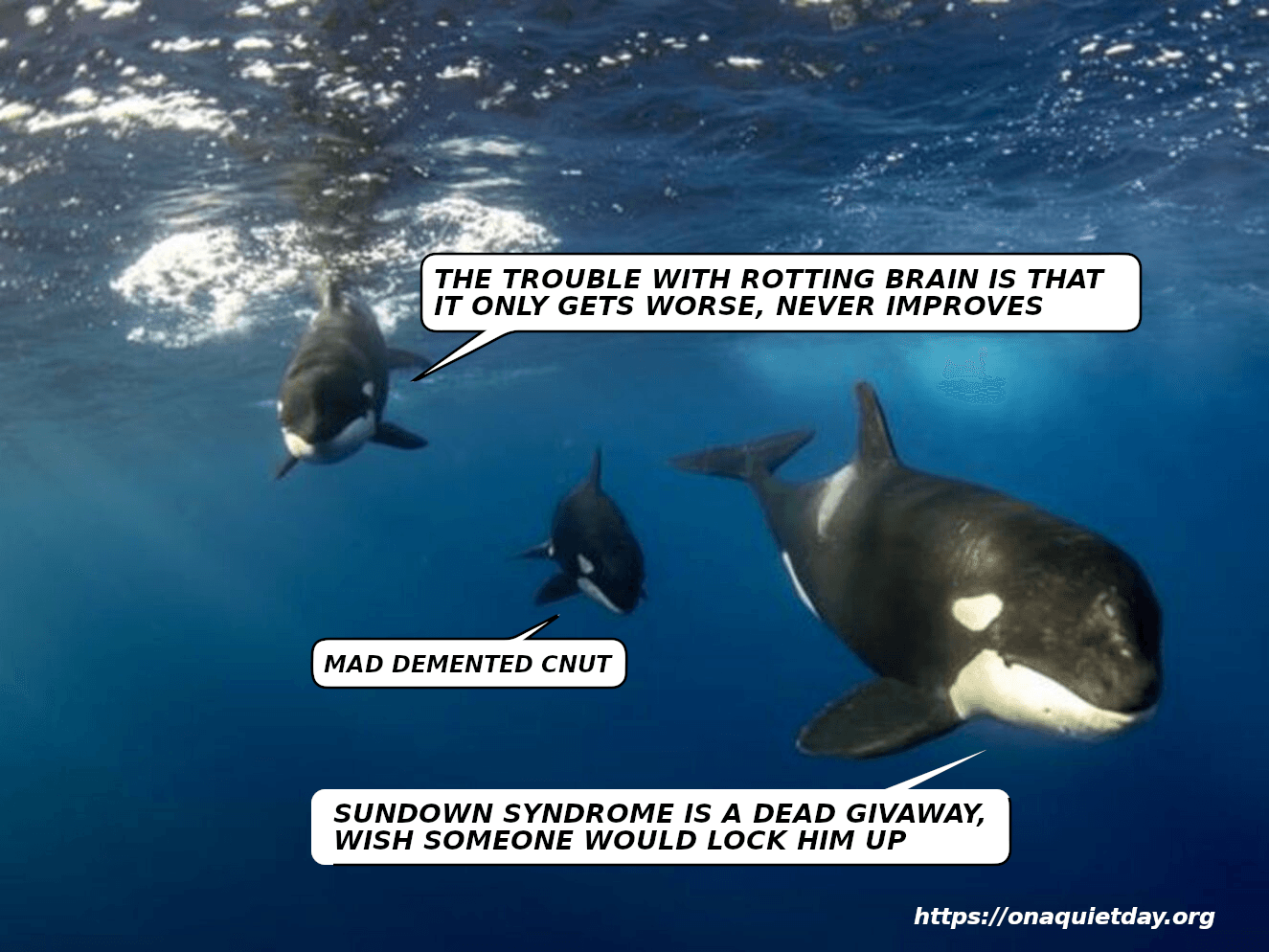
Orcas discuss Donald Trump and the killer apes’ concept of democracy. Front Orca warns that Trump is crashing his country’s economy and that everything he does he does for the fantastically wealthy.
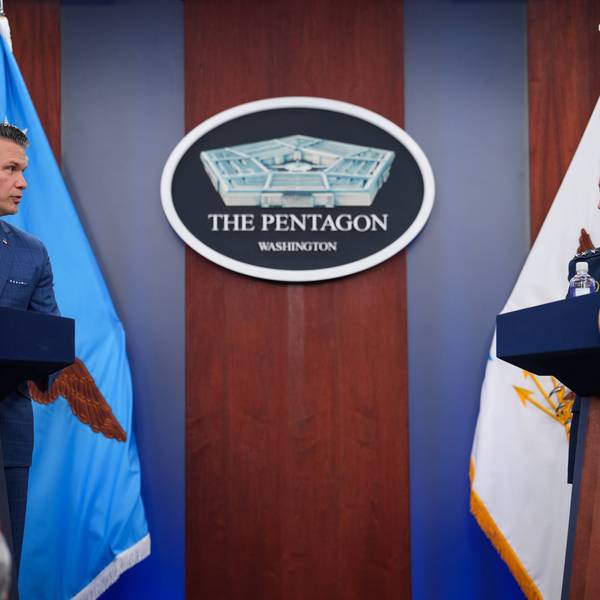
US Secretary of War Pete Hegseth speaks during a ceremony commemorating the 25th anniversary of the September 11 terrorist attacks in the courtyard of the Pentagon on September 11, 2026, in Arlington, Virginia. (Photo by Chip Somodevilla/Getty Images)
“What haunts me,” said one anti-war activist, “is how little accountability there has been for those who lied us into war—and how those same lies are now recycled to justify the attack on Iran.”
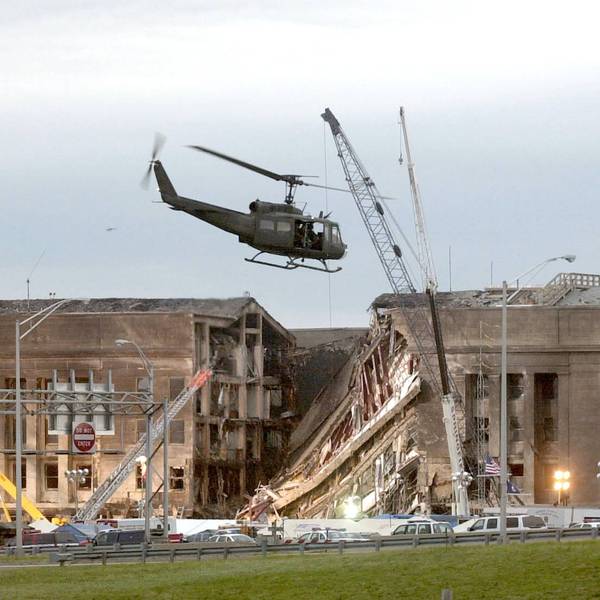
Twenty-five years later, Republican politicians are still using 9/11 to justify war in the Middle East. And they’re still lying shamelessly.
During remarks outside the Pentagon on Friday commemorating the 25th anniversary of the terrorist attack, President Donald Trump and Defense Secretary Pete Hegseth portrayed their deeply unpopular war in Iran as part of the lineage of the global War on Terror, which was marked by a pair of lengthy military engagements in Iraq and Afghanistan that cost well over $2 trillion and millions of lives.
Trump declared that he was prosecuting his new war with Iran to fulfill the “sacred oath” sworn in the names of the nearly 3,000 people whose lives were lost that day, that “we will never, ever forget.”
Hegseth seems to have forgotten quite a lot. Attempting to draw a link between the ideology of the al-Qaeda hijackers who committed the attack and the current Iranian government, the defense secretary said, “Our warriors have fought an Islamic theocracy that has wished us death for nearly half a century, that cheered on 9/11.”
Hegseth on Iran:
Our warriors have fought an Islamic theocracy that has wished us death for nearly half a century, that cheered on 9/11. pic.twitter.com/8jh8y1SMjn
Despite two decades of official hostility, the people and government of Iran have offered vivid messages of sympathy and condemnations of terrorism in the aftermath of last week’s attacks on New York and Washington…
Hard-line conservative Iranians and moderate reformers, top government and religious officials, Friday prayer leaders, and citizens on the street have uniformly denounced the plane hijackings and suicide crashes of September 11. Some, including President Mohammad Khatami, have offered to join an international campaign against terrorism under certain circumstances, including United Nations sponsorship.
On the day of the attacks in 2001, Khatami issued a swift condemnation over Iranian state TV of what he called “the terrorist operations of hijacking and attacking public places in American cities, which have resulted in the death of a large number of defenseless American people.”
Khatami later decried the attacks as “the ugliest form of terrorism ever seen.” According to later congressional testimony by a State Department official, he also asked to visit ground zero to light a candle out of respect for the victims, a request that was denied by the administration of then-US President George W. Bush.
Days after the attacks, Supreme Leader Ali Khamenei—who was killed this past February during the opening salvo of the joint US-Israeli war against Iran—agreed at the time that “mass murder of human beings is condemned,” though he also suggested that “expansionist” US foreign policy had played a role in provoking the attacks.
The US-funded Radio Free Europe reported that, far from celebrating in the streets, around 2,000 Iranians had gathered in Tehran for a candlelight vigil a week after the attacks, at which participants “chanted against terrorism and expressed their sympathy with America.” Days earlier, the Post reported that about 50,000 spectators at a World Cup qualifying match in Tehran observed a minute of silence in recognition of the attacks.
Iran’s support for the US following the attack also went beyond words. While still describing Iran as the world’s leading “state sponsor of terrorism,” a May 2002 State Department report emphasized Iran’s cooperation with US operations against al-Qaeda and the Taliban.
This included offering search-and-rescue assistance for downed US air crews, diplomatic cooperation at the 2001 Bonn Conference to build Afghanistan’s post-Taliban government, and promising border controls to prevent fleeing Taliban and al-Qaeda members from escaping.
Though Trump promised at the outset that it would last only a matter of weeks, his war with Iran has now lumbered into its sixth month with no sign of stopping. It has spilled out into a wider Middle Eastern conflict that has taken the lives of about 8,000 people, displaced millions, and wreaked financial chaos.
The war has included US attacks on civilians that have had a similar resonance with Iranians that 9/11 has for Americans, most infamously the bombing of an elementary school that killed at least 150 people, most of them children.
According to one economist’s recent estimate, the war has conservatively cost the average American household about $1,200 over six months, combining the direct cost to taxpayers with the knock-on effects of spiking oil prices and broader inflation.
Though around two-thirds of Americans say they oppose the war and Congress has ordered Trump to bring it to an end, recent reports indicate that the administration is considering expanding it following this November’s midterm elections.
Trump described the war as a grim necessity on Friday, in part to honor those who perished on September 11, 25 years earlier.
“That’s why we fight today,” Trump said. “We don’t have a choice. There can only be victory. We fight hard. We fight to win.”
Medea Benjamin, the co-founder of the anti-war group CodePink, reflected earlier this week on how the tragedy is still being used to this day to justify endless wars overseas.
“What haunts me today is not only the devastation of the invasion, but how little accountability there has been for those who lied us into war—and how those same lies are now recycled to justify the attack on Iran,” Benjamin said. “The War on Terror did not end.”
“The same impunity that has shielded the architects of the global War on Terror,” she added, “now emboldens the war criminals behind the genocide in Gaza and the Minab school massacre in Iran.”
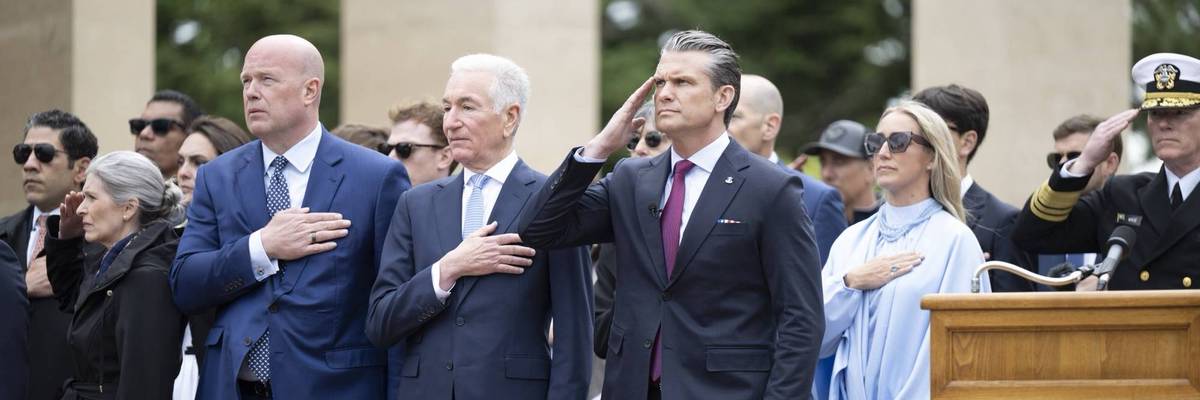
US Defense Secretary Pete Hegseth (second from the podium) attended a D-Day anniversary event at Normandy American Cemetery in Colleville-sur-Mer, France on June 6, 2026. (Photo by Pete Hegseth/X)
“Apparently our nitwit secretary of war(drobe) thinks a D-Day commemoration is an appropriate time to push his far-right ideology in Europe,” said US Sen. Tim Kaine.
US Defense Secretary Pete Hegseth came under fire from critics around the world this weekend after he turned his speech at a Saturday event marking the D-Day anniversary into a “racist rant” against migrants.
On June 6, 1944, Allied forces stormed the beaches of Normandy in France, which was occupied by Nazi Germany’s troops. Thousands were killed, but it is now widely seen as the beginning of the end of World War II. More than eight decades later, Hegseth traveled to the Normandy American Cemetery in Colleville-sur-Mer for the second straight year.
“Sadly, today, different European beaches are stormed by different dangerous ideologies,” President Donald Trump’s Pentagon chief said at the cemetery. “Beaches in Spain, in Italy, in Greece, and Bulgaria—boats and men arrive. When will European capitals do something about that invasion? Or is it too late? I pray not, and I believe not.”
Hegseth: Sadly, today, different European beaches are stormed by different dangerous ideologies. Beaches in Spain, in Italy, in Greece, in Bulgaria, boats and men arrive. When will European capitals do something about that invasion? pic.twitter.com/kCAiTc2mVm
US Army veteran and progressive advocate Mike Lavigne denounced Hegseth as “a disgrace to his office and to the nation.”
Sharing a report about Hegseth’s remarks on social media, Sen. Tim Kaine (D-Va.) wrote, “Apparently our nitwit secretary of war(drobe) thinks a D-Day commemoration is an appropriate time to push his far-right ideology in Europe.”
House Minority Leader Hakeem Jeffries (D-NY) said: “Thousands of American heroes died on D-Day to defend freedom and defeat fascism. Pete Hegseth should honor and respect their memory. Not politicize their ultimate sacrifice. May God Bless the Greatest Generation on D-Day and every day.”
My great-uncle Herb Reichlin lost an eye fighting for this country in Europe and is buried in Arlington Cemetery.
I am confident that he would have been furious to hear the plight of refugees crossing the Mediterranean described as an invasion in comparison to D-Day. https://t.co/MmUETHSn8dpic.twitter.com/wOIl5Nu1Ur
— Aaron Reichlin-Melnick (@ReichlinMelnick) June 6, 2026
After the speech, Hegseth “conspicuously skipped [the] afternoon’s main international ceremony marking the anniversary of the Allied landings,” France 24 reported. “His presence was not missed by some residents of the village hosting the ceremony, Langrune-sur-Mer, who said the US official was not welcome there.”
As the news network detailed:
“He has very warlike views and it seems to us that this man does not share our democratic values,” Sylvie Lamy Thepaut, a member of the municipal association Langrune en commun, told BFM TV.
A message on the association’s website called for Hegseth’s visit to be canceled on the grounds that the Pentagon chief “espouses values contrary to democracy, human rights and peace” and had made “numerous anti-European remarks,” “warlike statements,” and “American supremacist pronouncements.”
“The honor of Langrune, that of France, and the memory of the young Allied soldiers—American, British, Canadian—who died on our beaches in the name of democracy would dictate canceling this individual’s visit,” the statement concluded.
Hegseth’s comments notably came a just day after US Vice President JD Vanceclaimed on social media that Henry Nowak—an 18-year-old student fatally stabbed in the United Kingdom last year by a fellow Brit who has since been sentenced to life in prison—would still be alive “if the last few generations of European elites had stood their ground against the politics of self-hatred and the mass invasion of migrants, many of whom despise the West and the people who love it.”
“Each time a life like his is lost, the proper response—the only response—is righteous anger,” Vance added. “One of the most important things the Trump administration has proven to the world is that stopping the flow of mass migration and defending national sovereignty is a matter of political will and leadership. Anything else is an excuse.”
In response, a spokesperson for UK Prime Minister Keir Starmer said that “in recent days we have seen people trying to interfere in our democracy and seeking to stir up division on our streets. The Nowak family are grieving after Henry’s horrific murder. They have said they don’t want his death to be used to create further division, hatred, or tension. We should be respecting their wishes. Our politics should bring people together even in the most terrible of circumstances. That is who we are as a country.”
The recent remarks from Vance and Hegseth align with the Trump administration’s official National Security Strategy, which was released in December and is full of rhetoric often used by white nationalists. The document accuses the European Union of enacting “migration policies that are transforming the continent and creating strife,” claims that “should present trends continue, the continent will be unrecognizable in 20 years or less,” and stresses that US policy is to help “Europe to remain European, to regain its civilizational self-confidence, and to abandon its failed focus on regulatory suffocation.”
Earlier this week, the 27-nation EU moved forward with an overhaul of its migration policy, which has led some human rights advocates to draw comparisons to Trump’s use of US Immigration and Customs Enforcement (ICE) to crack down on people in the United States.
“Across the Atlantic, we see the violence and fear created by ICE’s brutal immigration enforcement,” Silvia Carter, a spokesperson for the Brussels-based Platform for International Cooperation on Undocumented Migrants, told The Associated Press. “Europe should be learning from the harms of that model, not building its own version of it.”
Already, many migrants die while trying to reach Europe. The International Organization for Migration announced in February that at least 7,667 people died or went missing on migration routes worldwide last year—including at least 2,185 who died or went missing in the Mediterranean Sea, and another 1,214 on the Western Africa/Atlantic route toward the Canary Islands—but “the real toll is likely higher.”
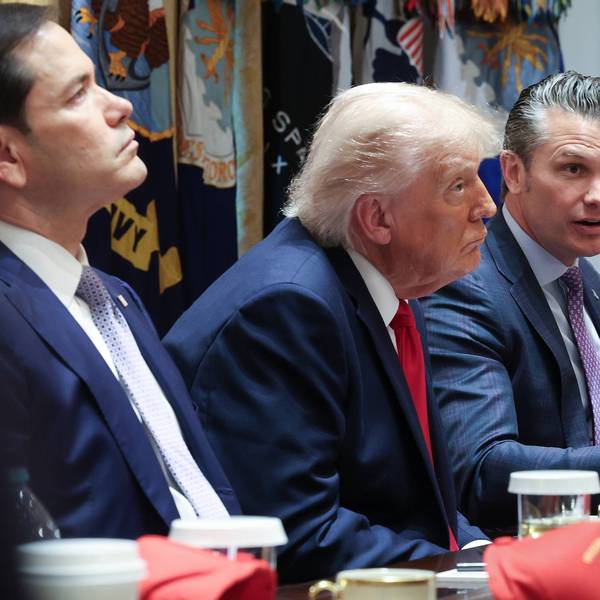
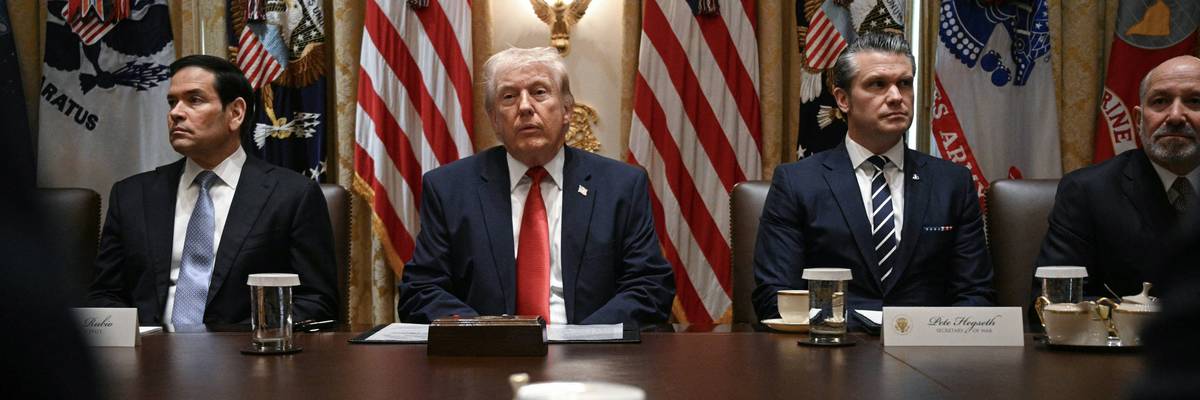
US President Donald Trump hosts a cabinet meeting in the Cabinet Room of the White House in Washington, DC, on March 26, 2026. (Photo by Jim Watson/AFP via Getty Images)
“Apparently you’re not allowed to kill people in international waters now?” said one progressive organizer.
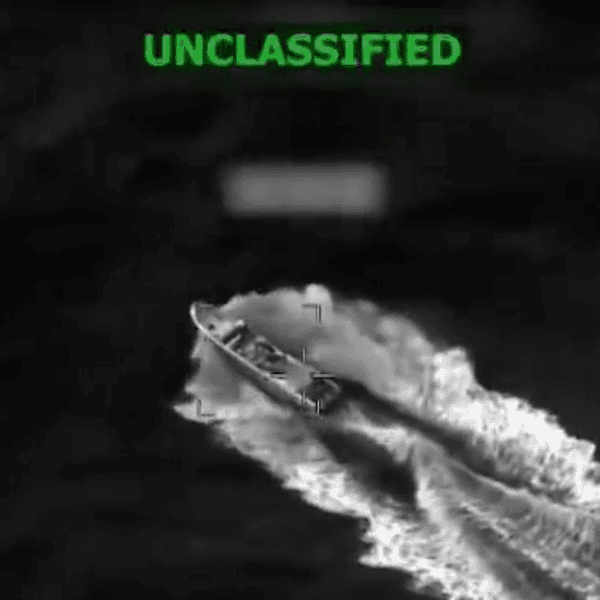
Over the last eight months, at the direction of President Donald Trump and Secretary of Defense Pete Hegseth, the US military has bombed at least 57 boats and killed close to 200 people—among them fishermen, a young man known in his town for his indoor soccer playing, and working people who had recently struggled to make ends meet—in what human rights experts have called “murders” and extrajudicial killings.
But the indictment filed this week regarding unlawful killings by government forces in the Caribbean region had nothing to do with Trump’s boat bombing spree, which the White House has claimed it aimed at stopping drug trafficking. Instead, the target of the indictment filed by the US Justice Department was 94-year-old former Cuban President Raúl Castro, who was charged with one count of conspiracy for his alleged role in shooting down planes that flew into Cuba’s airspace in 1996.
The planes were operated by an anti-Fidel Castro group, Brothers to the Rescue, and four Cuban-Americans were killed in the operation.
In expressing support for the indictment, US Rep. Carlos Giménez (R-Fla.), a Cuban-American immigrant, said that “there will be consequences to pay if you harm American citizens in international waters, in international airspace for no reason at all, and believe me, this was no reason at all.”
Michael Galant, a member of the secretariat of the Progressive International, commented with feigned surprise: “Apparently you’re not allowed to kill people in international waters now? Someone tell Hegseth.”
The organization’s co-general coordinator, David Adler, added, “I simply do not understand how we, as a country, tolerate the hypocrisy of indicting Raúl Castro for defending Cuban airspace—while our own government celebrates the extrajudicial assassinations of innocent fishermen sailing across the sea below,” while Ryan Grim of Drop Site News noted the indictment also followed the bombing of a school in Iran—an attack that investigators said was likely carried out by the US.
Trump bombs fishing boats at sea, at least once bombed the shipwrecked survivors, and bombed an elementary school, killing more than 165 little girls. And he wants to indict Raul Castro. https://t.co/zxRfbPM6FD
The indictment of Castro, noted the Progressive International, was set to coincide with Cuba’s Independence Day and came as Secretary of State Marco Rubio, the son of Cuban immigrants who has long desired regime change in the communist country, mused that the Cuban government has “plundered billions of dollars, but nothing has been used to help the people”—echoing his criticism of Iran, another target of the US military under Trump.
The timing of and ramp-up to the indictment was “a piece of political theater calibrated to one audience only: the Miami exile lobby that has spent decades pursuing its commercial and ideological vendetta against the Cuban Revolution,” said the group’s Cabinet.
“US officials themselves acknowledge they do not believe Cuba is an imminent threat, nor actively planning to attack American interests—and yet in the same breath, the administration has laundered a set of alarming claims about Cuban drone acquisitions, presented with all the breathless urgency of a casus belli,” the Progressive International added, referring to Axios’ reporting last weekend on claims from an administration official that Cuba is preparing to attack the US with drones—a report that ultimately acknowledged the Cubans are not planning any preemptive strikes on the US but are rather thought to be strategizing on self-defense as the US intensifies its anti-Cuba rhetoric and continues the oil blockade it imposed in February.
The Cuban embassy in the United Kingdom on Thursday said it rejected US claims about the downing of the Brothers to the Rescue plane, which it called “an irrefutable act of sovereign self-defense” that took place after “25 deliberate, calculated violations of our national airspace” by the exile group.
3/4 On 24 Feb 1996, they deviated from flight plans, penetrating restricted zones near Havana. Under Article 4 of the Chicago Convention, civil aviation must never be used for sabotage. By executing these hostile incursions, they immediately forfeited all civilian status. pic.twitter.com/vIdZKv8Nja
“To criminalize our nation, the US manipulated the official [International Civil Aviation Organization] investigation, deliberately erasing the first six minutes of radar and radio recordings to conceal the territorial incursion,” the embassy asserted. “The narrative of an attack in international waters is an absolute juridical fraud.”
In a column at Common Dreams Thursday, Codepink co-counder Medea Benjaminadded that she was in Cuba in 1996 when the planes were shot down. The leader of Brothers to the Rescue, José Baulto, she said, openly stated that he was “trained as a terrorist by the United States,” and said after one mission in which the group dropped leaflets over Havana that the group was seeking “confrontation.”
“The Cuban government repeatedly warned Washington, the Federal Aviation Administration (FAA), and international aviation authorities that these flights were illegal and dangerous. US officials knew the risks,” wrote Benjamin. “The hypocrisy of indicting Raúl Castro nearly 30 years later is staggering, given the long history of anti-Cuban extremists operating from US soil to wreak havoc against the island with bombings, sabotage, and airline terrorism.”
Those US-based extremists include the perpetrators of the 1976 midair bombing of Cubana Flight 455, a commercial airliner carrying 73 crew and passengers, many of them teenage members of Cuba’s junior Olympic fencing team.
The Trump administration’s boat bombings, meanwhile, have been called likely “war crimes” by some legal experts and “murders” by others. The White House has insisted the US is in an “armed conflict” with drug cartels in Latin America, but no conflict has been officially declared. In at least one instance, US military members were ordered to bomb the survivors of an initial strike—a clear violation of international law.
The US in the past has treated suspected drug trafficking as a criminal issue—not one to be dealt with militarily. Before the boat bombings began, one top military legal adviser warnedPentagon officials, “There is no world where this is legal,” and said carrying out the attacks could expose everyone involved, from top White House officials to rank-and-file service members ordered to carry out the strikes, to legal liability.
“The same US government now pursuing charges against Raúl Castro has itself been carrying out deadly strikes on alleged drug-smuggling boats in the Caribbean and Pacific, strikes that have killed at least 193 people since September 2025, with no transparency or due process,” wrote Benjamin.
Following the Castro indictment, the Progressive International called on “governments, movements, and peoples of conscience everywhere to call out this escalation for what it is—a naked effort to recolonize Cuba and the hemisphere at large—and to stand firmly against it.”
“We have seen this playbook before—in Iraq, in Libya, in Venezuela, and in other sites of manufactured consent for illegal war across the world. The Progressive International will not stand silent as it is deployed against Cuba,” said the group. “Hands off Cuba.”
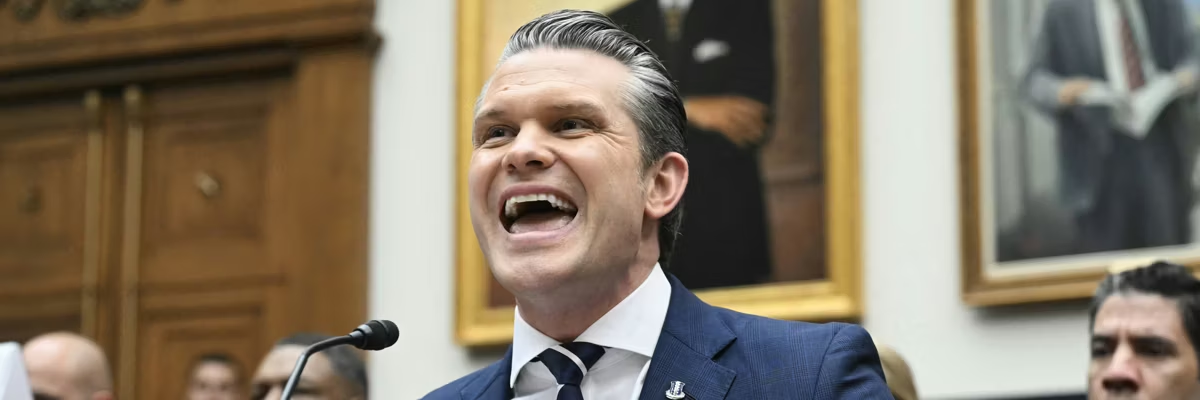
US Secretary of Defense Pete Hegseth testifies before a US House Armed Services Committee hearing on April 29, 2026. (Photo by Saul Loeb/AFP via Getty Images)
“In Iraq, it took more than three years to reach that high. In Vietnam, it took six years.”
More than 6 in 10 Americans now say President Donald Trump’s war in Iran was a “mistake,” according to a poll out Friday from the Washington Post/ABC News/Ipsos.
Within two months, the war—which has inflicted thousands of civilian deaths and caused gas prices to spike worldwide with little tangible gain—has reached levels of unpopularity that previous wars now seen as historic boondoggles took years to reach.
The Post has asked the “mistake” for other major wars. But CNN senior political reporter Aaron Blake explained: “In Iraq, it took more than three years to reach that high. In Vietnam, it took six years.”
Despite a massive protest movement, voters overwhelmingly supported President George W. Bush’s decision to invade Iraq, with 81% believing it was the “right thing” in April 2003 and just 16% believing it was a mistake.
But the occupation turned into a long, deadly, and costly disaster, and the administration’s pretexts for the war were revealed to be lies. Public opinion steadily eroded to the point where 64% viewed it as a mistake by January 2007.
Vietnam never had the overwhelming support of Iraq, but 60% of Americans still supported President Lyndon Johnson’s decision to begin direct US military involvement in 1965, while just 24% said it was a mistake.
While the protest movement against the war is as present in Americans’ memories today as the conflict itself, public opinion was still split until 1968 and only reached a high of 61% in May 1971, after more than 50,000 US soldiers had been killed in battle.
Trump’s war in Iran is unique in history in that it never enjoyed even a moment of consensus support. In a Reuters/Ipsos poll just days after the opening salvo of what the Trump administration dubbed “Operation Epic Fury,” just 27% said they approved of the strikes, which killed 555 Iranians, including Supreme Leader Ayatollah Ali Khamenei and several other top Iranian officials.
At this point, 43% of Americans already said they disapproved of the strikes, far eclipsing Iraq and Vietnam. But 30% still said they had not yet made up their minds.
In the coming months, they would. It was revealed that an airstrike on a school, which killed at least 155 people, including 120 children, was a double-tap attack by the United States. Iran retaliated by blocking oil shipments through the Strait of Hormuz, which sent US gas prices hurtling above $4 per gallon. And Trump took on an increasingly erratic and at times outright genocidal posture toward Iran that made any peaceful resolution appear increasingly impossible, even with the current fragile ceasefire.
61% of Americans say the Iran war is a "mistake," per new WaPo-ABC poll.
In Iraq, it took more than 3 years to reach that high.
Friday’s poll shows that while the war still maintains a core base of support—36% of Americans who say it was the right decision, nearly all of them Republicans—it is dwarfed by the 61% who say it was a mistake.
Majorities of respondents across all demographics show that they believe the war has increased the risks of “terrorism against Americans” (61%), “the US economy going into a recession” (60%), and “weakening relationships with US allies.” (56%)
Looking beneath the surface shows an even more worrying sign for Trump: The war has almost no constituency outside of his biggest fans. Self-identified Democrats (91%) overwhelmingly say the war was a mistake. But 71% of independents—many of whom were undecided at the war’s outset—now disapprove too, with just 24% in support.
Even within the GOP, there is a decisive split: 86% of those who self-identify as “MAGA Republicans” are still baying for blood. But “non-MAGA Republicans” have grown uncertain—50% still say war was the right decision, while 49% say it was a mistake.
They were particularly rattled by Trump’s threat last month that “a whole civilization will die tonight” if Iran did not negotiate a deal to his liking. The threat of genocide was too much even for the majority of Republicans, 53% of whom said they viewed it negatively.
GILLIBRAND: 3 out of 5 Americans are against this war
HEGSETH: I believe we have the support of the American people
GILLIBRAND: So you don't care that the American people don't support this war? pic.twitter.com/vjqMT2y1CD
What remains to be seen is whether even Trump’s most faithful backers will turn against the war as it drags on. If Defense Secretary Pete Hegseth’s appearance in Congress on Thursday is any guide, the country may soon find out.
On Thursday, when Sen. Kirsten Gillibrand (D-NY) pressed Hegseth about why he has “not sought the support of the American people” and added that “3 out of 5 Americans are against this war today,” he appeared in abject denial about the war’s unpopularity.
“I believe we do have the support of the American people,” he said. “I would remind you and this group that we’re two months in to an effort, and many congressional Democrats want to declare defeat two months in.”
He specifically invoked lengthy past conflicts, repeatedly emphasizing that this one had only lasted “two months,” as if to urge patience with a war Trump had previously said was intended to last only “four to five weeks.”
“Iraq took how many years? Afghanistan took how many years? And they were nebulous missions that people went along with,” he said.
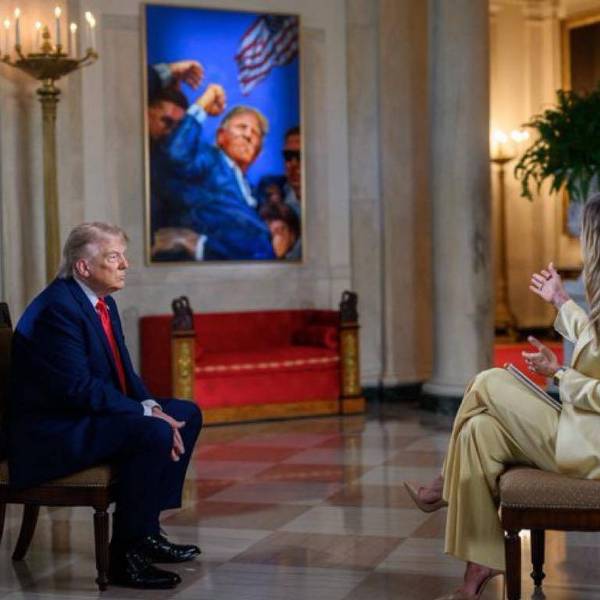
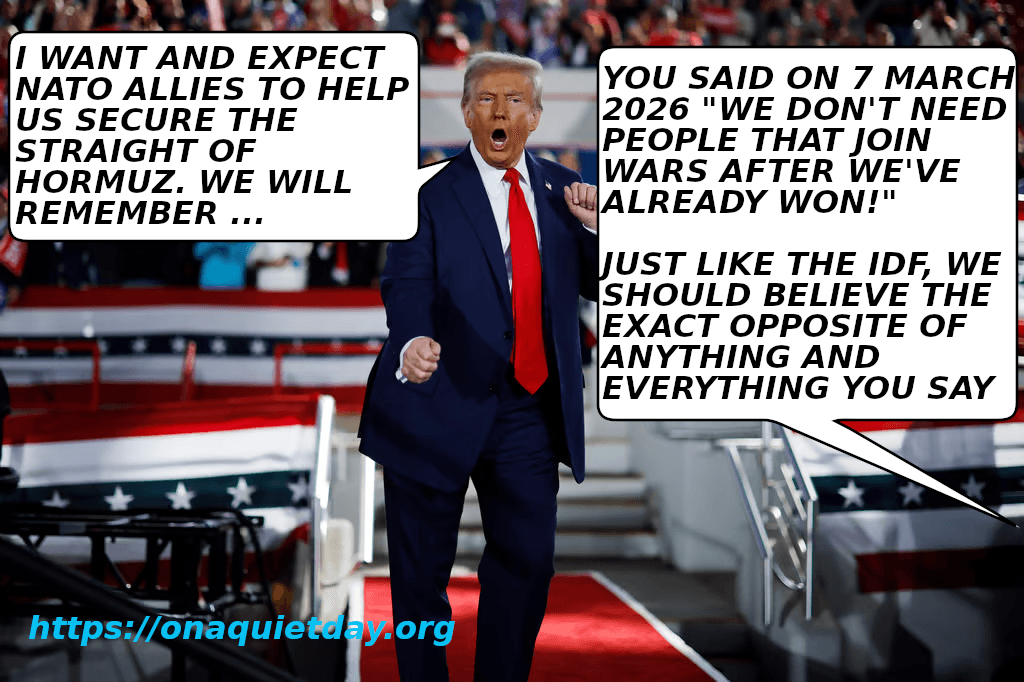
Donald Trump calls for help from NATO allies in securing the Strait of Hormuz despite saying on 7 March 2026 that they don’t need people to join wars after they’ve already won. He’s challenged with the claim that he lies as much as the IDF.